

Modern School Design for Rural Communities: Frough-E-Mehr Secondary School by Padiav Parth Architects
The Frough-E-Mehr Secondary School is a modern, culturally sensitive design providing education and community engagement for a rural village in Iran.


A Catalyst for Education and Community
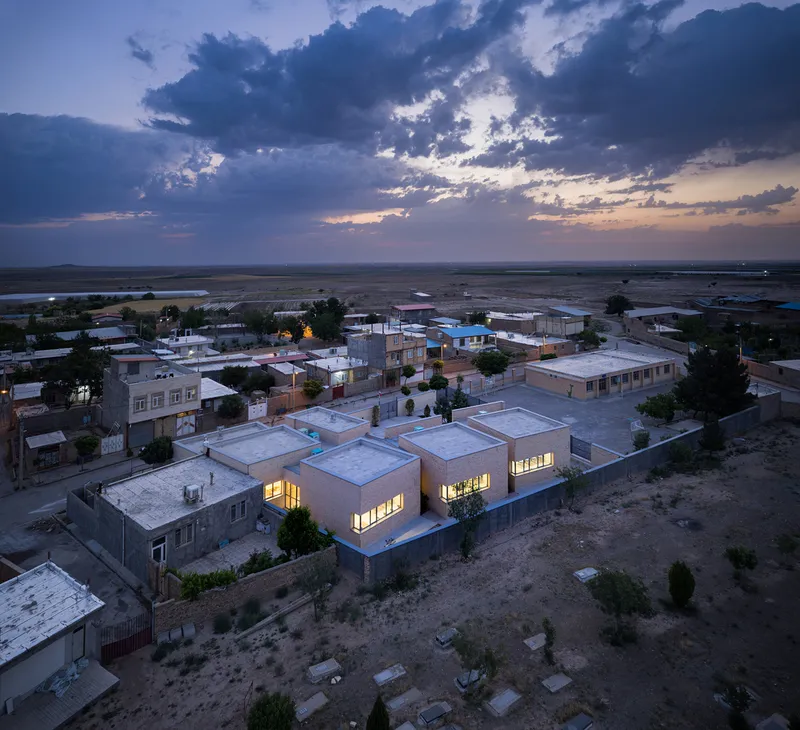
The Frough-E-Mehr Secondary School, designed by Padiav Parth Architects, transforms the educational landscape of Ja'farabad, a 250-year-old village in Qazvin Province, Iran. This 450-square-meter school balances modern functionality with cultural sensitivity, providing a space that serves both educational and socio-cultural needs. Through thoughtful design and community-focused planning, the school is more than an educational facility—it’s a beacon for progress in rural development.
Site Context and Challenges
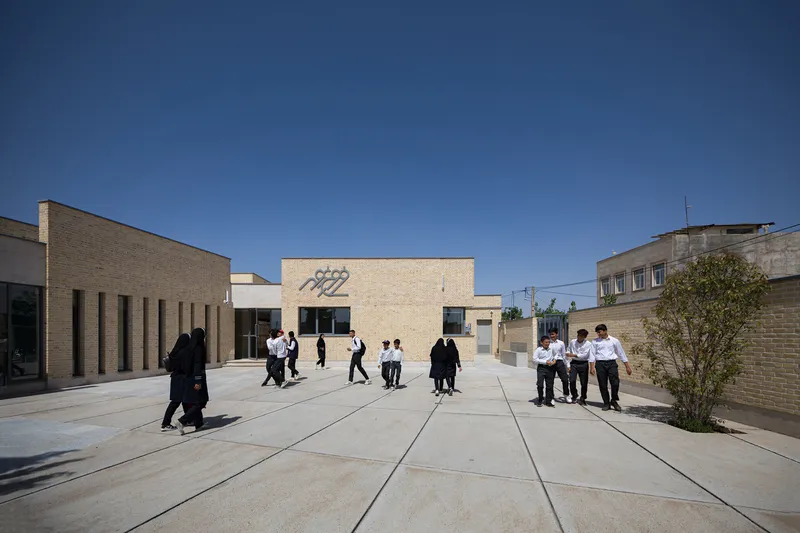
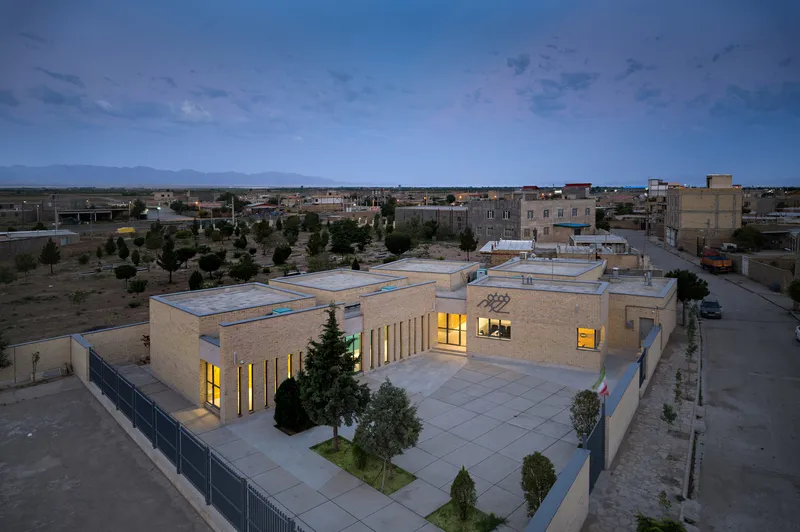
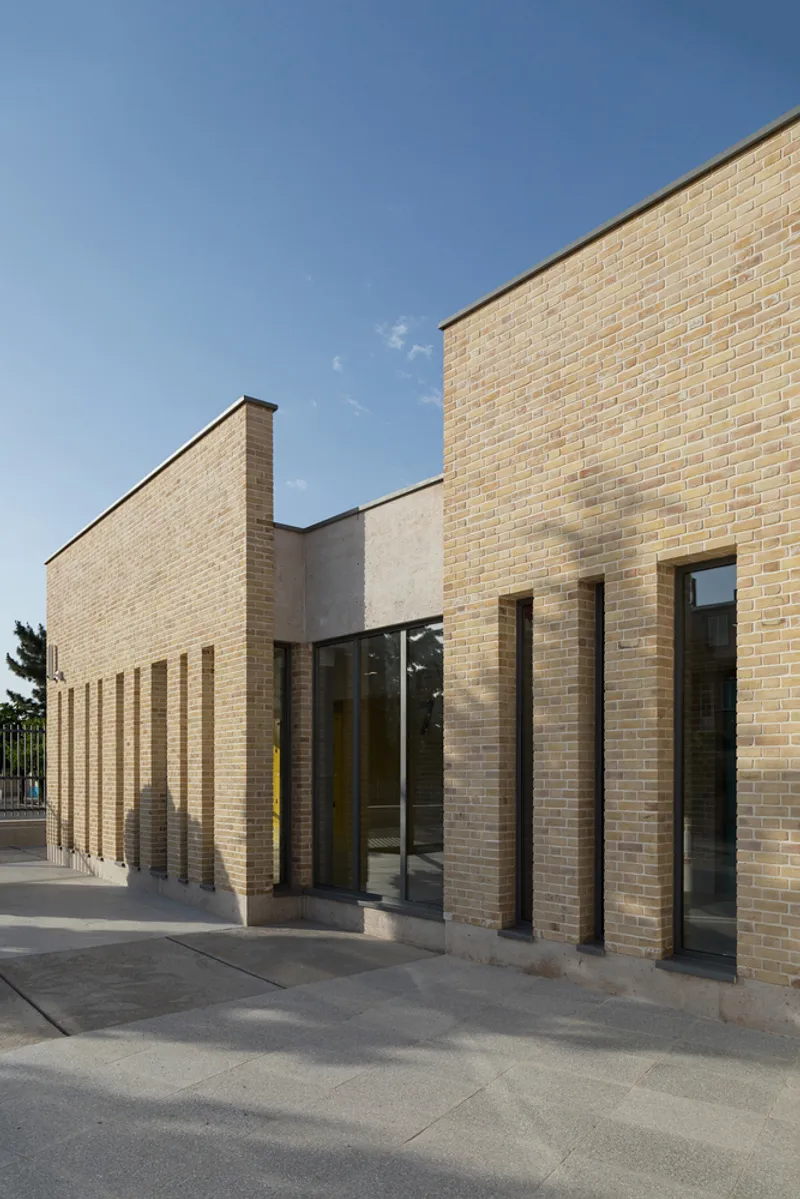
Ja'farabad, home to 750 residents, had limited educational facilities, with only two existing schools, one of which was aging and inadequate. To address this, a new site was allocated adjacent to the existing elementary school, bordered by a cemetery and residential buildings. The site’s irregular, trapezoidal geometry and space limitations required creative design solutions. Contributions from the cemetery and elementary school expanded the site area to 1,112 square meters, allowing for a comprehensive approach to accommodate both academic and extracurricular activities.
Design Philosophy: Beyond Education
The school’s design extends beyond serving first-year secondary students. In the afternoons, it accommodates second-year secondary girls, and its yard facilitates group sports like volleyball. By integrating these multi-purpose uses, the school becomes a vital hub for education, physical activities, and community engagement, reinforcing its socio-cultural impact.

Key Architectural Features
Central Axis and Site Geometry
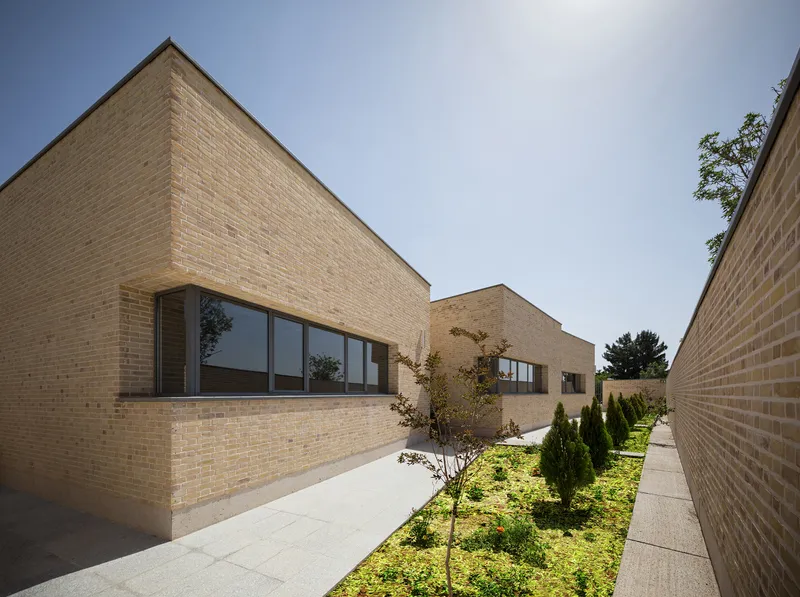
The school’s layout revolves around a central axis that organizes educational and multifunctional spaces. The design adapts to the trapezoidal angles of the site, harmonizing the school with its surroundings. This thoughtful geometric alignment ensures efficient use of space while maintaining visual and functional connections to the adjacent fabric.
Classroom Design and Placement
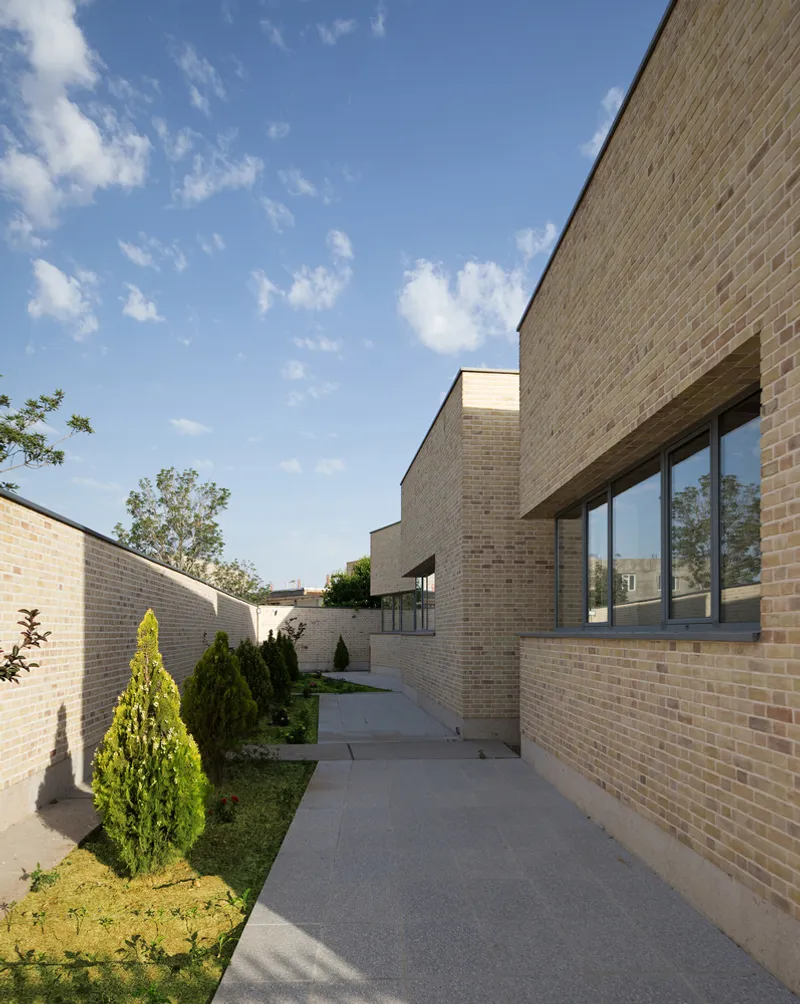
Classrooms, the school’s core, are strategically placed on the southern side of the site to maximize access to natural light and overlook a tranquil green space. Each classroom measures 8.60 by 7.20 meters, offering ample room for students. To minimize noise pollution, classrooms are oriented away from the street and are aligned with the site’s boundary angles, enhancing privacy and focus.

Multifunctional Spaces
The school incorporates a multipurpose space, principal’s office, teacher’s room, kitchenette, mechanical room, and restrooms. These facilities cater to both academic and extracurricular needs, creating a versatile environment that supports diverse activities.

Corridor Design: A Functional Connector
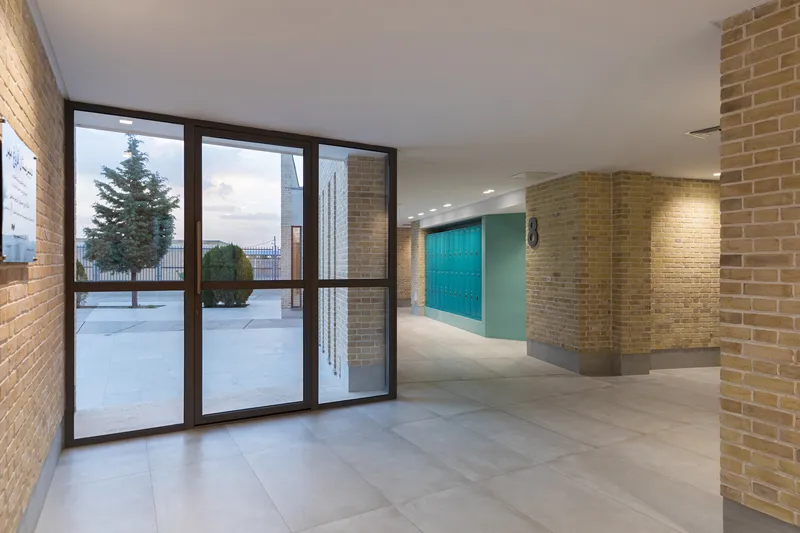
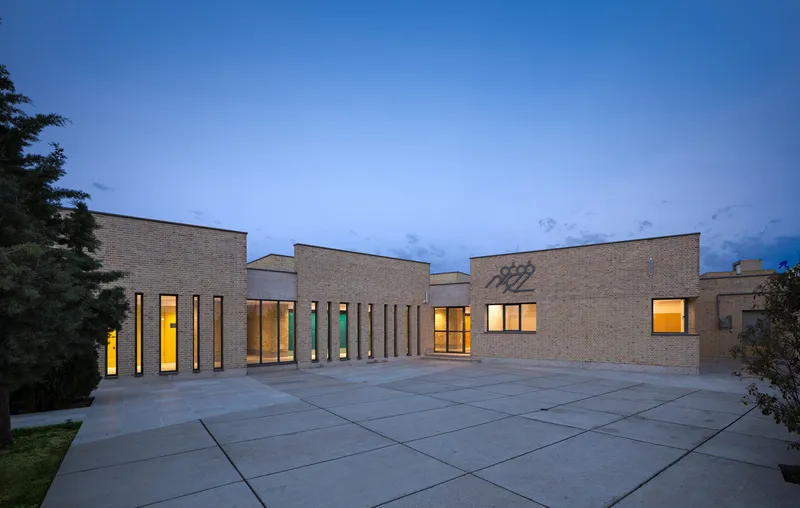
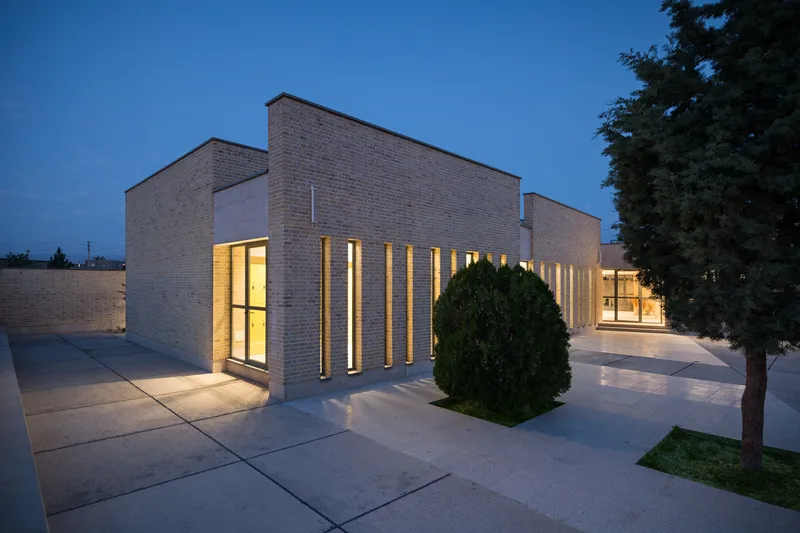
A longitudinal corridor connects all spaces, acting as a buffer between classrooms and the yard. The corridor features a perforated wall inspired by traditional Fakhro-Madin motifs, allowing northern light to filter through while maintaining privacy. Higher-than-usual parapet heights conceal rooftop mechanical units, preserving the corridor’s clean and functional aesthetic.
Cultural and Functional Integration
The design respects the village’s cultural context while addressing modern educational requirements. The perforated motifs not only provide ventilation and light but also echo traditional architecture, grounding the school in its cultural heritage. Additionally, lockers positioned along the corridor’s shared wall with classrooms optimize space and enhance functionality.
Sustainability and Community Impact
The school prioritizes sustainability through its use of natural light and efficient spatial planning. The incorporation of sports facilities and its dual-purpose classrooms foster inclusivity, ensuring that the school serves as a resource for the entire community. By bridging educational and cultural gaps, the Frough-E-Mehr Secondary School becomes a symbol of progress in rural development.

A Blueprint for Rural Education
The Frough-E-Mehr Secondary School exemplifies how thoughtful design can transform rural communities. By addressing both educational and cultural needs, Padiav Parth Architects have created a space that inspires learning and fosters community engagement. This project serves as a blueprint for modern school design in rural areas, where education is a gateway to empowerment and growth.

All Photographs are work of Mohammad Hassan Ettefagh


Popular Articles
Popular articles from the community


Juan García Correa, John González and Claudia Rueda Sink a Circular Amphitheater into a Manizales Engineering Building
On the La Nubia campus in Manizales, Colombia, the S1 Building folds labs and offices into a hillside of ramped lawns that double as a campus route.

GROUP A Strips a 1969 Rotterdam Harbor Headquarters to Its Frame and Wraps It in Timber Louvers
In Rotterdam's M4H harbor district, Ferro Offices reuses a 1969 frame, adds one timber storey and reaches BREEAM-NL Outstanding.

Architekt Andreas Gruber Scatters 23 Dark Timber Chalets Across a South Tyrolean Forest Edge
In Molini di Tures, Amonti Chalets breaks a resort into a hamlet of gabled timber houses, with parking, storage and services pushed into the slope.

LT2A and OPEN Architectes Thread a Brick and Glass High School Through a Wooded Belgian Campus
In Braine-l'Alleud, a 3,000 m² wing for Collège Cardinal Mercier pairs pale brick with a glazed colonnade, deferring to a small chapel and a dense wood.

Similar Reads
You might also enjoy these articles


Hodi-Mandai Geram
Project Function: Preservation and revitalization of the Intangible heritage and socio-spatial identity of the Hodi by Housing, Cultural Memory Center, Sacred Grove, landscape, local tourism economy


Olio Towers: A Mid-Rise for Performers That Fuses Housing, Rehearsal, and Stage
Located blocks from Houston's Theater District, this modular tower stacks living units around a central performance atrium.

Oasis: Modular Green Housing Carved into Dhaka's Urban Fabric
A shortlisted Plugin Housing entry reclaims unauthorized settlements in Dhaka with stepped concrete volumes, green roofs, and ventilation-driven design.

Black Hole: A Floating Megastructure for the Post-Physical Era
Emiliano Mazzarotto envisions a spherical, self-scaling arena where e-sports, digital hotels, and holographic stadiums replace traditional public space.

Explore School Building Competitions
Discover active competitions in this discipline

Challenge to design public laboratory

Challenge to reimagine the Iron Throne

Photograph architecture without architects

Illustrate the lost glory of Angkor Wat - Render Challenge
Comments (0)
Please login or sign up to add comments
No comments yet. Be the first to comment!