

Modular Houses in Piracaia by Arquipélago Arquitetos: A Sustainable Rammed Earth and Timber Living System
Modular rammed-earth and timber houses in Piracaia combine sustainable construction, reusable materials, and flexible layouts, blending craftsmanship with scalable modern living.


Innovative Modular Residential Architecture in Brazil
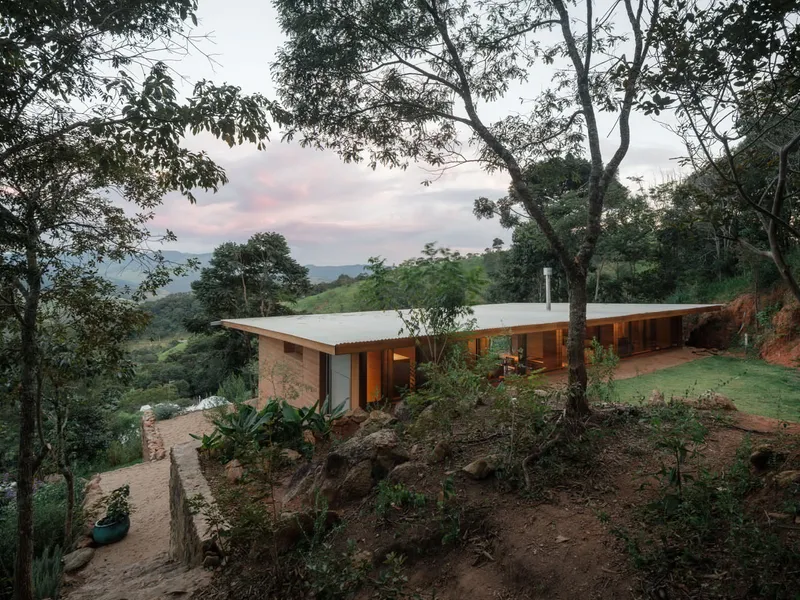
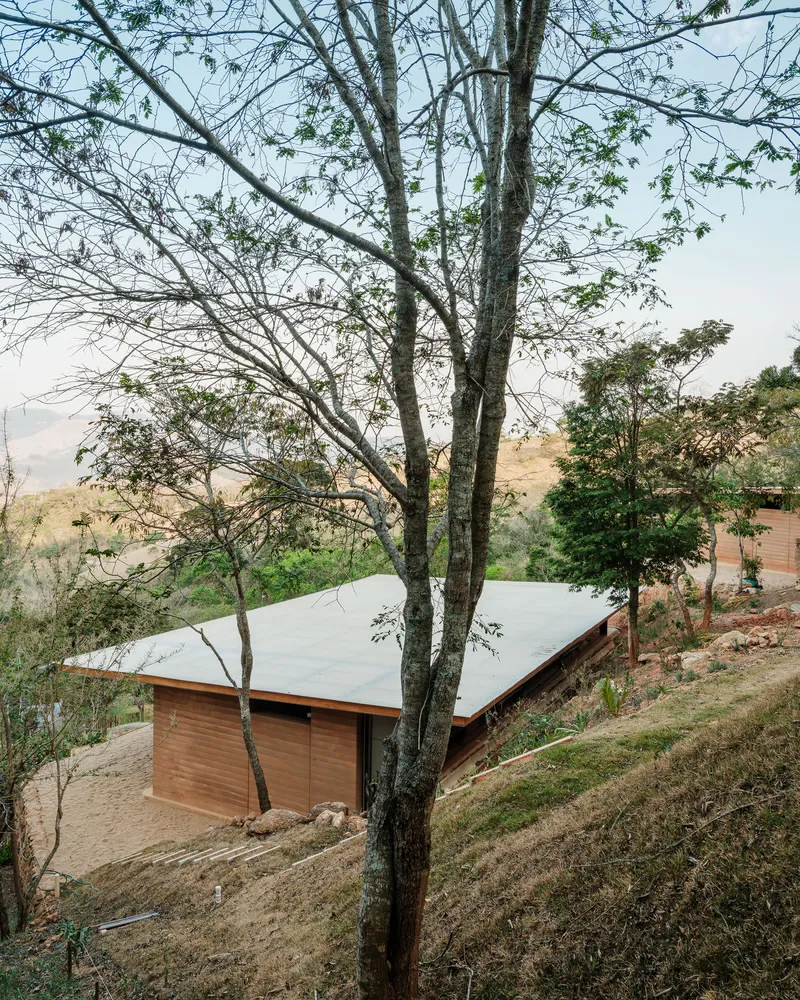
Set in the serene landscape of Piracaia, Brazil, the Modular Houses in Piracaia project by Arquipélago Arquitetospresents a pioneering approach to sustainable residential architecture. Completed in 2024 and spanning 250 m², this development showcases a replicable modular housing system built with rammed earth and timber construction, designed to support multiple dwelling sizes — including 50m², 100m², and 125m² configurations.

Rooted in local building culture and contemporary ecological values, the project reimagines rural Brazilian housing through a system that balances natural materials, low-impact construction, and modular scalability.
Design Concept and Construction Strategy
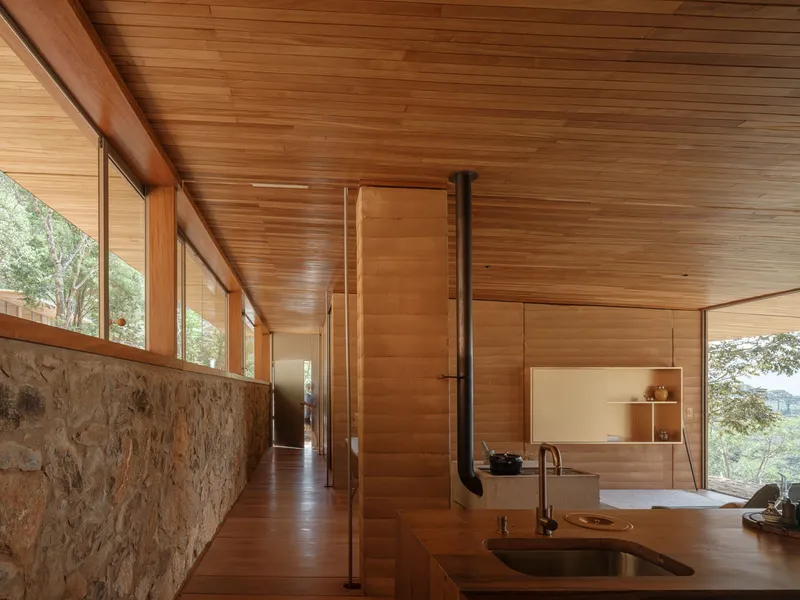
At the heart of the design is a rammed earth construction system, forming structural walls that serve as load-bearing masses. These walls support solid timber beams and wooden roof panels, creating a seamless structural synergy between compression and tension forces.
Key Architectural Principles:
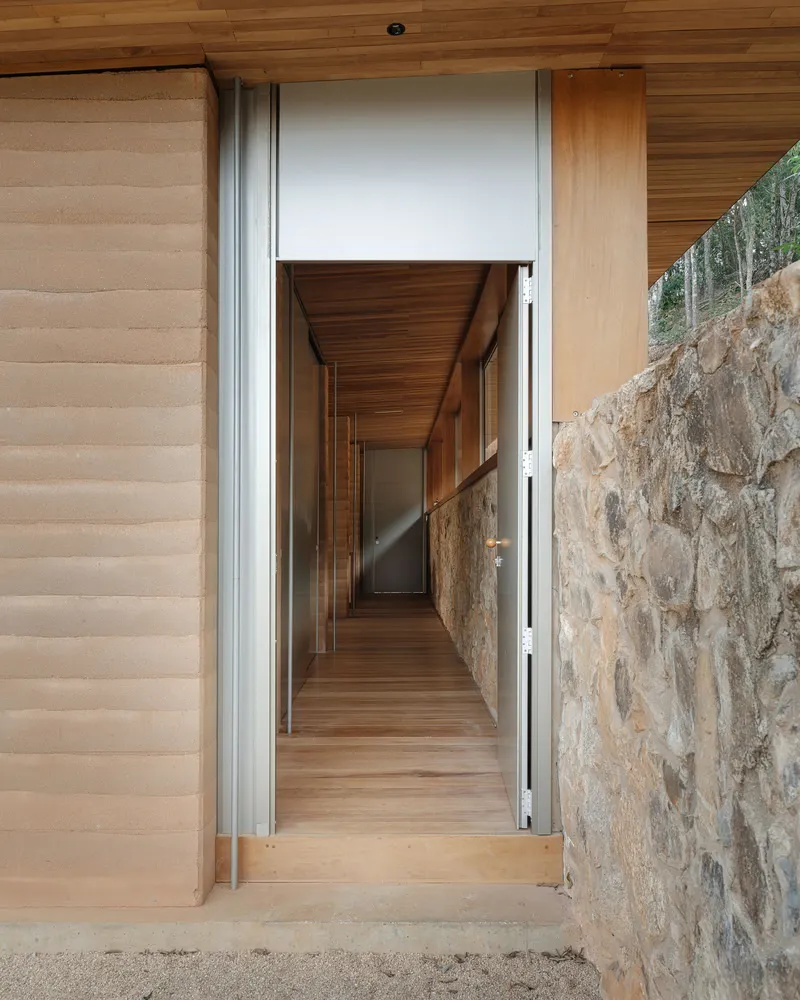
- Rammed Earth Walls as Structural Cores Each rammed earth wall anchors the building, housing interior zones between them. Their mass provides structural support while regulating temperature and creating a tactile, earthy interior aesthetic.
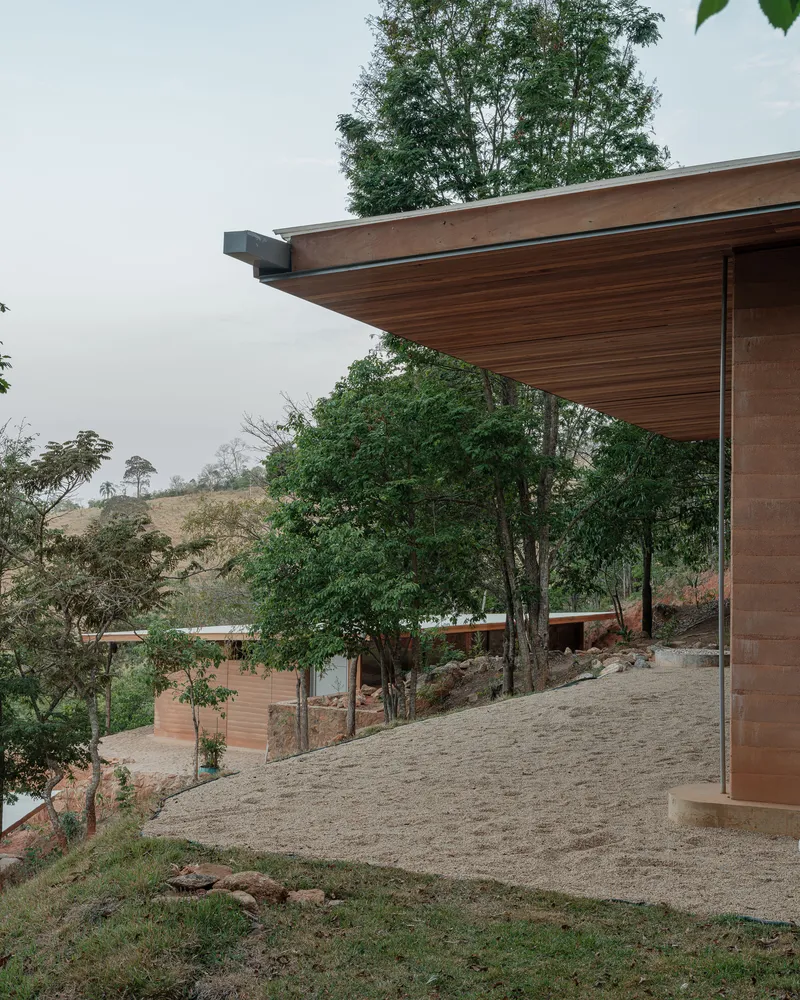
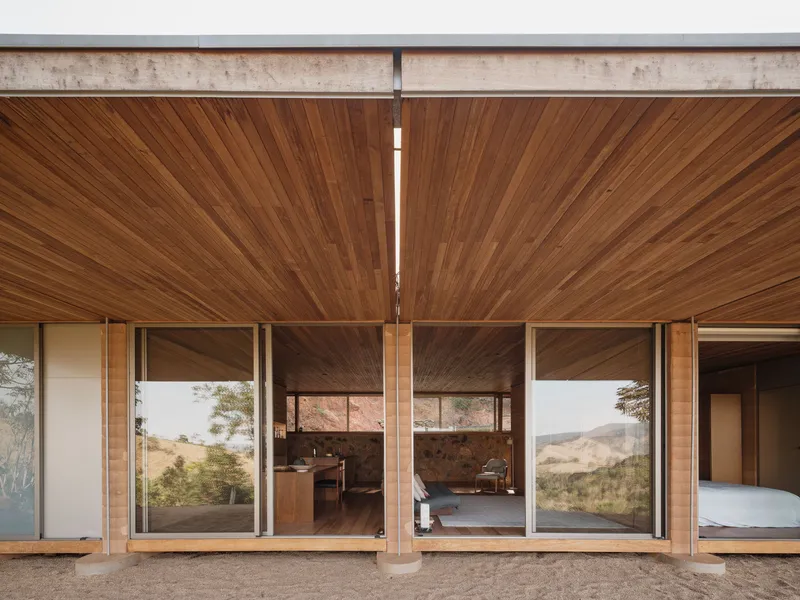
- Wooden Roof Panels & Structural Beams Timber beams sit atop the earthen walls, carrying roof loads and lifting the earthen structure 15cm above ground level, preventing moisture infiltration and enhancing longevity.
- Steel Rod Ties for Structural Balance Slim steel rods connect the roof to the beams, countering tensile forces and creating a balanced tension-compression system that reinforces the lightweight roof structure.
- Deep Eaves for Climate Protection Wide wooden eaves protect the walls from rain, strengthening the natural durability of rammed earth in this humid, tropical context.
Sustainable Construction & Material Reuse
Sustainability is embedded throughout the project — not only in material selection, but also in circular construction logic.
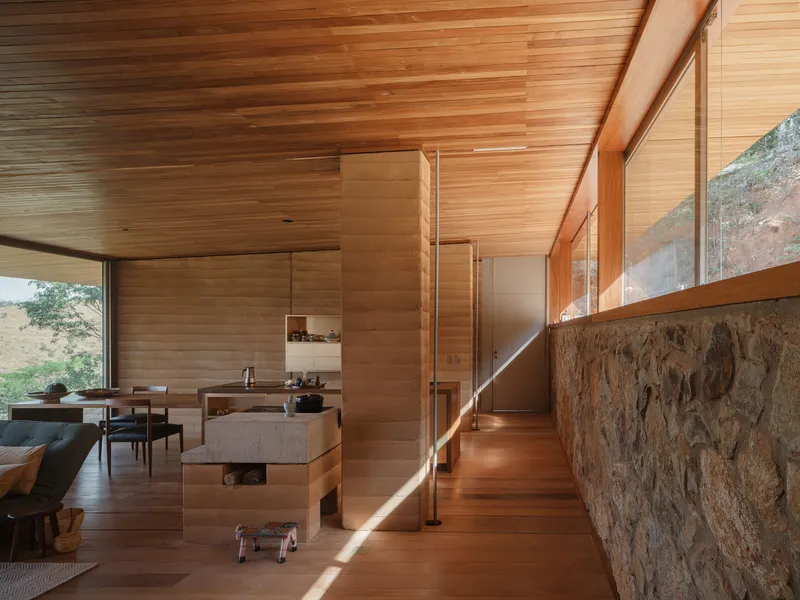
A dedicated carpentry component houses a kitchen countertop and dining surface made from reused itaúba wood, originally used as forms during wall construction. Once the rammed earth walls were cast, these wooden forms were repurposed into permanent architectural furnishings, eliminating waste and reinforcing the project’s commitment to zero-waste building systems.
Interior Atmosphere and Living Comfort
Inside, the homes feature warm timber finishes and exposed structural beams, creating a rustic yet contemporary atmosphere. The plan integrates:
- A fixed kitchen and dining block
- A traditional wood-burning stove serving both as a heating device and cooking element
- Functional aluminum components arranged across three structural bays
This layout honors Brazilian rural domestic culture while achieving a clean, minimalist sensibility aligned with modern modular living standards.
Balancing Craftsmanship and Production
More than a housing project, Modular Houses in Piracaia is an architectural research prototype testing the limits of manual craftsmanship and the potential of scalable modular construction. The scheme questions the role of artisanal building techniques vs. industrial prefabrication, seeking a middle path where handcrafted techniques evolve into sustainable production systems.
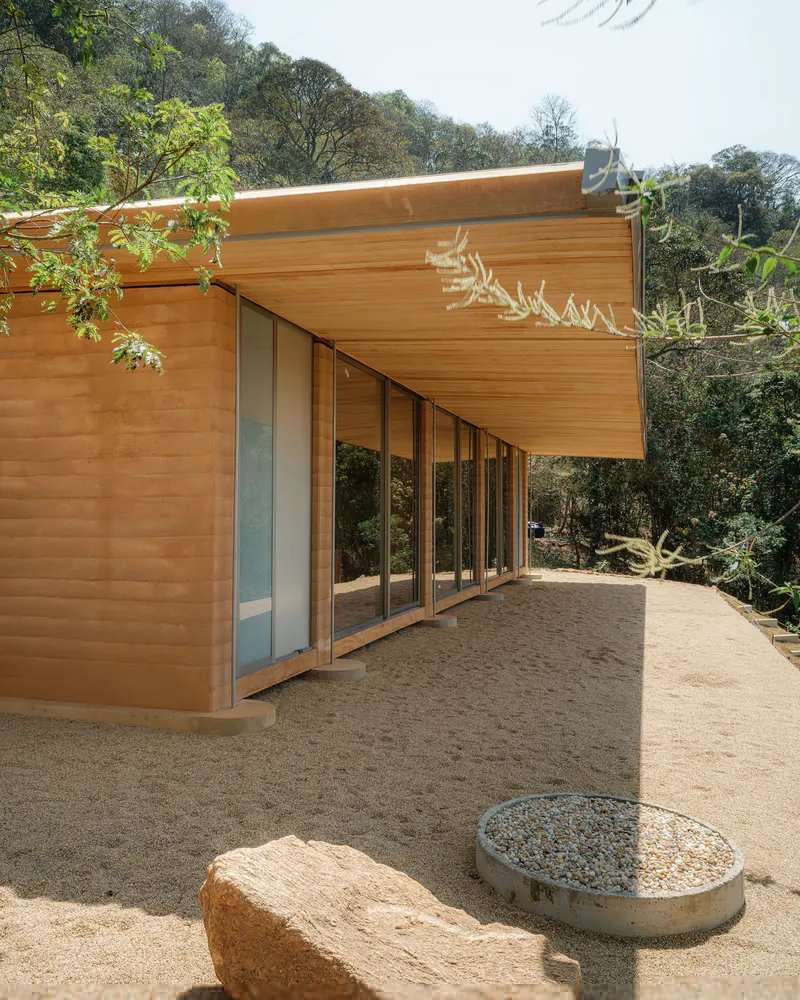
This hybrid strategy ensures cultural authenticity, environmental responsibility, and flexible replicability — positioning the project as a forward-thinking reference in modular eco-housing.
Arquipélago Arquitetos’ Modular Houses in Piracaia demonstrate how vernacular building techniques, modular design, and sustainable construction can intersect to redefine rural living in Brazil. Through rammed earth walls, timber systems, and carefully engineered structural logic, the homes stand as a testimony to low-impact craftsmanship and future-ready architectural innovation — adaptable, efficient, and deeply connected to place.
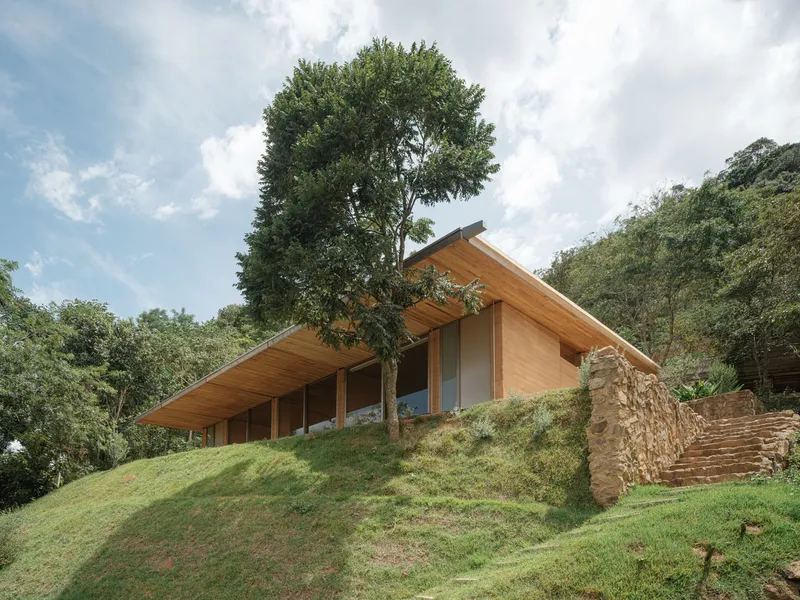
All photographs are works of Pedro Kok


Popular Articles
Popular articles from the community


Juan García Correa, John González and Claudia Rueda Sink a Circular Amphitheater into a Manizales Engineering Building
On the La Nubia campus in Manizales, Colombia, the S1 Building folds labs and offices into a hillside of ramped lawns that double as a campus route.

Cube Design Draws an Ecological Corridor Between Two Shenzhen Hills with the Nankai Building
Beside Shenzhen's container docks, the Nankai Building pairs stacked balconies with a climbing green screen to connect two hillsides across its height.

GROUP A Strips a 1969 Rotterdam Harbor Headquarters to Its Frame and Wraps It in Timber Louvers
In Rotterdam's M4H harbor district, Ferro Offices reuses a 1969 frame, adds one timber storey and reaches BREEAM-NL Outstanding.

Architekt Andreas Gruber Scatters 23 Dark Timber Chalets Across a South Tyrolean Forest Edge
In Molini di Tures, Amonti Chalets breaks a resort into a hamlet of gabled timber houses, with parking, storage and services pushed into the slope.

Similar Reads
You might also enjoy these articles


Hodi-Mandai Geram
Project Function: Preservation and revitalization of the Intangible heritage and socio-spatial identity of the Hodi by Housing, Cultural Memory Center, Sacred Grove, landscape, local tourism economy


Olio Towers: A Mid-Rise for Performers That Fuses Housing, Rehearsal, and Stage
Located blocks from Houston's Theater District, this modular tower stacks living units around a central performance atrium.

Oasis: Modular Green Housing Carved into Dhaka's Urban Fabric
A shortlisted Plugin Housing entry reclaims unauthorized settlements in Dhaka with stepped concrete volumes, green roofs, and ventilation-driven design.

Black Hole: A Floating Megastructure for the Post-Physical Era
Emiliano Mazzarotto envisions a spherical, self-scaling arena where e-sports, digital hotels, and holographic stadiums replace traditional public space.

Explore Modular Housing Competitions
Discover active competitions in this discipline

Challenge to reimagine the Iron Throne

Photograph architecture without architects

Illustrate the lost glory of Angkor Wat - Render Challenge

Design challenge to reuse E-waste
Comments (0)
Please login or sign up to add comments
No comments yet. Be the first to comment!