
Molí House by Sagristà-Simó: A Harmonious Blend of Tradition and Modernity
Molí House blends tradition and modernity, featuring sustainable design, natural materials, and seamless integration with La Puebla’s agricultural landscape.


A Modern Marvel Rooted in Agricultural Heritage
Molí House, designed by renowned architects Sagristà-Simó, is a stunning example of modern architecture that seamlessly integrates with its natural surroundings. Located in the fertile agricultural landscape of La Puebla (Sa Pobla), Spain, the house is set amidst the Marjals de Sa Pobla, a flat, open landscape characterized by geometric divisions of irrigated fields. The design takes inspiration from the Serra de Tramuntana mountain range, which serves as a dramatic backdrop to the otherwise flat landscape.
This architectural masterpiece stands as a testament to blending traditional architectural techniques with contemporary living, creating a sustainable and visually stunning space for a young couple of teachers and their families.
Architectural Context: A Tribute to the Landscape
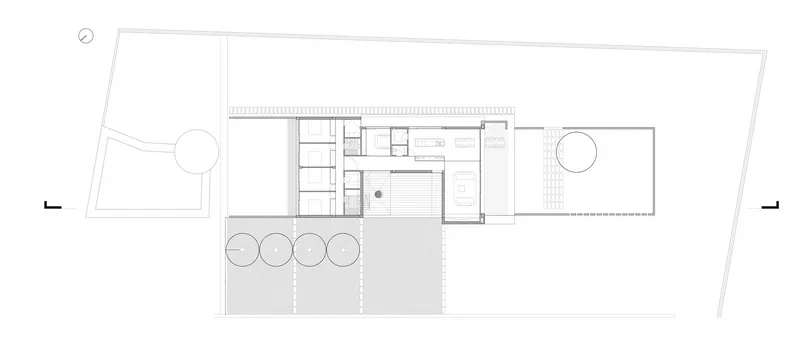
The Molí House is situated within an agriculturally rich environment where the geometry and regularity of the farmland dominate the landscape. This vast and cultivated land is punctuated by mill towers that historically drew water and ponds used for storage. To honor this rich agricultural history, the architects positioned the house longitudinally at the far end of the plot, perpendicular to the access road, ensuring that most of the space remains dedicated to cultivation.
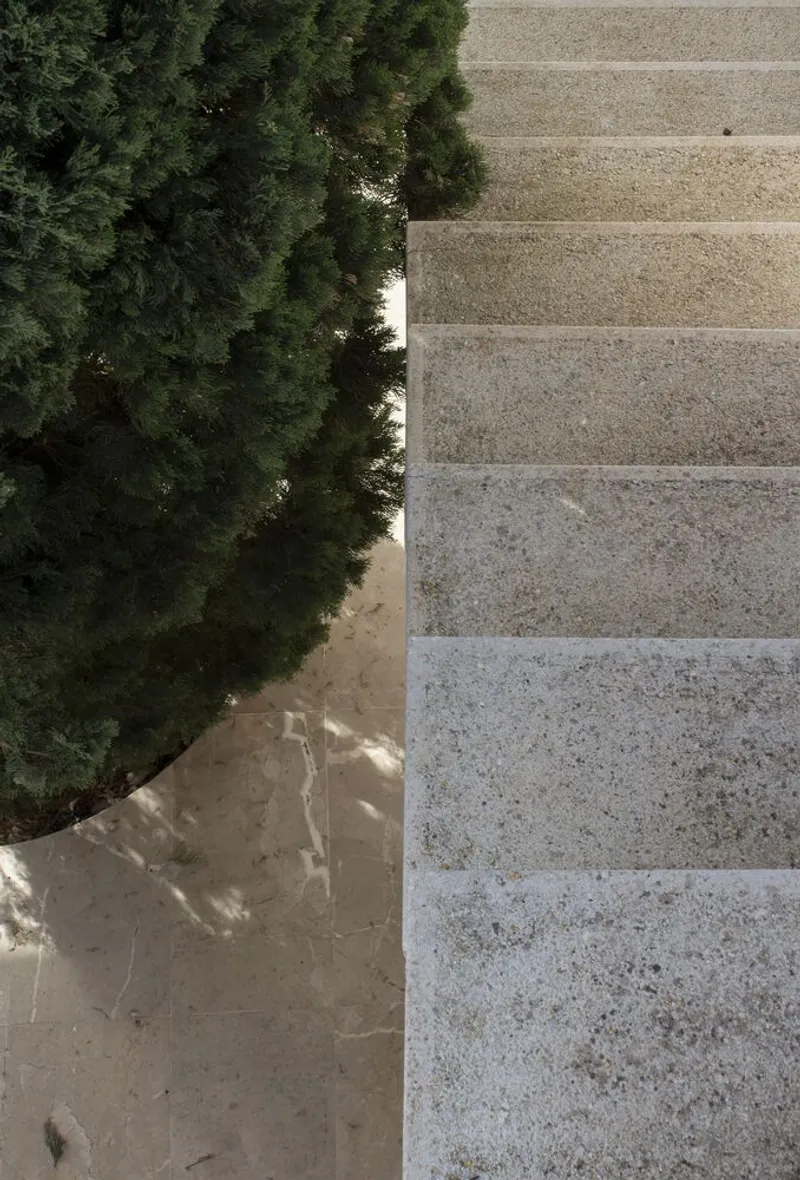
The house’s relationship with the surrounding environment is enhanced through the use of sandstone, a material commonly found in local agricultural buildings. This choice of material lends texture and warmth to the exterior, ensuring that the building blends harmoniously with its surroundings.
Design Philosophy: Integrating Traditional Elements
Sagristà-Simó’s design philosophy revolves around incorporating traditional architectural elements such as patios, latticework, vines, and thick stone walls, which provide a timeless aesthetic while ensuring energy efficiency. The house is built on a single ground floor, structured around two large patios positioned at either end. These patios act as natural filters, enhancing the connection between the house and the nearby landscape.
The patios and courtyards also contribute to natural ventilation and light diffusion, reducing the reliance on artificial cooling systems and adding to the house’s sustainable design.
Spatial Distribution: Balancing Privacy and Openness
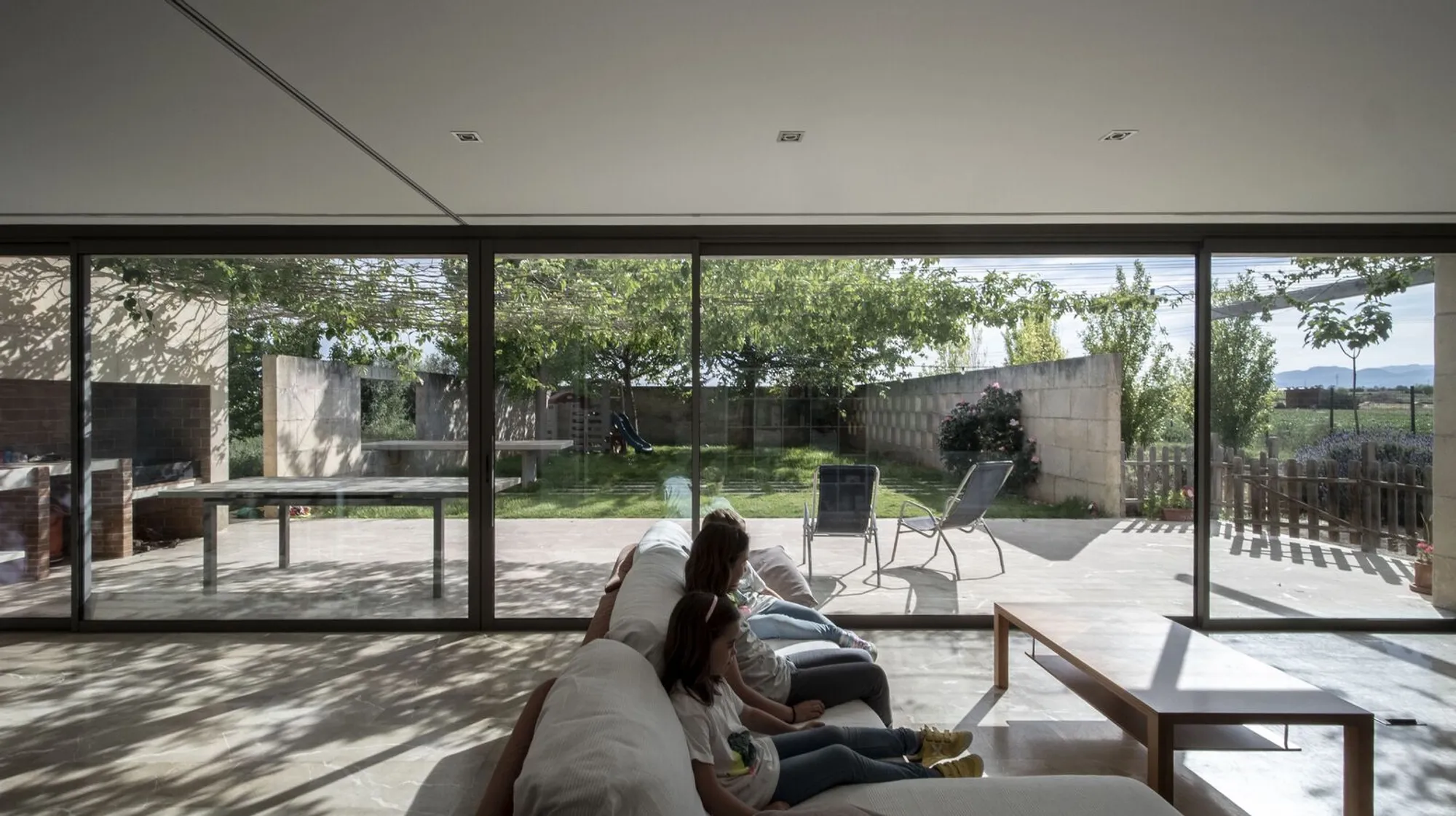
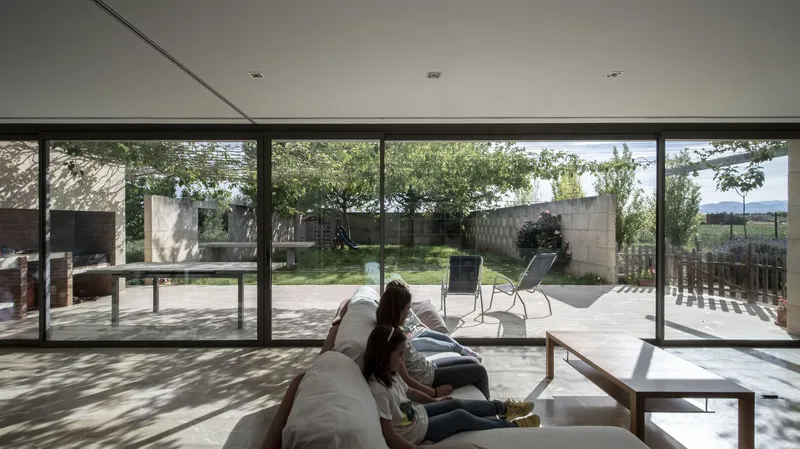
The spatial organization of Molí House is meticulously planned to maximize comfort and functionality. The layout follows an open orientation towards the southwest, where the living areas and day zones are located, offering uninterrupted views of the surrounding orchard and distant mountains.
The northeast section is reserved for the bedrooms and private quarters, ensuring privacy while maintaining a seamless connection with nature. A fluid corridor runs longitudinally through the entire house, accommodating multi-functional spaces such as the study and a garage with a porch, allowing flexibility in usage.
Interior Design: Warmth and Minimalism
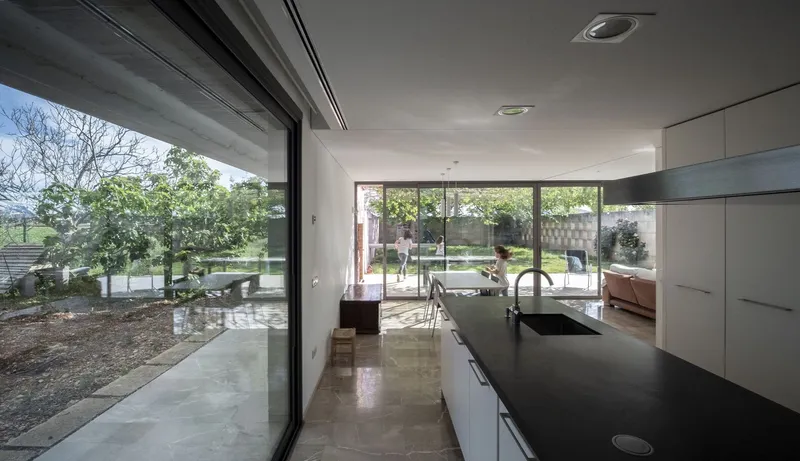
The interiors of Molí House reflect a harmonious blend of minimalism and warmth, achieved through the use of local materials and carefully selected design elements. The floors are paved with natural Binissalem stone, a locally sourced material that adds authenticity and durability to the space. Wooden elements, such as custom-made cupboards and sliding panels, introduce a sense of warmth and flexibility, enhancing the overall ambiance.
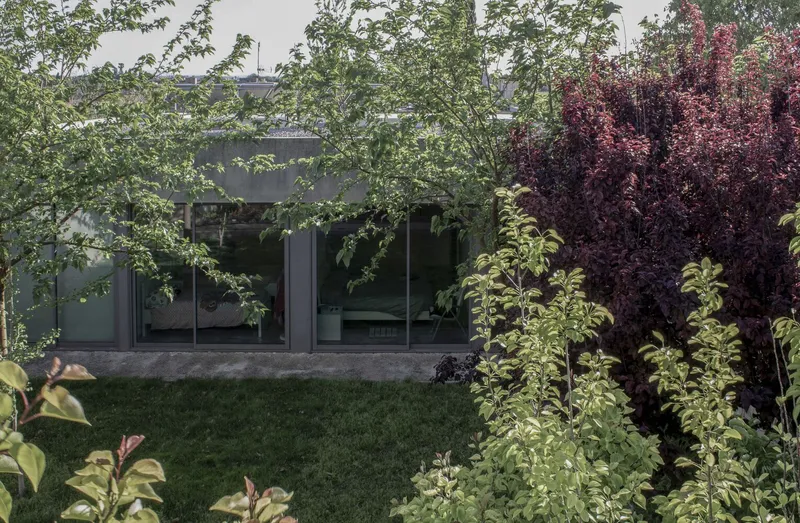
The interior design prioritizes simplicity while ensuring functionality, with large windows that invite ample natural light and offer panoramic views of the surrounding landscape.
Sustainability and Energy Efficiency
Sustainability is at the core of the Molí House design. The strategic placement of patios, coupled with thick stone walls and natural cross-ventilation, reduces the house’s carbon footprint by minimizing the need for artificial climate control. The orientation of the building optimizes sunlight exposure, enhancing thermal efficiency while maintaining a comfortable indoor environment.
Additionally, the integration of local materials not only reduces transportation emissions but also supports the region’s economy, making Molí House a sustainable and eco-friendly architectural model.
Visual Harmony with Nature
The exterior design of Molí House is a reflection of its commitment to preserving and celebrating the natural surroundings. The house is carefully integrated into the plot to leave the maximum possible area for cultivation, allowing the orchard and nearby mill to become an integral part of the visual experience.
The patios, combined with the sandstone cladding, create a textured façade that evolves with the changing light throughout the day, enhancing the aesthetic appeal of the house.

Key Features:
Integration with Nature: Longitudinal positioning maximizes cultivation space.Sustainable Design: Use of local materials and energy-efficient layout.
Functional Layout: Open and flexible spaces with a balance of privacy and openness.
Minimalist Interiors: Natural stone flooring and wooden elements create warmth.
Historical Inspiration: Incorporation of traditional architectural features like patios and latticework.
Molí House by Sagristà-Simó stands as a remarkable example of how architecture can bridge the gap between tradition and modernity. Through its thoughtful design, sustainable practices, and harmonious integration with the surrounding landscape, the house celebrates the essence of agricultural heritage while providing a comfortable and aesthetically pleasing living space.


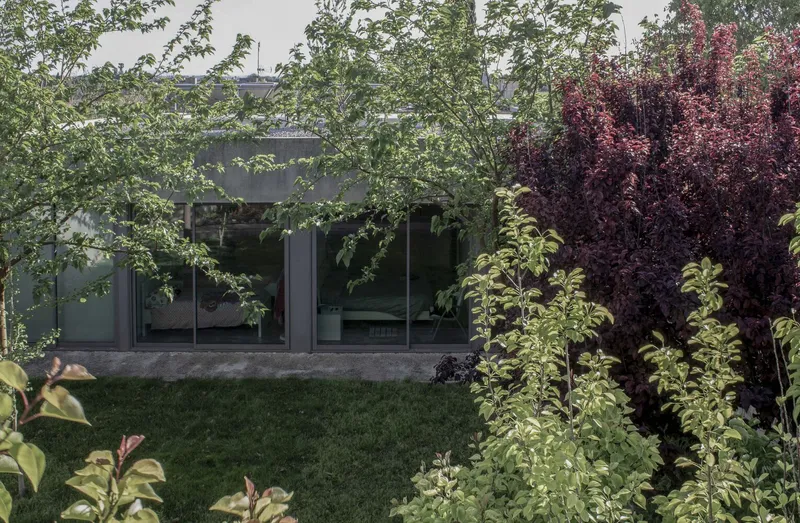
As a project that reflects the principles of sustainable architecture and cultural preservation, Molí House is not just a home—it’s a tribute to the timeless relationship between architecture and the land it inhabits.All photographs are works of Carlos Manuel González Baute



Popular Articles
Popular articles from the community

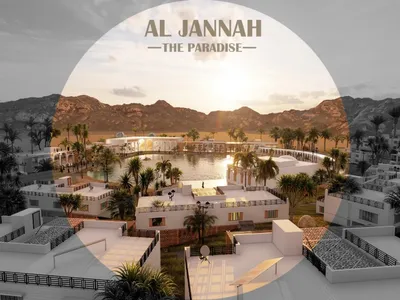
AL-JANNAH: Sustainable Architecture and Permaculture for Afghan Widows
AL-JANNAH uses sustainable architecture and permaculture to create resilient oasis of housing, learning, work and renewal for Afghan widows.

The Musturak Paradise: Senior Living Architecture for a Connected Future in Temara, Morocco
The Musturak Paradise reimagines senior living architecture in Temara via private homes, social spaces, culture, community, and shared care.

Co-life: Sustainable Architecture for Age-Friendly Community Living
Co-life reimagines sustainable architecture for seniors through courtyards, rammed earth, shared gardens, and spaces designed for belonging.

Co-Life: Senior Housing Design That Reconnects Older Adults With the City
Co-Life reimagines senior housing design through healing gardens, shared streets, workshops, and a sustainable community across generations.

Similar Reads
You might also enjoy these articles


Hodi-Mandai Geram
Project Function: Preservation and revitalization of the Intangible heritage and socio-spatial identity of the Hodi by Housing, Cultural Memory Center, Sacred Grove, landscape, local tourism economy


Olio Towers: A Mid-Rise for Performers That Fuses Housing, Rehearsal, and Stage
Located blocks from Houston's Theater District, this modular tower stacks living units around a central performance atrium.

Oasis: Modular Green Housing Carved into Dhaka's Urban Fabric
A shortlisted Plugin Housing entry reclaims unauthorized settlements in Dhaka with stepped concrete volumes, green roofs, and ventilation-driven design.

Black Hole: A Floating Megastructure for the Post-Physical Era
Emiliano Mazzarotto envisions a spherical, self-scaling arena where e-sports, digital hotels, and holographic stadiums replace traditional public space.


Explore Architecture Competitions
Discover active competitions in this discipline



Challenge to reimagine the Iron Throne


Photograph architecture without architects


Illustrate the lost glory of Angkor Wat - Render Challenge


Design challenge to reuse E-waste
Comments (0)
Please login or sign up to add comments
No comments yet. Be the first to comment!