

Moonah Tree House by Kirby Architects — A Coastal Retreat Rooted in Nature and Craftsmanship
Moonah Tree House blends rammed earth, timber, and recycled elements into a coastal retreat seamlessly integrated with nature, views, and history.


Nestled in the coastal town of Barwon Heads, Australia, the Moonah Tree House by Kirby Architects is a masterclass in integrating architecture with nature. Completed in 2023, this sustainable coastal home draws inspiration from its surrounding landscape and a majestic ancient Moonah tree, a species indigenous to the region and deeply connected to the area’s Traditional Owners.
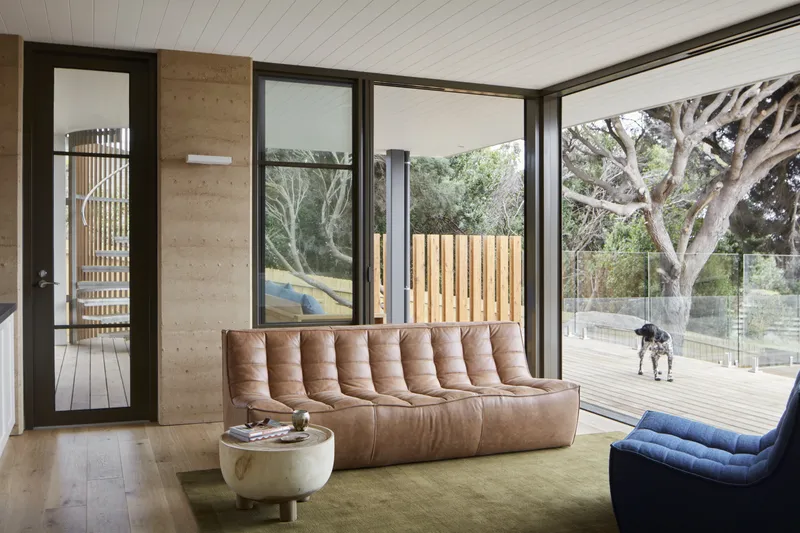
Architect Kirby Roper crafted the design to preserve and celebrate the tree’s presence. From the kitchen, residents feel as if they are suspended in a modern treehouse, while the expansive decks immerse them in the dappled light and foliage. The tree’s canopy also offers privacy, turning the outdoor spaces into serene sanctuaries.
Design Concept — Nestling into the Land
The brief called for a subtle structure deeply connected to its environment while capturing sweeping views of the ocean and nearby golf course. Instead of elevating the home, Kirby made the counterintuitive decision to embed the house into the landscape. By carefully adjusting the site levels, the architecture achieves a perfect balance — earthing the home while maintaining elevated vantage points through multiple decks aligned with the Moonah tree’s height.
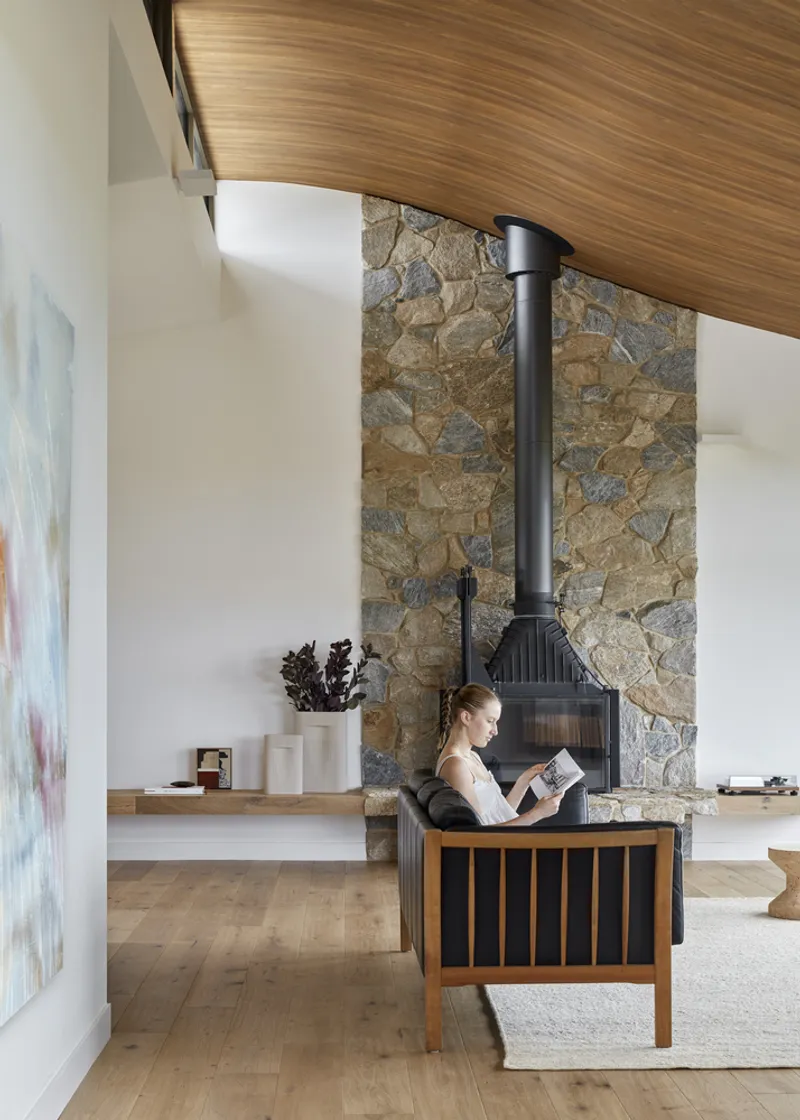
Architectural Form and Materials
The home’s fluid roofline and curvilinear forms echo the undulating contours of the adjacent golf course, from its rolling greens to soft sand bunkers — a fitting tribute for the golf-loving clients.
Constructed from rammed earth, the structure offers natural thermal mass, regulating indoor temperatures throughout the year. Kirby describes this tactile material as “soft and endearing — like a warm hug.” The thick walls lend the home a sense of permanence and security, while also lowering its environmental footprint.
The craftsmanship is equally remarkable. David McDonald Builders executed the details with precision, collaborating closely with the architect to enhance the original design intent and innovate on construction techniques.
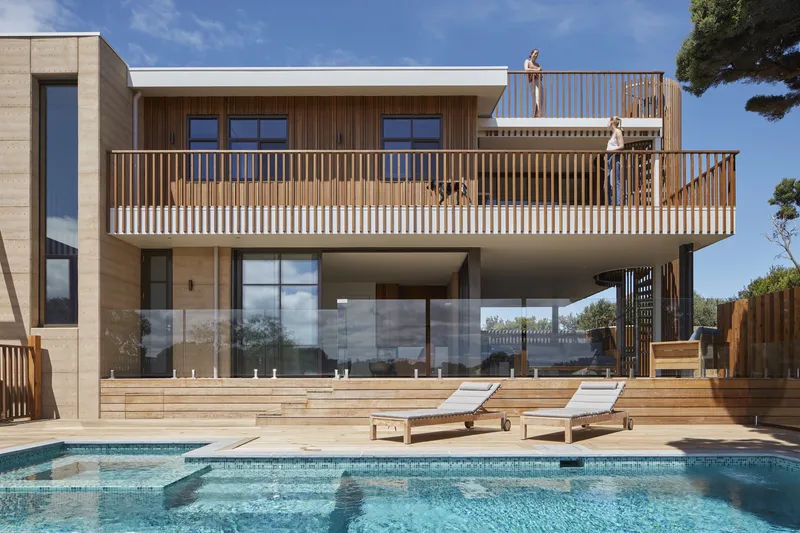
Coastal Character and Local References
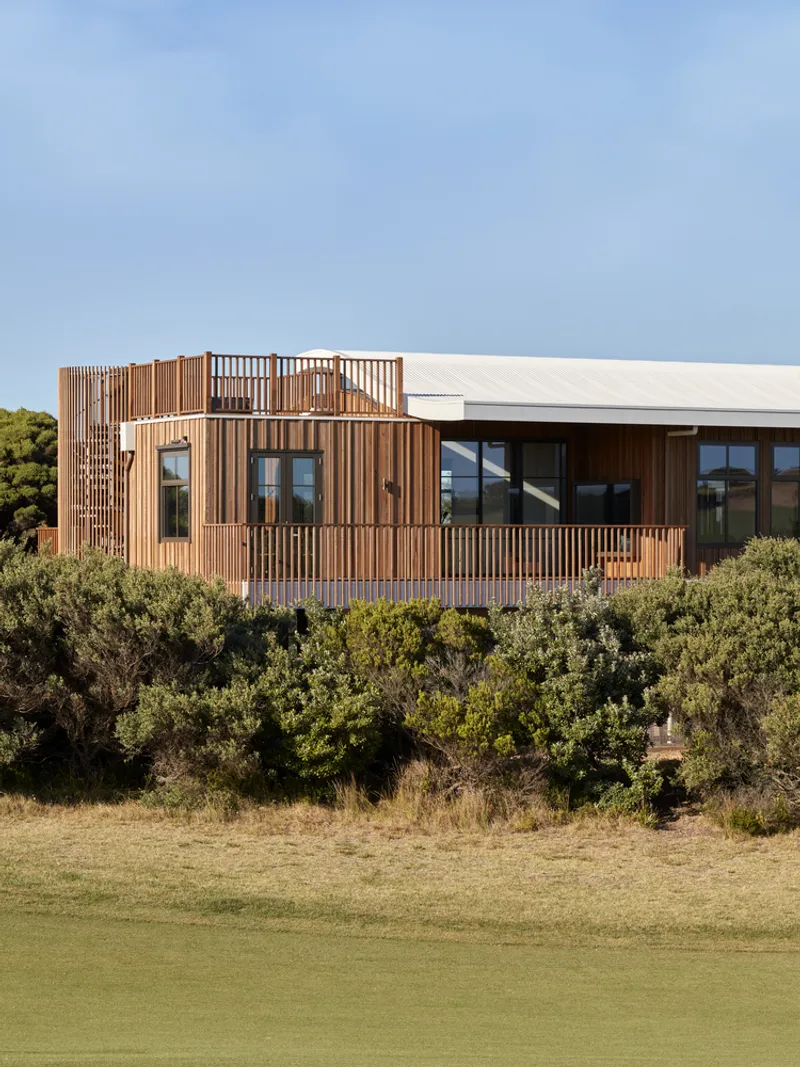
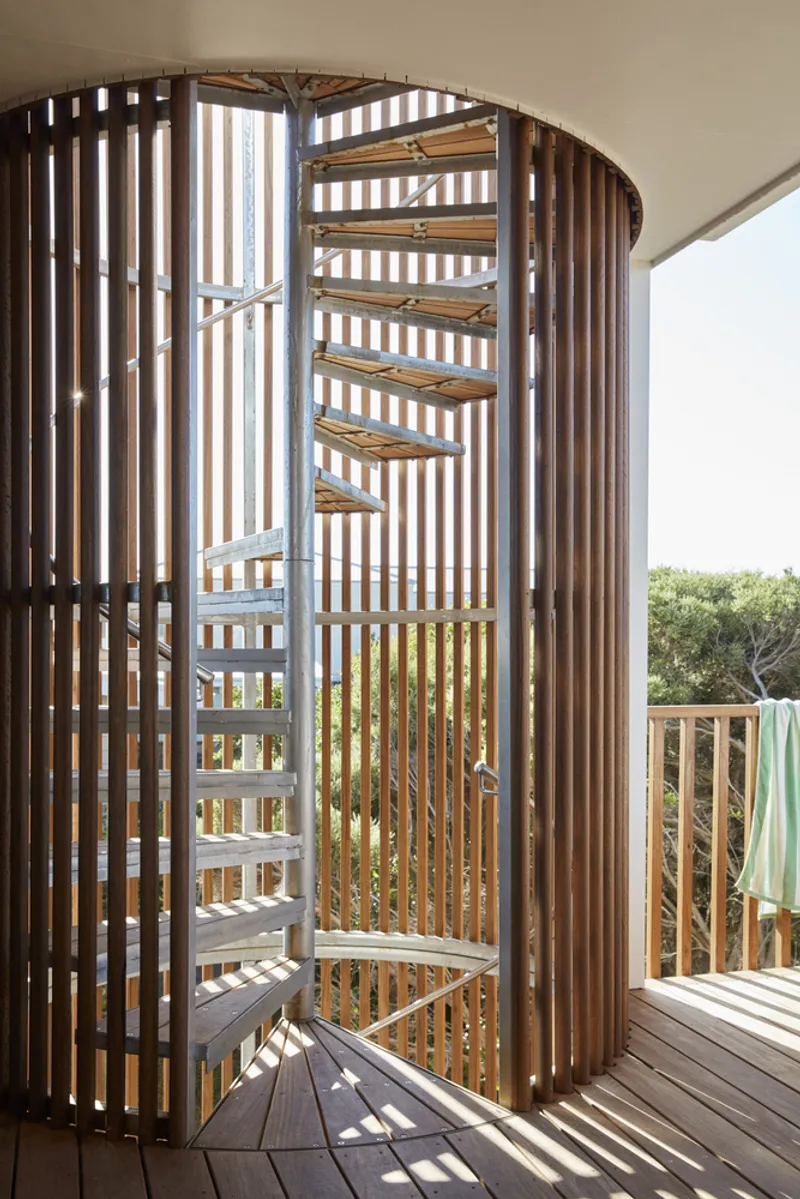
The Moonah Tree House also channels the laid-back beach town character of Barwon Heads. Inspired by mid-century local houses clad in timber and weatherboards, Kirby reinterpreted the look with vertical blackbutt timber battens. Over time, these will gracefully weather, developing a rich patina unique to the coastal climate.
An external spiral staircase, also clad in battens, connects the three deck levels. It offers partial transparency for views yet maintains privacy — and even protects against stray golf balls. Sculptural yet functional, it anchors the home to the site like a wooden beacon.
Reuse and Personalization
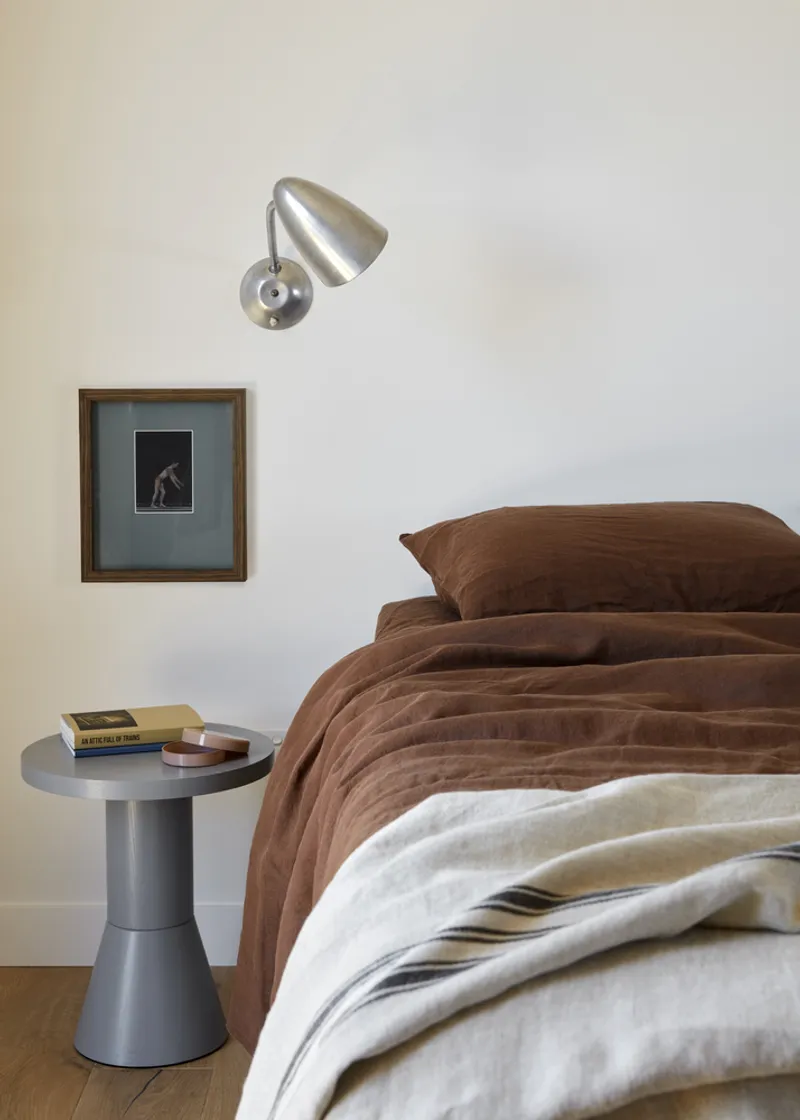
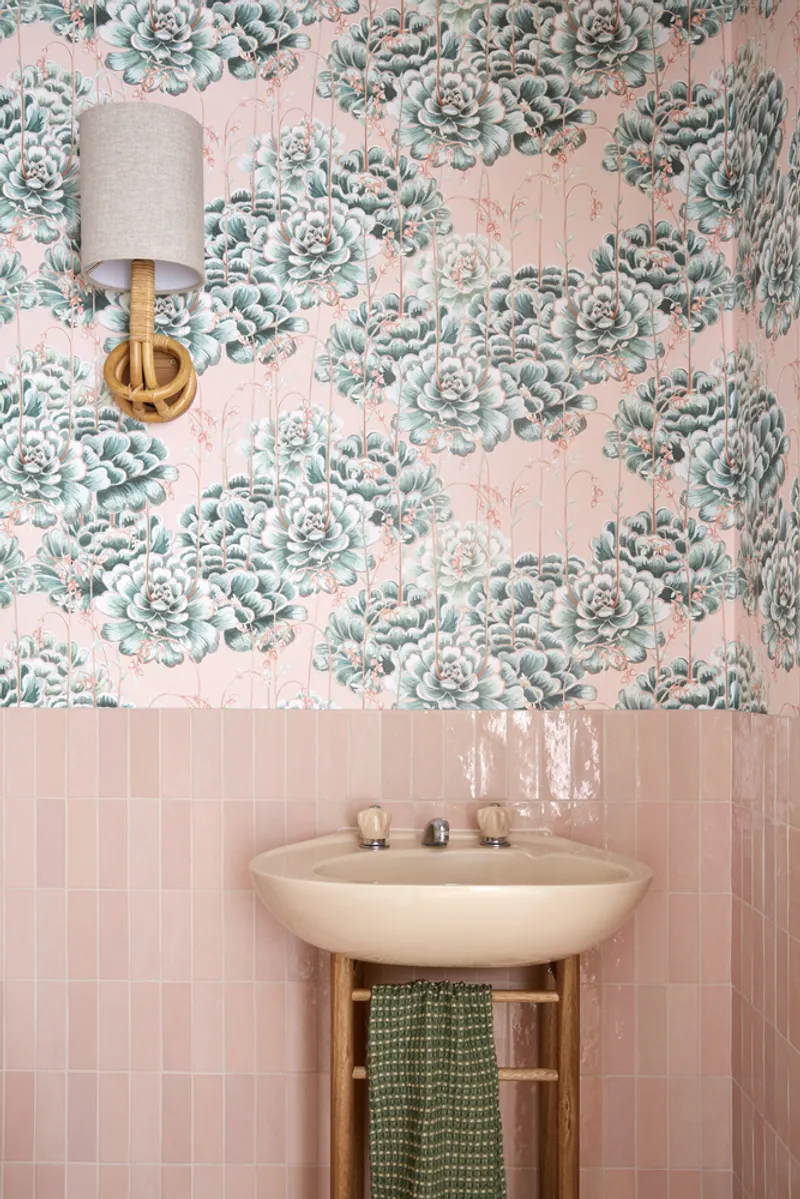
The clients played an active role in shaping the home’s personality. Prior to demolition of the original house, they salvaged cherished 1950s fittings — including colored basins, cedar boards, vintage light fixtures, and taps — which were thoughtfully integrated into the new build. These repurposed elements infuse the contemporary design with nostalgia and layered history.
Despite its striking views and multi-level arrangement, the Moonah Tree House maintains a humble, intimate atmosphere. The combination of tactile natural materials, recycled details, and the way the home gently hugs the land creates a unique coastal dwelling that is both personal and enduring.
Project Details
- Architect: Kirby Architects
- Location: Barwon Heads, Australia
- Year: 2023
- Photography: Jack Lovel
- Builder: David McDonald Builders
- Primary Materials: Rammed earth, blackbutt timber, recycled elements
All photographs are works of Jack Lovel


Popular Articles
Popular articles from the community


Jaramillo Van Sluys Arquitectura and Urbanismo Turn a Demolished Registry Lot in Quito into an Orchard Plaza
In Quito's Centro Histórico, a 2,800 m² plaza exposes the San Agustín convent wall and redraws its lost Augustinian orchard in volcanic stone.

U.GA Architects Wraps an Oval Rooftop Pool in Curved Board-Formed Concrete on Busan's Jeollidan-gil
In Busan's Jeonpo-dong, a 454 m² mixed-use block stacks a neighborhood facility, guest rooms and an oval rooftop pool inside spiraling concrete walls.

Juan García Correa, John González and Claudia Rueda Sink a Circular Amphitheater into a Manizales Engineering Building
On the La Nubia campus in Manizales, Colombia, the S1 Building folds labs and offices into a hillside of ramped lawns that double as a campus route.

David Ortega Stacks a Two-Story Mexico City Penthouse Around a Steel Stair and a Pergola-Shaded Roof Terrace
In Colonia Roma, a 300 m² penthouse uses oak joinery, a planted steel stair and a slatted roof pergola to make a new-build apartment feel like a house.

Similar Reads
You might also enjoy these articles


Hodi-Mandai Geram
Project Function: Preservation and revitalization of the Intangible heritage and socio-spatial identity of the Hodi by Housing, Cultural Memory Center, Sacred Grove, landscape, local tourism economy


Olio Towers: A Mid-Rise for Performers That Fuses Housing, Rehearsal, and Stage
Located blocks from Houston's Theater District, this modular tower stacks living units around a central performance atrium.

Oasis: Modular Green Housing Carved into Dhaka's Urban Fabric
A shortlisted Plugin Housing entry reclaims unauthorized settlements in Dhaka with stepped concrete volumes, green roofs, and ventilation-driven design.

Black Hole: A Floating Megastructure for the Post-Physical Era
Emiliano Mazzarotto envisions a spherical, self-scaling arena where e-sports, digital hotels, and holographic stadiums replace traditional public space.

Explore Tree House Competitions
Discover active competitions in this discipline

Challenge to reimagine the Iron Throne

Photograph architecture without architects

Illustrate the lost glory of Angkor Wat - Render Challenge

Design challenge to reuse E-waste
Comments (0)
Please login or sign up to add comments
No comments yet. Be the first to comment!