
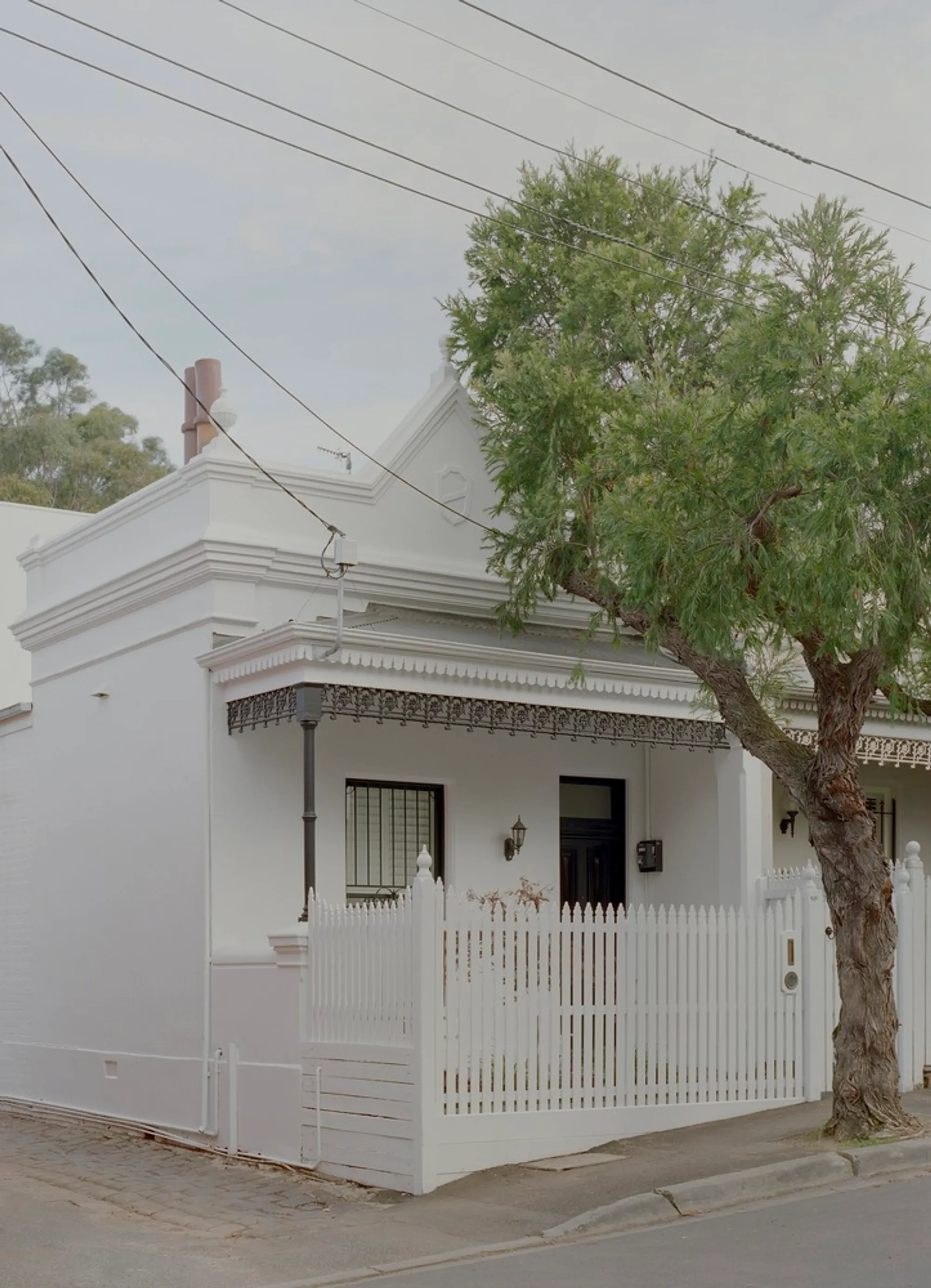
Moorhouse Street House by James Harbard Architects
A narrow Victorian terrace transformed into a serene urban sanctuary with timber screens, fluted glass, pastel interiors, and smart storage.


A Narrow Victorian Terrace Reimagined as a Tranquil Urban Sanctuary
Nestled in the heart of Richmond, just moments away from the urban chaos of Hoddle Street, the Moorhouse Street House by James Harbard Architects offers a delicate interplay between concealment and openness. This modest 4.5-meter-wide Victorian terrace has been meticulously restored and reimagined into a serene inner-city retreat, embodying spatial efficiency, architectural restraint, and material warmth.
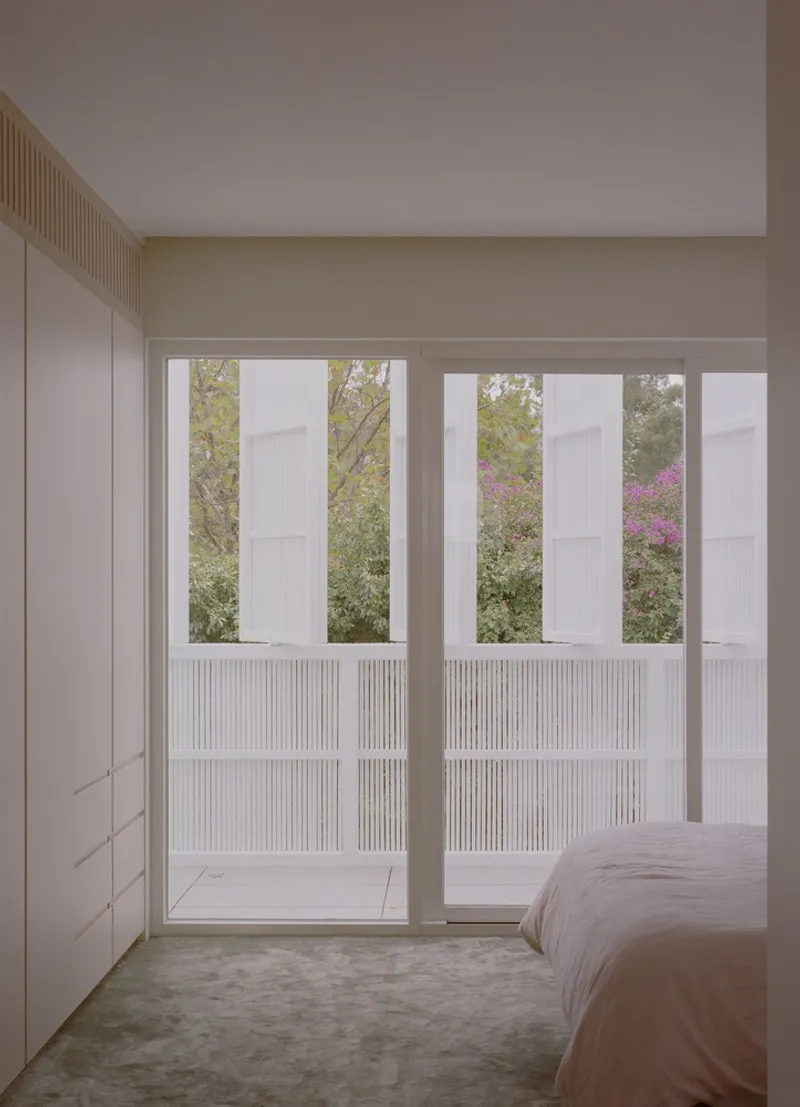
Despite its compact footprint of just 120 m², the renovation transforms the home into a layered and luminous space. At first glance, the house appears as a quiet enigma—a veil of movable white timber battens softens the façade, filtering sunlight and shielding interiors from prying views. These operable screens not only serve climatic purposes by shielding the home from the harsh western sun, but also allow the building to breathe and transform, transitioning from a private refuge to a semi-transparent urban lantern.
Blurred Boundaries: Privacy, Light, and Atmosphere
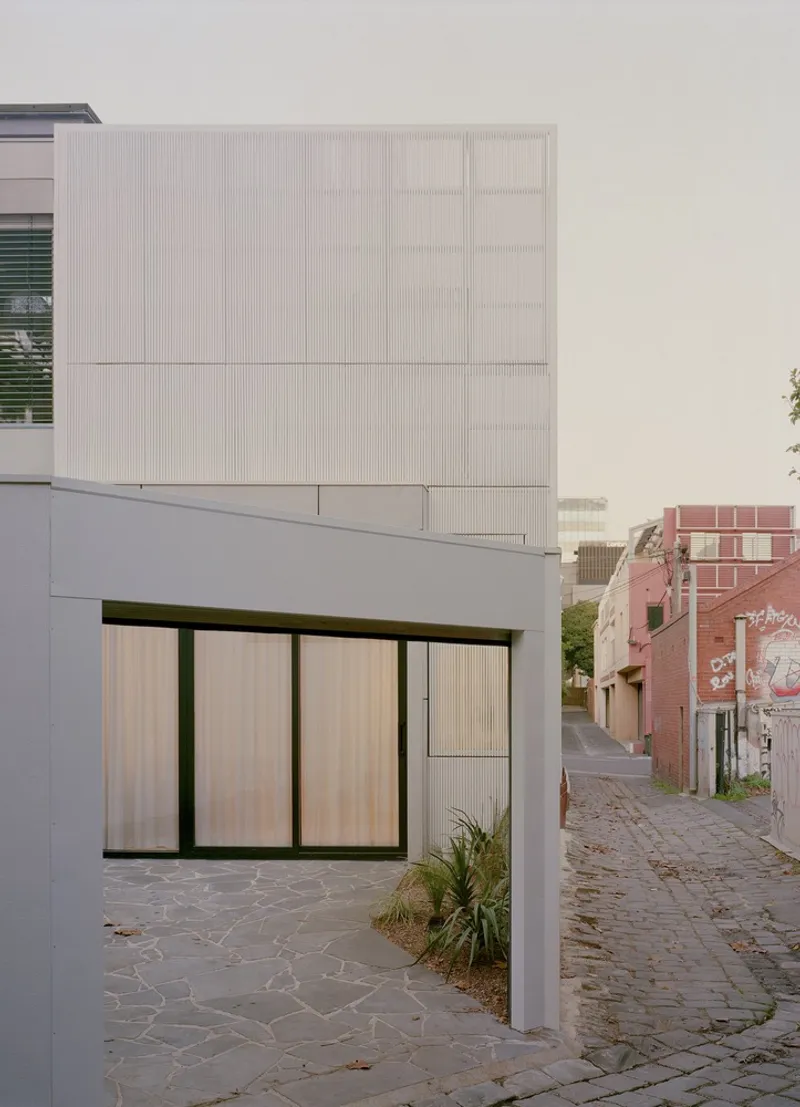
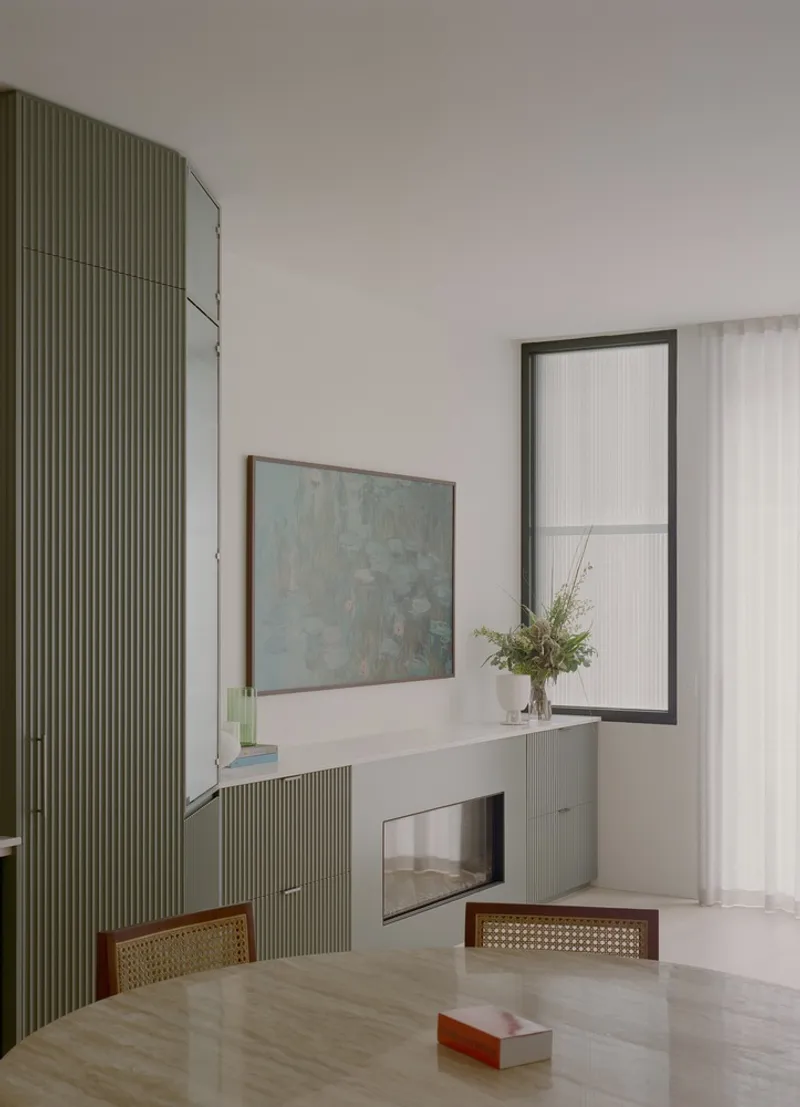
Facing a public laneway, the design employs fluted glass windows to mediate the boundary between private interior life and the street’s casual passersby. These textured panes obscure clarity, creating a poetic ambiguity between interior and exterior while allowing ambient daylight to enter gently.
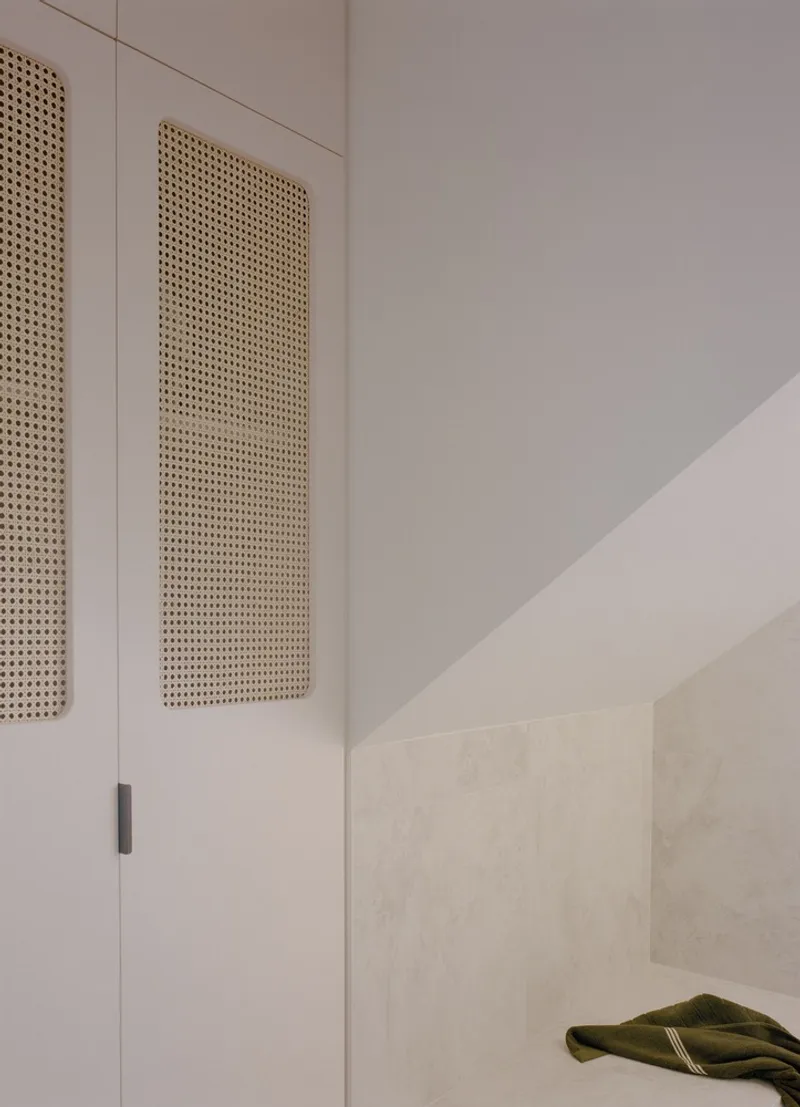
Inside, soft pastel tones define the material palette. Blush-pink joinery infuses the space with a warm and calming atmosphere, contrasting with the gritty vibrancy of its urban context. The carefully composed palette and material textures offer a sense of domestic quiet, making the interior feel worlds away from the bustling neighborhood.
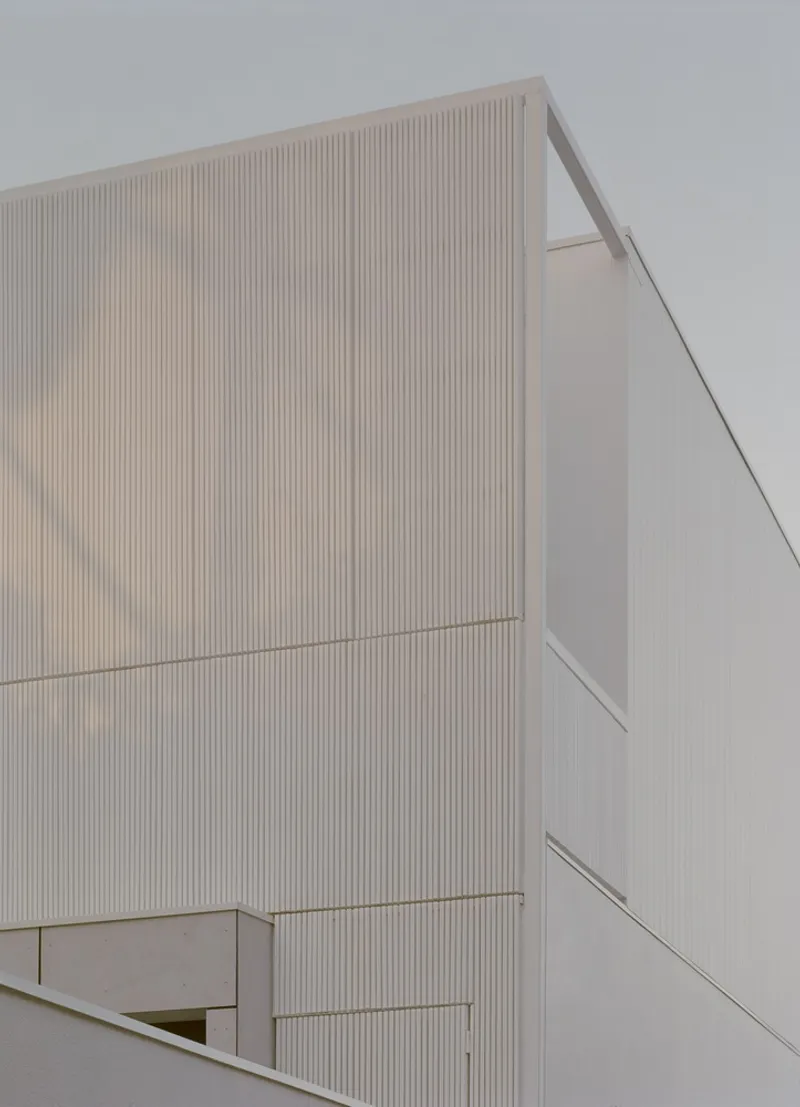
Space-Efficiency with Purposeful Planning
Through intelligent spatial planning, the home defies expectations commonly associated with narrow sites. Services are smartly concealed, and the arrangement of functions maximizes both natural light and visual openness. Each room flows seamlessly into the next, enhancing a sense of continuity and expansiveness far beyond the home's physical scale.
Storage solutions are deeply integrated into the architecture. From built-in cabinetry to discreet nooks and multi-functional furniture, every element is crafted to maintain a clutter-free and highly functional environment—essential in a home where every centimeter matters.
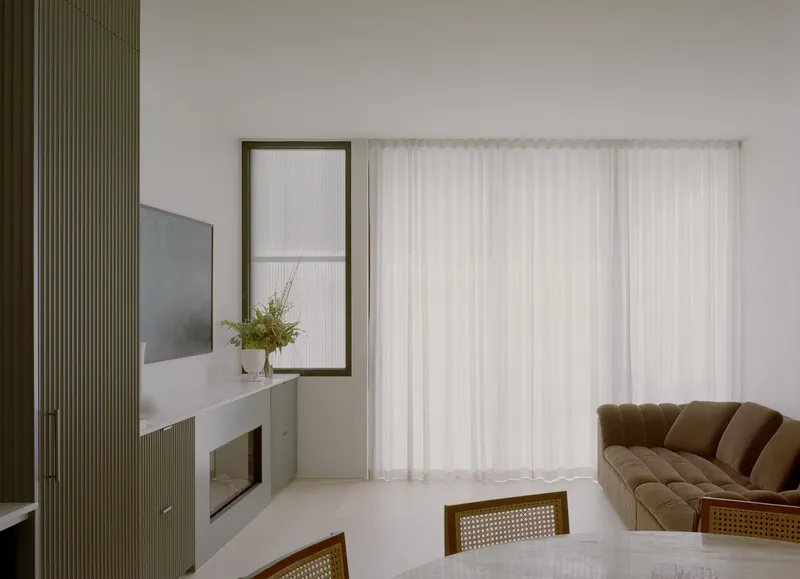
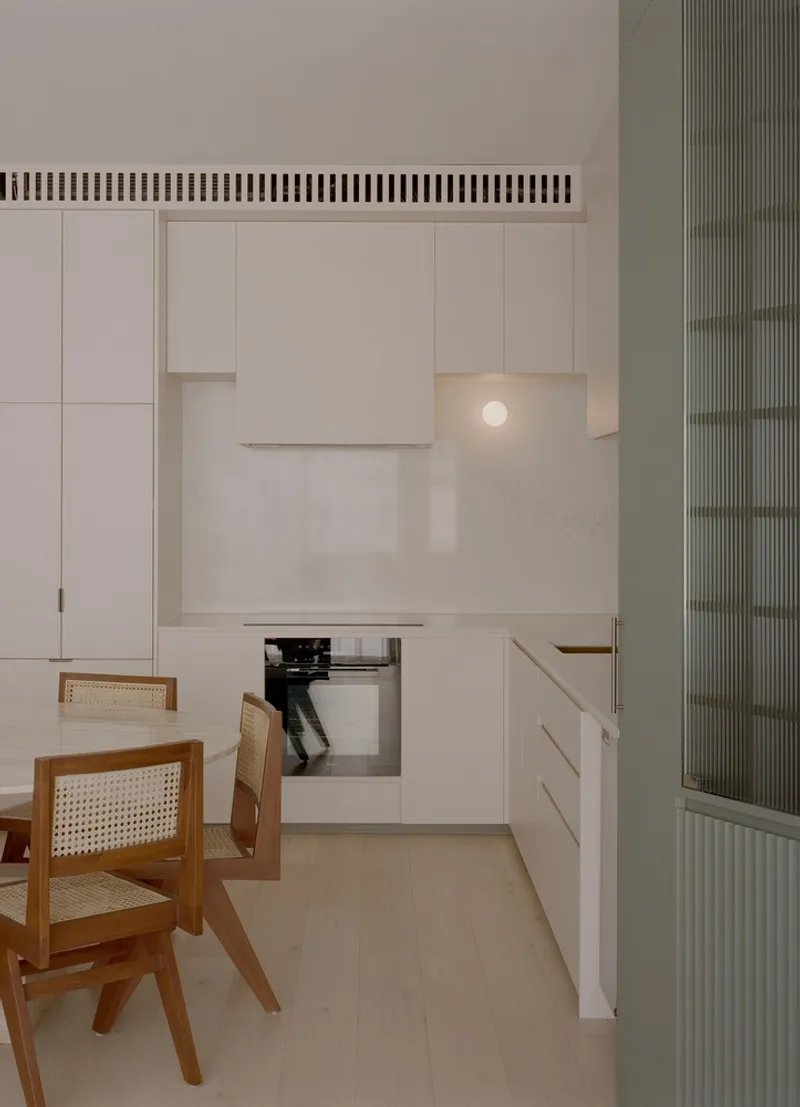
A Stone Threshold to the City
The rear bluestone courtyard is both a spatial release and a symbolic transition. It acts as a threshold between the tranquil domestic realm and the bustling rhythm of the city beyond. The textures and tones echo the heritage laneway it faces, creating a natural dialogue between the new and the old, the hidden and the revealed.
Moorhouse Street House demonstrates how contemporary residential architecture can extract beauty from constraint. James Harbard Architects presents a sophisticated balance of privacy, spatial generosity, and aesthetic restraint. Through thoughtful detailing, material sensitivity, and architectural discipline, this modest terrace evolves into a peaceful urban sanctuary—proof that small-scale interventions can carry profound spatial and emotional impact.
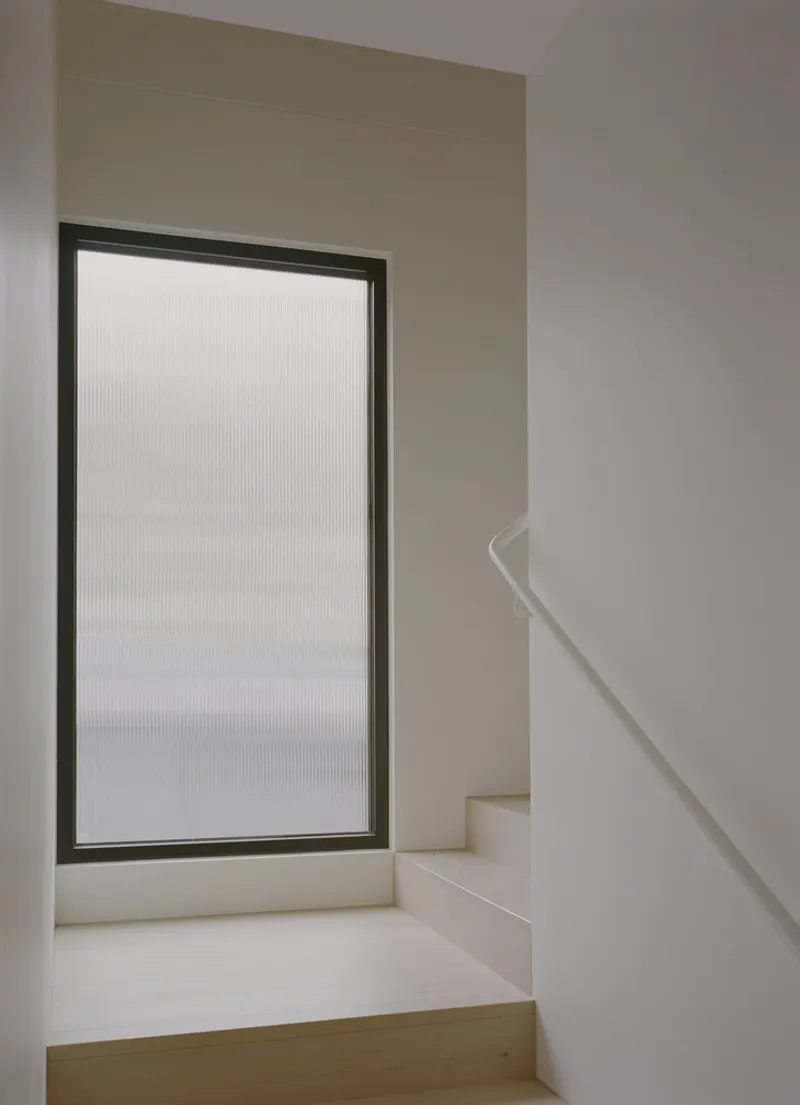
All Photographs are works of Pier Carthew




Popular Articles
Popular articles from the community


Riyadh For All: Intergenerational Urban Design for Active Aging in Rabat
Riyadh For All reimagines urban design in Rabat with intergenerational co-living, adaptive courtyards, and Moroccan cultural exchange today.

Hill & Cross Opera: Sculptural Opera House Architecture Shaped by Tallinn’s Landscape and Identity
Hill & Cross Opera reimagines opera house architecture in Tallinn through its sculptural hill, civic plaza, glass wave and a luminous cross.

The Earth Pod: 3D Printed Homes for Resilient Refugee Communities
The Earth Pod reimagines refugee housing through 3D printed homes made from clay, combining resilience, self-sufficiency, and rapid shelter.

The Ocean Hive: Sustainable Architecture for a Self-Sufficient Civilization at Sea
The Ocean Hive imagines sustainable architecture at sea, where modular habitats, algae, wave power and ocean waste sustain a growing colony.


Similar Reads
You might also enjoy these articles


Hodi-Mandai Geram
Project Function: Preservation and revitalization of the Intangible heritage and socio-spatial identity of the Hodi by Housing, Cultural Memory Center, Sacred Grove, landscape, local tourism economy


Olio Towers: A Mid-Rise for Performers That Fuses Housing, Rehearsal, and Stage
Located blocks from Houston's Theater District, this modular tower stacks living units around a central performance atrium.

Oasis: Modular Green Housing Carved into Dhaka's Urban Fabric
A shortlisted Plugin Housing entry reclaims unauthorized settlements in Dhaka with stepped concrete volumes, green roofs, and ventilation-driven design.

Black Hole: A Floating Megastructure for the Post-Physical Era
Emiliano Mazzarotto envisions a spherical, self-scaling arena where e-sports, digital hotels, and holographic stadiums replace traditional public space.


Explore Housing Competitions
Discover active competitions in this discipline



Challenge to reimagine the Iron Throne


Photograph architecture without architects


Illustrate the lost glory of Angkor Wat - Render Challenge


Design challenge to reuse E-waste
Comments (0)
Please login or sign up to add comments
No comments yet. Be the first to comment!