

Mountain House Architecture in Brazil: Araucarias House by ARKITITO Arquitetura
A sustainable mountain house in Brazil designed to harmonize with native forest, climate, and topography in Campos do Jordão.


Embracing Nature Through Design in Campos do Jordão
Located in the lush mountainous landscape of Campos do Jordão, Brazil, the Araucarias House by ARKITITO Arquitetura is a refined example of mountain house architecture in Brazil that merges contemporary living with ecological sensitivity. Surrounded by Araucarias and pines, the design prioritizes integration with the natural topography and forest environment, preserving native vegetation and enhancing the occupants’ experience of the site’s serenity and climate.
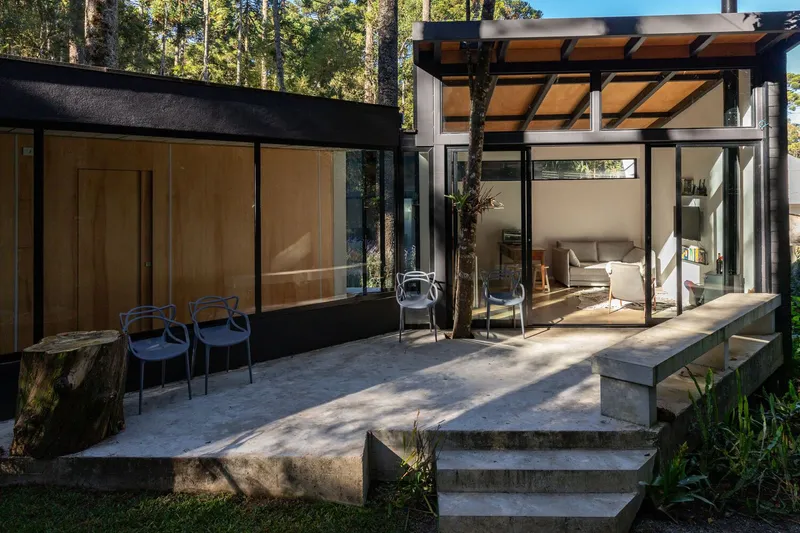
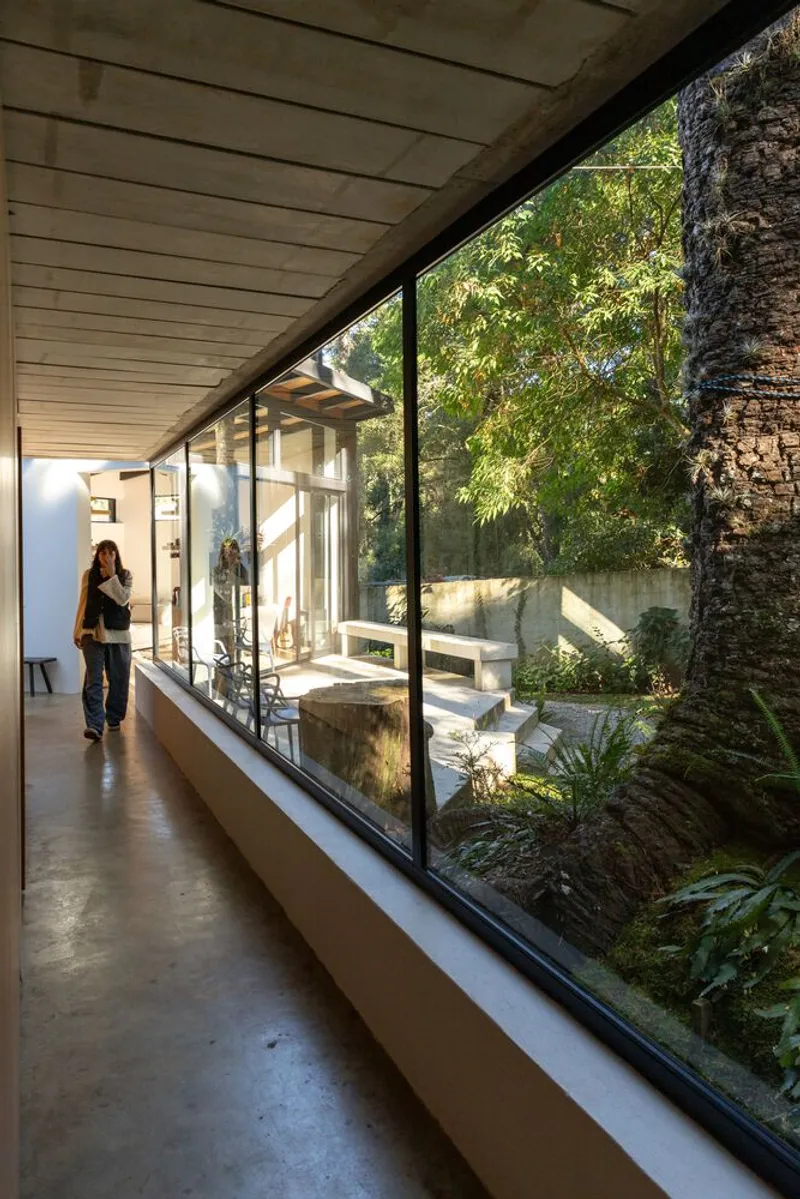
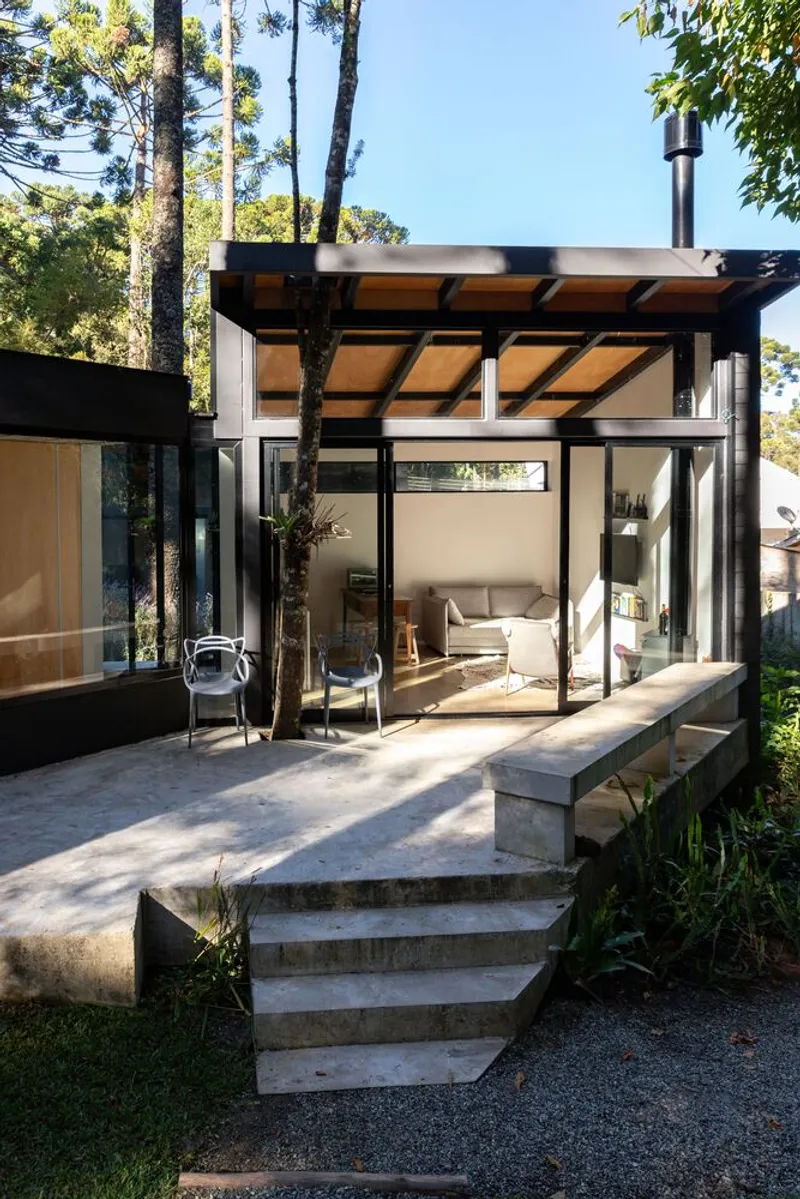
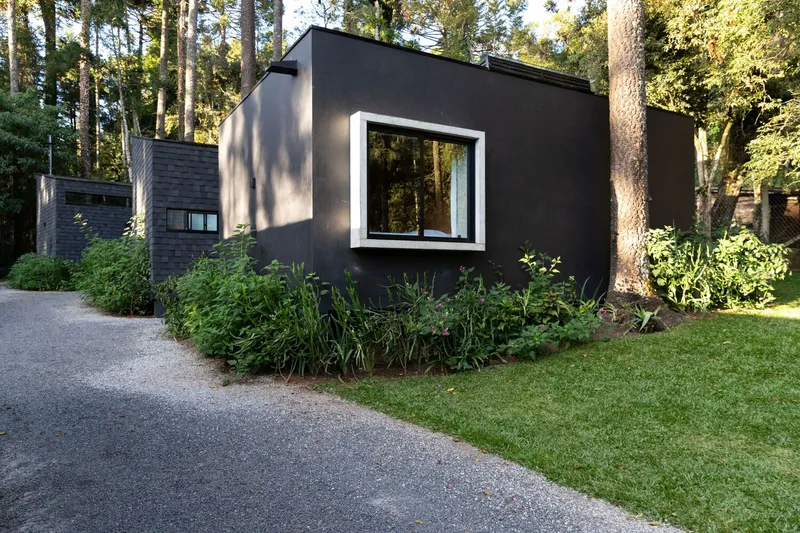
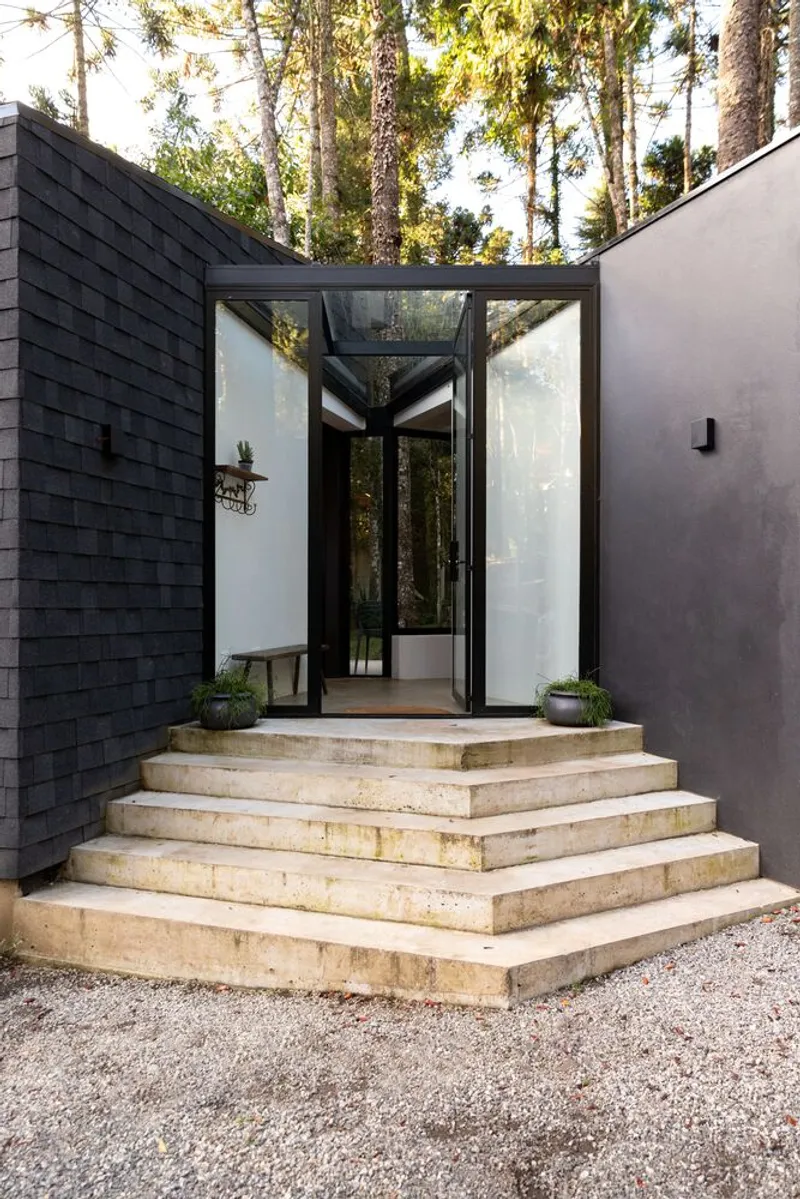
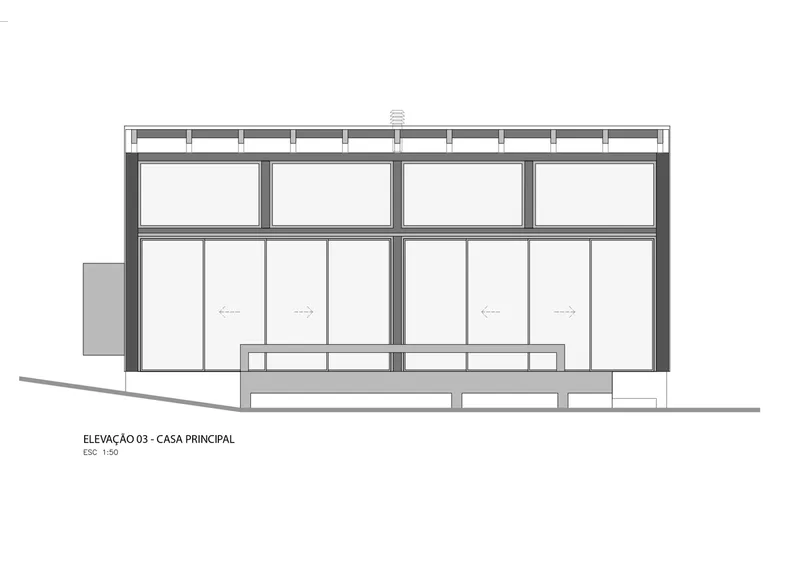
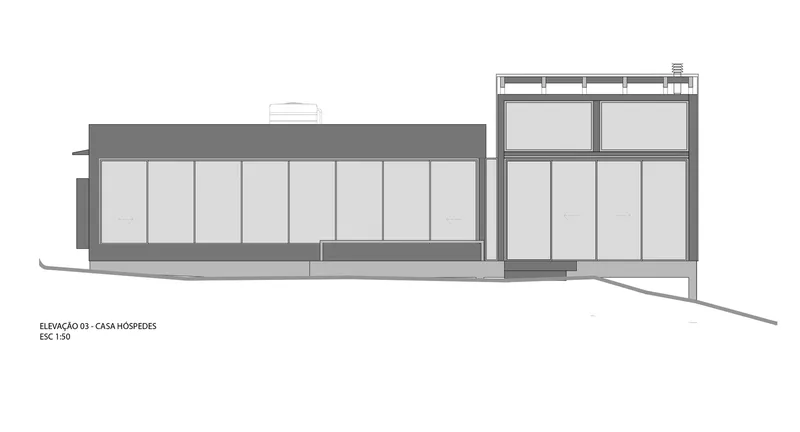
Designed as a vacation retreat, the project includes two independent volumes—a main house and a guest house—strategically positioned to maintain the site’s original terrain while creating private outdoor pockets. These volumes are unified through a glazed metal-roofed entrance hall that allows natural light to pour into the interiors, creating a visual rhythm between structure and landscape.
Spatial Organization and Climatic Adaptation
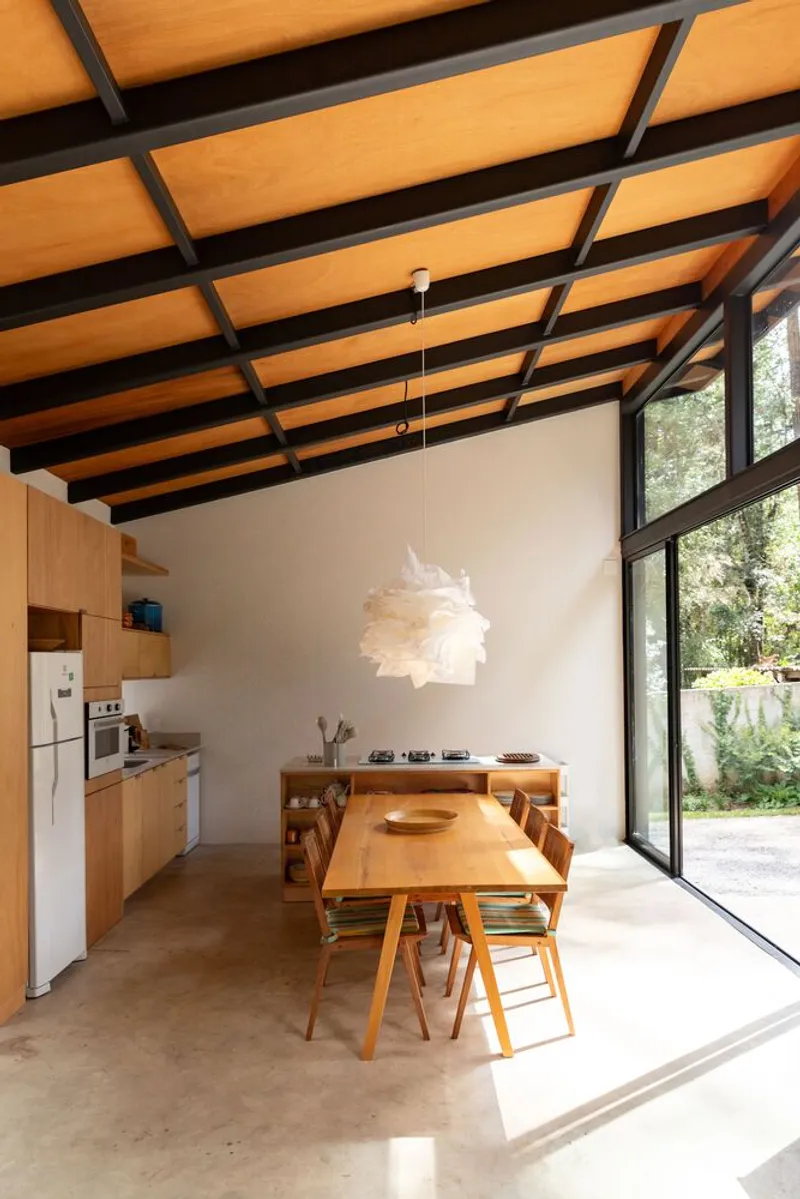
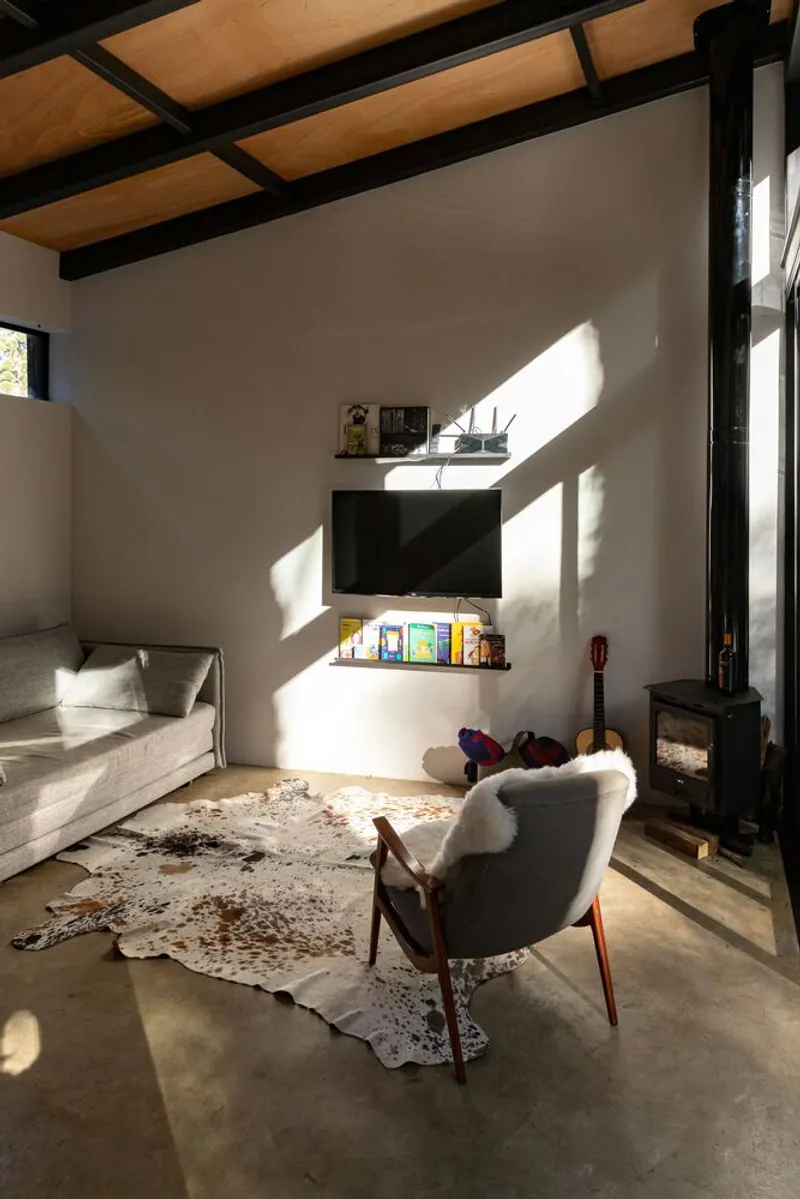
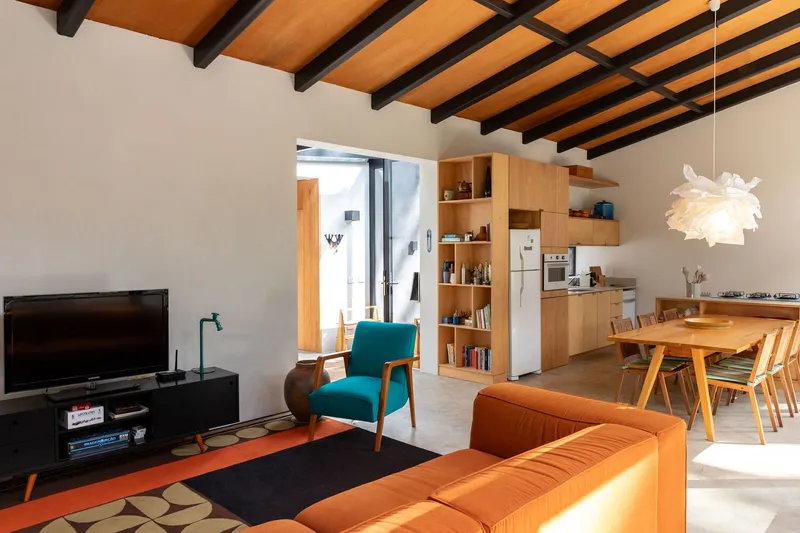
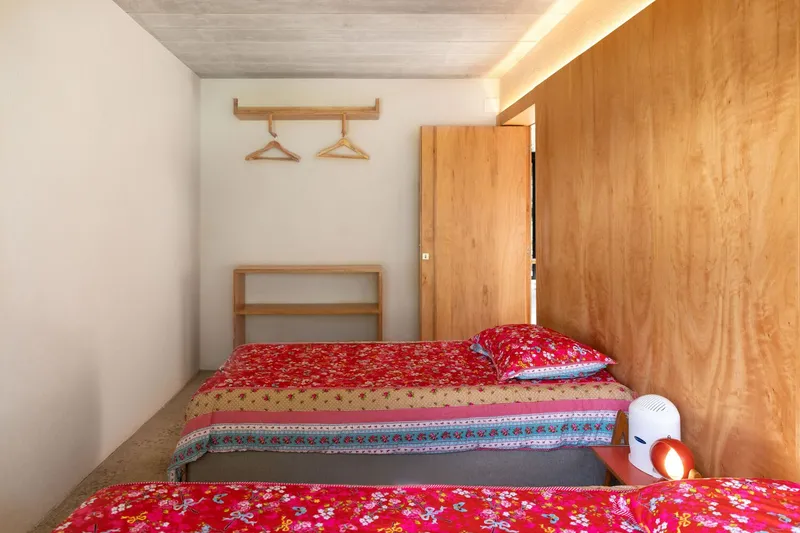
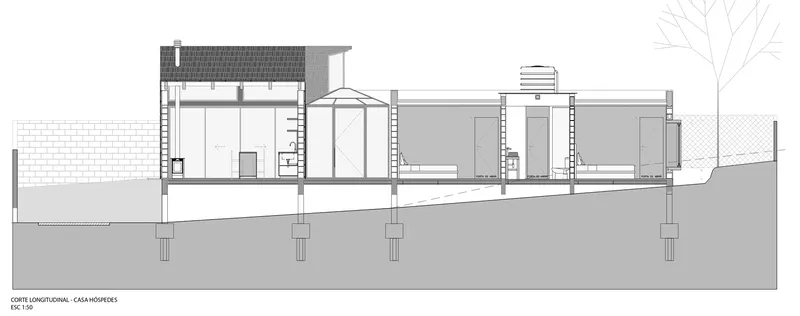
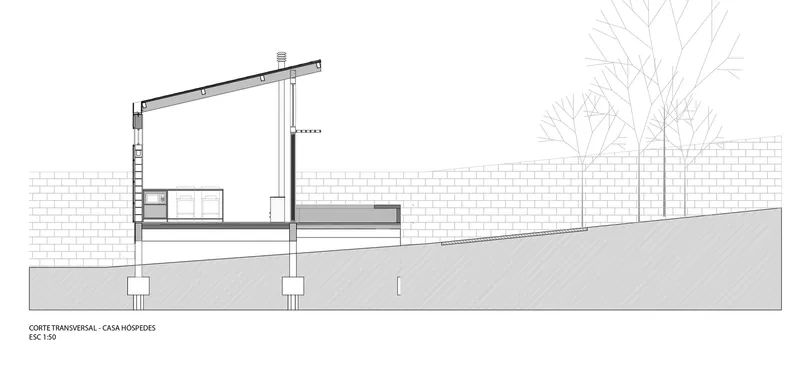
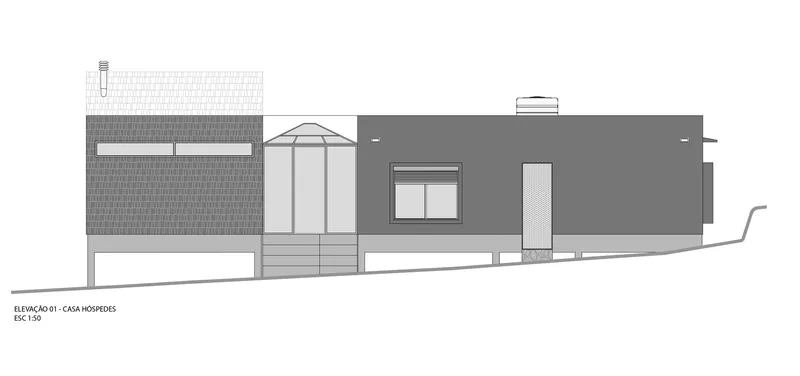
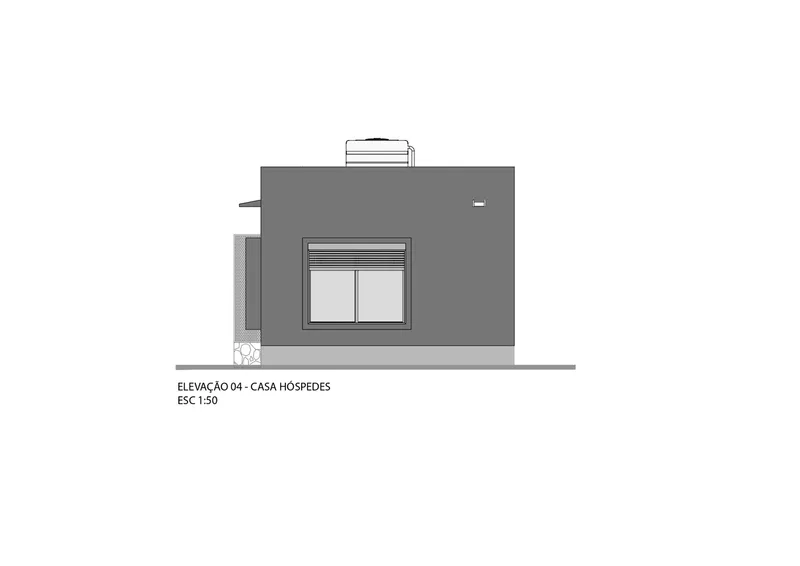
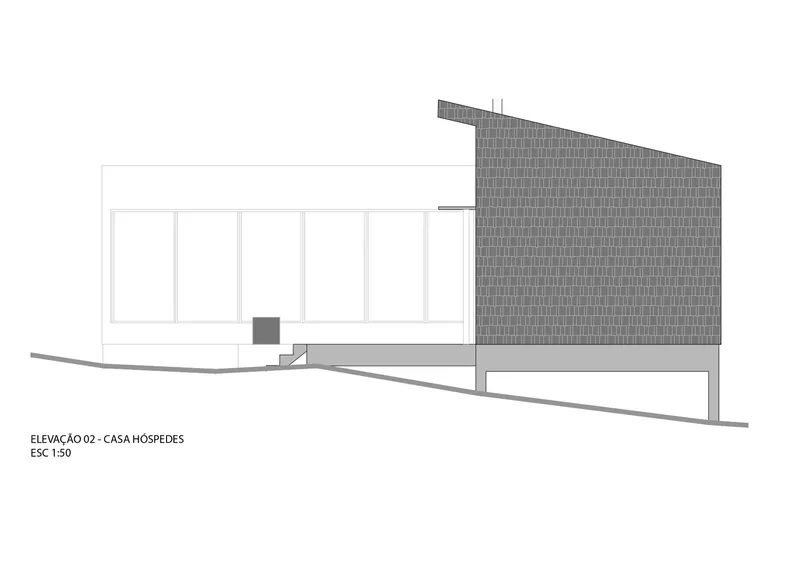
Each house features two zones: social areas with open-plan living and kitchen spaces, and private zones comprising two bedrooms. The architects approached the design with the region’s climatic challenges in mind, particularly cold temperatures and high soil humidity. As a result, both structures are elevated slightly above the ground to avoid direct contact with moisture.
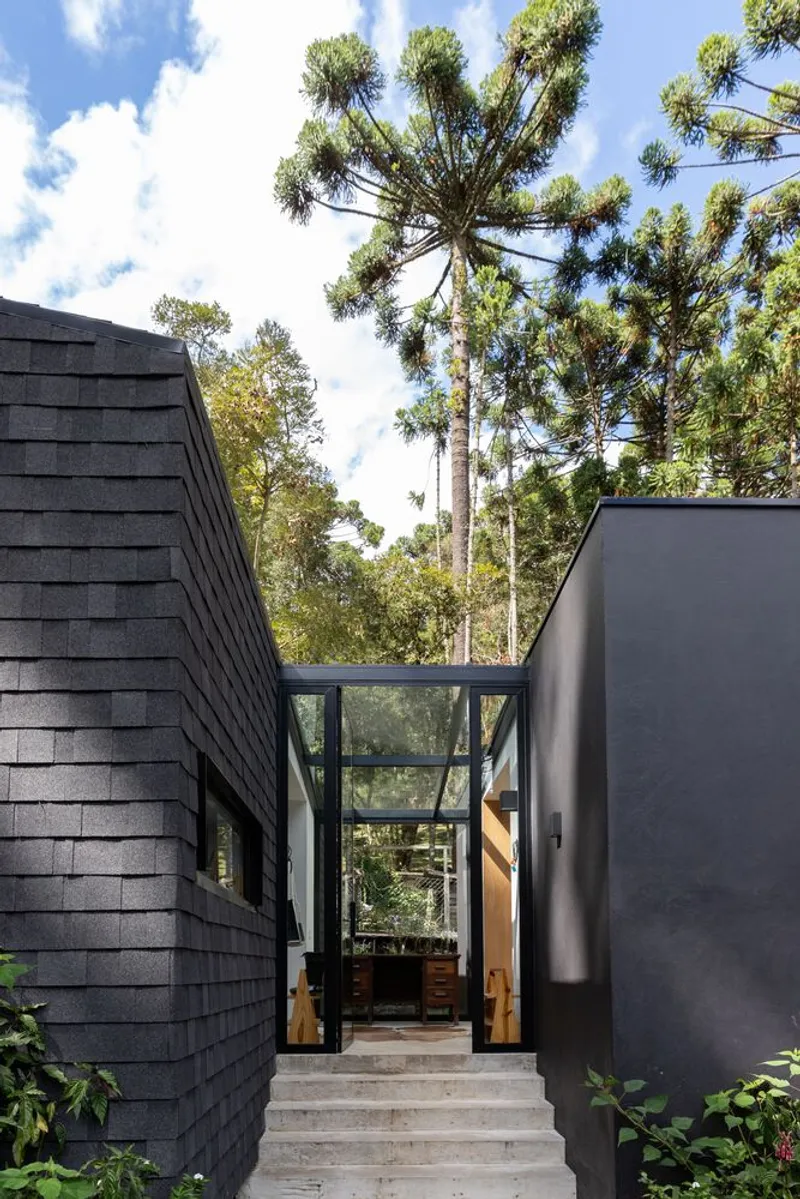
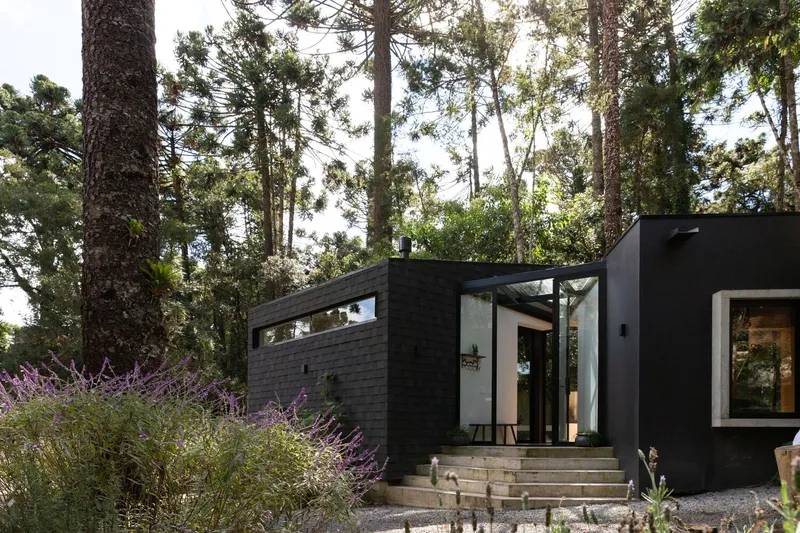
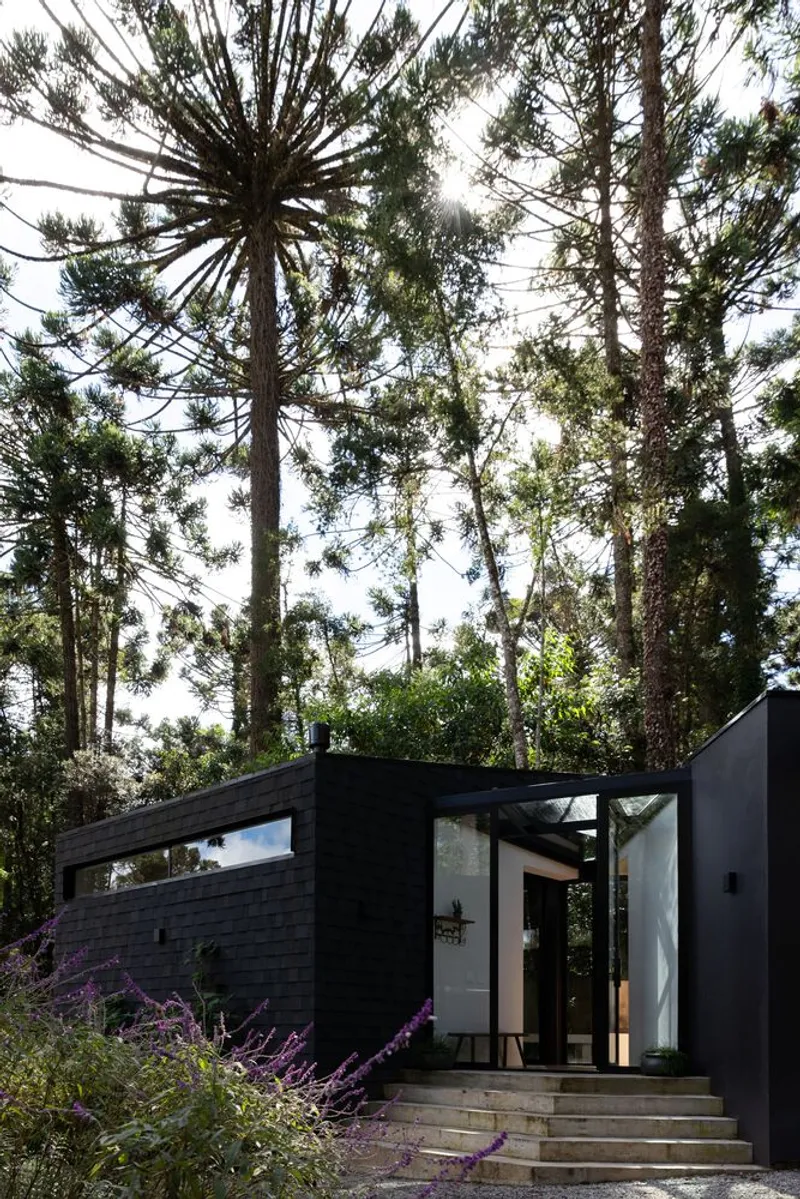
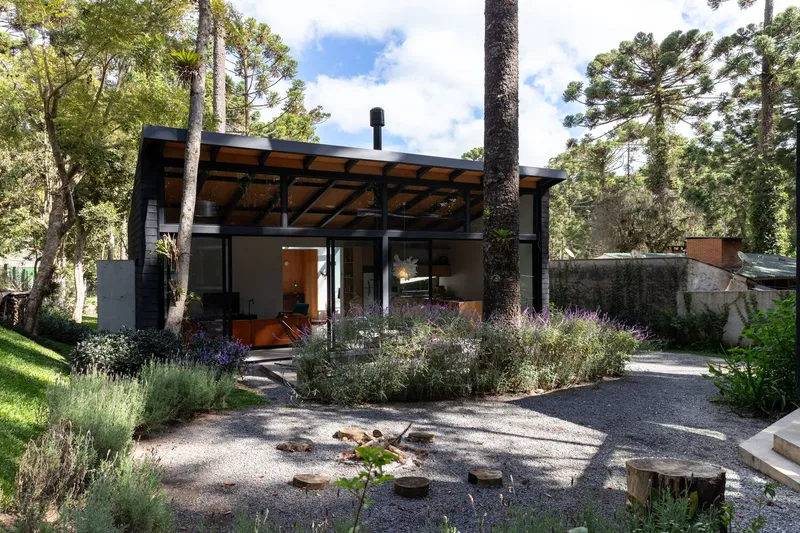
The structural system incorporates concrete blocks and vermiculite-insulated walls, ensuring thermal efficiency and acoustic comfort. The roofing strategy varies across functions—flat slabs in private zones allow for technical maintenance, while pitched metal roofs in social areas wrap down the walls, increasing insulation and architectural expression.
Materiality Rooted in Local Context
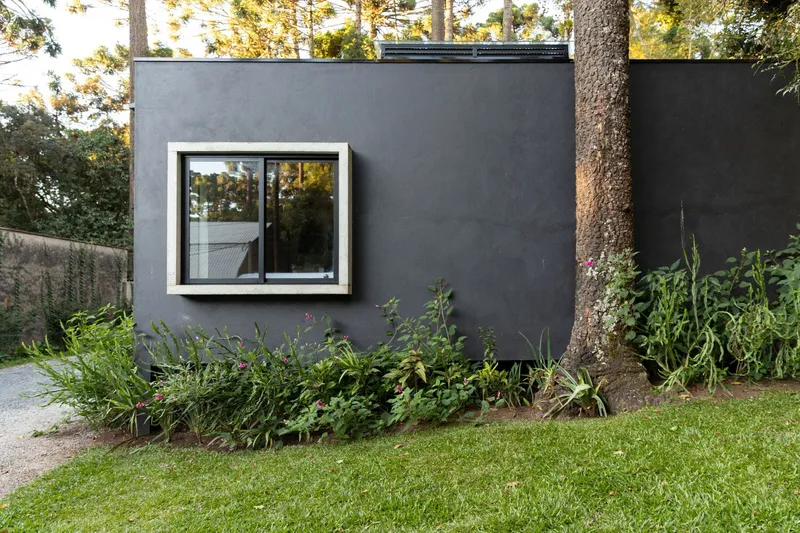
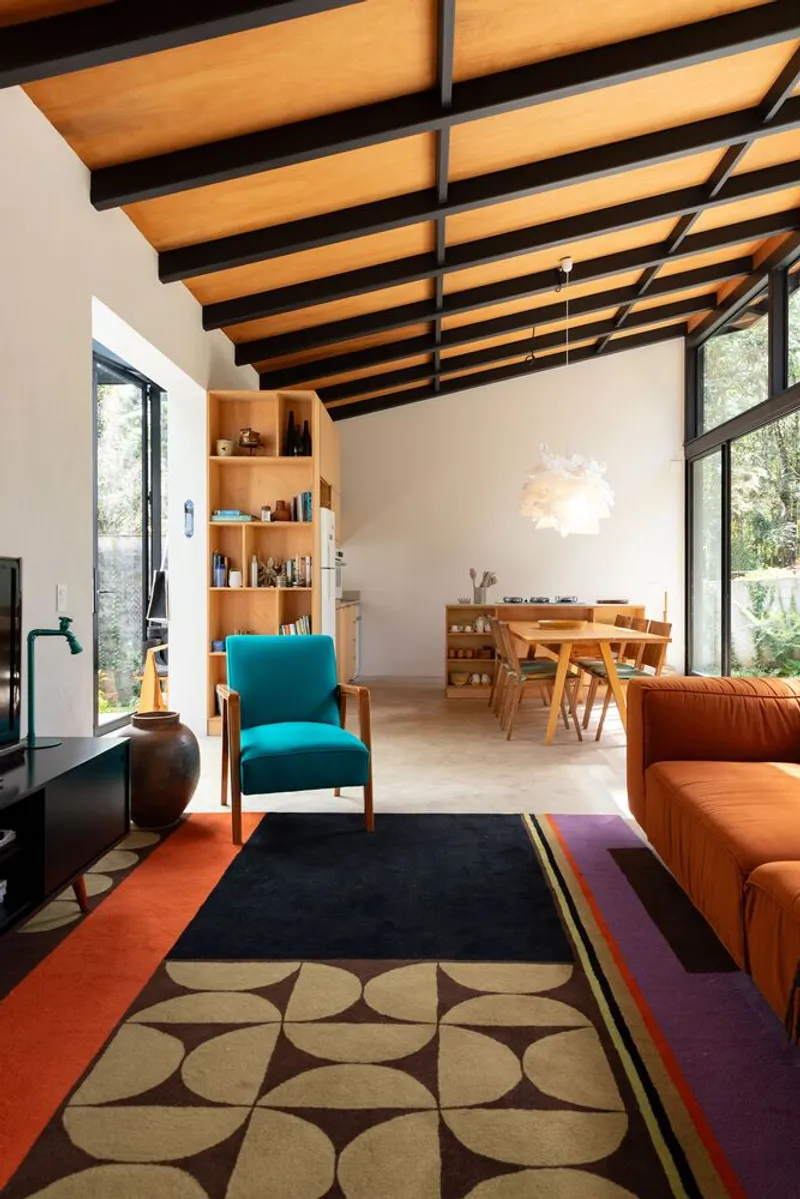
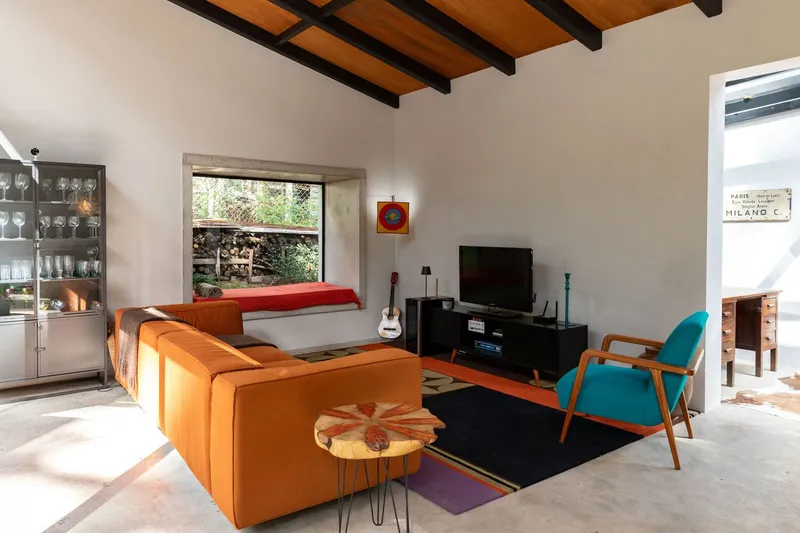
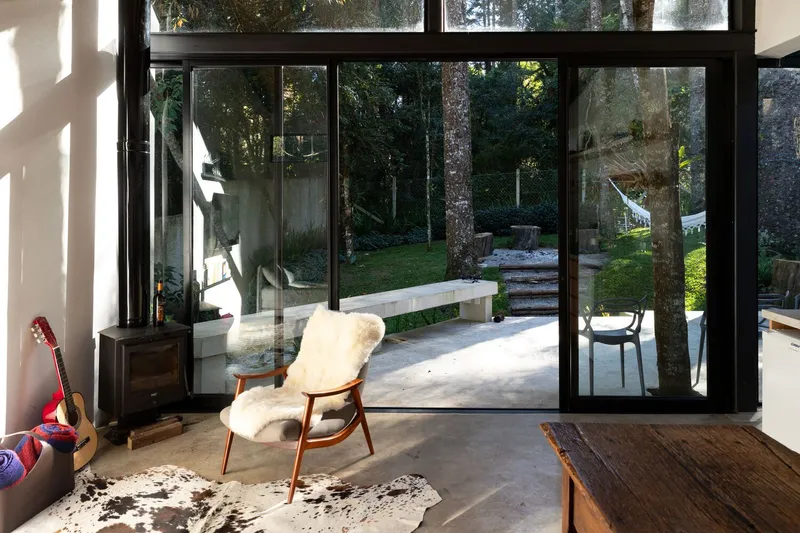
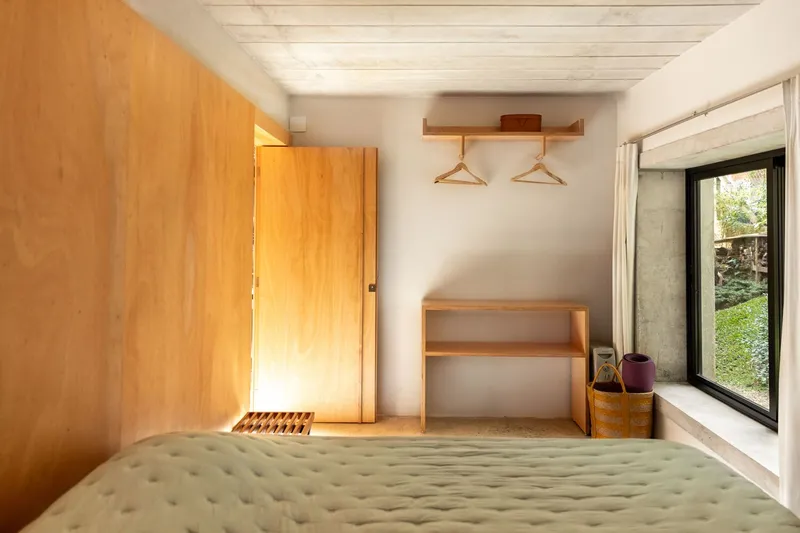
Material choices throughout the house reflect durability, low maintenance, and sensitivity to the setting. Exterior walls are finished in dark tones to contrast with the verdant environment, while interiors maintain a muted palette: polished cement floors, exposed black iron elements, white plaster walls, and yellow burnished cement in bathrooms. Skylights with high-resistance glass are integrated into bathrooms, protecting interiors from falling pinecones and introducing generous natural light.
Marine plywood defines the home’s carpentry—doors, furniture, and lighting coves—selected for its moisture resistance and warm aesthetic. Wooden beams and custom headboards echo this material consistency, reinforcing a cohesive and tactile spatial experience.
A Seamless Connection Between Indoors and Outdoors
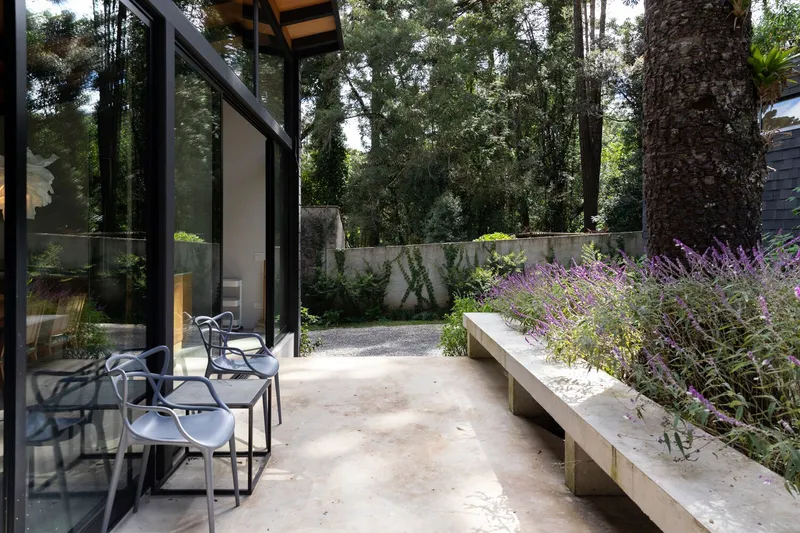
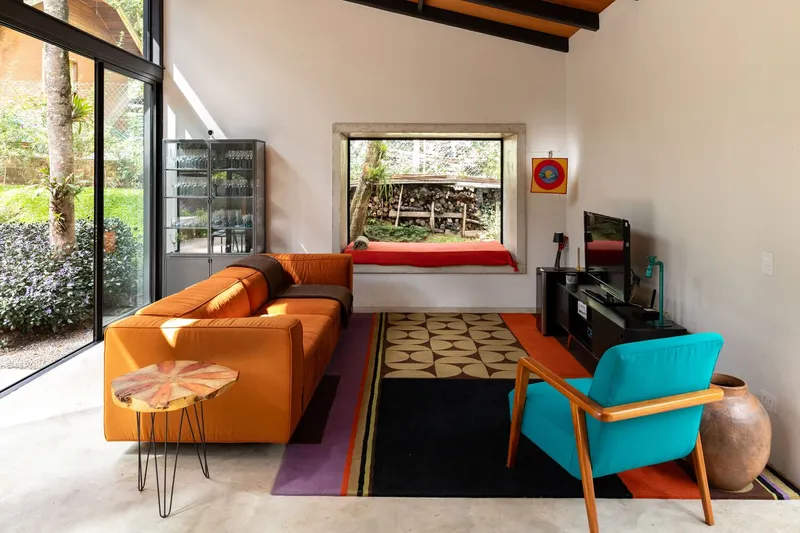
The project excels in fostering a continuous dialogue between interior living spaces and the surrounding landscape. Large glazed openings open the social zones to external concrete decks, turning each façade into an invitation to the forest. Window projections become spaces for contemplation or decoration, enriching the relationship between occupants and nature.
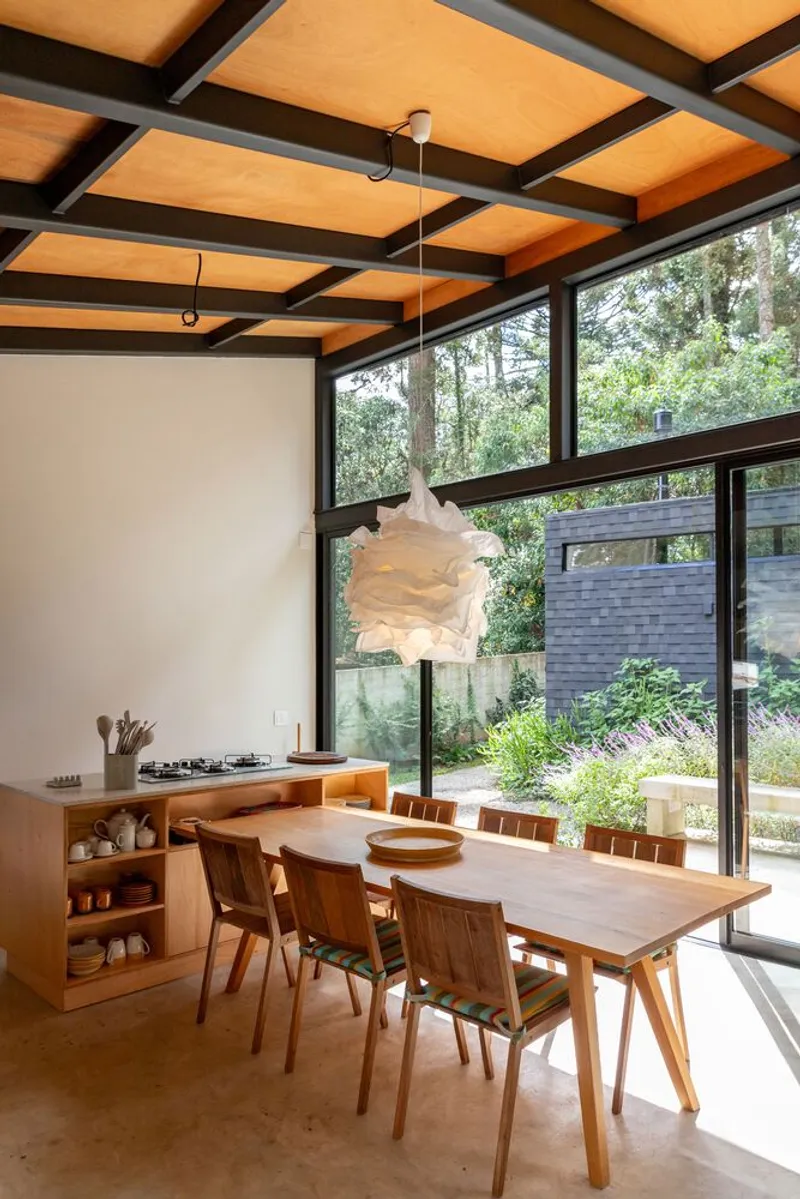
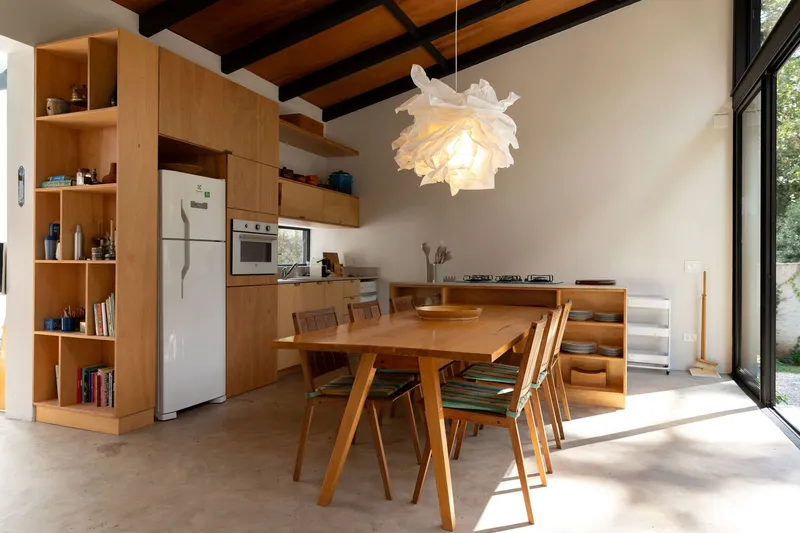
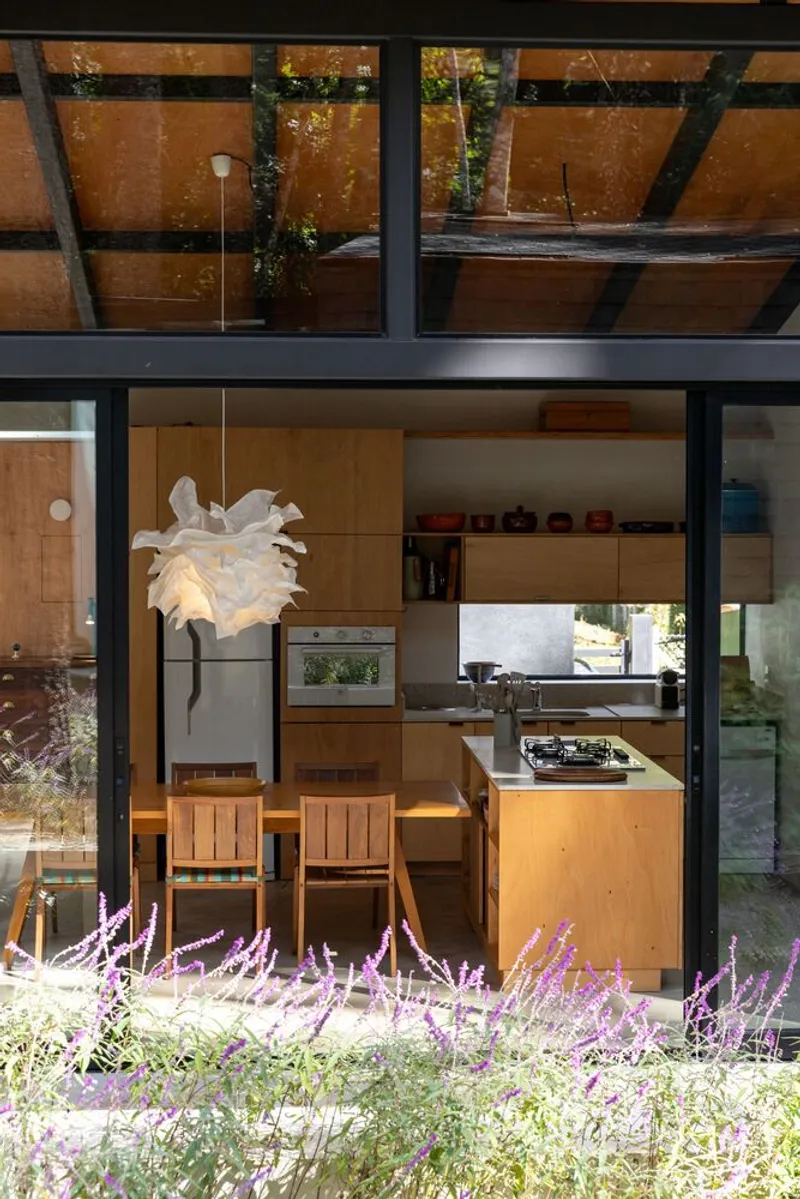
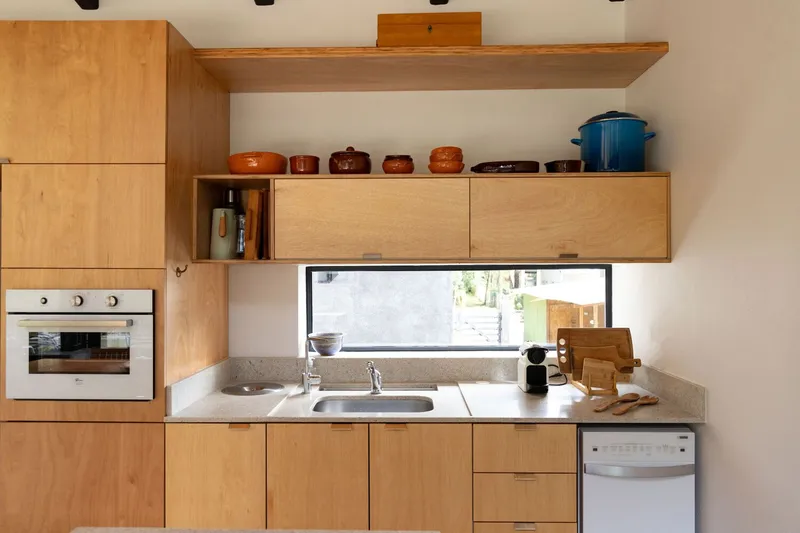
The landscape design further amplifies this intent. Native plants line the periphery, fostering biodiversity and attracting resilient local fauna. The central garden remains unprogrammed, offering flexibility for the inhabitants while celebrating the untouched quality of the terrain.
A Contemporary Mountain Home that Respects its Roots
The Araucarias House exemplifies a holistic approach to mountain house architecture in Brazil, where contextual understanding, material integrity, and spatial clarity come together in a quiet, thoughtful design. It is a house that doesn’t impose itself on its site but rather grows from it—elevated not only in structure but in concept, atmosphere, and environmental responsibility.
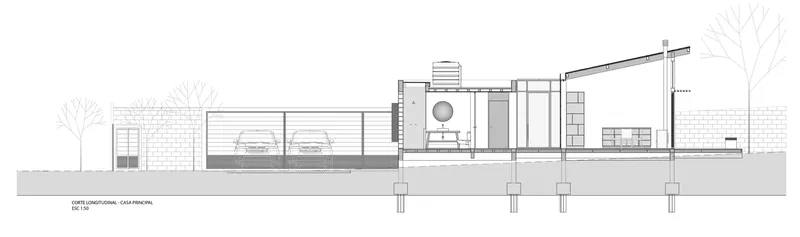
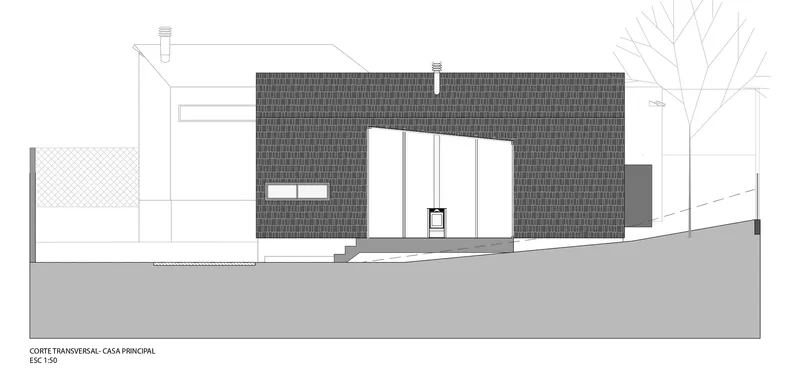
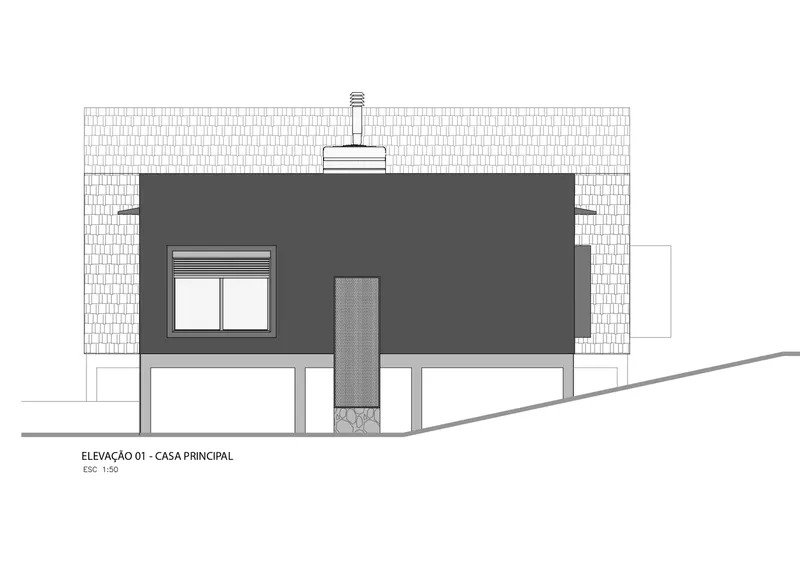
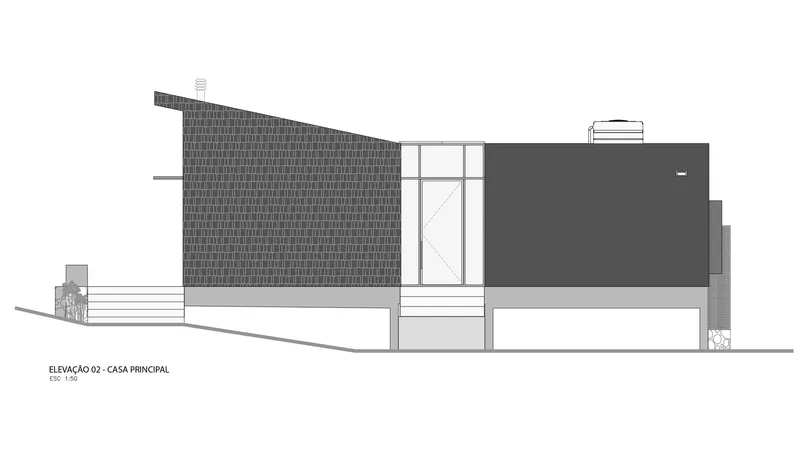
ARKITITO Arquitetura’s intervention is a celebration of local vegetation, seasonal climate, and tactile materiality, creating a space where retreat meets resonance. In every detail, from structure to finish, the house honors its mountain setting and offers its inhabitants a peaceful dialogue between architecture and nature.
All the photographs are works of Andrea Soares


Popular Articles
Popular articles from the community


GROUP A Strips a 1969 Rotterdam Harbor Headquarters to Its Frame and Wraps It in Timber Louvers
In Rotterdam's M4H harbor district, Ferro Offices reuses a 1969 frame, adds one timber storey and reaches BREEAM-NL Outstanding.

longwave studio Reorganizes a 112 m² Tainan Apartment Around the Daily Routines of a Family and Two Cats
In Tainan, Taiwan, birch plywood, rust-red furniture and a freestanding plaster wall link arrival, storage, work and family life in one apartment.

David Ortega Stacks a Two-Story Mexico City Penthouse Around a Steel Stair and a Pergola-Shaded Roof Terrace
In Colonia Roma, a 300 m² penthouse uses oak joinery, a planted steel stair and a slatted roof pergola to make a new-build apartment feel like a house.

LT2A and OPEN Architectes Thread a Brick and Glass High School Through a Wooded Belgian Campus
In Braine-l'Alleud, a 3,000 m² wing for Collège Cardinal Mercier pairs pale brick with a glazed colonnade, deferring to a small chapel and a dense wood.

Similar Reads
You might also enjoy these articles

Gil Mello Arquitetura Tilts a Single Roof Toward the Waterfalls on a Plateau Above Aiuruoca, Brazil
In Aiuruoca, Minas Gerais, a 200 m² house of local labor and reclaimed poles pairs a low valley veranda with a tall mountain one.

U.GA Architects Wraps an Oval Rooftop Pool in Curved Board-Formed Concrete on Busan's Jeollidan-gil
In Busan's Jeonpo-dong, a 454 m² mixed-use block stacks a neighborhood facility, guest rooms and an oval rooftop pool inside spiraling concrete walls.

Felipe Hess Arquitetos Turns a Blind Stone Wall to the Street and Opens a Brazilian House onto a Courtyard and Canal
A canal-front house in Brazil hides behind painted stone and planting, then opens to an olive-tree courtyard, a reed-ceilinged porch and a curving pool.

David Macias Steps a Doorless Stone and Plaster House Down a Tropical Colombian Hillside
In the humid hills of Colombia, Threshold House replaces the front door with an open void and terraces its 850 m² down the slope instead of fighting it.

Explore Architecture Competitions
Discover active competitions in this discipline

Challenge to reimagine the Iron Throne

Photograph architecture without architects

Illustrate the lost glory of Angkor Wat - Render Challenge

Design challenge to reuse E-waste
Comments (0)
Please login or sign up to add comments
No comments yet. Be the first to comment!