

Mountain House by Chris van Niekerk: A Sculptural Retreat Embedded in the Cape Landscape
Mountain House by Chris van Niekerk blends concrete, glass, and nature in Cape Town, offering sustainable, sculptural living rooted in landscape.


Set on a 4000 m² plot at the base of the Steenberg Mountains in Cape Town, Mountain House by architect Chris van Niekerk is a deeply contextual residential project that dissolves the boundary between architecture and its surrounding landscape. The design explores how material, light, and topography can work in harmony to create a modern house in South Africa that is both sculptural and grounded, introverted and open.

A Topographical Response
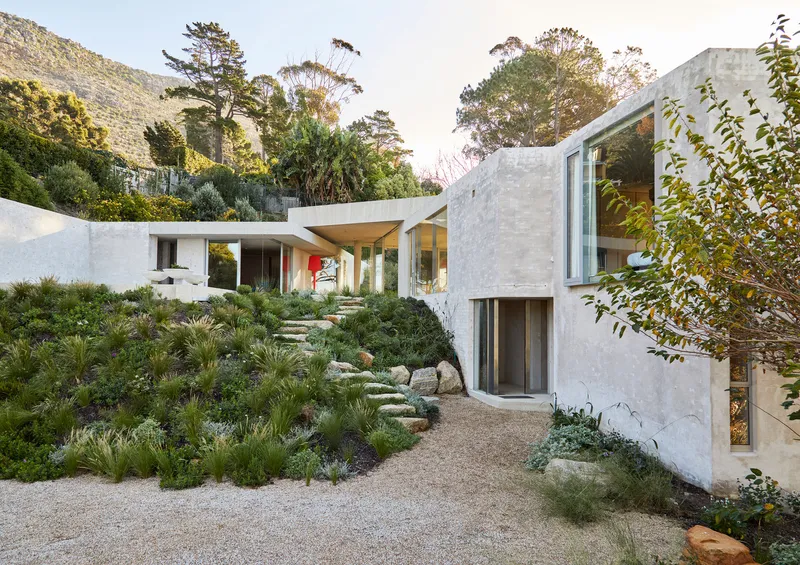
Rather than dominate its semi-rural site, Mountain House is carefully placed to neither float above nor burrow into the landscape. The home occupies a central position on the plot—a gesture of balance. The site, bearing the remnants of a previously failed structure, was only minimally manipulated. This conscious decision to preserve traces of the site’s past adds a narrative depth, maintaining the landscape’s architectural memory.
Fragmented Composition and Environmental Integration
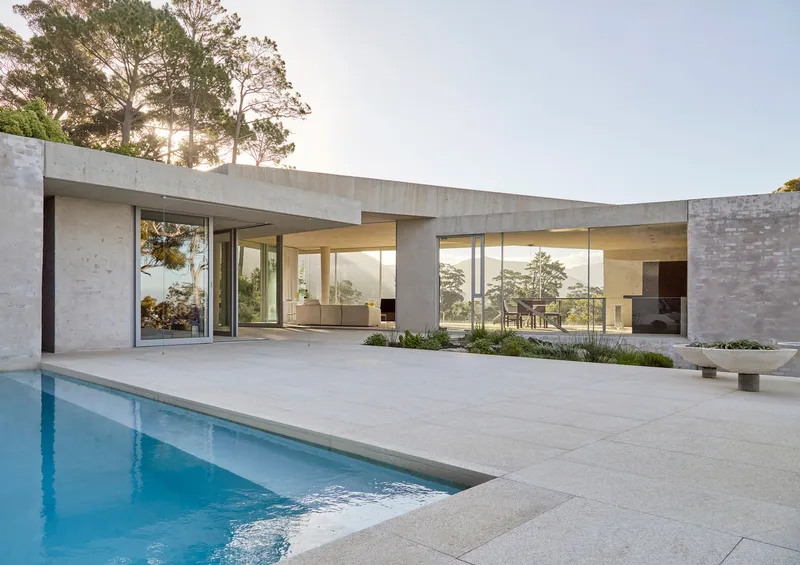
The design is composed of three distinct volumes arranged in a U-shaped configuration. Each responds uniquely to the terrain, wind patterns, sunlight, and the need for privacy.
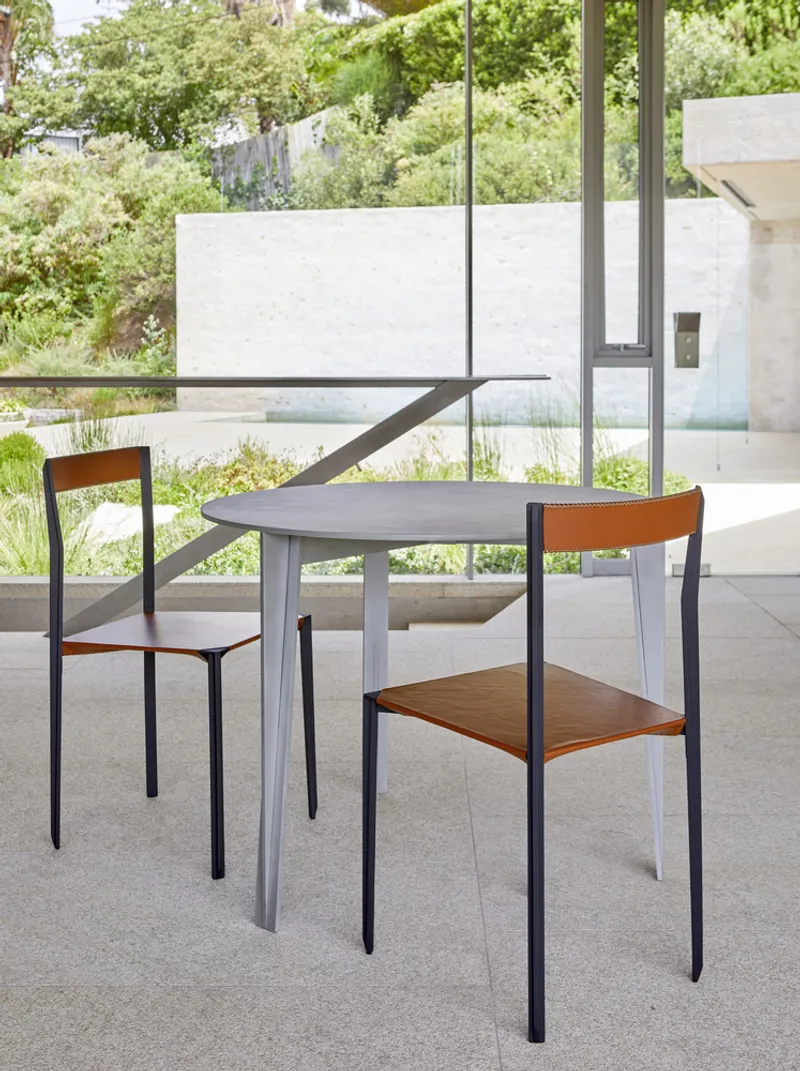
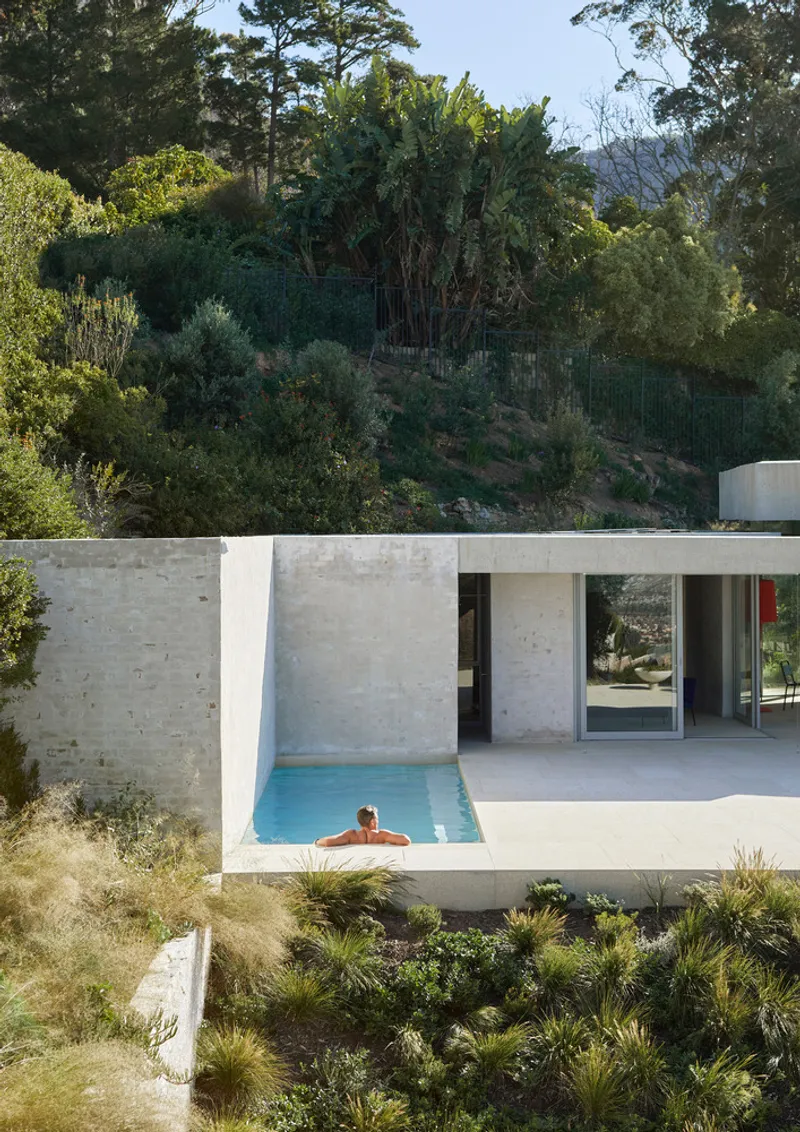
- The guest suite and workspace emerges gently from the sloping site, partially concealed by a low garden wall that folds back into the natural topography.
- Adjacent, a concrete canopy—inspired by the jagged rocky ridges of the nearby mountains—shelters an open-air pavilion. This shaded retreat offers panoramic views south toward False Bay and frames vistas of Table Mountain to the north.
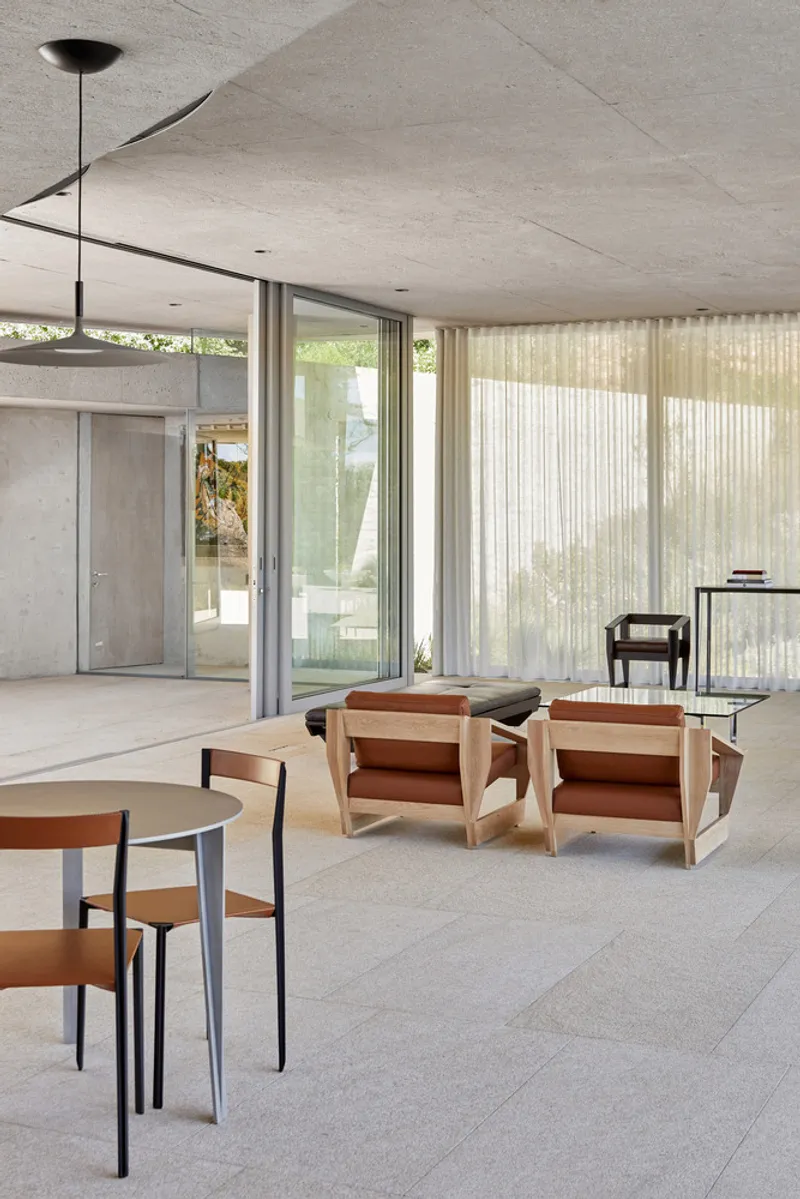
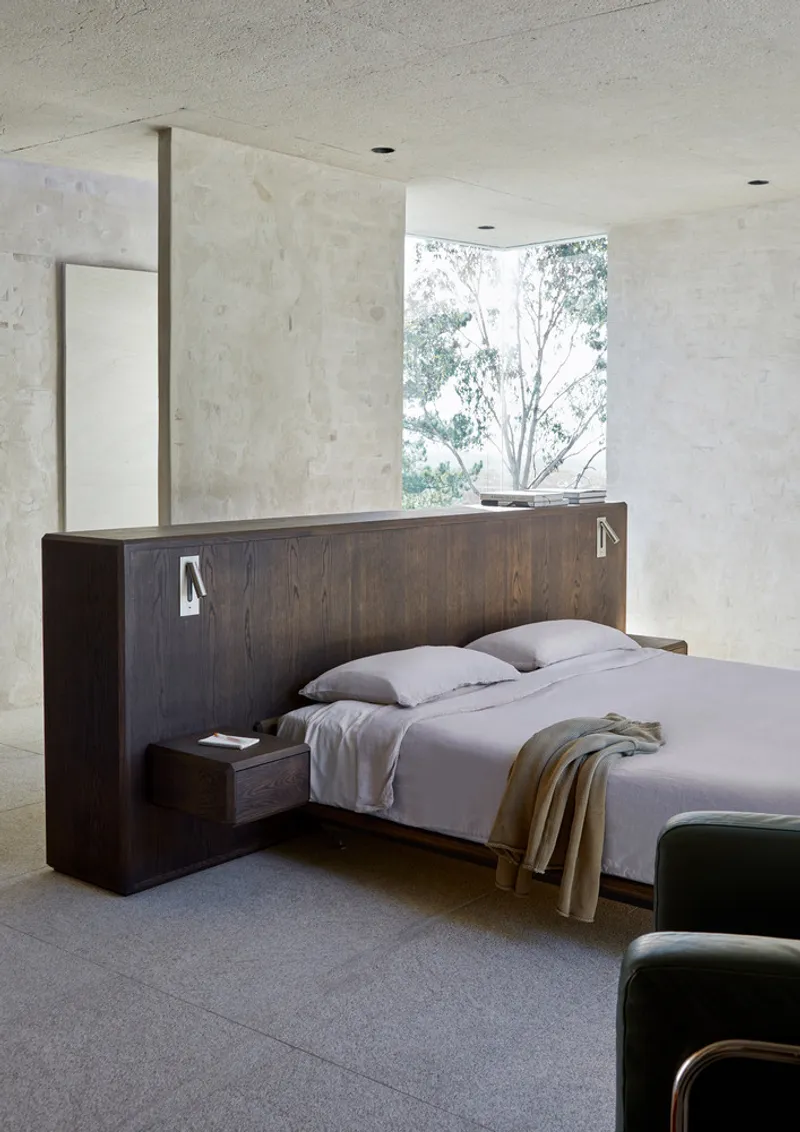
- The main living area and kitchen sit beneath the same concrete volume, wrapped in glass and bathed in filtered light. Materials are minimal, allowing the play of sun and shadow to animate the interiors. A transition threshold steps down into more enclosed, moody spaces—including the kitchen and private bedroom wing.
Materials and Light
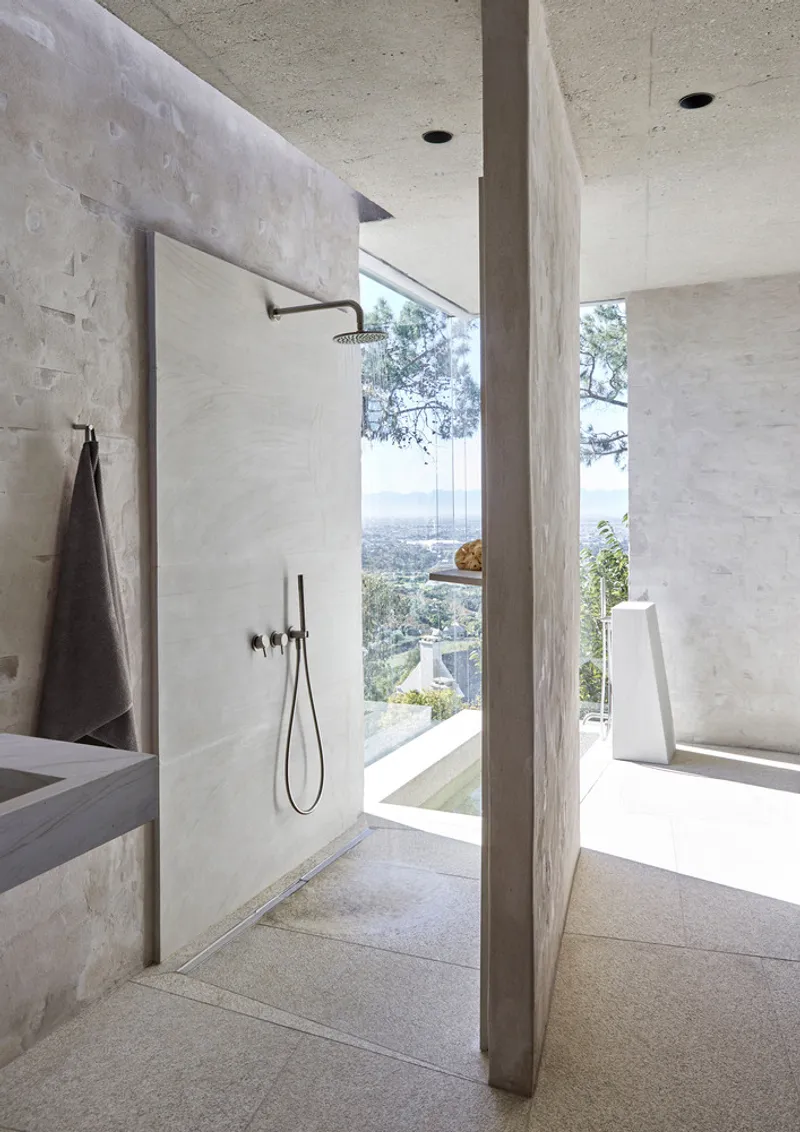
Mountain House uses a pared-back material palette to reinforce a feeling of unity between structure and site. Earthy concrete, steel, and glass are employed in a way that allows their natural textures to be felt. The result is not decoration but revelation—a home where structure and finish are one, and where light changes the reading of surfaces throughout the day.

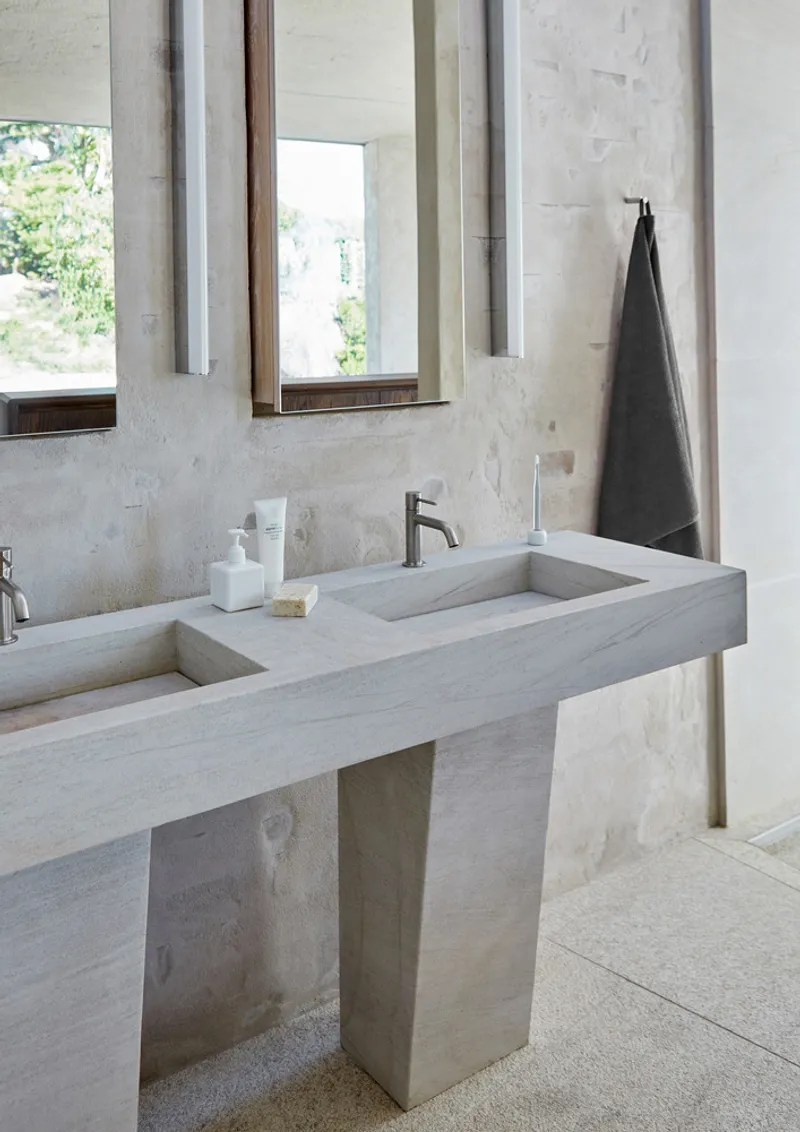
The lower level, accessed via a gentle stair, houses the main entrance and more introverted living quarters, with views directed inward and a more sheltered spatial quality. The restrained materials and spatial choreography create an atmosphere of quiet contemplation.
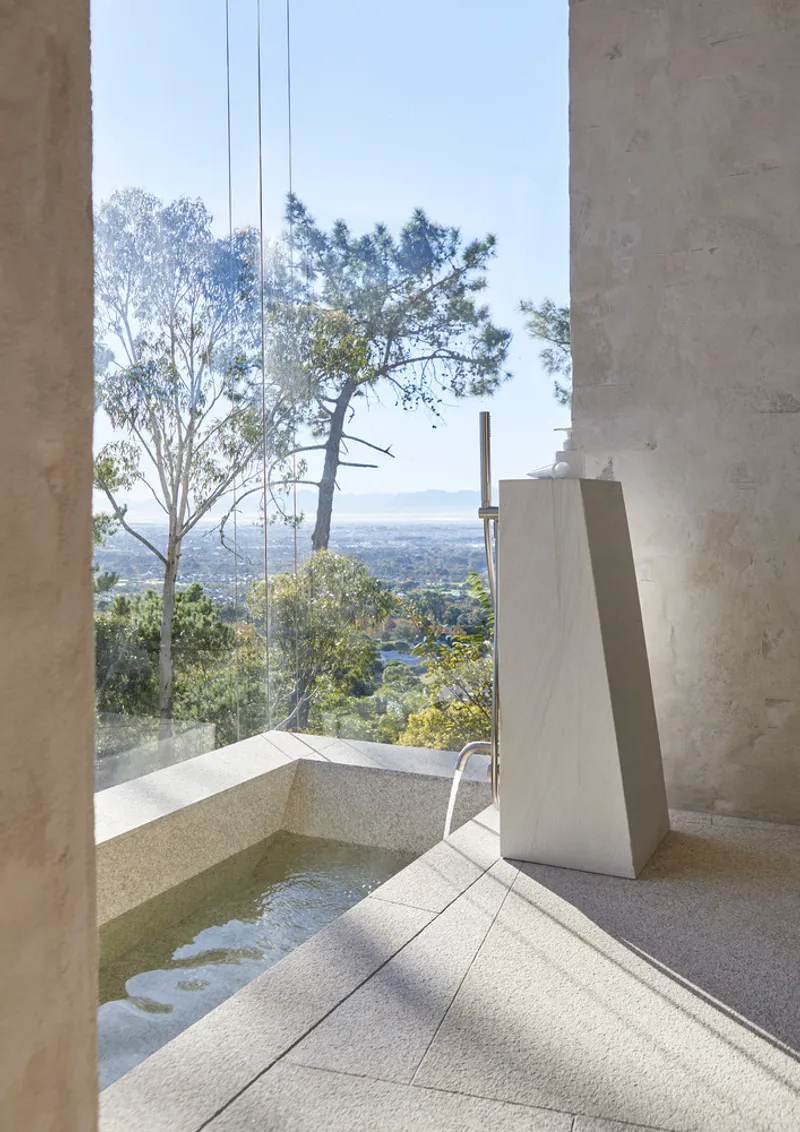
Sustainable Landscaping and Shelter
In keeping with South Africa’s climate realities, the garden has been restored and replanted with indigenous, water-wise vegetation. Over time, this will grow to embrace the building further, making the architecture feel like an extension of the natural landscape rather than an imposition upon it.
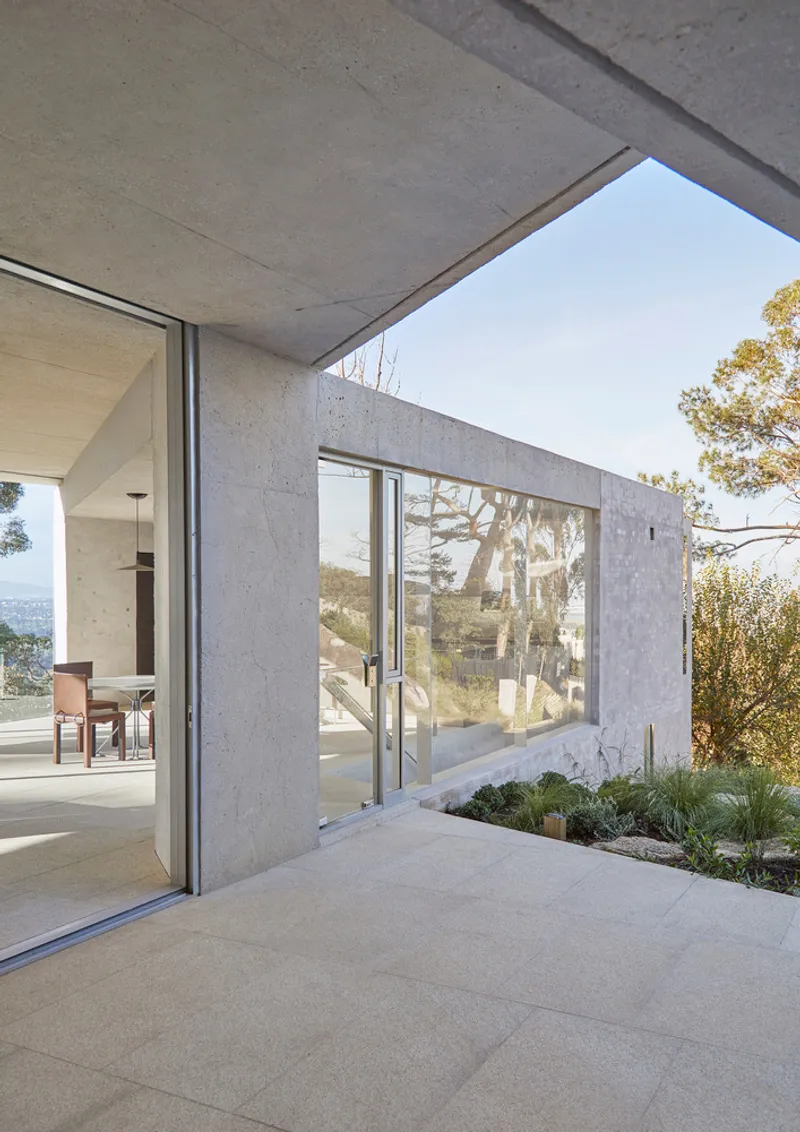
Mountain House resonates with a primordial sense of shelter—a place that acknowledges the basic rituals of daily life, while being attuned to the earth’s rhythms and cycles. It’s a rare example of contemporary South African residential architecture that foregrounds the landscape and the human experience above all else.
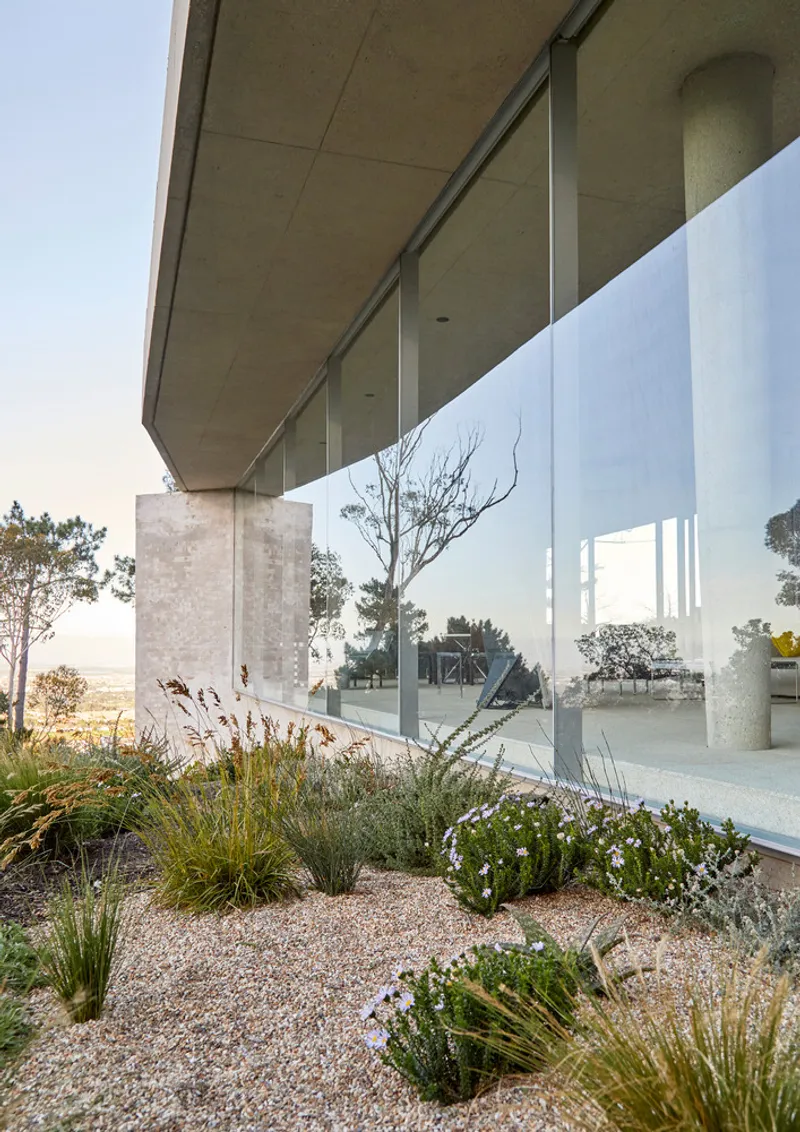
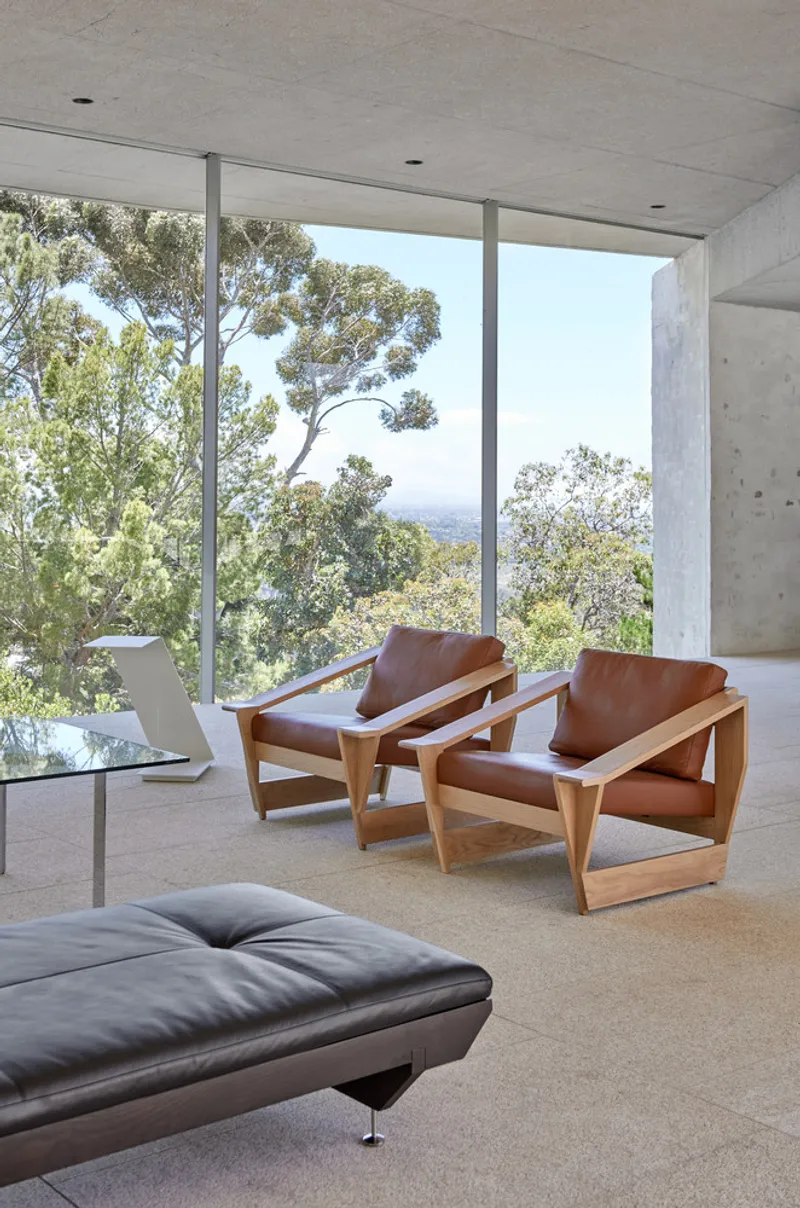
All the photographs are works of Greg Cox



Popular Articles
Popular articles from the community


Co-Life: Senior Housing Design That Reconnects Older Adults With the City
Co-Life reimagines senior housing design through healing gardens, shared streets, workshops, and a sustainable community across generations.

Co-life: Sustainable Architecture for Age-Friendly Community Living
Co-life reimagines sustainable architecture for seniors through courtyards, rammed earth, shared gardens, and spaces designed for belonging.
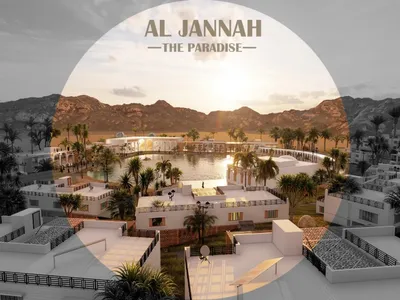
AL-JANNAH: Sustainable Architecture and Permaculture for Afghan Widows
AL-JANNAH uses sustainable architecture and permaculture to create resilient oasis of housing, learning, work and renewal for Afghan widows.

EW PARK: Sustainable Architecture Reimagines the Future of Urban Parking
EW PARK reimagines city parking as a modular wooden tower combining automation, solar energy, electric mobility, and adaptable urban design.


Similar Reads
You might also enjoy these articles


Hodi-Mandai Geram
Project Function: Preservation and revitalization of the Intangible heritage and socio-spatial identity of the Hodi by Housing, Cultural Memory Center, Sacred Grove, landscape, local tourism economy


Olio Towers: A Mid-Rise for Performers That Fuses Housing, Rehearsal, and Stage
Located blocks from Houston's Theater District, this modular tower stacks living units around a central performance atrium.

Oasis: Modular Green Housing Carved into Dhaka's Urban Fabric
A shortlisted Plugin Housing entry reclaims unauthorized settlements in Dhaka with stepped concrete volumes, green roofs, and ventilation-driven design.

Black Hole: A Floating Megastructure for the Post-Physical Era
Emiliano Mazzarotto envisions a spherical, self-scaling arena where e-sports, digital hotels, and holographic stadiums replace traditional public space.


Explore Architecture Competitions
Discover active competitions in this discipline



Challenge to reimagine the Iron Throne


Photograph architecture without architects


Illustrate the lost glory of Angkor Wat - Render Challenge


Design challenge to reuse E-waste
Comments (0)
Please login or sign up to add comments
No comments yet. Be the first to comment!