
Multifunctional Scientific and Entertainment Center: A Landmark of Sustainable Architecture in Kazan
A sustainable architecture proposal redefining Kazan’s riverfront through science, culture, and adaptive public space.


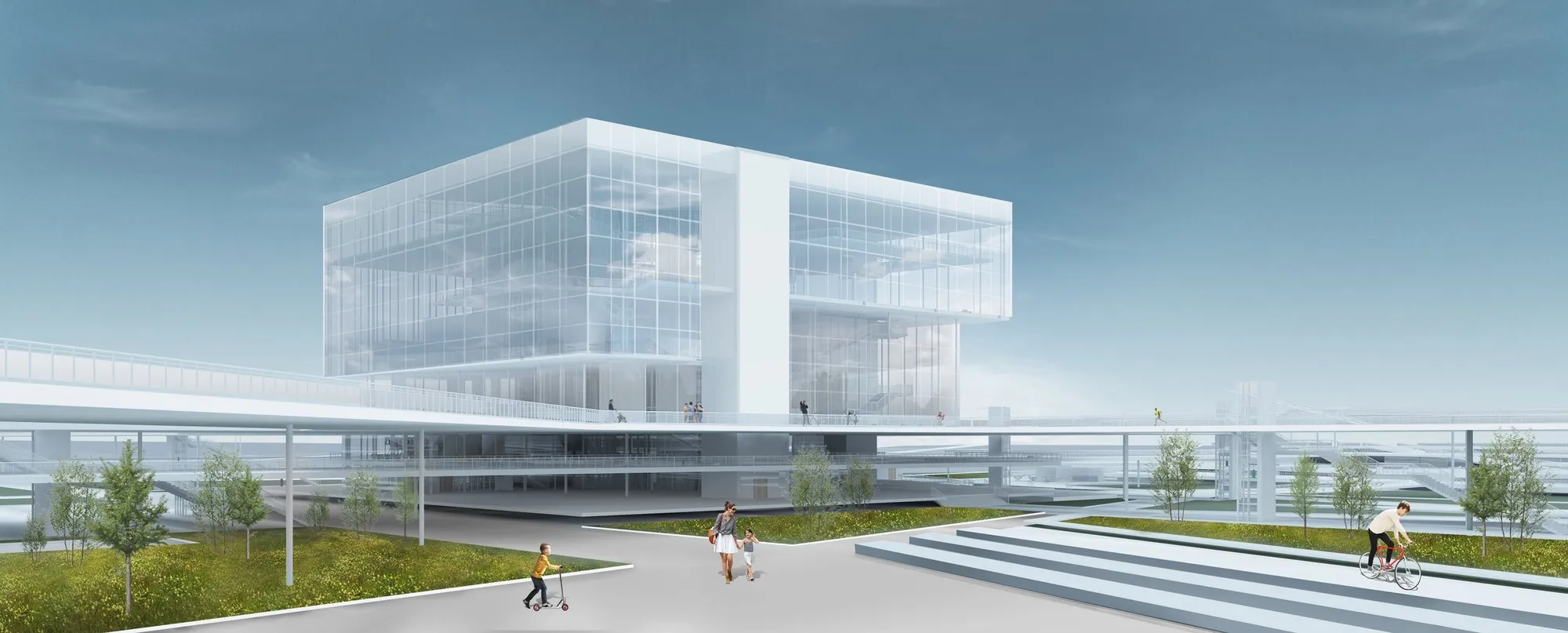
In the evolving discourse of sustainable architecture, the challenge is no longer limited to energy efficiency or material innovation. Today, architecture must respond to society, culture, ecology, and urban disconnection simultaneously. The Multifunctional Scientific and Entertainment Center by Julia Arkhipova emerges as a powerful academic exploration of this expanded role of architecture.
Situated in Kazan near the Kazanka River and adjacent to the renowned Krylai Park, the project reimagines a fragmented urban territory into an active civic epicenter. The proposal integrates science, education, entertainment, and public life into a unified spatial system, transforming an underutilized site into a dynamic platform for cultural engagement.
Urban Context: Reconnecting the City Fabric
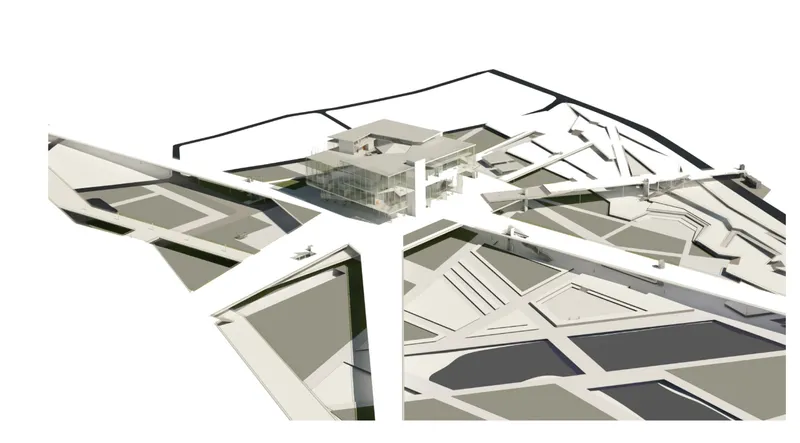
The design territory lies within a forest park area bordered by residential buildings and recreational landscapes. Despite its central location near significant cultural heritage sites, the area lacks integration with the surrounding urban fabric. A major road separates the site from the Kazanka River embankment, creating physical and psychological barriers.
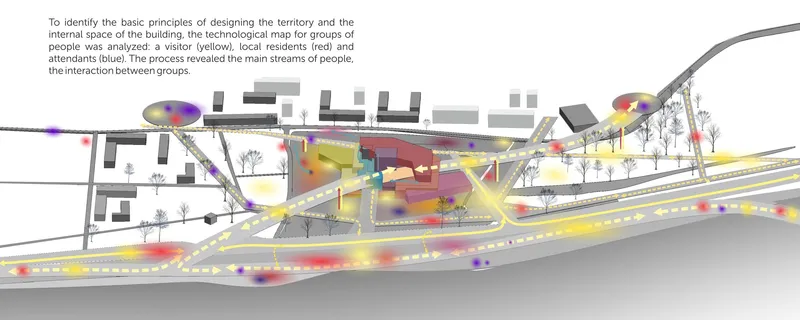
Through the lens of sustainable urban architecture, the project addresses this fragmentation by restoring pedestrian connectivity and activating neglected edges. The proposal carefully studies urban flows, identifying three primary user groups:
- Visitors (yellow)
- Local residents (red)
- Staff and attendants (blue)
Mapping these movement patterns revealed interaction zones and potential conflict points. Instead of isolating these streams, the design orchestrates them into a cohesive circulation system, allowing overlap while maintaining functional clarity.
This analytical approach demonstrates how sustainable architecture operates not only environmentally, but socially: by fostering accessibility, inclusivity, and interaction.
Programmatic Innovation: Science as Public Experience
The core ambition of the project is to bring science closer to everyday urban life. Rather than conceiving a traditional museum or research facility, the design proposes a hybrid typology combining:
- Exhibition halls
- Laboratories
- Classrooms
- Auditorium
- Reading rooms
- Workshops
- Science attractions
- Planetarium
- Café and community spaces
Each floor is designed with temporal adaptability in mind. In the morning, classrooms accommodate schoolchildren. In the afternoon, laboratories and reading spaces serve students and researchers. In the evening, lecture halls and the planetarium activate for adult audiences.
This multi-use scheduling reduces energy consumption and increases spatial efficiency, core principles of sustainable architecture. The building operates as a flexible organism rather than a static structure.
Architectural Strategy: Vertical Layering and Spatial Dialogue
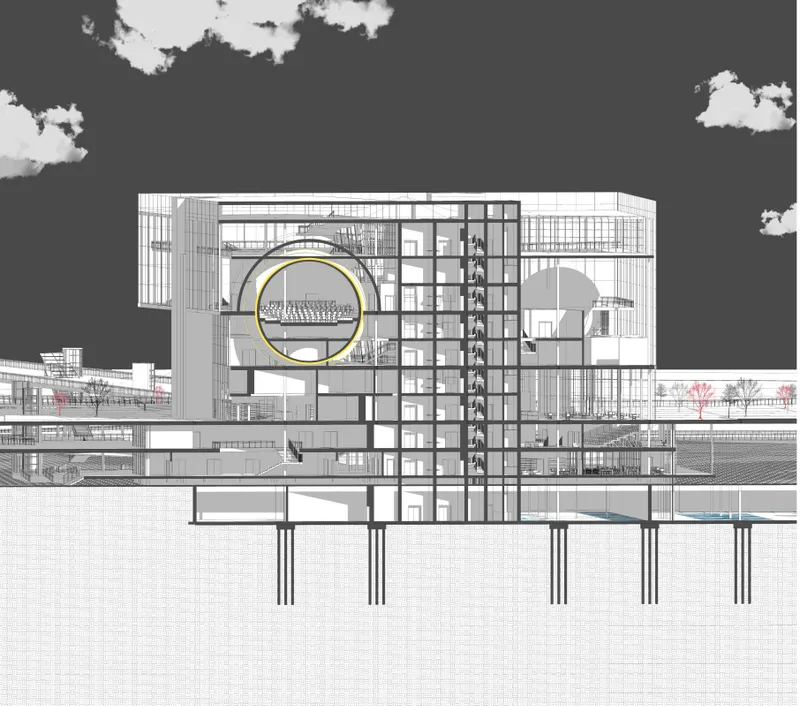
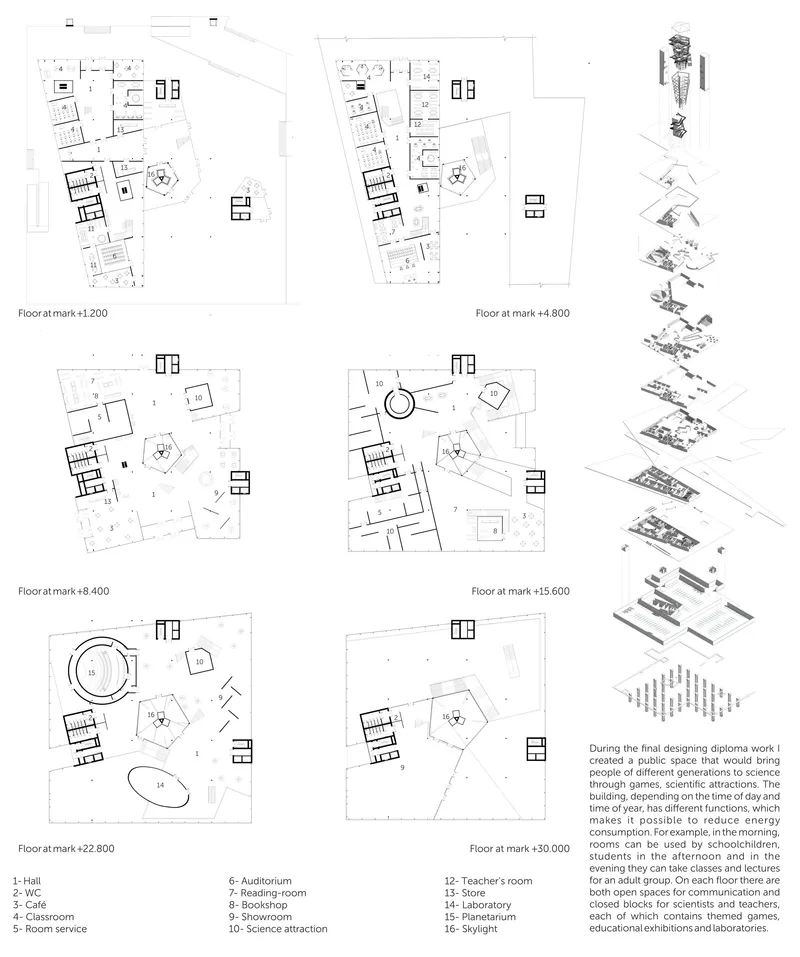
The spatial organization unfolds across multiple levels (+1.200 to +30.000), with carefully distributed functional clusters. Open communication spaces coexist with enclosed research blocks, creating a dialogue between transparency and concentration.
Key spatial elements include:
- A central hall acting as an orienting nucleus
- Skylights (Element 16) introducing natural daylight deep into the interior
- The planetarium (Element 15) as a sculptural experiential core
- Layered floor plates that create visual connectivity across levels
The exploded axonometric diagrams reveal a deliberate structural logic. Rather than imposing a singular monumental gesture, the architecture emerges through assembled layers: each responding to programmatic, environmental, and circulation requirements.
This stratified organization enhances natural ventilation, daylight penetration, and visual permeability, reinforcing the sustainable architecture framework.
Environmental Considerations and Energy Efficiency
Environmental awareness plays a central role in the thesis. The building’s flexibility directly contributes to reduced energy consumption. Instead of heating or cooling underused zones, the adaptive scheduling ensures optimal occupancy throughout the day.
Additional sustainable principles embedded in the project include:
- Maximized daylight through extensive glazing and skylights
- Activation of public terraces and open transitional spaces
- Integration with surrounding green park landscapes
- Encouragement of pedestrian movement over vehicular dependency
The proposal positions the scientific center as both a physical and ecological mediator between city and nature.
Night Identity: Architecture as Urban Beacon
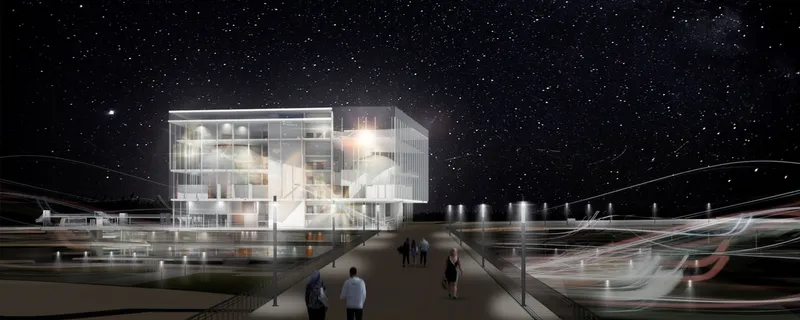
The final visualizations depict the building illuminated under a star-filled sky. The transparent façade reveals interior activity, symbolizing openness and knowledge-sharing. Light becomes a narrative device: connecting science, cosmos, and community.
The structure stands as a luminous object on the riverfront, redefining the nighttime identity of Kazan. Rather than overpowering the landscape, the architecture glows softly, reinforcing its civic role.
This poetic yet restrained expression reflects a mature understanding of sustainable architecture, where form follows purpose, and symbolism emerges from function.
Social Impact: A Cultural Epicenter
Beyond its architectural qualities, the project aspires to reposition Kazan as an epicenter of cultural heritage and scientific engagement. By merging recreation, education, and research, the center strengthens intergenerational interaction and community cohesion.
Each floor supports both open communication zones and focused scientific spaces. The design encourages curiosity, experimentation, and informal learning. It becomes not merely a building, but a catalyst for urban transformation.
In contemporary architectural discourse, sustainable architecture must be measured not only by carbon metrics but by its ability to enhance collective life. Julia Arkhipova’s thesis demonstrates this expanded understanding with clarity and ambition.
The Multifunctional Scientific and Entertainment Center is a compelling example of sustainable architecture responding to urban fragmentation, social diversity, and environmental responsibility. By integrating science, culture, and public space within a flexible architectural system, the project proposes a new civic model for Kazan’s riverfront.
Through analytical mapping, adaptive programming, and spatial transparency, the thesis elevates architecture beyond form-making into a tool for societal progress.
As cities continue to seek resilient and inclusive futures, projects like this reaffirm architecture’s power to reconnect, educate, and inspire.



Popular Articles
Popular articles from the community


Conexión: Biophilic Design Reimagines High-Rise Living in Hong Kong
Conexión reimagines high-rise living in Hong Kong through biophilic design, green facades, shared spaces, daylight, water and nature within.

Hill & Cross Opera: Sculptural Opera House Architecture Shaped by Tallinn’s Landscape and Identity
Hill & Cross Opera reimagines opera house architecture in Tallinn through its sculptural hill, civic plaza, glass wave and a luminous cross.

Riyadh For All: Intergenerational Urban Design for Active Aging in Rabat
Riyadh For All reimagines urban design in Rabat with intergenerational co-living, adaptive courtyards, and Moroccan cultural exchange today.

Co-life: Sustainable Architecture for Age-Friendly Community Living
Co-life reimagines sustainable architecture for seniors through courtyards, rammed earth, shared gardens, and spaces designed for belonging.

Similar Reads
You might also enjoy these articles

Eco Chapel: A Green Architecture Pavilion Designed in Symbiosis with the Forest
Eco Chapel uses green architecture to weave prayer, learning and reuse into a forest pavilion shaped by modular hexagonal canopies for life.
Kaffeebühnen: Coffee Shop Architecture Designed as a Civic Stage Between Vienna’s City and Park
Kaffeebühnen turns coffee shop architecture into a civic stage, linking Vienna’s park edge, urban life, warm timber yards, and coffee craft.
Healing Façade: Sustainable Architecture for Reforestation, Community, and Sacred Ecology in Ethiopia
Healing Façade reimagines sustainable architecture as a living wall that restores soil, catches water and renews Ethiopia's forest churches.


Urban Forest: A Vertical Ecosystem for 5,000 Workers in Singapore's Changi Business Park
Radially stacked pods and layered green decks turn a 7-acre plot into 47 acres of ecological workspace projected for 2040.
Explore Landscape Design Competitions
Discover active competitions in this discipline



Challenge to reimagine the Iron Throne


Photograph architecture without architects


Illustrate the lost glory of Angkor Wat - Render Challenge


Design challenge to reuse E-waste
Comments (0)
Please login or sign up to add comments
No comments yet. Be the first to comment!