

Nandivardhanam House By Studio Inscape
Nandivardhanam House in Hyderabad is a serene exposed-brick residence celebrating slow living, climate-responsive design, courtyards, rituals, and landscape harmony.


Set amid expansive agricultural fields on the outskirts of Hyderabad, Nandivardhanam House, designed by Studio Inscape, is a residence that embodies the philosophy of slow living. Completed in 2023, the 6,200 ft² home is conceived as an architecture of grounding—where material honesty, climate sensitivity, and everyday domestic rituals shape a deeply rooted spatial experience.
Curated by Miwa Negoro and photographed by Niveditaa Gupta, the project reflects a thoughtful dialogue between land, craft, and lifestyle. Rather than imposing itself on the terrain, the house rises gently from it, embracing the rhythms of rural life while offering a contemporary yet timeless domestic environment.
Architecture as Threshold and Shelter
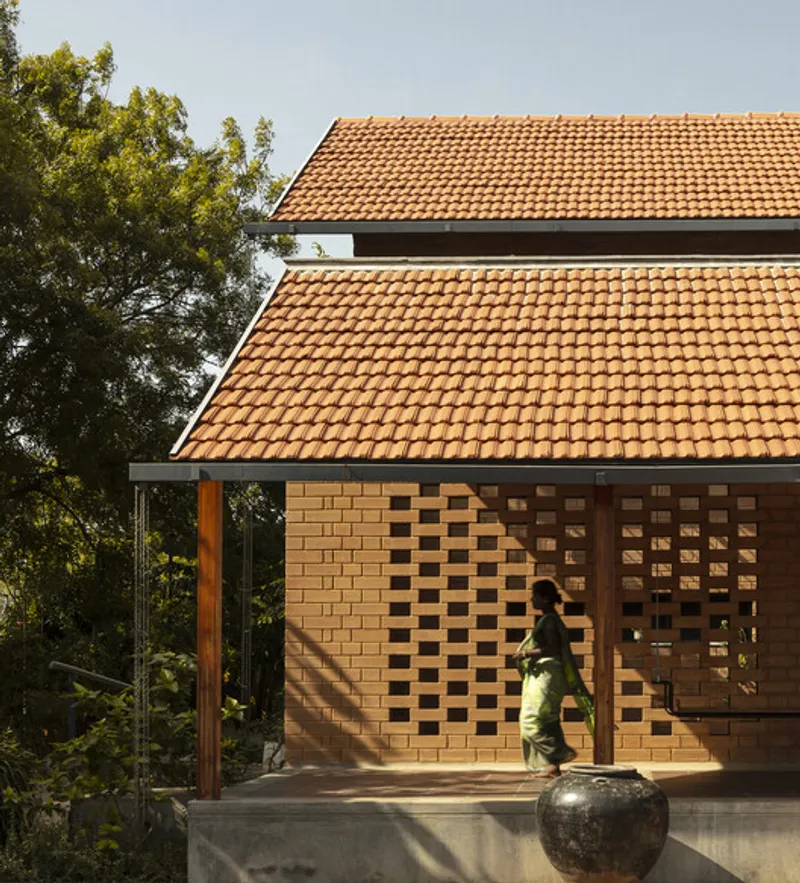
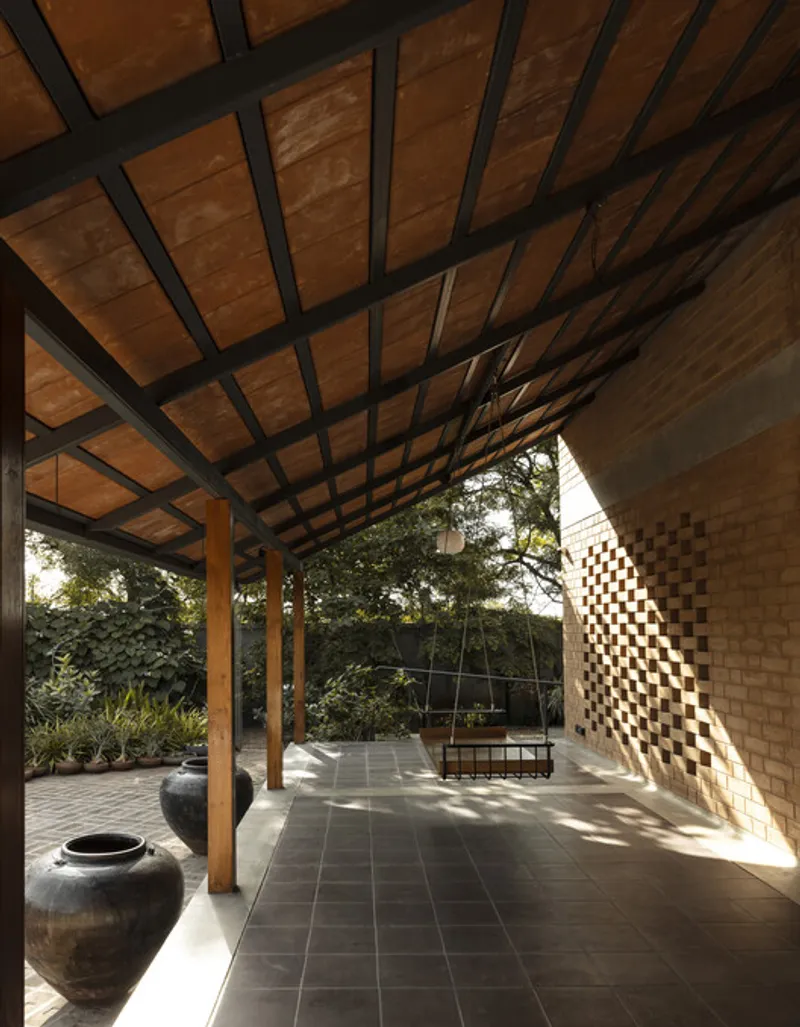
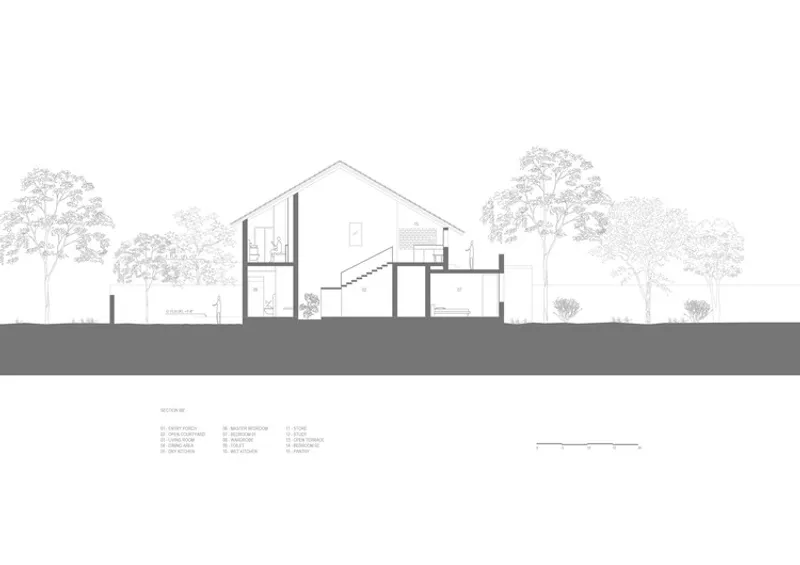
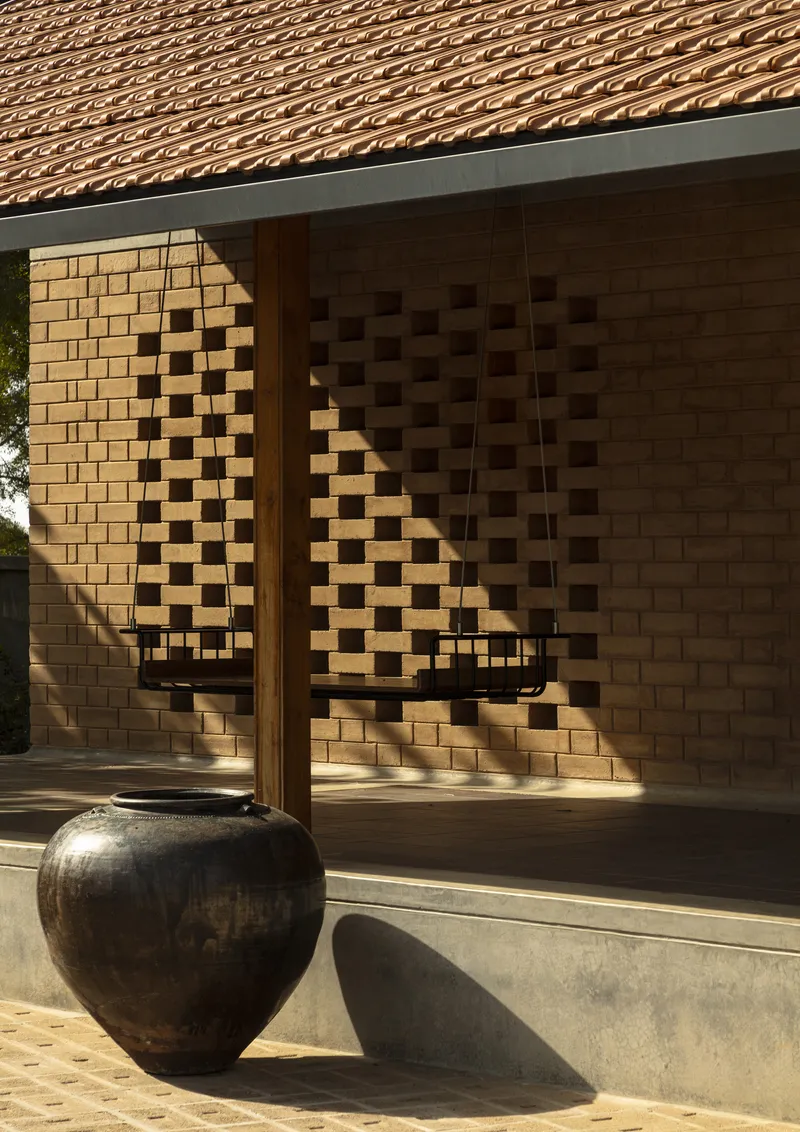
The spatial organization of Nandivardhanam House is anchored by a deep verandah, conceived as a climatic and experiential threshold between the open landscape and interior life. This shaded transitional zone plays a critical role in moderating heat and light, creating a cooler microclimate in contrast to the surrounding fields. More than a circulation space, the verandah becomes a place of pause—where occupants experience seasonal shifts, breezes, and changing daylight.
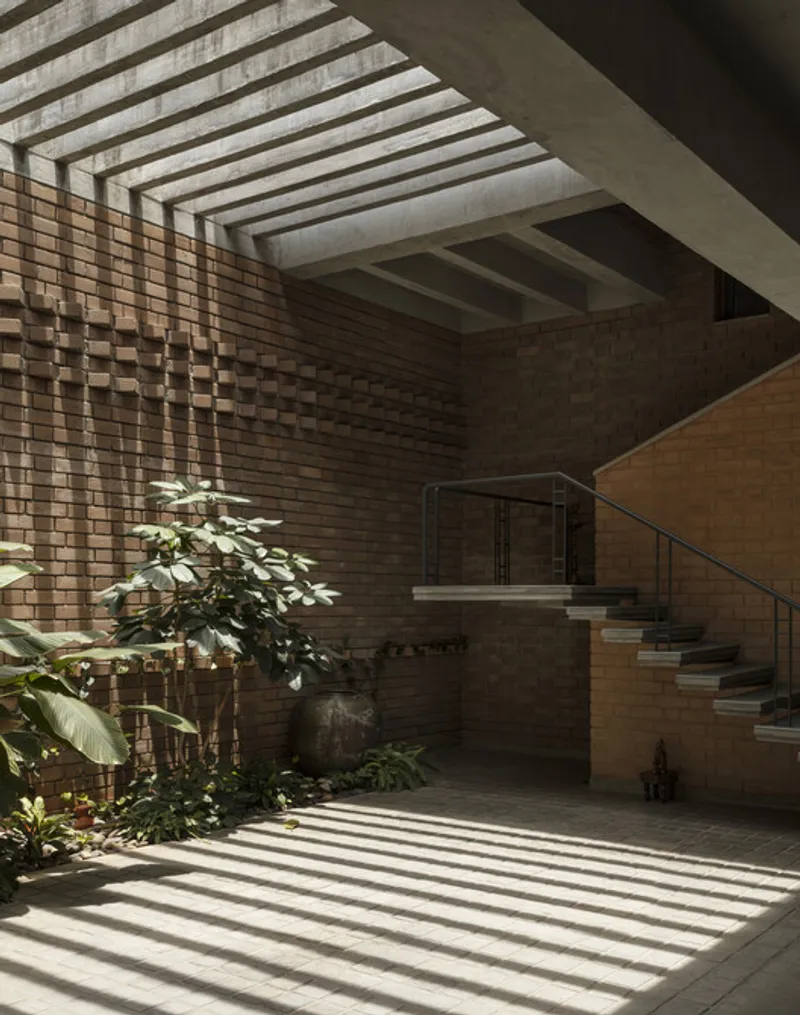
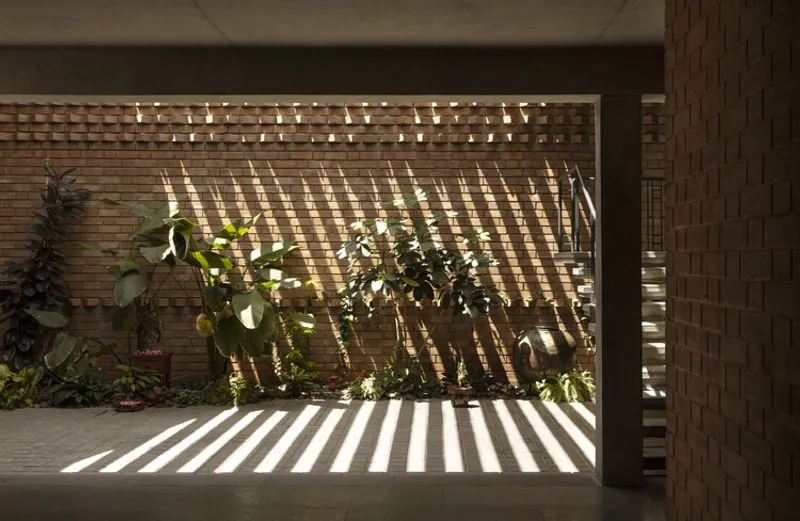
From here, the house unfolds along a slender internal spine that leads into a central courtyard. A small brass idol of Lord Krishna is placed quietly within this open-to-sky space, anchoring the home both symbolically and atmospherically. Though modest in scale, the courtyard functions as the emotional and spatial heart of the residence, organizing movement while reinforcing a sense of inward calm.
Material Authenticity and Load-Bearing Craft
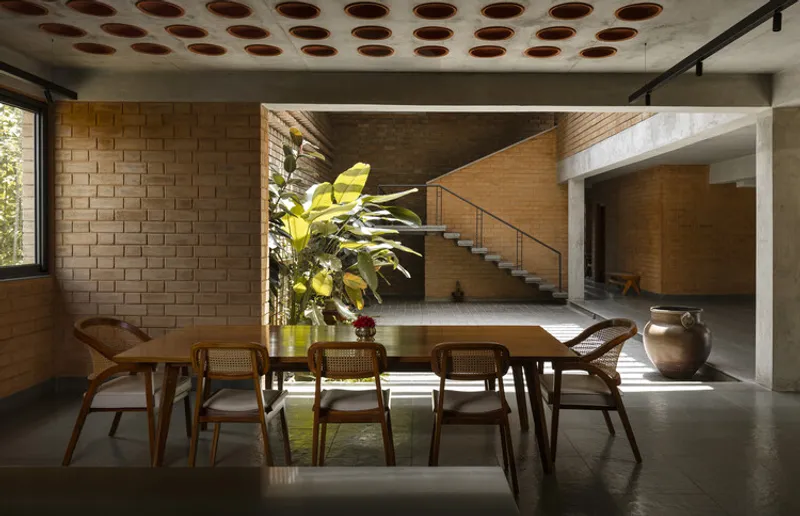
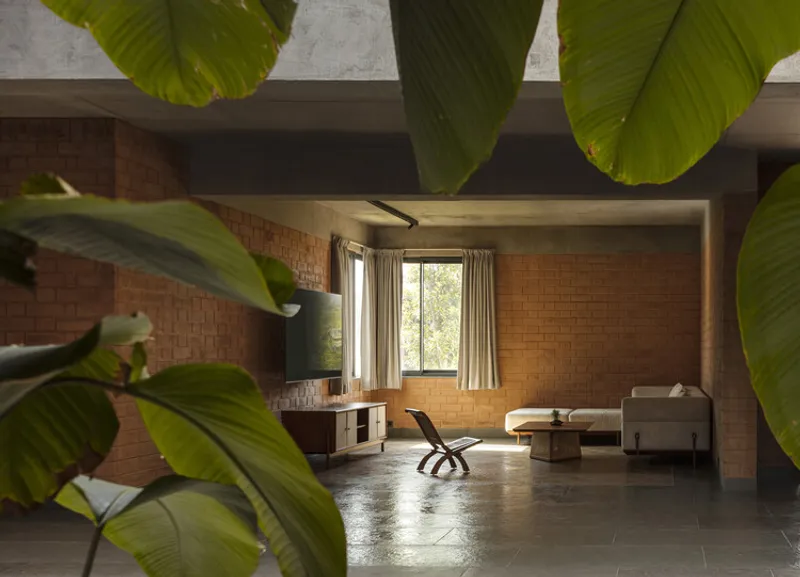
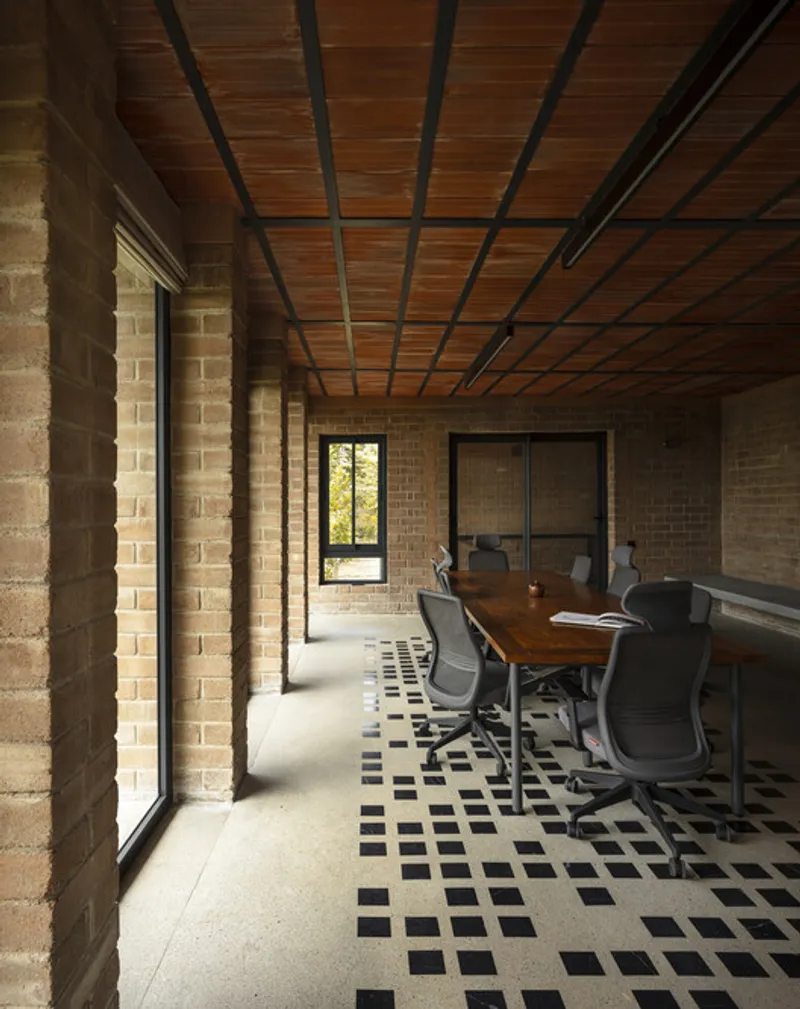
Constructed entirely using load-bearing exposed brick masonry, the house reflects the family’s appreciation for craftsmanship, tactility, and material truth. By eliminating plaster and surface finishes, the architecture allows brick to express its natural texture, color variation, and structural logic. The result is a raw yet refined aesthetic that feels both grounded and enduring.
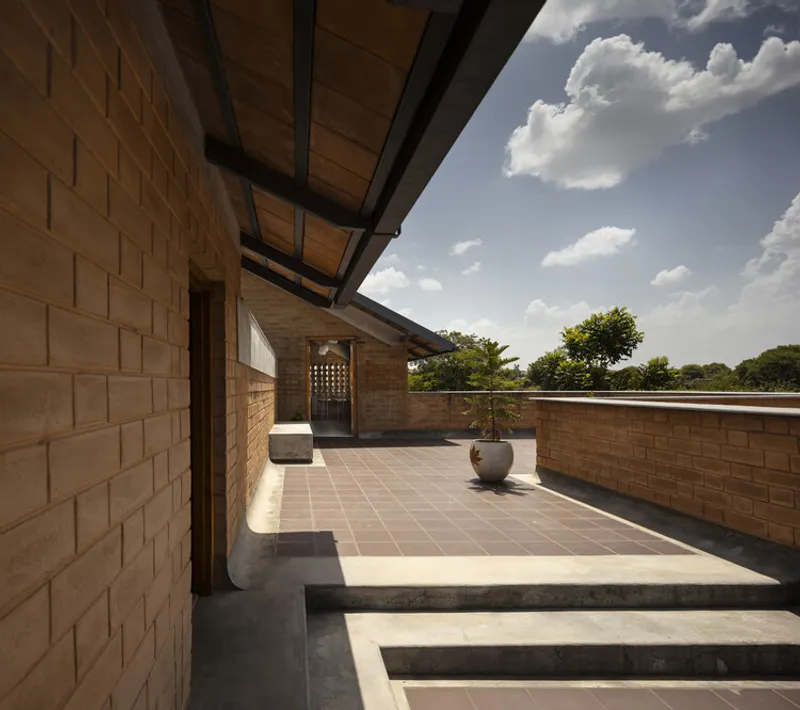
The built form reads as an extension of the land itself. Verandah steps spread outward like roots, while the protective roofline shelters internal spaces much like a tree canopy. This architectural metaphor reinforces the idea of the house as a living entity—deeply connected to its site and climate.
Spaces for Ritual, Pause, and Observation
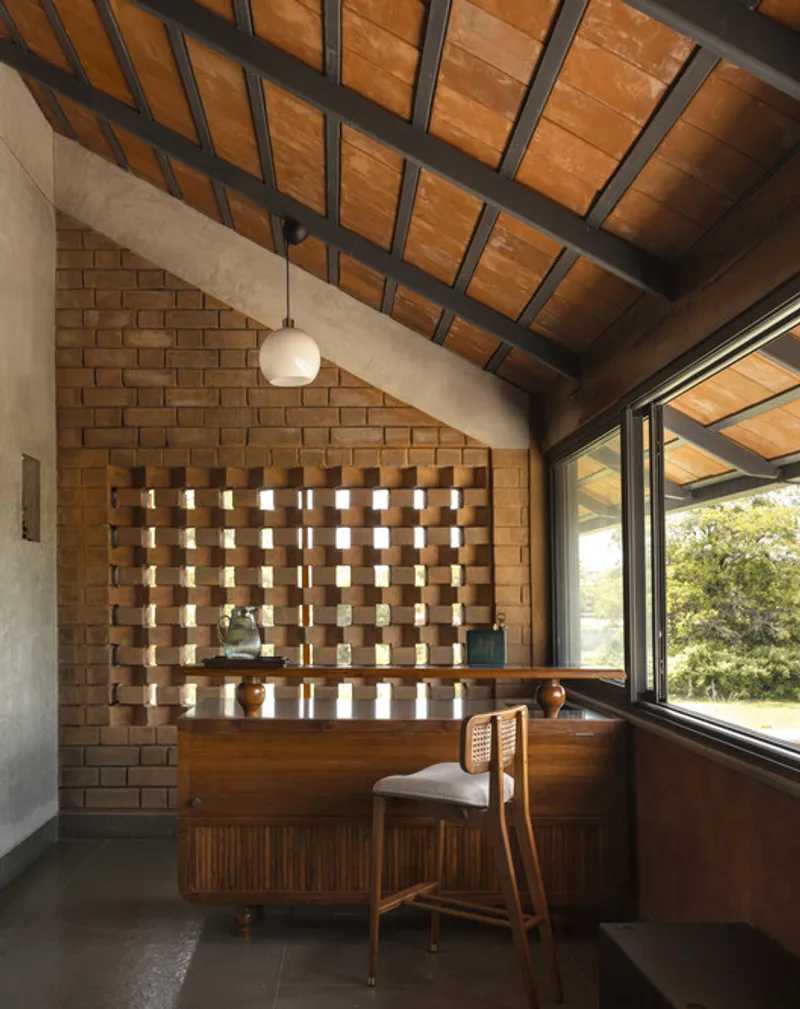
Interior spaces are conceived not merely as functional rooms, but as environments that encourage slowness and reflection. Deep window sills invite sitting and contemplation, framing views of farmland and gardens beyond. Carefully controlled apertures choreograph natural light throughout the day, creating subtle shifts in mood and atmosphere.
Everyday rituals—meals, conversations, moments of solitude—are elevated through tactile surfaces, exposed brick walls, wooden elements, and thoughtful proportions. The architecture positions itself quietly in the background, allowing life to unfold without distraction, yet remaining emotionally present through its material warmth and spatial clarity.

Landscape as an Extension of Architecture
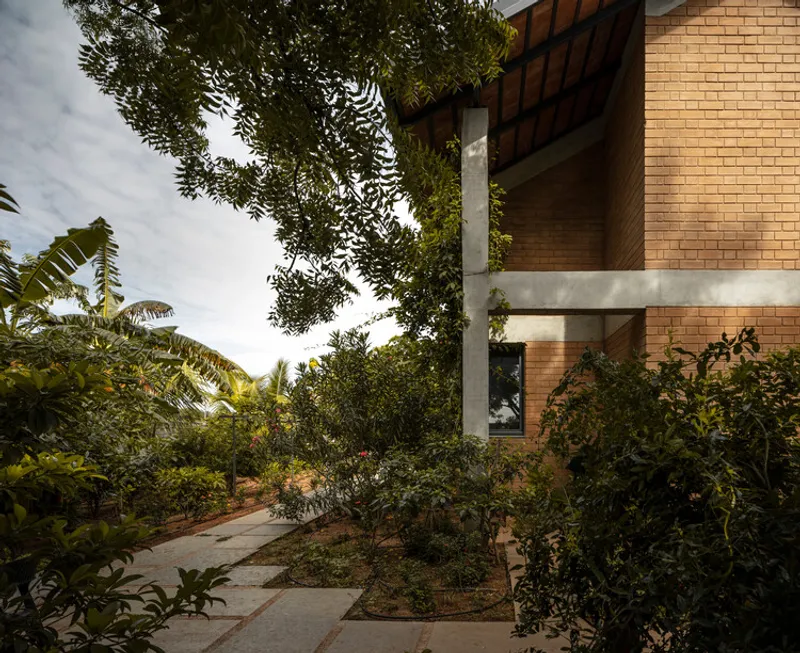
Landscape design plays an integral role in shaping the identity of Nandivardhanam House. Each plant is intentionally placed, reinforcing visual connections and emotional associations. A Champa tree, planted during the conceptual phase of the project, is positioned to be visible from the primary bedroom—marking time, growth, and continuity.
The one-acre site also accommodates an office for the father and staff residences. These auxiliary structures adopt the same exposed brick language, forming a protective perimeter around the central garden while maintaining a cohesive architectural vocabulary. Together, they create a quiet enclave that balances privacy with openness.

A House That Glows with Meaning
The name Nandivardhanam, meaning “one who increases joy,” reflects the family’s aspiration for a life centered on calmness, ritual, and connection to the land. As dusk settles, the house begins to glow softly—its warm interior light filtering through brick and openings, transforming the residence into a lantern-like presence within the landscape.
Understated yet deeply resonant, Nandivardhanam House stands as a contemporary Indian home rooted in tradition, material integrity, and climate responsiveness. It is a reminder that architecture can be both quiet and powerful—shaping lives not through spectacle, but through presence, patience, and care.
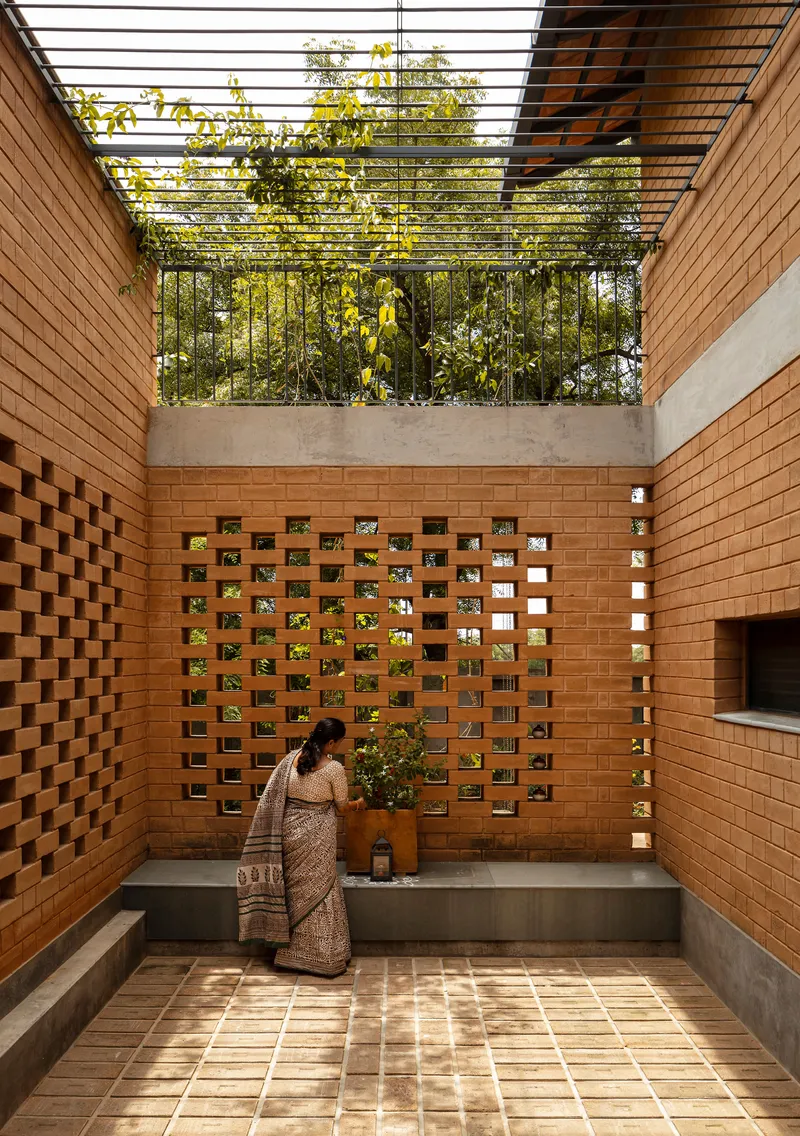
All the photographs are works of Niveditaa Gupta




Popular Articles
Popular articles from the community

EW PARK: Sustainable Architecture Reimagines the Future of Urban Parking
EW PARK reimagines city parking as a modular wooden tower combining automation, solar energy, electric mobility, and adaptable urban design.

Riyadh For All: Intergenerational Urban Design for Active Aging in Rabat
Riyadh For All reimagines urban design in Rabat with intergenerational co-living, adaptive courtyards, and Moroccan cultural exchange today.

Conexión: Biophilic Design Reimagines High-Rise Living in Hong Kong
Conexión reimagines high-rise living in Hong Kong through biophilic design, green facades, shared spaces, daylight, water and nature within.

Co-Life: Senior Housing Design That Reconnects Older Adults With the City
Co-Life reimagines senior housing design through healing gardens, shared streets, workshops, and a sustainable community across generations.

Similar Reads
You might also enjoy these articles


Hodi-Mandai Geram
Project Function: Preservation and revitalization of the Intangible heritage and socio-spatial identity of the Hodi by Housing, Cultural Memory Center, Sacred Grove, landscape, local tourism economy


Olio Towers: A Mid-Rise for Performers That Fuses Housing, Rehearsal, and Stage
Located blocks from Houston's Theater District, this modular tower stacks living units around a central performance atrium.

Oasis: Modular Green Housing Carved into Dhaka's Urban Fabric
A shortlisted Plugin Housing entry reclaims unauthorized settlements in Dhaka with stepped concrete volumes, green roofs, and ventilation-driven design.

Black Hole: A Floating Megastructure for the Post-Physical Era
Emiliano Mazzarotto envisions a spherical, self-scaling arena where e-sports, digital hotels, and holographic stadiums replace traditional public space.


Explore Housing Competitions
Discover active competitions in this discipline



Challenge to reimagine the Iron Throne


Photograph architecture without architects


Illustrate the lost glory of Angkor Wat - Render Challenge


Design challenge to reuse E-waste
Comments (0)
Please login or sign up to add comments
No comments yet. Be the first to comment!