
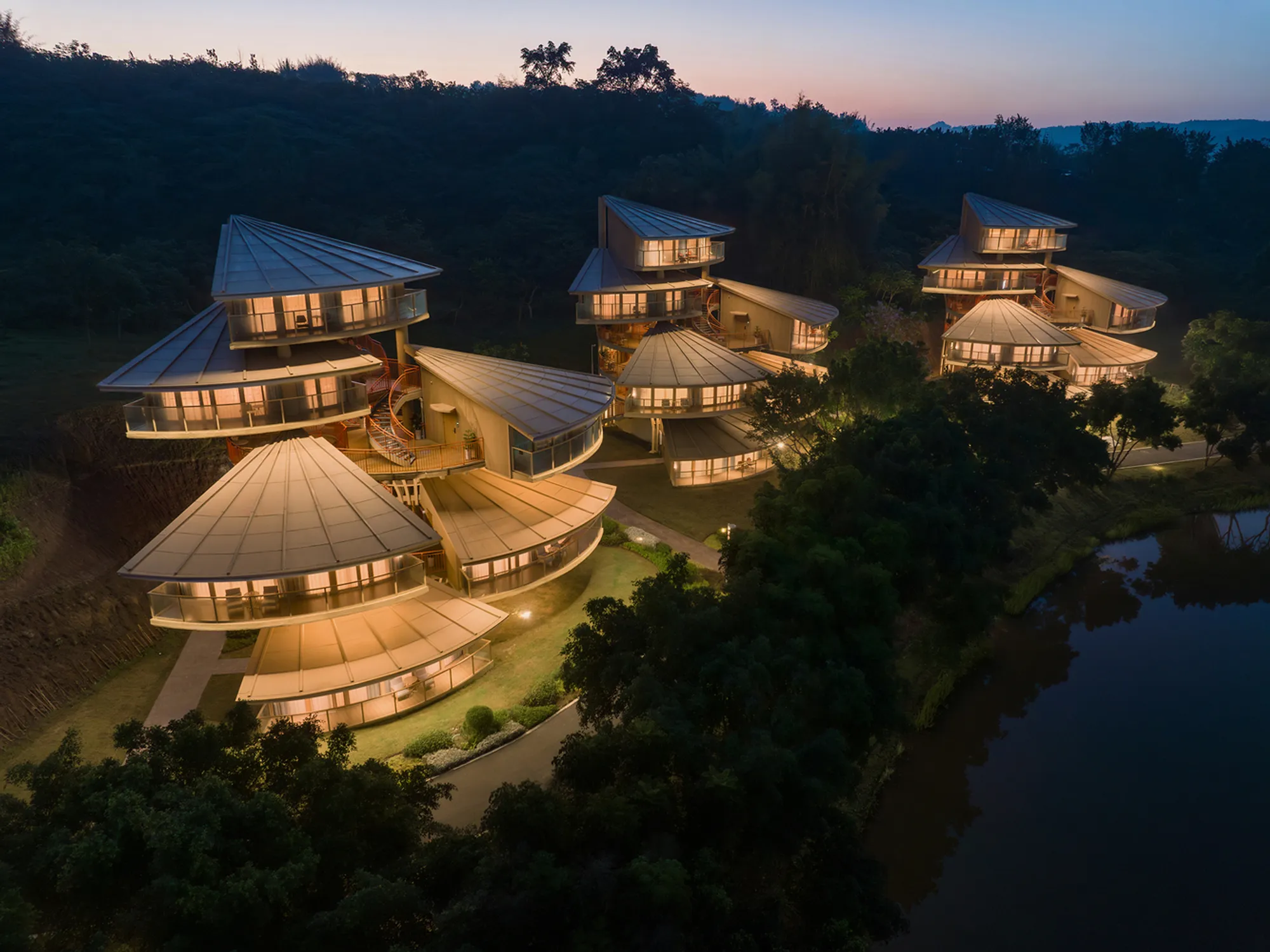
Nanxi Happy Pastoral Wild Hotel Tree House Design by WH Studio: A Modern Architectural Retreat in Yibin
Nanxi Happy Pastoral Wild Hotel’s treehouses by WH Studio blend organic leaf-inspired design, cantilevered structures, and immersive nature experiences in Yibin.


Nanxi Happy Pastoral Wild Hotel’s treehouse design represents a bold evolution in sustainable, nature-integrated architecture. Nestled in the lush landscapes of Yibin’s Nanxi District, this project is the next iteration of WH Studio’s acclaimed treehouse design, building on the success of the Hangzhou Xianghu Senbo Resort Hotel treehouse completed in 2019. That original version quickly became a cultural tourism icon, widely featured in both domestic and international media, and celebrated as a prime filming location for advertising and social campaigns.
Conceptual Vision: Treehouse 2.0
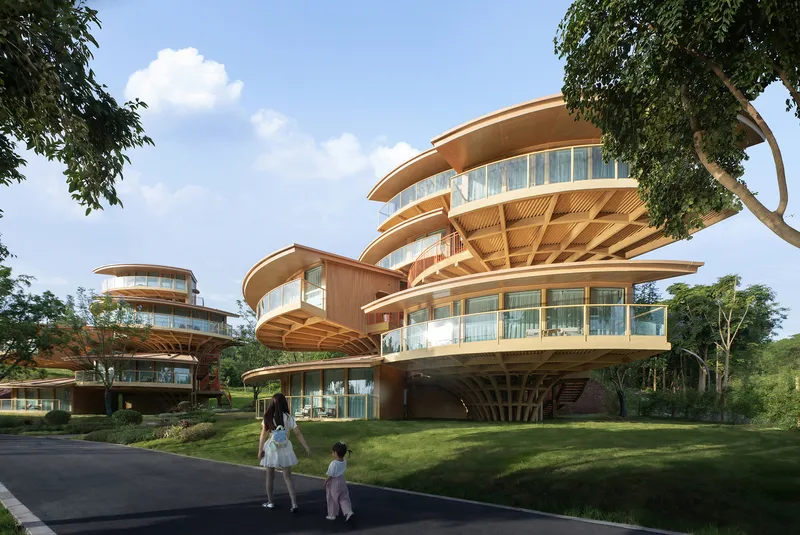
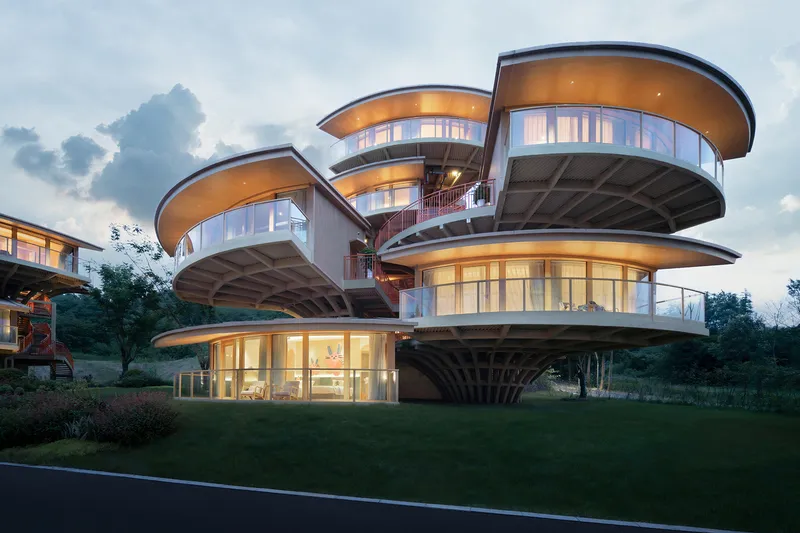
WH Studio approached the Nanxi project as Treehouse 2.0, evolving the concept from the original "nest-like" aesthetic to a more abstract, organic, and suspended architectural form. Inspired by the structure of leaves, the design seeks to balance natural light exposure, wind resistance, and aesthetic fluidity. Leaves are one of the most prevalent biological forms on Earth, their cantilevered structure providing a blueprint for architectural innovation.
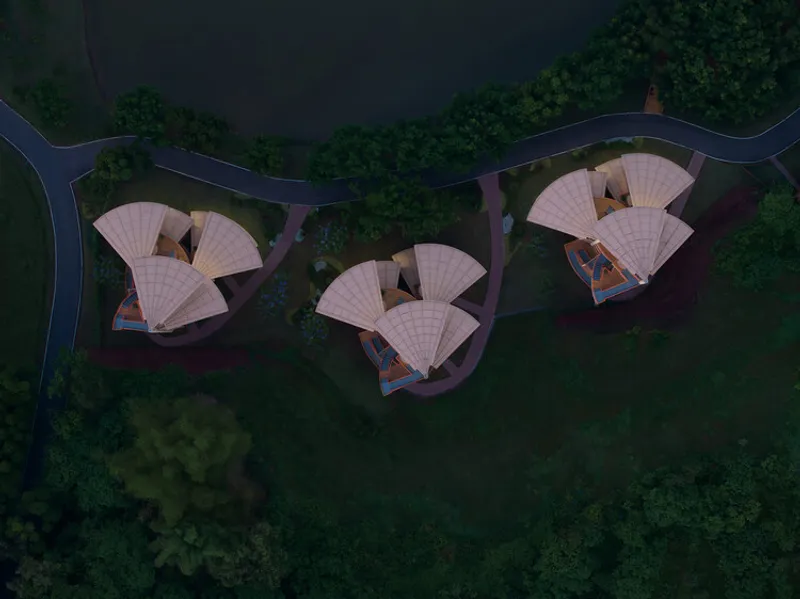
The design draws particular inspiration from Ginkgo biloba leaves, celebrated for their classical elegance and evolutionary resilience. With their fan-shaped form and uniform forked veins, ginkgo leaves optimize sunlight capture while enduring wind and rain. Similarly, the Nanxi treehouses employ a forked-vein-inspired structural system, with staggered guest room units positioned at different heights, each oriented to maximize scenic views while maintaining privacy and comfort.
Architectural Form and Structure
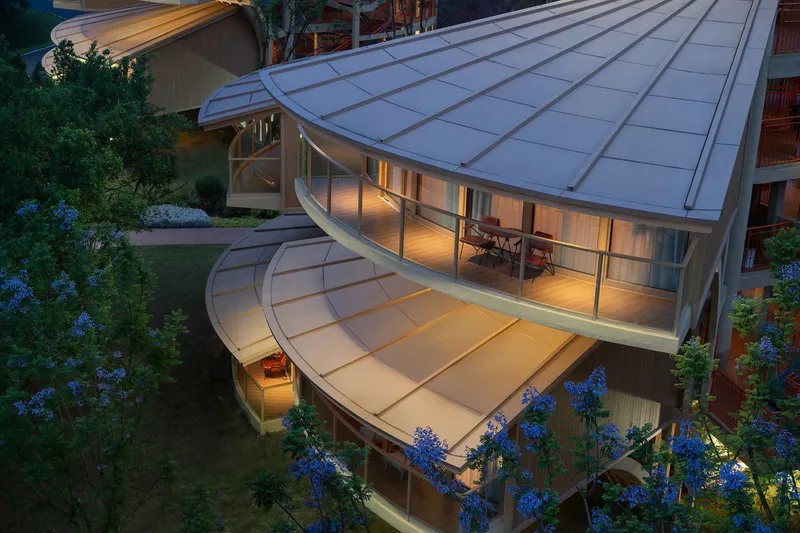
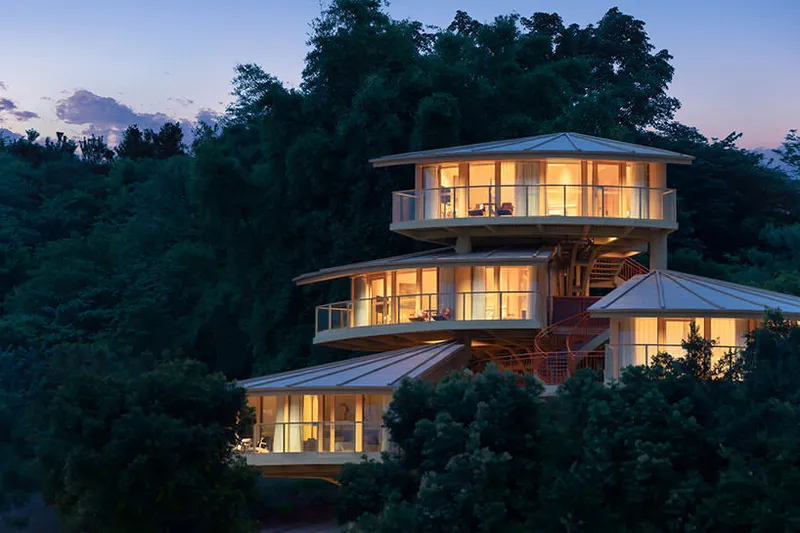
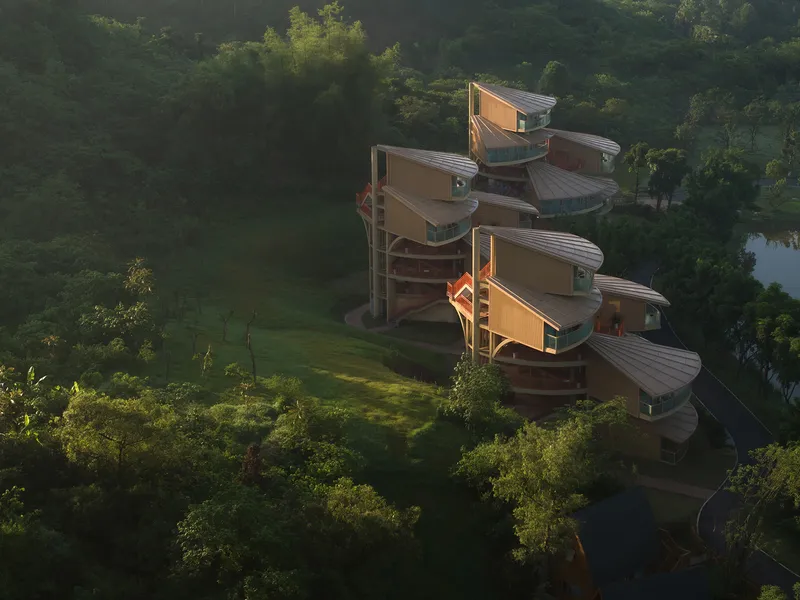
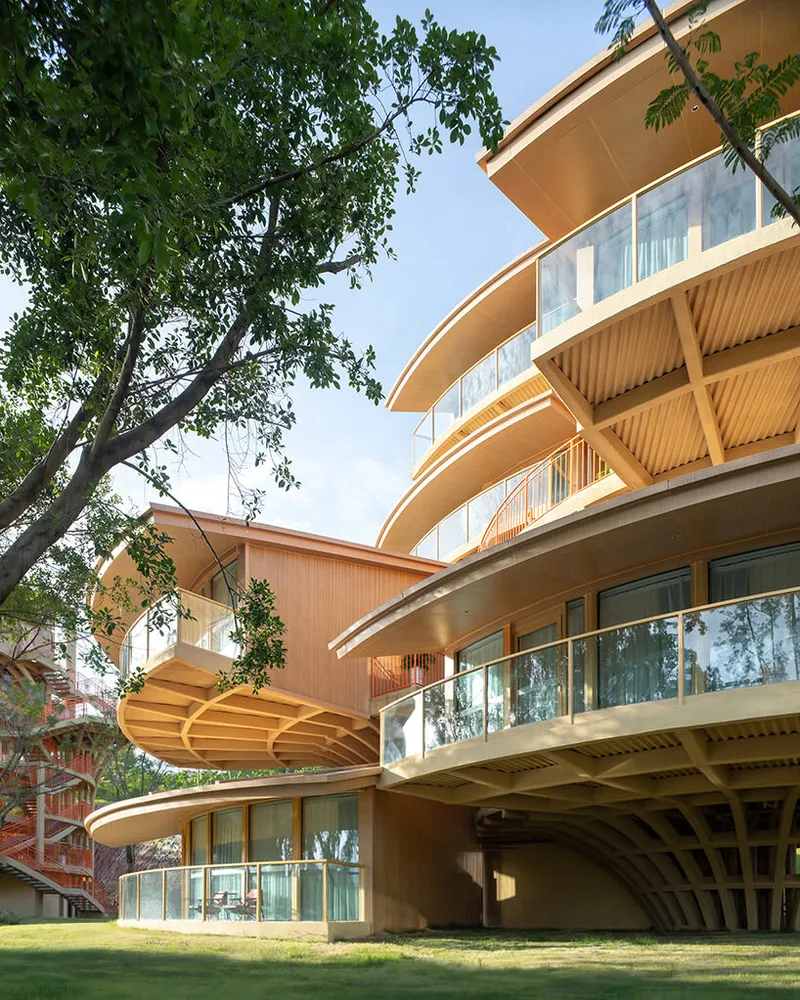
Each treehouse unit is an independent, fan-shaped architectural module supported by three main steel columns forming a stable triangular frame. Additional leaf-vein-like structural columns provide support for the cantilevered floors, while smaller steel elements integrate seamlessly into window frames and roof slopes. This intricate arrangement creates a sense of floating above the landscape, echoing the natural experience of perching on tree branches.
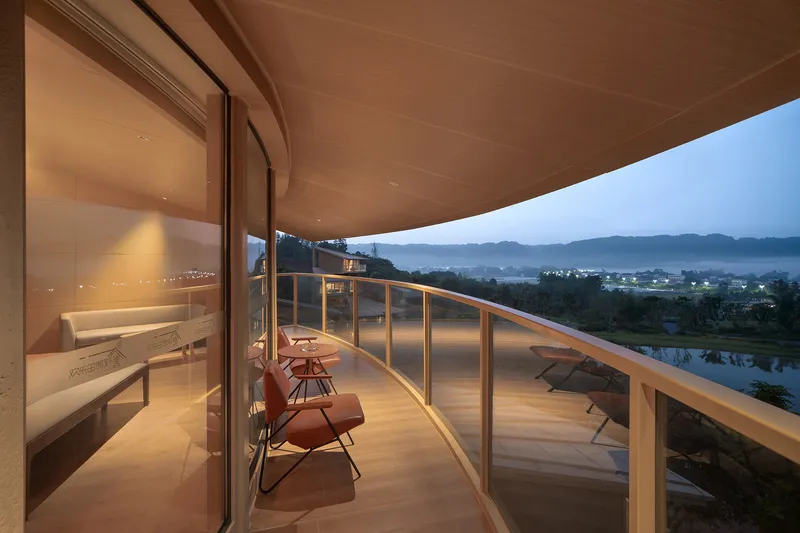
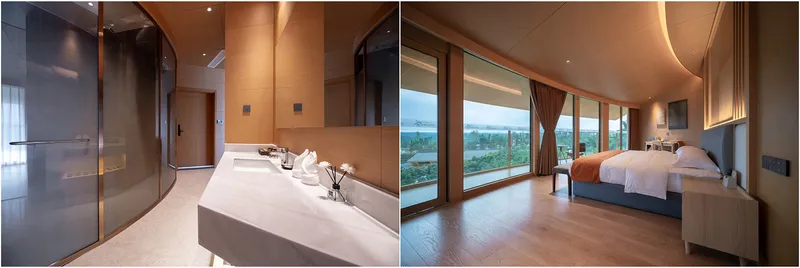
The interior design emphasizes simplicity, privacy, and clean spatial flow. Circular circulation paths guide visitors from the entrance to the living space, while curved balconies—approximately 12 meters long—offer panoramic views of the surrounding pastoral landscape. Interior spaces, including bathrooms, are thoughtfully proportioned to enhance the feeling of intimacy without compromising the open connection to nature.
Experiential Design: Nature Meets Comfort
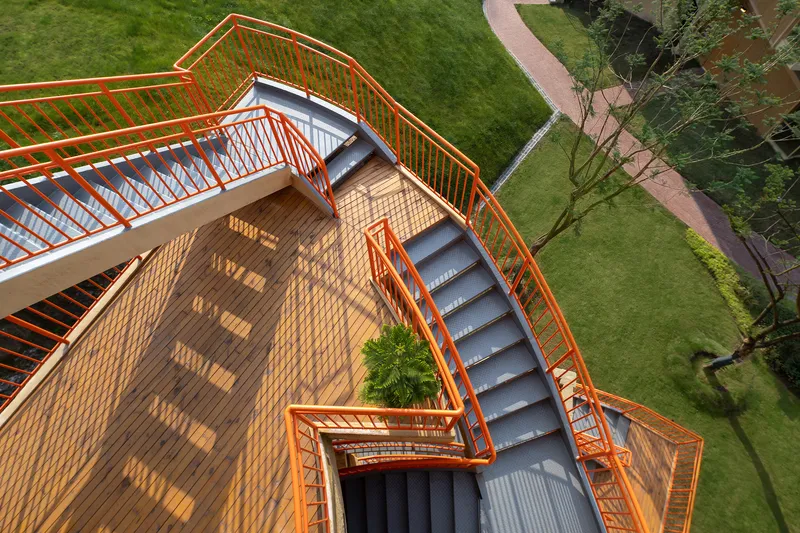
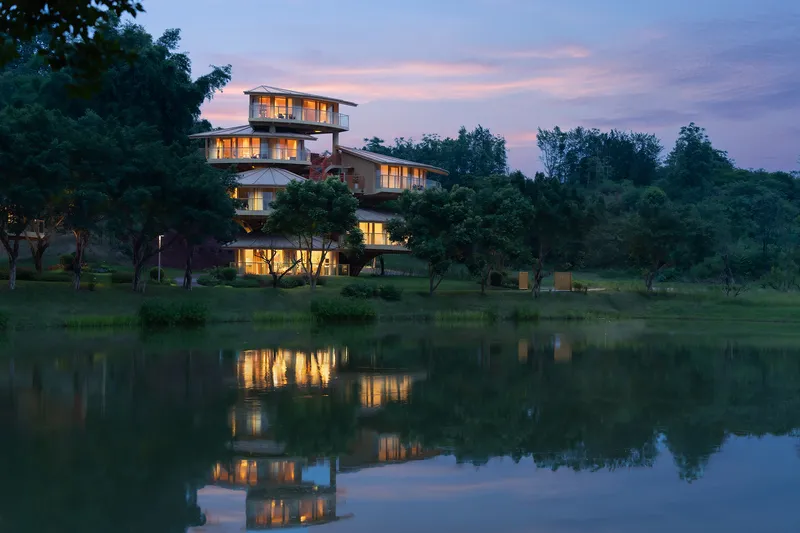
With slender, curved columns and large cantilevers, the treehouses convey lightness and suspension, evoking the sensation of floating amidst treetops. Each of the three buildings houses six guest rooms at varying elevations, with the highest floor reaching 14.4 meters. Compliance with safety regulations required dual evacuation staircases per unit, cleverly integrated to maintain the visual elegance of the structures.
Outdoor decks at each level serve as communal and recreational spaces, ideal for family activities or quiet reflection. Guests can enjoy immersive experiences in nature: listening to birdsong, feeling the breeze, or simply observing the landscape. The design achieves a harmonious balance, offering solitude and community, creating an architectural environment where visitors can feel truly “one with nature.”
Sustainability and Cultural Integration
The Nanxi Happy Pastoral Wild Hotel treehouse combines sustainable design, cultural sensitivity, and innovative architectural expression. By interpreting natural forms structurally and spatially, WH Studio creates a unique lodging experience that is both environmentally responsible and visually striking. This project reinforces the appeal of eco-tourism architecture in China, setting a new benchmark for treehouse design that integrates seamlessly with its natural surroundings.
All photographs are works of Prism Image




Popular Articles
Popular articles from the community


Co-Life: Senior Housing Design That Reconnects Older Adults With the City
Co-Life reimagines senior housing design through healing gardens, shared streets, workshops, and a sustainable community across generations.

Hill & Cross Opera: Sculptural Opera House Architecture Shaped by Tallinn’s Landscape and Identity
Hill & Cross Opera reimagines opera house architecture in Tallinn through its sculptural hill, civic plaza, glass wave and a luminous cross.

The Ocean Hive: Sustainable Architecture for a Self-Sufficient Civilization at Sea
The Ocean Hive imagines sustainable architecture at sea, where modular habitats, algae, wave power and ocean waste sustain a growing colony.

Riyadh For All: Intergenerational Urban Design for Active Aging in Rabat
Riyadh For All reimagines urban design in Rabat with intergenerational co-living, adaptive courtyards, and Moroccan cultural exchange today.

Similar Reads
You might also enjoy these articles


Hodi-Mandai Geram
Project Function: Preservation and revitalization of the Intangible heritage and socio-spatial identity of the Hodi by Housing, Cultural Memory Center, Sacred Grove, landscape, local tourism economy


Olio Towers: A Mid-Rise for Performers That Fuses Housing, Rehearsal, and Stage
Located blocks from Houston's Theater District, this modular tower stacks living units around a central performance atrium.

Oasis: Modular Green Housing Carved into Dhaka's Urban Fabric
A shortlisted Plugin Housing entry reclaims unauthorized settlements in Dhaka with stepped concrete volumes, green roofs, and ventilation-driven design.

Black Hole: A Floating Megastructure for the Post-Physical Era
Emiliano Mazzarotto envisions a spherical, self-scaling arena where e-sports, digital hotels, and holographic stadiums replace traditional public space.

Explore Sustainable Design Competitions
Discover active competitions in this discipline



Challenge to reimagine the Iron Throne


Photograph architecture without architects


Illustrate the lost glory of Angkor Wat - Render Challenge


Design challenge to reuse E-waste
Comments (0)
Please login or sign up to add comments
No comments yet. Be the first to comment!