
Naples Street House by Edition Office: A Multi-Generational Sustainable Home in Australia
The Naples Street House by Edition Office is a sustainable, multi-generational home featuring a brick facade, central courtyard, and passive solar design.


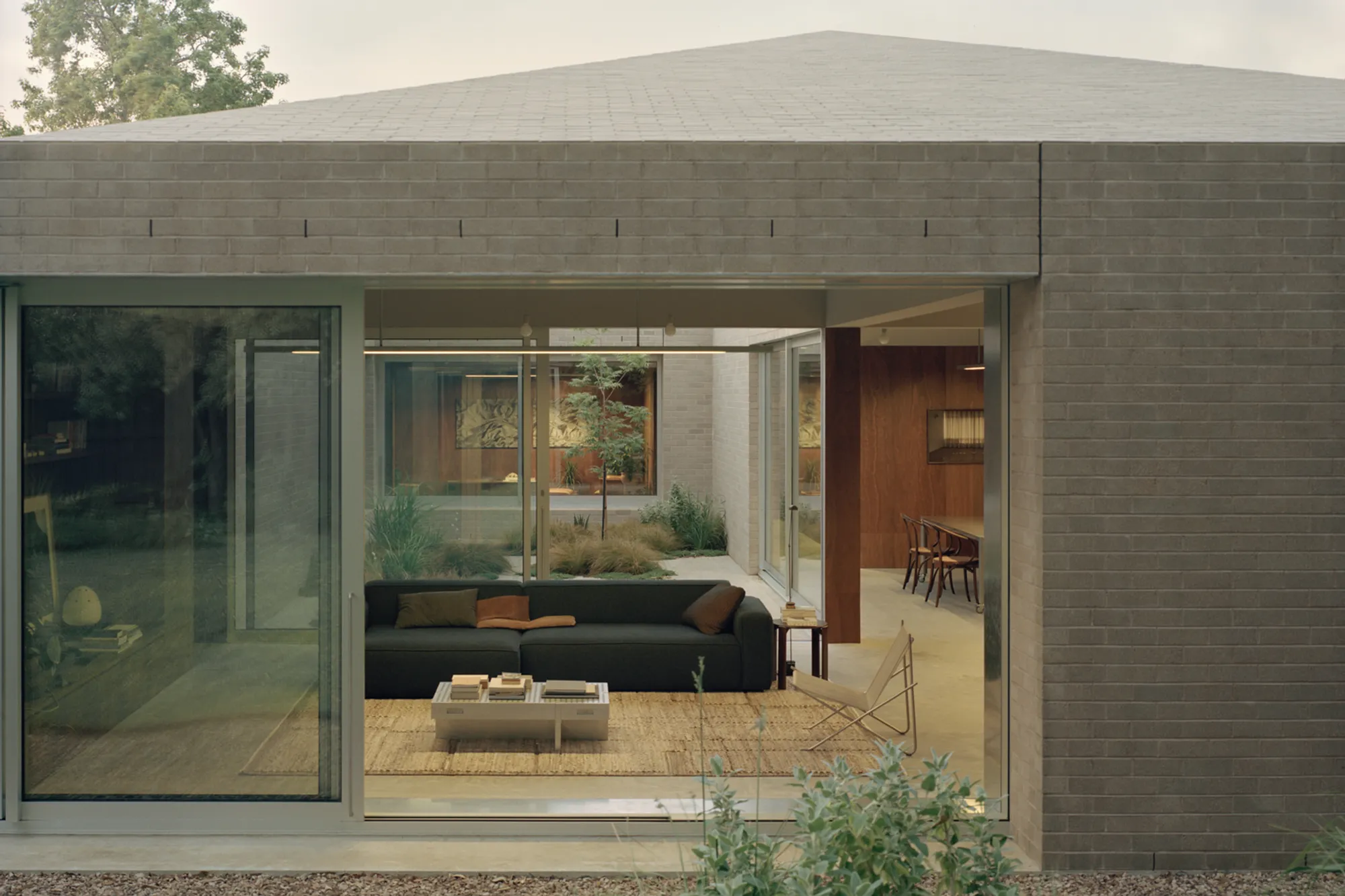
The Naples Street House in Australia, designed by Edition Office, exemplifies thoughtful architecture for multi-generational living. Completed in 2023, this innovative residence harmonizes sustainable materials, natural light, and spatial fluidity while embracing the subtleties of its urban context. Photographed by Tasha Tylee, the house showcases a seamless blend of robust brick exteriors, warm interiors, and an intimate connection to nature.
A Compact Footprint with Expansive Design
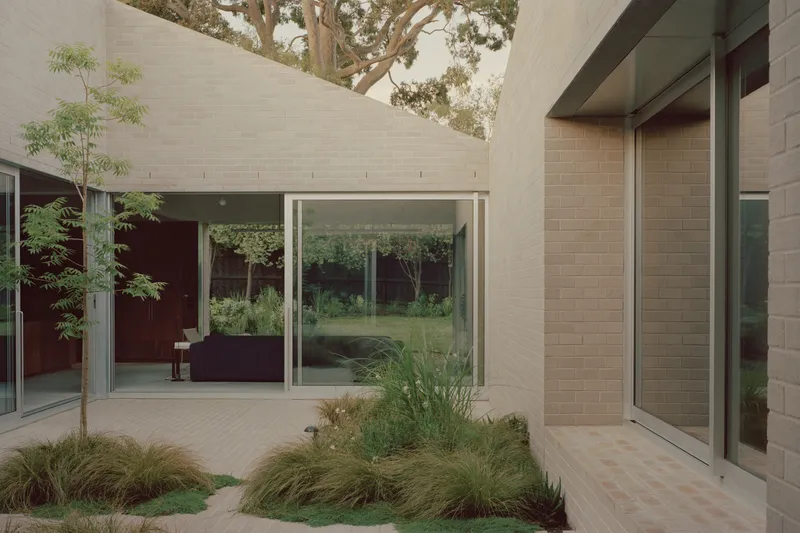
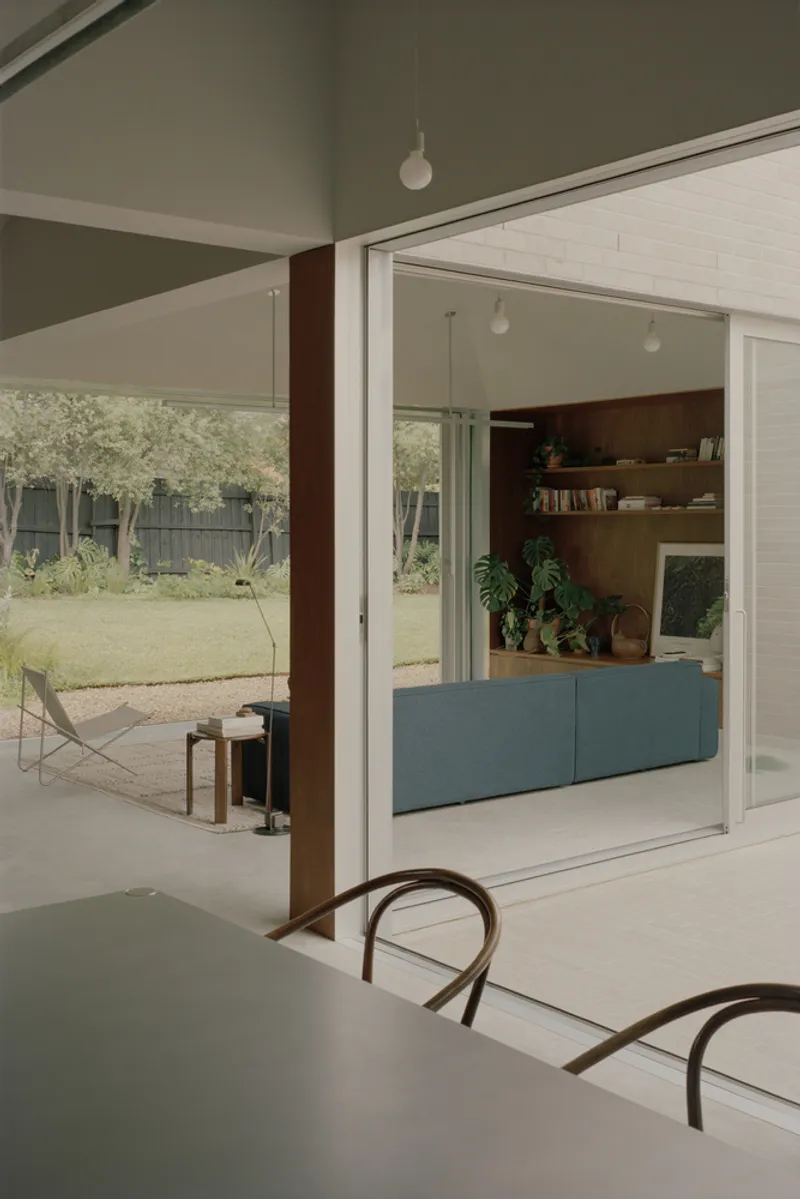
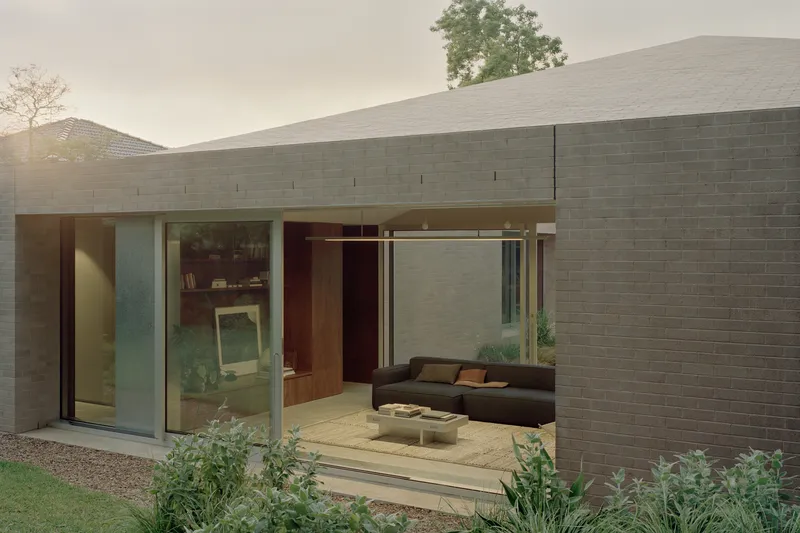
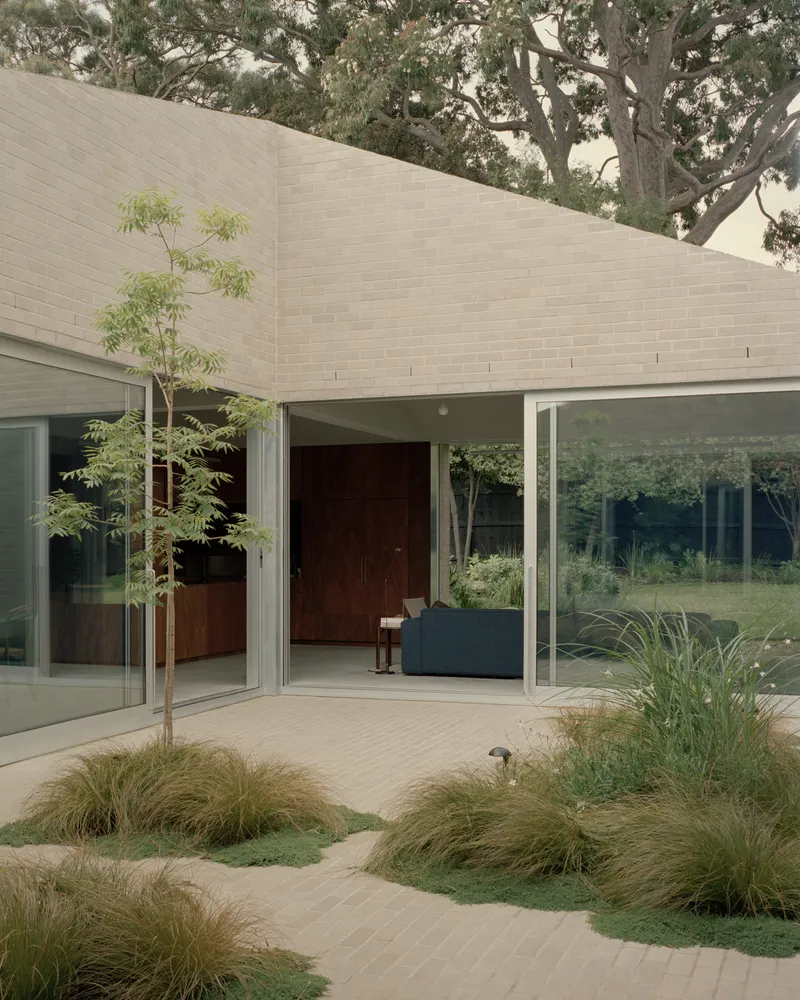
Despite its modest footprint, the Naples Street House creates a sense of openness through inward-facing architecture. The house wraps around a central garden courtyard, forming a private outdoor room that invites northern sunlight deep into the home. The undulating folded roofline choreographs views, ensuring that interiors encounter only the sky and neighboring trees, fostering privacy while connecting occupants to seasonal changes.
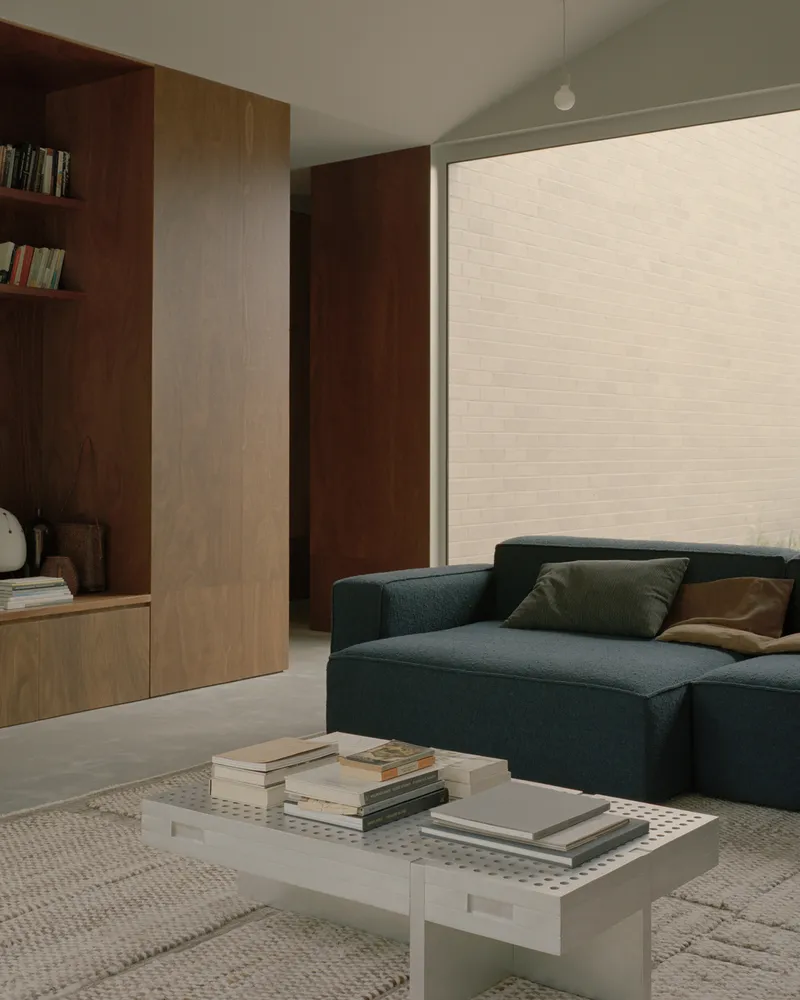
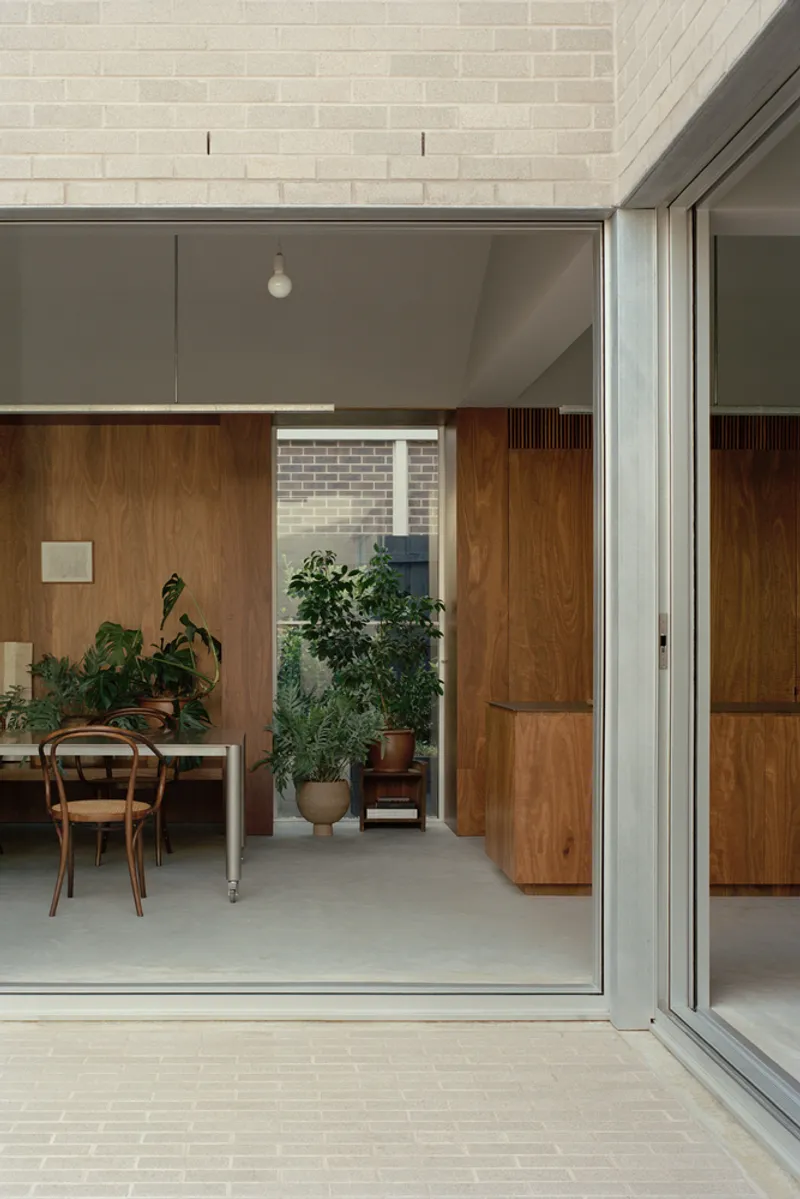
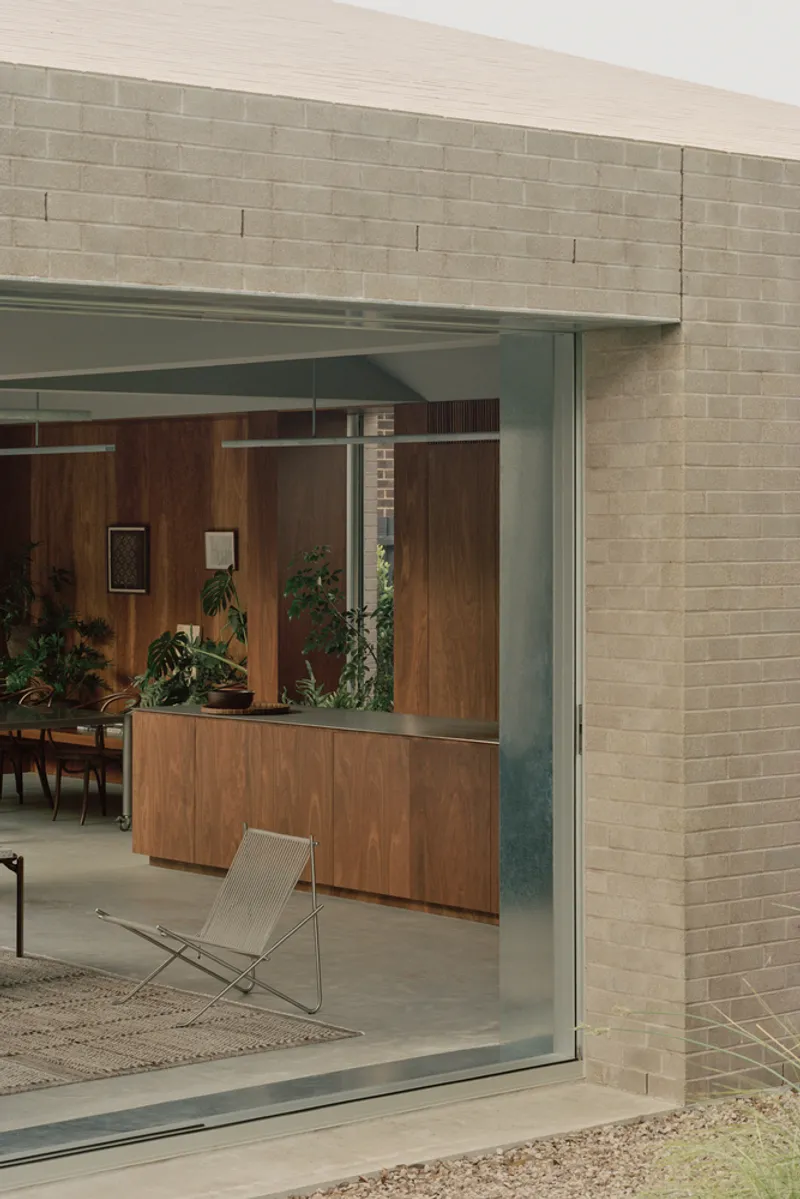
The exterior presents a unified brick facade, wrapping over the pitched and folded roof forms down into the courtyard. This material choice reflects the traditional interwar houses of the neighborhood while offering a modern, solid presence. Importantly, all bricks are Carbon Neutral, contributing to the home’s low environmental footprint and long-term sustainability.
Multi-Generational Living in Mind
Designed for three generations of one family, the home accommodates clients, their children, and elderly parents. Twin principal bedroom suites for the elders occupy opposing corners of the house, mirrored by the alternating roof forms. This creates a rhythmic spatial experience as occupants circulate around the central courtyard, reflecting cycles of rising and falling forms.
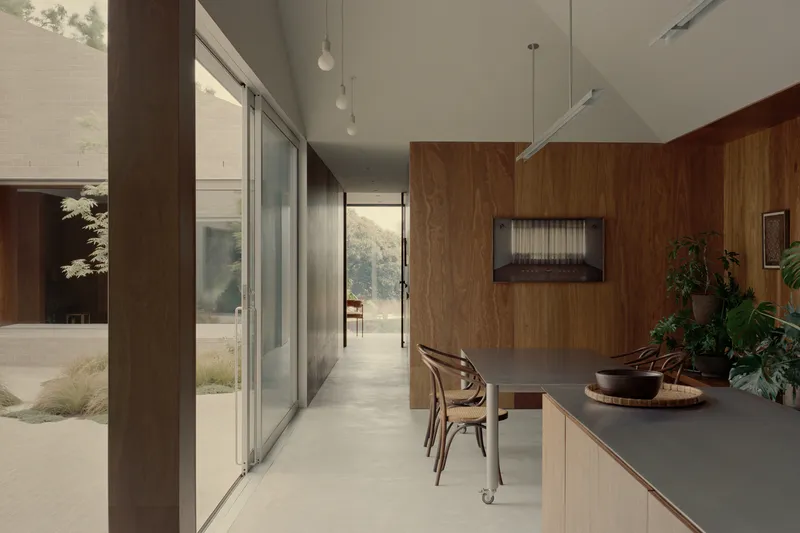
Bedrooms and bathing areas are positioned in the eastern wing, separated from social spaces by an axial hallway. This hallway connects the front entry to the rear garden, providing filtered light and fluid circulation throughout the home.
Rich and Sustainable Interior Materials
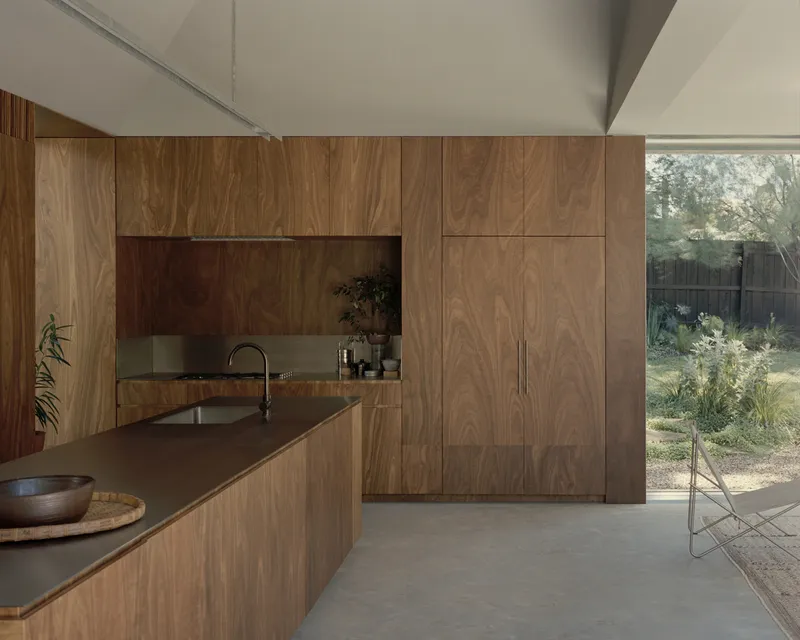
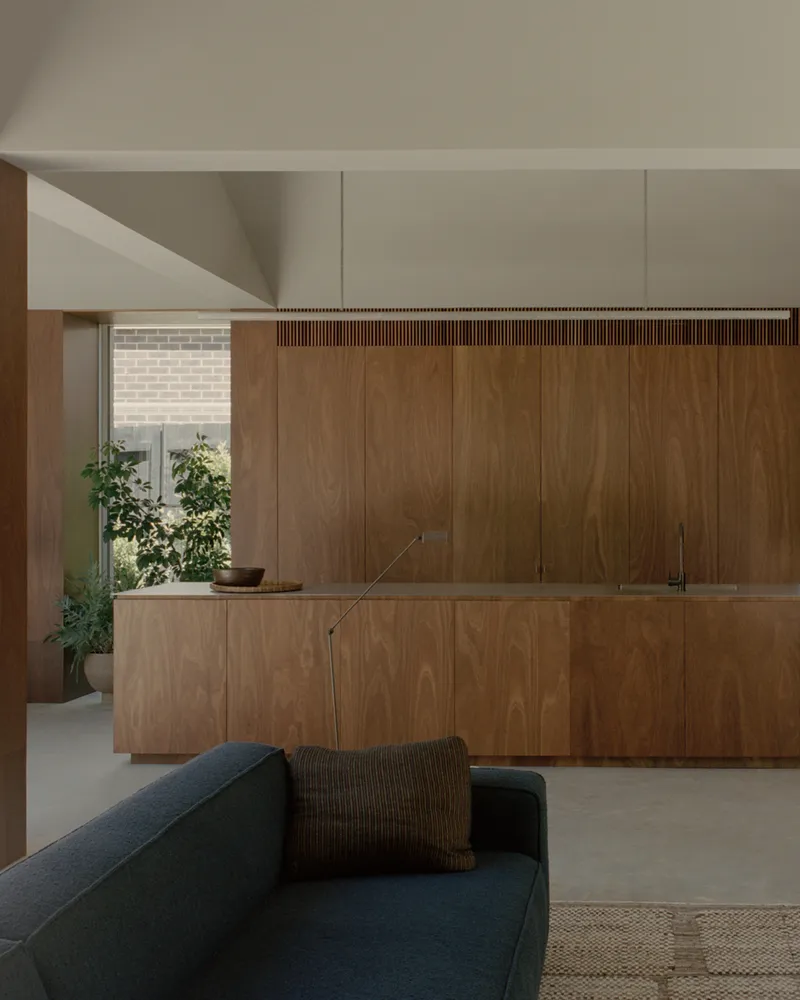
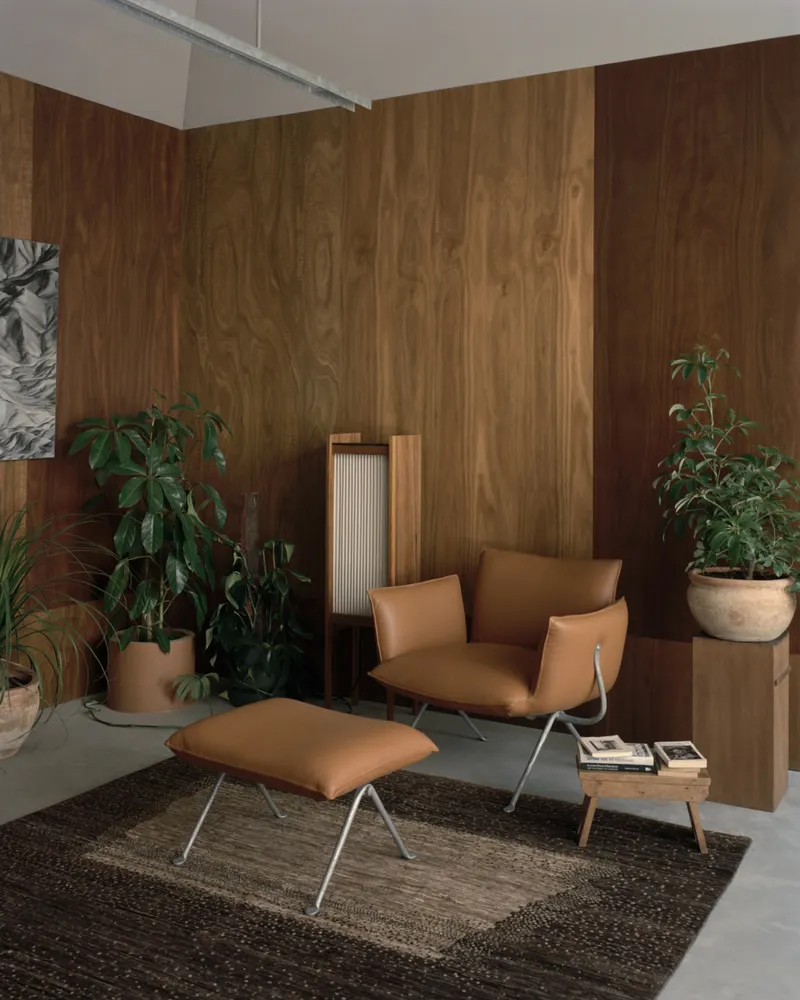
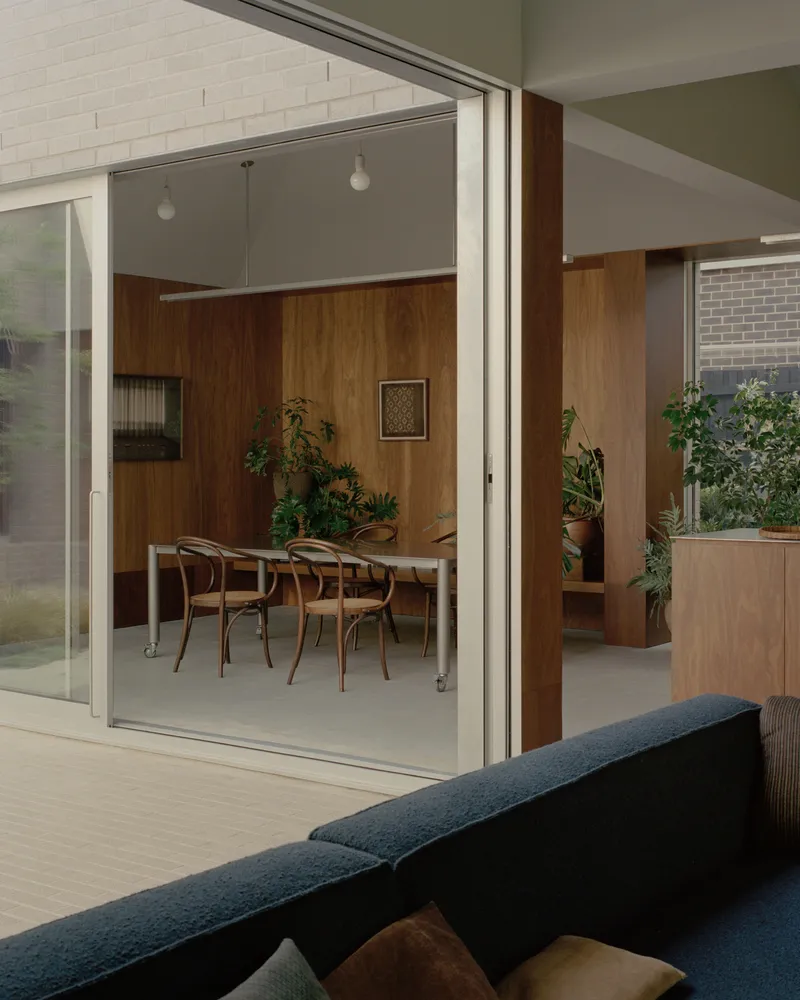
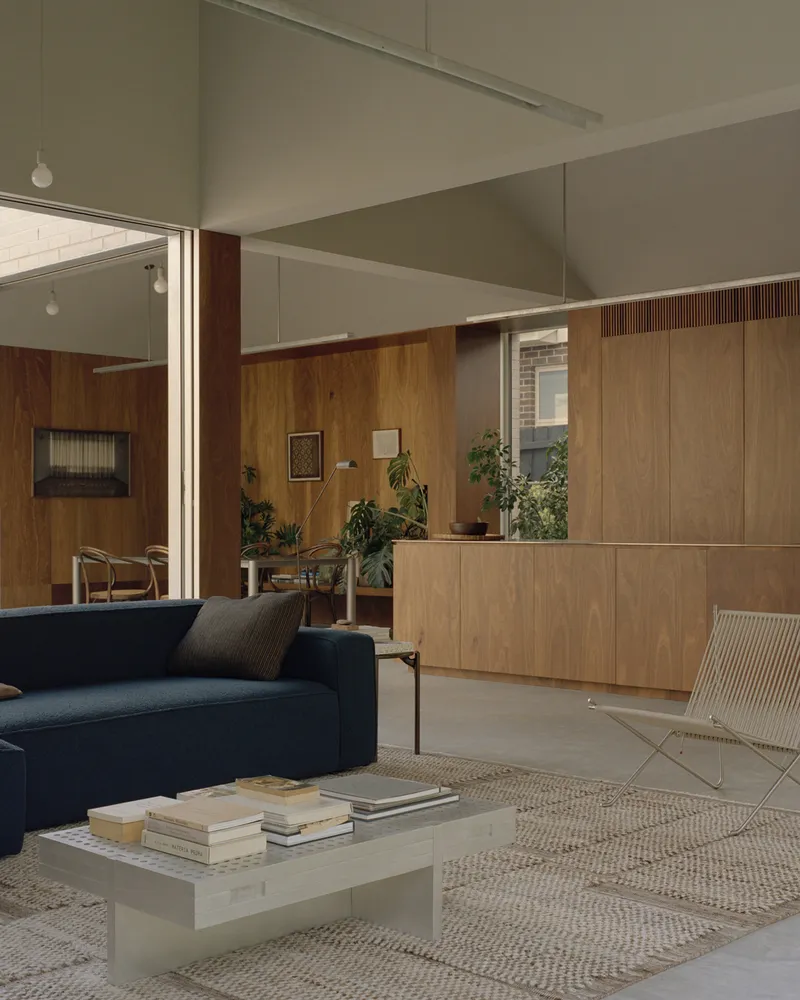
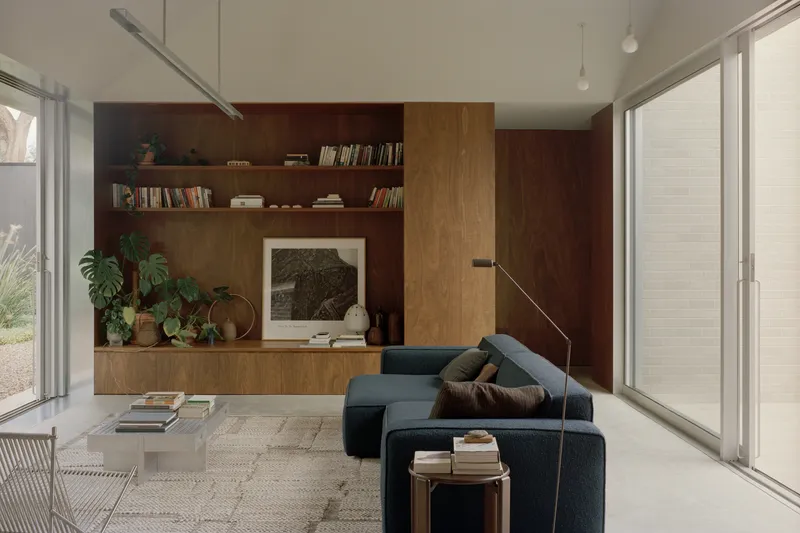
Inside, the Naples Street House offers a tactile contrast to its sharp brick exterior. Social spaces are lined with locally sourced spotted gum plywood, finished with a wax treatment for texture and warmth. Floors are burnished concrete, doubling as the structural slab and finished surface, reducing material use and additional costs.
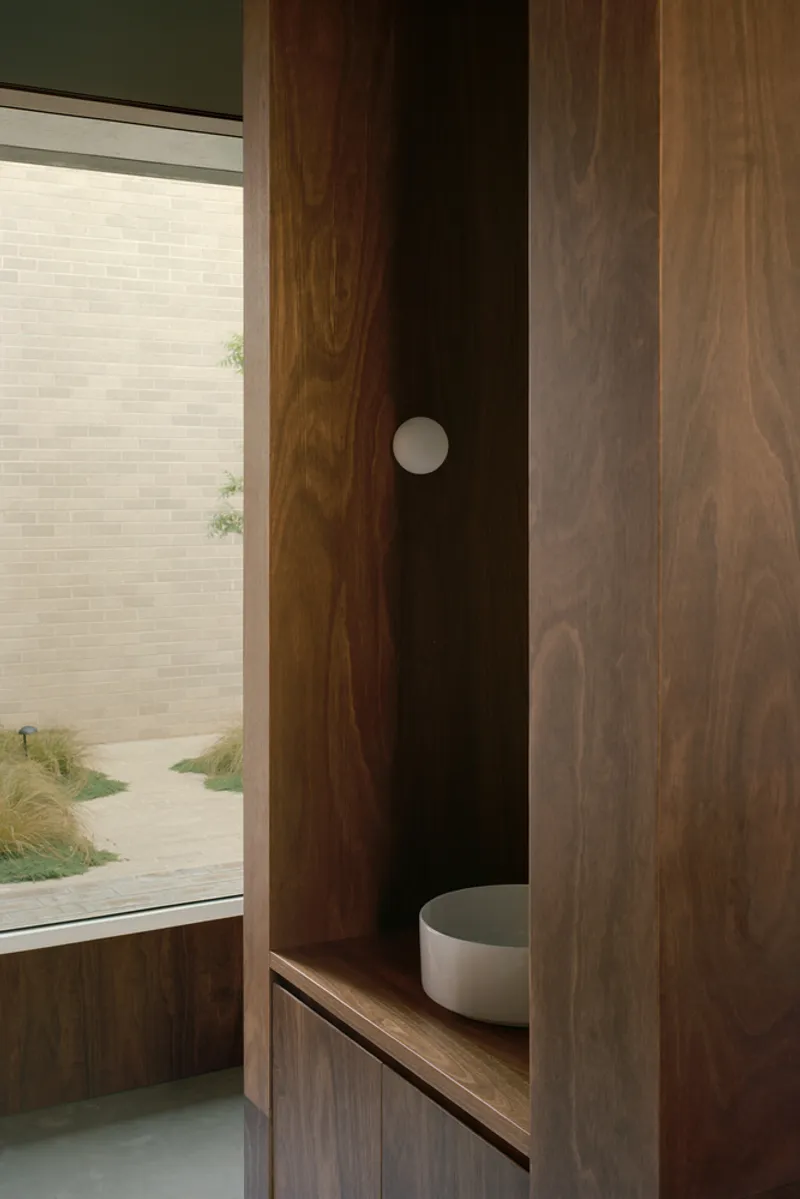
The living, dining, and kitchen areas feature soft grey undulating ceilings, accentuating light and shadow across folded planes. Bedrooms maintain a muted grey palette, allowing natural light from the garden to create a gentle, ever-changing interior ambiance.
Passive Design and Environmental Responsiveness
The central garden room acts as a thermal regulator, allowing winter sun to passively warm the concrete floors while providing natural shade in summer. Numerous windows and doors enable cross-flow ventilation, creating a naturally comfortable indoor climate year-round.
Externally, the house is set back from eastern and northern boundaries to maximize sunlight access and preserve views of a majestic gum tree. Over time, thick gardens along these edges create a buffer for privacy and ecological integration.
Harmonizing Tradition and Innovation
The Naples Street House represents a thoughtful synthesis of traditional forms and contemporary design. Its brick exterior nods to the interwar architecture of the neighborhood, while its folded rooflines, central courtyard, and sustainable material palette demonstrate a modern approach to residential architecture.
By prioritizing multi-generational functionality, environmental sustainability, and spatial intimacy, the home embodies a model for future-focused urban living in Australia.
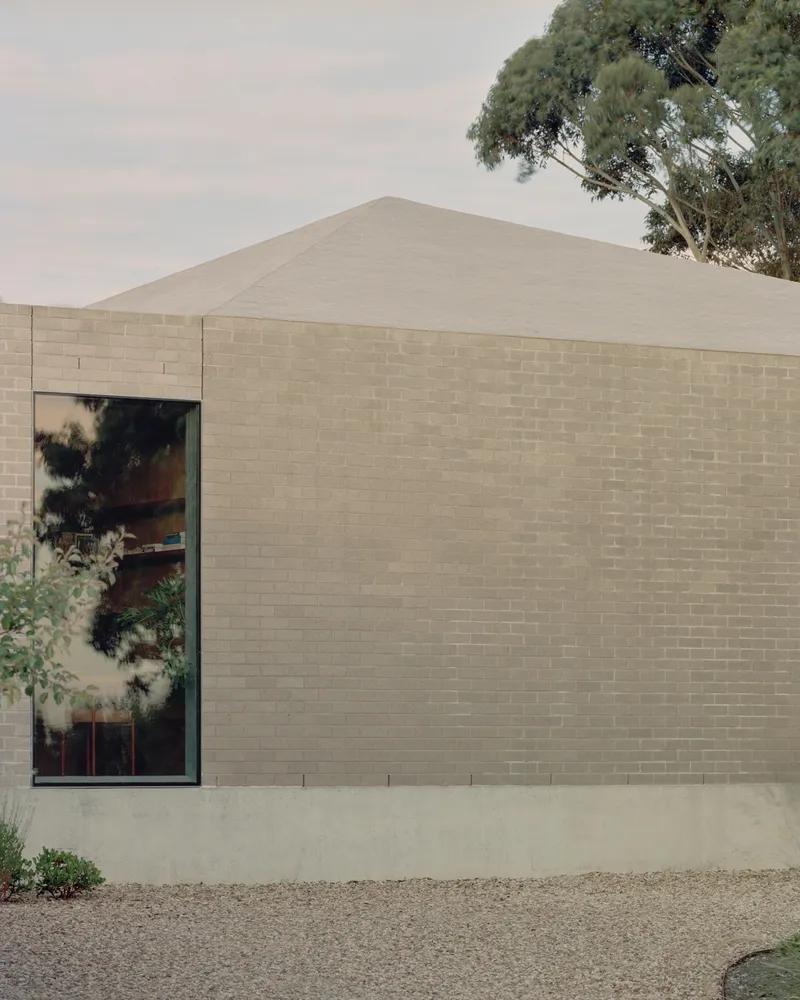
All photographs are works of
Tasha Tylee



Popular Articles
Popular articles from the community


The Earth Pod: 3D Printed Homes for Resilient Refugee Communities
The Earth Pod reimagines refugee housing through 3D printed homes made from clay, combining resilience, self-sufficiency, and rapid shelter.

Co-life: Sustainable Architecture for Age-Friendly Community Living
Co-life reimagines sustainable architecture for seniors through courtyards, rammed earth, shared gardens, and spaces designed for belonging.

The Musturak Paradise: Senior Living Architecture for a Connected Future in Temara, Morocco
The Musturak Paradise reimagines senior living architecture in Temara via private homes, social spaces, culture, community, and shared care.

Conexión: Biophilic Design Reimagines High-Rise Living in Hong Kong
Conexión reimagines high-rise living in Hong Kong through biophilic design, green facades, shared spaces, daylight, water and nature within.


Similar Reads
You might also enjoy these articles

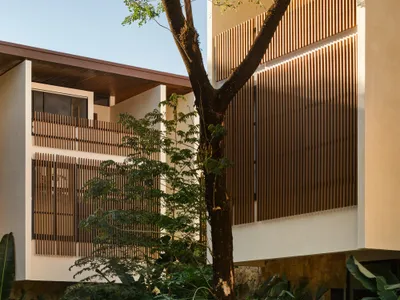
FAMM Arquitectura Organizes Ten Villas Around Courtyards and Jungle in Nosara, Costa Rica
El Molino pairs two elongated volumes with deep overhangs and timber louvers to build a compact coastal community five minutes from the beach.
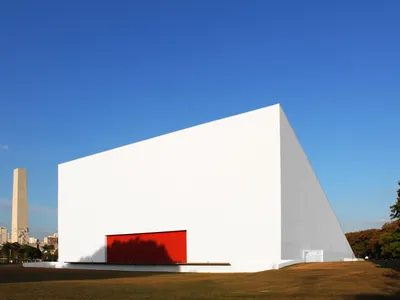
Oscar Niemeyer's Ibirapuera Park Pavilions Define São Paulo's Cultural Identity in Concrete and Curve
A constellation of modernist volumes set within São Paulo's most important urban park, conceived for the city's 400th anniversary in 1954.

How Henri Picq's 1889 Paris Pavilion Traveled 11,000 Kilometers to Become Santiago's Artequín Museum
A prefabricated iron and glass pavilion built for the Paris Universal Exposition found a second life as a children's art museum in Chile.
Sanjay Puri Architects Wraps a Jaipur Office Tower in Capsule-Shaped Green Buffers
A nine-level climate-responsive workplace near Jaipur Airport uses stacked planter terraces and aluminium screens to fight 40°C heat.


Explore Housing Competitions
Discover active competitions in this discipline



Challenge to reimagine the Iron Throne


Photograph architecture without architects


Illustrate the lost glory of Angkor Wat - Render Challenge


Design challenge to reuse E-waste
Comments (0)
Please login or sign up to add comments
No comments yet. Be the first to comment!