
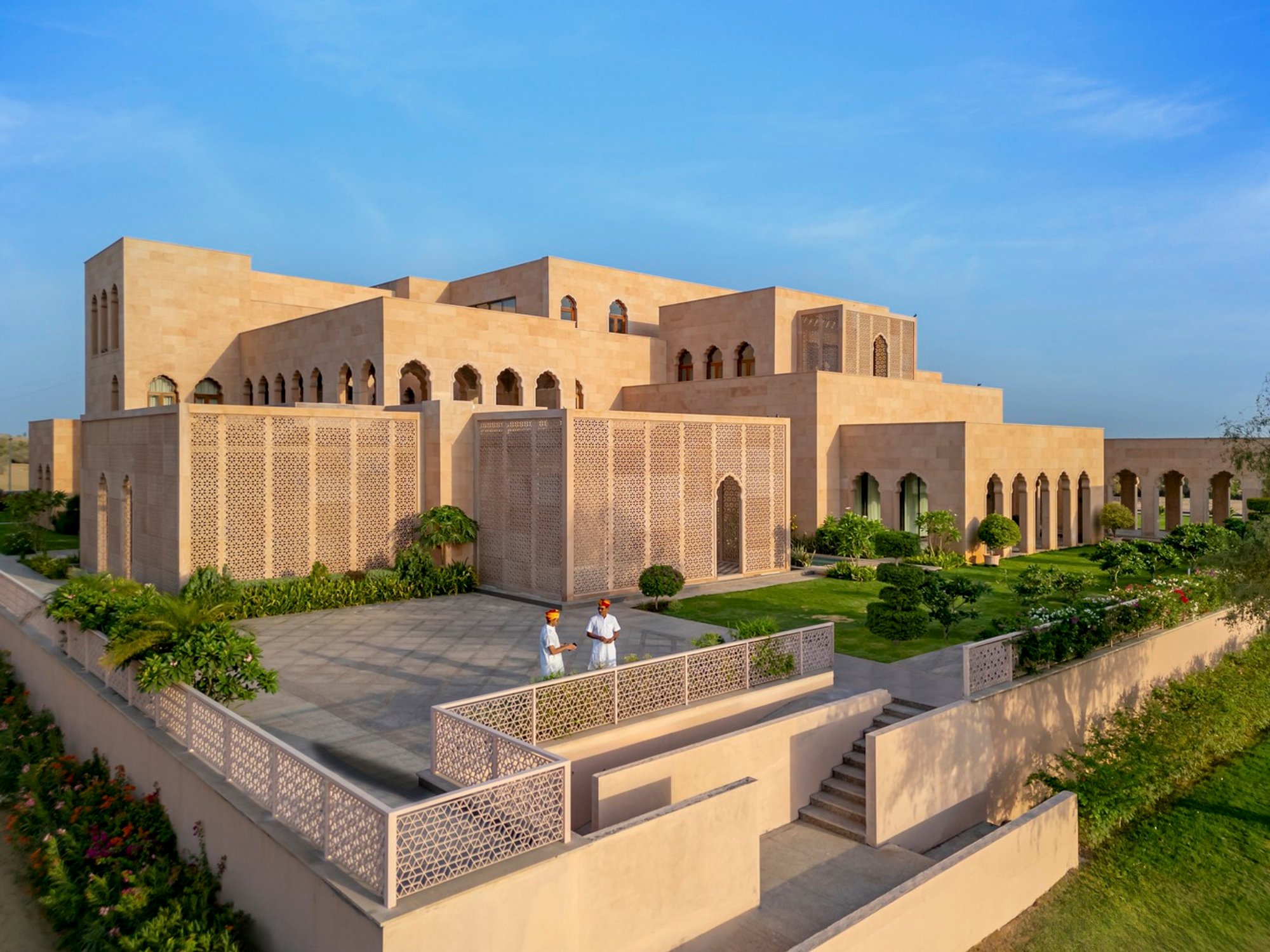
Narsighar House: Sustainable Desert Living with Traditional Rajasthani Architecture
Narsighar House by Sanjay Puri Architects in Rajasthan blends traditional Rajasthani courtyards, sandstone, and local craftsmanship for sustainable, multigenerational living.

Architects: Sanjay Puri Architects
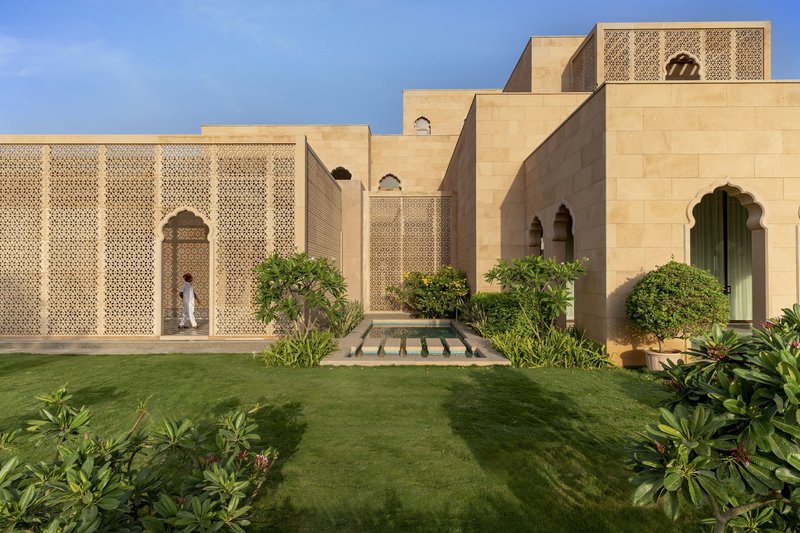
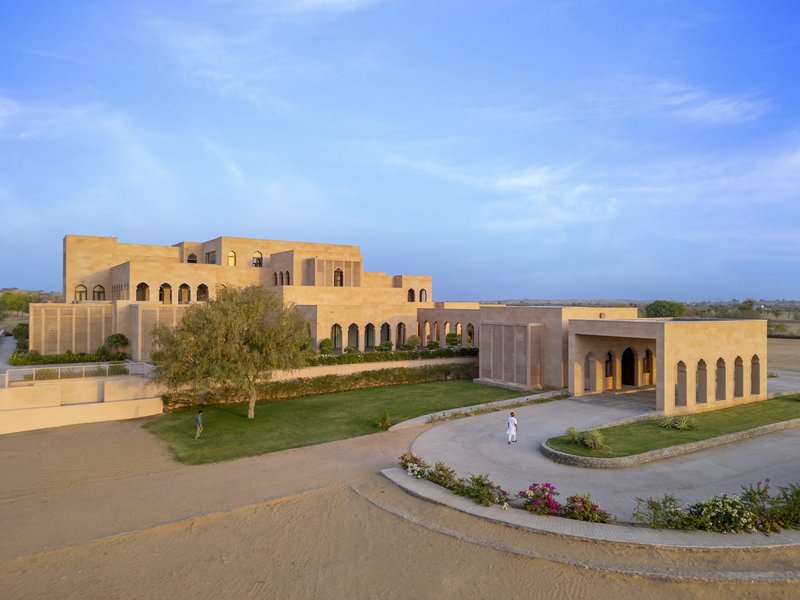
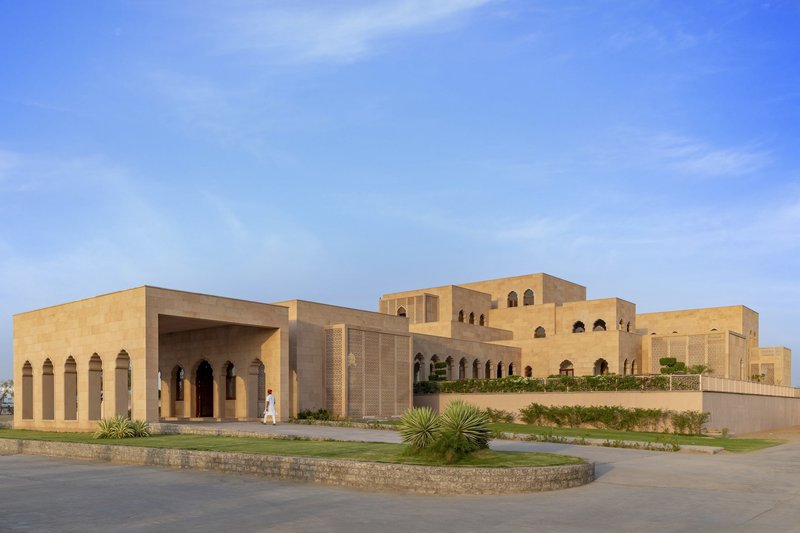
Nestled in the arid desert region of Nokha, Rajasthan, the Narsighar House exemplifies a seamless blend of traditional Rajasthani architecture and modern sustainable living. Drawing inspiration from centuries-old regional design principles, the house incorporates passive cooling strategies, thick sandstone walls, and stone jali screens, all historically used to mitigate extreme heat in desert climates.
Every design choice celebrates local heritage, from the arrangement of courtyards to the strategic placement of open spaces, ensuring the home remains cool while embracing natural light.
Courtyards and Sheltered Outdoor Spaces
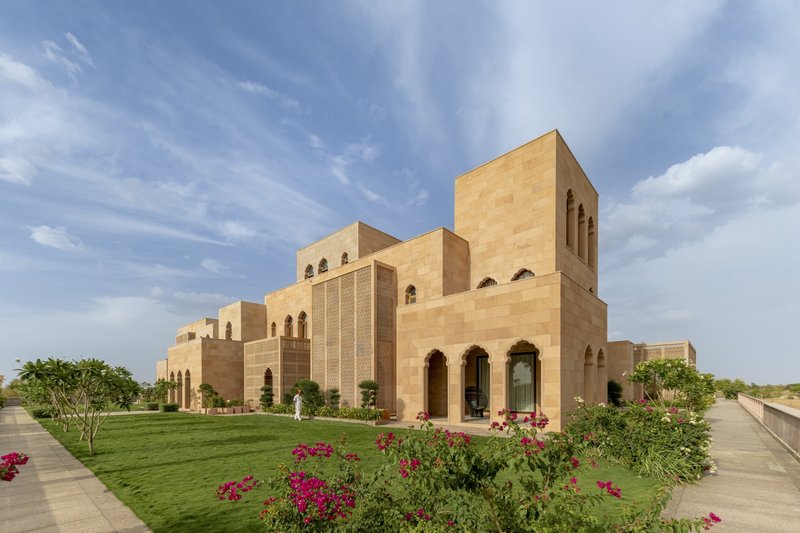
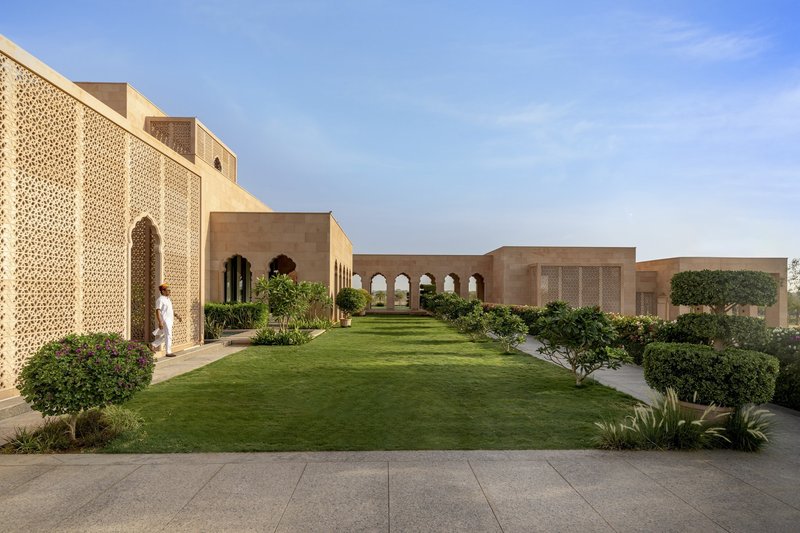
The home is punctuated by a series of central and peripheral courtyards, with all living spaces opening into these protected outdoor areas. These courtyards not only act as natural cooling zones but also safeguard interiors from the frequent sandstorms of the Thar Desert. Designed for a multigenerational family, the house features nine bedrooms and flexible multifunctional living spaces, creating a fluid connection between indoor and outdoor environments.
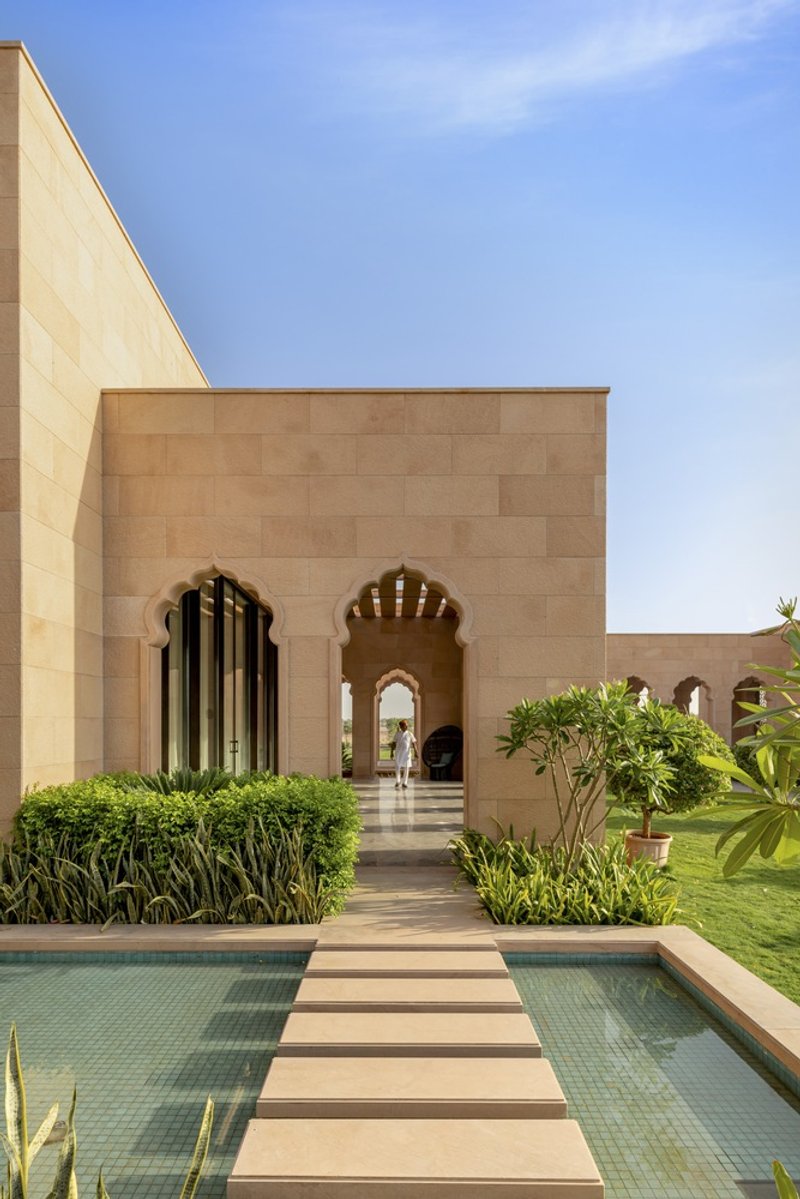
Revival of Traditional Rajasthani Craftsmanship
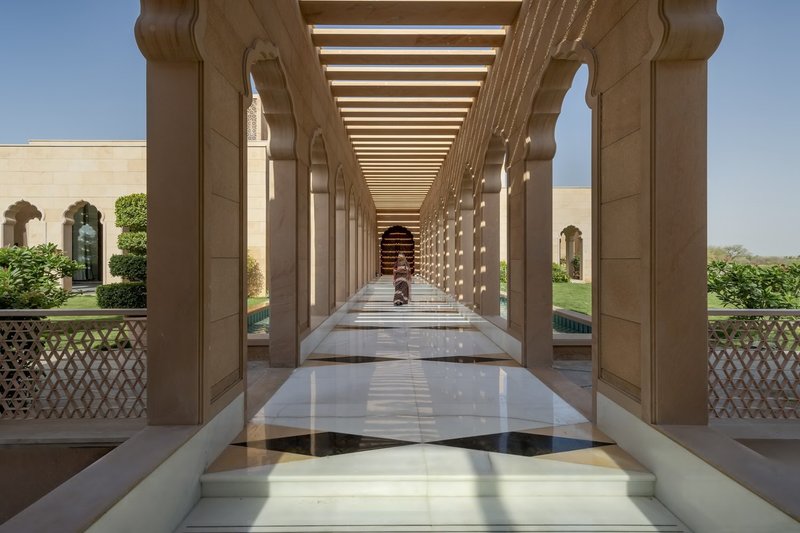
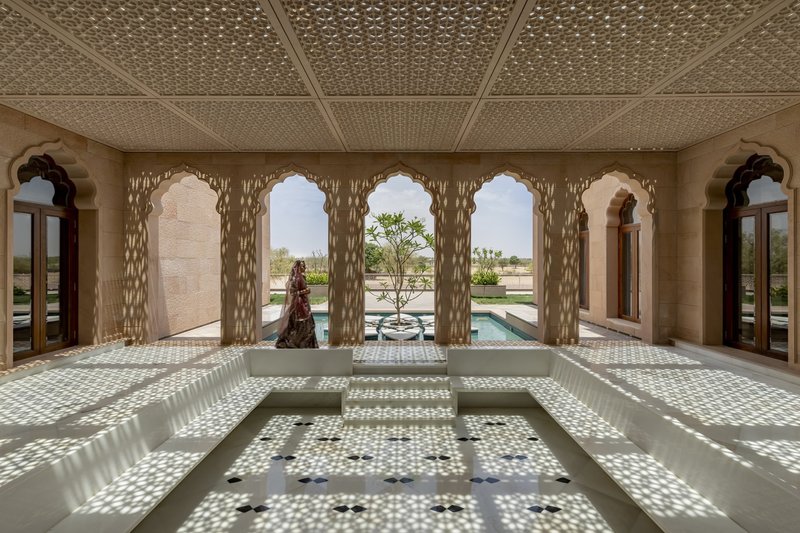
The Narsighar House celebrates the rich craft traditions of Rajasthan. Every element: from multifoil arched windows and patterned stone screens to perforated stone panels, stone pergolas, inlay work, and intricate carvings, is executed by skilled local artisans. Techniques such as marble inlay, lime plastering, mirror work, and custom carpentry were revived to bring authenticity to the design. All materials, including sandstone, marble, timber, and lime plaster, were sourced locally, emphasizing regional sustainability and heritage.
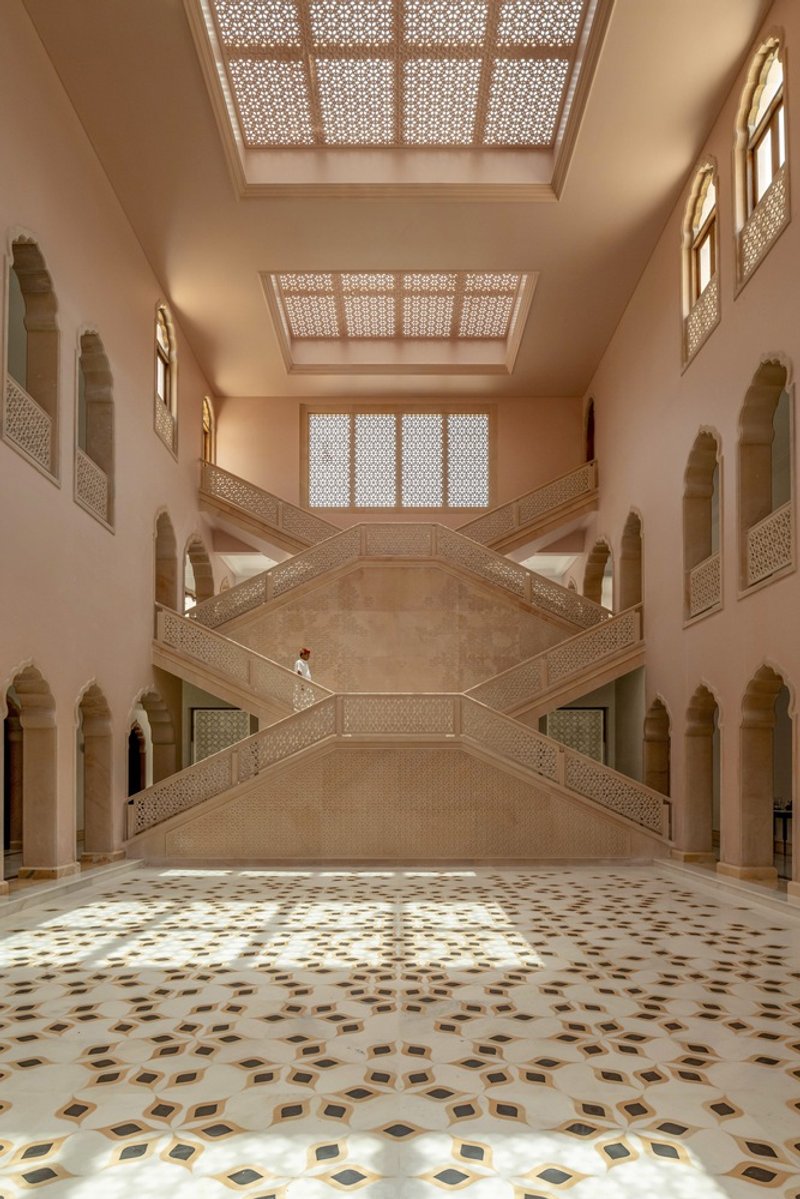
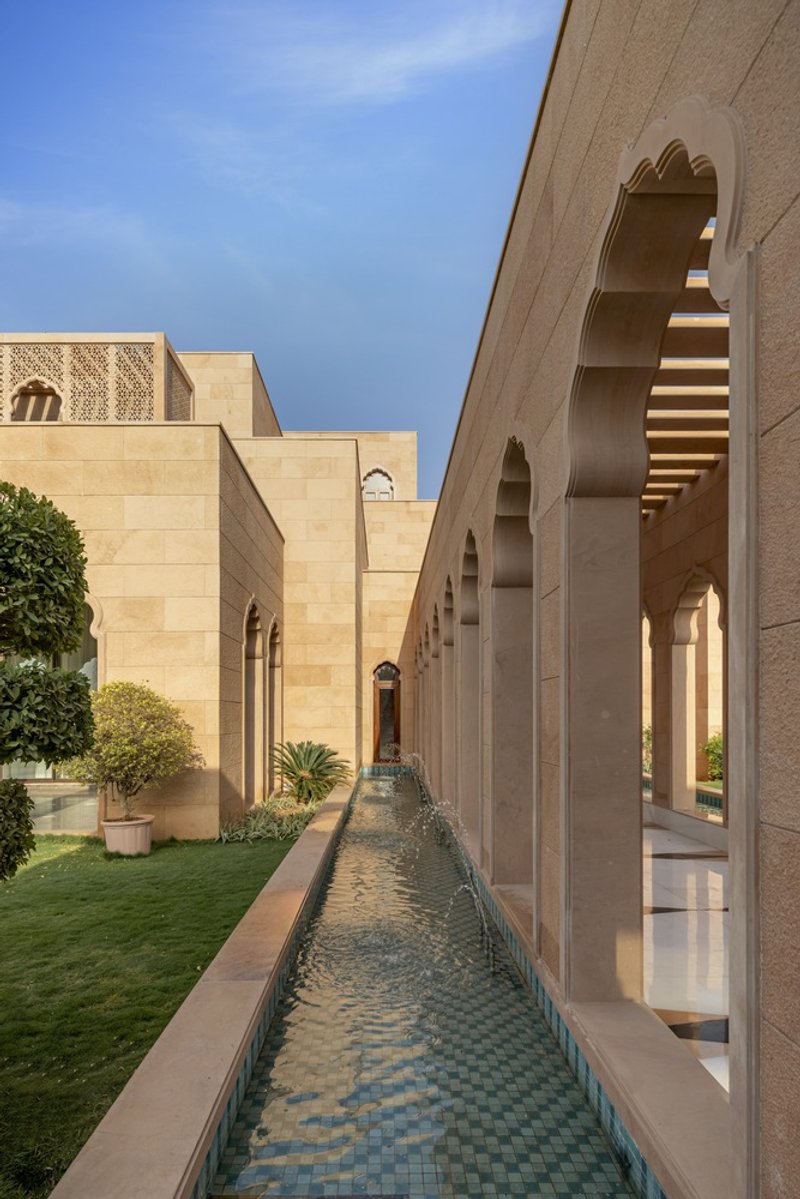
Architectural Volumes and Spatial Dynamics
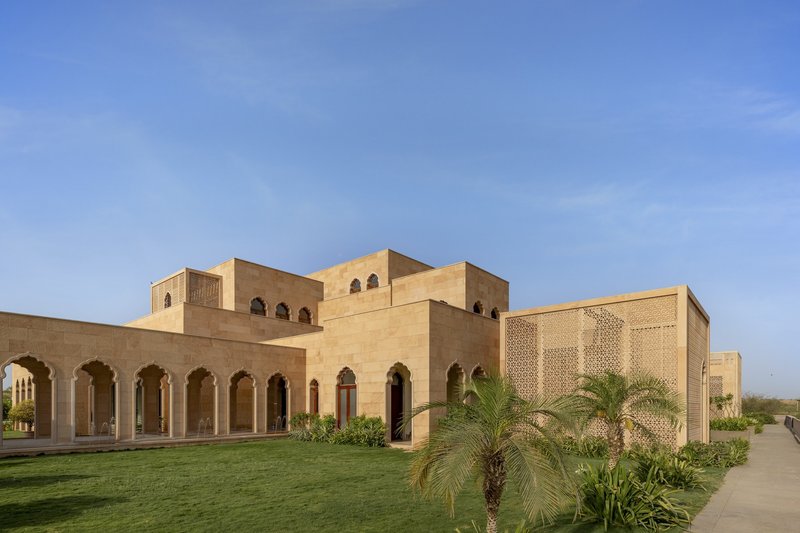
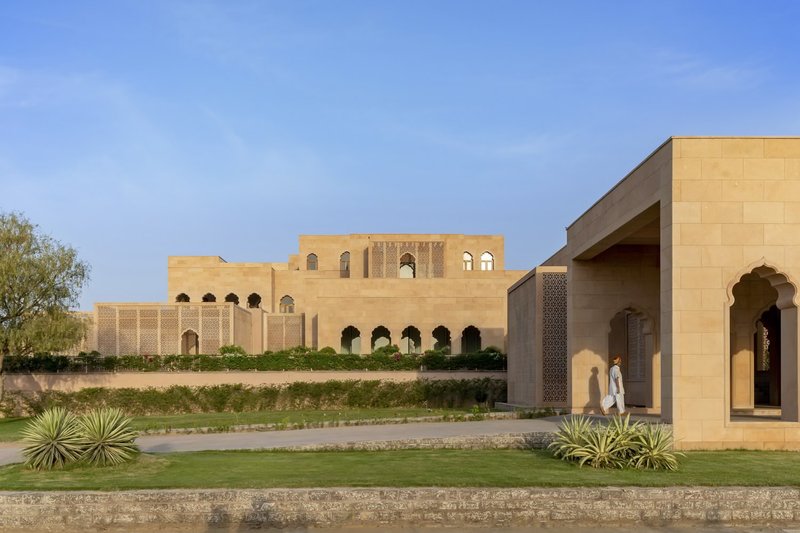
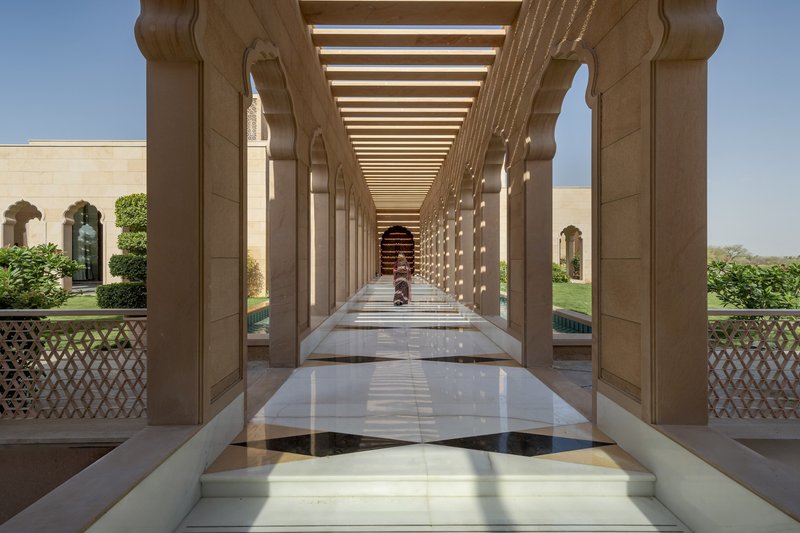
Although expansive, over 40% of Narsighar House’s area is dedicated to open courtyards, outdoor patios, and circulation spaces. The home is composed as a collection of articulated volumes, creating dynamic visual and spatial experiences. A welcoming car porch leads into a sunlit courtyard, followed by a stone arcade with water troughs and gardens for passive cooling before entering the main residence.
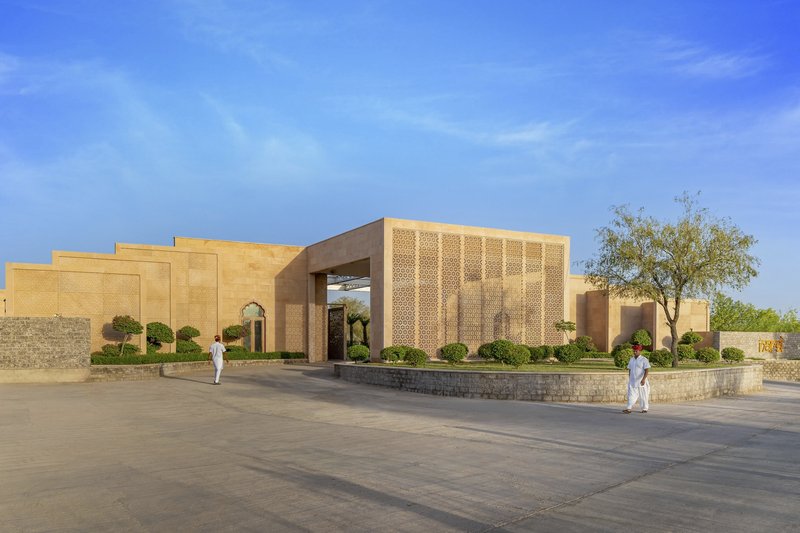
The main central courtyard serves as the heart of the house, naturally ventilated through clear-story windows. Ceiling heights vary to enhance spatial dynamics: most rooms reach 4 meters, the main living room 6.5 meters, the central courtyard 12 meters, secondary courtyards 8 meters, and outdoor patios 3.6 meters. This careful sectional planning ensures optimal airflow and creates transitional volumes between indoor and outdoor areas, minimizing heat gain.
Passive Cooling and Sustainable Design
Light filters through arches and stone screens, creating dynamic shadow patterns throughout the day. The house’s design prioritizes energy efficiency, passive cooling, and long-term durability. By employing local materials, regional craftsmen, and traditional building techniques, Narsighar House is built to stand for generations, honoring both climate and cultural heritage.
Contextual and Sustainable Living
Contextually responsive to the climate, location, and heritage of Rajasthan, Narsighar House is a modern reinterpretation of Indian vernacular architecture. It embodies sustainable desert living, revives traditional crafts, and seamlessly integrates heritage-inspired design with modern comfort, creating a timeless family home for future generations.
All photographs are works of
Vinay Panjwani




Popular Articles
Popular articles from the community

RDTH architekti Rips Out Nearly Every Wall in a Prague Apartment and Replaces Them with Furniture
A 101-square-meter post-war flat in Prague trades rigid partitions for a single rotated furniture block, curtains, and glass concrete.
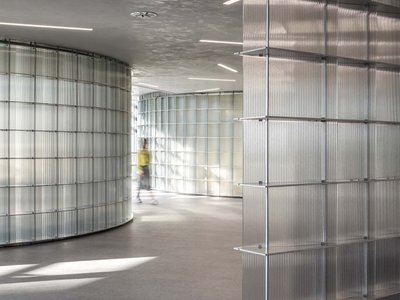
HCCH Studio Wraps a Shanghai High-Rise Office in Curved Walls of Translucent Glass
A 1,000 square meter fit-out in Lujiazui replaces the typical tech-office palette with layered glass, micro-cement, and quiet rigor.

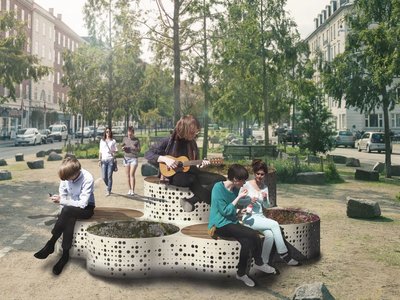
20 Most Popular Furniture Design Projects of 2025
Modular street systems, parametric benches, and insect hotels: the furniture design projects that captivated architects on uni.xyz in 2025.
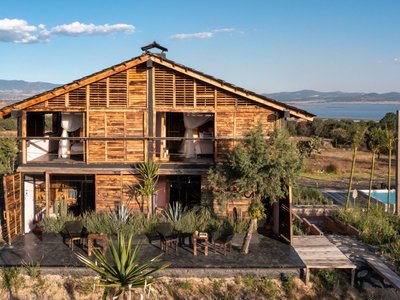
Fausto Terán and Toro Fuse Japanese Craft with Mexican Tradition in a Lakeside Retreat
Nakamura House pairs Shou-Sugi-Ban charred pine with handmade clay tile at the foot of Atlangatepec Lagoon in Mexico.


Similar Reads
You might also enjoy these articles

Kokaistudios Wraps a Shanghai Retail Podium in Horizontal Louvers That Echo Its Foster + Partners Neighbor
A four-storey glass-roofed gateway links an underground commercial valley to the revitalized north bank of Shanghai's Suzhou River.
Fausto Terán and Toro Fuse Japanese Craft with Mexican Tradition in a Lakeside Retreat
Nakamura House pairs Shou-Sugi-Ban charred pine with handmade clay tile at the foot of Atlangatepec Lagoon in Mexico.
RDTH architekti Rips Out Nearly Every Wall in a Prague Apartment and Replaces Them with Furniture
A 101-square-meter post-war flat in Prague trades rigid partitions for a single rotated furniture block, curtains, and glass concrete.

SWA Group Spirals a Landscape Memorial into the Woods of Sandy Hook
A 1.8-acre clearing in Newtown, Connecticut, honors 26 lives lost with water, stone, and a single sycamore tree.


Explore Architecture Competitions
Discover active competitions in this discipline




The International Standard for Design Portfolios


The Global Benchmark for Architecture Dissertation Awards


The Global Benchmark for Graduation Excellence


Challenge to reimagine the Iron Throne
Comments (0)
Please login or sign up to add comments
No comments yet. Be the first to comment!