

Narxoz University Business School / AGP Architects
Adaptive reuse project restoring sawtooth roof, transforming Soviet building into flexible business school with modern spaces, daylight, and strong institutional identity.


Located in Almaty, Kazakhstan, the Narxoz University Business School by AGP Architects is a compelling example of adaptive reuse that transforms a neglected Soviet-era campus building into a contemporary educational environment. The project not only revitalizes an outdated structure but also redefines how executive education is spatially experienced, positioning the building as a new institutional landmark.
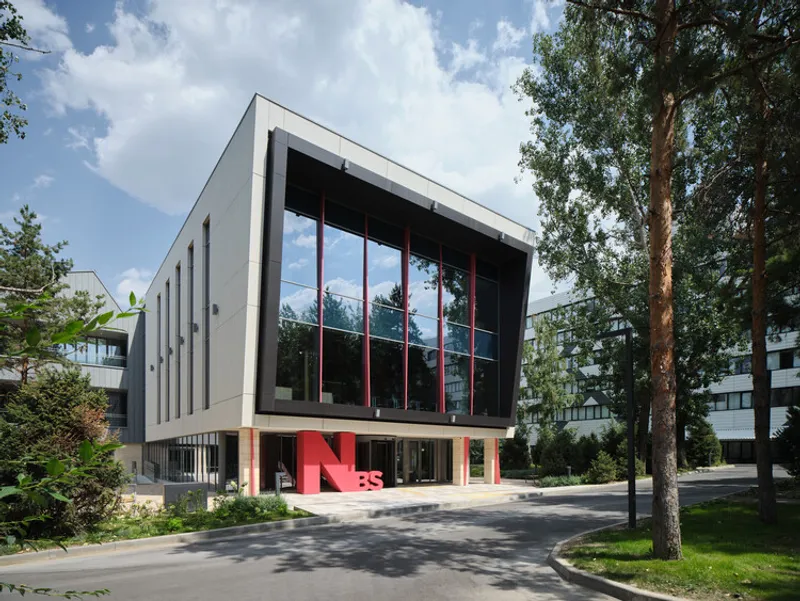
Originally constructed in 1978, the building had undergone multiple alterations over time, including the addition of an upper floor that disrupted its original proportions and compromised its structural integrity. As part of the renovation process, this later addition was dismantled, revealing the possibility of restoring the building’s original architectural identity.

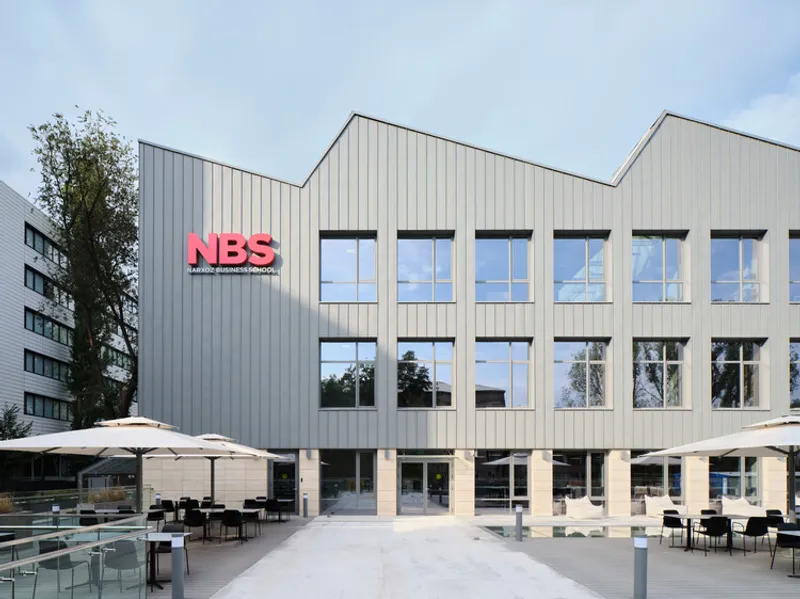
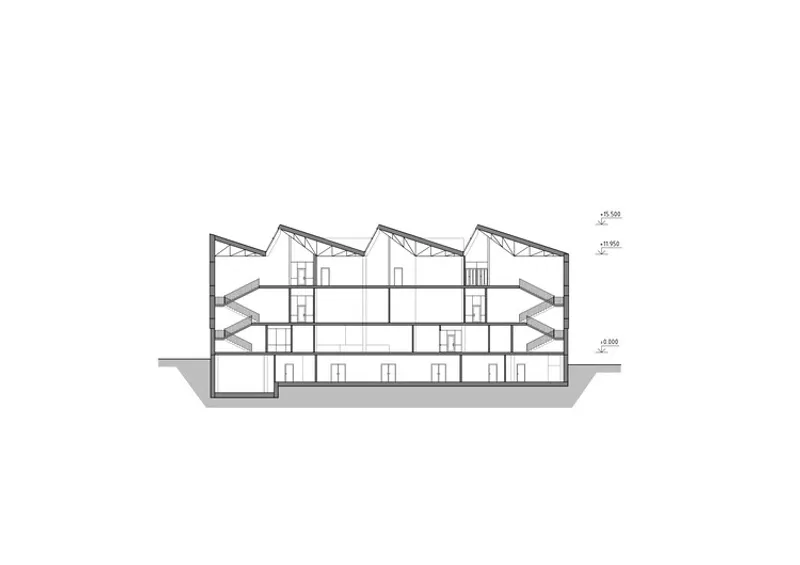
One of the most significant design decisions was the reconstruction of the sawtooth roof, a defining feature that had long been concealed. Through archival research and on-site analysis, the architects reintroduced this geometry using modern structural systems. This move was both architectural and cultural, challenging the common practice of demolishing Soviet-era buildings and instead treating them as valuable resources for transformation.

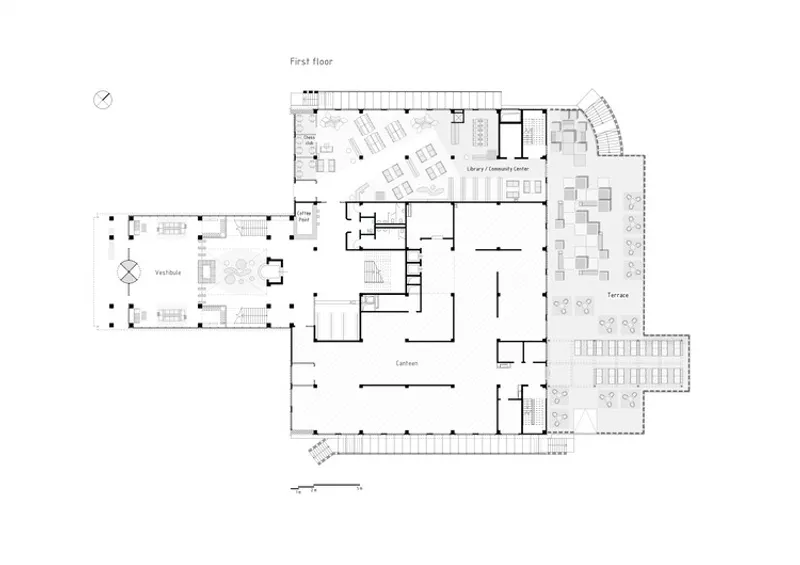
To establish a clear identity for the Business School, a new volume was added to the existing structure. This extension houses the main entrance, reception, and a double-height lobby, along with a panoramic elevator that enhances circulation and accessibility. Acting as a central hub, this addition connects the building internally while also presenting a distinct public face to the campus.


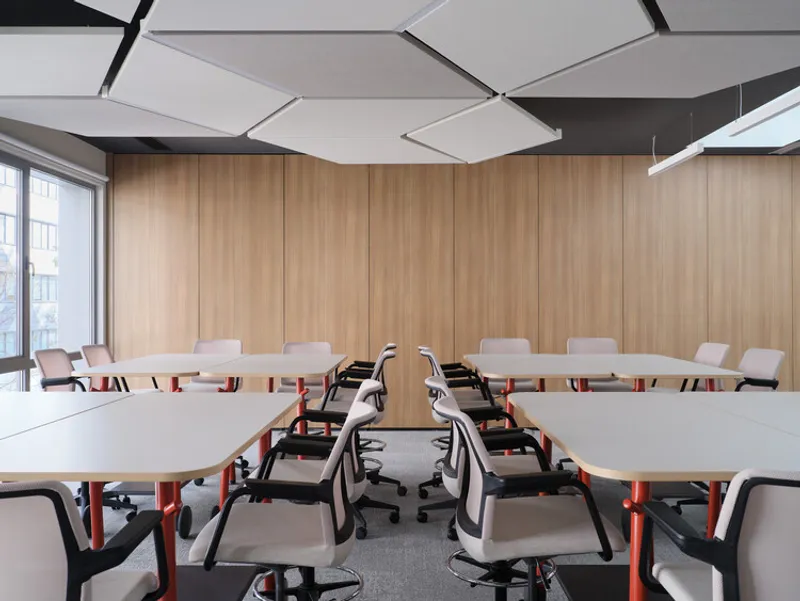
Inside, the building is organized as a dynamic sequence of spaces that support a variety of educational and social functions. Classrooms equipped with modern technology are complemented by coworking areas, informal meeting zones, and coffee points. This diversity of spaces reflects contemporary approaches to learning, where collaboration and flexibility are as important as formal instruction.

Previously underutilized basement areas have been transformed into multifunctional halls for events and exhibitions. These spaces are now filled with natural light through the introduction of full-height glazing and a horizontal skylight integrated into the terrace above. This intervention not only improves usability but also enhances the overall spatial quality of the building.
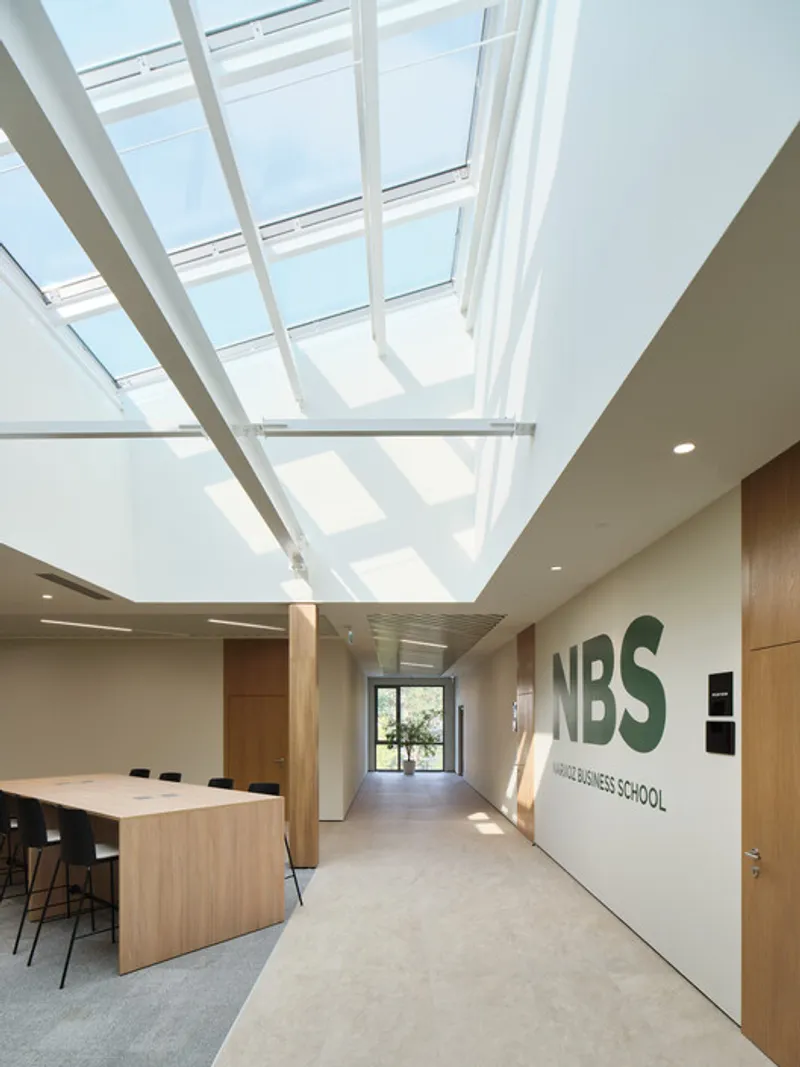
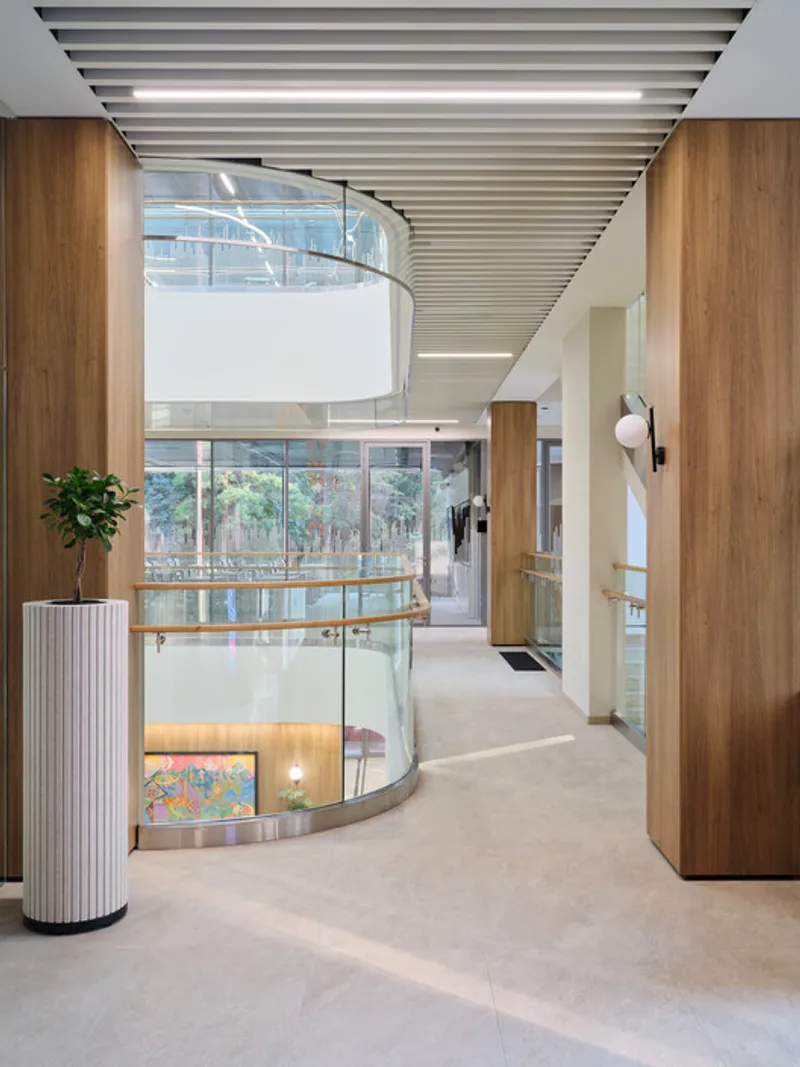
Daylight plays a central role throughout the design. The restored sawtooth roof allows diffused natural light to penetrate deep into the interiors, creating a comfortable and productive learning environment. Open views and carefully considered acoustics further support concentration and interaction.
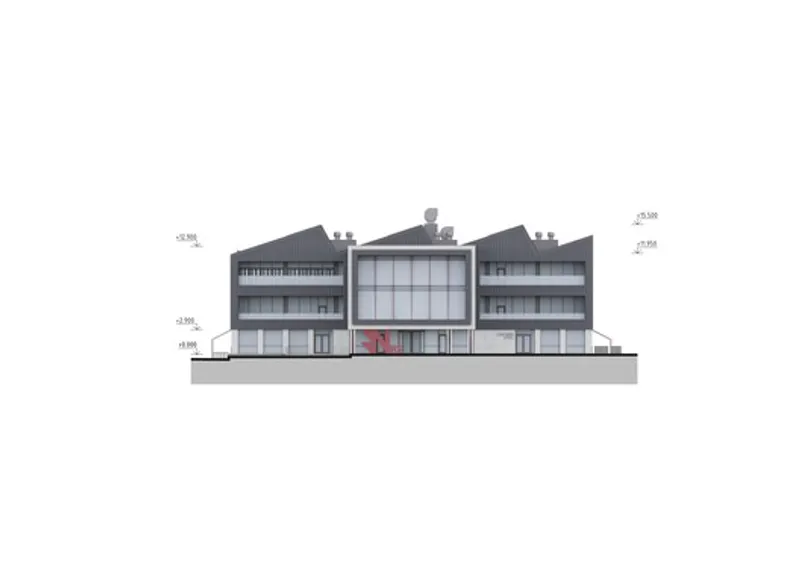
Material expression reinforces the building’s renewed identity. The exterior is clad in standing seam metal panels that extend seamlessly across both roof and façade, emphasizing the rhythm of the sawtooth form. A restrained palette of grey and white tones ensures harmony with the surrounding campus while allowing the building to stand out through its form and detailing.
Structurally and environmentally, the project responds to the challenges of Almaty’s seismic conditions. All interventions were carefully designed to meet strict safety requirements while maintaining the integrity of the existing structure. This balance between preservation and performance underscores the project’s technical sophistication.
Ultimately, the Narxoz Business School is more than a renovation, it is a redefinition of value in architecture. By uncovering and reinterpreting a hidden architectural layer, the project demonstrates how existing buildings can be adapted to meet contemporary needs while preserving cultural memory. It stands as a model for sustainable transformation, where history becomes the foundation for innovation and future growth.

All the Photographs are works of Damir Otegen


Popular Articles
Popular articles from the community


Hill & Cross Opera: Sculptural Opera House Architecture Shaped by Tallinn’s Landscape and Identity
Hill & Cross Opera reimagines opera house architecture in Tallinn through its sculptural hill, civic plaza, glass wave and a luminous cross.

Co-Life: Senior Housing Design That Reconnects Older Adults With the City
Co-Life reimagines senior housing design through healing gardens, shared streets, workshops, and a sustainable community across generations.
EW PARK: Sustainable Architecture Reimagines the Future of Urban Parking
EW PARK reimagines city parking as a modular wooden tower combining automation, solar energy, electric mobility, and adaptable urban design.

The Musturak Paradise: Senior Living Architecture for a Connected Future in Temara, Morocco
The Musturak Paradise reimagines senior living architecture in Temara via private homes, social spaces, culture, community, and shared care.


Similar Reads
You might also enjoy these articles


FAMM Arquitectura Organizes Ten Villas Around Courtyards and Jungle in Nosara, Costa Rica
El Molino pairs two elongated volumes with deep overhangs and timber louvers to build a compact coastal community five minutes from the beach.

Oscar Niemeyer's Ibirapuera Park Pavilions Define São Paulo's Cultural Identity in Concrete and Curve
A constellation of modernist volumes set within São Paulo's most important urban park, conceived for the city's 400th anniversary in 1954.
How Henri Picq's 1889 Paris Pavilion Traveled 11,000 Kilometers to Become Santiago's Artequín Museum
A prefabricated iron and glass pavilion built for the Paris Universal Exposition found a second life as a children's art museum in Chile.

Sanjay Puri Architects Wraps a Jaipur Office Tower in Capsule-Shaped Green Buffers
A nine-level climate-responsive workplace near Jaipur Airport uses stacked planter terraces and aluminium screens to fight 40°C heat.


Explore Architecture Competitions
Discover active competitions in this discipline



Challenge to design public laboratory


Challenge to reimagine the Iron Throne


Photograph architecture without architects


Illustrate the lost glory of Angkor Wat - Render Challenge
Comments (0)
Please login or sign up to add comments
No comments yet. Be the first to comment!