

Natatorium of Southeast University by SEU-ARCH Zhou Qi Studio
Curved concrete arches define Southeast University's natatorium, blending structure and form to create a rhythmic, light-filled, sustainable sports facility.


Located adjacent to the east gate of Jiulonghu Campus in Nanjing, China, the Natatorium of Southeast University, designed by SEU-ARCH Zhou Qi Studio, marks a significant architectural addition to the campus—being the first indoor swimming pool in the university's history. The 5,650-square-meter facility reimagines sports architecture through expressive concrete arches, sustainable materials, and a unified approach to structure and form.
Architectural Concept: Fragmenting the Monolith
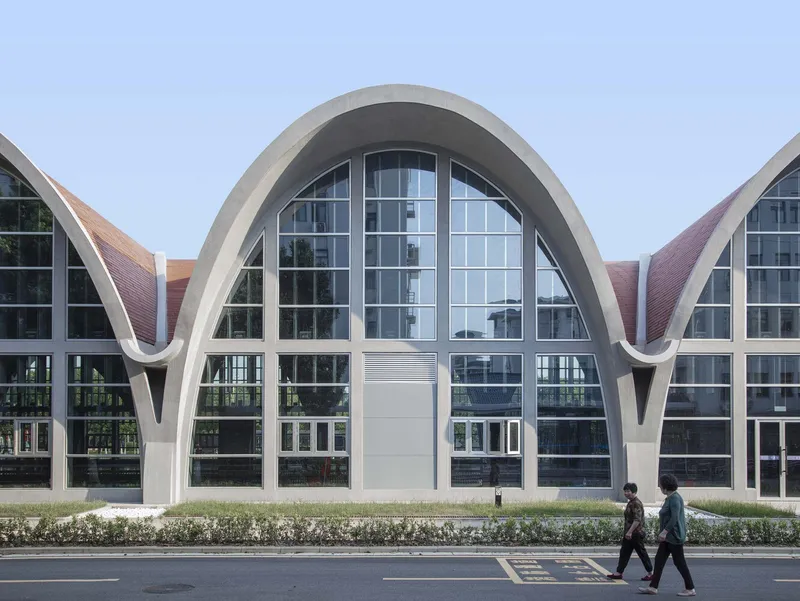
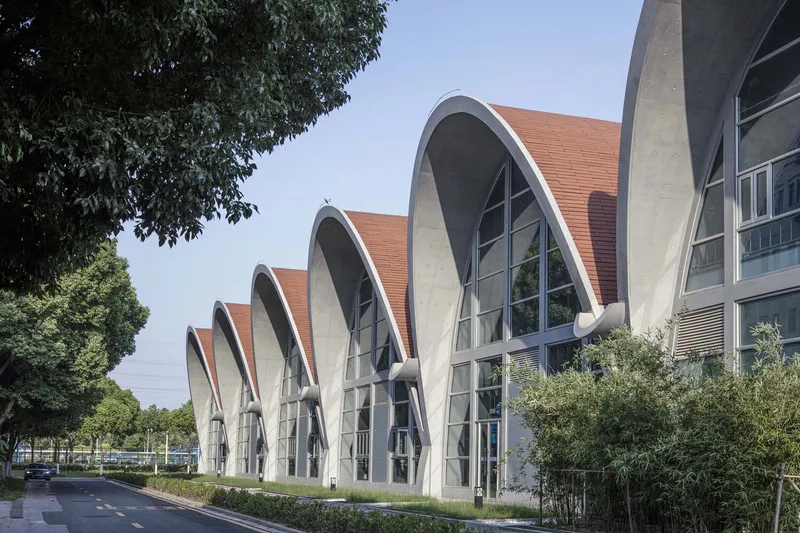
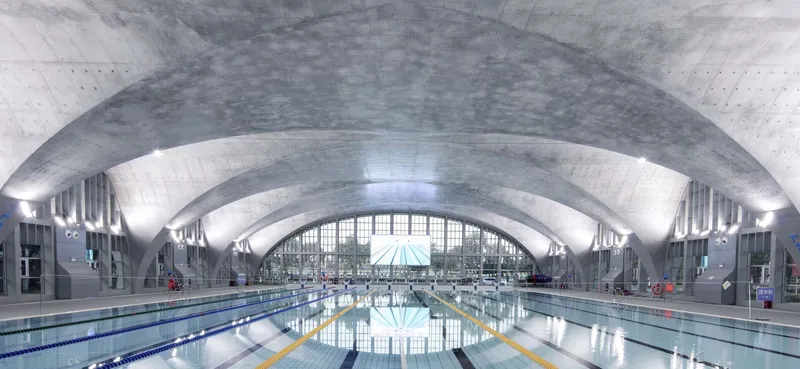
Sports buildings are often perceived as monumental and alien within open urban landscapes. In response, the natatorium’s design embraces seven continuous circular concrete arches, each shaped like an unfurling petal. These rhythmic, overlapping forms help to break down the massing and create a more approachable, dynamic silhouette. Rather than isolating the roof as a separate element, the building’s roof and walls merge into a single cohesive structure, reinforcing the continuity of the architectural gesture.


Interior Atmosphere: Rhythm of Curves and Light
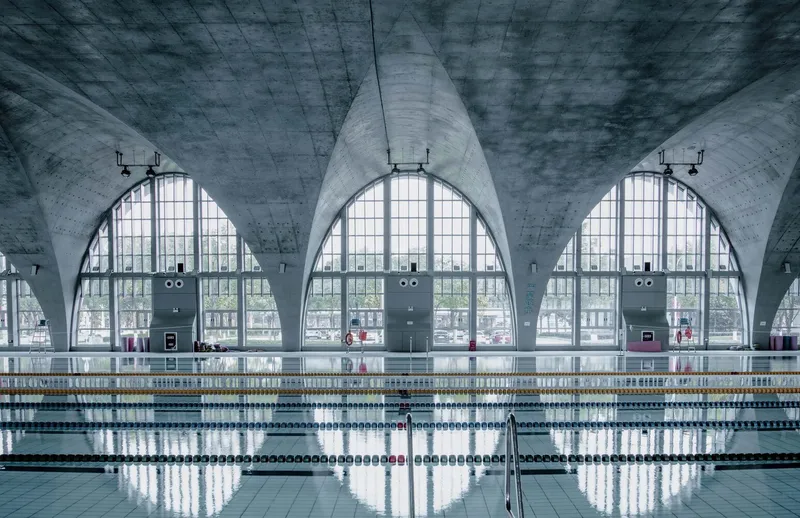
Inside, the interior spaces are sculpted by curved surfaces that create a rhythmic spatial flow. The interplay of materials and natural light defines the user experience: fluid blue water, raw gray concrete, and sunlight filtered through louvers all interact to heighten the sensory impact. As light refracts off surfaces and casts shadows shaped by the geometric structure, a unique sense of place is established—inviting contemplation and motion.
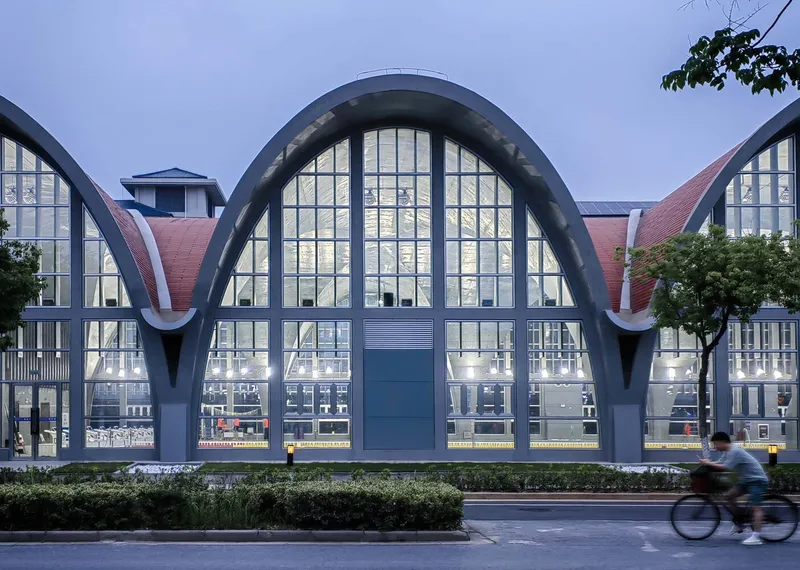
Large glazed façades provide transparency between interior and exterior, blurring the boundary between spectators and swimmers, and emphasizing visual connection and activity.

Functional Layout: Swimming, Training, and Community
The rectangular plan houses a standard 50m x 20m swimming pool with supporting mechanical systems placed underground. The ground floor includes the main pool and changing facilities, while the upper level offers a gym and classrooms, enabling multifunctional athletic and academic use. This dual-level configuration reflects a thoughtful approach to vertical spatial organization in sports design.

Construction and Materials: Honoring Craft Through Concrete
The project celebrates the anti-industrial potential of cast-in-place concrete. Each arch was formed by hand-crafted wooden formwork and poured on-site, requiring scaffolding over 10 meters high and covering a 120m x 40m construction area. Notably, each arch reaches the ground at a single point where the concrete is trimmed—producing a naturally formed base that could not be achieved with prefabricated elements. This bespoke construction approach elevates craftsmanship and material authenticity.
Unlike conventional steel structures, which would require massive beams and risk corrosion in humid environments, the concrete arches offer a structurally and materially resilient solution. The ceiling is left bare—without overhead lights or surface treatments—allowing the structural material to stand as both enclosure and expression.
Sustainable Skin: Terracotta as Timeless Façade
The exterior is clad with red terracotta tiles, fired at 1,200°C using modern techniques. Dry-hung on the façade, the tiles are not only durable (with a 150-year lifespan) but also fully recyclable and replaceable, promoting long-term sustainability. Their brick-like scale and cross-peak splicing provide a handcrafted contrast to the imposing concrete arches, reinforcing the dialogue between monumental form and tactile detail.
In its essence, the building speaks the architectural truth that “the structure is the building, and the building is the structure.” Each element—whether concrete arch or terracotta skin—serves both practical and poetic functions.


Popular Articles
Popular articles from the community


FCC Arquitectura Expands a Portuguese Granite House with a Board-Marked Concrete Wing
In Portugal, JV House pairs a cleaned-up whitewashed and granite dwelling with a timber-shuttered concrete extension, courtyards and a garden pool.


The Amber Palace Opera: A Geological Fiction Surfaces on Tallinn's Baltic Waterfront
Pierre Brillard reimagines a Baltic legend as a public landscape, opera house, and waterfront promenade rooted in Tallinn's coastal identity.

ETEH Reworks the Shared Spaces of São Domingos School in Brazil Around Timber, Color and Hanging Plants
At São Domingos School in Brazil, 436 m² of hall, refectory and library are recast with timber joinery, a yellow and blue code and trailing greenery.

Cube Design Draws an Ecological Corridor Between Two Shenzhen Hills with the Nankai Building
Beside Shenzhen's container docks, the Nankai Building pairs stacked balconies with a climbing green screen to connect two hillsides across its height.

Similar Reads
You might also enjoy these articles


Hodi-Mandai Geram
Project Function: Preservation and revitalization of the Intangible heritage and socio-spatial identity of the Hodi by Housing, Cultural Memory Center, Sacred Grove, landscape, local tourism economy


Olio Towers: A Mid-Rise for Performers That Fuses Housing, Rehearsal, and Stage
Located blocks from Houston's Theater District, this modular tower stacks living units around a central performance atrium.

Oasis: Modular Green Housing Carved into Dhaka's Urban Fabric
A shortlisted Plugin Housing entry reclaims unauthorized settlements in Dhaka with stepped concrete volumes, green roofs, and ventilation-driven design.

Black Hole: A Floating Megastructure for the Post-Physical Era
Emiliano Mazzarotto envisions a spherical, self-scaling arena where e-sports, digital hotels, and holographic stadiums replace traditional public space.

Explore Swimming Pool Competitions
Discover active competitions in this discipline

Challenge to design a barrier free sports center

Challenge to design an outdoor ice-rink and park

Challenge to reimagine the Iron Throne

Photograph architecture without architects
Comments (0)
Please login or sign up to add comments
No comments yet. Be the first to comment!