
National Gallery Sainsbury Wing Renovation by Selldorf Architects
Selldorf Architects’ renovation of the National Gallery Sainsbury Wing enhances accessibility, daylight, and visitor flow while honoring Post-Modern heritage.


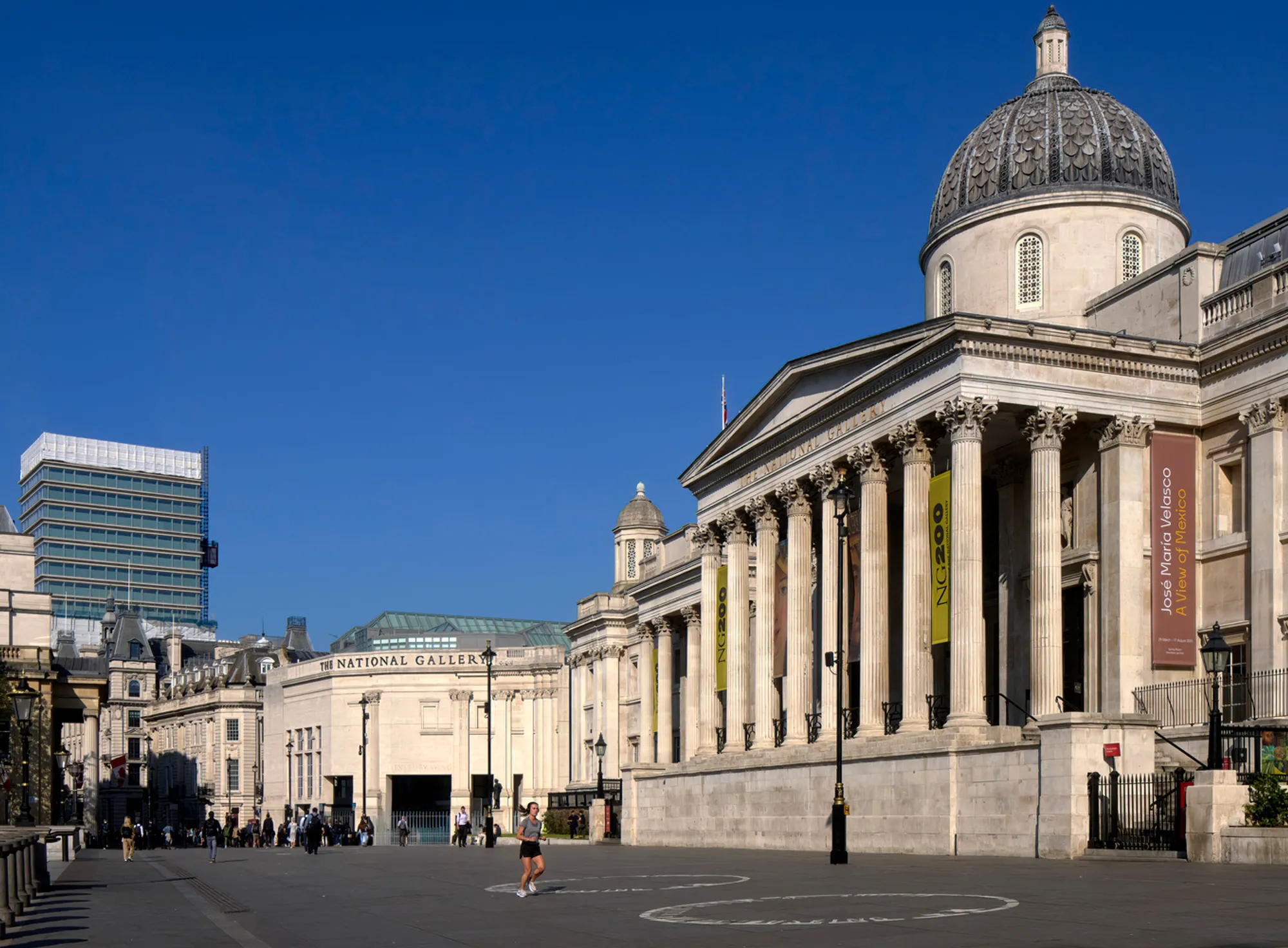
The National Gallery Sainsbury Wing Renovation, designed by Selldorf Architects in collaboration with Purcell, marks a transformative moment for one of London’s most iconic cultural landmarks. Completed in 2025 as part of the £85 million NG200 Welcome Building Programme, the project celebrates the National Gallery’s 200th anniversary by redefining how millions of visitors experience its entrance, circulation, and public spaces. The refurbishment respects the original 1991 Post-Modern design by Venturi, Scott Brown and Associates while significantly improving accessibility, natural lighting, and connections to Trafalgar Square.
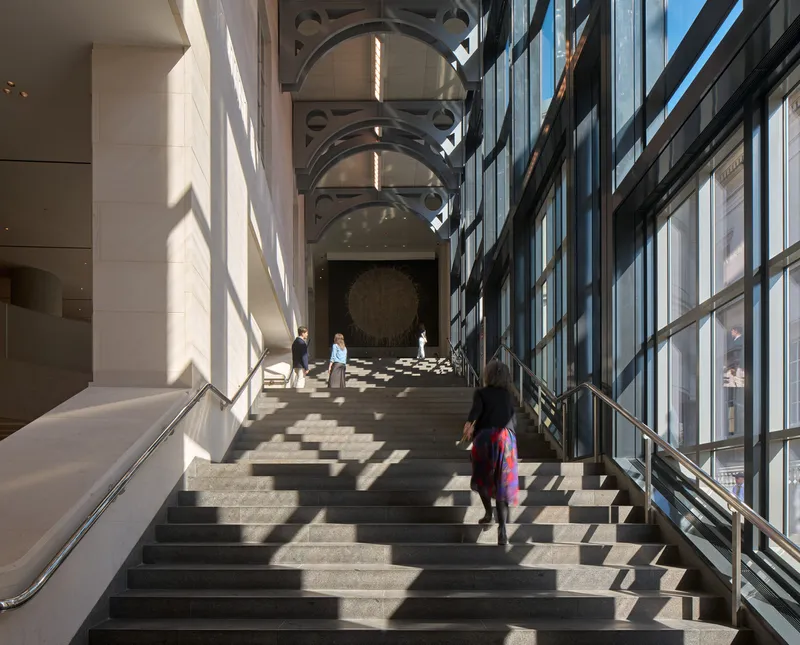
A New Welcoming Entrance
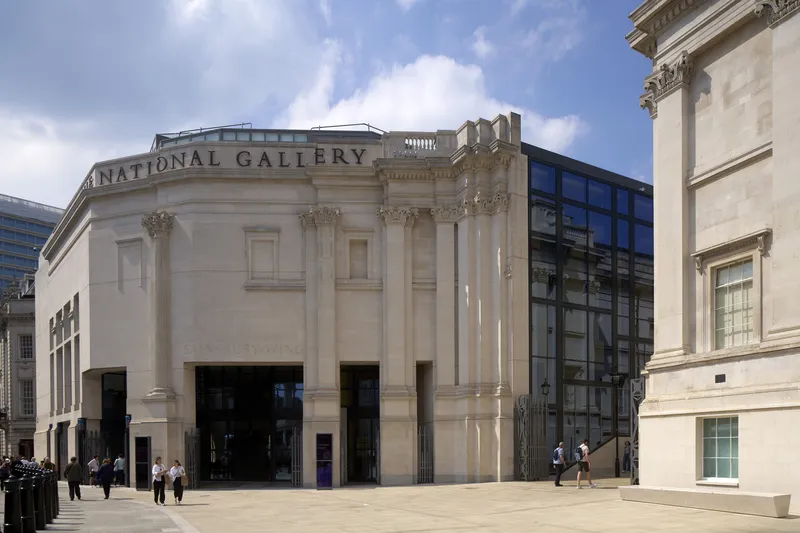
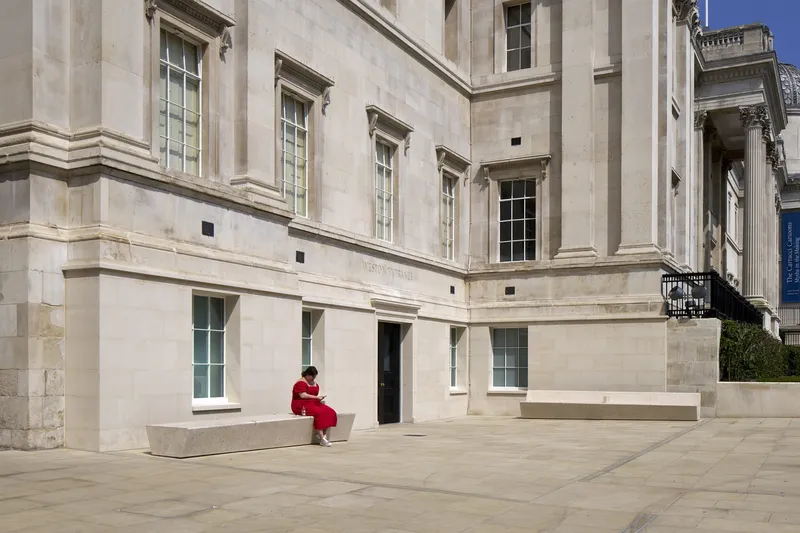
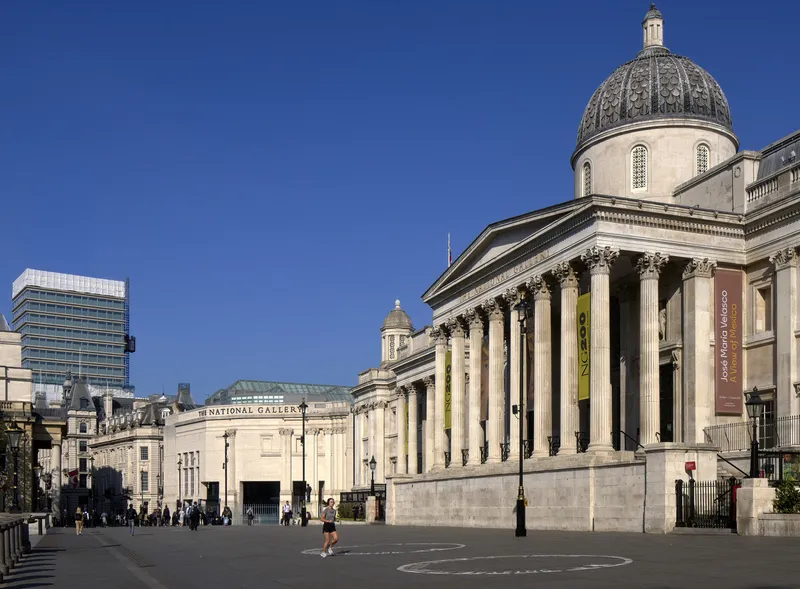
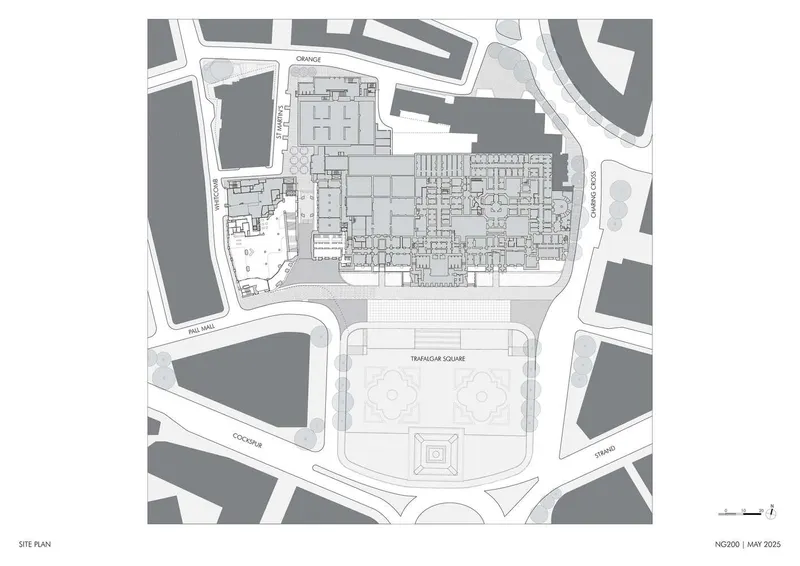
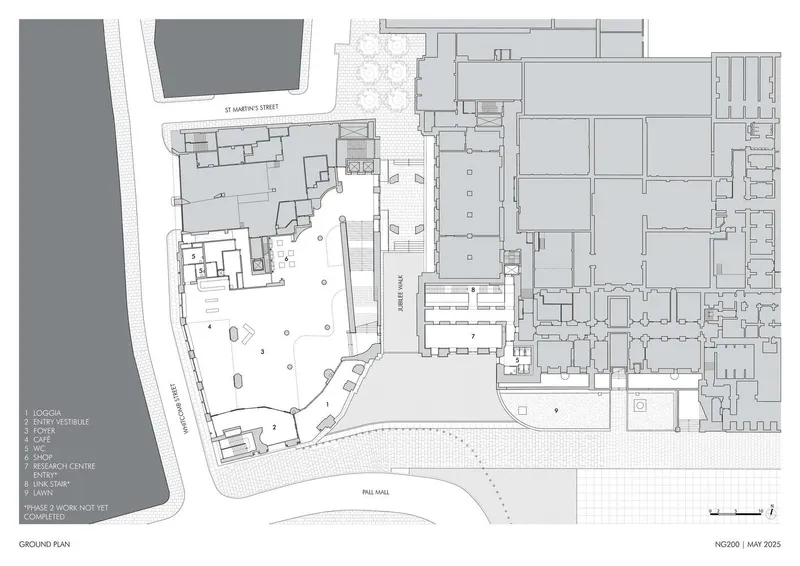
The renovated Sainsbury Wing entrance is designed to be lighter, more welcoming, and intuitive. Sir Gabriele Finaldi, Director of the National Gallery, emphasizes that the goal was to ensure the building feels open to everyone, offering both first-time and returning visitors a refreshed and inviting start to their journey. A newly landscaped public square at the southwest corner of the National Gallery establishes a direct and accessible link to Trafalgar Square. The stepless street-level entrance seamlessly welcomes all visitors, improving both security and wayfinding.
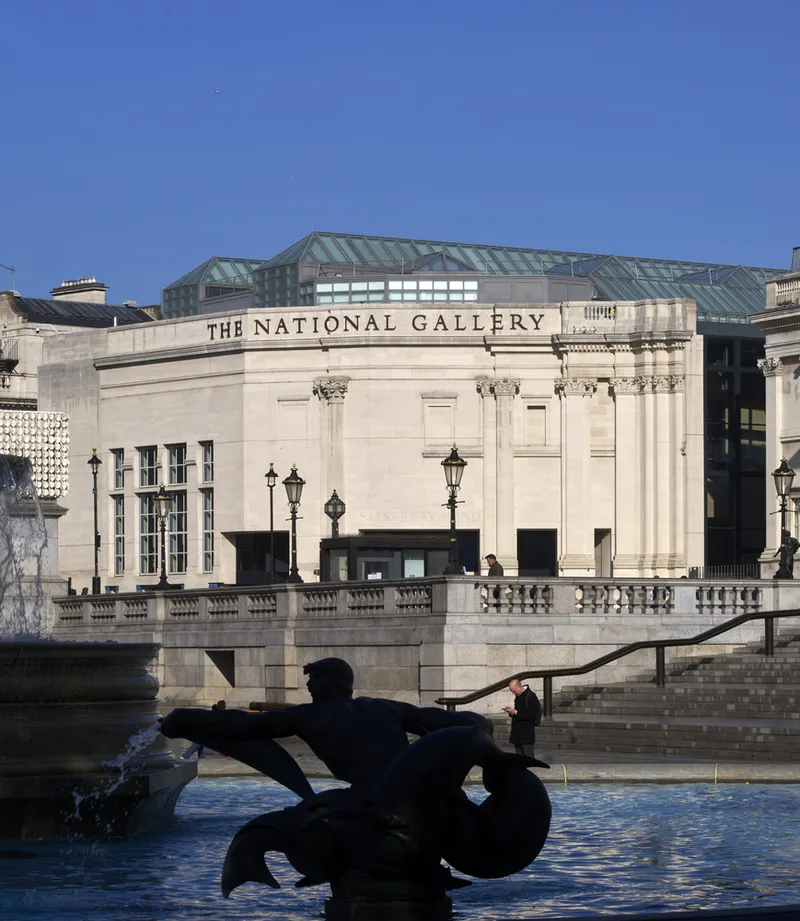
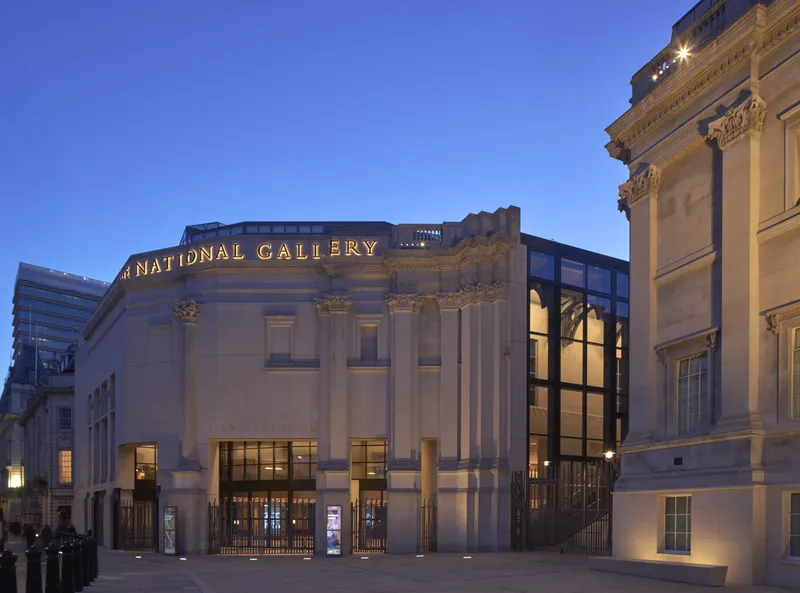
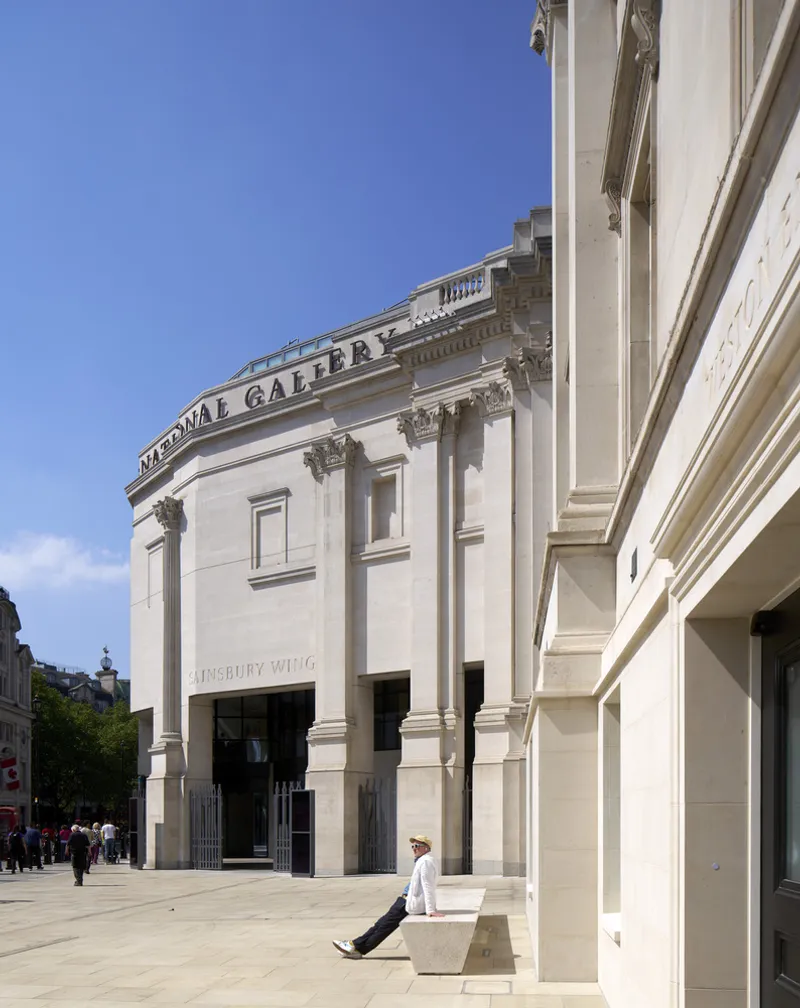
Architectural Approach and Design Intent
Annabelle Selldorf’s design approach was driven by respect for the Sainsbury Wing’s original architecture. Rather than alter its identity, the renovation enhances key architectural gestures while modernizing its function for today’s visitor numbers. Sightlines have been opened, queuing streamlined, and the experience of entering the gallery made more fluid and filled with natural light. Selldorf’s team ensured the architectural dialogue with Venturi, Scott Brown’s playful Post-Modern language remains intact, maintaining the signature compressed and released spatial moments while improving legibility and flow.
The Renovated Foyer and Public Spaces
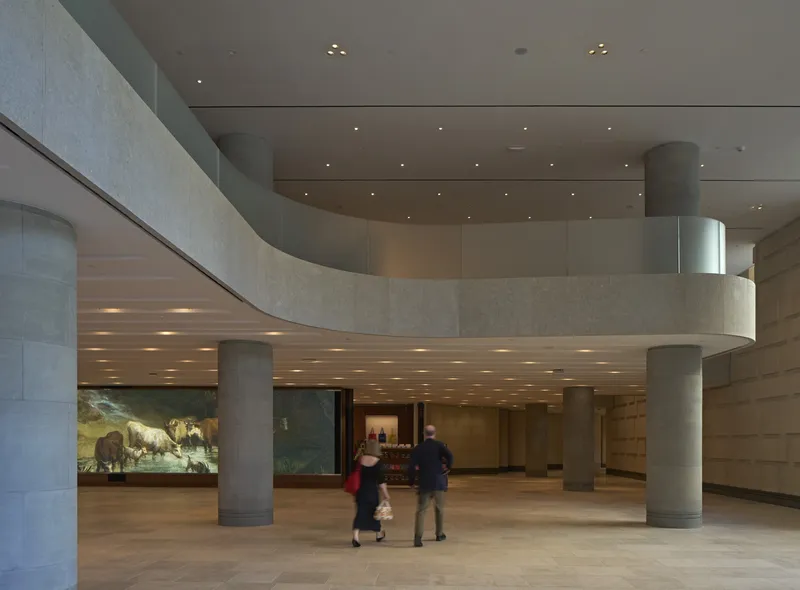
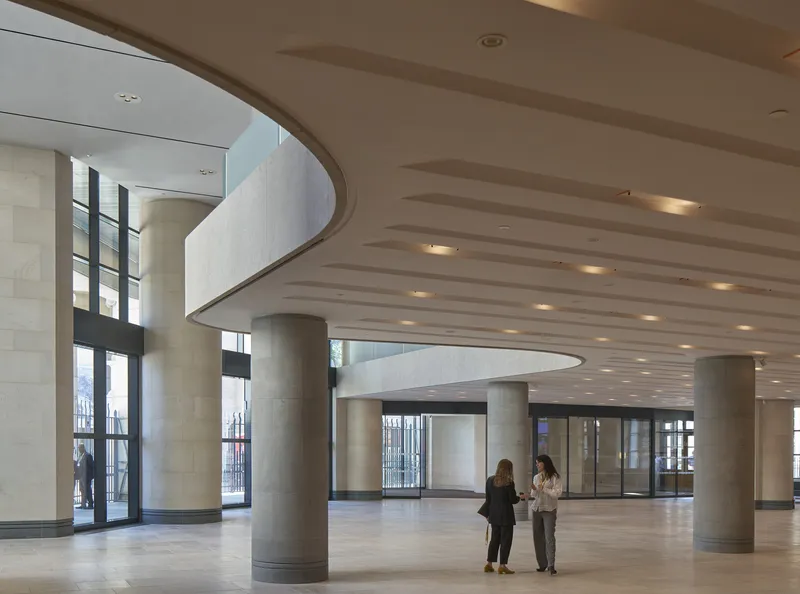
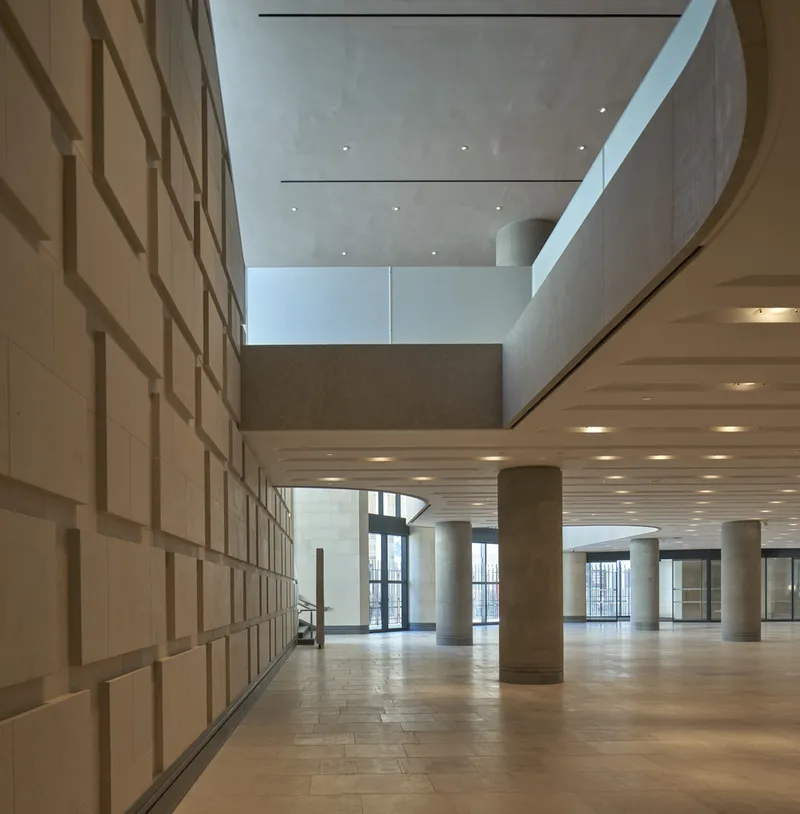
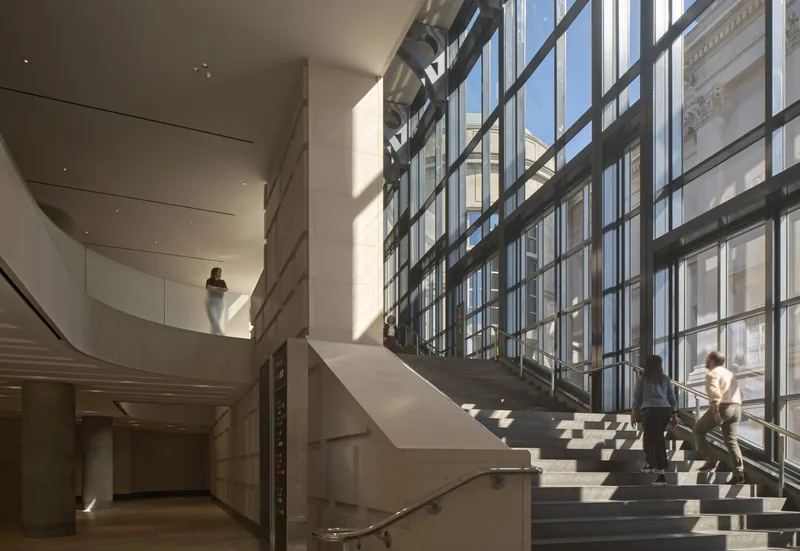
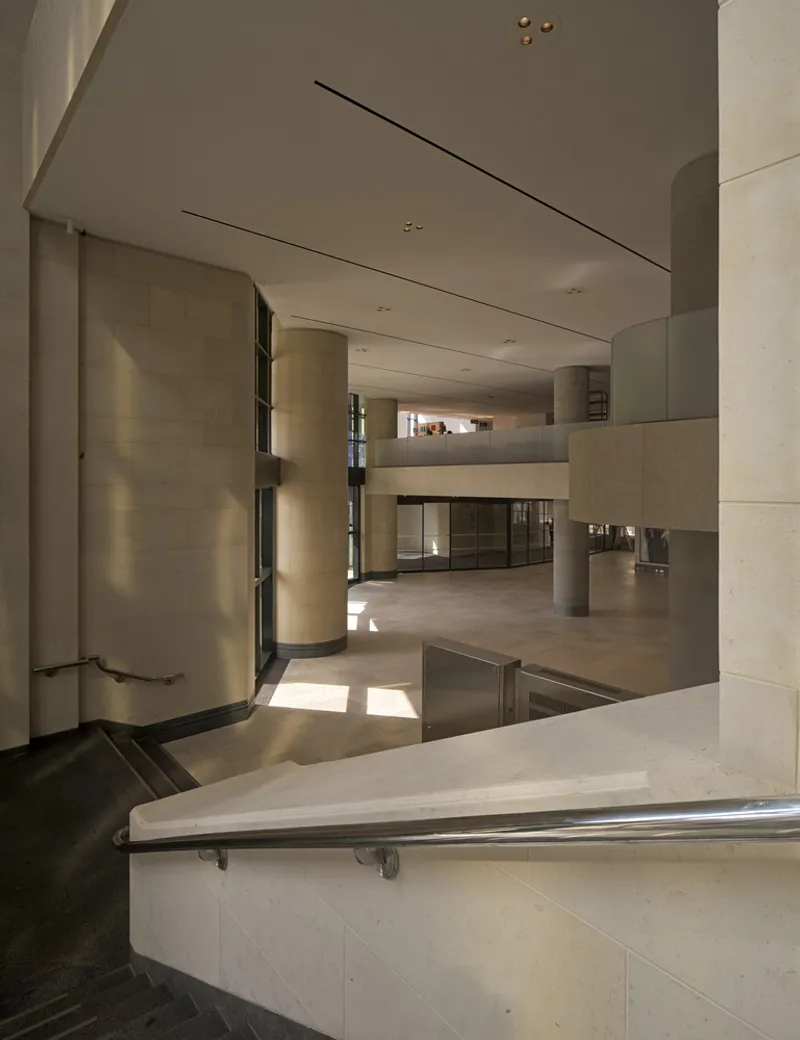
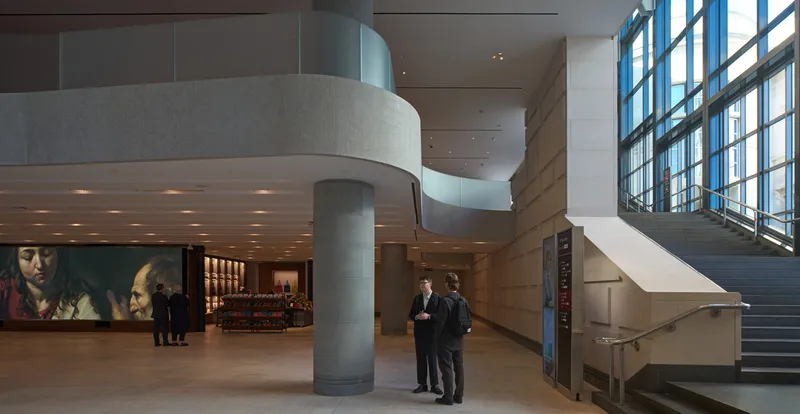
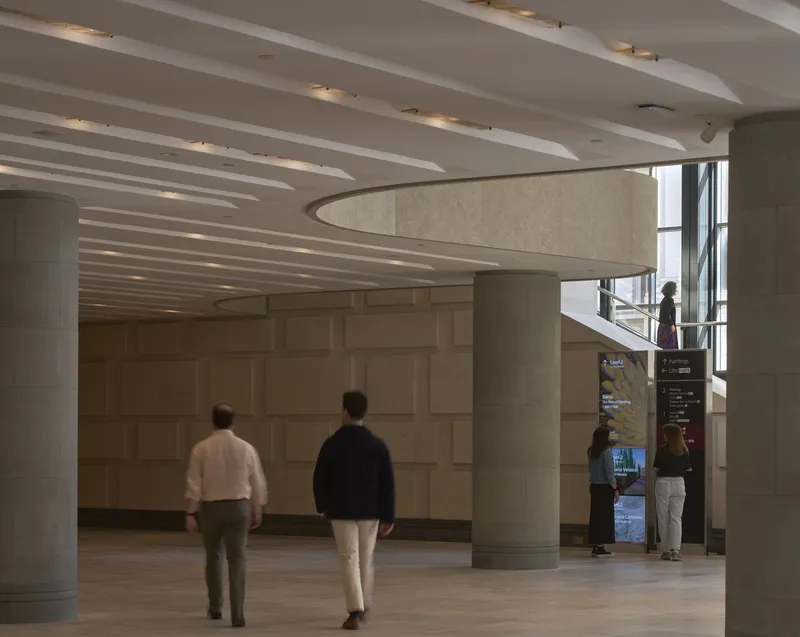
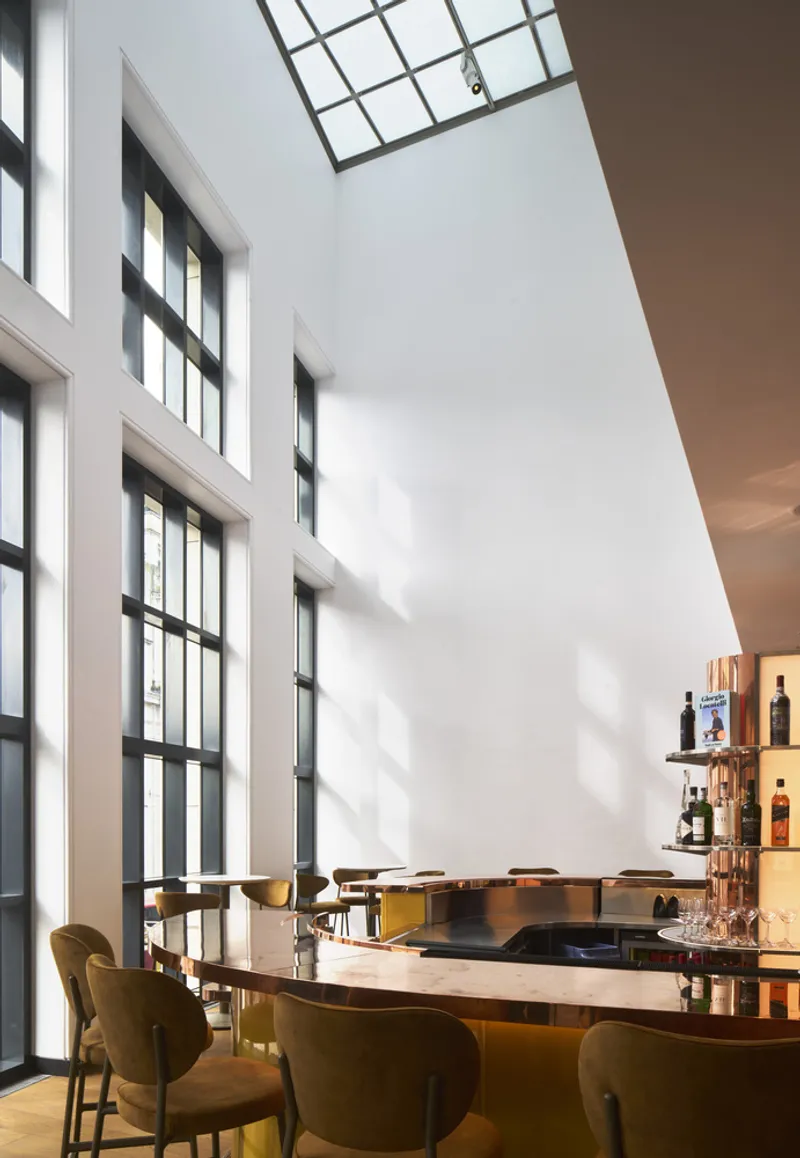
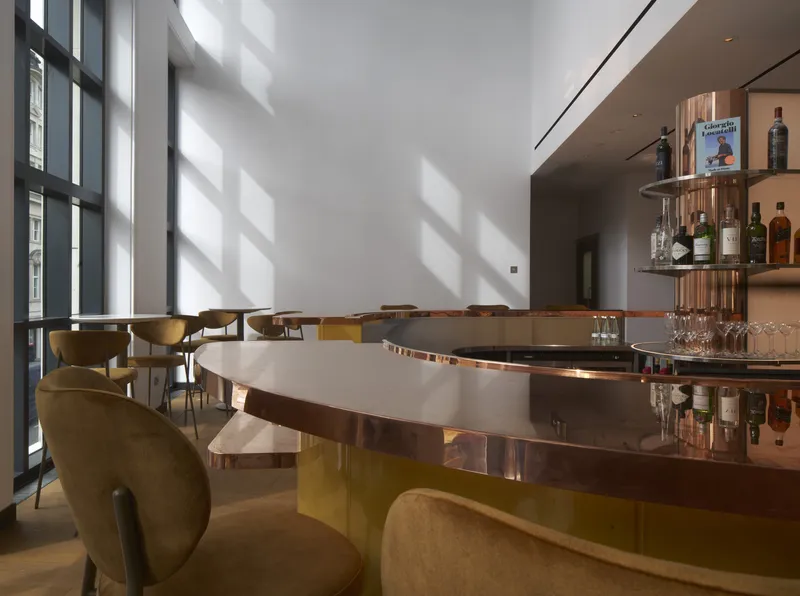
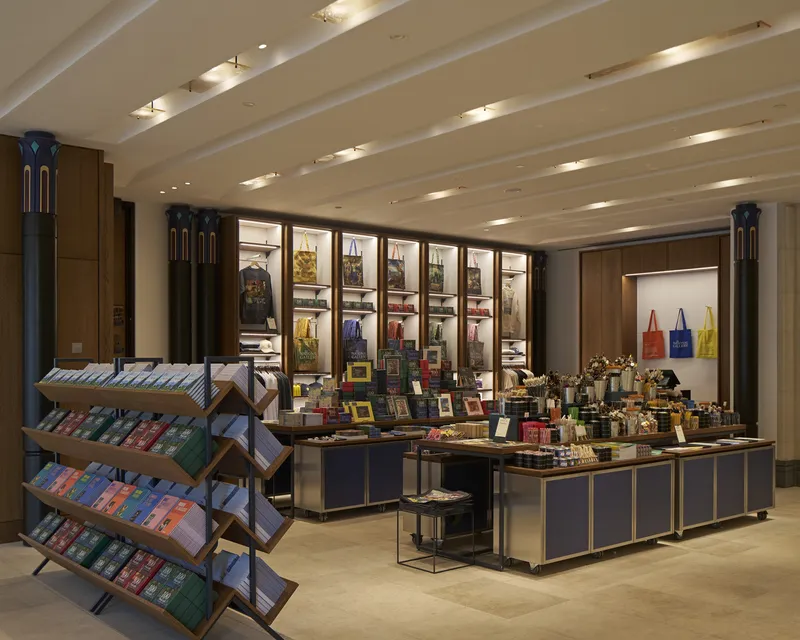
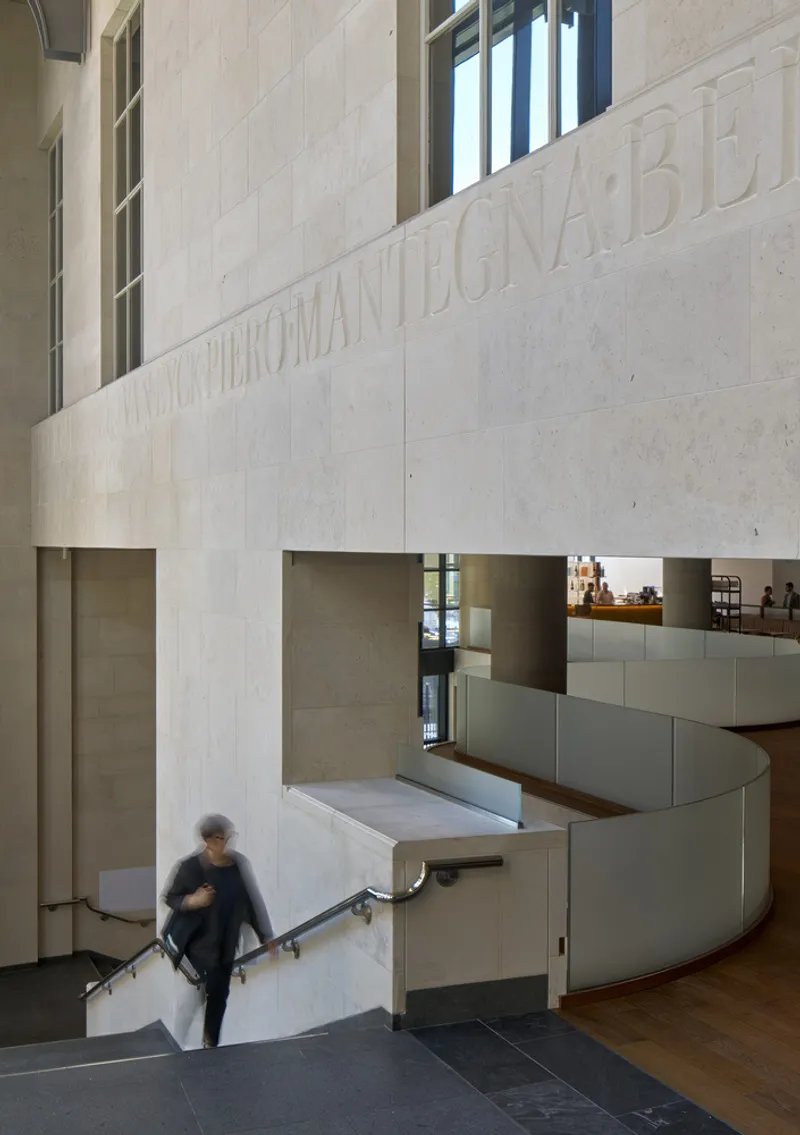
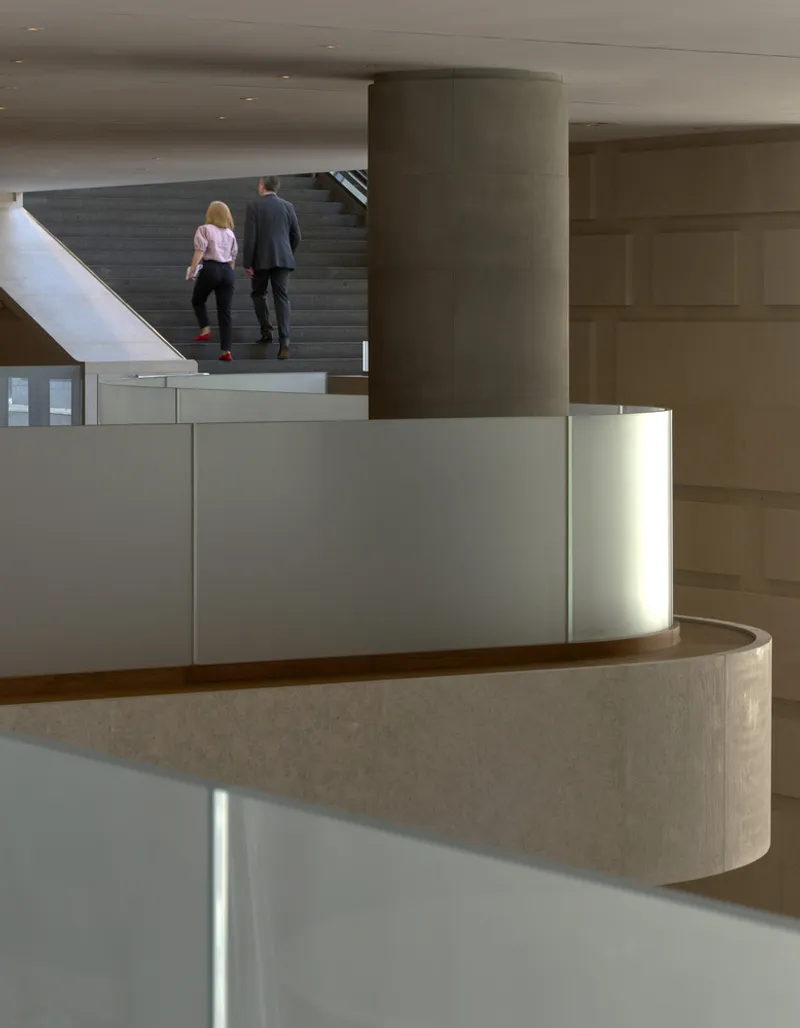
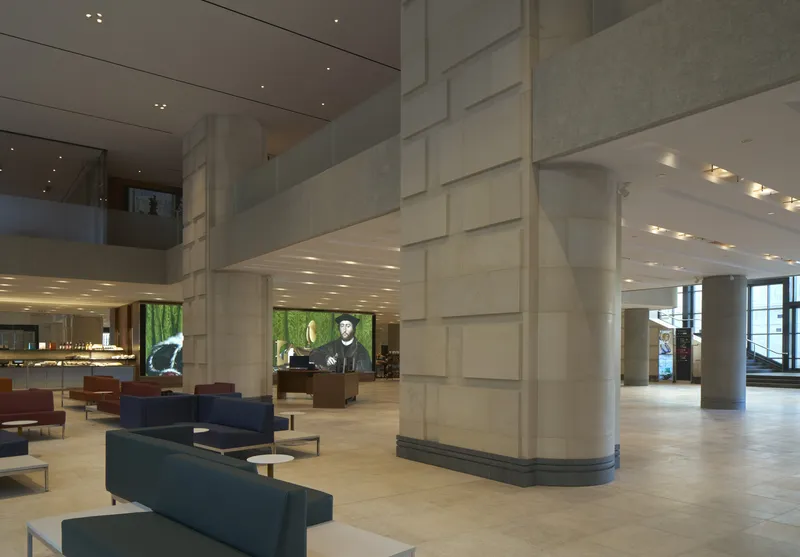
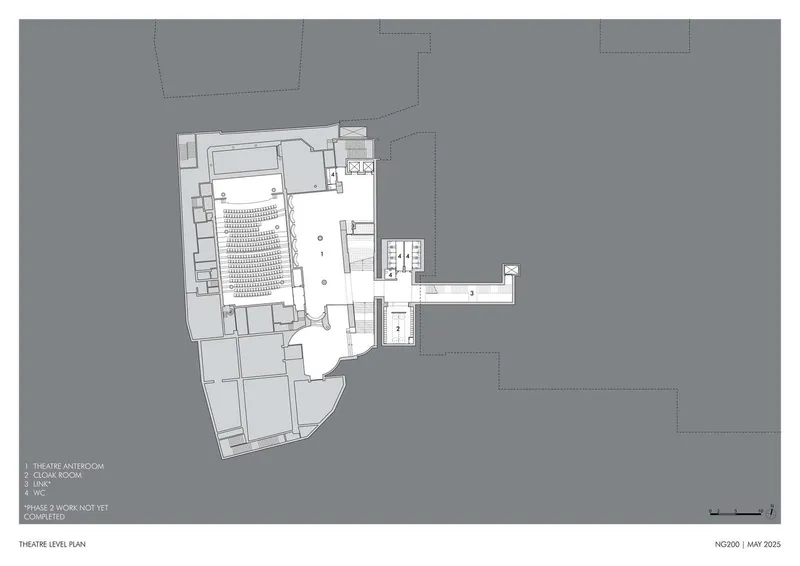
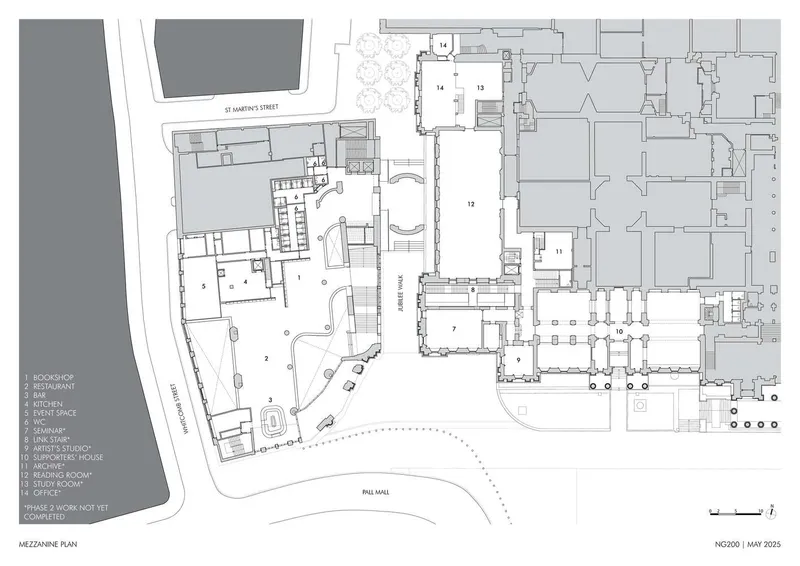
The redesigned foyer offers 60% more open public space, now flooded with daylight due to the replacement of the original dark glass with clear glazing. This creates visual transparency between interior spaces and the historic 1830s National Gallery façade by William Wilkins. Visitors can now view the grand stair and surrounding activity from outside, enhancing the sense of orientation and public connection. The first floor has been reimagined as a mezzanine, hosting a new bookshop, bar, and restaurant that remain visually connected to the ground-floor arrival sequence.
Interior Detailing and Material Palette
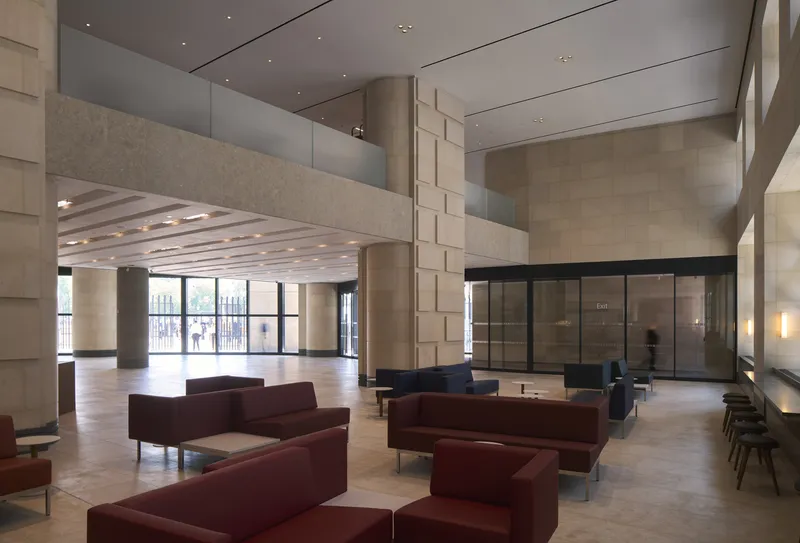
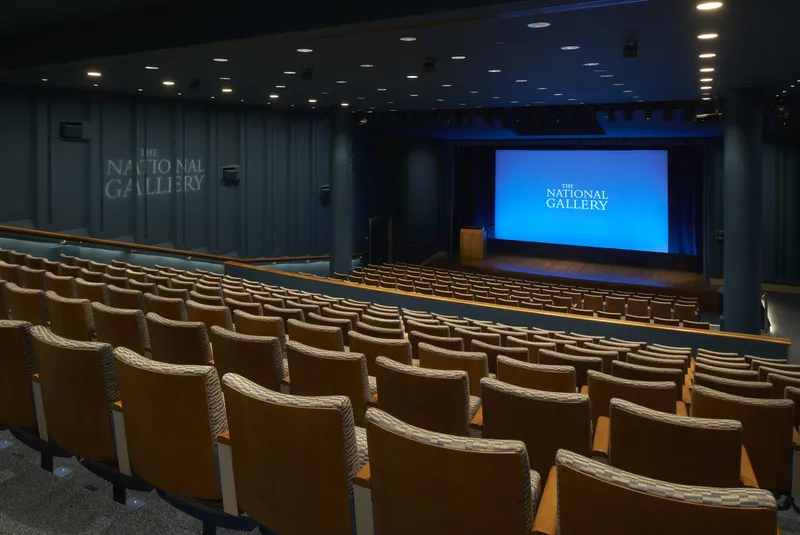
The renovation carefully balances contemporary interventions with original materials. A natural palette of Florentine limestone (pietra serena), Chamesson limestone from Burgundy, slate, oak, and black granite continues the tactile and visual continuity of the original design. Where possible, existing materials have been recycled or repurposed. The lighting strategy has also been updated with integrated, seamless mechanical systems, ensuring the foyer provides a calm and undistracting backdrop to the Grade I listed architecture.
Landscape Integration by VOGT
The new entrance square designed by VOGT Landscape Architecture introduces Portland limestone concrete benches, providing a social space where visitors can gather, meet, or simply enjoy views of Trafalgar Square. The redesign emphasizes subtraction rather than addition, replacing an underused courtyard with a dynamic, open plaza that aligns the Sainsbury Wing with the larger public realm of the city.
Phased Development and Future Interventions
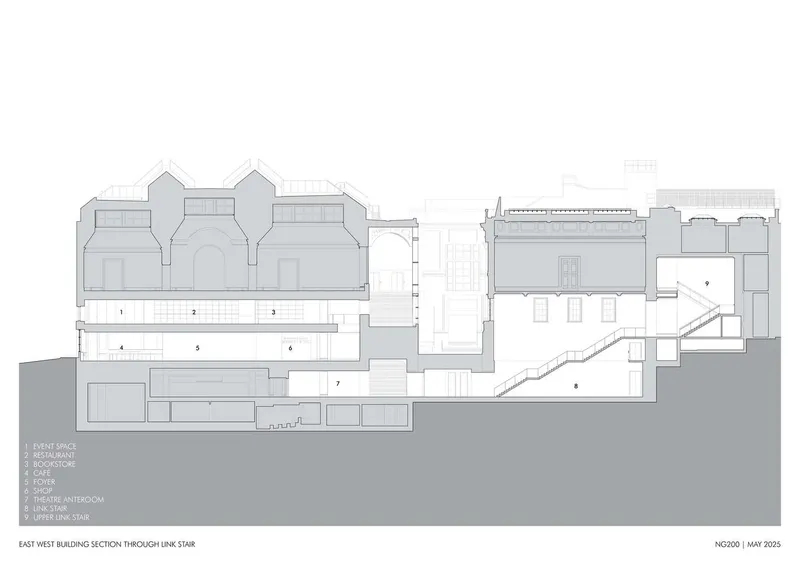
The Sainsbury Wing renovation is part of the wider NG200 initiative, which includes the upcoming Supporters’ House and an underground connection to the main National Gallery building. A renewed Research Centre will also be unveiled in future phases. Each stage of the program reinforces the Gallery’s commitment to accessibility, conservation, and enhancing the visitor experience.
The National Gallery Sainsbury Wing Renovation by Selldorf Architects redefines the threshold between Trafalgar Square and one of the world’s greatest collections of art. Through sensitive interventions, modernized public spaces, and a renewed sense of welcome, the project bridges past and present while preparing the National Gallery for its next century of cultural significance.
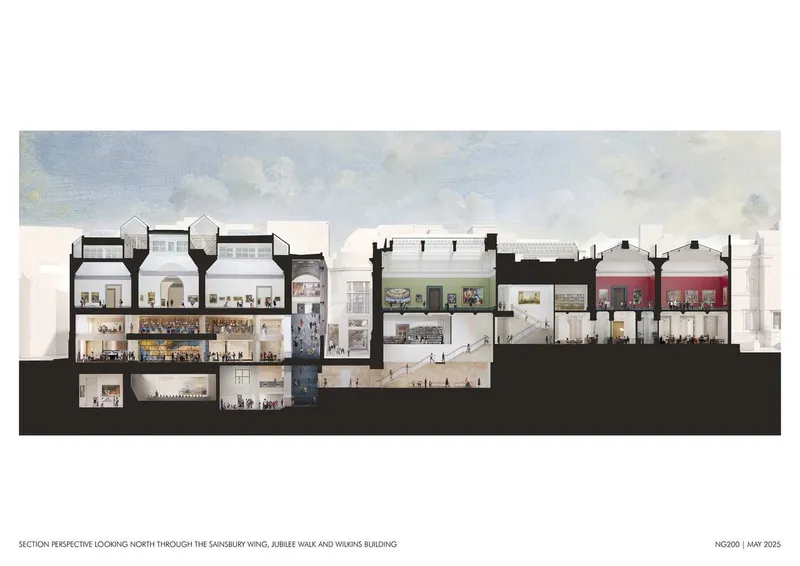
All the photographs are works of Edmund Sumner




Popular Articles
Popular articles from the community


Co-Life: Senior Housing Design That Reconnects Older Adults With the City
Co-Life reimagines senior housing design through healing gardens, shared streets, workshops, and a sustainable community across generations.

Lunar Spiral: Space Architecture Shaped by the Mathematics of the Universe
Lunar Spiral reimagines space architecture through Fibonacci geometry, lunar regolith, levitating habitats, and self-sustaining Moon living.

Hill & Cross Opera: Sculptural Opera House Architecture Shaped by Tallinn’s Landscape and Identity
Hill & Cross Opera reimagines opera house architecture in Tallinn through its sculptural hill, civic plaza, glass wave and a luminous cross.

Play: Fragments of Their World
Familiar architecture becomes modular playground design, creating safe spaces where displaced children can learn, connect, imagine and play.


Similar Reads
You might also enjoy these articles


FAMM Arquitectura Organizes Ten Villas Around Courtyards and Jungle in Nosara, Costa Rica
El Molino pairs two elongated volumes with deep overhangs and timber louvers to build a compact coastal community five minutes from the beach.
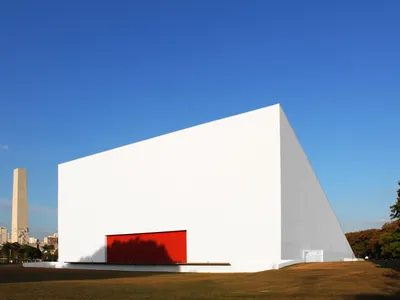
Oscar Niemeyer's Ibirapuera Park Pavilions Define São Paulo's Cultural Identity in Concrete and Curve
A constellation of modernist volumes set within São Paulo's most important urban park, conceived for the city's 400th anniversary in 1954.
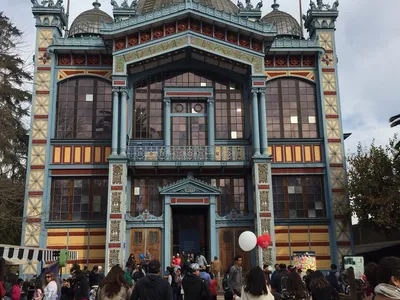
How Henri Picq's 1889 Paris Pavilion Traveled 11,000 Kilometers to Become Santiago's Artequín Museum
A prefabricated iron and glass pavilion built for the Paris Universal Exposition found a second life as a children's art museum in Chile.
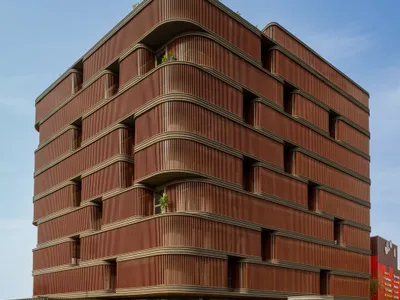
Sanjay Puri Architects Wraps a Jaipur Office Tower in Capsule-Shaped Green Buffers
A nine-level climate-responsive workplace near Jaipur Airport uses stacked planter terraces and aluminium screens to fight 40°C heat.


Explore Contemporary Gallery Competitions
Discover active competitions in this discipline



Challenge to reimagine the Iron Throne


Photograph architecture without architects


Illustrate the lost glory of Angkor Wat - Render Challenge


Design challenge to reuse E-waste
Comments (0)
Please login or sign up to add comments
No comments yet. Be the first to comment!