
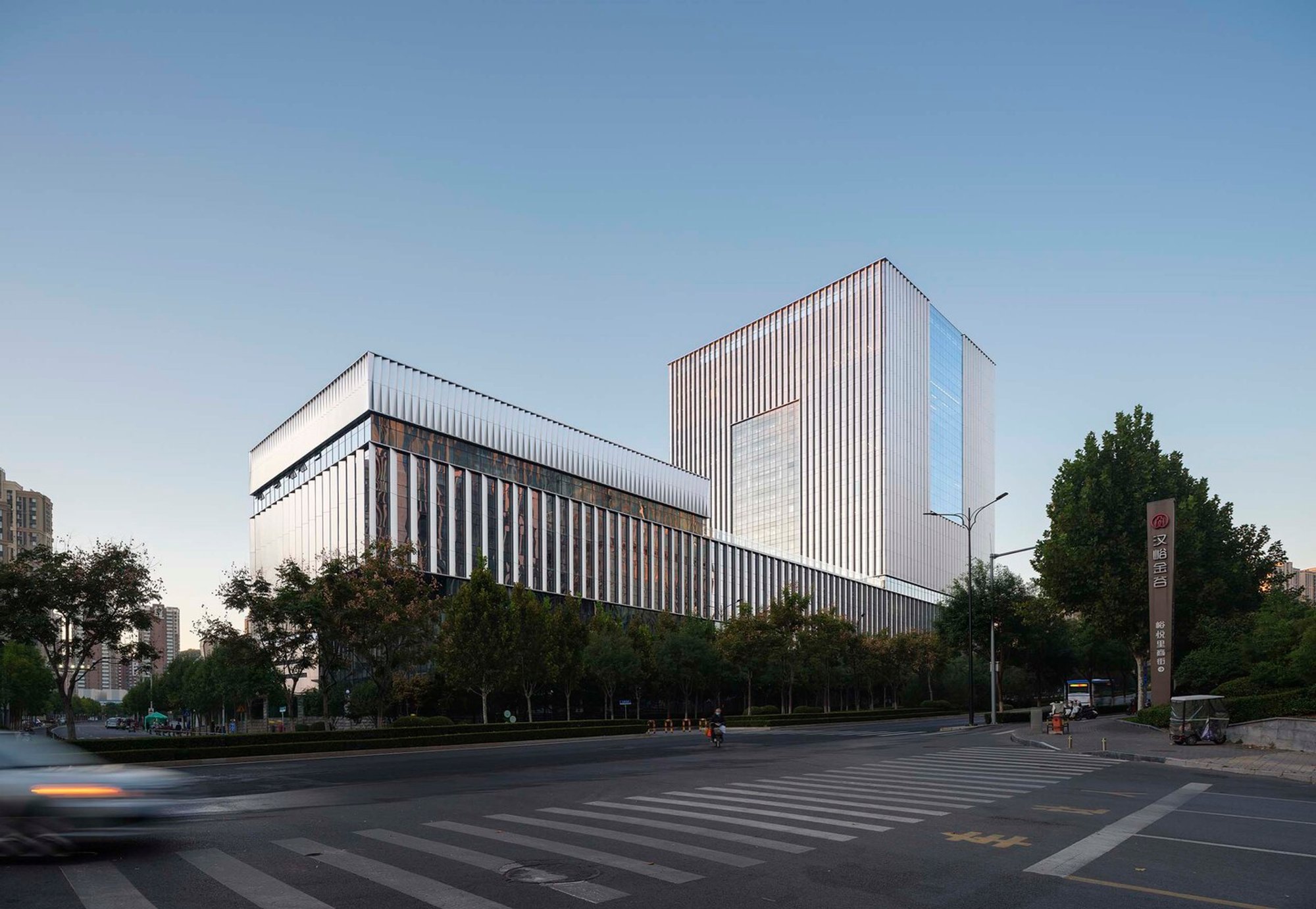
National Heavy Vehicle Engineering Technology Research Center – A Landmark of Modern Industrial Architecture in Jinan
Minimalist floating tower with energy-efficient facade, daylight-filled interiors, and landscaped terraces, creating a sustainable, innovative headquarters in Jinan, China.

By CCDI GROUP 21 Design Studio
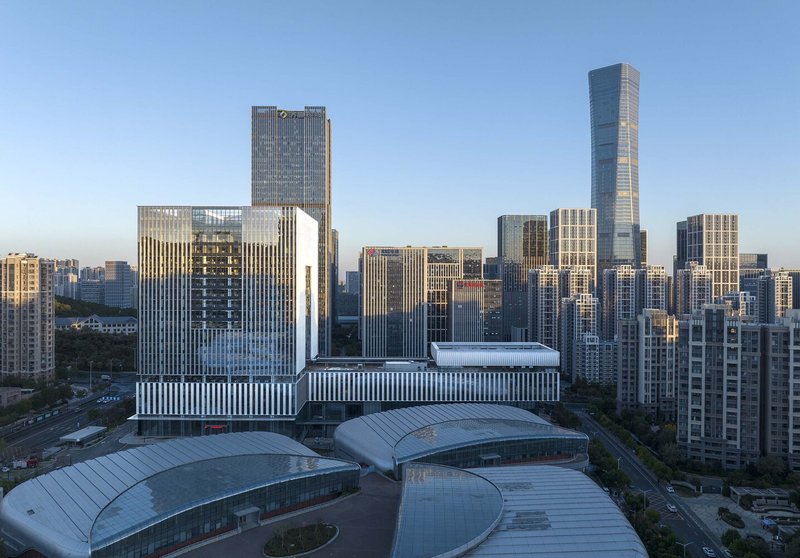
The National Heavy Vehicle Engineering Technology Research Center stands as a flagship headquarters for innovation, research, and corporate representation in the heart of Jinan High-tech Zone, China. Designed by CCDI GROUP 21 Design Studio, this high-rise complex is strategically positioned near Hanyu Golden Valley to the north and Shunao Park to the east, benefiting from both vibrant urban connectivity and lush natural surroundings.
Covering a site area of 22,861 m² and boasting a total built-up area of 145,516.21 m², the development rises with a tower curtain wall height of 96 meters. Completed in 2022, the project embodies a refined balance between architectural minimalism and high-performance functionality—a direct reflection of the corporate culture of China National Heavy Duty Truck Corporation (CNHTC).
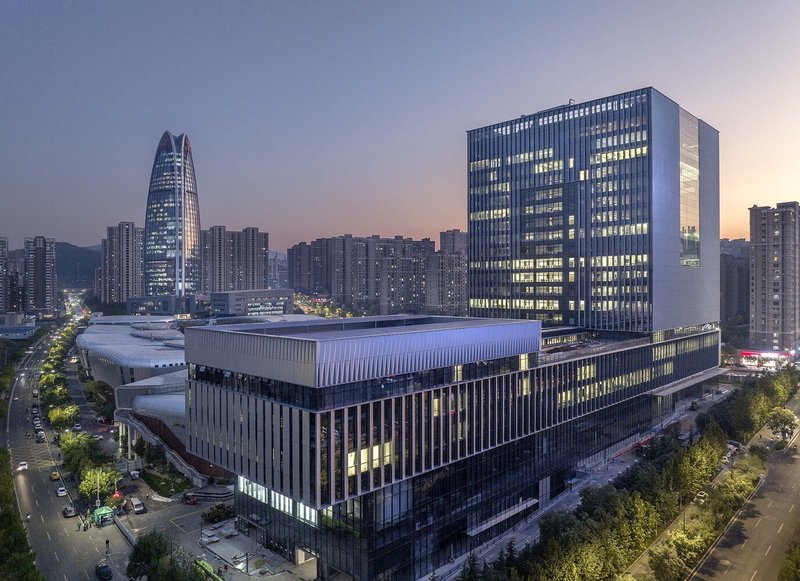
Architectural Vision – Efficiency Meets Human-Centric Design
The design philosophy aimed to combine operational efficiency with a superior workplace experience. The surrounding skyline, shaped by CCDI’s earlier projects in Hanyu Golden Valley, provided a contextual dialogue—contrasting suspended minimalist volumes with rich, dynamic interiors.
By offering a humanized, open, and collaborative office environment, the architects sought to stimulate innovation within CNHTC’s workforce, envisioning the center as a hub for future-forward industrial research.
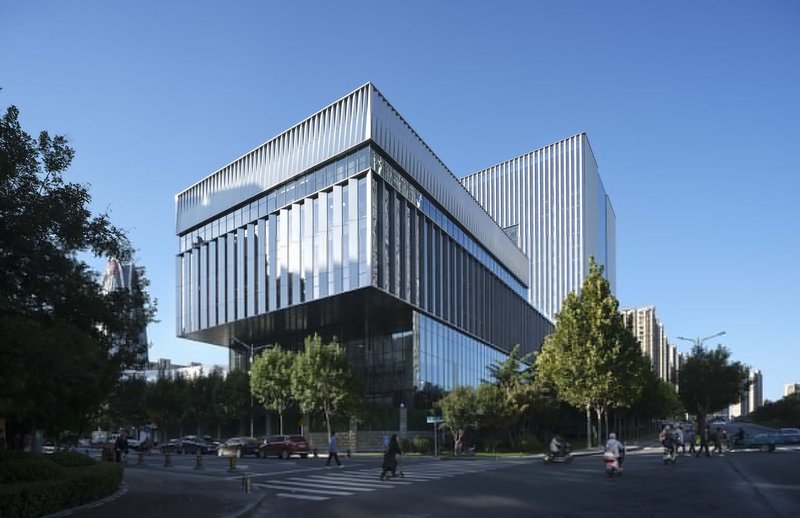
Master Plan & Spatial Layout
The site is characterized by an L-shaped footprint stretching from east to west. Its functional zoning is clear and strategic:
- Northwest Corner – The office tower rises here, symbolizing the corporate image and anchoring the site visually.
- East-West Axis – The enterprise exhibition hall extends horizontally, maximizing display frontage for visitors.
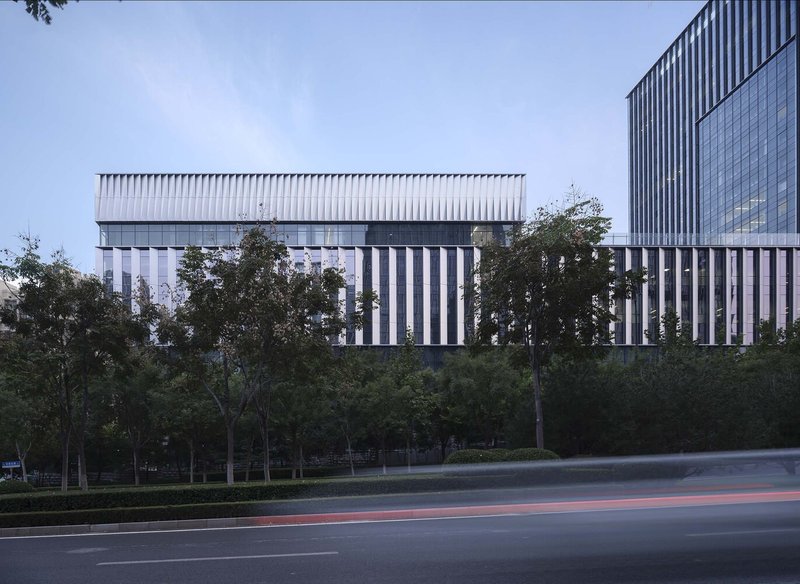
- Podium Levels – The first floor houses the exhibition space, while the upper podium accommodates a conference center and cafeteria.
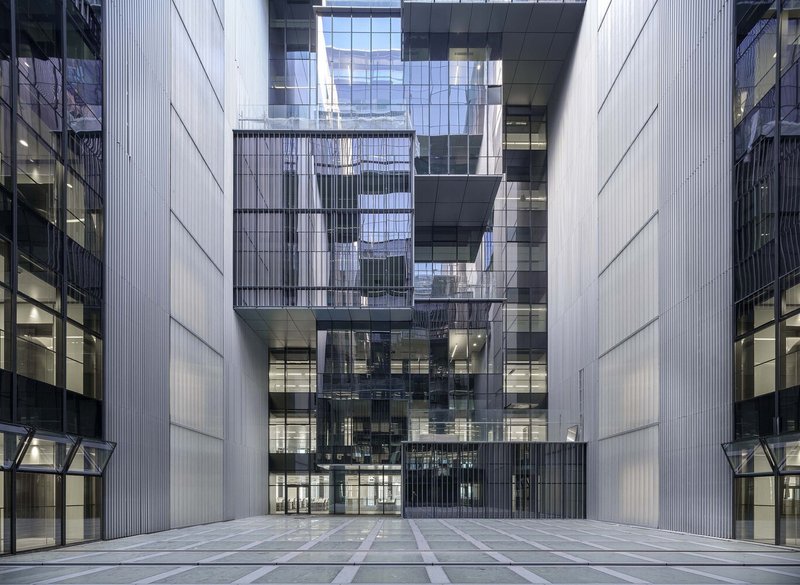
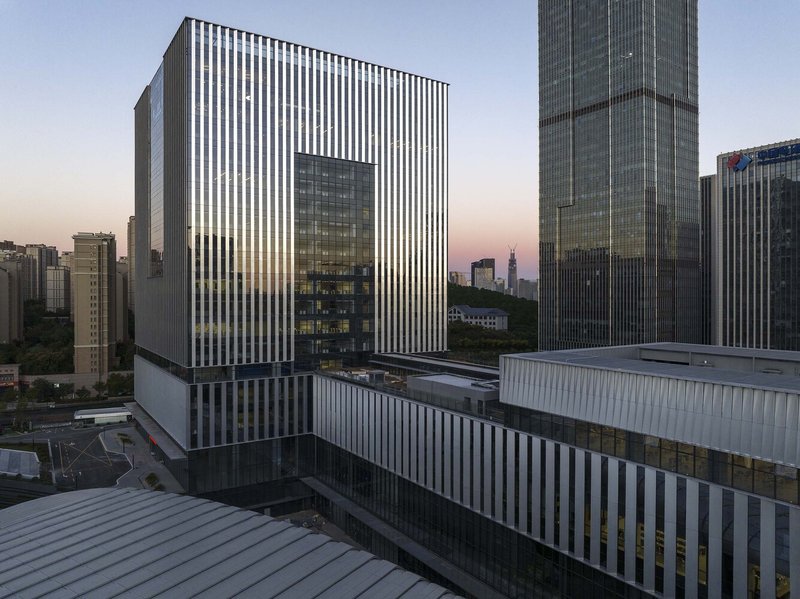
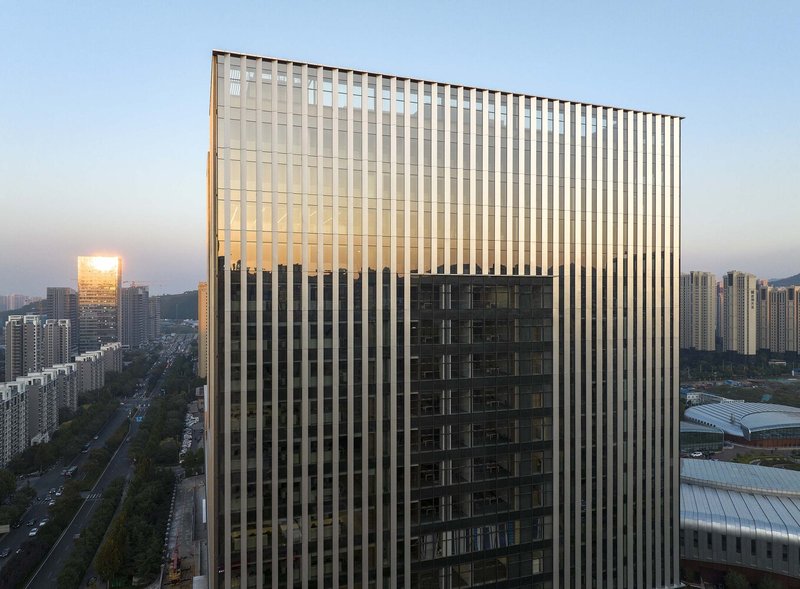
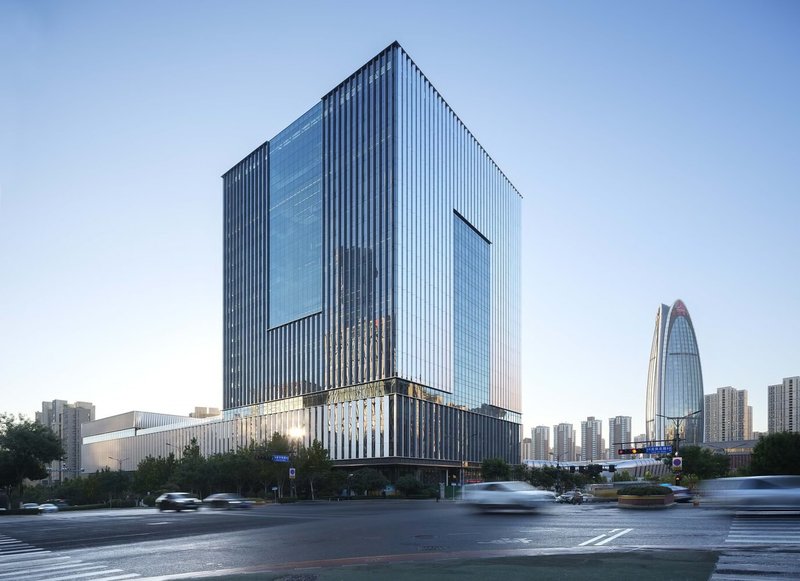
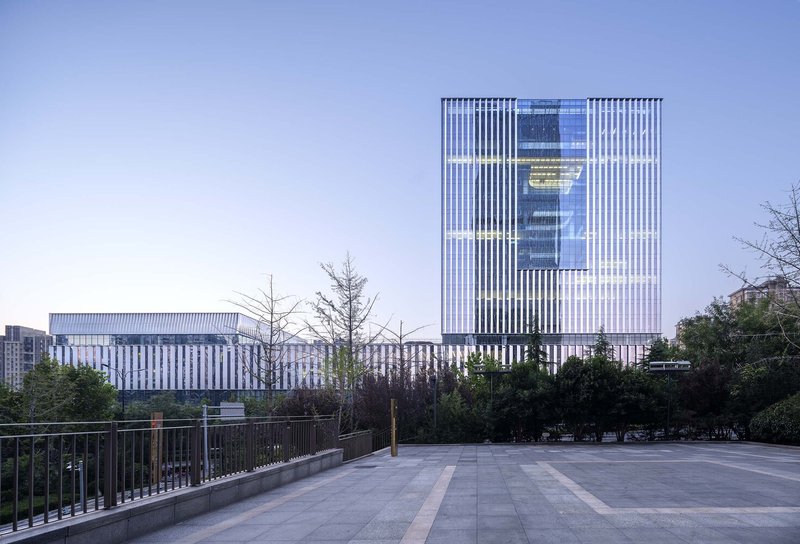
The office tower floats above the podium like a pure white cube, creating a visual dialogue with the earlier phase of CNHTC’s facilities. The east side features an open ground-level gray space—a shaded, semi-public area that visually and physically connects the building to the adjacent park and city streets.
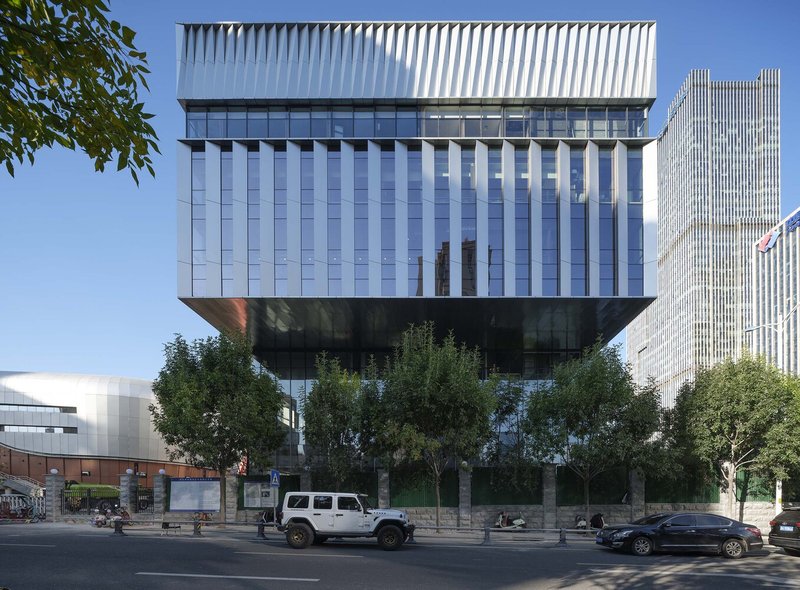
Facade & Sustainability Features
Designed to meet China’s Two-Star Green Building Standard, the facade incorporates ultra-clear triple silver Low-E glass for optimal daylighting, insulation, and glare control.
Key sustainable facade strategies include:
- Minimalist, precise detailing with concealed ventilation panels for natural airflow and smoke exhaust.
- Vertical triangular anodized aluminum elements forming sunshades, reducing heat gain while adding a rhythmic architectural texture.
- Cloth-patterned stainless steel at the entrance canopy, enhancing the metallic aesthetic.
- Integrated lighting design with hidden grooves and wall-wash effects, subtly illuminating the triangular slopes for a high-end yet understated night-time presence.
Interior Experience – Light, Space, and Interaction
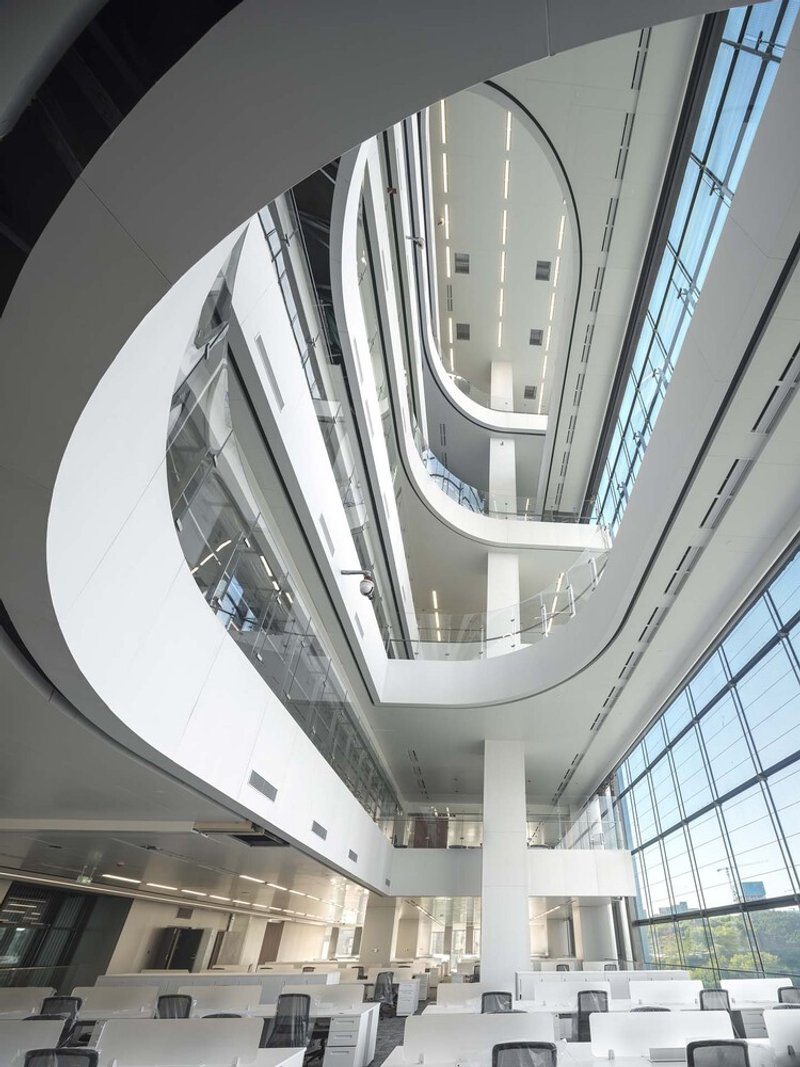
Behind its minimalist exterior, the interior offers a multi-layered spatial experience designed to foster collaboration, creativity, and well-being.
Key design features include:
- Vertical Courtyard (6–18 floors) – Enhances daylight penetration, improves ventilation, and reduces energy consumption during transitional seasons.
- Open Elevator Lobbies – Facing the central courtyard, breaking away from the enclosed, isolating feel of typical high-rise offices.
- U-glass Partition Walls – Providing privacy while maximizing natural light in restrooms and service areas.
- Skylit Atrium – Works in harmony with metal blinds to filter sunlight, producing ever-changing shadows and a “light-harvesting” effect.
- Tiered Conference Rooms – Positioned around the courtyard to create a dynamic, pavilion-like arrangement for meetings and gatherings.
- Accessible Garden Terraces – Offering fresh air, natural greenery, and outdoor workspaces for employees.
Urban Dialogue & Technological Expression
On the north-facing side, a high-side courtyard from the 9th to 18th floors frames views of the main road, acting as a visual bridge between the corporate headquarters and the city. The facade incorporates over 1,000 m² of photoelectric glass within a cable-supported curtain wall system, merging architectural elegance with cutting-edge technology and sustainability.
The resulting form—a silver-gray floating volume above a transparent podium—communicates both industrial strength and innovative agility, setting a benchmark for corporate R&D architecture in China.
Project Data
- Project Name: National Heavy Vehicle Engineering Technology Research Center
- Location: Jinan High-tech Zone, Jinan, China
- Architects: CCDI GROUP 21 Design Studio
- Lead Architect: Lang Wang
- Area: 145,516.21 m²
- Height: 96 m (curtain wall), 89.85 m (structural roof)
- Completion Year: 2022
- Photography: Jian Fang
- Certification: Two-Star Green Building Standard
The National Heavy Vehicle Engineering Technology Research Center is not just a corporate headquarters—it’s an architectural statement on how modern industrial R&D spaces can blend efficiency, sustainability, and employee well-being. With its floating volumes, energy-efficient facade, and daylight-optimized interiors, the building offers a forward-looking model for innovative workplace design in China’s rapidly evolving industrial sector.
All photographs are works of Jian Fang




Popular Articles
Popular articles from the community

Not All Architecture Grounds a Timber Retreat in Victoria's Coastal Bushland
Ironbark House stretches low beneath eucalyptus canopy, threading a quiet domestic life between courtyard, deck, and landscape.
KCAP and DCA Architects Build a Stepped Urban Village on Singapore's King's Dock Waterfront
A 26,000 square meter residential development in Singapore trades tower isolation for terraced courtyards and a planted promenade along the harbor.

CTA | Creative Architects Designs Triangular Floating Shelters for Vietnam's Flood-Ravaged Communities
A timber-louvered triangular shelter rises on concrete pontoons to keep Vietnamese families safe and together when floodwaters come.
Three Architects Stitch a Social Center into a Crumbling Galician Hamlet
In Muimenta, Spain, timber and plywood volumes graft onto granite ruins to anchor a rural revitalization effort.

Similar Reads
You might also enjoy these articles

Filtering Space: A Gradual Spatial Experience
From urban intensity to spatial calm.


The Ken Roberts Memorial Delineation Competition (Krob)
As the most senior architectural drawing competition currently in operation anywhere in the world, it draws hundreds of entries each year, awarding the very best submissions in a series of medium-based categories.


Waterfront Redevelopment and Urban Revitalization in Mumbai: Forging a New Dawn for Darukhana
A transformative waterfront redevelopment project reimagining Darukhana’s shipbreaking heritage into an inclusive urban future.

OUT-OF-MAP: A Call for Postcards on Feminist Narratives of Public Space
Rhizoma Design and Research Lab invites artists, designers, architects, researchers, and students to reflect on how feminist perspectives can reshape public space. Selected works will be exhibited in Barcelona, October 2026. Submissions open until 15 April 2026.


Explore Architecture Competitions
Discover active competitions in this discipline




The International Standard for Design Portfolios


The Global Benchmark for Architecture Dissertation Awards


The Global Benchmark for Graduation Excellence


Challenge to reimagine the Iron Throne
Comments (0)
Please login or sign up to add comments
No comments yet. Be the first to comment!