

Nativa House by FROM: A Contemporary Renewal Rooted in History and Nature
Nativa House blends mid-century structure with contemporary openness, reconnecting family, nature, and daily rituals through fluid spaces, garden entry, and rooftop greenhouse.


Located in a quiet residential neighborhood in Montevideo, Uruguay, Nativa House by FROM reimagines a mid-century dwelling for a family returning home after years abroad. The project transforms a vacant 1956 structure into a warm, contemporary residence that honors memory while embracing modern living, nature, and artisanal craft.
Designed in 2024, the 220-square-meter house becomes a site of reconnection—between past and present, structure and atmosphere, city and landscape. The architecture balances nostalgia with innovation, creating a refined yet deeply personal environment shaped by rituals, material honesty, and spatial fluidity.
Reinterpreting a 1956 Home for Modern Life
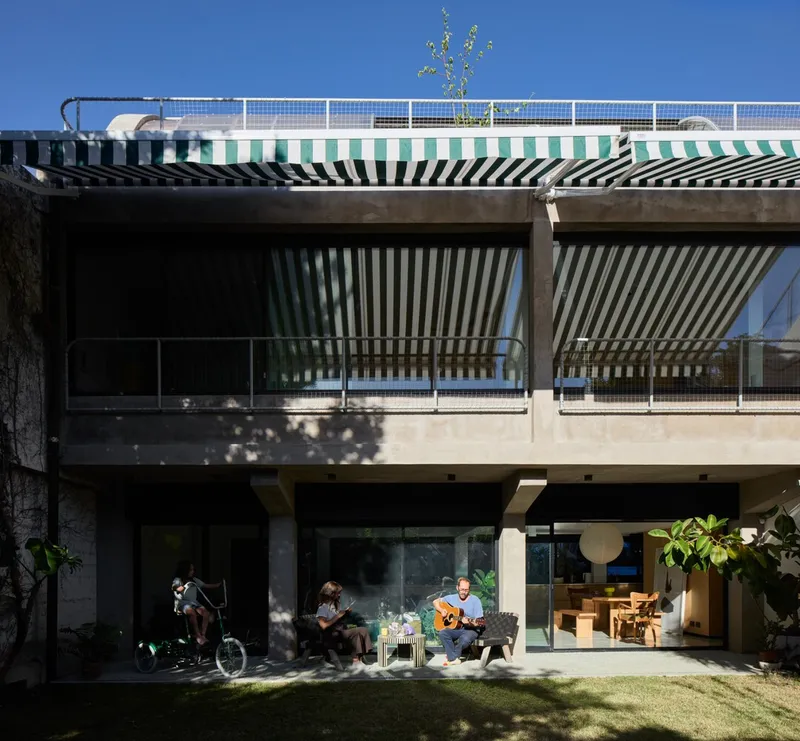
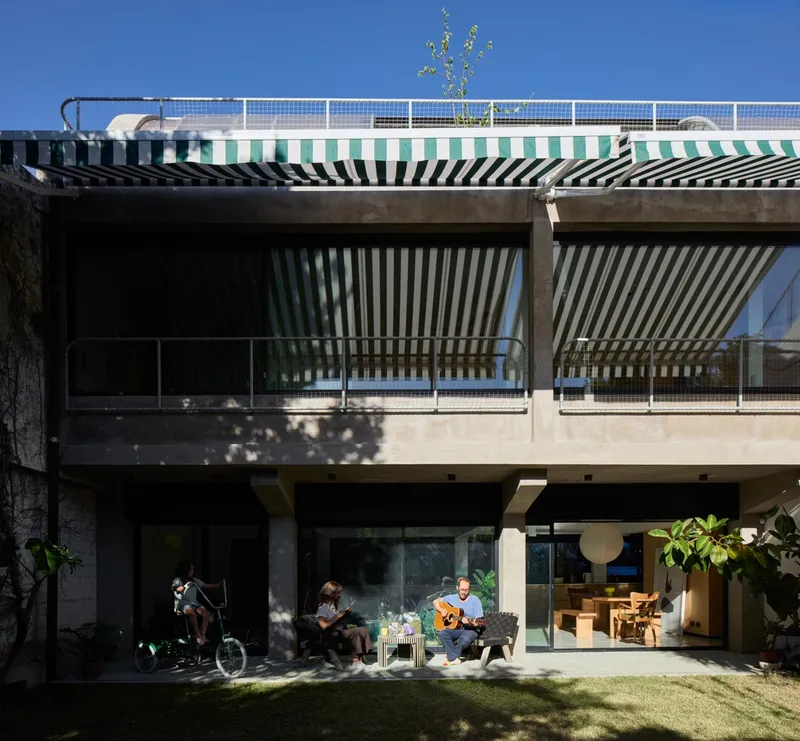
The original home was divided vertically, with the upper level dedicated to family and social life and the lower level used for services and garage functions. FROM’s intervention dissolves this rigid hierarchy, giving equal importance to both floors and rethinking circulation, lighting, and openness.
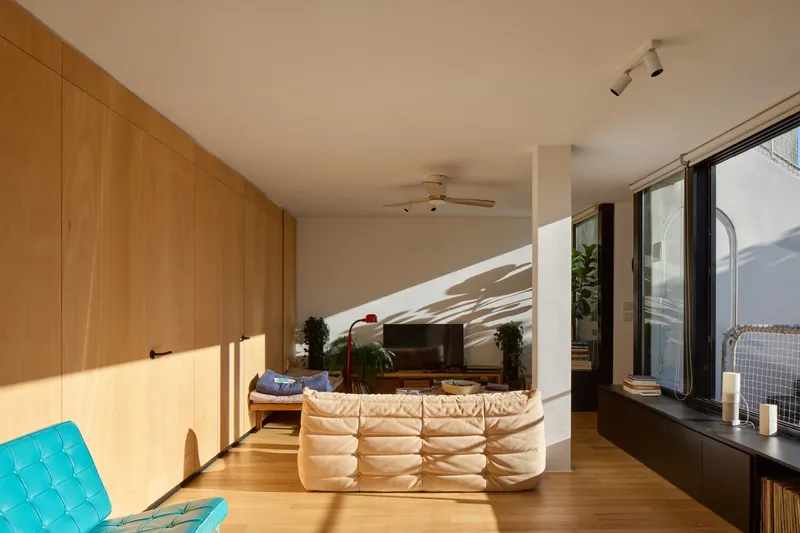
To achieve this transformation, the architects removed interior partitions, the staircase, and parts of the façade, revealing the simple structural frame and allowing light, air, and sightlines to define the spatial experience. The newly exposed void acts as a central anchor, emphasizing transparency and continuity.
This architectural strategy celebrates the home’s heritage while carving space for new habits, daily rhythms, and future adaptability.

A New Way of Entering and Living
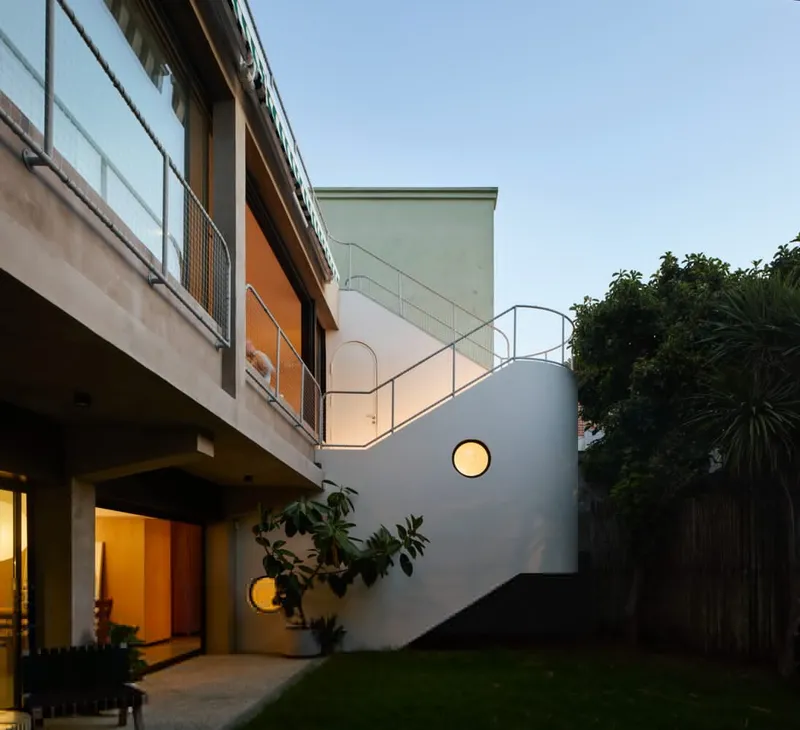
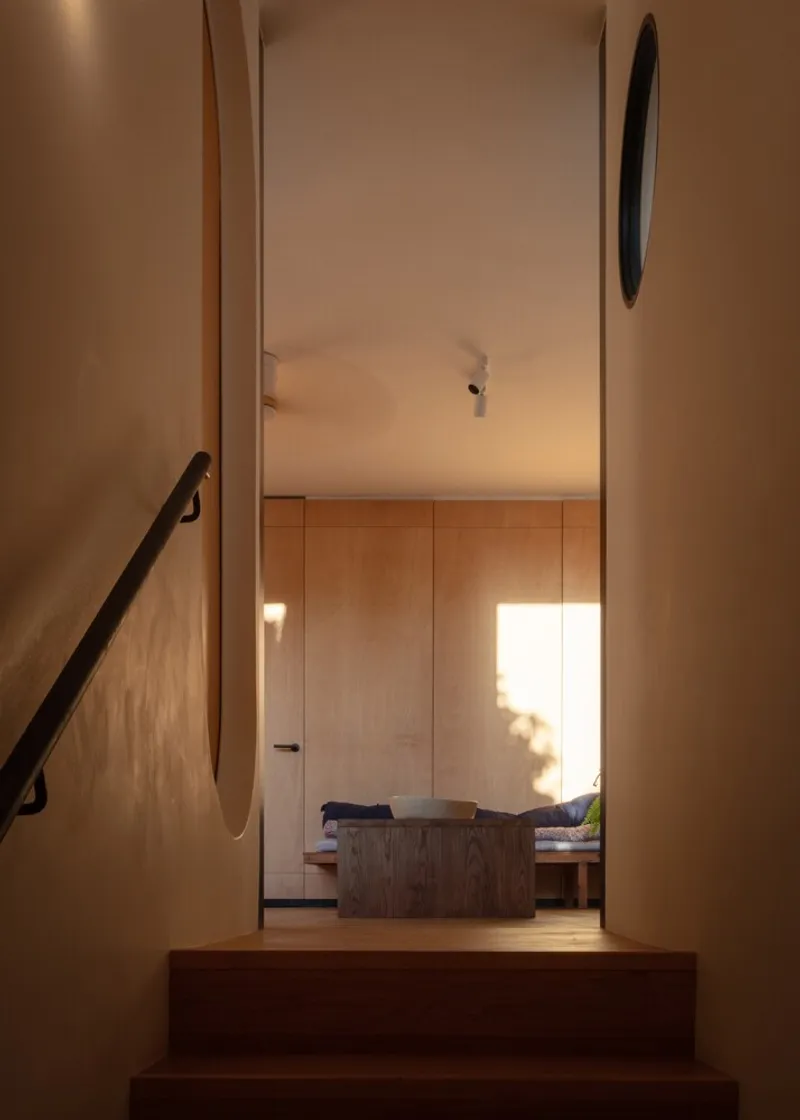
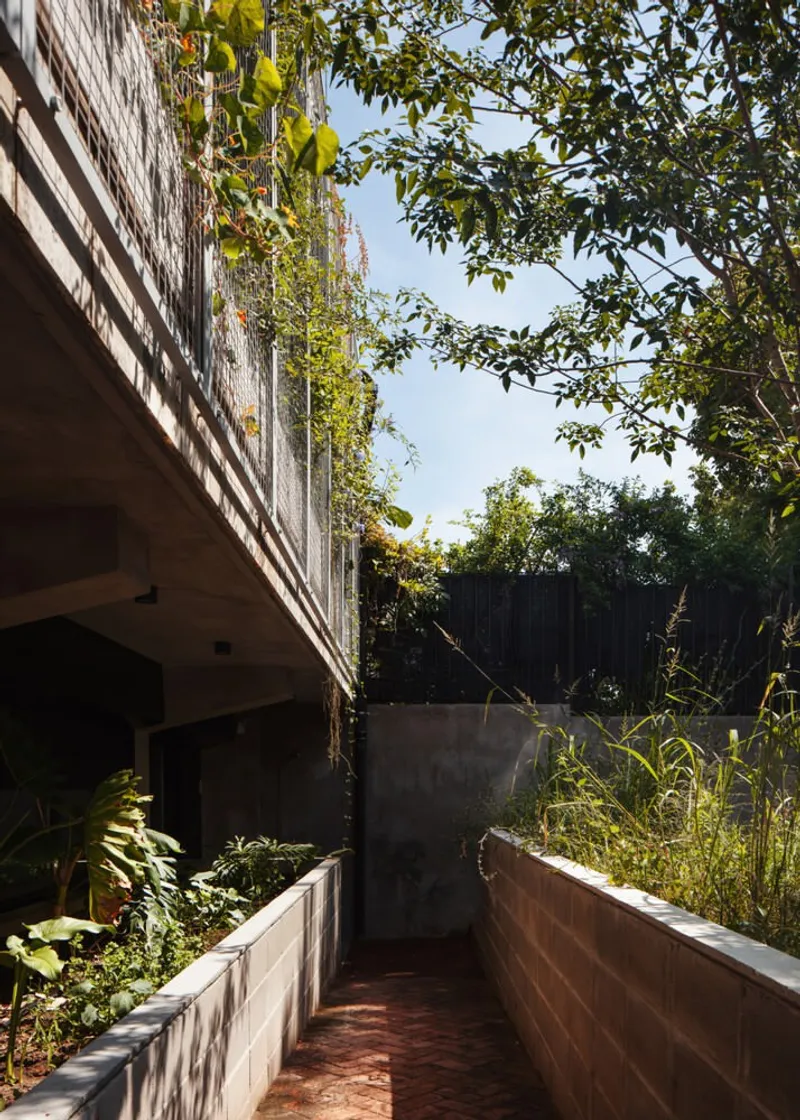
One of the most significant gestures of the redesign is the transformation of arrivals and movement. Instead of accessing the home via an elevated bridge—once the only route to the social level—residents and guests now descend a gentle ramp surrounded by a lush, wild garden.
This intimate approach softens the transition from urban street to domestic refuge, deepening the relationship between architecture and nature. As the lower floor becomes the primary entry, it opens itself to both the front and rear gardens, dissolving boundaries and fostering a sense of openness and hospitality.
Internal-External Flow and Spatial Devices
To reinforce the new circulation logic, FROM introduces two key spatial elements:
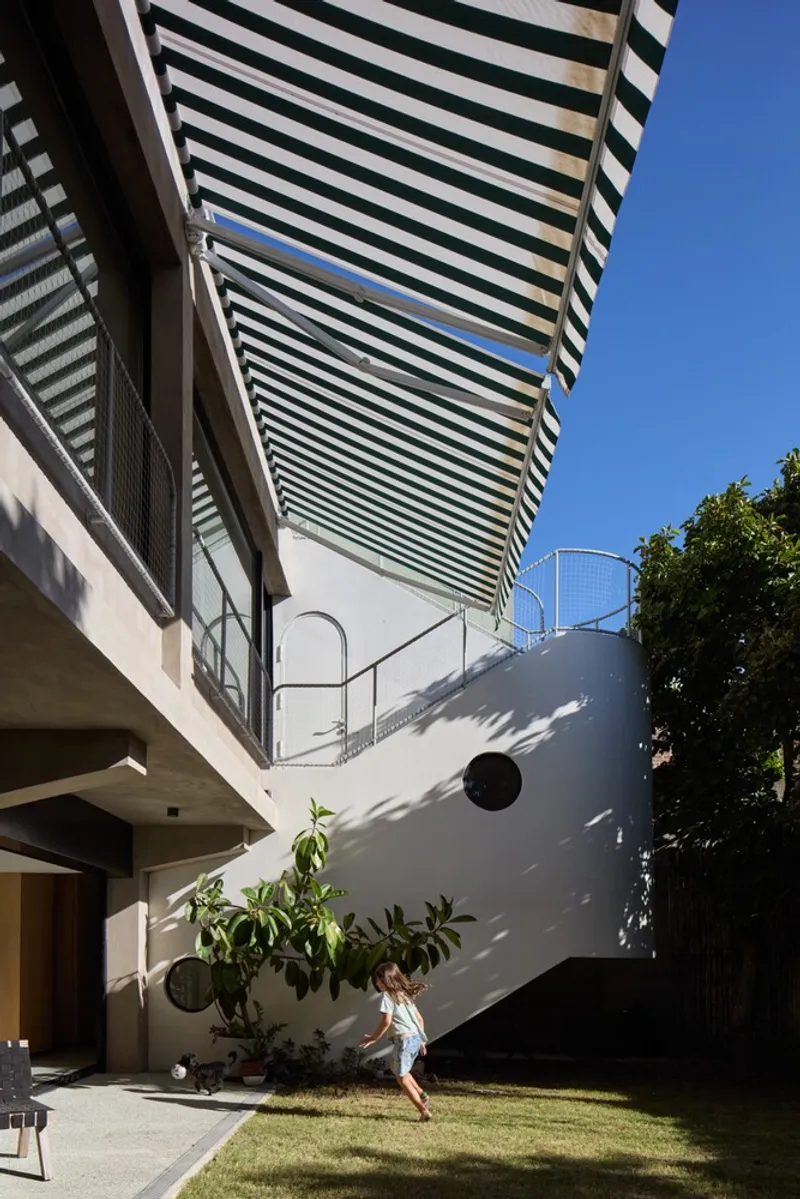
1. A sculptural internal-external staircase
This distinctive stair binds the levels together and becomes a symbolic connector—an architectural link between private, social, and outdoor spaces. Its dual positioning allows movement to slip between interior and exterior environments with fluidity and ease.
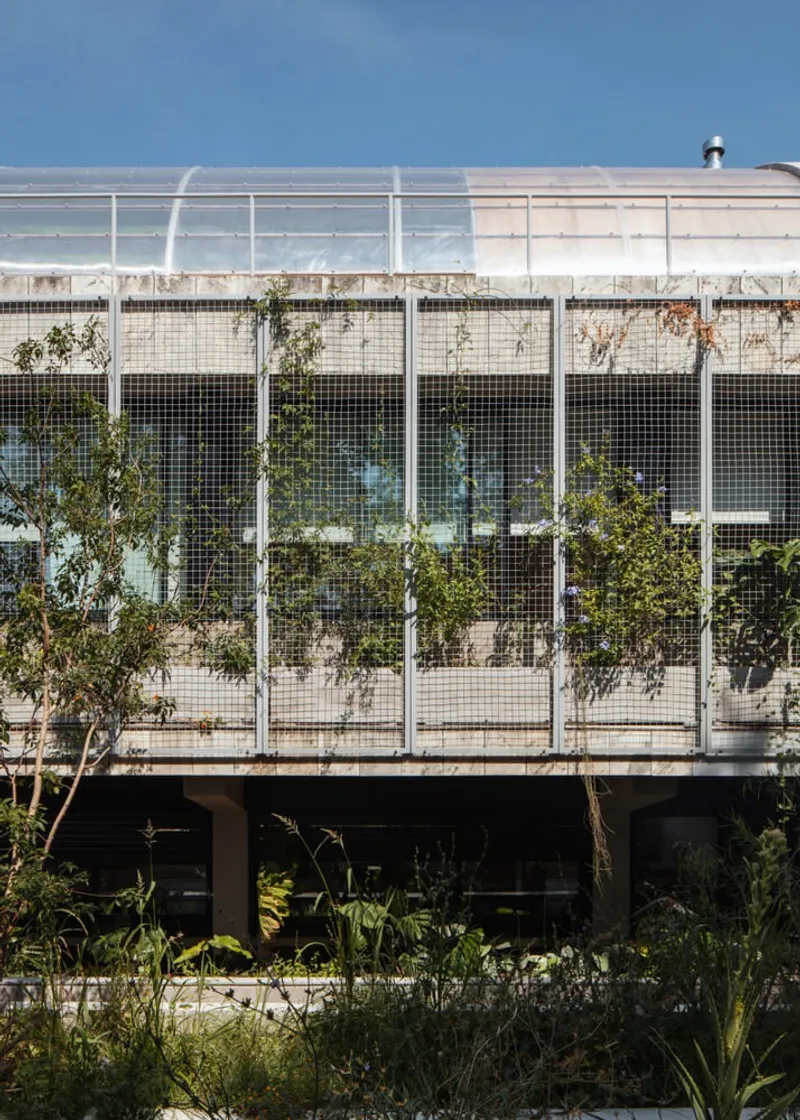
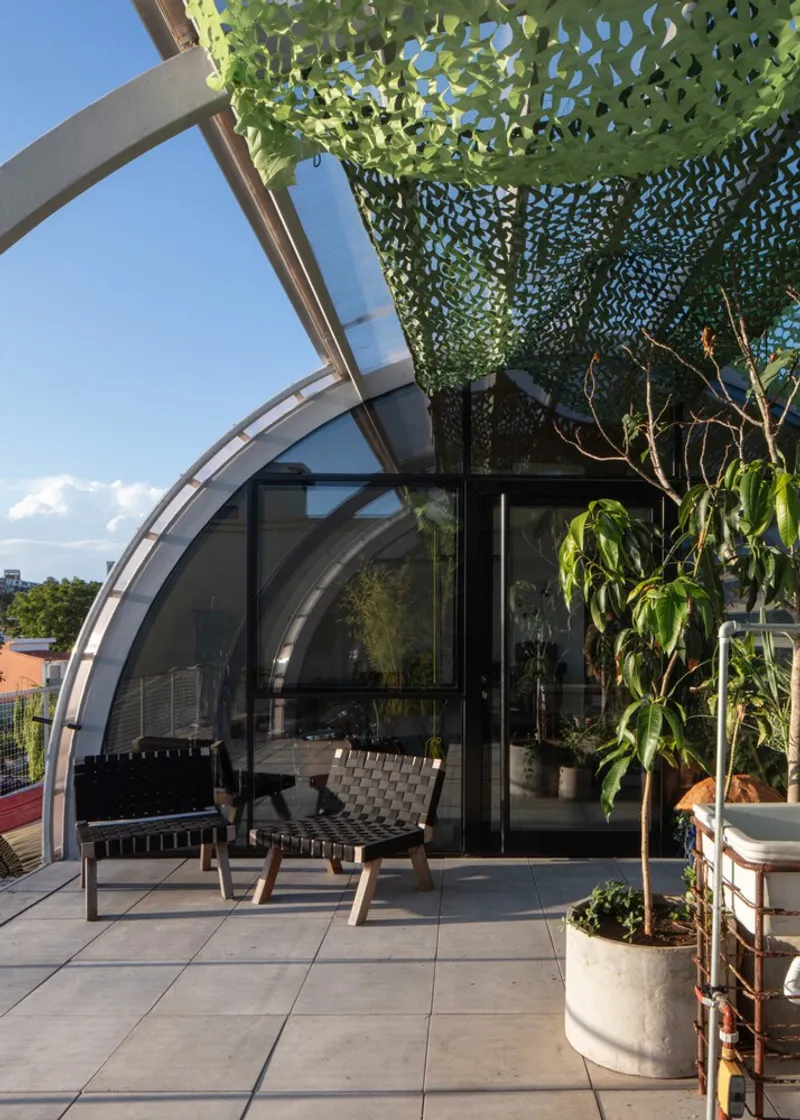
2. A semicircular rooftop greenhouse-workshop
Emerging like a lantern on the roof, the greenhouse nods to craftsmanship, gardening, and the family’s cultural return. It becomes a space for making, experimenting, and cultivating—an elevated retreat that celebrates creativity and domestic ritual.
Together, these devices enrich the home’s experiential narrative, adding layers of movement, light, and texture.
Material Warmth and Spatial Character
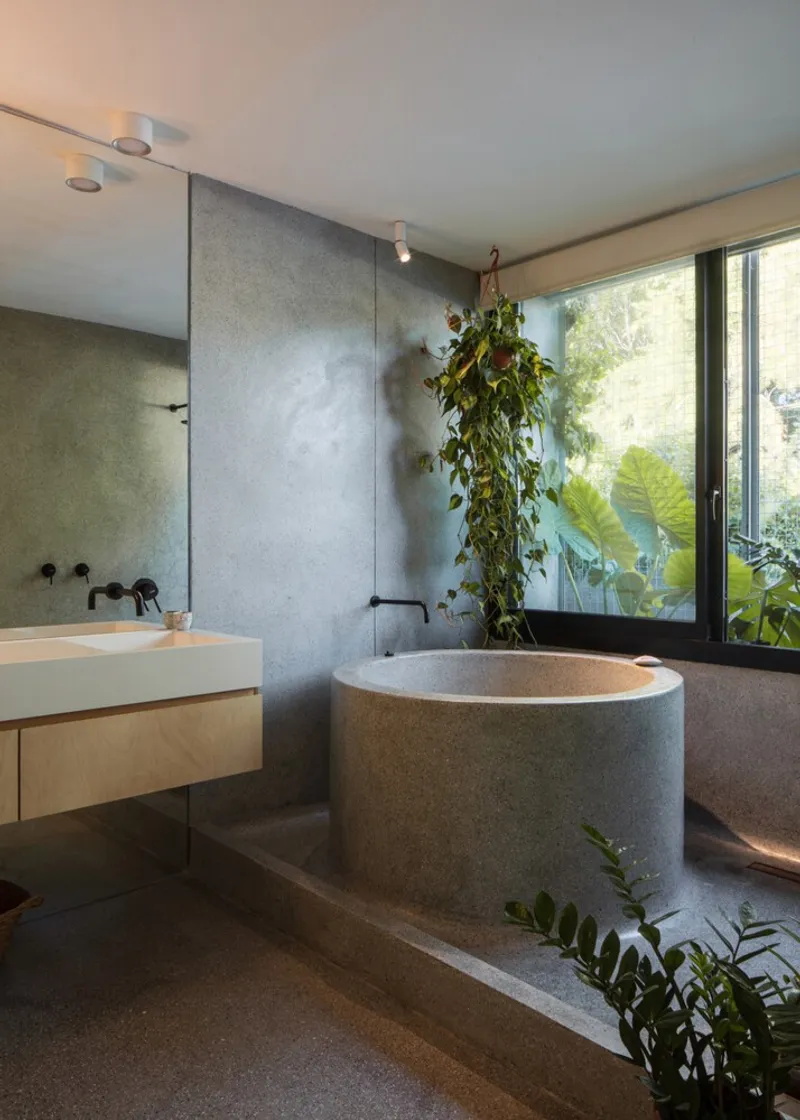
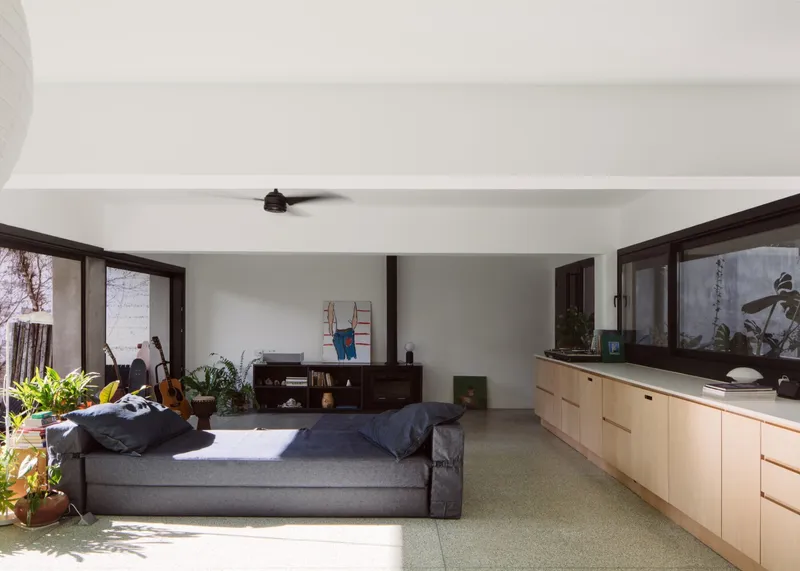
Throughout the home, materials speak softly yet confidently: exposed structure, warm woods, natural light, and handcrafted elements. The architecture avoids nostalgia yet remains deeply connected to memory, with subtle gestures honoring the home’s origin while opening it to contemporary life.
The result is an atmosphere defined by simplicity, earthy elegance, and a sense of belonging—echoing the meaning of “Nativa”: native, rooted, born of place.
A Dialogue Between Past and Future
Nativa House reflects a larger architectural ethos emerging in Latin America—one that respects heritage, emphasizes material modesty, and embraces spatial freedom. FROM’s intervention offers a model for sustainable renovation where adaptation is not merely technical but emotional and cultural.
All photographs are works ofAldo Lanzi




Popular Articles
Popular articles from the community


The Ocean Hive: Sustainable Architecture for a Self-Sufficient Civilization at Sea
The Ocean Hive imagines sustainable architecture at sea, where modular habitats, algae, wave power and ocean waste sustain a growing colony.

Lunar Spiral: Space Architecture Shaped by the Mathematics of the Universe
Lunar Spiral reimagines space architecture through Fibonacci geometry, lunar regolith, levitating habitats, and self-sustaining Moon living.

Riyadh For All: Intergenerational Urban Design for Active Aging in Rabat
Riyadh For All reimagines urban design in Rabat with intergenerational co-living, adaptive courtyards, and Moroccan cultural exchange today.

Co-life: Sustainable Architecture for Age-Friendly Community Living
Co-life reimagines sustainable architecture for seniors through courtyards, rammed earth, shared gardens, and spaces designed for belonging.

Similar Reads
You might also enjoy these articles


Hodi-Mandai Geram
Project Function: Preservation and revitalization of the Intangible heritage and socio-spatial identity of the Hodi by Housing, Cultural Memory Center, Sacred Grove, landscape, local tourism economy


Olio Towers: A Mid-Rise for Performers That Fuses Housing, Rehearsal, and Stage
Located blocks from Houston's Theater District, this modular tower stacks living units around a central performance atrium.

Oasis: Modular Green Housing Carved into Dhaka's Urban Fabric
A shortlisted Plugin Housing entry reclaims unauthorized settlements in Dhaka with stepped concrete volumes, green roofs, and ventilation-driven design.

Black Hole: A Floating Megastructure for the Post-Physical Era
Emiliano Mazzarotto envisions a spherical, self-scaling arena where e-sports, digital hotels, and holographic stadiums replace traditional public space.


Explore Nio Architects Competitions
Discover active competitions in this discipline



Challenge to reimagine the Iron Throne


Photograph architecture without architects


Illustrate the lost glory of Angkor Wat - Render Challenge


Design challenge to reuse E-waste
Comments (0)
Please login or sign up to add comments
No comments yet. Be the first to comment!