
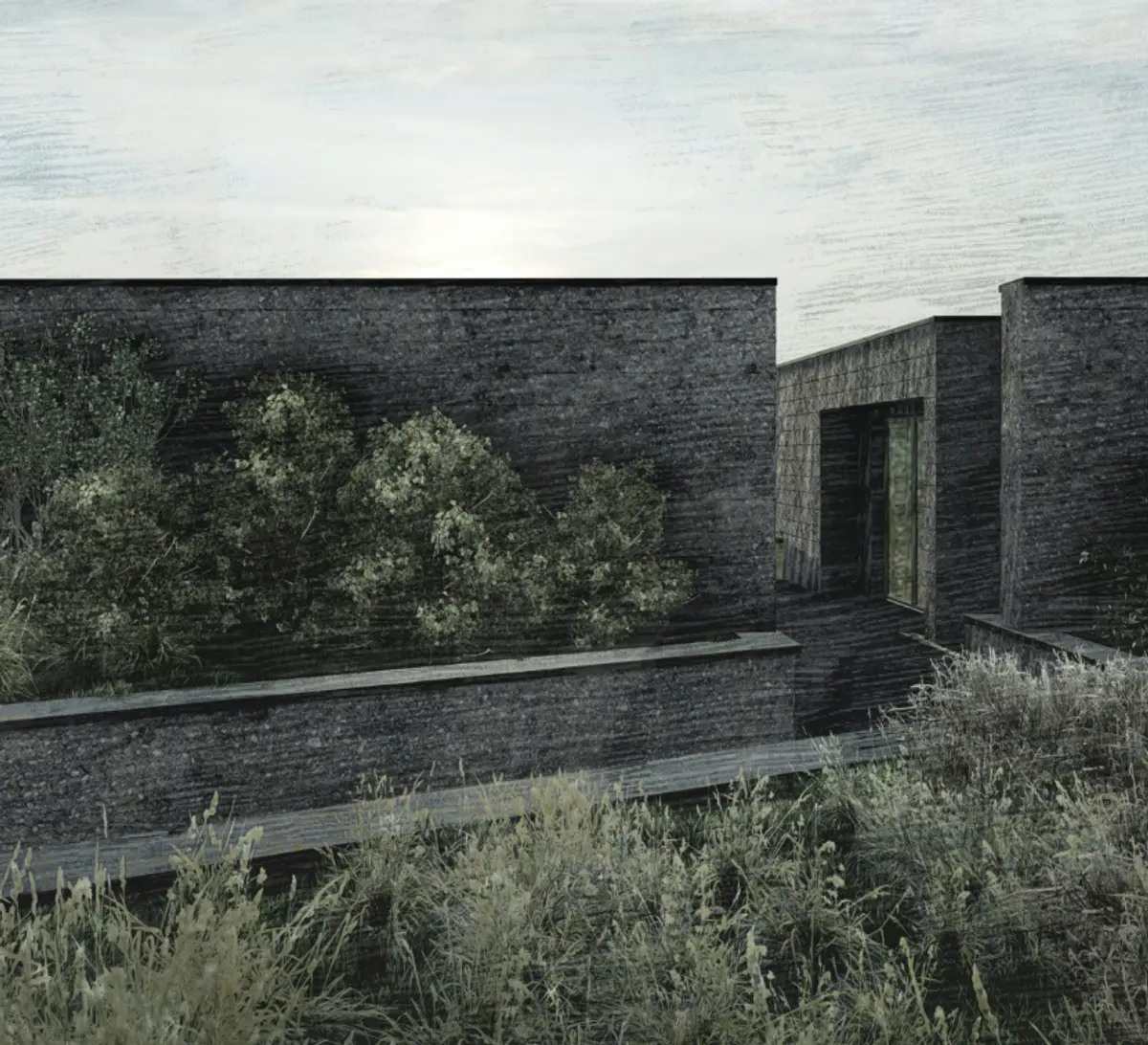
“Natural object”. A recreational center in warsaw’s district Mokotów
Nature.
The problem of today's society living in large and crowded cities is the lack of green spaces. Having not enough contact with nature contributes, among other things, to the common civilization diseases, such as depression or obesity. For animals, the lack of natural resources often means a lack of their natural habitat. Moreover, progressing global threat - the potential environmental degradation - increasingly restricts people and animals' access to green areas. Faced with these difficulties, the main task for architects and engineers should be to develop the natural building technologies. Putting the solution to presented problems as the main aim and the idea of the thesis, I propose a "natural object", a therapeutic and relaxation center, hereinafter referred to as "Straightening Up Project". The resort offers regeneration and relaxation in an area organized by fourth nature. The project includes residence houses for rent, therapeutic buildings, and service buildings. The center is an architectural complex integrated with the local flora and fauna, which does not generate rubbish that threatens our planet at the stage of construction, exploitation and demolition. Each building in the complex uses ecological, biodegradable or reusable materials. The main raw materials used for the building process are earth, cork and wood. Locating the "Straightening Up Project" in Warsaw's Mokotów district is a procedure that provides the needy residents with easy access by public transport. The site is currently one of the few areas in Warsaw that has not been developed by people yet. It shows the example of wild nature in an urban agglomeration. In the future, the "Straightening Up Project" will function as a small local nature reserve and a shelter for animals in the middle of extensive urban development.

Popular Articles
Popular articles from the community


Co-Life: Senior Housing Design That Reconnects Older Adults With the City
Co-Life reimagines senior housing design through healing gardens, shared streets, workshops, and a sustainable community across generations.

The Ocean Hive: Sustainable Architecture for a Self-Sufficient Civilization at Sea
The Ocean Hive imagines sustainable architecture at sea, where modular habitats, algae, wave power and ocean waste sustain a growing colony.

Co-life: Sustainable Architecture for Age-Friendly Community Living
Co-life reimagines sustainable architecture for seniors through courtyards, rammed earth, shared gardens, and spaces designed for belonging.

Conexión: Biophilic Design Reimagines High-Rise Living in Hong Kong
Conexión reimagines high-rise living in Hong Kong through biophilic design, green facades, shared spaces, daylight, water and nature within.

Similar Reads
You might also enjoy these articles
ALGAL REALM: A Bio-Integrated Lunar Habitat Design for Life Beyond Earth
ALGAL REALM reimagines lunar habitat design with algae-powered life support, 3D-printed regolith, and vertical living for a lunar future.

Cinema Futurismo: Futuristic Architecture Reimagining the Future of Cinema
Cinema Futurismo merges futuristic architecture, holographic projection, intimate seating, and landscape into a new social cinema.

Little Red Riding Hood: Architectural Design as a Journey Through Fear, Light, and Storytelling
Little Red Riding Hood reimagines the fairy tale through architectural design shaped by fear, light, scale, memory, uncertainty, and choice.
Playducation: Modular Architecture That Turns Play Into a Space for Learning
Playducation transforms modular architecture into a flexible world of play, learning, and healing for children in refugee settlements.

Comments (0)
Please login or sign up to add comments
No comments yet. Be the first to comment!