
Neville Park House by Reigo & Bauer: Toronto Residential Architecture
Neville Park House by Reigo & Bauer features geometric design, light-filled interiors, bold materials, and verticality on Toronto’s challenging sloped site.


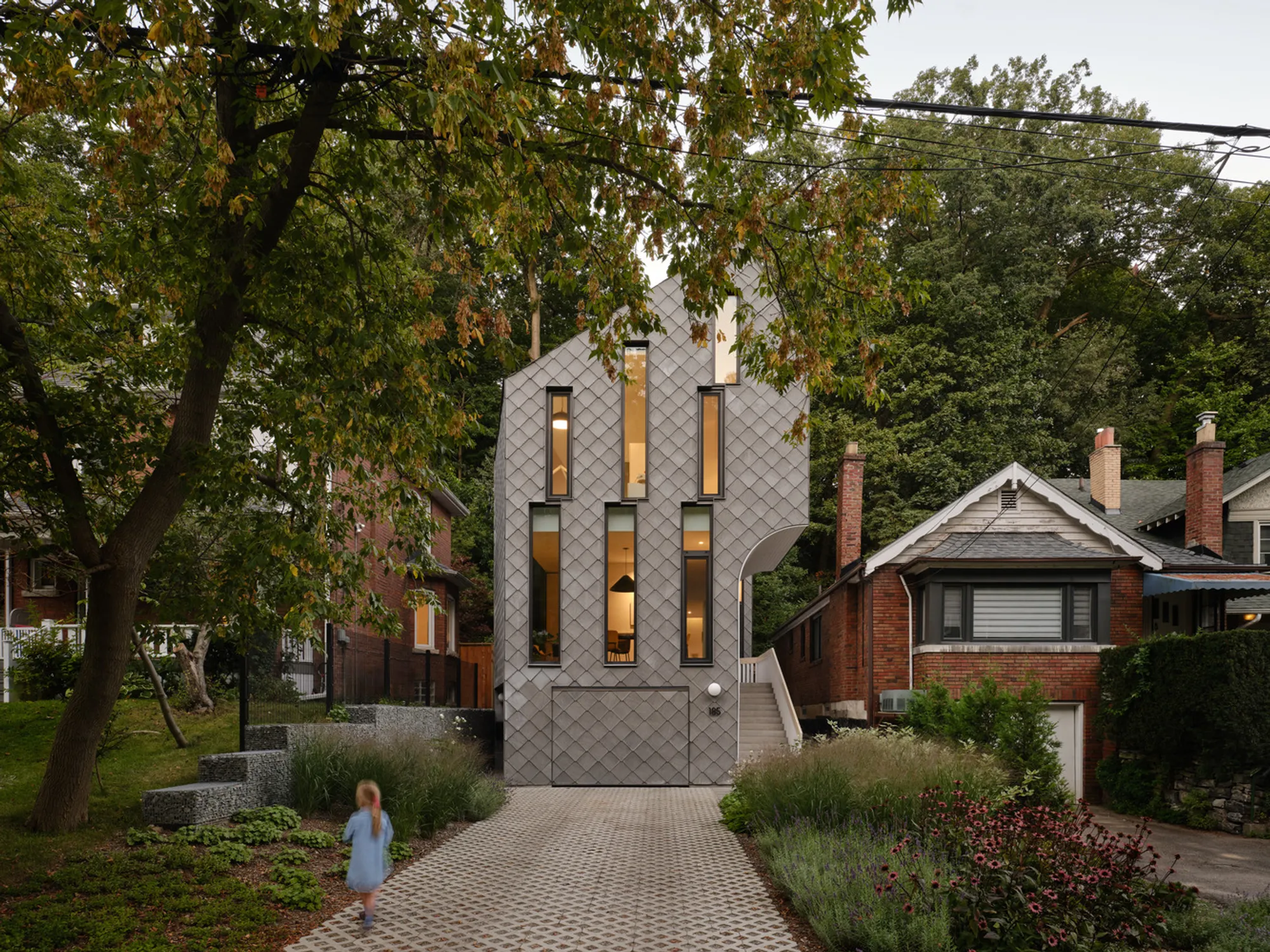
Nestled on a steeply sloped site in Toronto’s east end, Neville Park House is a striking example of contemporary residential architecture by Canadian studio Reigo & Bauer. Completed in 2023, this four-bedroom, 2,000 ft² single-family home creatively responds to the challenges of a narrow, gully-adjacent lot, combining geometric precision with innovative spatial strategies.
Contextual Design on a Sloping Site
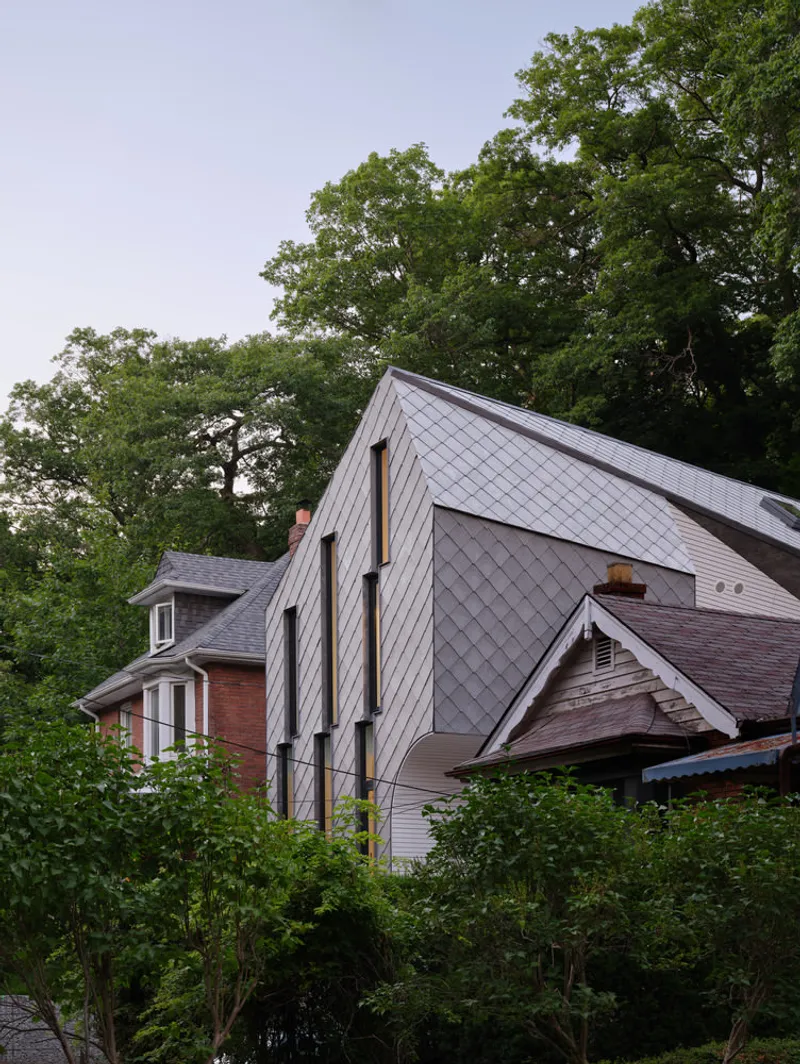
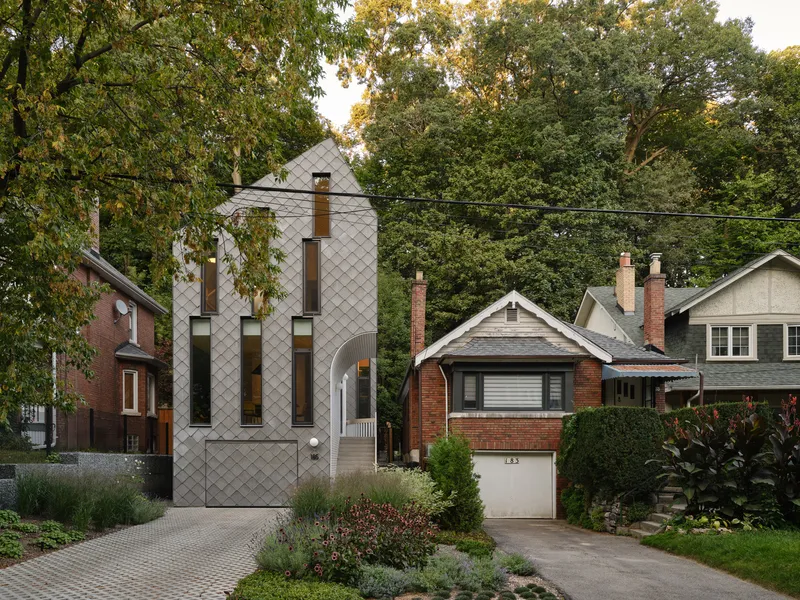
The site’s natural topography, with steep slopes both behind the backyard and across the street, shaped the home’s bold, vertically oriented form. Designed to harmonize with the surrounding wooded hills and mature trees, the house rises gracefully, emphasizing verticality while maintaining a human scale. The home’s tall silhouette not only respects the surrounding landscape but also provides a sculptural presence that complements the existing neighborhood.
Distinctive Exterior: Geometry and Materiality
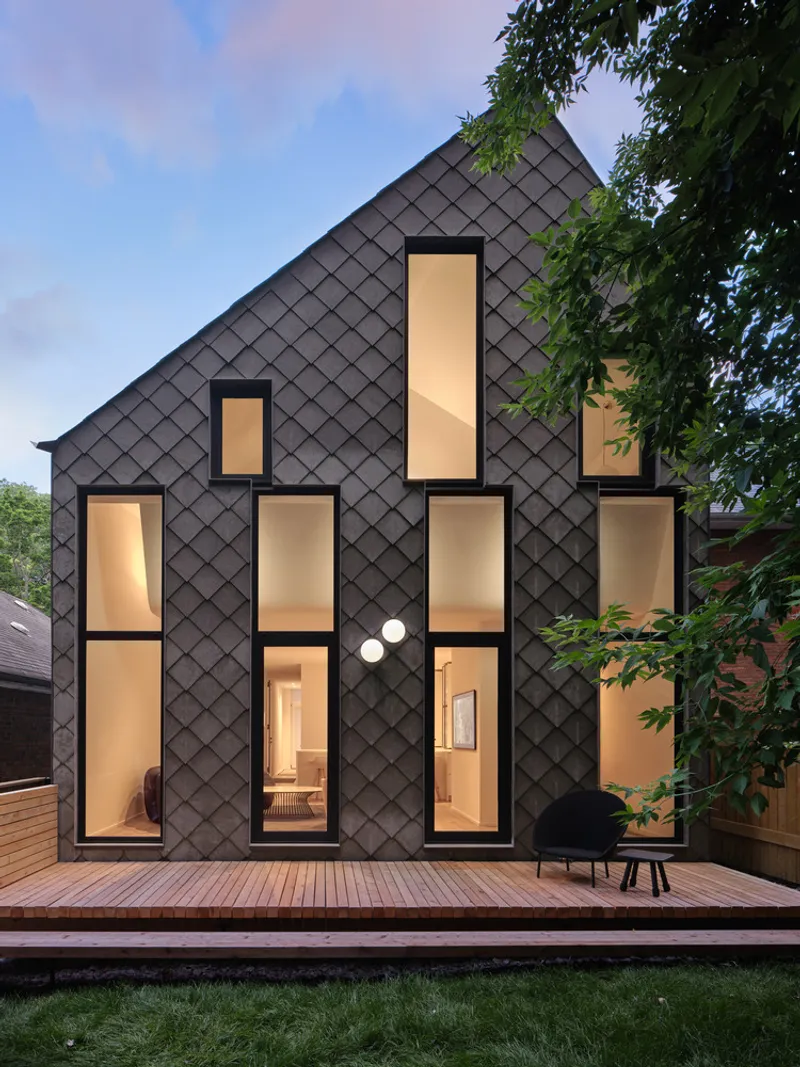
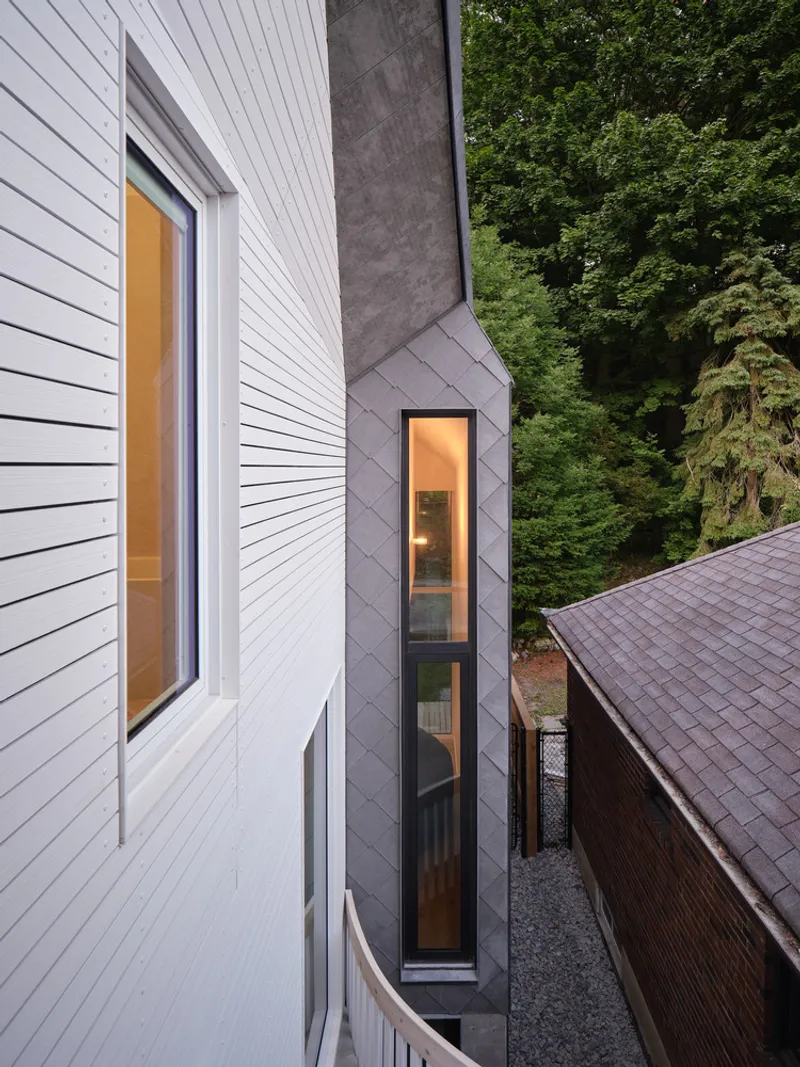
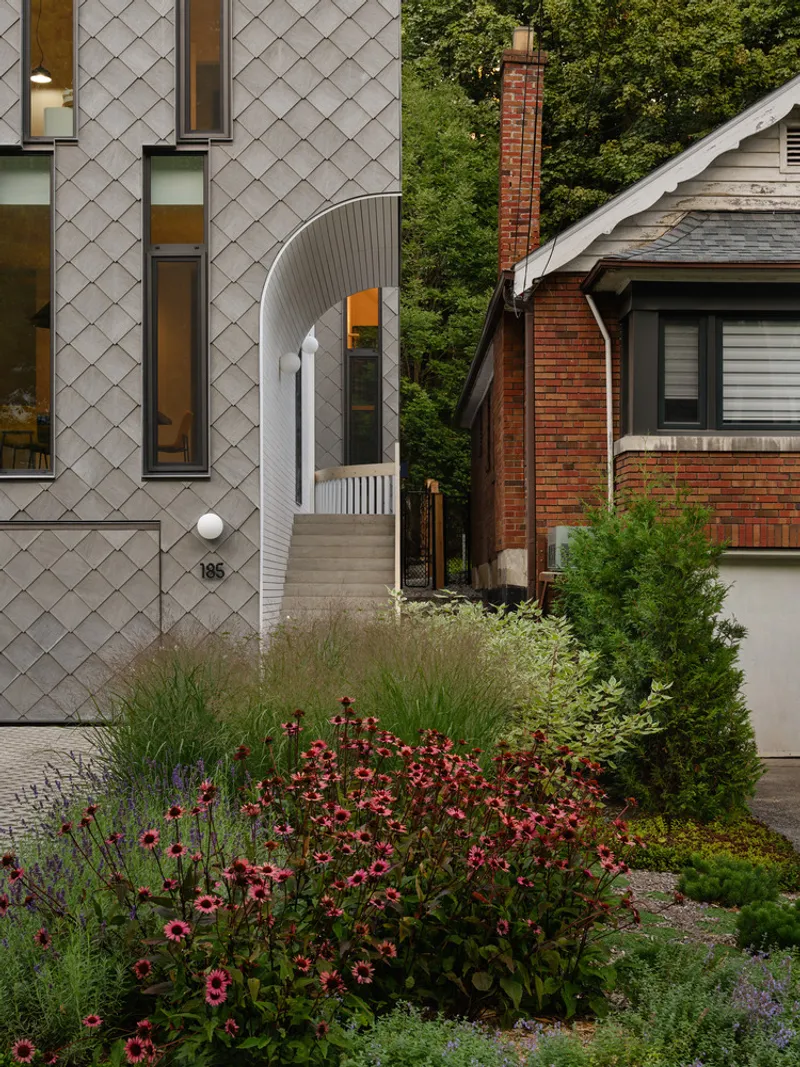
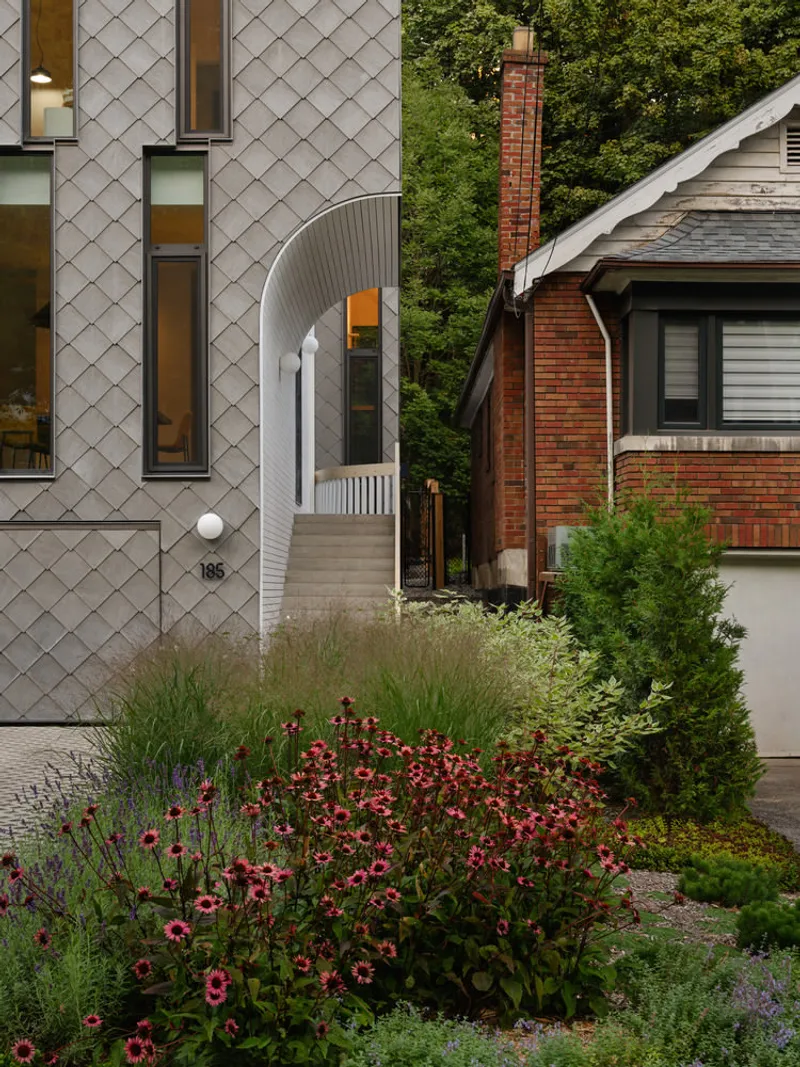
The exterior of Neville Park House is clad almost entirely in grey diamond-shaped tiles, creating a cohesive visual language that seamlessly extends over the garage and roof, producing a monolithic yet dynamic facade. On the south elevation, strategic setbacks carve out space for entry steps and window bays, enhancing natural light without encroaching on neighboring properties. These thoughtful geometries also optimize compliance with local zoning regulations.
A section of the facade is highlighted with white concrete boards, which extend to the roofline and elegantly curve over the entry steps, sheltering the front access. The roof itself features triangular facets and offset pitches, a signature Reigo & Bauer approach that introduces visual intrigue while subtly directing views from the front to the back of the house.
Light, Privacy, and Interior Spatial Dynamics
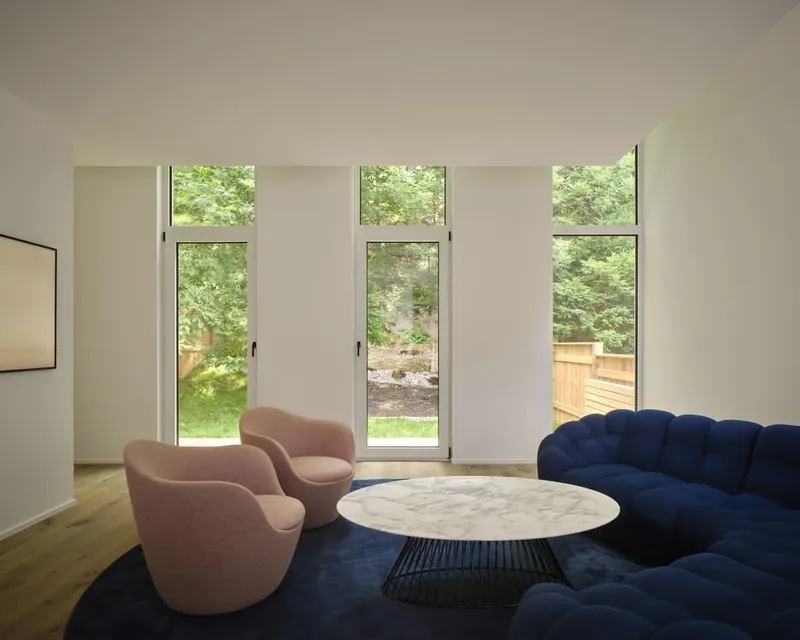
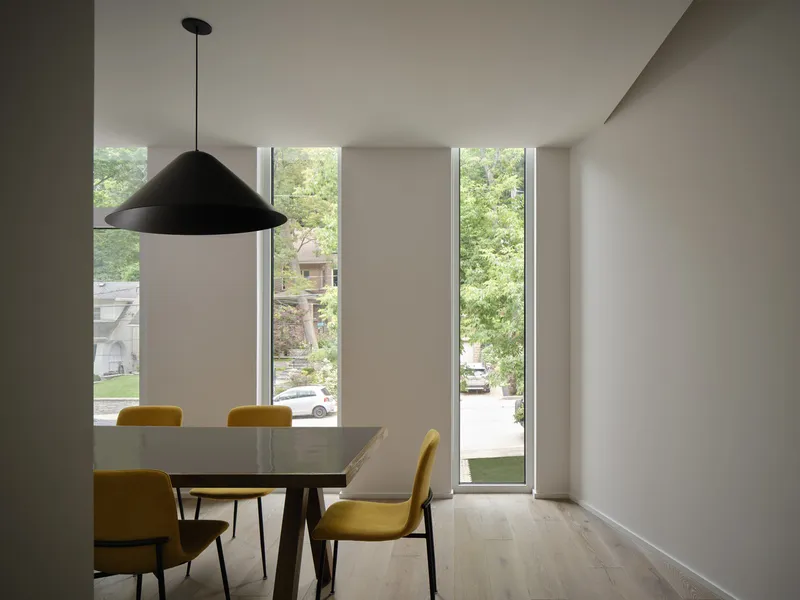
Inside, staggered narrow windows along the front and rear facades allow abundant daylight while maintaining privacy. Vertical emphasis continues in the street-facing dining area, where windows extend above the ceiling plane. At the rear, living room ceilings curve to accommodate elongated windows, drawing the eye toward the wooded hillside and creating the perception of increased volume without sacrificing usable floor area.

Thoughtful Interior Layout
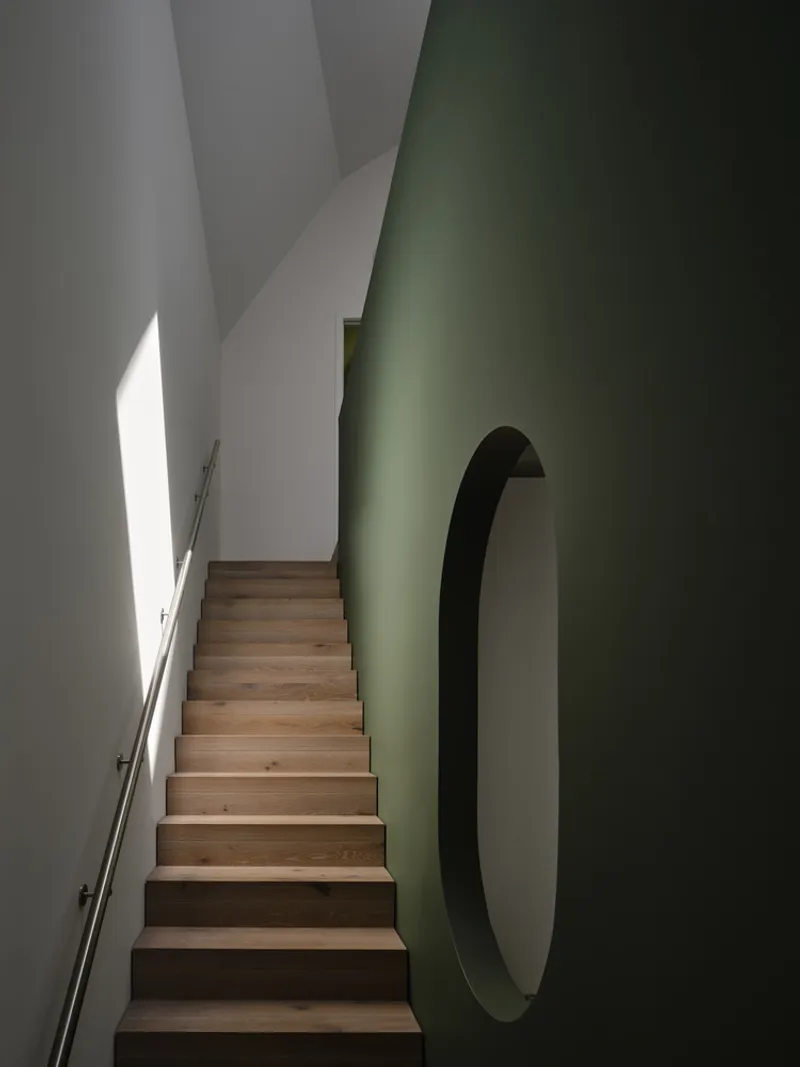
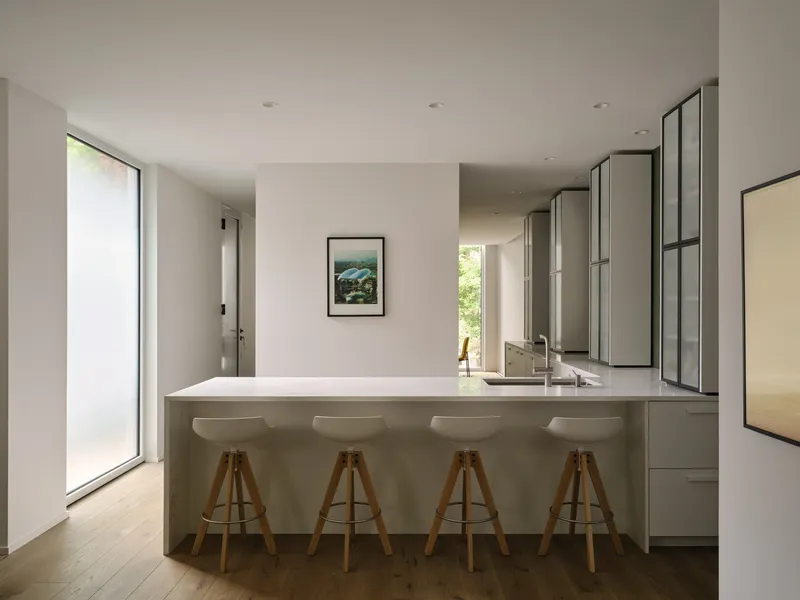
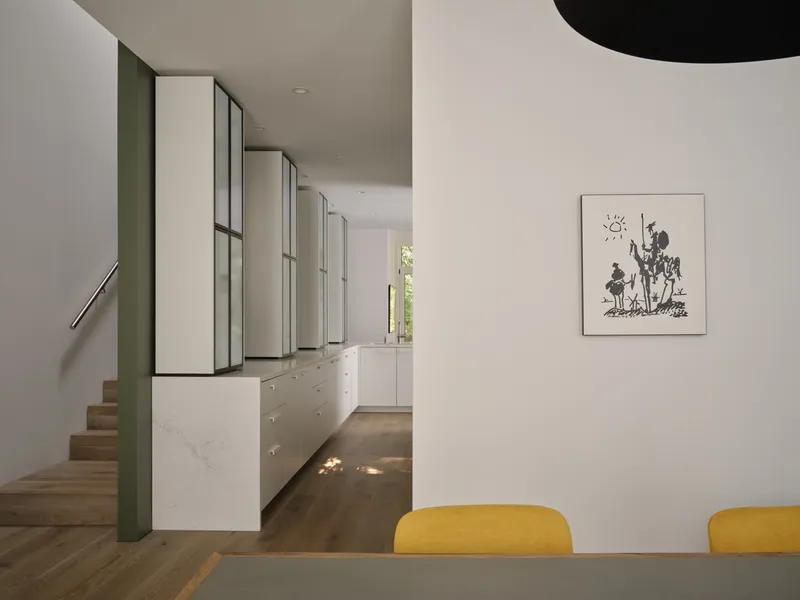
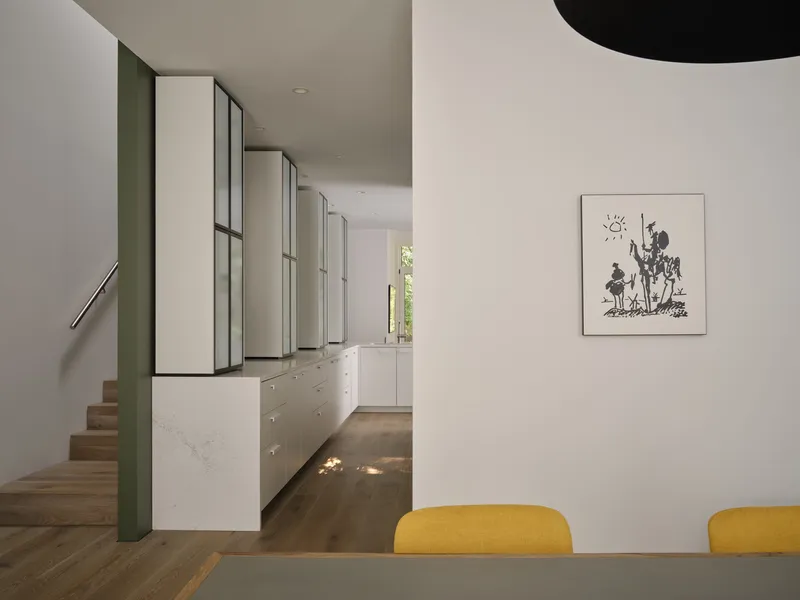
The entry-level central block organizes the interior, housing a powder room, pantry, and storage, while enabling open circulation between kitchen, dining, and living spaces. The kitchen features minimalist white cabinetry with integrated surfaces for a clean, understated aesthetic. A muted green wall divides the kitchen from the staircases, featuring pill-shaped cutouts that allow daylight to permeate both upper and lower floors, as well as mirrored surfaces that create playful visual effects.
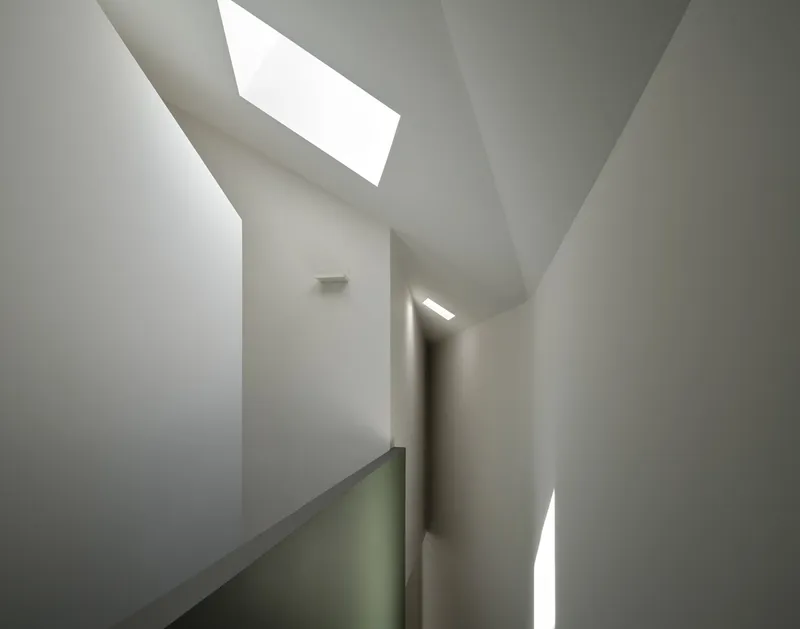
On the upper floor, a skylit corridor connects two front bedrooms and the primary suite at the rear, while an additional bedroom occupies the basement behind the garage. Colorful accents punctuate the interior: pale dusty pink in the living room and terracotta-inspired tones in the primary suite bath, balanced by light oak flooring and white walls that allow flexible furnishing and décor choices. Repeating spherical light fixtures throughout the house unify the interior and exterior, demonstrating the architects’ attention to subtle yet cohesive design details.
A Statement in Residential Architecture
Neville Park House exemplifies Reigo & Bauer’s mastery of geometric design, spatial optimization, and innovative materiality. The home responds intelligently to a challenging site, resulting in an exterior that is both bold and contextually appropriate, paired with interiors that feel dynamic, balanced, and light-filled. This project highlights the potential of ground-up residential architecture to transform narrow, sloped urban lots into visually compelling and functional living environments.
All photographs are works of Doublespace Photography



Popular Articles
Popular articles from the community


The Ocean Hive: Sustainable Architecture for a Self-Sufficient Civilization at Sea
The Ocean Hive imagines sustainable architecture at sea, where modular habitats, algae, wave power and ocean waste sustain a growing colony.

The Musturak Paradise: Senior Living Architecture for a Connected Future in Temara, Morocco
The Musturak Paradise reimagines senior living architecture in Temara via private homes, social spaces, culture, community, and shared care.
EW PARK: Sustainable Architecture Reimagines the Future of Urban Parking
EW PARK reimagines city parking as a modular wooden tower combining automation, solar energy, electric mobility, and adaptable urban design.

The Earth Pod: 3D Printed Homes for Resilient Refugee Communities
The Earth Pod reimagines refugee housing through 3D printed homes made from clay, combining resilience, self-sufficiency, and rapid shelter.


Similar Reads
You might also enjoy these articles


Hodi-Mandai Geram
Project Function: Preservation and revitalization of the Intangible heritage and socio-spatial identity of the Hodi by Housing, Cultural Memory Center, Sacred Grove, landscape, local tourism economy


Olio Towers: A Mid-Rise for Performers That Fuses Housing, Rehearsal, and Stage
Located blocks from Houston's Theater District, this modular tower stacks living units around a central performance atrium.

Oasis: Modular Green Housing Carved into Dhaka's Urban Fabric
A shortlisted Plugin Housing entry reclaims unauthorized settlements in Dhaka with stepped concrete volumes, green roofs, and ventilation-driven design.

Black Hole: A Floating Megastructure for the Post-Physical Era
Emiliano Mazzarotto envisions a spherical, self-scaling arena where e-sports, digital hotels, and holographic stadiums replace traditional public space.


Explore Residential Building Competitions
Discover active competitions in this discipline


Challenge to design mud housing for contemporary communities


Challenge to reimagine the Iron Throne


Photograph architecture without architects


Illustrate the lost glory of Angkor Wat - Render Challenge
Comments (0)
Please login or sign up to add comments
No comments yet. Be the first to comment!