

New Aare Bridge by Christ & Gantenbein: A Contemporary Infrastructure Landmark Rooted in Tradition
New Aare Bridge blends historic context with modern design, featuring elegant concrete arches, public spaces, and sustainable urban integration.


Located in Aarau, Switzerland, the New Aare Bridge by Christ & Gantenbein, alongside WMM Ingenieure AG, Henauer Gugler AG, and August + Margrith Künzel Landschaftsarchitekten AG, is a sophisticated example of infrastructural design that honors its historical setting while embracing contemporary urban needs. Completed in 2023, the bridge replaces a deteriorating 1949 structure with a visionary and technically optimized design that redefines the urban riverfront.
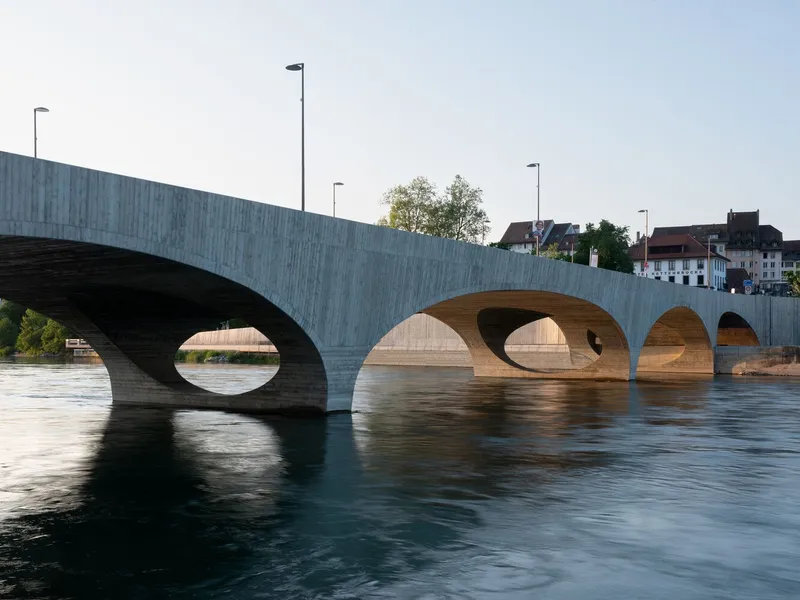
Contextual Design and Heritage Integration
Bridges have existed at this very spot since Roman times, forming a crucial link between Aarau’s old town and the northern Jura region. The New Aare Bridge is a continuation of this historical thread. It thoughtfully references earlier structures—including the 1848 “Kettenbrücke”—while introducing a modern architectural identity. The winning competition entry was chosen for its deep sensitivity to the city’s historical and urban fabric, establishing a new civic landmark that complements Aarau’s riverside setting.
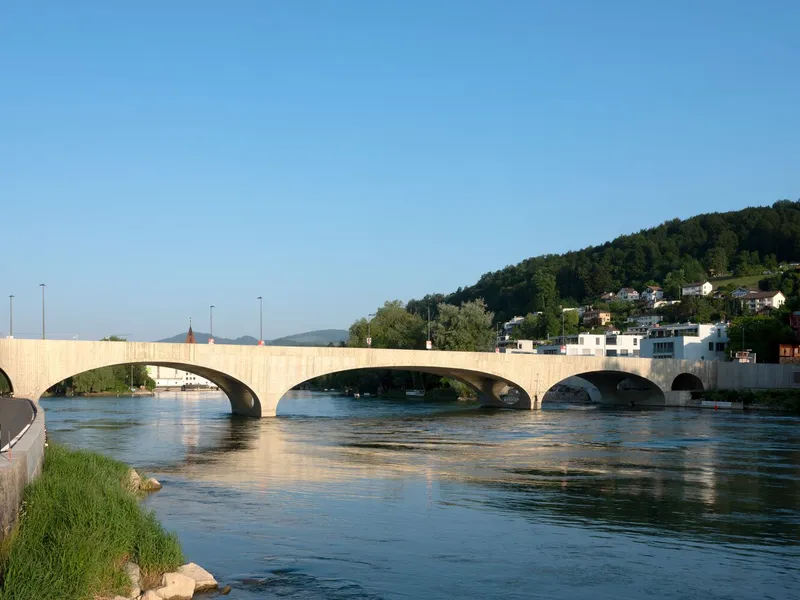
Architectural Expression Through Structure
The bridge’s reinforced concrete arches reflect the mass and geometry of nearby historic buildings, piers, and retaining walls. Its light-toned concrete finish mirrors the coloration of local stone, visually embedding the structure within the landscape. Comprising five asymmetrical spans, the arches rest on existing caissons from the previous bridge, demonstrating resourceful reuse. Its monolithic construction—where pillars, arches, flanks, roadway, and parapets form a unified system—enables efficient load distribution and reduces material consumption.

Sustainable Engineering and Public Utility
Spanning 119 meters with a width of 17.5 meters, the bridge supports two vehicle lanes, sidewalks, and bicycle paths. Openings along its sides provide expansive river views, enhancing the bridge’s usability for pedestrians and cyclists. More than a passageway, the structure functions as public space, connecting riverside promenades with landscape elements like meadows, trees, and gathering areas. The bridge is designed as a social connector—a place to pause, observe, and interact with the river.
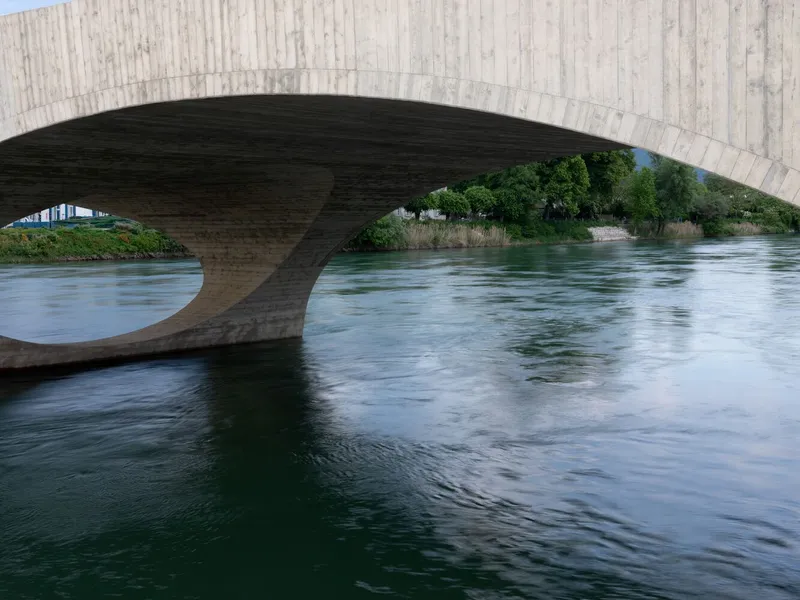
Urban Renewal and Riverside Activation
On the old town side, a spacious promenade now provides shaded resting areas beneath trees, while the northern riverbank features native vegetation and green expanses. The bridge doesn’t merely link two sides of the river—it activates the waterfront, creating a new urban commons and enhancing Aarau’s public realm.

A Modern Civic Icon
While rooted in tradition, the New Aare Bridge presents itself as a contemporary engineering marvel. Its clean geometry, functional elegance, and urban impact reflect a design ethos that balances heritage respect with forward-thinking design. As a piece of civic infrastructure, the bridge strengthens community connections and enhances the spatial experience of both locals and visitors.

All Photographs are works of Stefano Graziani


Popular Articles
Popular articles from the community


Juan García Correa, John González and Claudia Rueda Sink a Circular Amphitheater into a Manizales Engineering Building
On the La Nubia campus in Manizales, Colombia, the S1 Building folds labs and offices into a hillside of ramped lawns that double as a campus route.

David Macias Steps a Doorless Stone and Plaster House Down a Tropical Colombian Hillside
In the humid hills of Colombia, Threshold House replaces the front door with an open void and terraces its 850 m² down the slope instead of fighting it.

David Ortega Stacks a Two-Story Mexico City Penthouse Around a Steel Stair and a Pergola-Shaded Roof Terrace
In Colonia Roma, a 300 m² penthouse uses oak joinery, a planted steel stair and a slatted roof pergola to make a new-build apartment feel like a house.

Cube Design Draws an Ecological Corridor Between Two Shenzhen Hills with the Nankai Building
Beside Shenzhen's container docks, the Nankai Building pairs stacked balconies with a climbing green screen to connect two hillsides across its height.

Similar Reads
You might also enjoy these articles

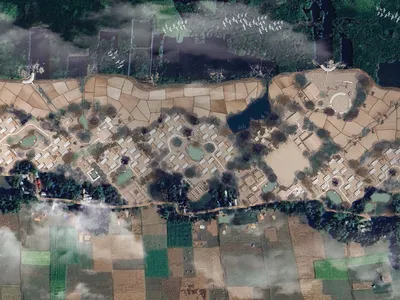
Hodi-Mandai Geram
Project Function: Preservation and revitalization of the Intangible heritage and socio-spatial identity of the Hodi by Housing, Cultural Memory Center, Sacred Grove, landscape, local tourism economy

Olio Towers: A Mid-Rise for Performers That Fuses Housing, Rehearsal, and Stage
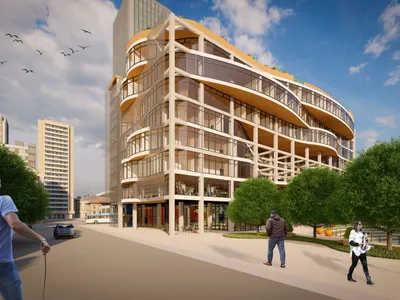
Located blocks from Houston's Theater District, this modular tower stacks living units around a central performance atrium.
Oasis: Modular Green Housing Carved into Dhaka's Urban Fabric
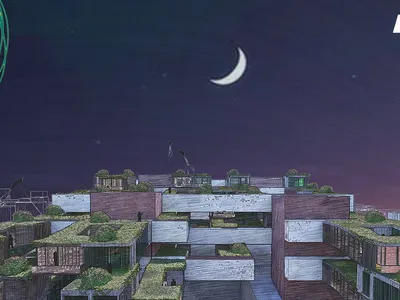
A shortlisted Plugin Housing entry reclaims unauthorized settlements in Dhaka with stepped concrete volumes, green roofs, and ventilation-driven design.

Black Hole: A Floating Megastructure for the Post-Physical Era
Emiliano Mazzarotto envisions a spherical, self-scaling arena where e-sports, digital hotels, and holographic stadiums replace traditional public space.

Explore Public Bridge Competitions
Discover active competitions in this discipline

Challenge to reimagine the Iron Throne

Photograph architecture without architects

Illustrate the lost glory of Angkor Wat - Render Challenge

Design challenge to reuse E-waste
Comments (0)
Please login or sign up to add comments
No comments yet. Be the first to comment!