
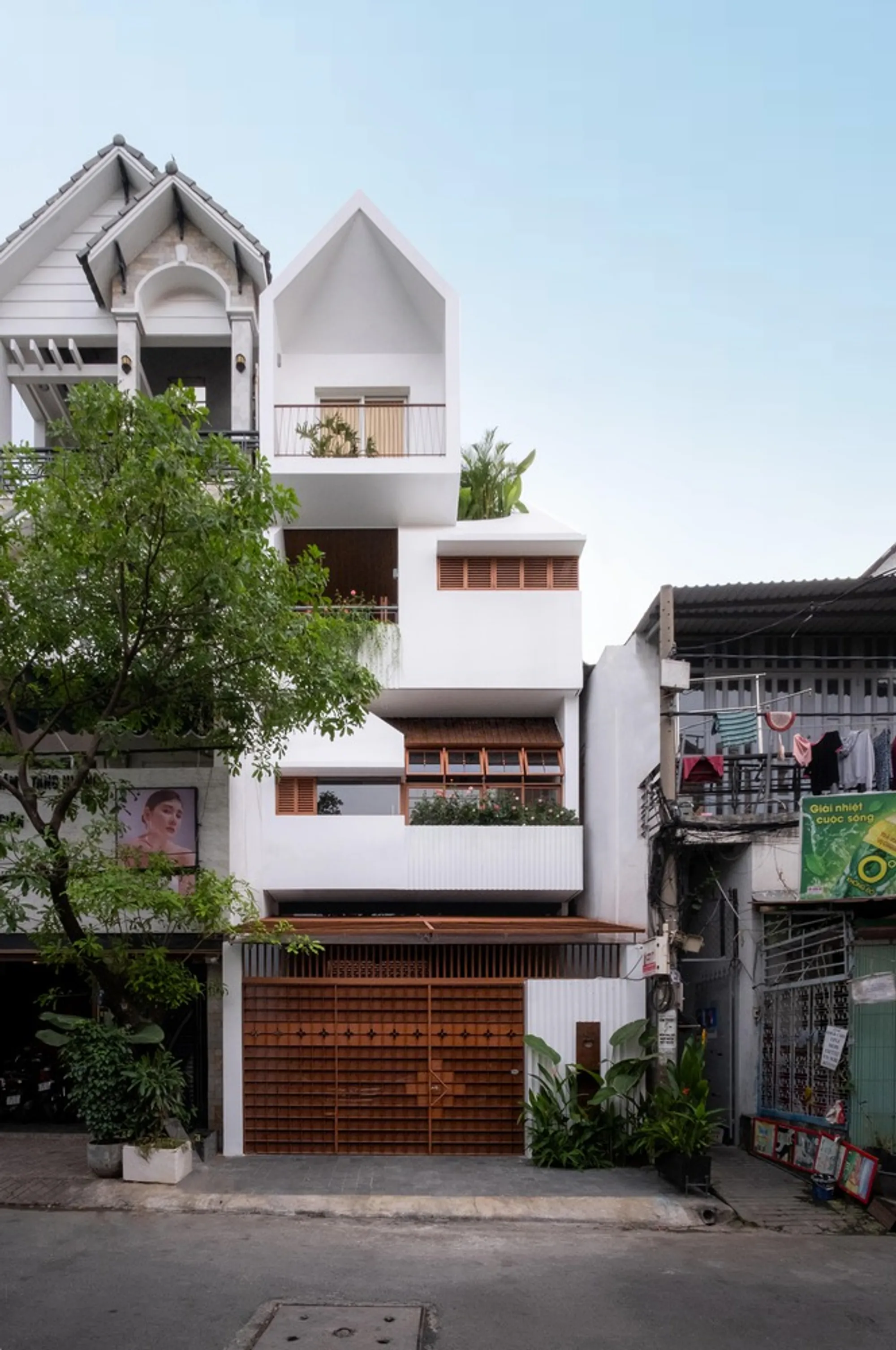
NHÀ QUANH SÂN House by AD+studio: A Contemporary Urban Home Rooted in Vietnamese Tradition
A rural-inspired urban house centered around stacked courtyards, natural ventilation, and slanted roofs, reconnecting family life with nature in a compact city setting.


NHÀ QUANH SÂN House byAD+studio reimagines the essence of traditional Vietnamese living within the dense fabric of a modern city. Designed for a full-time mother seeking a nurturing, nature-connected home, the project revives the symbolic and spatial role of the courtyard, long considered the heart of Vietnamese domestic life. With a compact 92-square-meter footprint, the house demonstrates how thoughtful design can restore emotional warmth, natural connection, and family-centered living in urban conditions.
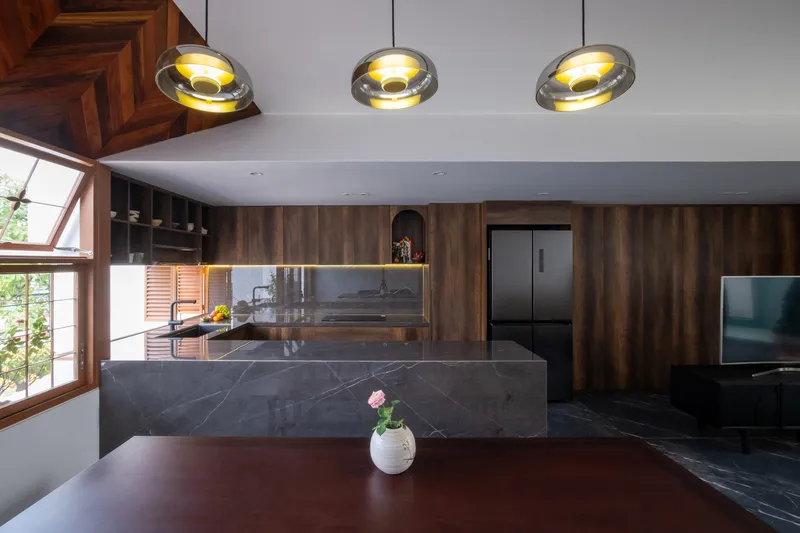
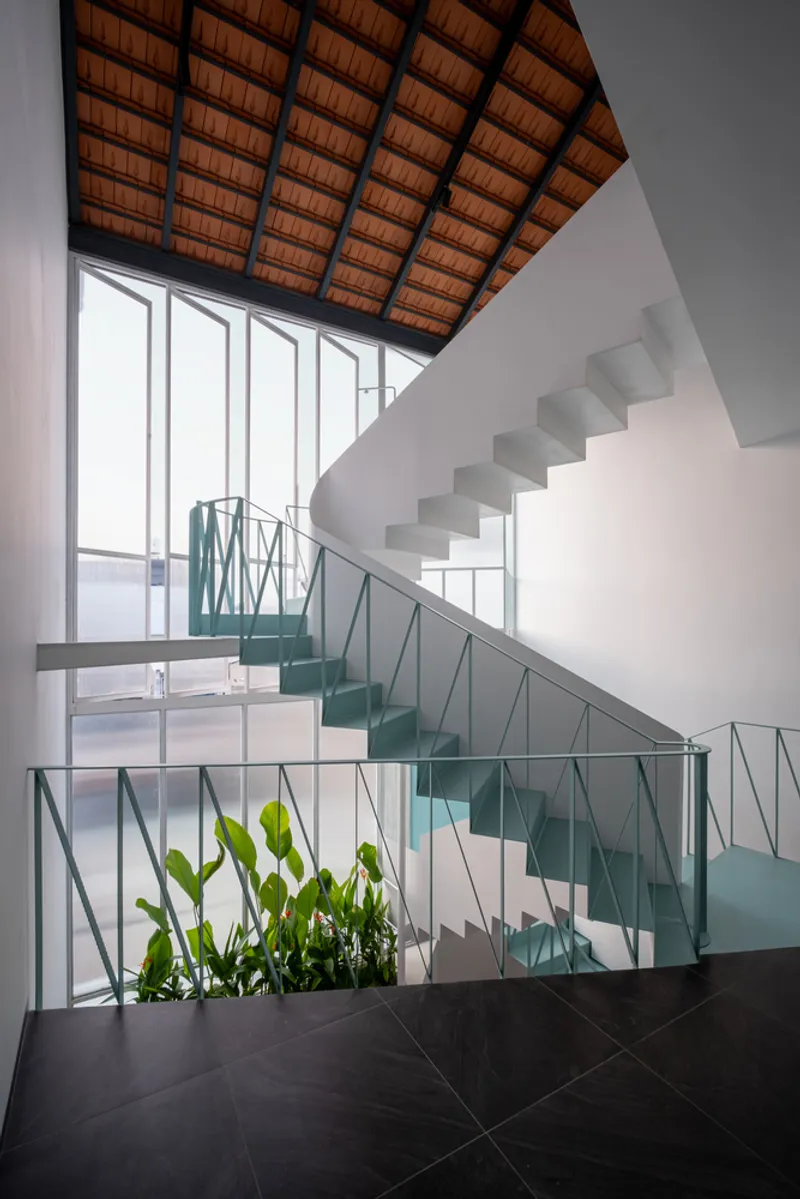
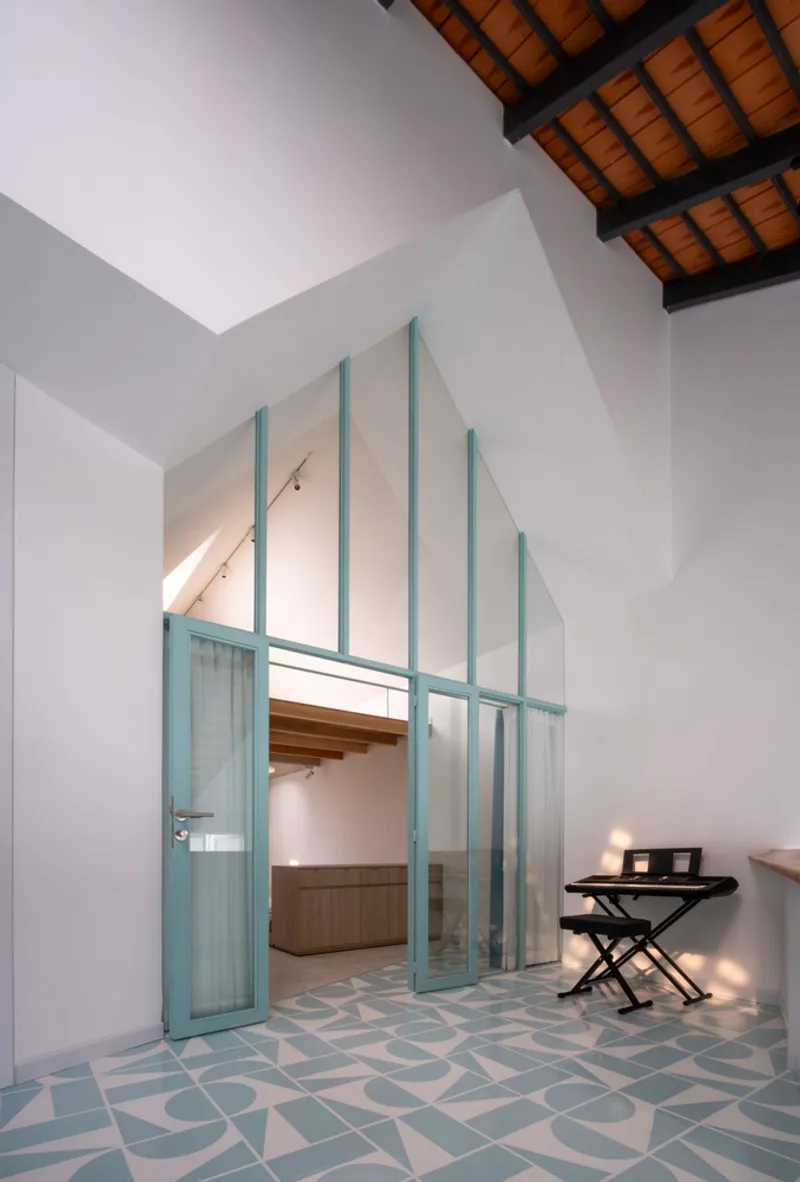
In classical Vietnamese architecture, the courtyard serves as an immediate living space—a threshold that brings daylight, breeze, and greenery into the home while weaving relationships between family members. For people who have migrated from rural areas to urban centers, this spatial memory becomes more than nostalgia; it becomes a deep personal need. NHÀ QUANH SÂN House responds directly to this longing, offering a “countryside home within the city,” defined by open air, a shared sky, and the calming presence of nature.
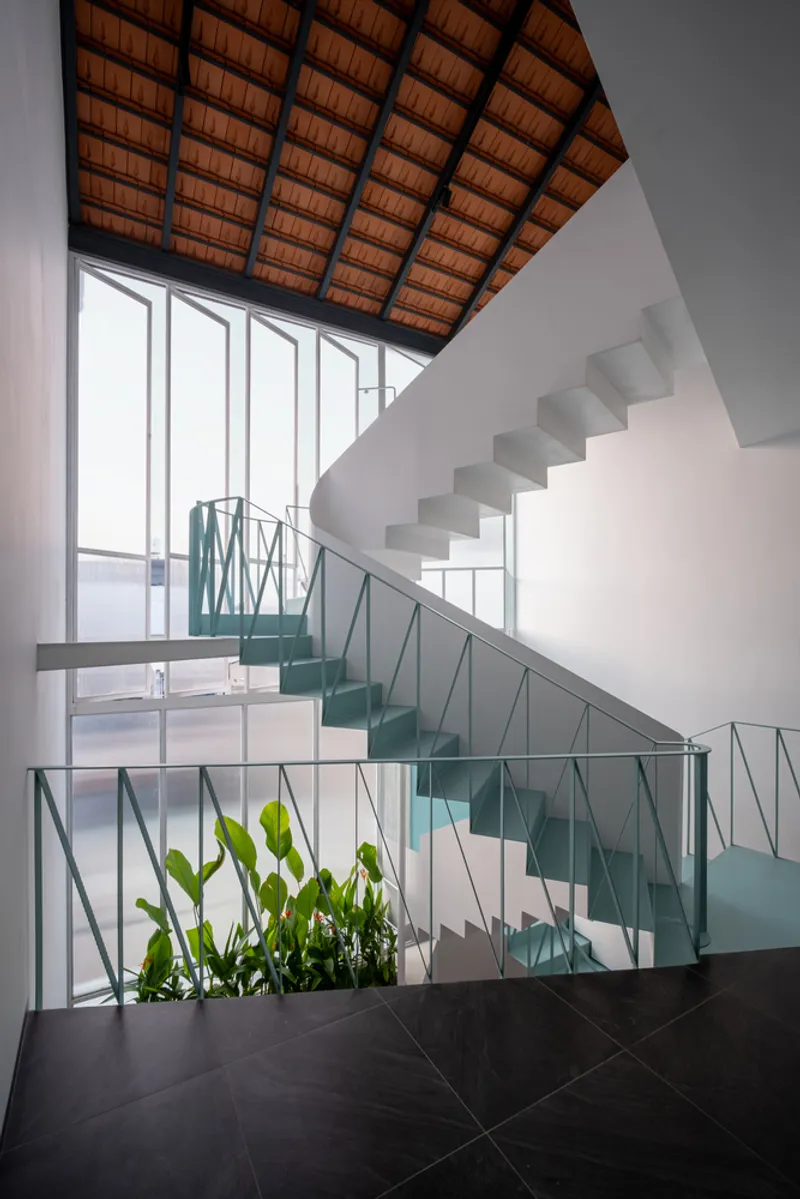
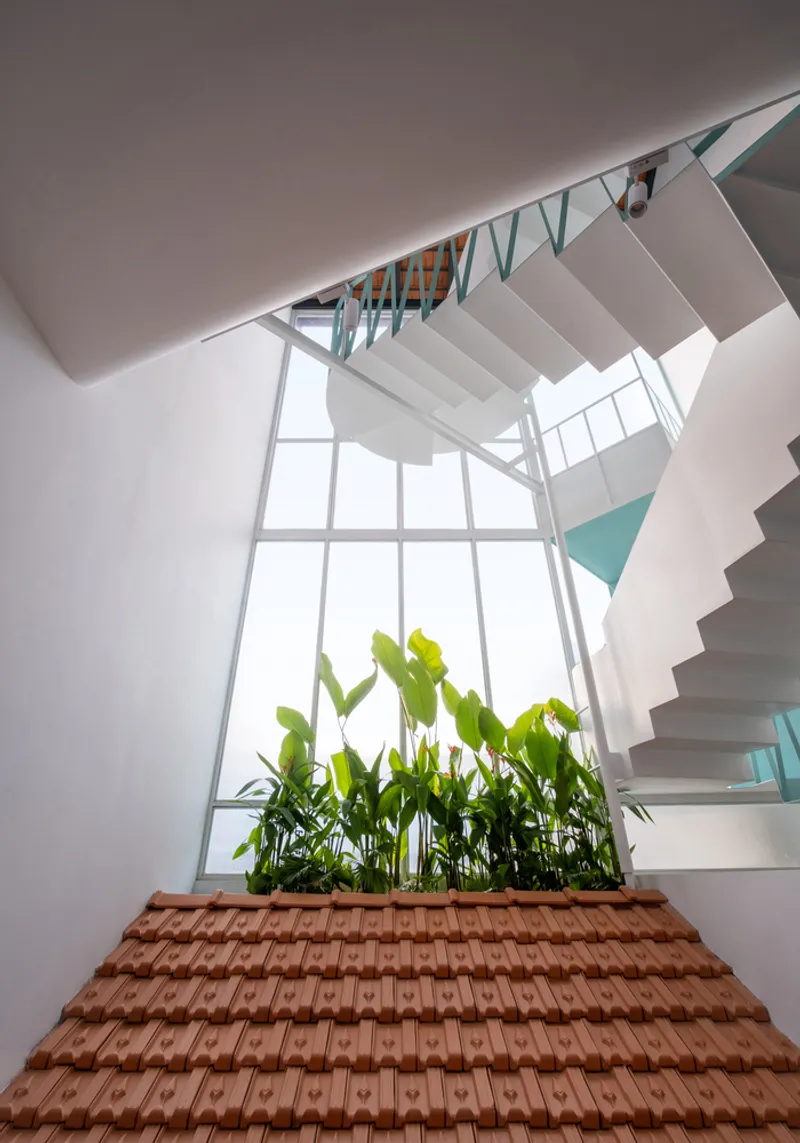
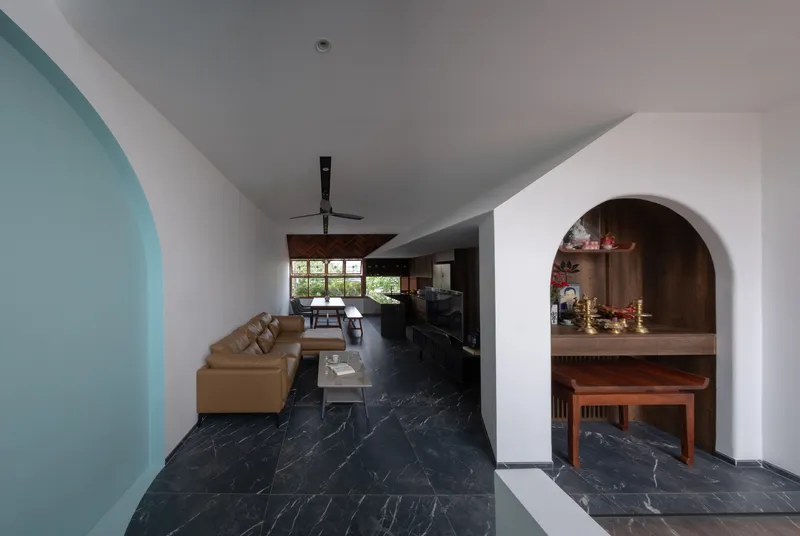
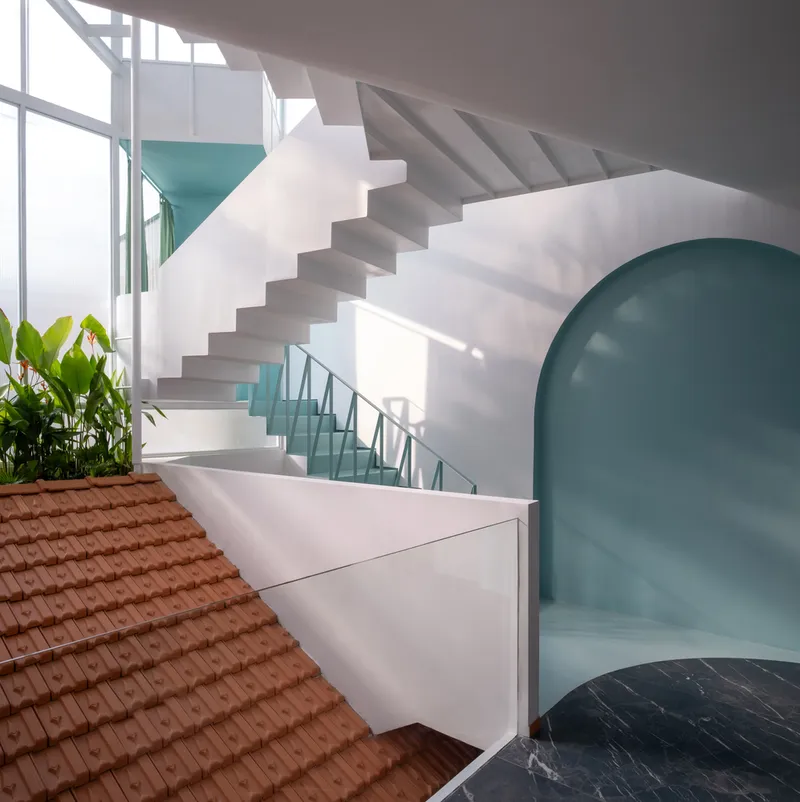
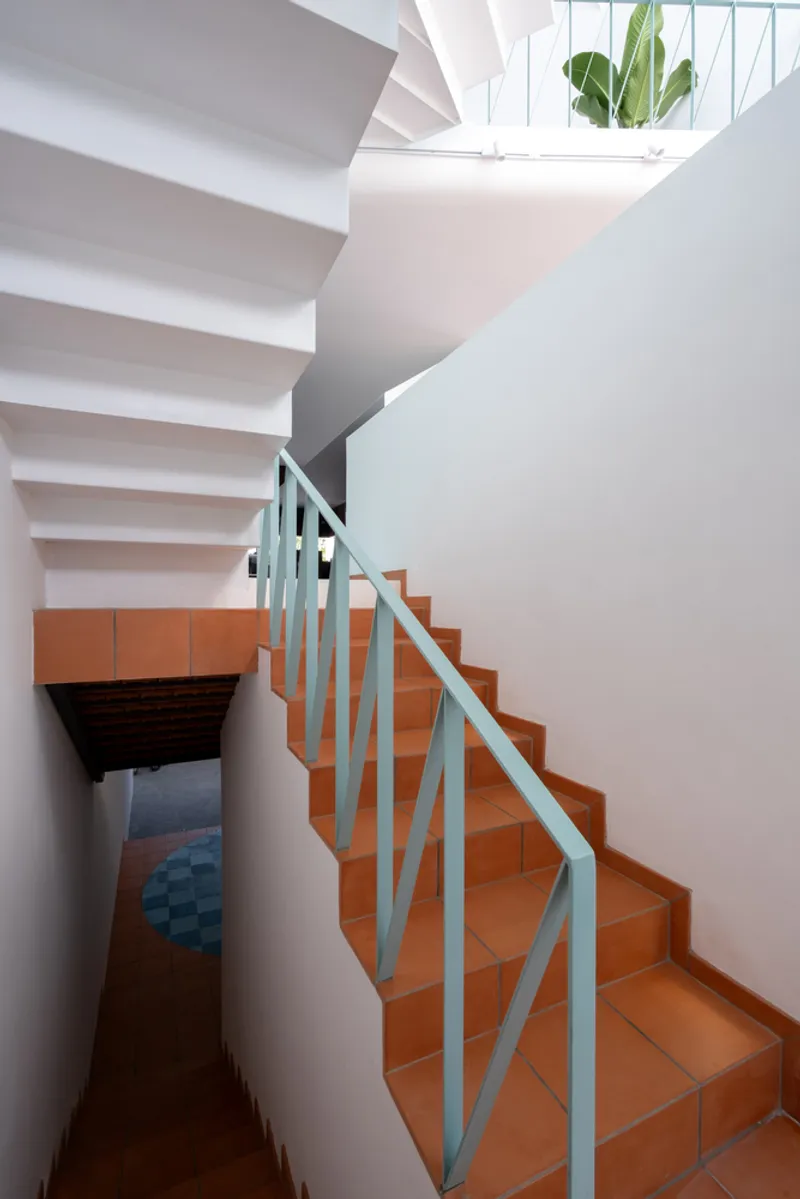
The design emerged from a central question that often guides townhouse projects: How can the concept of an atrium transcend its usual technical role for lighting and ventilation and instead transform into a true courtyard—a place where people can breathe, pause, and connect? AD+studio tackles this challenge by creating a vertical sequence of courtyards, each serving as a microclimate buffer and a communal living space. These courtyards are stacked and linked through a continuous open void at the back of the house, ensuring natural airflow and encouraging daily interaction between family members.
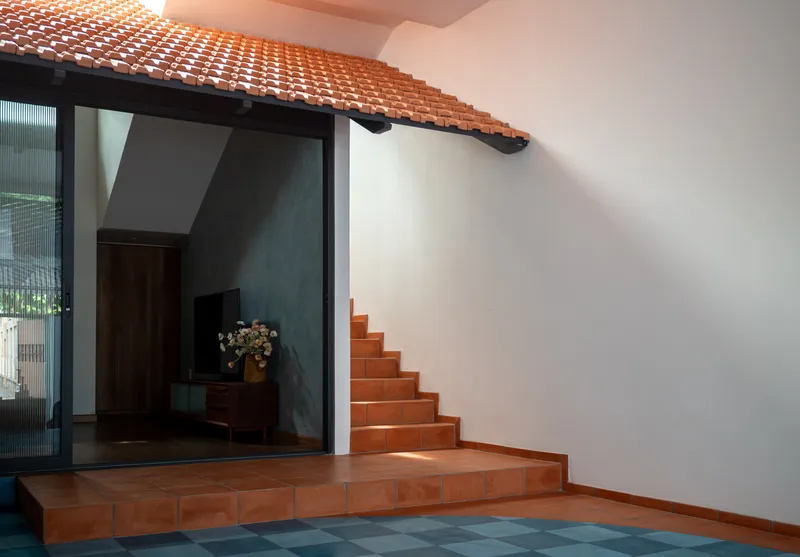
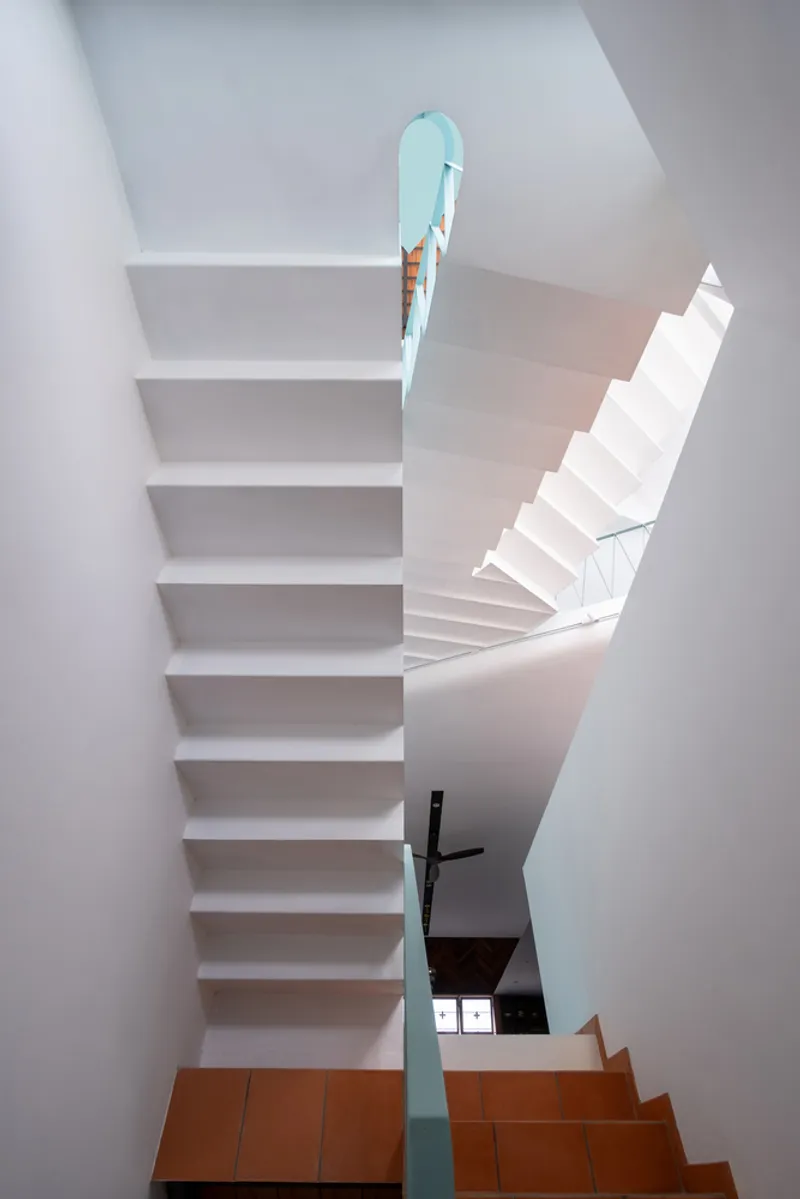
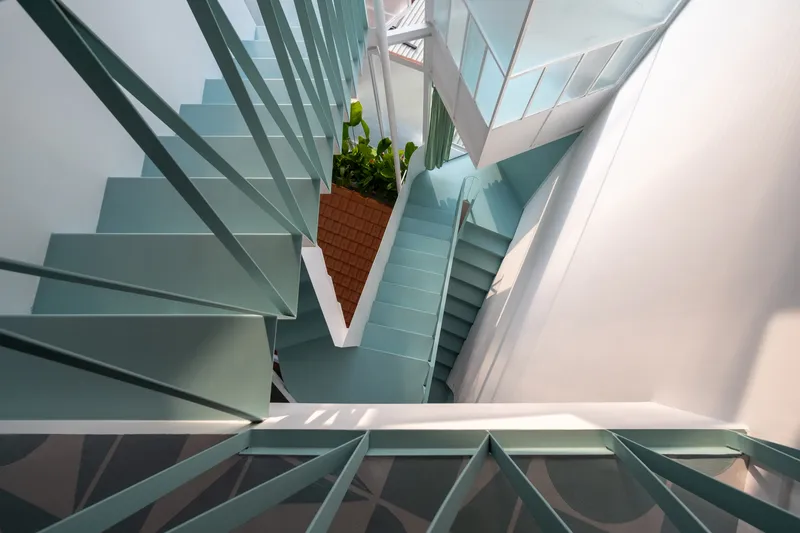
Instead of confining shared functions indoors, the architects organize them around these open spaces. This layout not only maximizes cross-ventilation but also redefines circulation into a shared, experiential journey where residents constantly encounter light, air, plants, and one another. The result is an urban home that feels porous, breathable, and emotionally resonant.
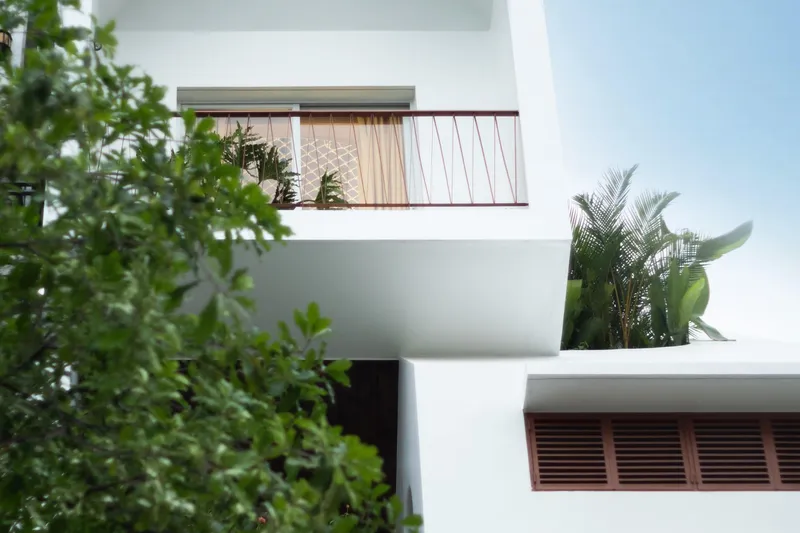
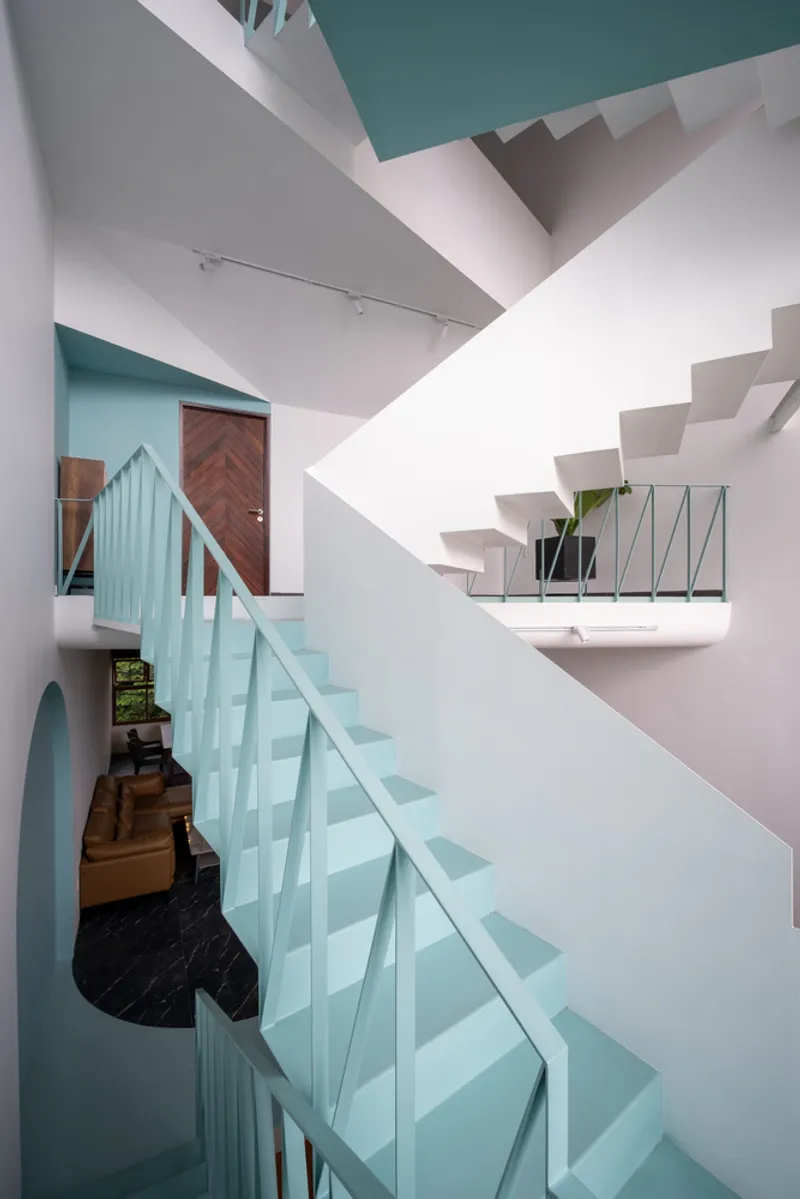
At the architectural level, the project draws inspiration from the familiar silhouette of rural Vietnamese roofs—a symbolic form charged with memories of grandmothers, mothers, and traditional family life. The slanted roof geometry becomes a recurring design language throughout the house, softening the rigid vertical layering typical of townhouses. Rooflines overlap and interweave around the central courtyard, evoking a village atmosphere and forming a subtle emotional connection for those who have moved away from their hometowns.
All photographs are works of
Dung Huynh



Popular Articles
Popular articles from the community


The Earth Pod: 3D Printed Homes for Resilient Refugee Communities
The Earth Pod reimagines refugee housing through 3D printed homes made from clay, combining resilience, self-sufficiency, and rapid shelter.

The Musturak Paradise: Senior Living Architecture for a Connected Future in Temara, Morocco
The Musturak Paradise reimagines senior living architecture in Temara via private homes, social spaces, culture, community, and shared care.

Co-life: Sustainable Architecture for Age-Friendly Community Living
Co-life reimagines sustainable architecture for seniors through courtyards, rammed earth, shared gardens, and spaces designed for belonging.

Conexión: Biophilic Design Reimagines High-Rise Living in Hong Kong
Conexión reimagines high-rise living in Hong Kong through biophilic design, green facades, shared spaces, daylight, water and nature within.

Similar Reads
You might also enjoy these articles


Hodi-Mandai Geram
Project Function: Preservation and revitalization of the Intangible heritage and socio-spatial identity of the Hodi by Housing, Cultural Memory Center, Sacred Grove, landscape, local tourism economy


Olio Towers: A Mid-Rise for Performers That Fuses Housing, Rehearsal, and Stage
Located blocks from Houston's Theater District, this modular tower stacks living units around a central performance atrium.

Oasis: Modular Green Housing Carved into Dhaka's Urban Fabric
A shortlisted Plugin Housing entry reclaims unauthorized settlements in Dhaka with stepped concrete volumes, green roofs, and ventilation-driven design.

Black Hole: A Floating Megastructure for the Post-Physical Era
Emiliano Mazzarotto envisions a spherical, self-scaling arena where e-sports, digital hotels, and holographic stadiums replace traditional public space.


Explore Housing Competitions
Discover active competitions in this discipline



Challenge to reimagine the Iron Throne


Photograph architecture without architects


Illustrate the lost glory of Angkor Wat - Render Challenge


Design challenge to reuse E-waste
Comments (0)
Please login or sign up to add comments
No comments yet. Be the first to comment!