

NHM Commons Sustainable Museum Design: A Community-Focused Architectural Marvel
NHM Commons redefines museum spaces with sustainable design, community engagement, and cutting-edge architecture in Los Angeles' Exposition Park.


The NHM Commons Museum Wing and Community Hub, designed by Frederick Fisher and Partners, represents a transformative addition to the Natural History Museum of Los Angeles County. Located at Exposition Park, this 75,000-square-foot project redefines museum spaces by blending sustainability, transparency, and community engagement. Completed in 2024, the NHM Commons aims to be both a cultural destination and a gateway to the museum, fostering connections with its surrounding environment and institutions.

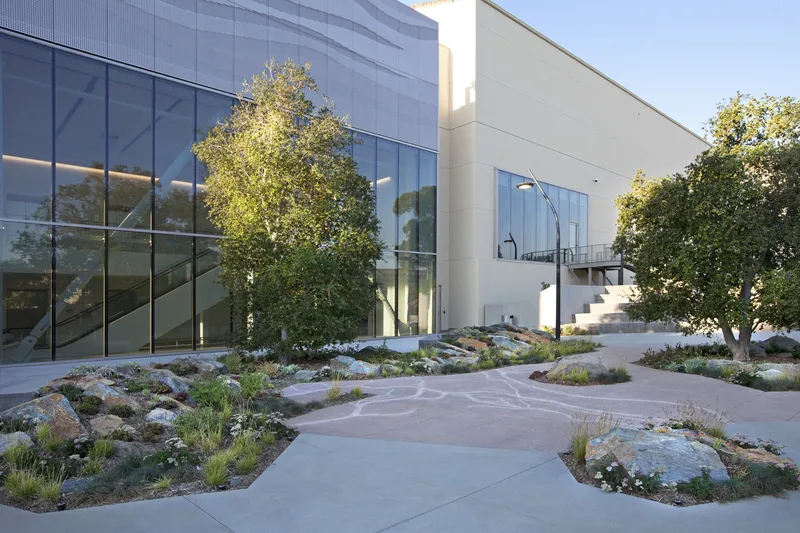

A Gateway to Exploration
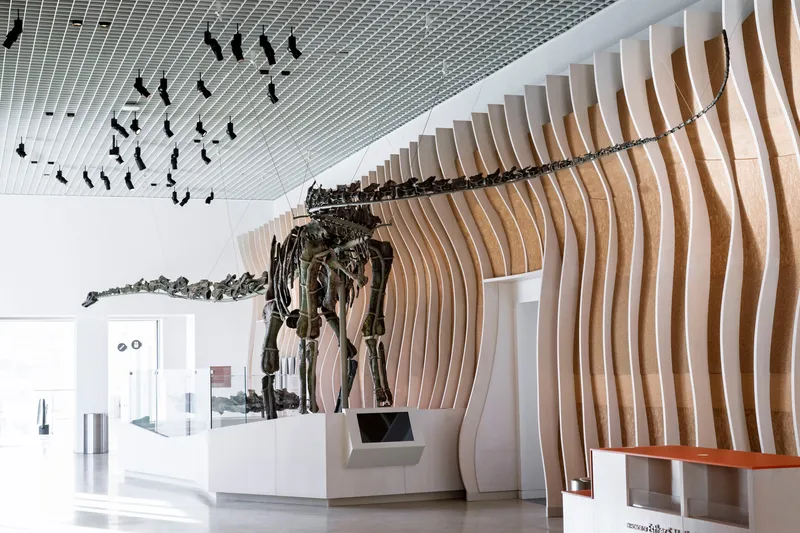
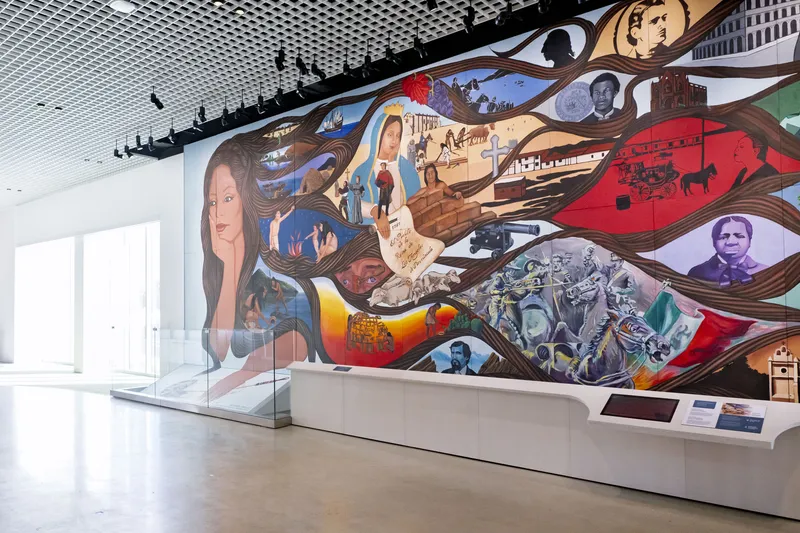
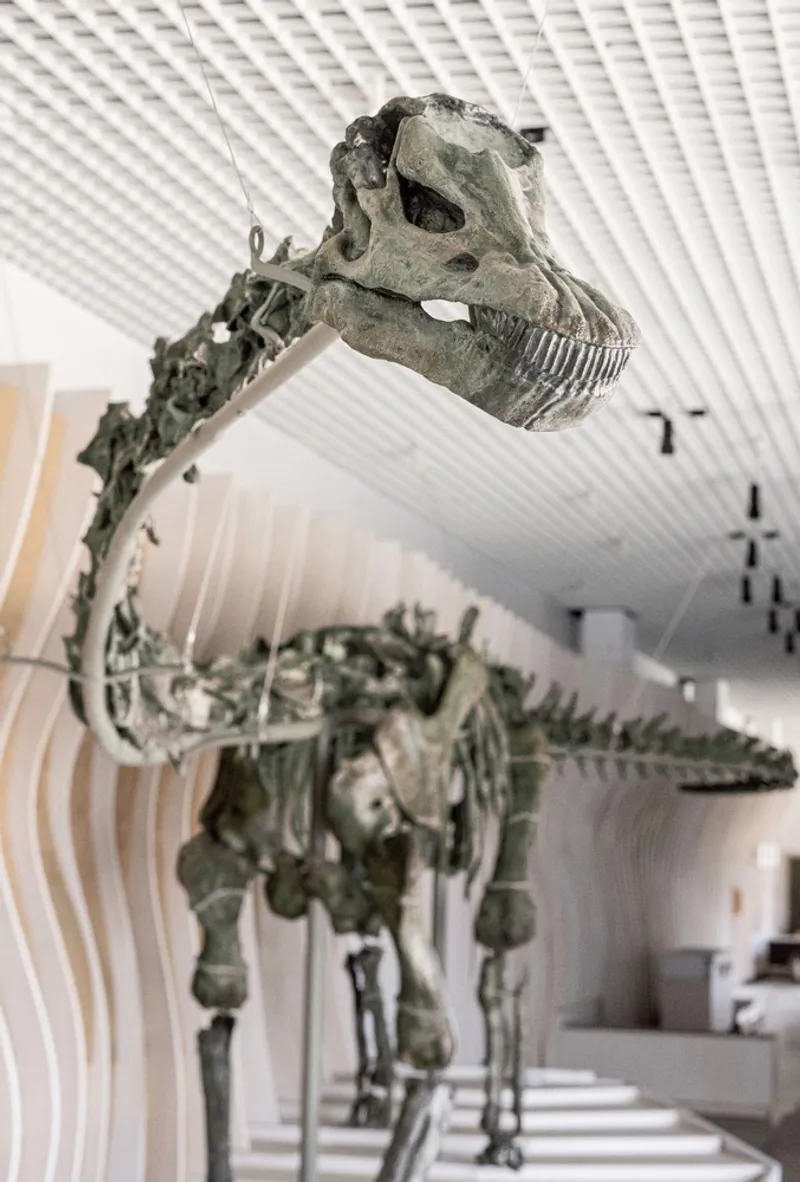
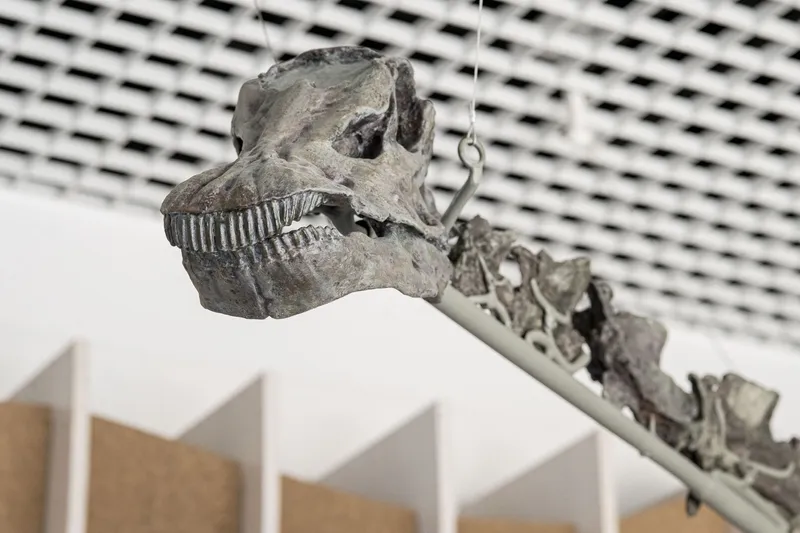
The NHM Commons is more than an architectural extension; it serves as a bridge between the museum and the community. Positioned on the west end of the museum, the new wing features a reimagined south entrance and a welcoming "front porch" for visitors. The Judith Perlstein Welcome Center provides an open, no-ticket-required space where visitors can interact with exhibits, including the striking Gnatalie, a 75-foot-long sauropod dinosaur skeleton, and Barbara Carrasco’s mural L.A. History: A Mexican Perspective.

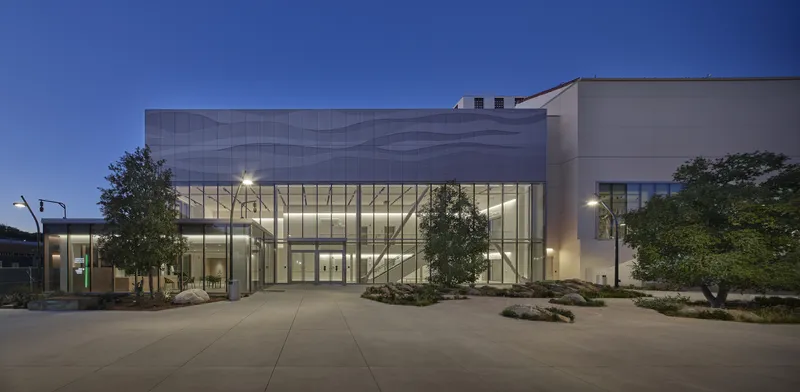

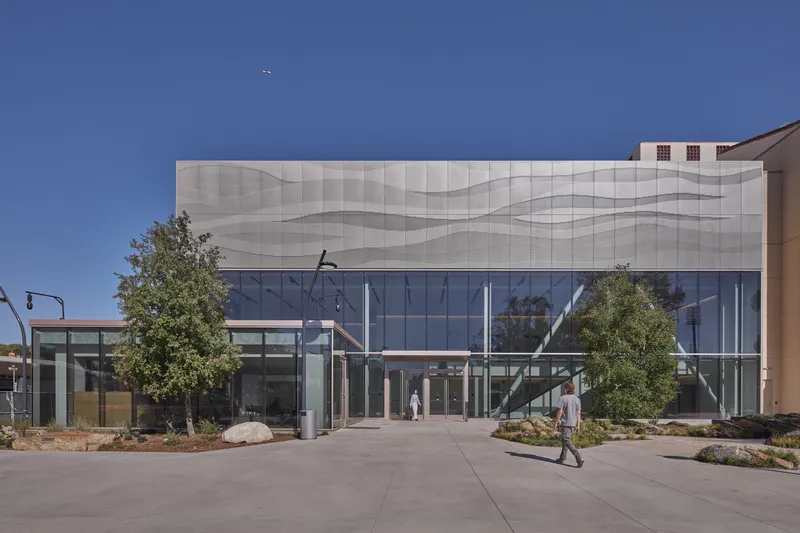
This central hub connects key elements such as the entrance plaza, a new café, a state-of-the-art theater, and exhibition spaces. The transparent glass facade ensures visual continuity, offering glimpses into these spaces and into Exposition Park itself, bridging the gap between the museum’s indoor and outdoor experiences.
Sustainability and Design Innovations
NHM Commons incorporates cutting-edge sustainable design principles, earning LEED Gold certification. A new combustion-free mechanical system minimizes the building’s carbon footprint, while a high-performance building envelope optimizes energy efficiency by reducing heat gain and loss.


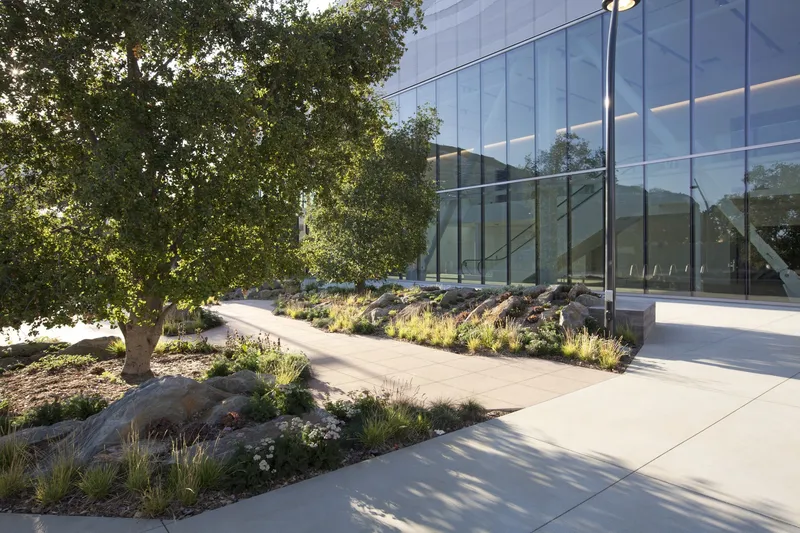
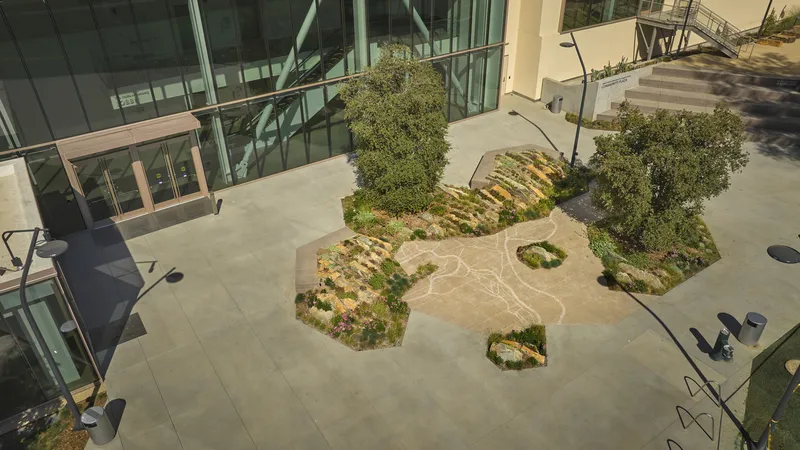
The structure maximizes natural light in public areas, enhancing the visitor experience while reducing energy consumption. Healthy building materials were carefully selected to eliminate hazardous substances, prioritizing worker safety during fabrication and installation. Native landscaping, including sustainable gardens and new oak trees, enhances the ecological footprint of the museum, creating green spaces that seamlessly integrate with the surrounding urban environment.

Community and Cultural Integration
NHM Commons amplifies its mission of inclusivity and community engagement. The Rose Hills Amphitheater and the Ahmanson Foundation Promenade provide outdoor venues for events and leisure, while the café and retail spaces celebrate local artisans and the diverse cultural fabric of Los Angeles.
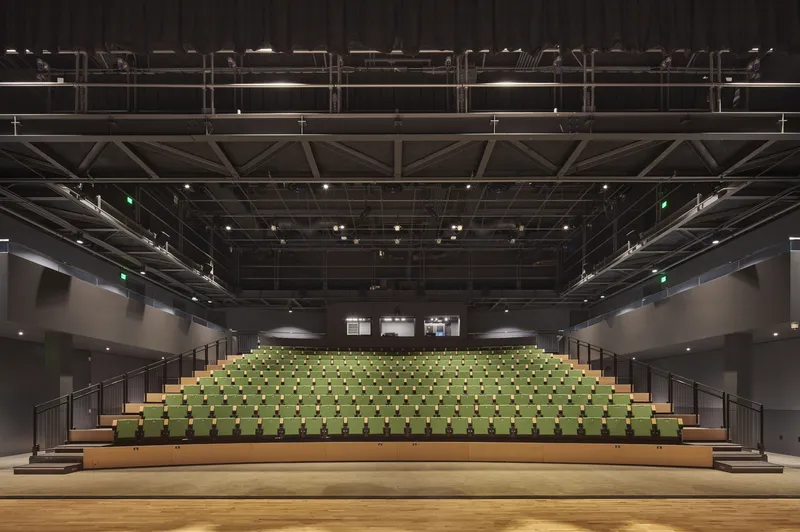

Inside, the Commons Theater serves as a dynamic, multi-functional space for films, performances, discussions, and festivals. Partnering with the Commons Advisory Coalition, the museum expands its programming to include family-friendly activities and youth-oriented initiatives. This community-focused approach positions NHM Commons as a cultural hub for Los Angeles, where education, entertainment, and discovery converge.

A Resilient Vision for the Future
The reconfiguration of the museum’s Welcome Center and South Entry reflects a commitment to resilience and adaptability. By upgrading building systems and rethinking spatial configurations, NHM Commons exemplifies the museum's forward-thinking vision. Its design harmonizes historical preservation with modern innovation, creating a space that is both functional and inspiring.

The integration of indoor and outdoor elements aligns with NHMLAC’s broader mission of fostering connections between natural and cultural worlds. The museum’s extensive collections, encompassing over 35 million objects, serve as the foundation for groundbreaking research and immersive visitor experiences.
Inspiring Wonder and Discovery
The NHM Commons Museum Wing and Community Hub encapsulates the essence of modern museum architecture—accessible, sustainable, and community-driven. Through thoughtful design and innovative programming, it bridges the past, present, and future, creating a vibrant space where visitors can explore the wonders of science, history, and culture.


This project is a testament to the power of architecture to transform spaces into hubs of learning, interaction, and sustainability. It exemplifies how design can inspire wonder and responsibility, engaging communities while paving the way for a more connected and sustainable future.


All Photographs are work of Undine Pröhl, Benny Chan


Popular Articles
Popular articles from the community


David Macias Steps a Doorless Stone and Plaster House Down a Tropical Colombian Hillside
In the humid hills of Colombia, Threshold House replaces the front door with an open void and terraces its 850 m² down the slope instead of fighting it.

Cube Design Draws an Ecological Corridor Between Two Shenzhen Hills with the Nankai Building
Beside Shenzhen's container docks, the Nankai Building pairs stacked balconies with a climbing green screen to connect two hillsides across its height.

U.GA Architects Wraps an Oval Rooftop Pool in Curved Board-Formed Concrete on Busan's Jeollidan-gil
In Busan's Jeonpo-dong, a 454 m² mixed-use block stacks a neighborhood facility, guest rooms and an oval rooftop pool inside spiraling concrete walls.

Juan García Correa, John González and Claudia Rueda Sink a Circular Amphitheater into a Manizales Engineering Building
On the La Nubia campus in Manizales, Colombia, the S1 Building folds labs and offices into a hillside of ramped lawns that double as a campus route.

Similar Reads
You might also enjoy these articles


Hodi-Mandai Geram
Project Function: Preservation and revitalization of the Intangible heritage and socio-spatial identity of the Hodi by Housing, Cultural Memory Center, Sacred Grove, landscape, local tourism economy


Olio Towers: A Mid-Rise for Performers That Fuses Housing, Rehearsal, and Stage
Located blocks from Houston's Theater District, this modular tower stacks living units around a central performance atrium.

Oasis: Modular Green Housing Carved into Dhaka's Urban Fabric
A shortlisted Plugin Housing entry reclaims unauthorized settlements in Dhaka with stepped concrete volumes, green roofs, and ventilation-driven design.

Black Hole: A Floating Megastructure for the Post-Physical Era
Emiliano Mazzarotto envisions a spherical, self-scaling arena where e-sports, digital hotels, and holographic stadiums replace traditional public space.

Explore Architecture Competitions
Discover active competitions in this discipline

Challenge to reimagine the Iron Throne

Photograph architecture without architects

Illustrate the lost glory of Angkor Wat - Render Challenge

Design challenge to reuse E-waste
Comments (0)
Please login or sign up to add comments
No comments yet. Be the first to comment!