

Nikon Shanghai Flagship Store 2.0 by LUKSTUDIO: Reimagining Retail Through Light and Community
LUKSTUDIO transforms Nikon's Shanghai flagship into an immersive photography hub celebrating light, minimalist design, and community through innovative spatial experiences.


In 2020, Nikon Corporation entrusted LUKSTUDIO with a significant commission: designing its first flagship retail location in mainland China. This inaugural store, positioned on Shanghai's prestigious Huaihai Road, one of the city's most prominent commercial thoroughfares, would establish the spatial language and brand experience for Nikon's expanding Chinese market presence. The success of this initial collaboration led to subsequent commissions for flagship stores in Guangzhou, Chengdu, and Beijing, each contributing to LUKSTUDIO's evolving understanding of how physical retail spaces could embody a technology brand's values while fostering genuine community engagement.
Historical Context and Design Evolution

The Evolution of LUKSTUDIO's Design Philosophy
Over the five-year period between the original Shanghai flagship and its 2024 renovation, LUKSTUDIO's approach to brand space design underwent a significant philosophical transformation. The studio's early work employed what they describe as "symbolic uses of materials", design strategies that relied on literal material metaphors and explicit references to communicate brand identity. However, through successive projects and deepening engagement with Nikon's brand essence, LUKSTUDIO gravitated toward a more sophisticated design language rooted in refined minimalism.

This evolution reached its clearest expression in the Beijing flagship store, titled "The Urban Viewfinder," which established a new design vocabulary emphasizing three core principles: purity of form, materiality as experience, and light as the primary spatial medium. When Nikon approached LUKSTUDIO in 2024 to renovate and expand the original Shanghai store, the project presented an opportunity to bring this mature design language back to where the relationship began, creating a fuller realization of the brand's spatial identity.
The Imperative for Renovation
The decision to undertake a comprehensive renovation and expansion of the Shanghai flagship reflected several converging factors. Nikon's brand image had evolved significantly since 2020, particularly in the Chinese market where photography had transitioned from a specialized hobby to a mainstream cultural practice embraced by diverse demographics. The photography enthusiast community had grown exponentially, driven by social media platforms emphasizing visual content and an increasing appreciation for professional-quality imaging technology.
The original store design, while successful, no longer adequately served this expanded and diversified user base. The renovation would need to accommodate more extensive product displays, create dedicated spaces for community events and educational programming, and establish an environment that could function simultaneously as retail destination, learning center, and social gathering place for photography enthusiasts.
Design Concept and Philosophical Framework
"Light is the Soul of Photography"
The overarching conceptual framework for the Nikon Shanghai Flagship Store 2.0 centers on a fundamental truth of photography: light is not merely a technical requirement but the essential medium through which photographic vision is realized. This theme, "Light is the soul of photography", informed every design decision, from large-scale spatial organization to the smallest material details.

Rather than treating lighting as a functional necessity or decorative afterthought, LUKSTUDIO elevated it to the role of primary architectural language. Natural daylight, ambient illumination, accent lighting, and sculptural light installations work in orchestrated harmony throughout the three-floor space, creating layered environments that constantly shift in character and mood. This dynamic quality mirrors the photographer's experience of observing how changing light conditions transform familiar subjects, encouraging visitors to perceive the space itself as a continuously evolving photographic composition.
Expressing Core Brand Values
The design articulates three fundamental values central to Nikon's brand identity: technological innovation, connection to nature, and commitment to sustainability. These themes manifest not through didactic signage or explicit symbolism but through experiential qualities embedded in the spatial design.


Technological innovation appears in the precision of custom fabricated elements, the sophistication of integrated lighting systems, and the careful calibration of proportions and details that echo optical engineering principles. The "Natural Island" concept on the second floor, with its floating display tables and organic materiality, expresses Nikon's understanding that photography serves as a bridge between human perception and the natural world. Sustainability considerations influenced material selection, prioritizing natural materials like elm wood, specifying low-energy LED lighting systems, and designing flexible, adaptable displays that can evolve with changing product lines rather than requiring complete replacement.
Community as Central Function
Perhaps the most significant conceptual shift from the original store to the 2.0 renovation involves the elevation of community function from secondary consideration to central organizing principle. While traditional camera retail focuses primarily on product display and transaction, LUKSTUDIO recognized that Nikon's Chinese flagship needed to function as a genuine community hub, a place where photography enthusiasts could gather, learn, experiment, share knowledge, and build connections with fellow practitioners.

This social dimension shaped the program significantly, leading to the expansion and reorganization of the third-floor workshop space and the integration of casual seating throughout the store. The design creates what retail strategists call "third place" qualities, characteristics that make a commercial space feel like a welcoming destination for extended visits rather than purely transactional encounters.
Ground Floor: The Art of Welcome and Discovery
Spatial Organization and Flow
The ground floor establishes the visitor's first impression and sets the experiential tone for the entire store. Serving dual functions as entrance threshold and primary display area, this level required careful choreography to balance multiple objectives: creating an inviting atmosphere that draws pedestrians from the busy Huaihai Road sidewalk, establishing clear wayfinding for first-time visitors, showcasing featured products effectively, and maintaining sufficient openness to prevent crowding during peak hours.

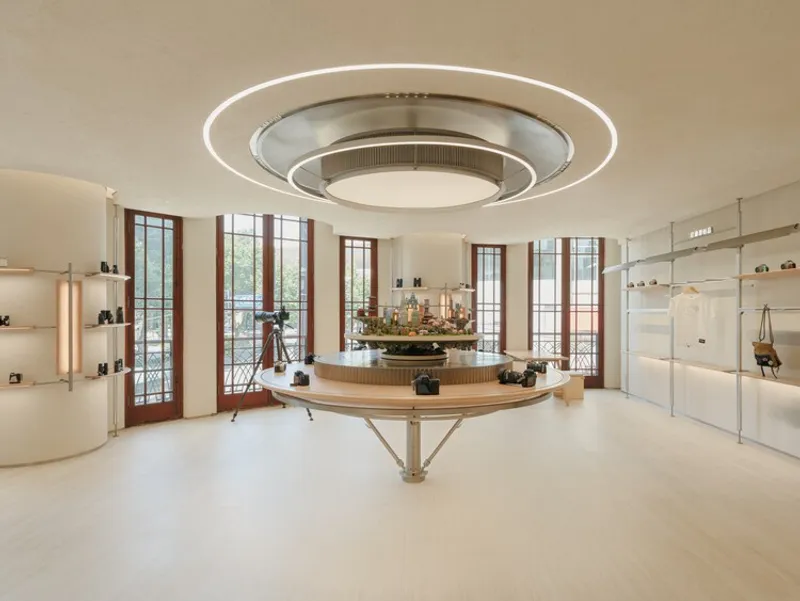
The floor plan employs a centripetal organization, using a circular light-strip ceiling element as the spatial anchor. This overhead feature, simultaneously functional lighting and sculptural installation, creates a gentle visual pull that draws visitors inward from the entrance. The circular geometry establishes a rotational rather than linear spatial logic, encouraging exploratory movement patterns rather than predetermined circulation routes. Visitors naturally gravitate toward the center, then orbit outward to discover peripheral zones before proceeding to upper levels.
The Lens-Inspired Central Installation
At the heart of the ground floor, a central light panel inspired by camera lens design serves as both literal and metaphorical focal point. This custom element abstracts the concentric geometry of photographic optics into an architectural light feature, creating immediate visual connection to Nikon's core product. The installation functions on multiple registers simultaneously: as wayfinding beacon, as atmospheric lighting source, as instagrammable background for visitor photography, and as subtle brand signifier that communicates technological sophistication without overt corporate branding.

The panel's illumination quality was carefully calibrated to provide even, flattering light that complements rather than overwhelms the natural daylight filtering through the storefront glazing. This balance proves crucial during Shanghai's varying seasonal and weather conditions, maintaining consistent spatial character whether encountered on bright summer afternoons or overcast winter days.
Peripheral Integration Through Curved Forms
The ground floor's peripheral elements, wall niches displaying featured products, the reception desk handling customer service and transactions, and seating areas for customer waiting or casual browsing, employ soft, curved forms that integrate seamlessly with the architectural envelope. This approach contrasts with conventional retail design, which often treats display fixtures, furniture, and service counters as discrete objects placed within neutral space.

LUKSTUDIO's strategy creates visual continuity and spatial flow, with one element transitioning organically into the next. The curved geometries reference both the circular ceiling feature and the optical forms central to photographic technology, establishing formal coherence while softening the space's character. These gentle curves create what environmental psychologists call "approach gradients", spatial qualities that feel welcoming and non-confrontational, encouraging visitors to move closer and engage rather than maintaining distance.
Light Layering and Atmospheric Quality
The ground floor demonstrates LUKSTUDIO's sophisticated understanding of lighting design as multi-dimensional practice. Rather than relying on uniform illumination that flattens spatial perception, the design employs carefully calibrated layers of light operating at different scales and serving different purposes.


Natural daylight enters through the storefront glazing, connecting the interior to the urban context and providing temporal variation that keeps the space feeling alive throughout the day. Ambient light panels embedded in the ceiling and walls establish base illumination levels while contributing to the overall atmospheric character. Accent lighting highlights specific products and architectural features, creating focal points that guide attention without becoming visually aggressive. The integration of these lighting strategies ensures that functional zones transition naturally, producing the "calm, flowing atmosphere" that subtly guides visitor experience without requiring explicit signage or heavy-handed wayfinding graphics.
Second Floor: The Natural Island and Product Theater
Conceptual Framework
Following vertical circulation from the ground floor, visitors emerge into the second-floor environment, the store's primary product display area and its most spatially ambitious zone. Here, LUKSTUDIO developed the "Natural Island" concept, a spatial metaphor that frames product exploration as a journey of discovery through an imagined landscape. This conceptual approach transforms conventional retail display into something more experiential and memorable, encouraging visitors to spend extended time engaging with products rather than conducting quick transactional visits.

The "island" metaphor operates on multiple levels. Literally, display tables appear to float above the floor surface, suggesting landforms surrounded by water or clouds hovering above the earth. Experientially, the space creates an atmosphere of exploratory adventure, with visitors as travelers discovering technological treasures. Psychologically, the concept positions Nikon products not as consumer goods but as tools for exploring and capturing the natural world, reinforcing brand values while elevating the retail experience beyond mere commerce.
Floating Display Tables and Structural Innovation
The floating display tables represent one of the project's most distinctive design innovations. Each table surface rests on slender steel bases that appear almost impossibly thin, creating a sense of visual lightness and technological precision. This structural approach required careful engineering to ensure stability while maintaining the desired aesthetic of weightlessness. The tables vary in size and height, creating a dynamic topography that prevents visual monotony and accommodates different product categories and display requirements.

The floating effect serves multiple functions beyond pure aesthetics. Practically, it allows for easy cleaning and maintenance of floor surfaces and creates unobstructed sight lines that make the space feel larger than its actual square meterage. Psychologically, the hovering tables create a sense of surprise and delight, subtly communicating technological sophistication while making product interaction feel special rather than mundane.
The Central Circular Display
Beneath lens-shaped ceiling lights, custom fixtures that echo the ground floor's central installation while establishing vertical visual continuity throughout the store, a large central circular display platform emphasizes Nikon's technological innovation. This elevated platform, more substantial than the surrounding floating tables, serves as the primary stage for flagship products and new releases.

The circular geometry creates natural gathering opportunities, allowing multiple visitors to simultaneously view products from different angles without crowding. The platform's height brings products to optimal viewing and interaction level while establishing clear visual hierarchy that signals importance. Integrated lighting within the platform itself provides consistent illumination of displayed items regardless of ambient conditions or time of day.
Embedded Miniature Scenes and Visual Storytelling
Throughout the second floor, embedded miniature scenes offer visual storytelling opportunities that contextualize camera equipment within photographic practice. These carefully composed dioramas, small-scale environments suggesting various photography genres and subject matters, demonstrate the capabilities of different lenses, camera bodies, and accessories while inspiring visitors' own photographic imagination.


A miniature landscape scene might showcase telephoto lens compression effects, while an architectural vignette demonstrates wide-angle capabilities. Portrait-scale figures illustrate bokeh characteristics of various apertures, and macro close-up displays reveal the extraordinary detail possible with specialized equipment. These storytelling elements transform product display from technical specification recitation into imaginative possibility presentation, helping visitors envision themselves using the equipment in their own photographic pursuits.
Window-Side Interaction Zones
Along the perimeter windows, super-telephoto tripod kits are permanently positioned to encourage hands-on interaction. This placement serves multiple strategic purposes. The window location provides real-world viewing opportunities, visitors can test long telephoto lenses by photographing distant buildings, street activity, or landscape elements visible from the elevated second-floor vantage point. This practical testing capability proves far more valuable than abstract product handling, allowing potential customers to genuinely evaluate equipment performance.


The window position also creates impressive visual interest for pedestrians viewing the store from street level, with serious-looking telephoto rigs suggesting professional capability and drawing attention to the store's presence. Additionally, the window-side location naturally handles the spatial requirements of long telephoto equipment, which cannot be comfortably demonstrated in the store's central areas without disrupting circulation or occupying excessive floor area.
Material and Lighting Refinement
Behind the main display platform, conical elm wood tables introduce organic materiality that warms the technological precision of the steel and glass elements. These tables receive layered lighting, multiple light sources positioned at different angles, that softens shadows and enhances visual comfort. This attention to lighting quality reflects professional photography principles: just as skilled photographers use multiple light sources to eliminate harsh shadows and create dimensional modeling, LUKSTUDIO's lighting design ensures products appear three-dimensional and inviting rather than flat or cold.
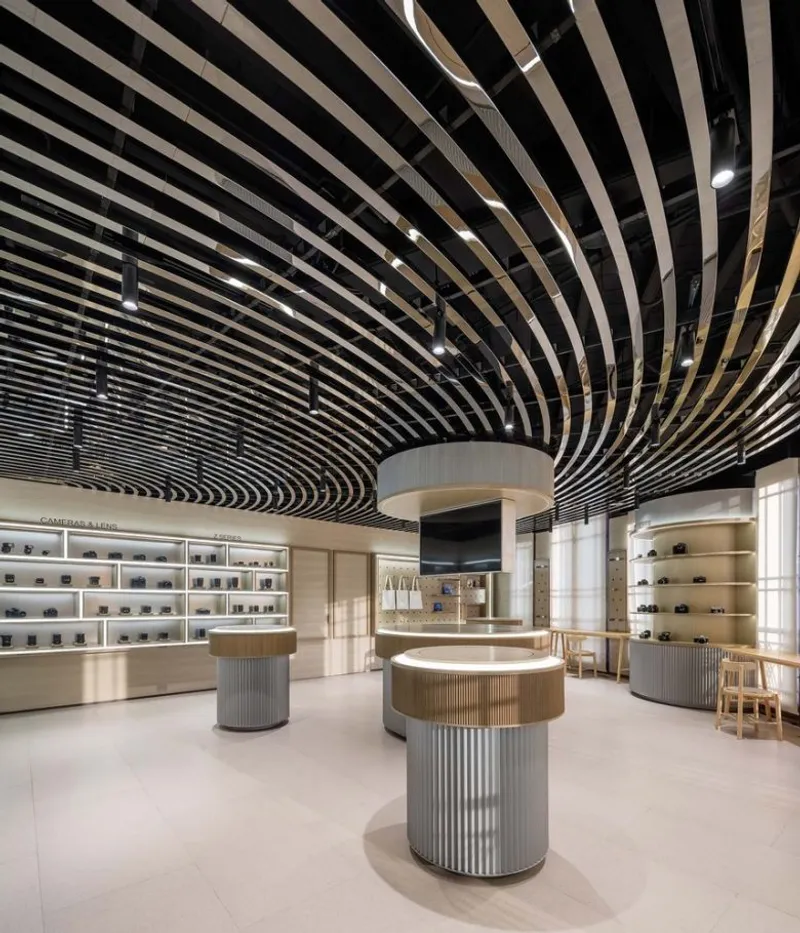
Wall-mounted displays combine metal framework with wood paneling, creating adaptable exhibition infrastructure that can accommodate diverse product categories and evolving display requirements. This material combination, structural metal providing flexibility and warmth-giving wood providing perceptual softness, exemplifies the design's broader strategy of balancing technological precision with human-scale comfort.
Window-side seating encourages relaxed, extended engagement. Visitors can test equipment, review captured images, complete purchase processes, or simply rest while contemplating products, all in comfortable settings that don't feel rushed or transactional. The seating placement adjacent to testing areas creates natural opportunities for group discussion and knowledge sharing among photography enthusiasts, reinforcing the community-building objectives.
Display Refinement for Classic Equipment
Classic cameras and specialized accessories receive special presentation treatment using frosted acrylic panels and thin, light-guiding shelves. This approach recognizes that vintage or collectible equipment requires different display strategies than current-production items. The frosted acrylic provides protection while maintaining visibility, creating a museum-quality presentation that signals these items' special status. Light-guiding shelf edges, using optical principles similar to fiber optics, illuminate displayed items from below and within, creating luminous presentation that emphasizes form and finish while maintaining compact, elegant proportions.
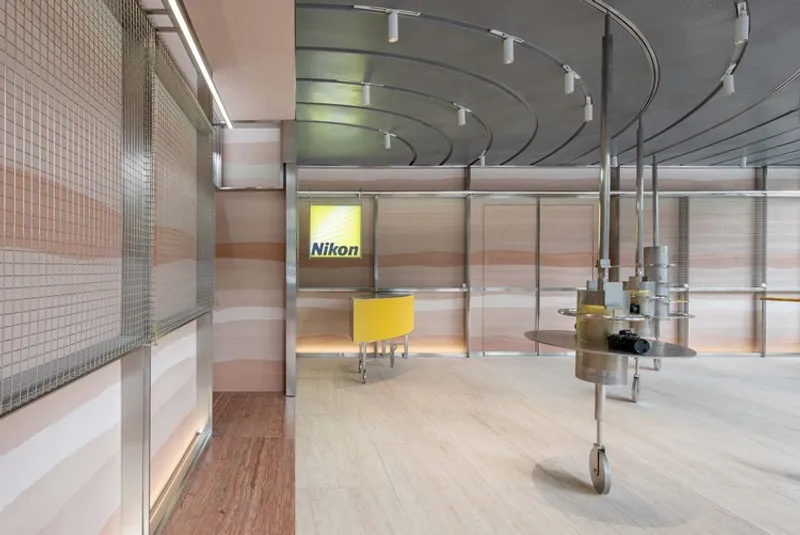

This refined presentation delivers both visual clarity and tactile quality, inviting close inspection while clearly differentiating these special items from everyday products. The display strategy itself becomes a form of storytelling, communicating Nikon's long history of optical innovation and manufacturing excellence.
Third Floor: The Workshop as Community Hub
Expanded Programming and Spatial Division
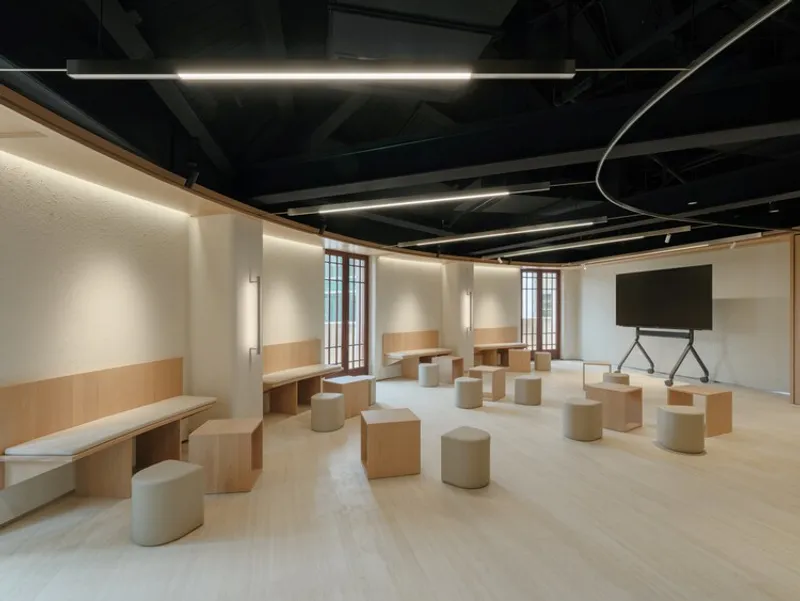
The third floor underwent the most dramatic transformation during the renovation, expanding from a modest secondary space into a fully realized workshop and community gathering area. This floor now serves as the heart of Nikon's community-building mission in Shanghai, hosting educational workshops, photography exhibitions, product launch events, user group meetings, and informal gathering opportunities for enthusiasts.

The expanded space divides into front and rear zones, each serving distinct but complementary functions. This division allows for flexible programming that can accommodate multiple simultaneous activities or transform the entire floor into unified space for larger events.
The Fan-Shaped Front Zone
The front area employs a fan-shaped geometry that creates natural gathering focus while maintaining visual openness. This configuration proves ideal for small-scale events, instructor-led workshops, product demonstrations, artist talks, or community presentations, where attendees need clear sight lines to a focal point while maintaining comfortable density.
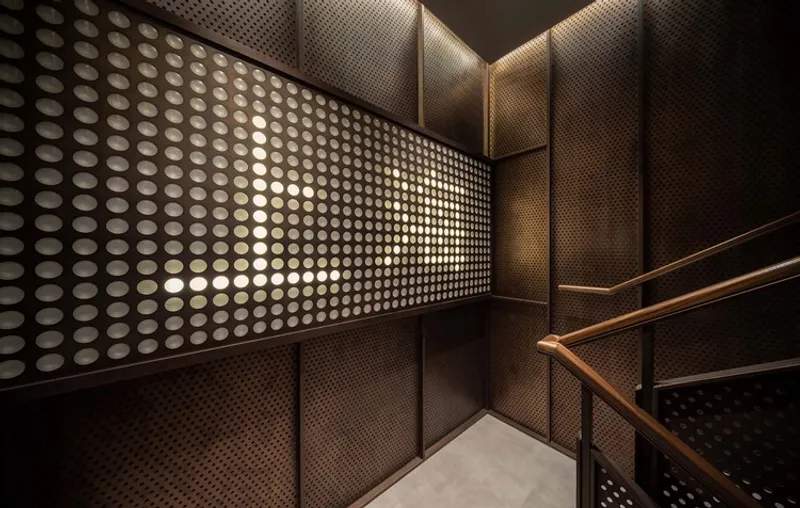
The fan shape also offers acoustic advantages, with the splayed walls helping to distribute sound evenly and reduce problematic reflections that plague rectangular rooms. This consideration proves crucial for events involving spoken presentations or video content, ensuring good audio quality throughout the space without requiring extensive acoustic treatment.
A curved ceiling curtain provides gentle visual separation between front and rear zones without creating hard barriers. This soft division maintains spatial flow and allows light to circulate between zones while providing sufficient definition that activities in one area don't disrupt those in another. The curtain can be drawn fully for maximum openness or deployed strategically to create more intimate front-zone character for smaller gatherings.
Modular Flexibility
Throughout the workshop floor, movable modular seating enables infinite spatial arrangements responsive to varying program needs. A lecture format might employ rows of seating facing a presentation area. A workshop setting could arrange seats around work tables. A reception or networking event might scatter seating in casual groupings throughout the space. An exhibition opening could remove most seating entirely, maximizing circulation area.

This flexibility proves essential for a community space that must accommodate diverse activities and user groups. Rather than designing for a single idealized use case, LUKSTUDIO created infrastructure that empowers Nikon's programming team to continuously reimagine the space according to evolving needs and creative ambitions.
Preservation of Architectural Character
At the rear of the third floor, the original building's double-pitched roof structure is preserved and celebrated rather than concealed. This architectural honesty creates immediate warmth and character, distinguishing the workshop space from the more refined retail environments below. The exposed roof structure communicates authenticity and craft, values that resonate with serious photography practitioners who appreciate the intersection of art, technology, and skilled making.

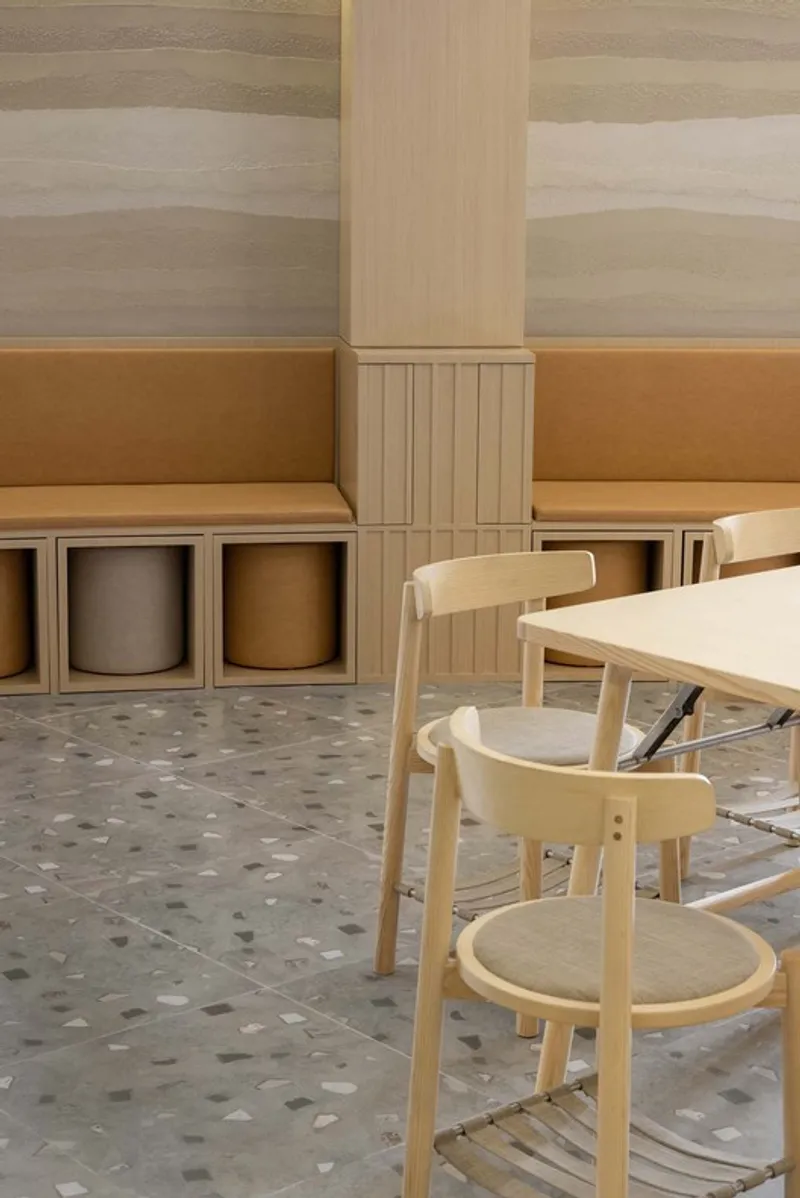
Wood paneling conceals necessary structural elements and building service systems, HVAC distribution, electrical infrastructure, acoustic insulation, resulting in clean, finished surfaces that maintain the exposed structure's visual impact while ensuring comfortable environmental conditions. The wood material itself contributes warmth and natural texture that softens the workshop atmosphere, making the space feel welcoming for extended occupancy.
Linear Lighting as Spatial Connector
Linear track lighting extends from ceiling planes onto wall surfaces in continuous runs, creating visual rhythm while providing flexible illumination for varying display and activity needs. This lighting approach echoes the second floor's display system, establishing visual continuity between retail and community functions while emphasizing that both serve the larger mission of supporting photographic practice.
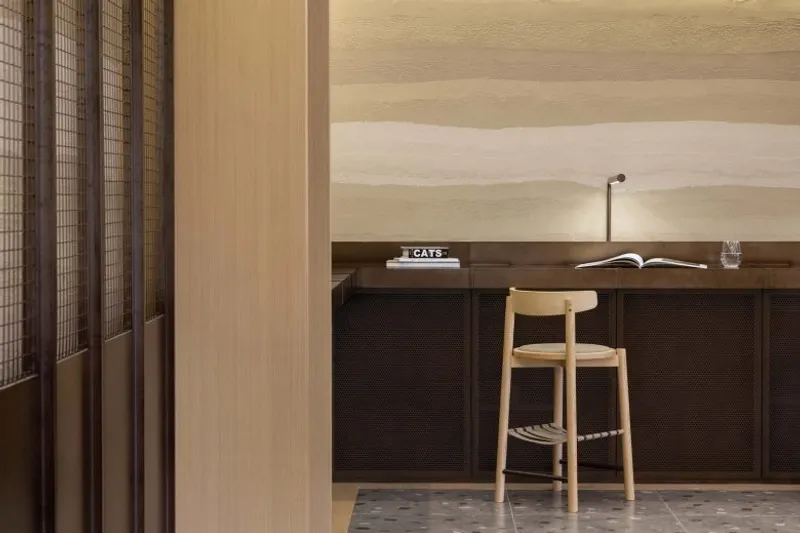
The track system's flexibility allows lighting to be repositioned and refocused as space usage evolves, accommodating temporary exhibitions, projection requirements for presentations, or task lighting for hands-on workshops. This adaptability ensures the space remains functional and appropriate regardless of programming changes over the store's lifespan.
Material Strategy and Sensory Experience
Natural and Artificial Light Orchestration
Throughout all three floors, natural and artificial lighting operates as carefully orchestrated composition rather than simple functional requirement. LUKSTUDIO's approach recognizes that lighting quality fundamentally shapes spatial perception and emotional response. The design team calibrated lighting according to walls, props, and functional zones, creating layered spaces that continuously reinforce the theme: "Light is the soul of photography."
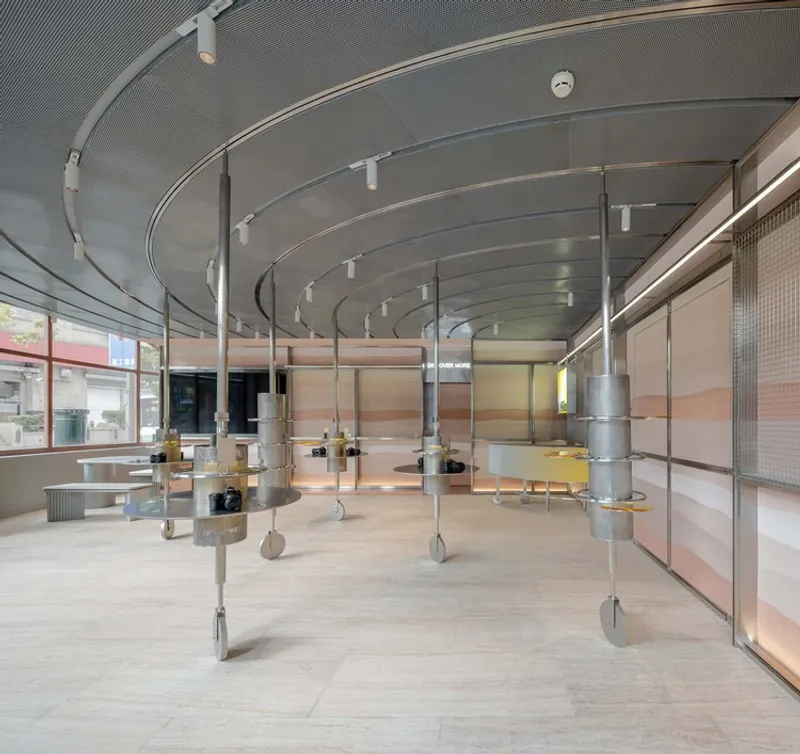
This orchestration manifests in subtle but perceptual significant ways. Natural daylight, valued for its spectrum quality and temporal variation, is welcomed through windows but controlled and filtered to prevent glare or excessive heat gain. Artificial lighting supplements and extends natural light rather than replacing it, maintaining circadian-appropriate conditions while ensuring consistent retail display quality regardless of weather or time of day.
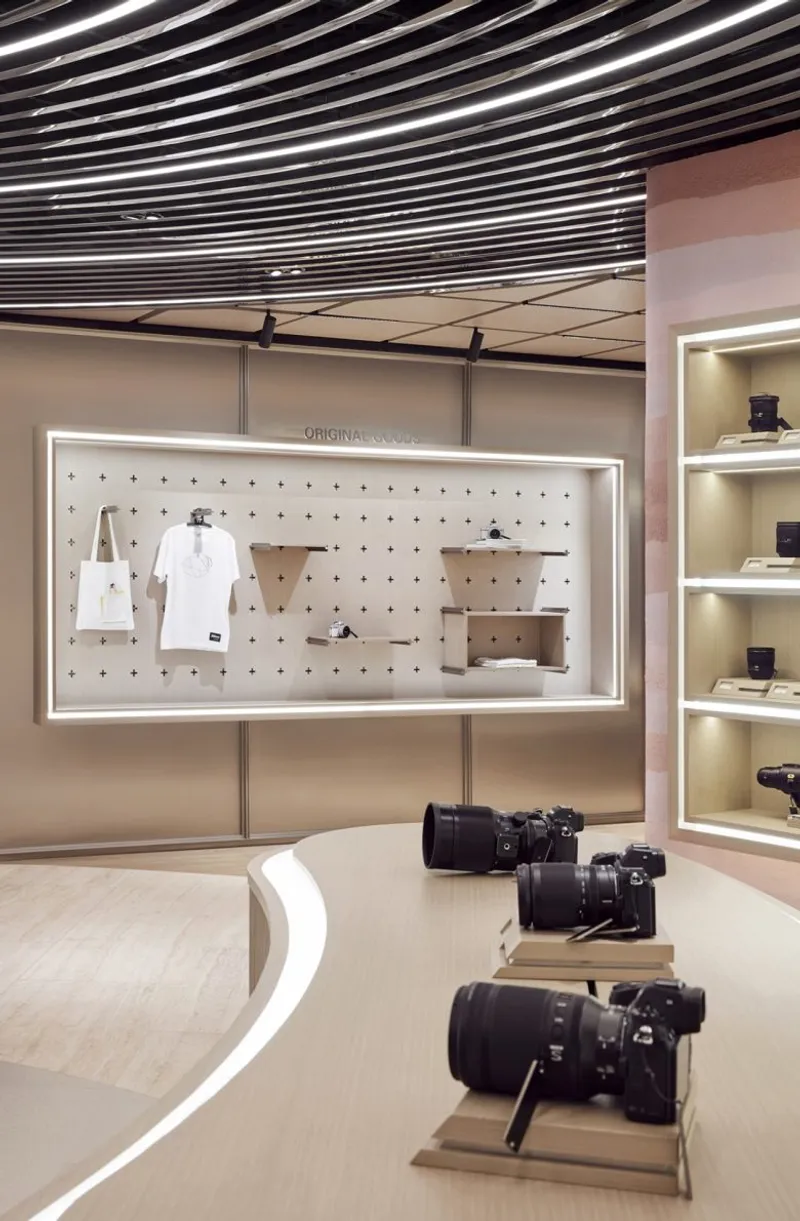

Accent lighting highlights architectural features and key products without creating the harsh contrasts or spotlight effects common in conventional retail. Ambient illumination establishes base light levels that allow for comfortable extended visits and detailed product inspection. Decorative light features, the lens-inspired installations, edge-lit displays, linear tracks, create visual interest and brand character while contributing to functional illumination.
Custom Curved Props and Detail Refinement
Throughout the store, custom-designed curved props and fixtures reflect Nikon's commitment to craftsmanship and attention to detail. These elements, display plinths, seating forms, reception desks, product pedestals, employ gentle curves and precise radii that require sophisticated fabrication capabilities. The curves are not arbitrary styling gestures but carefully calibrated geometries that reference optical design principles while creating welcoming, approachable forms.

The investment in custom fabrication communicates quality and permanence, distinguishing Nikon's flagship from temporary pop-ups or generic retail installations. These bespoke elements create a sense of place specific to this store, this brand, this moment, encouraging repeat visits and building loyalty among the photography community.
Texture Variety and Tactile Richness
Material texture variety creates tactile richness that engages multiple senses beyond pure vision. Smooth, cool metal surfaces contrast with warm wood grain. Matte painted surfaces meet glossy acrylic panels. Soft fabric seating provides relief from hard display fixtures. This sensory diversity maintains visitor engagement and prevents the perceptual fatigue that occurs in monotonous environments.

The texture strategy also serves practical functions. Matte surfaces reduce glare and reflections that could interfere with product viewing or photography within the space. Wood and fabric materials provide acoustic absorption that manages sound levels in the retail environment. Durable finishes ensure the space will maintain its refined appearance despite heavy traffic and continuous product handling.
Retail Strategy and Business Performance
Beyond Transaction: The Experience Economy
Nikon Shanghai Flagship Store 2.0 exemplifies contemporary retail's shift from transactional efficiency to experiential richness. In an era when pure product purchases can be completed online with minimal friction, physical retail survives and thrives by offering value that e-commerce cannot replicate: hands-on product testing, expert consultation, community connection, education, and inspiration.
LUKSTUDIO's design recognizes this reality, creating environments that encourage extended visits, repeated returns, and genuine community formation. The store functions as destination rather than mere distribution point, giving photography enthusiasts compelling reasons to visit beyond immediate purchase needs.
Community Building as Brand Strategy
For technology brands like Nikon facing intense competition and rapid market evolution, community building represents crucial strategic advantage. Loyal communities provide market feedback, generate user-created content, offer peer-to-peer education and support, and create emotional connections that transcend rational product comparisons.
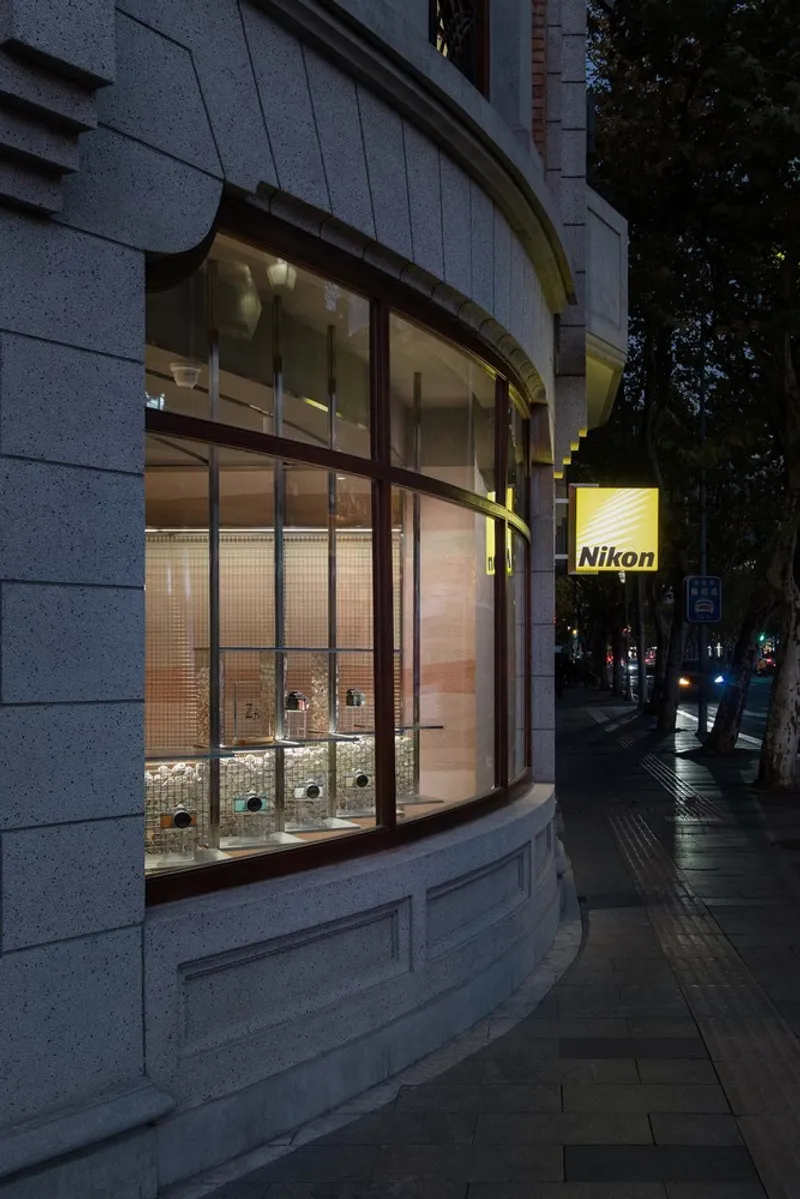

The Shanghai flagship's community-focused design, particularly the expanded third-floor workshop, provides infrastructure for systematic community cultivation. Regular workshops build skills while creating repeated touch points with the brand. User group meetings facilitate connections among community members, with Nikon positioned as convener and enabler. Product launches and exhibitions generate excitement while demonstrating ongoing innovation.
Flexibility and Future-Proofing
The design's inherent flexibility helps protect the significant renovation investment against uncertain future conditions. Modular displays can adapt to changing product lines. Flexible lighting accommodates evolving retail strategies. The workshop space can host programs that don't exist yet but may become important. This adaptability ensures the space remains relevant and functional over extended timeframes, avoiding the rapid obsolescence that plagues more rigid retail designs.
Design Innovation and Industry Influence
Advancing Retail Design Practice
Nikon Shanghai Flagship Store 2.0 contributes meaningfully to broader conversations about contemporary retail design. The project demonstrates how minimalist aesthetics can create warmth and welcome rather than cold austerity. It shows how sophisticated lighting design can function as primary architectural language. It proves that community function and commercial objectives can be mutually reinforcing rather than conflicting.

These innovations provide models that other designers and brands can study, adapt, and build upon, gradually elevating retail design standards industry-wide.
Brand Space as Cultural Institution
The store's museum-quality displays, educational programming, and community gathering functions position it as something beyond pure commerce, approaching the role of cultural institution. This elevation benefits both Nikon and the broader Shanghai cultural ecosystem, creating a specialized resource for photography enthusiasts that enriches the city's cultural offerings while advancing the brand's reputation and influence.


All the Photographs are works of Wen Studio


Popular Articles
Popular articles from the community


U.GA Architects Wraps an Oval Rooftop Pool in Curved Board-Formed Concrete on Busan's Jeollidan-gil
In Busan's Jeonpo-dong, a 454 m² mixed-use block stacks a neighborhood facility, guest rooms and an oval rooftop pool inside spiraling concrete walls.

David Ortega Stacks a Two-Story Mexico City Penthouse Around a Steel Stair and a Pergola-Shaded Roof Terrace
In Colonia Roma, a 300 m² penthouse uses oak joinery, a planted steel stair and a slatted roof pergola to make a new-build apartment feel like a house.

longwave studio Reorganizes a 112 m² Tainan Apartment Around the Daily Routines of a Family and Two Cats
In Tainan, Taiwan, birch plywood, rust-red furniture and a freestanding plaster wall link arrival, storage, work and family life in one apartment.

LT2A and OPEN Architectes Thread a Brick and Glass High School Through a Wooded Belgian Campus
In Braine-l'Alleud, a 3,000 m² wing for Collège Cardinal Mercier pairs pale brick with a glazed colonnade, deferring to a small chapel and a dense wood.

Similar Reads
You might also enjoy these articles


Hodi-Mandai Geram
Project Function: Preservation and revitalization of the Intangible heritage and socio-spatial identity of the Hodi by Housing, Cultural Memory Center, Sacred Grove, landscape, local tourism economy


Olio Towers: A Mid-Rise for Performers That Fuses Housing, Rehearsal, and Stage
Located blocks from Houston's Theater District, this modular tower stacks living units around a central performance atrium.

Oasis: Modular Green Housing Carved into Dhaka's Urban Fabric
A shortlisted Plugin Housing entry reclaims unauthorized settlements in Dhaka with stepped concrete volumes, green roofs, and ventilation-driven design.

Black Hole: A Floating Megastructure for the Post-Physical Era
Emiliano Mazzarotto envisions a spherical, self-scaling arena where e-sports, digital hotels, and holographic stadiums replace traditional public space.

Explore Commercial Buildings Competitions
Discover active competitions in this discipline

Challenge to reimagine the Iron Throne

Photograph architecture without architects

Illustrate the lost glory of Angkor Wat - Render Challenge

Design challenge to reuse E-waste
Comments (0)
Please login or sign up to add comments
No comments yet. Be the first to comment!