

noa* Wraps an Alpine Hotel in Swamp-Inspired Armor and Japanese Ritual
At the end of a South Tyrolean valley, the Silena Hotel fuses moorland materiality with Asian spatial traditions across 1,800 square meters.


The word Moar means "marsh" in the local South Tyrolean dialect, and the farmstead that once occupied this site at the end of the Valser valley wore the name honestly. Surrounded by moorland at roughly 1,300 meters above sea level, the original Moarhof was a building shaped by its wet, dark terrain. When noa* network of architecture returned for a second intervention in 2022, following an earlier phase completed in 2017, the studio leaned into that origin story while layering over it something unexpected: the spatial discipline and ceremonial quietude of Japanese interior culture.
What makes the Silena interesting is not the collision of references per se but the precision with which the architects fused them into a single material and spatial logic. Earth-colored aluminum panels climb the facade like swamp vegetation reclaiming the building, while inside, podiums, tatami-scaled seating, and a tea table that sinks into the floor compress and ritualize the guest experience. The owners' fascination with Asian customs, born during a trip through the continent, gave noa* a genuine brief rather than a decorative mood board. The result is a hotel where bog and bonsai coexist without irony.
A Facade That Grows
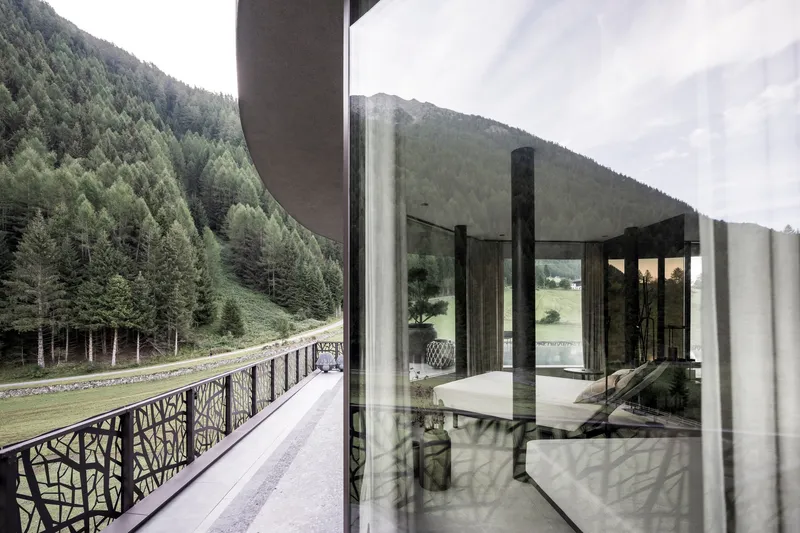
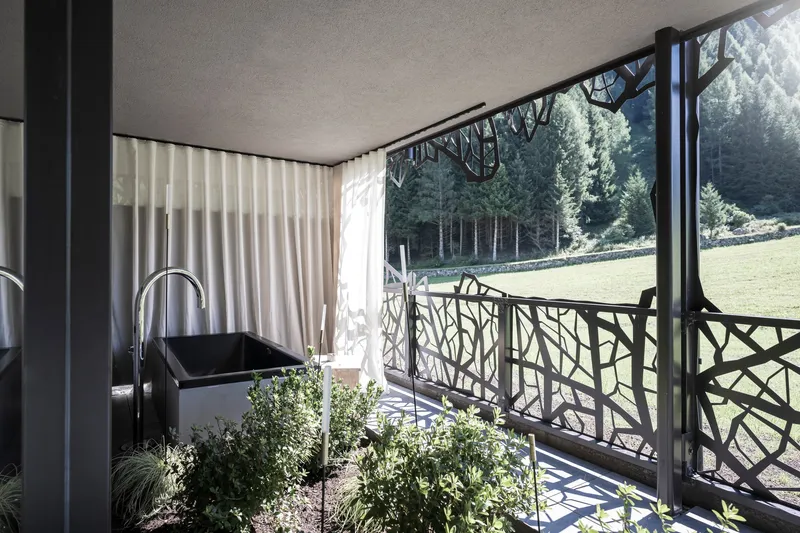
The earth-colored aluminum panels that wrap the Silena do double duty. From a distance they read as organic growth, something between lichen and reeds climbing the building's skin. Up close they function as privacy screens, transforming terraces into semi-private outdoor rooms where guests sit behind geometric metal railings and white curtains with the forest as a backdrop. The patterned panels also filter light into the suites, producing shifting shadows that change through the day.
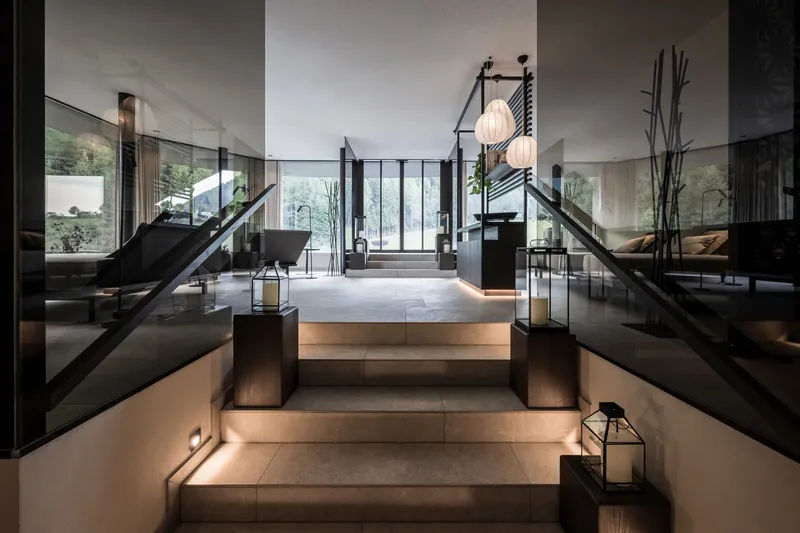
At the ground floor, the facade loosens into organic curves that hug the wellness area, dissolving the boundary between building and landscape. The illuminated stone staircase and glazed vestibule give the entrance a lantern quality at night, signaling arrival without shouting. It is a building that wants to be found rather than seen.
Threshold and Portal
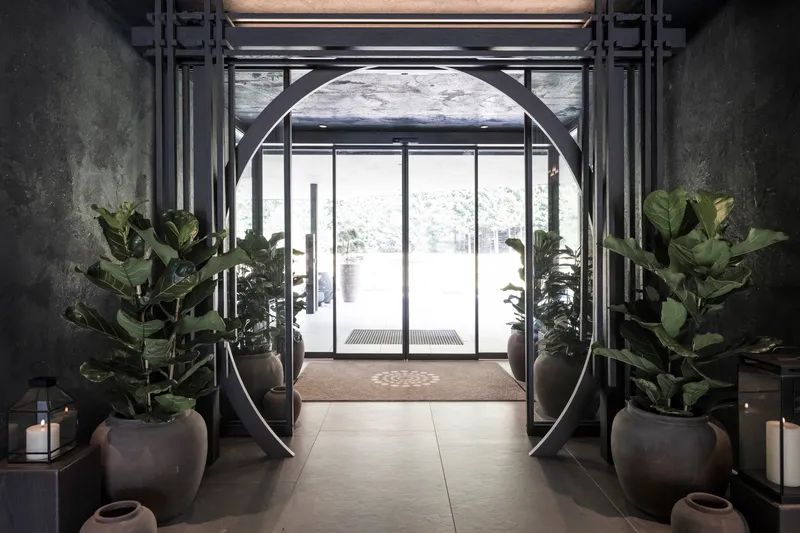
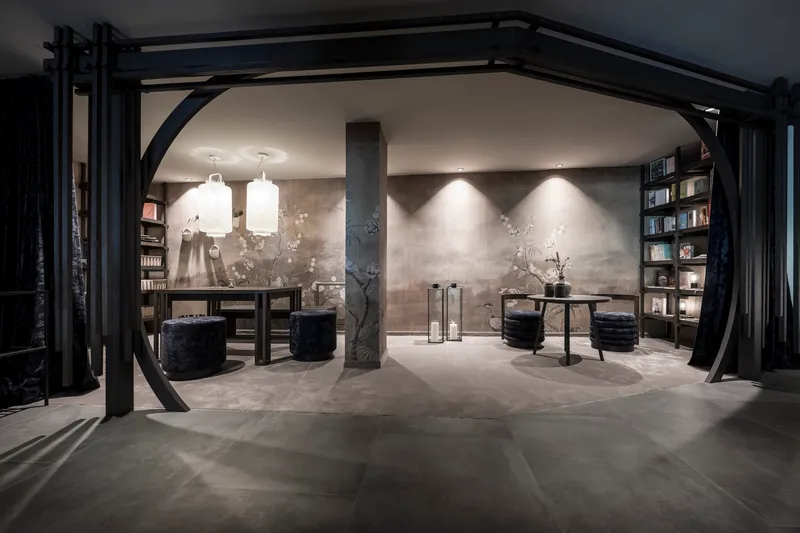
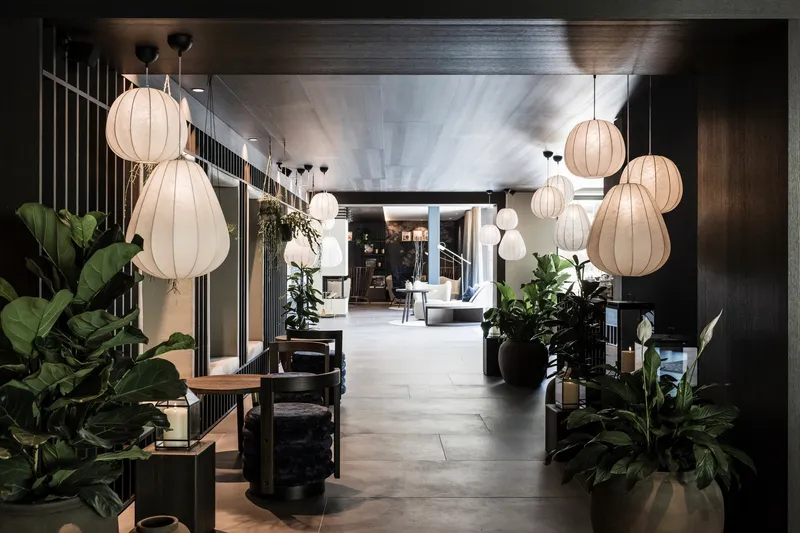
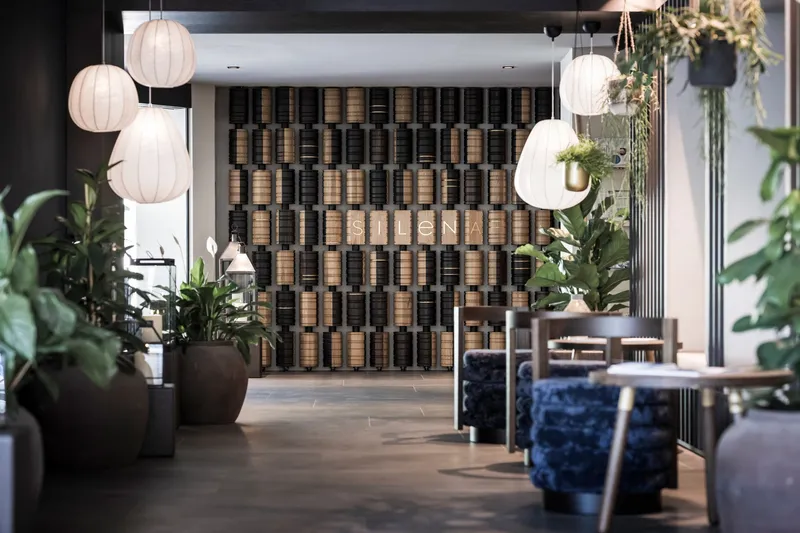
The entry sequence is theatrical in the best sense. An octagonal steel portal frame, flanked by potted plants and candlelit alcoves, compresses the arrival moment into a single decisive gesture. This is not a lobby you drift through; it is a threshold you cross. Behind it, arched steel frames open into lounge zones where illuminated textured walls and black timber screens create depth without clutter.
noa* reportedly crafted a round wooden entrance portal using traditional Asian woodworking techniques, and the influence is visible in the joints and proportions. Dark timber paneling, fabric pendant lamps, and tropical plants line the corridors, establishing a palette that holds across every floor. The warmth here is not decorative; it comes from the oak itself, a material chosen to echo the surrounding moorland forest.
Suites as Small Worlds
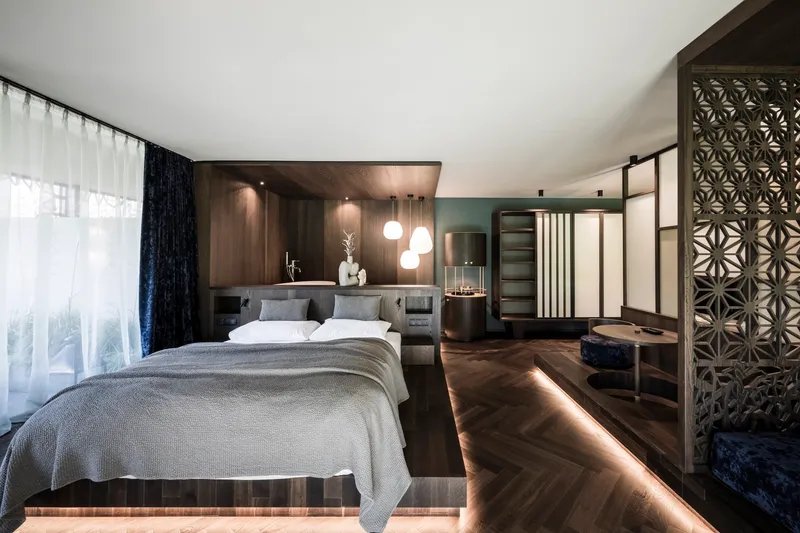
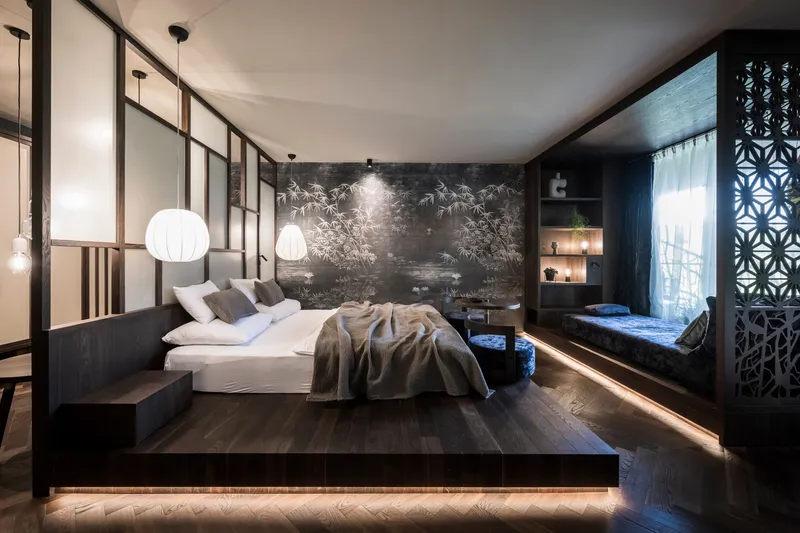
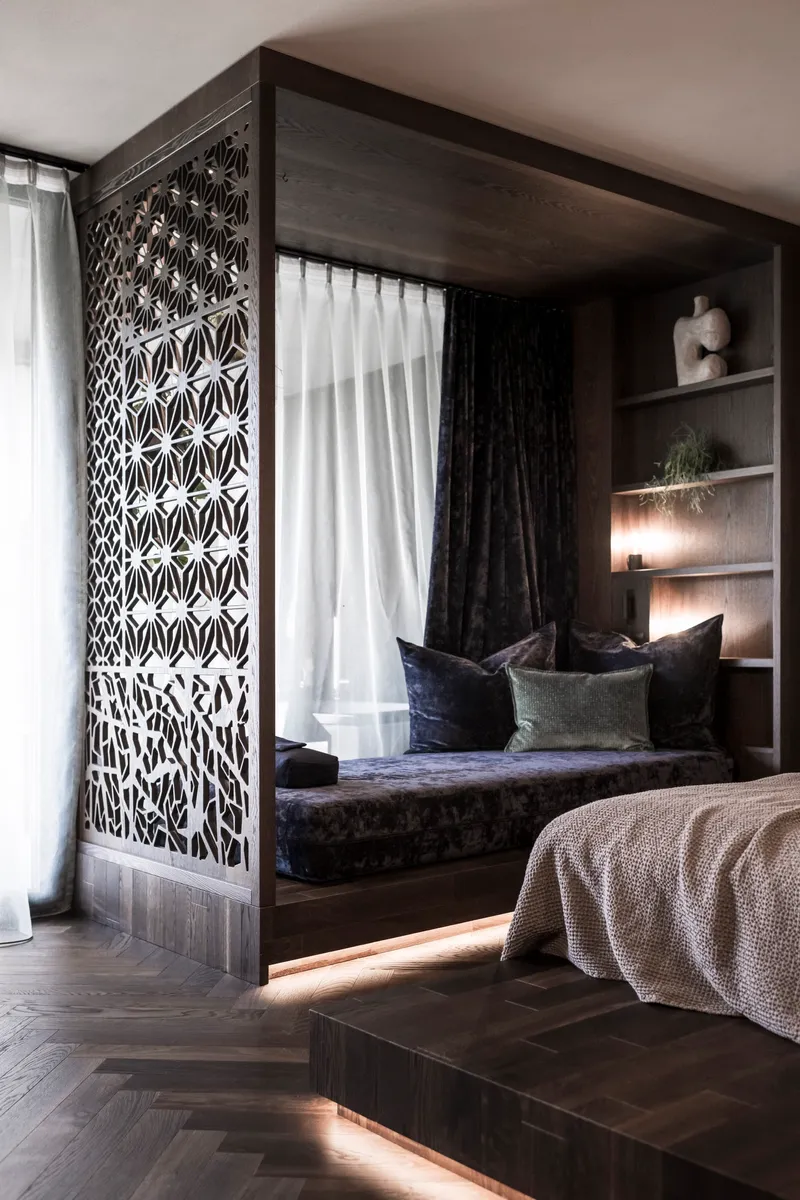
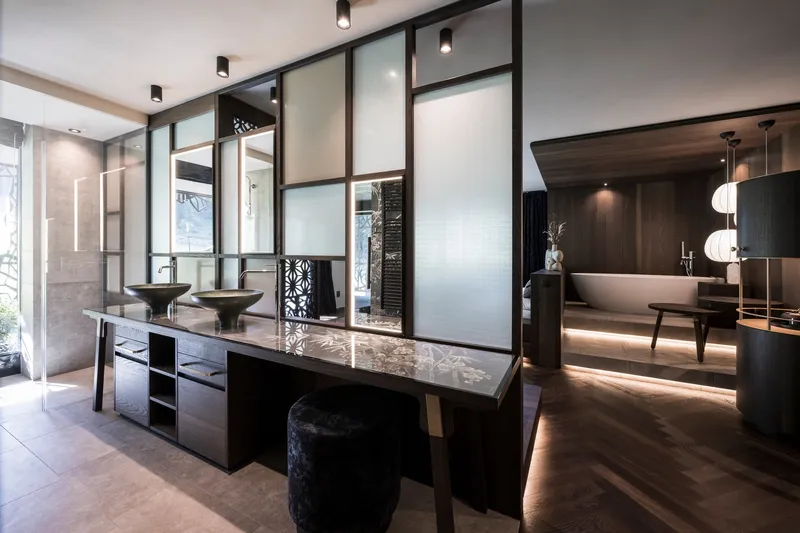
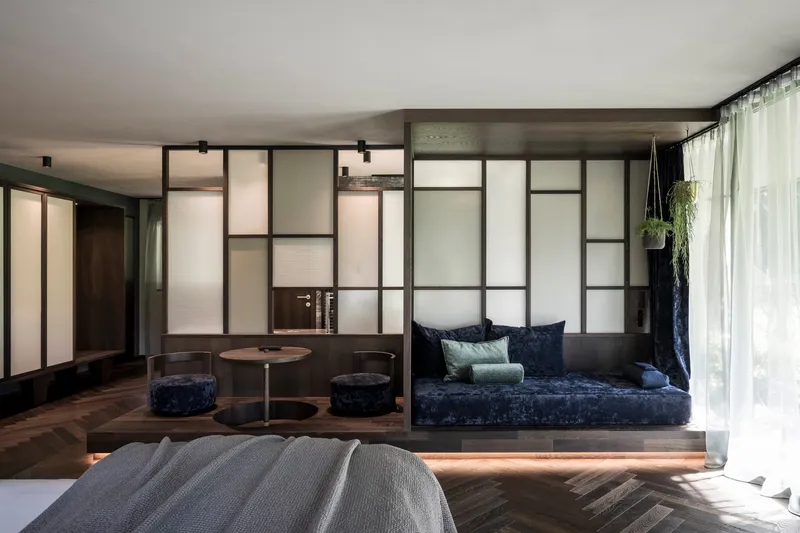
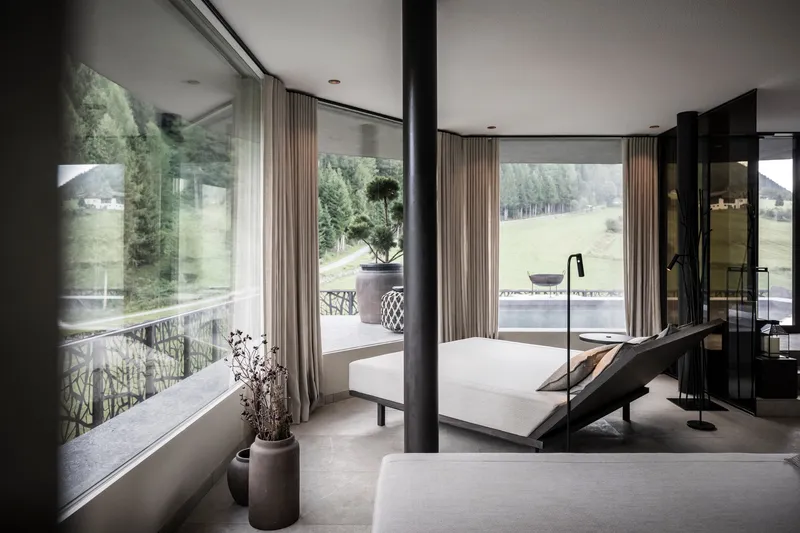
The six new suites, ranging from 30 to 55 square meters, take their organizational cue from the Japanese tradition of creating small, precisely defined spaces. Each area within a suite is demarcated by a change in floor level: a raised sleeping platform with an underlit perimeter, a meditation corner, a ceremonial tea table engineered to lower flush into the floor. Glass partitions in opaque, semi-transparent, and open configurations separate sleeping zones from bathrooms, giving every suite a layered sense of privacy.
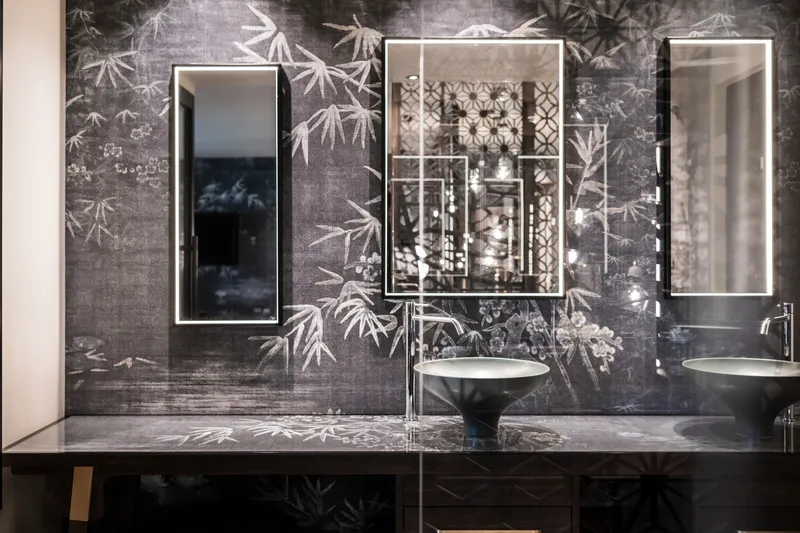
Patterned metal screens and geometric lattice panels wrap window seats and built-in niches, controlling views and light with the same logic the facade applies to the exterior. Botanical wallcoverings and brass-framed mirrors nod to chinoiserie without tipping into pastiche. The dark oak flooring and custom furniture tie every element back to the surrounding landscape's muted, earthy register. Each suite also opens onto a small private garden with a bathtub, flower beds, and curtains: a personal moorland in miniature.
Water, Stone, and Stillness
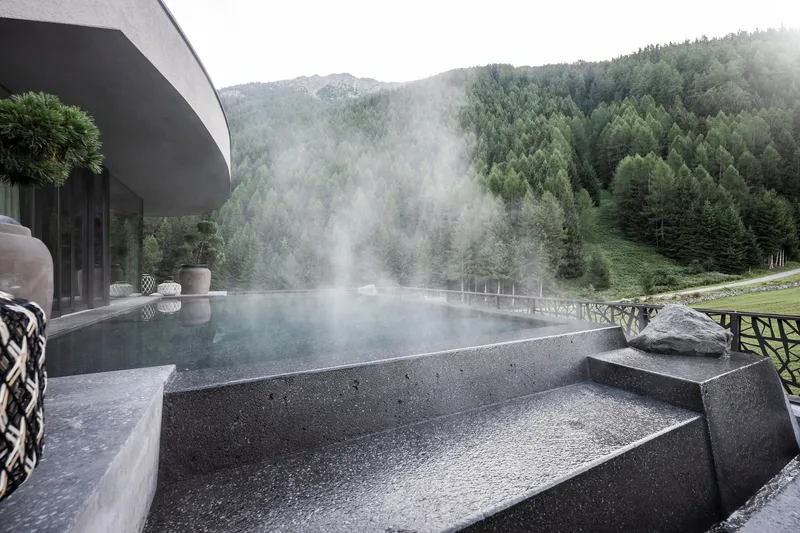
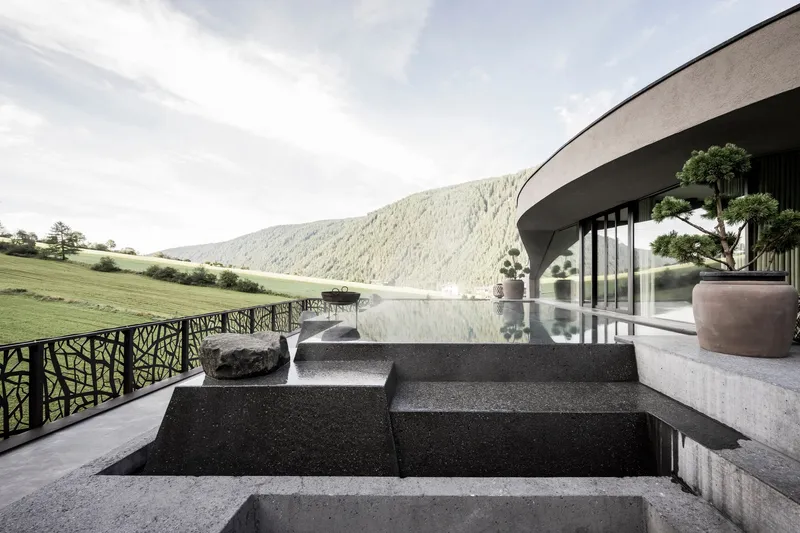
The wellness program spans the ground floor and the roof terrace, bookending the building vertically. At the base, a sauna, beauty area, two relaxation rooms, and the existing indoor pool sit behind the curving glass walls of the ground floor. Cascading black stone fountain steps beneath a curved canopy introduce water as both sound and surface, with potted bonsai trees reinforcing the cross-cultural narrative.
On the roof, an open-air pool held at a constant 40 degrees sends steam into the alpine air. The infinity edge dissolves into the forested hillside beyond, a move that is admittedly well-worn in hospitality design but executed here with restraint. Black exposed concrete pool steps and a freestanding tub facing floor-to-ceiling meadow views keep the material language tight. A panoramic sauna, relaxation room, lounge, and a roof garden planted with moss and grass complete the uppermost floor, merging the building's top surface back into the green of the Dolomites.
Communal Spaces and Craft
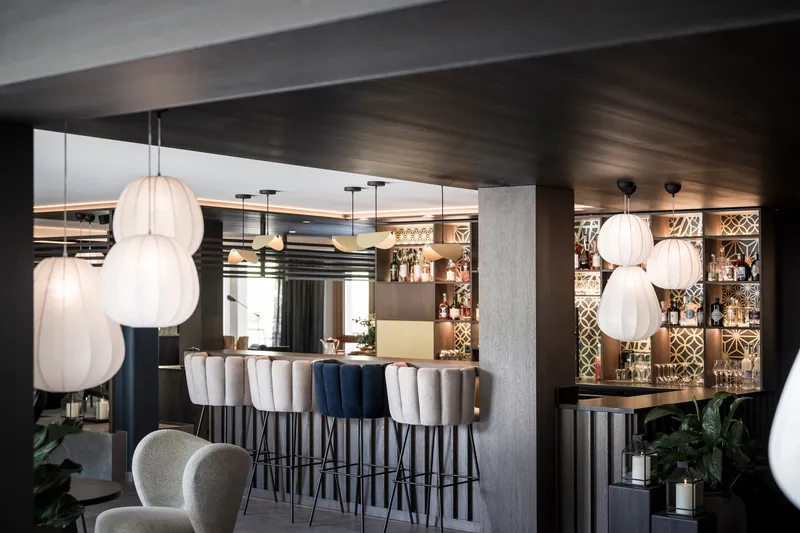
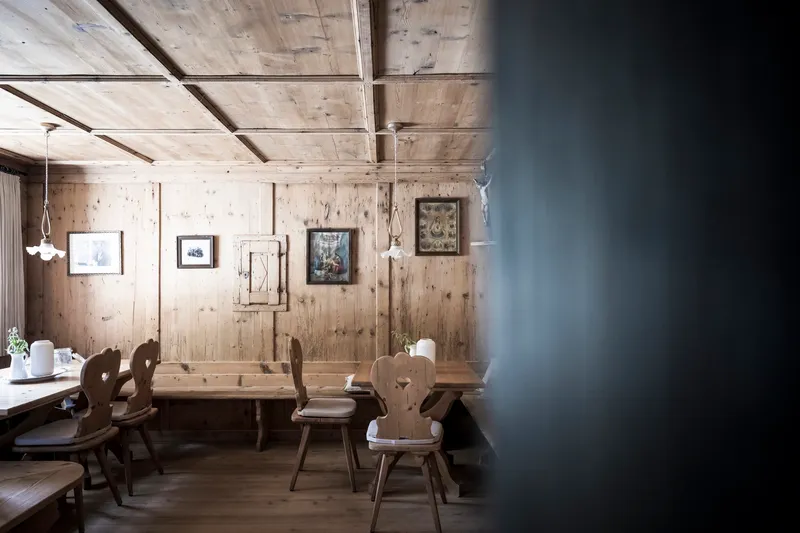
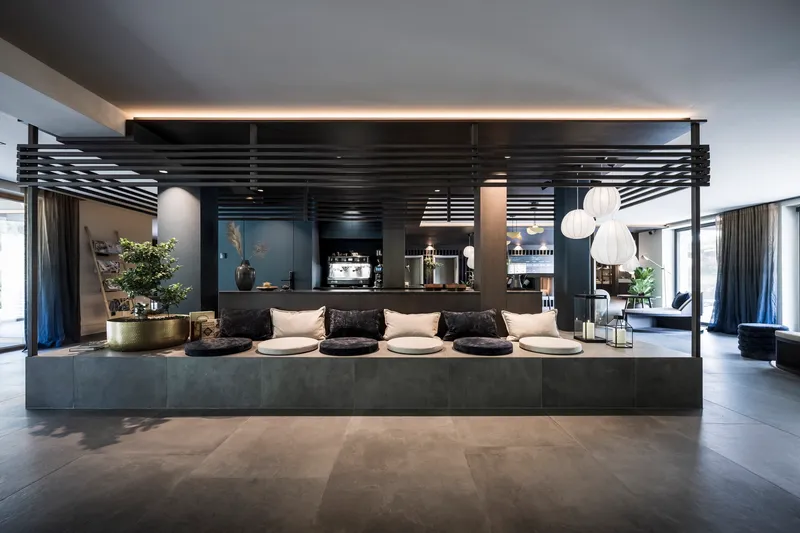
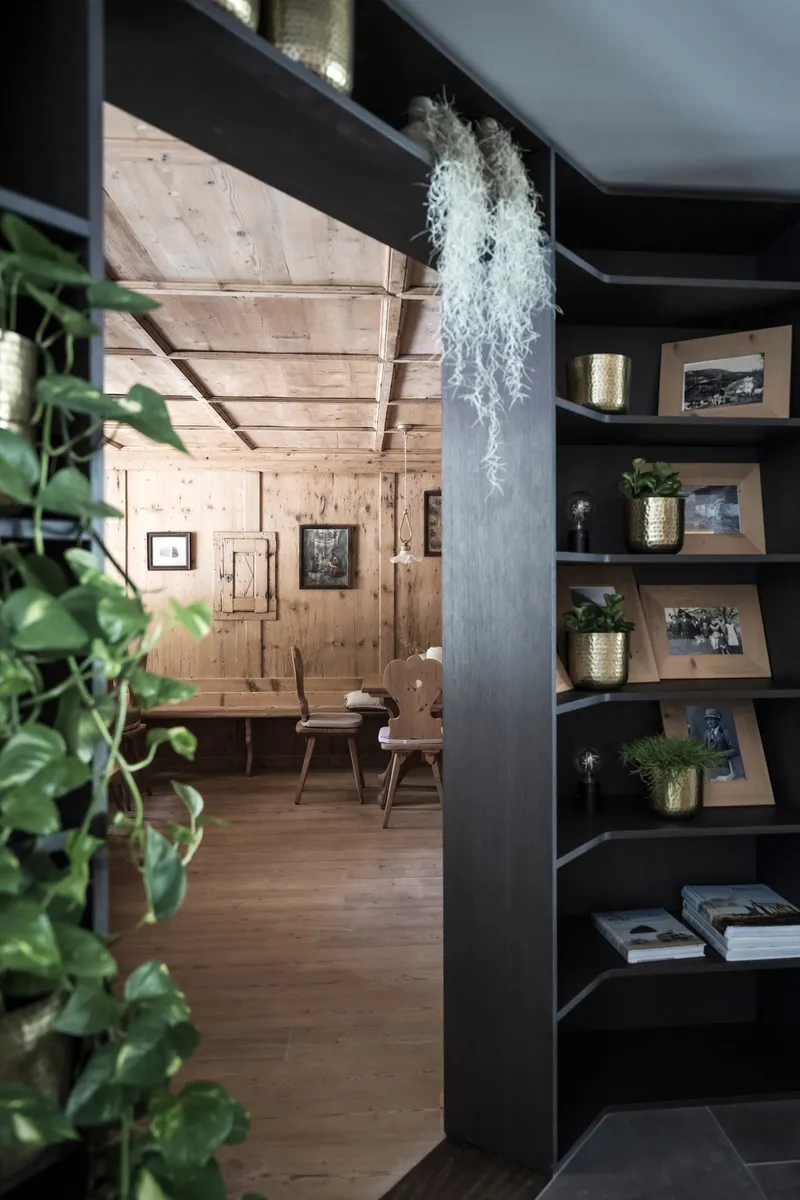
The expanded restaurant and bar occupy the floor above the wellness level, opening onto an outdoor terrace. The hospitality bar pairs a horizontal slatted canopy with a dark stone counter, while a backlit geometric tile wall behind the bottles adds graphic punch without competing with the views. Elsewhere, a dining alcove lined with weathered timber planks and carved wooden chairs gestures toward the building's farmhouse lineage.
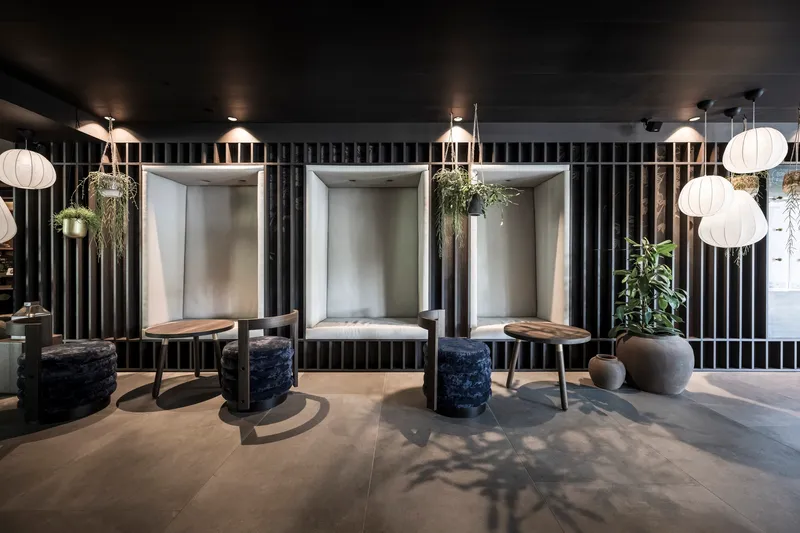
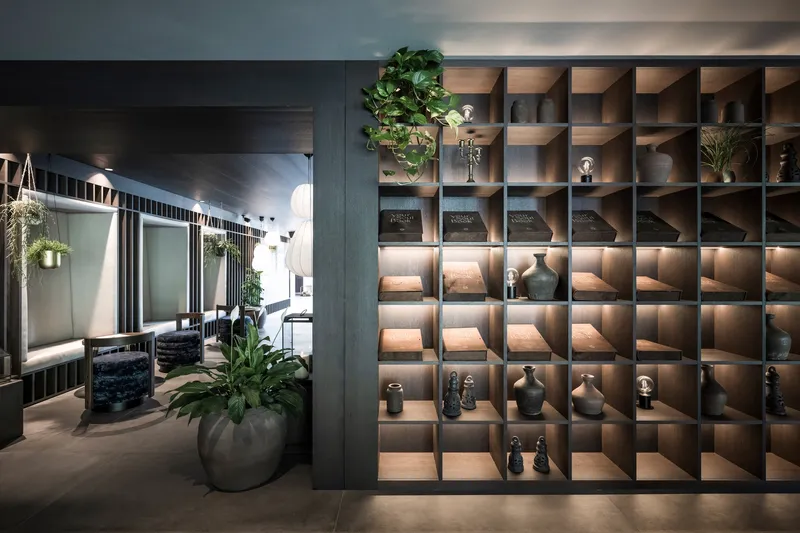
A tea library in the southeast tract completes the cultural program. Tatami mats encourage cross-legged sitting, and backlit timber cubby walls display ceramic vessels alongside an interior courtyard filled with greenery. Illuminated niches, vertical slat dividers, and spherical pendant lights give the communal lounges a rhythm that alternates between intimacy and openness. The checkered acoustic panels and paper lanterns in the lobby space manage sound as carefully as the partitions manage sight.
Material Details
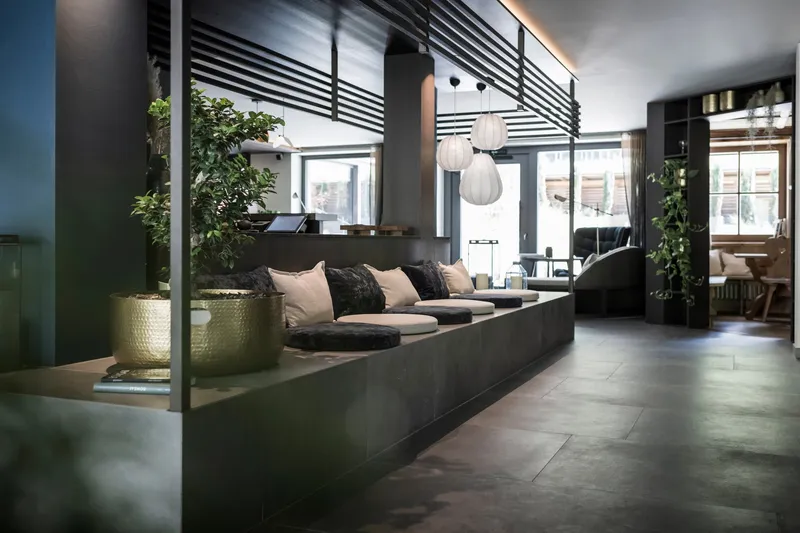
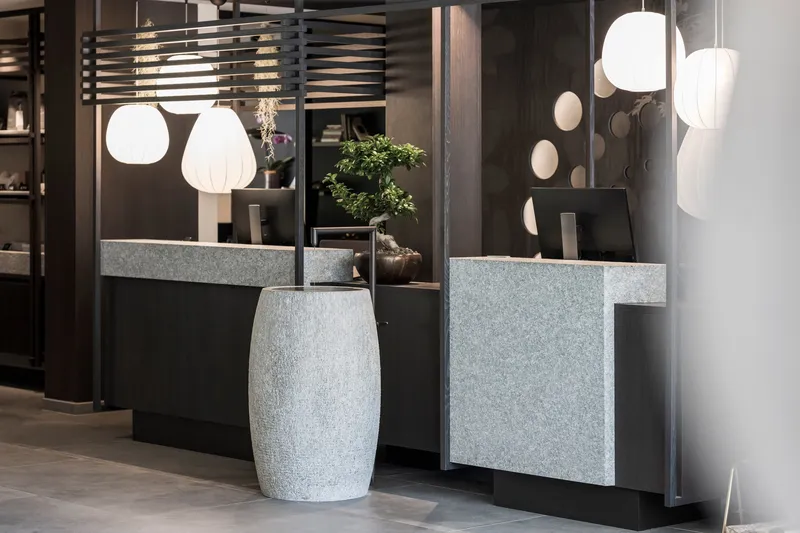
Throughout the hotel, noa* deploys a restrained palette: dark oak, black concrete, terrazzo stone, brass accents, and earth-toned metals. A freestanding terrazzo basin beside matching stone counters demonstrates the level of craft expected in a project where every surface is a decision. Concrete seating platforms in the lounge areas and horizontal metal screens maintain the taut, grounded mood even in spaces exposed to overcast alpine daylight.
The trailing plants that appear on shelving units and in brass planters are not incidental. They extend the facade's vegetative logic inward, blurring the line between the building's swamp-plant exterior and its lived interior. Oak, the dominant timber, reflects what the architects describe as the charm of local nature. It ages gracefully in humid alpine conditions and darkens over time, drawing the interior closer to the moorland palette with each passing year.
Plans and Drawings
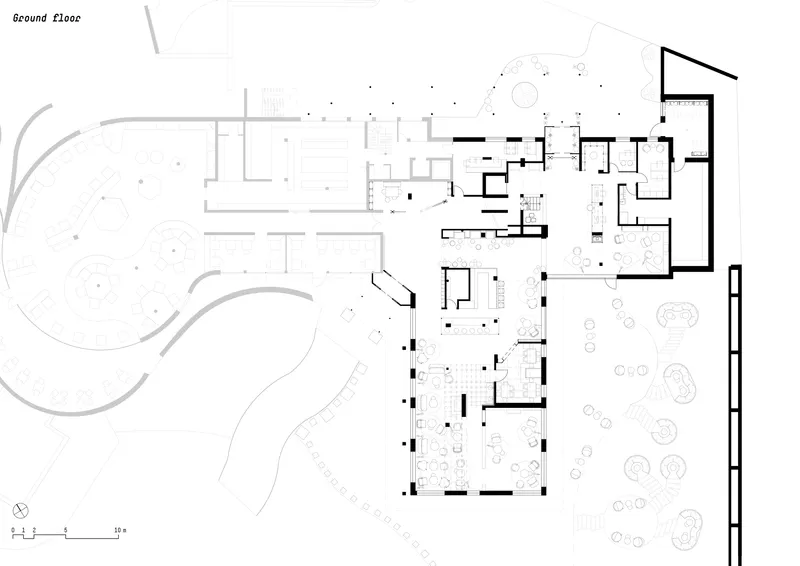
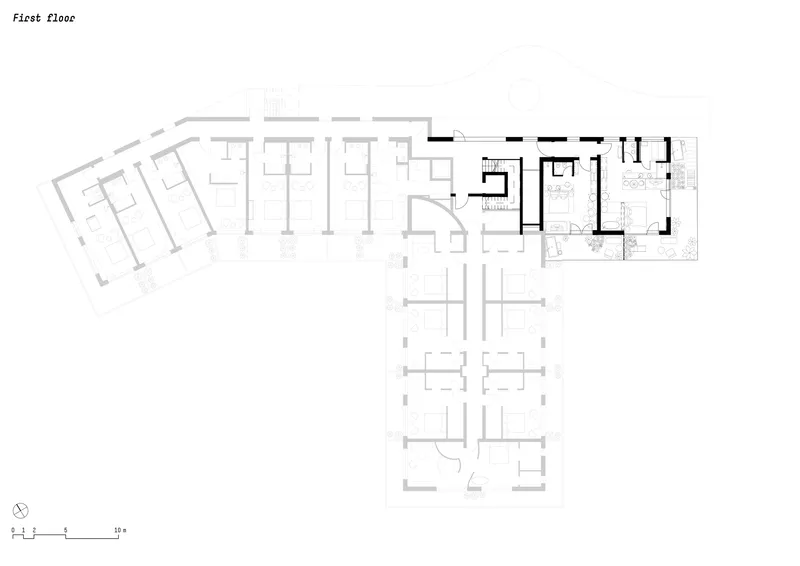
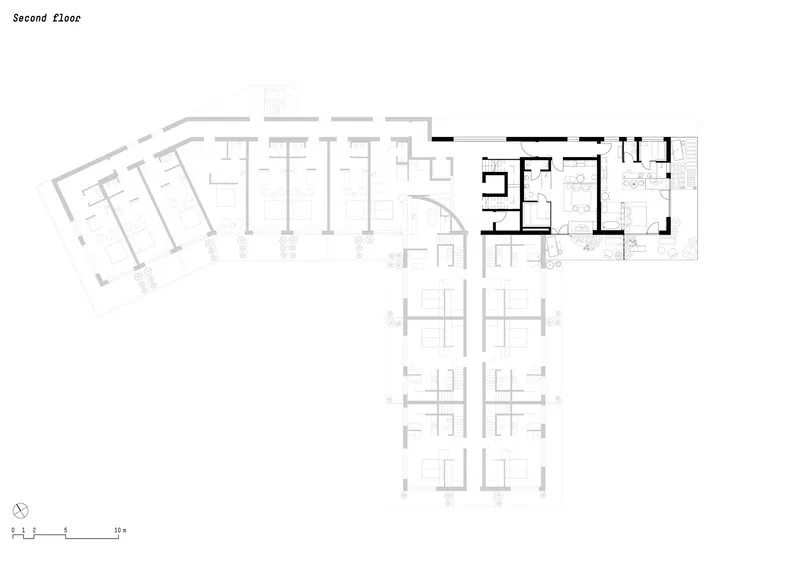
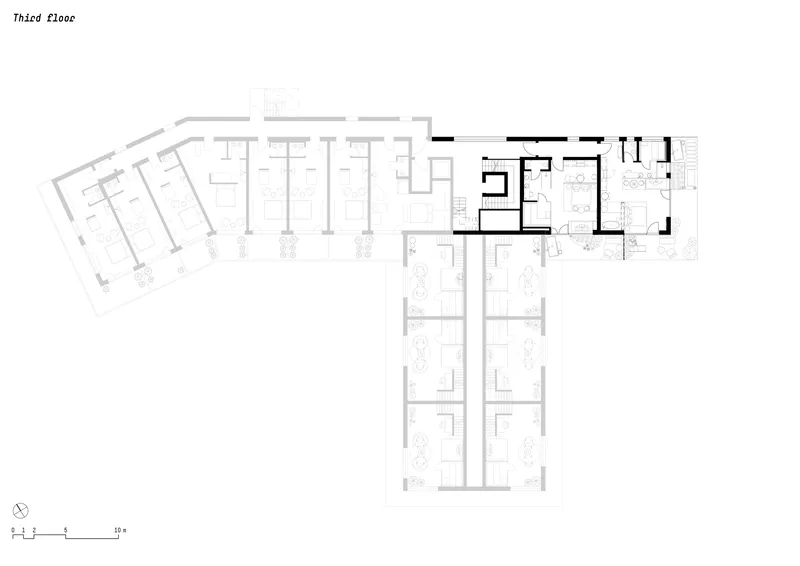
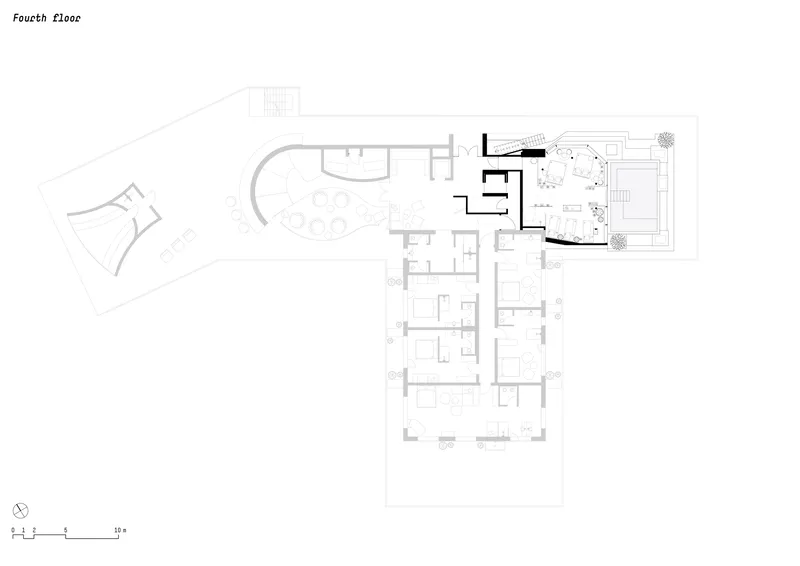
The floor plans reveal how noa* navigated the existing structure's constraints. The ground floor plan shows curved pathways weaving through planted areas before connecting to the orthogonal interior rooms of the wellness zone, a hybrid geometry that lets the organic facade logic penetrate the building. Upper floors stack angled residential wings around a central circulation core, with each room gaining a private balcony indicated by dotted planting zones.
The third floor, completely rebuilt in the 2022 phase, adds rooms and a suite with its own sauna and wellness oasis. At the fourth level, the rooftop terrace plan reads almost like a landscape drawing: trees, open gathering spaces, and the panoramic pool replace the tight residential modules below. The progression from compressed ground-floor spa to open rooftop garden gives the section a clear narrative arc, tightly organized at the base and expansive at the crown.
Why This Project Matters
Hotels that borrow from distant cultures risk superficiality. The Silena avoids that trap because the cross-cultural program is structural, not decorative. The Japanese spatial principles of defined podiums, lowered furnishings, and layered transparency organize the plan; the moorland material palette grounds the experience in its South Tyrolean site. Neither tradition dominates, and neither is reduced to a set of motifs. The fact that the owners initiated the cultural exchange through personal experience rather than a branding exercise gives the whole effort an authenticity that clients and architects rarely achieve together.
For hotel design more broadly, the project demonstrates that renovating an existing structure does not mean hiding its past. noa* stripped the building to its supportive skeleton and rebuilt selectively, preserving the 2017 southeast wing while adding a new third floor and rooftop program. The facade acts as a unifying skin that reconciles old geometry and new ambition. At a moment when alpine hospitality architecture often defaults to either barn nostalgia or glacial minimalism, the Silena carves out a third path: layered, ritualistic, and rooted in the specific darkness of its marshy valley.
Silena Hotel by noa* network of architecture, located in Valler Tal (Vals/Valles), Italy. 1,800 m². Completed 2022. Photography by Alex Filz.
About the Studio
Share Your Own Work on uni.xyz
If projects like this are the kind of work you want to make, uni.xyz is a place to publish your own, find collaborators, and enter design competitions.


Popular Articles
Popular articles from the community


David Ortega Stacks a Two-Story Mexico City Penthouse Around a Steel Stair and a Pergola-Shaded Roof Terrace
In Colonia Roma, a 300 m² penthouse uses oak joinery, a planted steel stair and a slatted roof pergola to make a new-build apartment feel like a house.

Architekt Andreas Gruber Scatters 23 Dark Timber Chalets Across a South Tyrolean Forest Edge
In Molini di Tures, Amonti Chalets breaks a resort into a hamlet of gabled timber houses, with parking, storage and services pushed into the slope.

longwave studio Reorganizes a 112 m² Tainan Apartment Around the Daily Routines of a Family and Two Cats
In Tainan, Taiwan, birch plywood, rust-red furniture and a freestanding plaster wall link arrival, storage, work and family life in one apartment.

Jaramillo Van Sluys Arquitectura and Urbanismo Turn a Demolished Registry Lot in Quito into an Orchard Plaza
In Quito's Centro Histórico, a 2,800 m² plaza exposes the San Agustín convent wall and redraws its lost Augustinian orchard in volcanic stone.

Similar Reads
You might also enjoy these articles


LAVA Architecten Gives Vocational Education a Sawtooth-Roofed Face on a Mechelen School Campus
In Mechelen, Belgium, a 2,053 m² STEM school on a 6×6 m grid turns workshops and classrooms into rooms that can be rearranged as teaching changes.

KEMA Studio Turns a Derelict Marvila Attic into a 60 m² Lighthouse Apartment Above Lisbon
In Lisbon's Marvila district, a rebuilt roof, four skylights and two plywood volumes turn an unlivable attic into a bright home facing the Tagus.

Pixel Gardens: One Repeated Module Stacked Into a Terraced Social Housing Tower for Famagusta
Salem Bader's shortlisted housing tower builds a vertical neighbourhood from one repeated module, offsetting units to carve terraces, light and air.

Bao Huynh Watercolor Atelier: A Serene Art Retreat in Hội An
Bao Huynh Watercolor Atelier in Hội An blends multifunctional art spaces, sustainable design, local materials, and family-friendly living in a serene environment.

Comments (0)
Please login or sign up to add comments
No comments yet. Be the first to comment!