
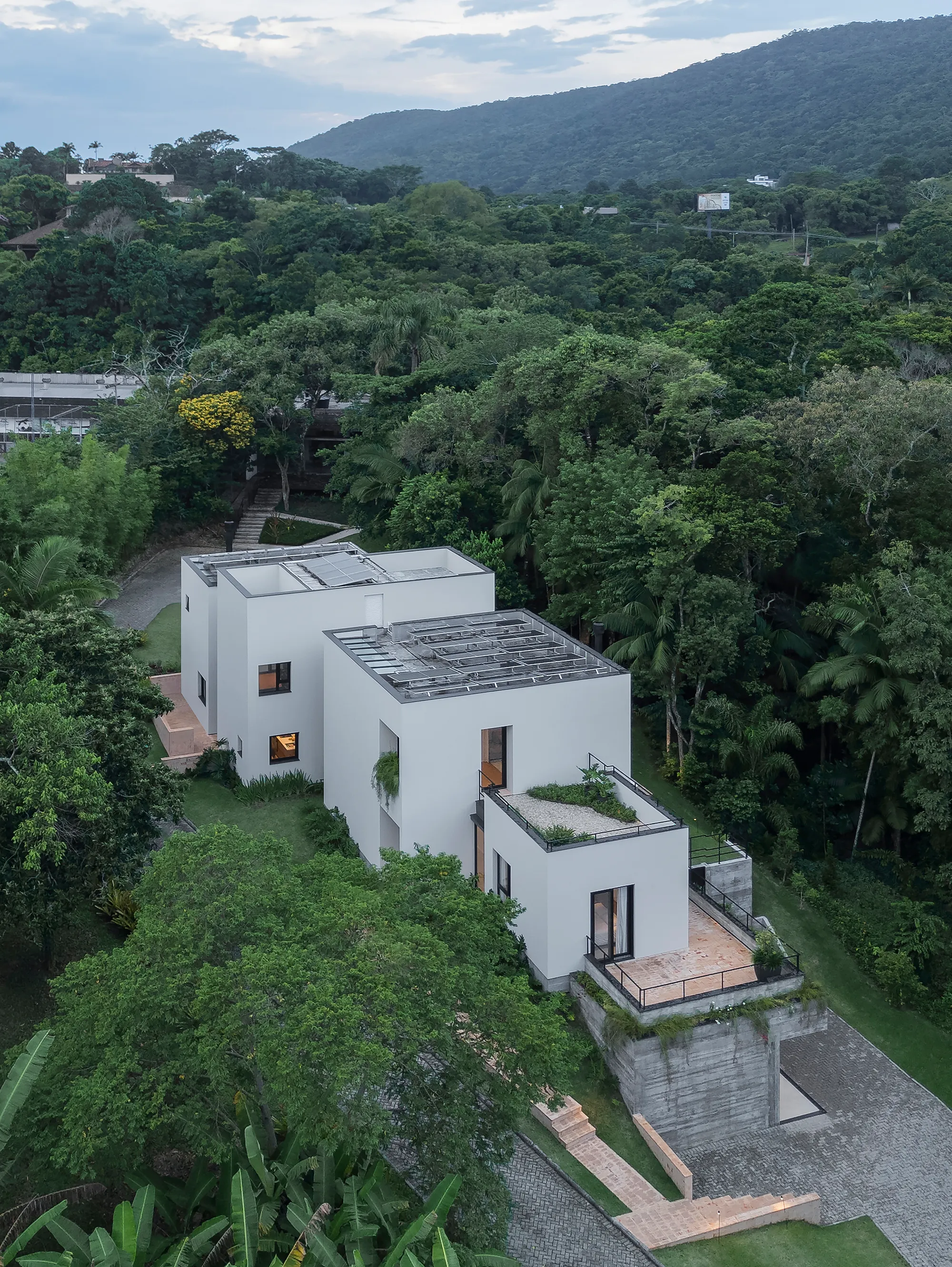
Nommo Arquitetos Fragments a House into Offset Volumes on a Forested Slope in Florianópolis
Named after a juçara palm already rooted on the site, Piná House in Santo Antônio de Lisboa treats nature as a collaborator, not a backdrop.


A house named after a tree already growing on the site tells you something about its architects' priorities. Piná House, designed by Nommo Arquitetos and completed in 2025 in Santo Antônio de Lisboa, Florianópolis, takes its name from the juçara palm (known locally as piná) that was planted years earlier by the mother of one of the residents. Rather than clearing the slope and starting fresh, lead architects Anderson Luís de Almeida, Giulia Gomes Viana, and Elaine Moreira chose to build around what was already there: the palms, the Atlantic Forest canopy, the local flora, and the memories embedded in the landscape.
What makes the project genuinely interesting is its refusal to do the obvious thing. On a sloped site surrounded by dense subtropical forest, the expected move would be to blow the walls open with floor-to-ceiling glass and let the view do the work. Nommo went the other direction. Piná House is contained, introspective, and deliberate about where it allows nature in. The architecture fragments into offset white volumes that step down the terrain, connected by a clear circulation spine, and each opening is calibrated: a square window framing a palm trunk, a recessed terrace catching filtered light, a mesh screen letting air and sound pass through. The house does not consume the landscape. It negotiates with it.
Stepping Down the Terrain
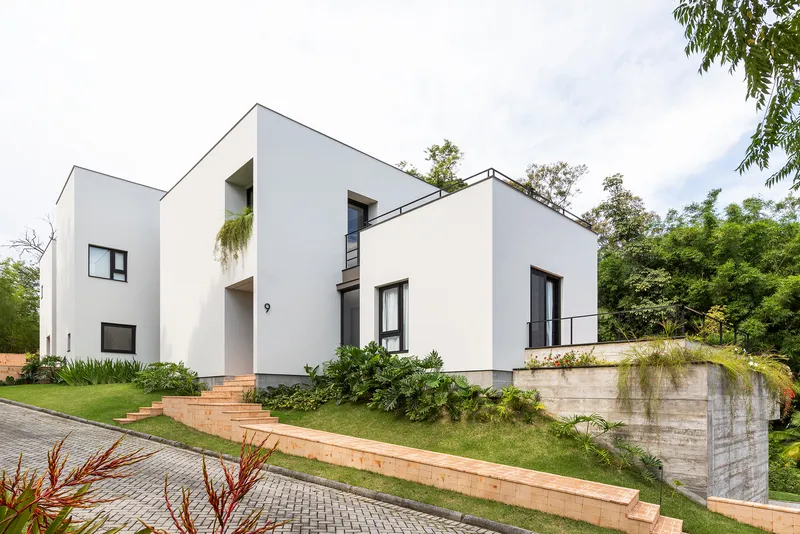
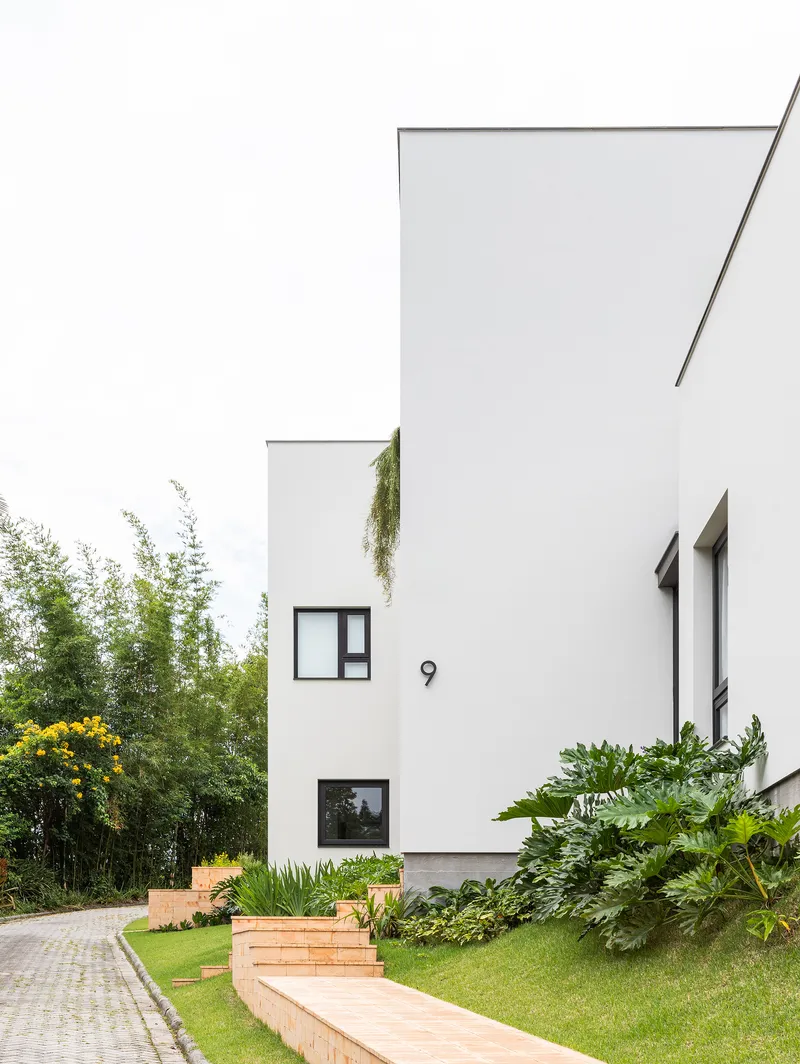
From the street, the house presents a compact, almost reticent face. White stucco volumes sit atop a board-formed concrete base, their angular geometry softened by cascading plantings and timber-edged steps that cut through the terraced lawn. The massing reads as a cluster of boxes rather than a single building, each volume offset just enough to break up the facade and create pockets of shadow and greenery between them.
The decision to fragment the program into discrete blocks is not stylistic. It is topographic. The site drops steeply, and by splitting the house into staggered volumes, Nommo avoids the massive retaining walls and excavation that a single footprint would demand. Each block finds its own level, and the gaps between them become courtyards, light wells, and passages. The house reads differently from every angle because it genuinely is a different building depending on where you stand.
The Concrete Plinth and Material Logic
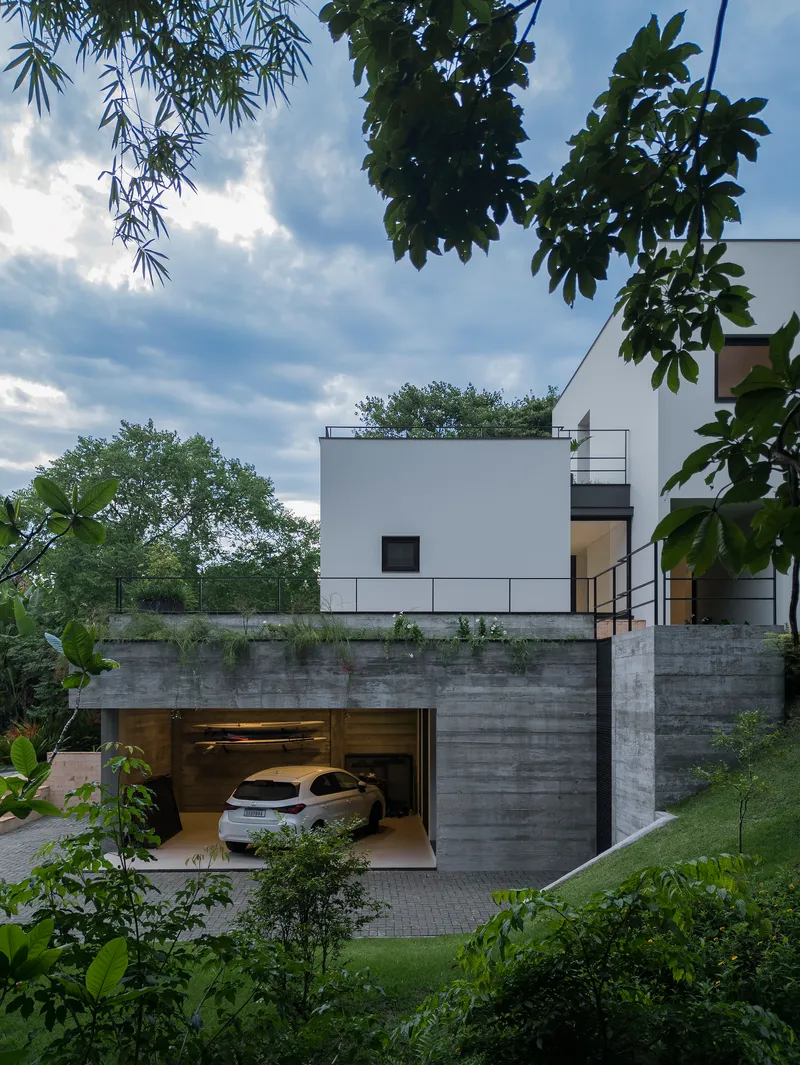
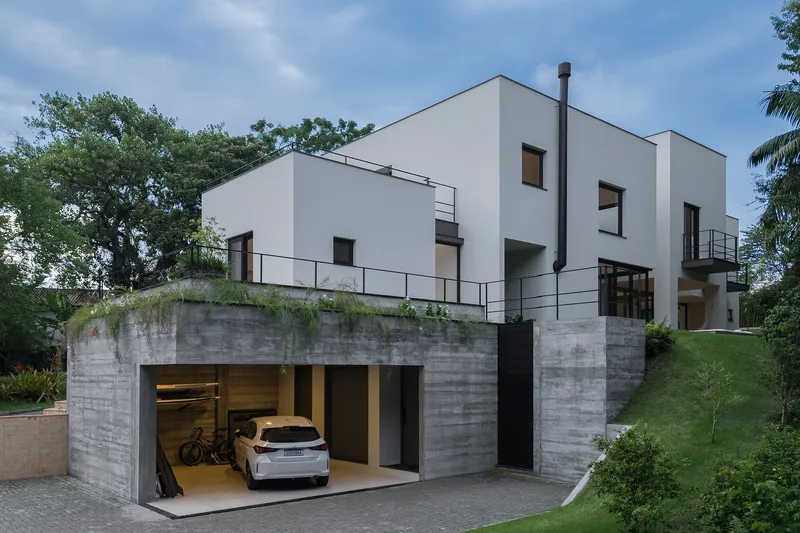

The material palette is restrained to two primary registers: a heavy, board-formed concrete base that anchors the house to the slope, and lighter white stucco volumes that float above it. The concrete plinth absorbs the grade change and houses the garage, its rough, striated texture an honest record of the formwork. Above, the plastered volumes feel almost weightless by contrast, their flat roofs and clean edges giving nothing away.
Brick appears continuously through both interior and exterior, serving as a connective thread between the two material worlds. At the entrance, masonry steps climb through planted beds, and the brick base of the entry wall grounds the otherwise abstract white form. It is a material choice that resists the sterility that all-white houses often fall into. The brick provides warmth, texture, and a sense of handmade construction that the concrete and plaster alone would not deliver.
Controlled Openings and Selective Framing
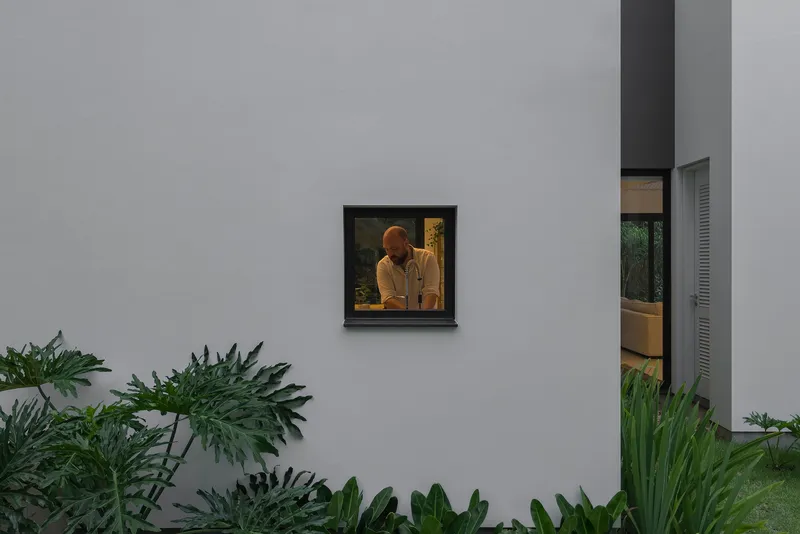
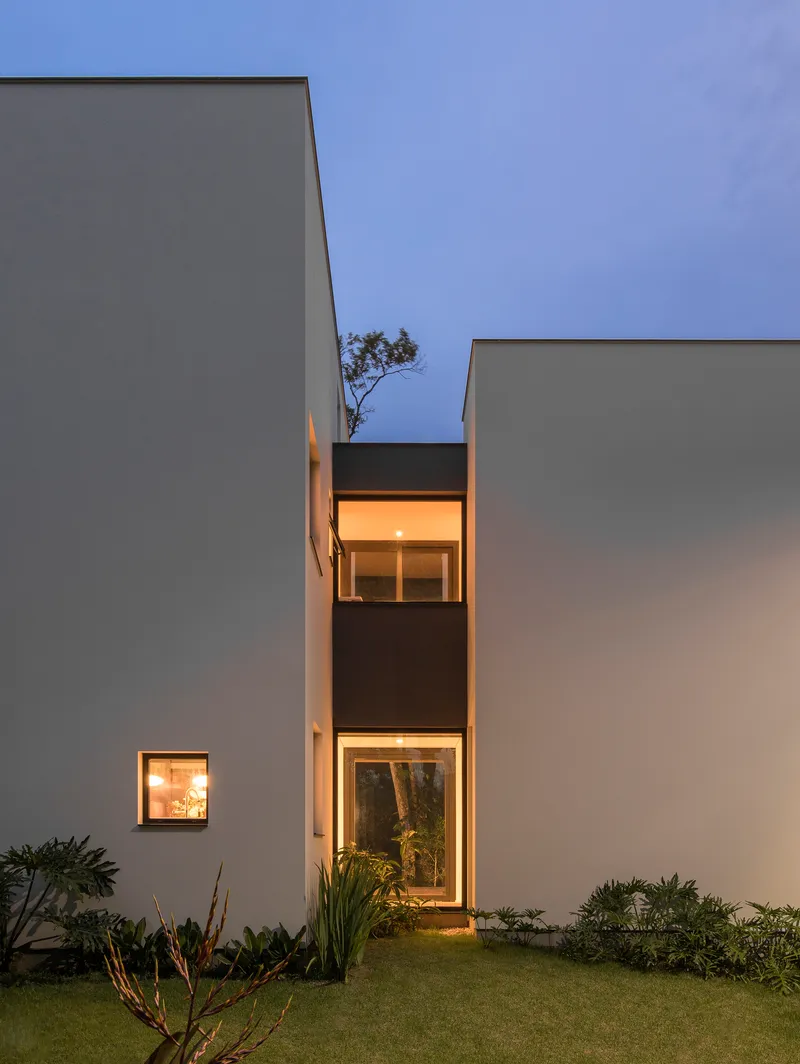
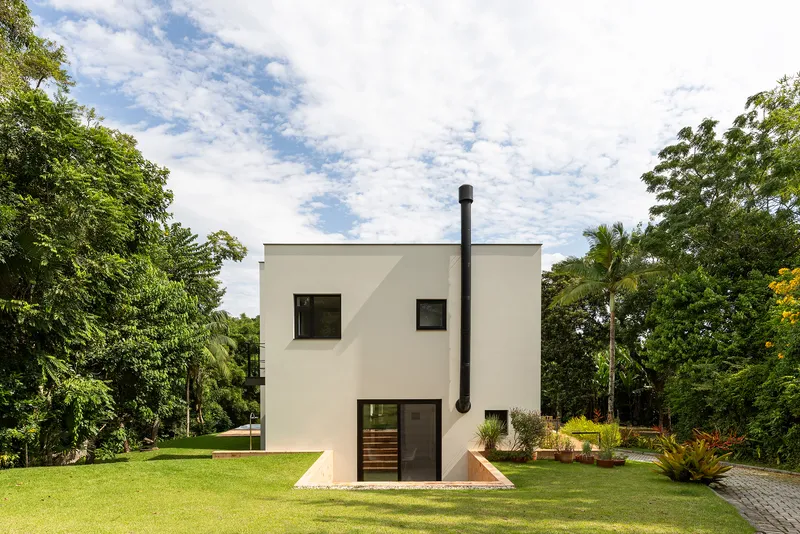
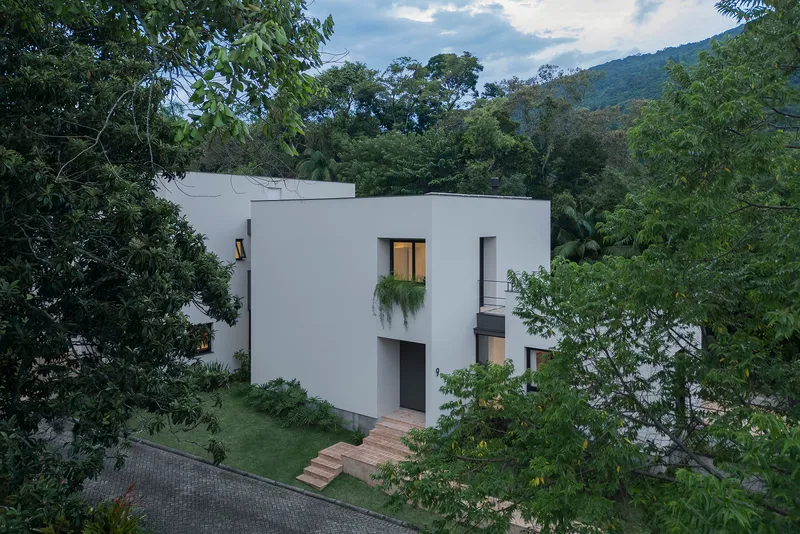
The most disciplined aspect of Piná House is what it does not show. Instead of panoramic glazing, the architects use square and rectangular openings punched into thick walls, each one framing a specific element: a palm trunk, a patch of sky, a figure moving inside. At dusk, these windows become illuminated pictures seen from the garden, reversing the relationship between interior and landscape. The house watches the forest. The forest watches back.
The rear elevation, with its external black chimney pipe and modestly scaled windows, confirms the project's introspective posture. Where many architects would place a fully glazed living room facing the garden, Nommo allows only enough glass to establish a connection without surrendering privacy or thermal control. Given the involvement of thermal comfort consultants Ticiana Weiss and Daniel Trento, it is clear these decisions are performance-driven as much as aesthetic.
Living Between the Volumes
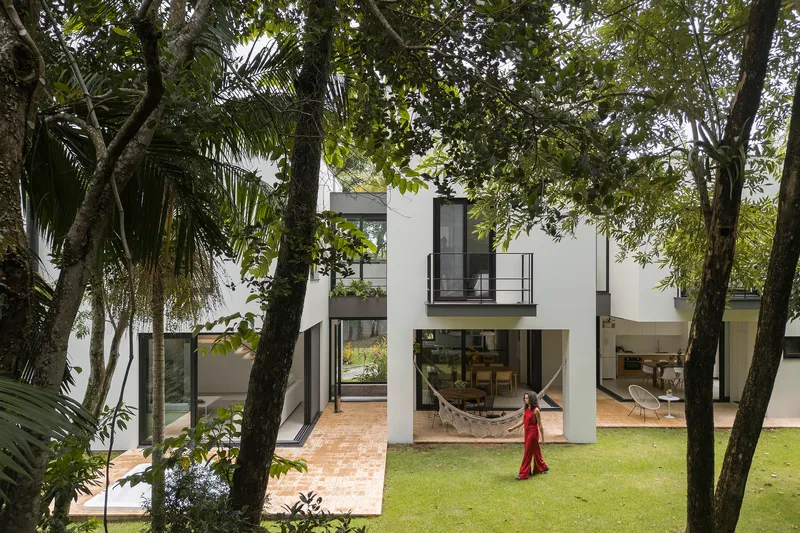
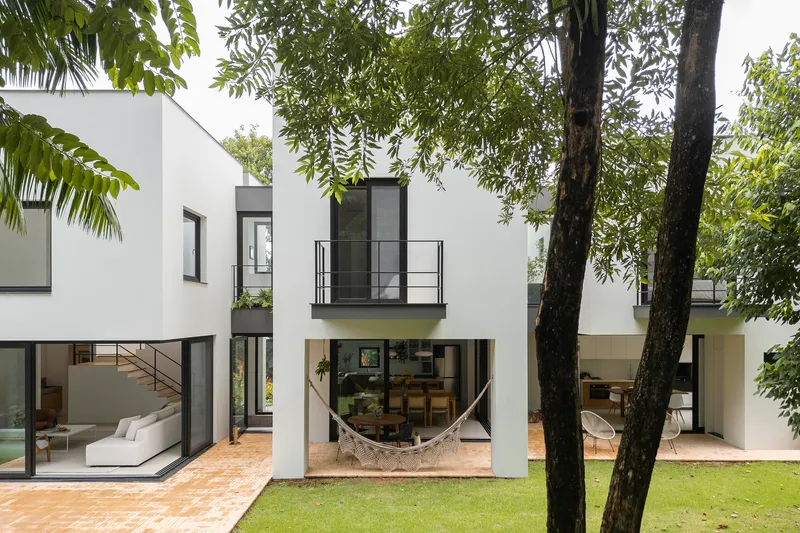
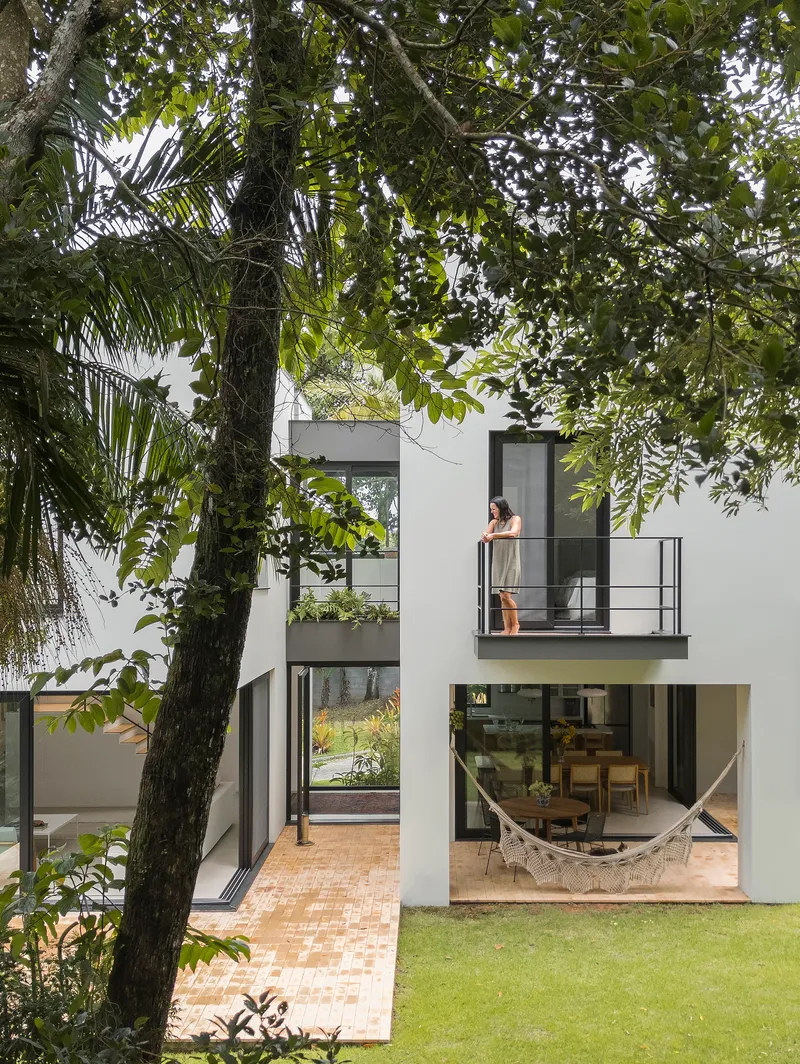
The spaces between the built volumes are as carefully composed as the interiors. A garden courtyard opens between two white blocks, framed by mature trees that predate the construction. A rear terrace stretches between tree trunks, wide enough for a hammock but narrow enough to feel sheltered. These are not leftover spaces; they are programmed outdoor rooms connected to the circulation axis that threads through the house.
Landscape architect Marco Antônio Rodrigues preserved the existing planting while introducing new species that reinforce the boundary between domestic and wild. The result is a gradient: paved terrace gives way to lawn, lawn gives way to planted beds, planted beds dissolve into the dense Atlantic Forest canopy that surrounds the property. You are never far from the trees, but you are never entirely in them either.
Interior Life: Mesh, Timber, and Vertical Space
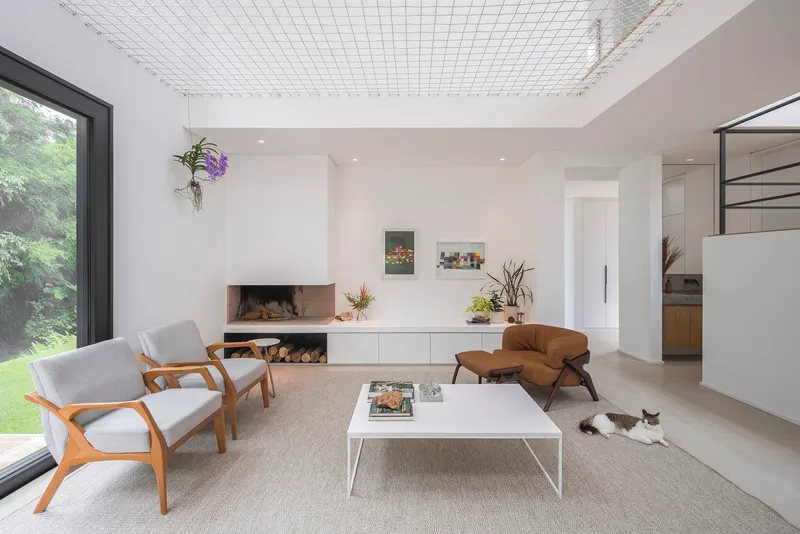
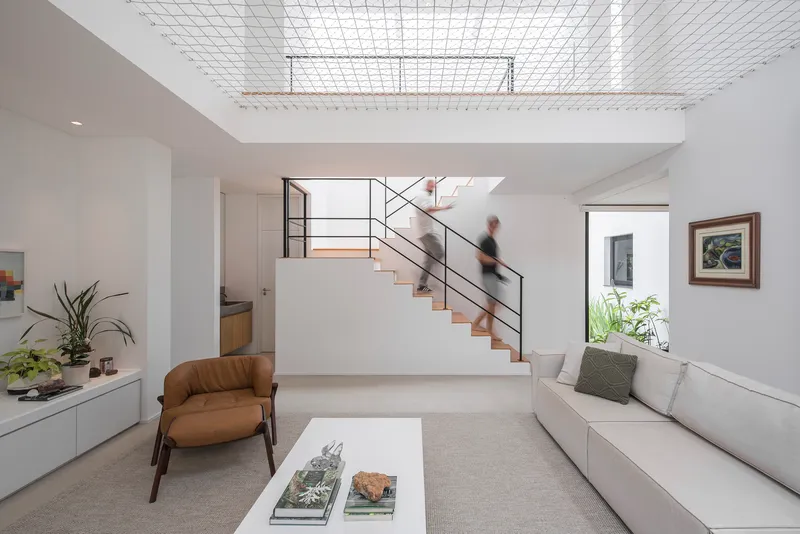
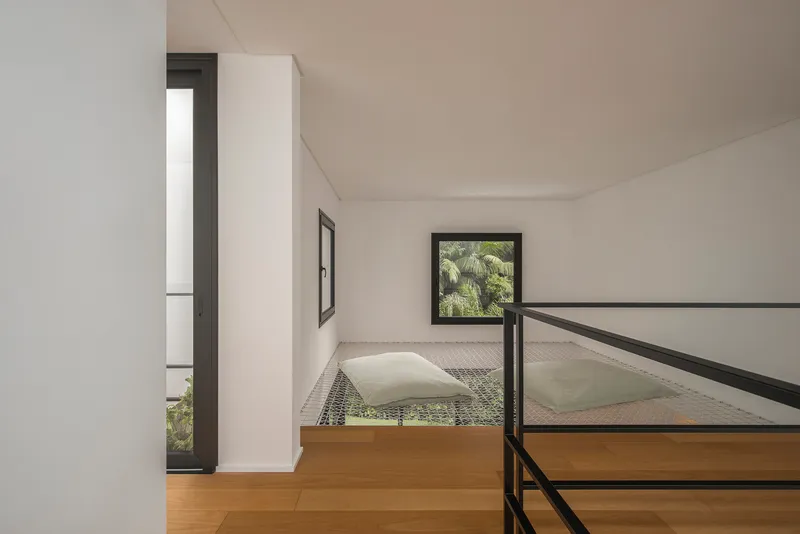
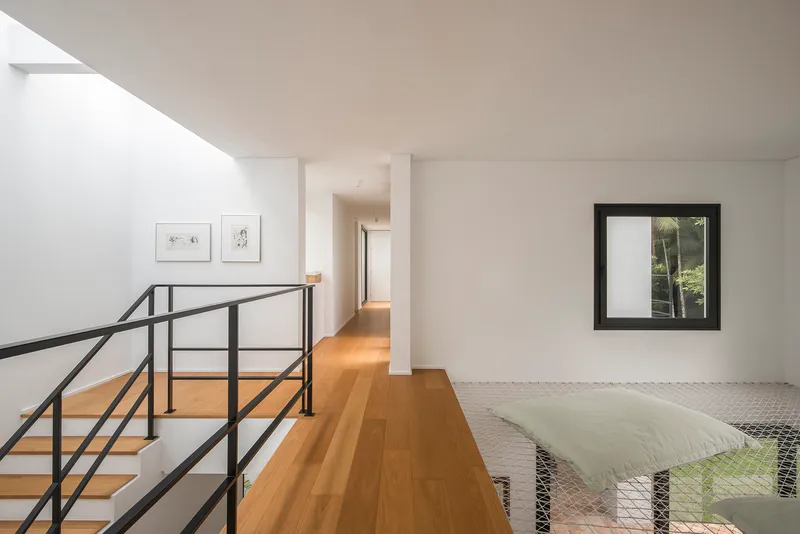
Inside, the house opens up vertically in ways the exterior does not telegraph. A double-height living space anchored by a fireplace is topped with a wire mesh ceiling panel that allows light and air to filter through from the upper level. The mesh reappears as flooring in a reading nook above, where you can look down through the steel grid to the living room below. It is a bold detail that turns the section into an inhabited experience rather than a diagram.
The staircase, rendered in white with steel railings, connects the levels with the same precision that governs the rest of the house. Timber flooring on the upper corridor warms the palette and provides acoustic softness underfoot. The interiors, designed by Sarah Pirath Abrahão and Francielle Dalsasso, are furnished with restraint. A cat on a carpet, four bar stools at a kitchen island, a single framed window at the end of a corridor: the house is occupied, not decorated.
Kitchen and Domestic Core
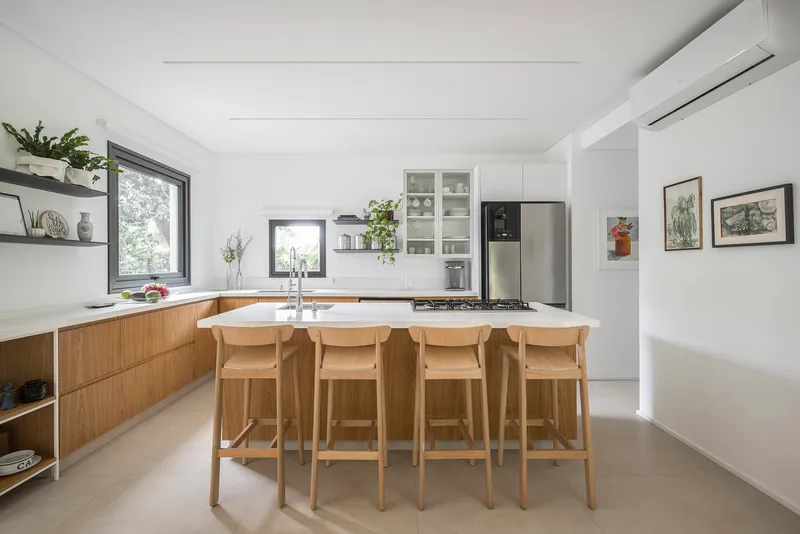
The open kitchen sits at the heart of the ground floor plan, with timber cabinetry and white countertops that maintain the two-tone material logic established on the exterior. The island, sized for four stools, doubles as the informal dining surface and the social center of the house. It faces the living area without separation, reinforcing the ground level as a single continuous domestic space.
From the upper corridor, a framed window at the landing offers a controlled view out, and the steel railing overlooking the mesh screen below creates a visual connection between floors. The house encourages movement: up the stairs, along the corridor, down to the kitchen, out to the terrace. Circulation is not a residual function but a spatial experience in its own right.
Dusk and the Exterior Chimney
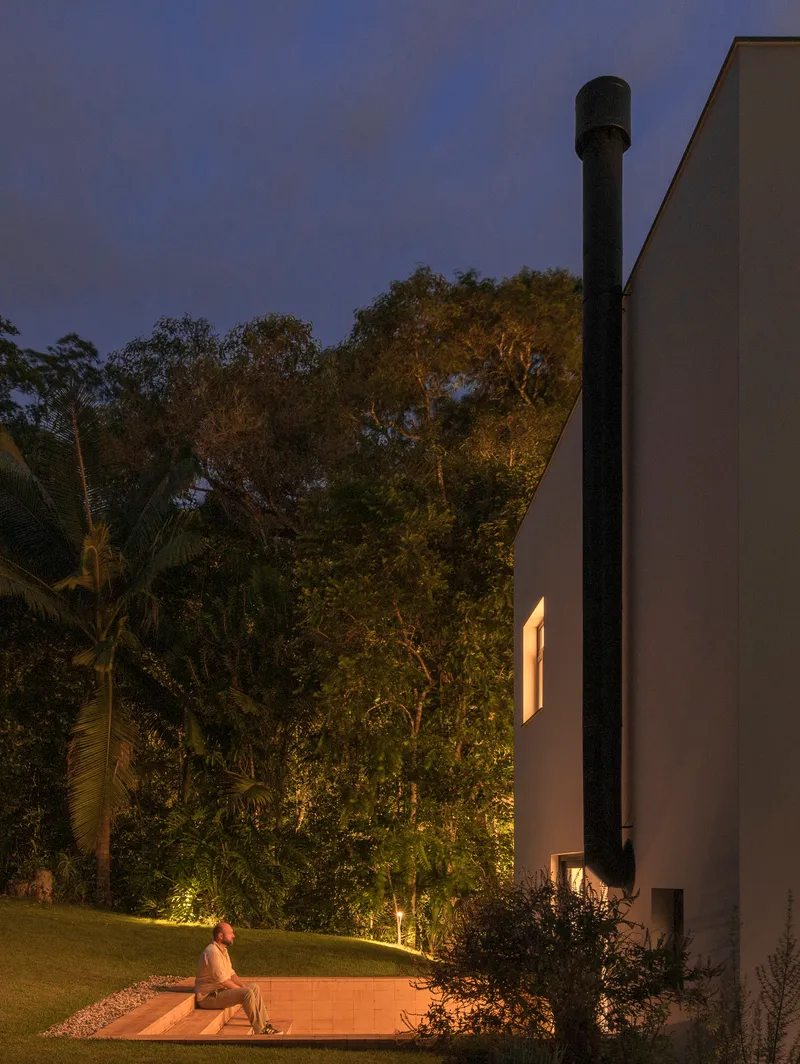
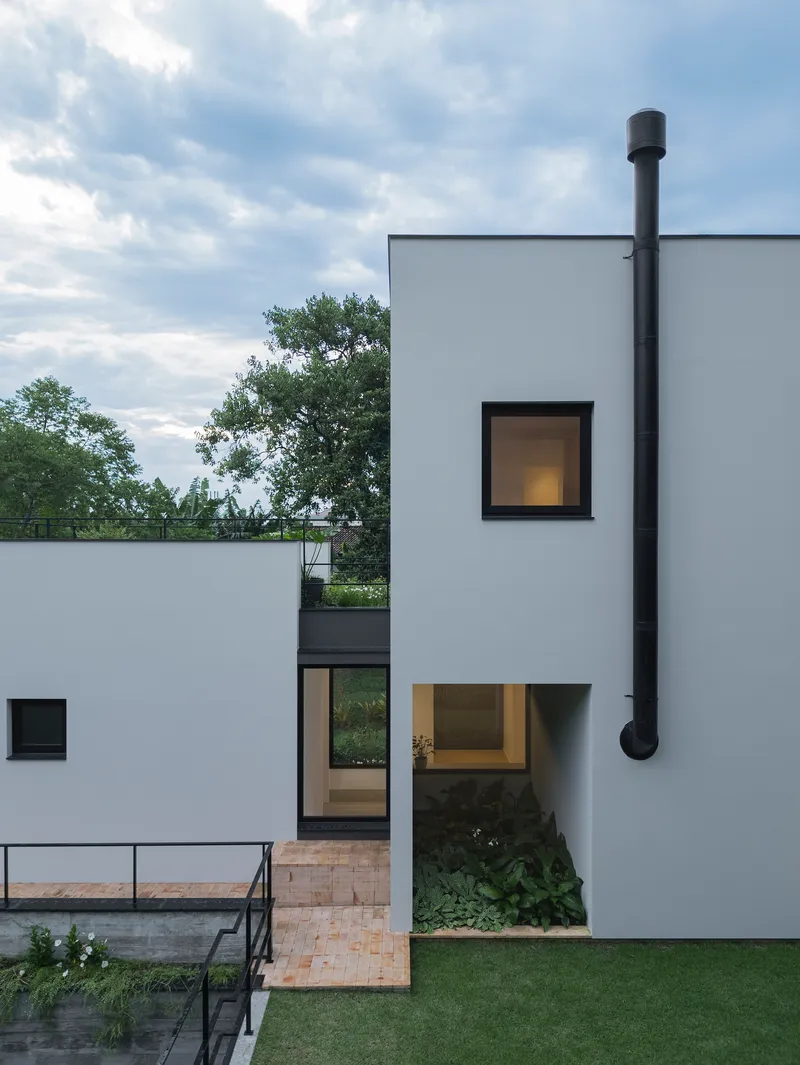
The black cylindrical chimney flue rising against the white facade is the building's most assertive formal gesture. It is unapologetically industrial against the smooth plaster, a vertical line that anchors the composition the way a column might in a more classical vocabulary. At dusk, with a figure seated on the timber deck below, the chimney becomes a kind of totem marking the domestic hearth from the outside.
The twilight photographs reveal a second life for the house. During the day, its white volumes absorb sunlight and recede into the sky. At night, the square openings glow amber, and the planted beds between them become dark silhouettes. The transition is dramatic but unforced: it is simply what happens when a house is designed with solid walls and specific openings rather than continuous glass.
Entry Sequence and the Street Threshold
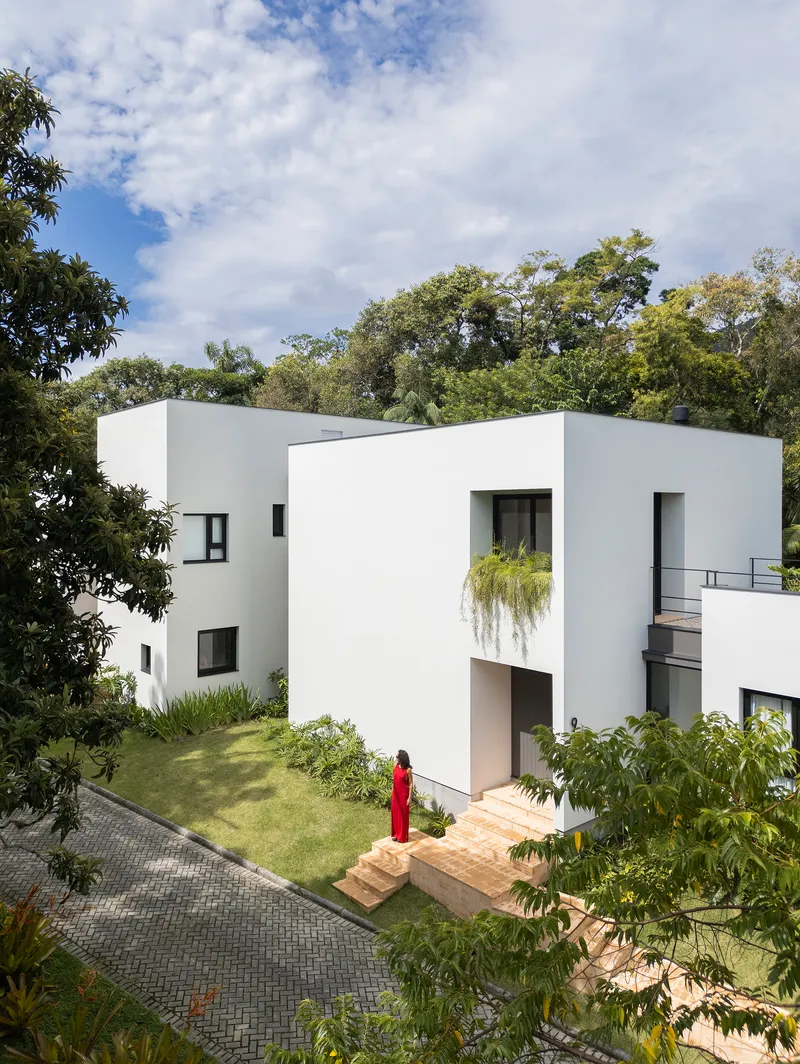
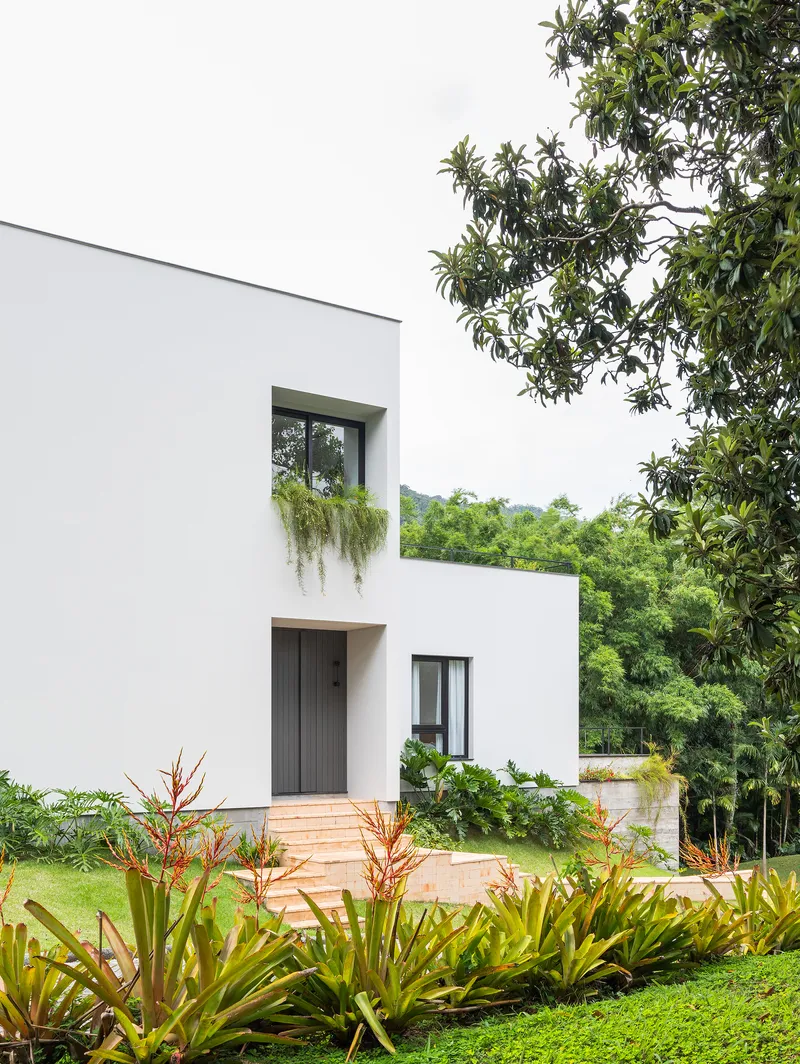
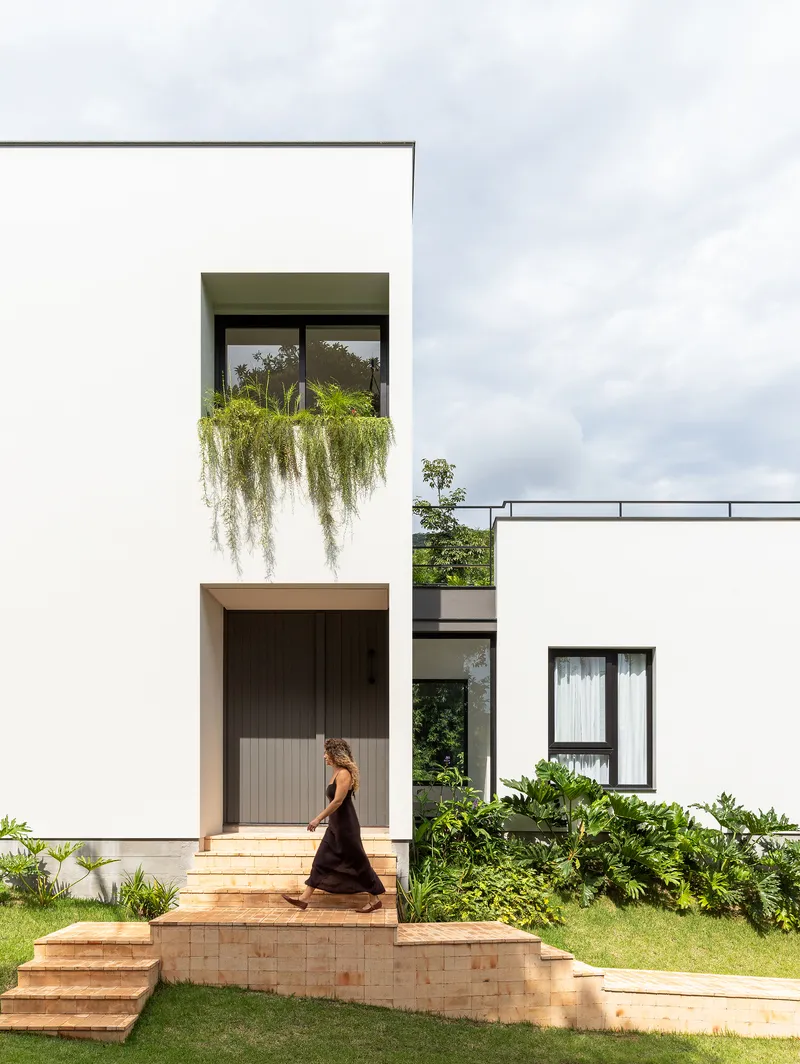
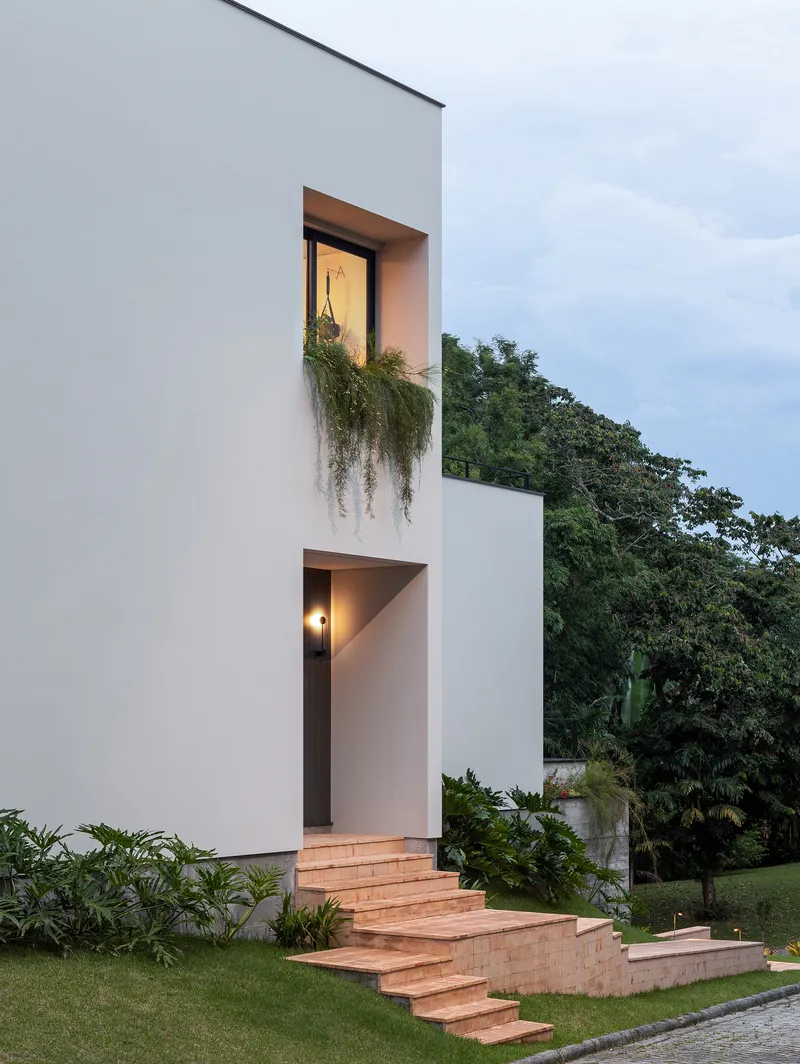
Arriving at Piná House is a choreographed descent. From the street, brick steps cut through planted beds of red and green foliage, dropping you down to the recessed entrance. The timber door is framed by the masonry base and an upper window with trailing plants overhead, creating a threshold that is simultaneously domestic and slightly ceremonial. You know you are entering a considered space before you cross the door.
The planted beds flanking the entry stairs are not decorative afterthoughts. They manage the grade change, retain soil, and establish the project's primary argument from the first moment: the built and the grown are partners here. The figure descending in red, visible against the white facade, gives the steps a human scale that the architecture carefully maintains throughout.
Plans and Drawings

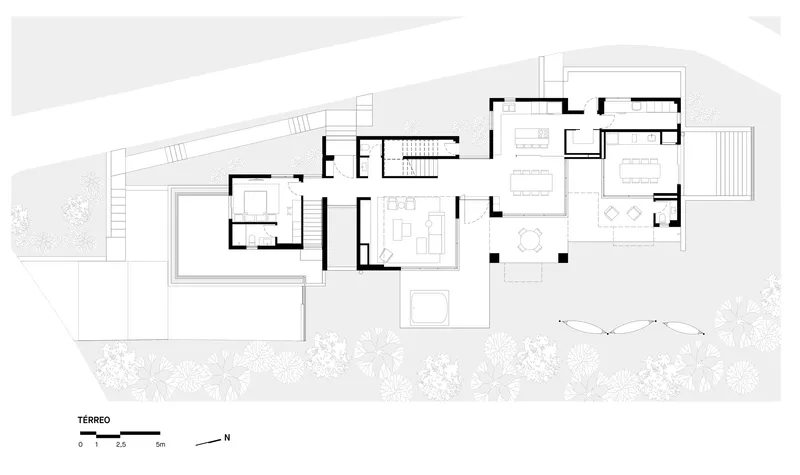
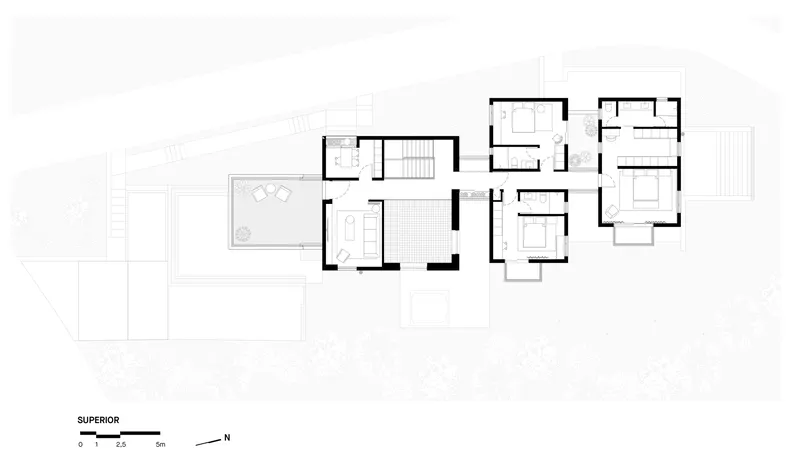
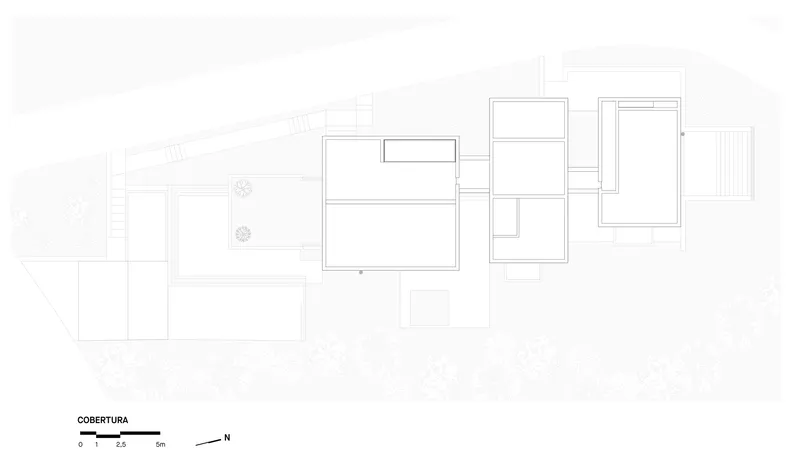
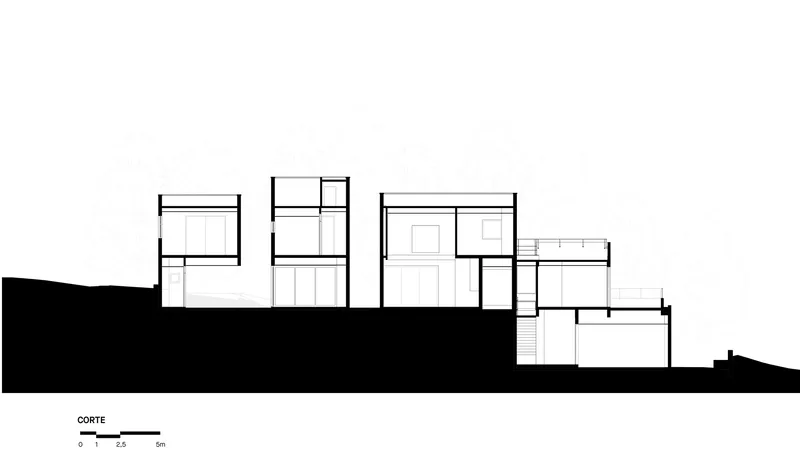
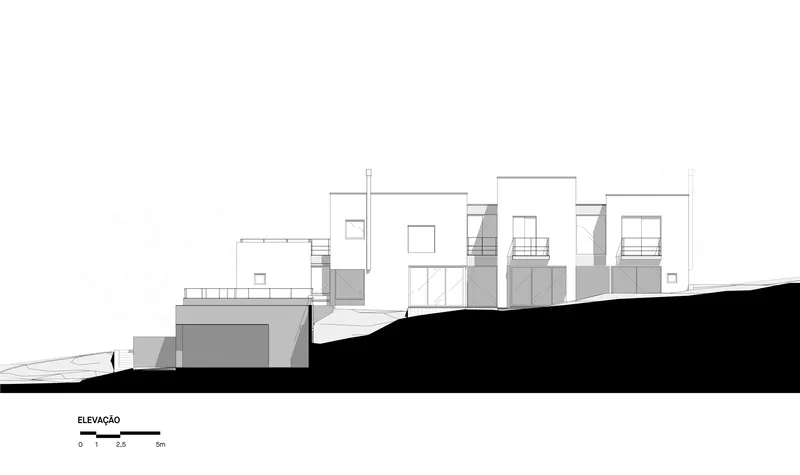
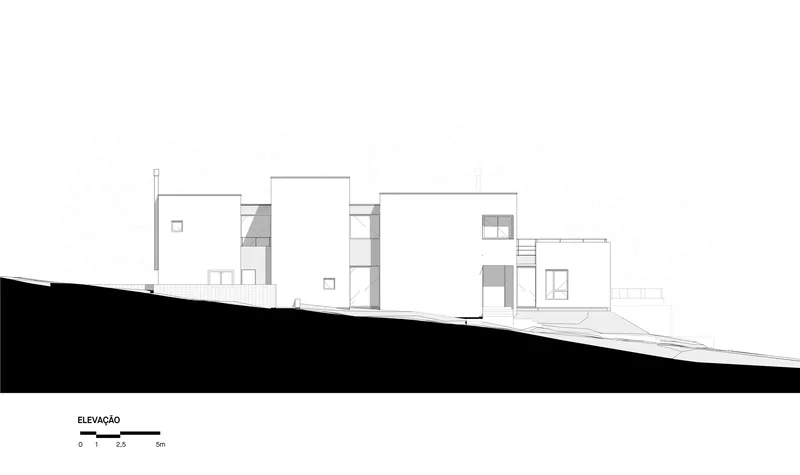
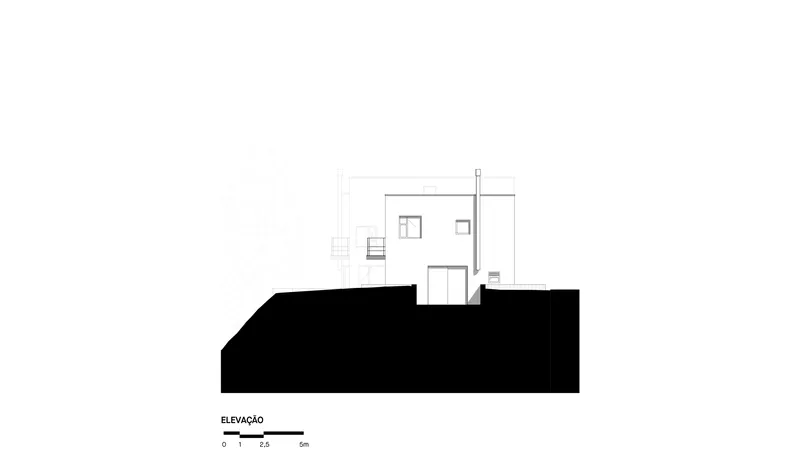
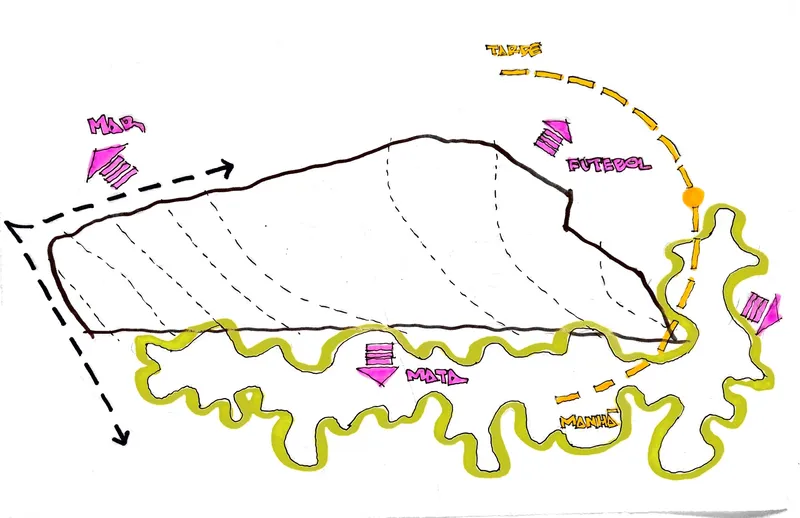
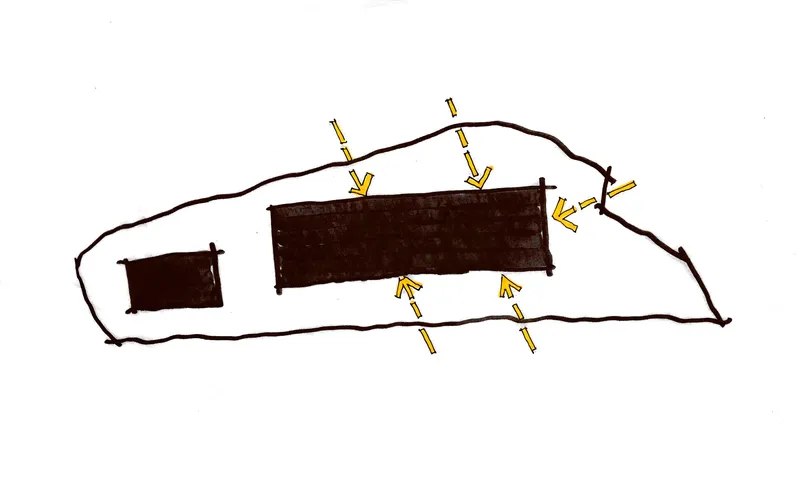
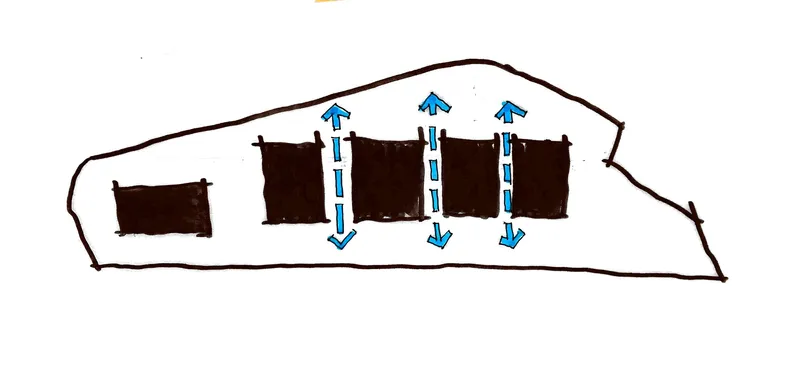
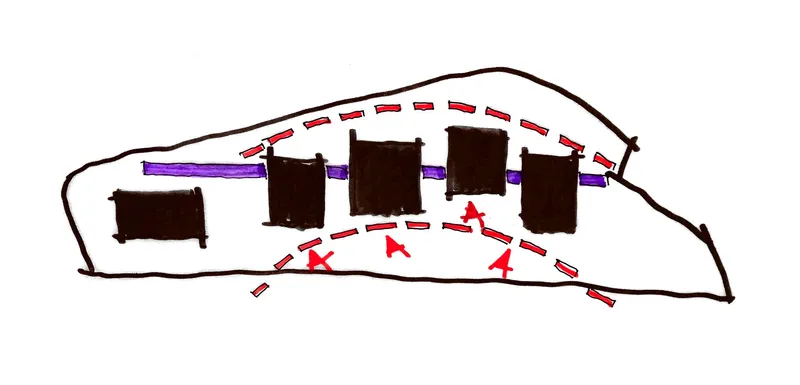
The drawings confirm what the photographs suggest: Piná House is organized as a series of rectangular volumes offset along a circulation spine that follows the contour of the slope. The garage sits at street level, the living areas occupy the ground floor with direct access to the pool terrace and garden, and the bedrooms are arranged on the upper level around a central staircase. The section is the most revealing drawing, showing how the staggered levels carve into the hillside without fighting it.
The environmental diagrams are particularly instructive. Yellow and blue arrows trace natural ventilation paths through and over the volumes, showing how air moves vertically through the double-height space and the mesh screens. A circulation diagram with red dashed lines maps the movement patterns through the house, confirming that the offset massing is not arbitrary but structured around a clear spatial sequence. The roof plan, with the pool tucked between volumes and landscaped zones wrapping the perimeter, reads as a site plan in miniature: architecture and landscape fully interlocked.
Why This Project Matters
Piná House matters because it resists the two most common traps of residential architecture on scenic sites: the glass pavilion that dissolves into its surroundings and the bunker that ignores them. Nommo Arquitetos found a third position. By fragmenting the house into offset volumes, calibrating each opening, and treating the existing vegetation as a design constraint rather than an obstacle, they built a house that is firmly in the landscape without being about the landscape. It is a house about living in a specific place, with specific trees, on a specific slope, and the specificity is what gives it force.
The project also offers a quiet lesson in passive environmental design. The thermal comfort consultants were not brought in to engineer a mechanical solution; they were brought in to verify that the architectural decisions, the thick walls, the controlled openings, the vertical ventilation paths through mesh screens, would perform as intended. In a profession increasingly reliant on technology to compensate for formal ambition, Piná House suggests that the architecture itself can do the work, if the architects are willing to exercise restraint.
Piná House by Nommo Arquitetos (Anderson Luís de Almeida, Giulia Gomes Viana, Elaine Moreira). Located in Santo Antônio de Lisboa, Florianópolis, Brazil. 437 m². Completed 2025. Photography by João Vitor Sarturi.
About the Studio
Share Your Own Work on uni.xyz
If projects like this are the kind of work you want to make, uni.xyz is a place to publish your own, find collaborators, and enter design competitions.



Popular Articles
Popular articles from the community


Riyadh For All: Intergenerational Urban Design for Active Aging in Rabat
Riyadh For All reimagines urban design in Rabat with intergenerational co-living, adaptive courtyards, and Moroccan cultural exchange today.

Hill & Cross Opera: Sculptural Opera House Architecture Shaped by Tallinn’s Landscape and Identity
Hill & Cross Opera reimagines opera house architecture in Tallinn through its sculptural hill, civic plaza, glass wave and a luminous cross.

Co-life: Sustainable Architecture for Age-Friendly Community Living
Co-life reimagines sustainable architecture for seniors through courtyards, rammed earth, shared gardens, and spaces designed for belonging.

Co-Life: Senior Housing Design That Reconnects Older Adults With the City
Co-Life reimagines senior housing design through healing gardens, shared streets, workshops, and a sustainable community across generations.


Similar Reads
You might also enjoy these articles

Bao Huynh Watercolor Atelier: A Serene Art Retreat in Hội An
Bao Huynh Watercolor Atelier in Hội An blends multifunctional art spaces, sustainable design, local materials, and family-friendly living in a serene environment.

Atelier Macri Concept Store Interior Design by CASE-REAL
Atelier Macri store features a "ko" counter, walnut wood details, cork displays, blending retail, gallery, and seamless customer experiences.

Manuel Vargas Izquierdo Stadium and High-Performance Sports Center: Architectural Excellence in Jalpa de Méndez
The Manuel Vargas Izquierdo Stadium blends sustainable design, inclusive sports facilities, and cultural-inspired architecture, revitalizing Jalpa de Méndez’s public spaces.

KAKR Buluh Awar Hall: Revitalizing Community and Ecology Through Bamboo Architecture
Community built bamboo hall revitalizes Buluh Awar village, empowering youth, restoring ecology, celebrating vernacular craftsmanship through sustainable architecture and culture.




Comments (0)
Please login or sign up to add comments
No comments yet. Be the first to comment!