

Nova Despensa Store by Solo Arquitetos
A light-filled bulk grocery store in Curitiba, reimagining sustainable retail through custom dispensers, central circulation, and a welcoming domestic atmosphere.


Located in the Batel district of Curitiba, Brazil, Nova Despensa Store is a compact yet conceptually ambitious retail space designed by Solo Arquitetos. Conceived as the first physical manifestation of a new bulk-food brand, the 95-square-metre store rethinks the traditional grocery experience through architecture, service design, and product development. Rooted in principles of conscious consumption and environmental responsibility, the project demonstrates how spatial design can actively shape more sustainable habits.
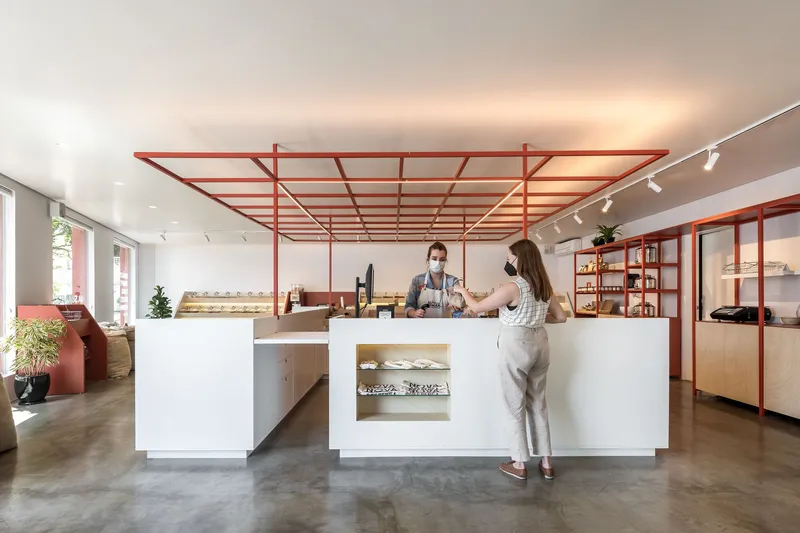
Developed over two years in close collaboration with the client, Nova Despensa emerged from a shared desire to create a bulk store that would move beyond utilitarian models. Rather than focusing solely on efficiency, the architects sought to cultivate an atmosphere of care, transparency, and domestic familiarity: one that encourages customers to slow down, engage with products, and reflect on their consumption choices.
From Brand Concept to Built Space
As the inaugural store of a new brand, the project extended far beyond conventional architectural scope. Solo Arquitetos participated in multiple stages of development, including brand identity, service design, spatial programming, and site selection. During the early phases, the team collaborated with Touz.Co to define customer journeys and operational strategies, ensuring that architectural decisions aligned seamlessly with the store’s ethos.

The pandemic period further intensified this reflective process. Isolation prompted deeper internal discussions about consumption, community, and resilience, reinforcing the project’s commitment to simplicity and sustainability. These considerations ultimately shaped both the layout and material language of the final design.

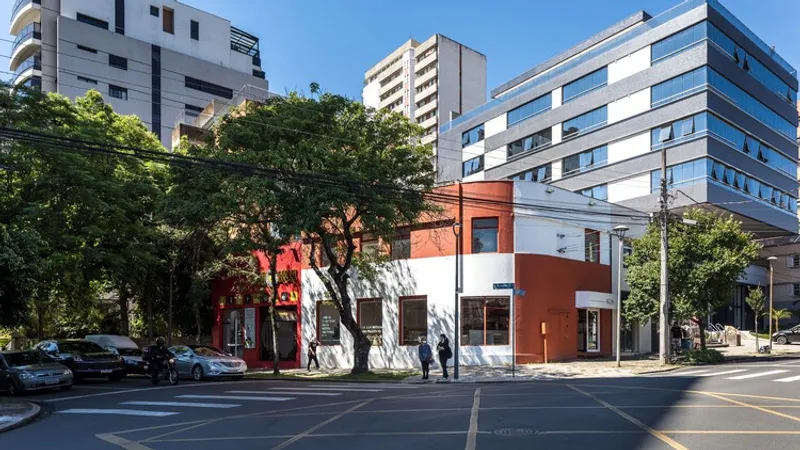
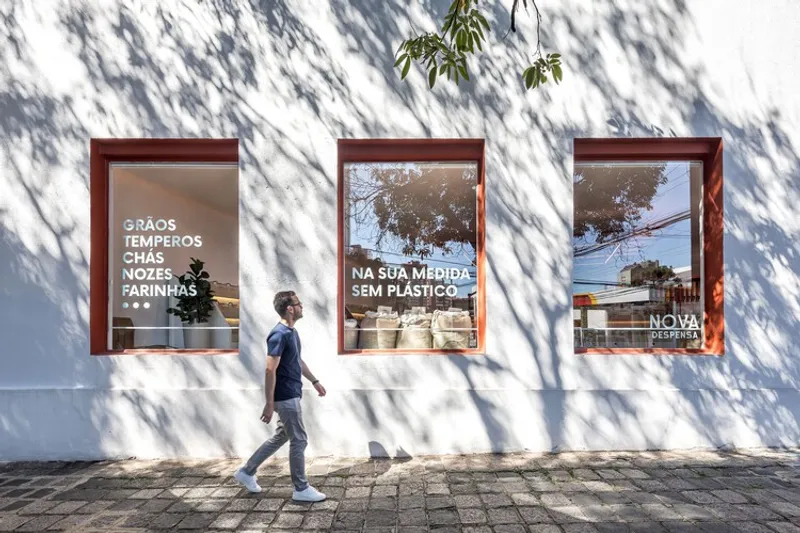
A key criterion in selecting the site was access to abundant natural light. The chosen corner property on Avenida Vicente Machado benefits from large windows on multiple façades, allowing daylight to permeate the interior and reducing reliance on artificial lighting. This openness also reinforces transparency, a core value of the brand.
Designing Around the Dispenser
One of the project’s primary challenges was spatial dimensioning. As a bulk store, Nova Despensa is fundamentally organized around dispensers, which dictate circulation, storage, and display. However, the architects soon encountered limitations in the available market supply. Standard dispensers lacked both aesthetic refinement and ergonomic consideration.
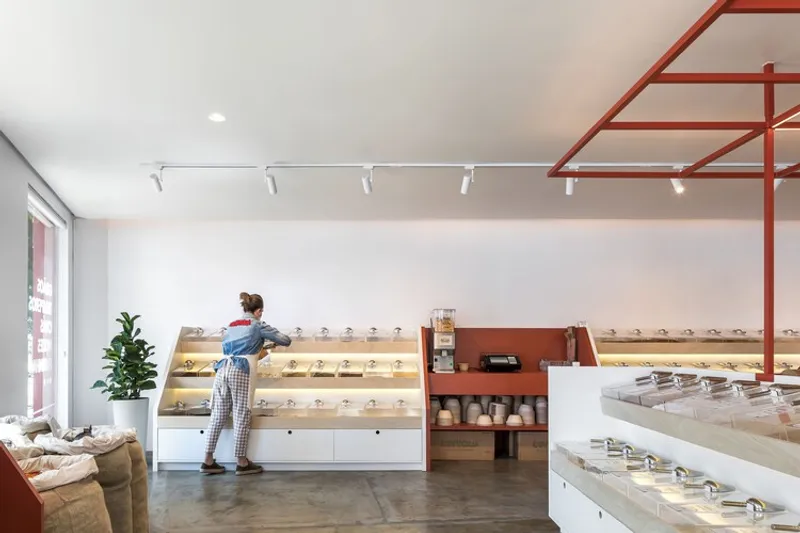
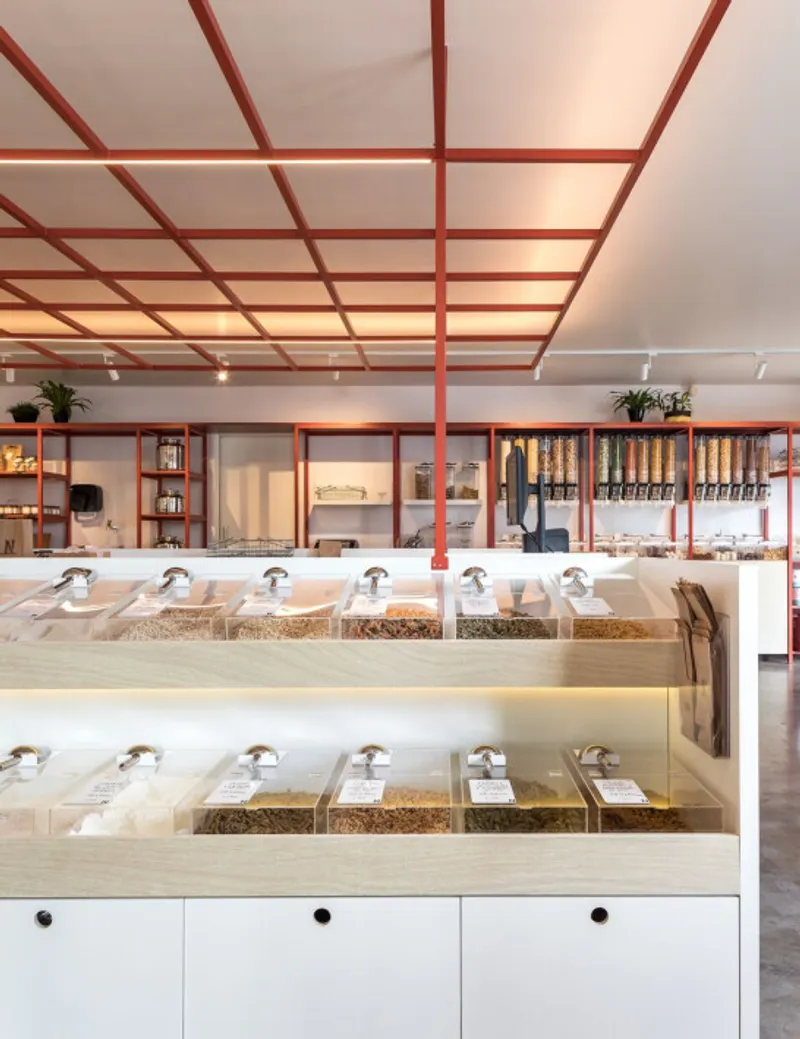
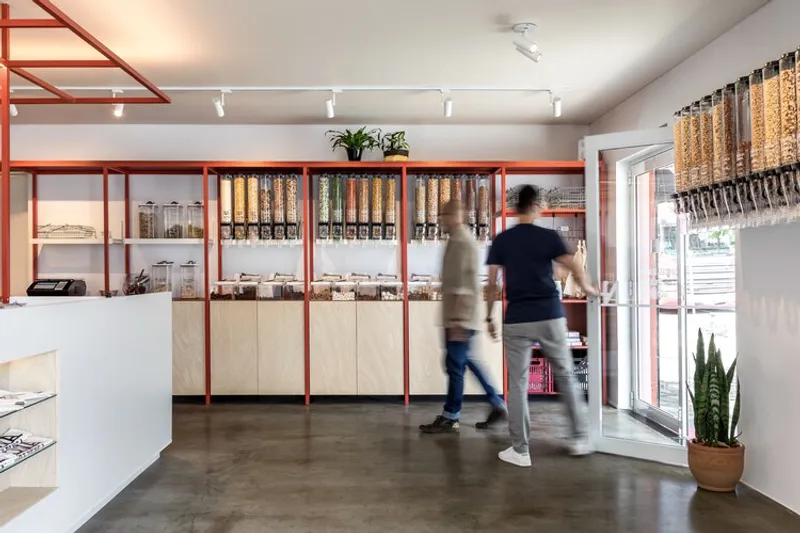
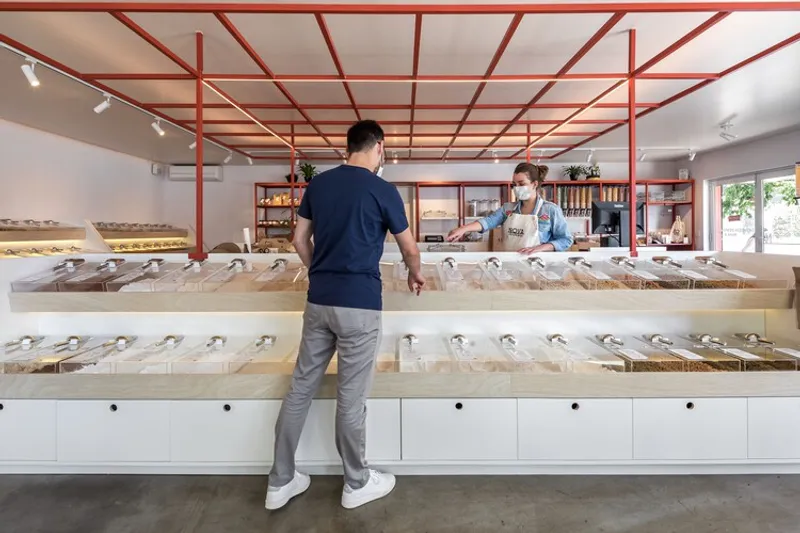
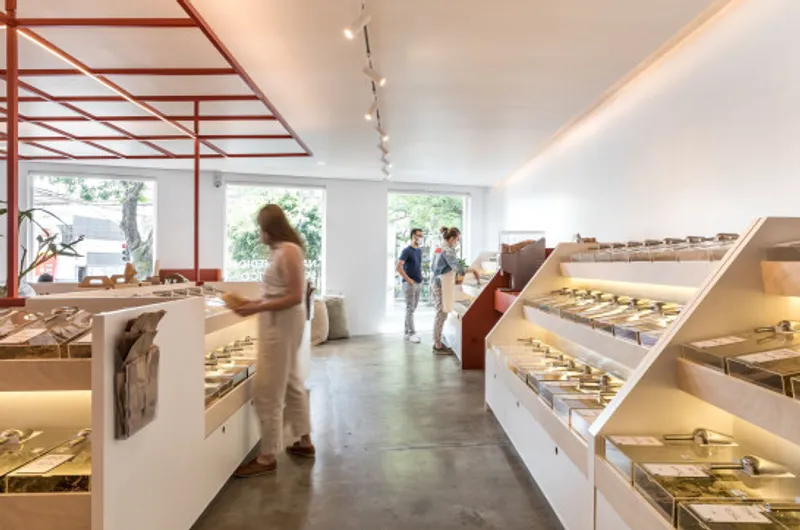
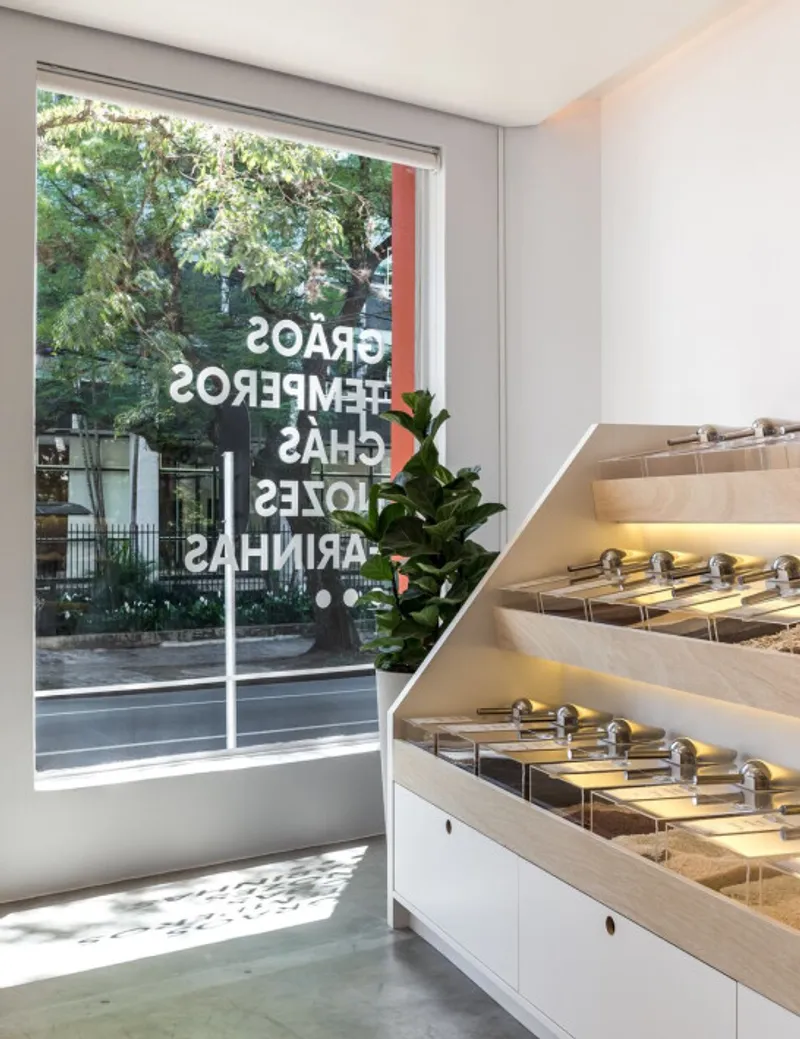
In response, Solo Arquitetos partnered with product designer Max Kampa of VenturaLab to develop a custom dispenser system. These bespoke units integrate carefully designed spoons and proportioned containers that enhance usability while showcasing the products’ textures and colors. When arranged in repetition, the dispensers form a rhythmic architectural element, becoming the visual signature of the store.
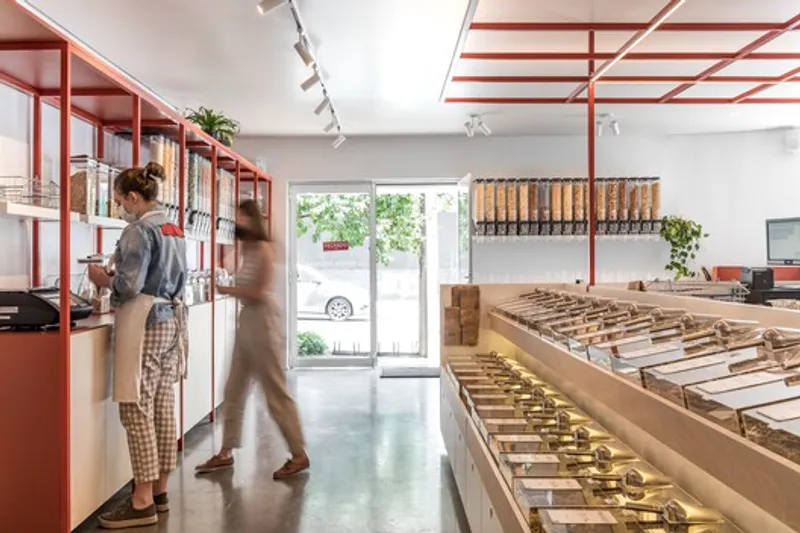
This integration of product design and architecture ensures that sustainability is not treated as an afterthought but embedded directly into the spatial experience.
Rethinking the Consumer Relationship
The layout of Nova Despensa is informed by a historical reflection on retail typologies. Early grocery stores placed products behind counters, requiring mediation by staff. Later, industrialized supermarkets introduced long aisles and linear circulation, encouraging fast, often unconscious consumption.

Solo Arquitetos proposed an alternative model. At the center of the space stands a multifunctional island that combines service, display, and interaction. Around this internal “kiosk,” customers circulate freely, engaging with products at their own pace. Perimeter cabinetry complements the island, creating a continuous loop rather than a prescribed path.
This spatial strategy restores a sense of agency to the consumer. Shoppers are neither passive recipients nor rushed navigators; instead, they become active participants in the selection process.
Cabinet heights were carefully calibrated to maintain visual clarity. Upon entering, customers can grasp the entire spatial organization at a glance, avoiding information overload. At the same time, staff retain unobstructed sightlines, enabling responsive assistance and reinforcing a sense of hospitality.
Lightness, Clarity, and Domestic Atmosphere
Materiality plays a crucial role in reinforcing the store’s ethos. The interior palette is deliberately restrained, composed primarily of white surfaces, light-toned wood, and subtle accents in the brand’s signature colors. This combination produces a bright, calm environment that foregrounds the products rather than competing with them.
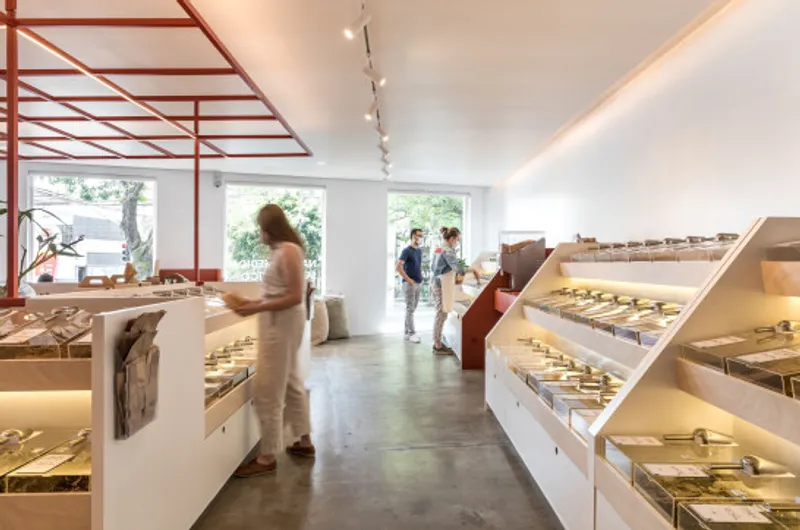
Natural light filters through large windows, animating the space throughout the day and enhancing the perception of freshness. Artificial lighting, supplied by E.LED systems, complements daylight with soft, evenly distributed illumination.
Joinery and shelving are designed with clean lines and minimal detailing, emphasizing legibility and ease of maintenance. The overall atmosphere evokes a contemporary kitchen or pantry rather than a conventional retail store, aligning with the brand’s ambition to function as an extension of customers’ homes.
Sustainability Through Design Integration
Nova Despensa’s environmental commitment is not limited to selling unpackaged goods. It is reinforced architecturally through durable materials, efficient lighting, and flexible layouts that can adapt over time. By prioritizing daylight, minimizing decorative excess, and integrating product systems into the architecture, the project reduces both operational and material waste.
The custom dispensers further contribute to sustainability by improving durability and user experience, reducing the likelihood of spillage, contamination, or product loss. Their modular design also allows for future reconfiguration as the brand evolves.
A Small Store with Broader Implications
Despite its modest size, Nova Despensa Store offers a compelling model for contemporary retail. It demonstrates how architecture can mediate between ethics and everyday practice, translating abstract ideas of sustainability into tangible spatial experiences.

By merging branding, service design, product development, and architectural thinking, Solo Arquitetos created more than a store, they shaped a behavioral framework. Customers are invited not just to purchase goods, but to participate in a culture of mindful consumption.
In this sense, Nova Despensa functions as both a commercial space and a pedagogical environment, subtly encouraging reflection on how food is sourced, stored, and consumed.


Popular Articles
Popular articles from the community


David Ortega Stacks a Two-Story Mexico City Penthouse Around a Steel Stair and a Pergola-Shaded Roof Terrace
In Colonia Roma, a 300 m² penthouse uses oak joinery, a planted steel stair and a slatted roof pergola to make a new-build apartment feel like a house.

U.GA Architects Wraps an Oval Rooftop Pool in Curved Board-Formed Concrete on Busan's Jeollidan-gil
In Busan's Jeonpo-dong, a 454 m² mixed-use block stacks a neighborhood facility, guest rooms and an oval rooftop pool inside spiraling concrete walls.

LT2A and OPEN Architectes Thread a Brick and Glass High School Through a Wooded Belgian Campus
In Braine-l'Alleud, a 3,000 m² wing for Collège Cardinal Mercier pairs pale brick with a glazed colonnade, deferring to a small chapel and a dense wood.

Juan García Correa, John González and Claudia Rueda Sink a Circular Amphitheater into a Manizales Engineering Building
On the La Nubia campus in Manizales, Colombia, the S1 Building folds labs and offices into a hillside of ramped lawns that double as a campus route.

Similar Reads
You might also enjoy these articles


Hodi-Mandai Geram
Project Function: Preservation and revitalization of the Intangible heritage and socio-spatial identity of the Hodi by Housing, Cultural Memory Center, Sacred Grove, landscape, local tourism economy


Olio Towers: A Mid-Rise for Performers That Fuses Housing, Rehearsal, and Stage
Located blocks from Houston's Theater District, this modular tower stacks living units around a central performance atrium.

Oasis: Modular Green Housing Carved into Dhaka's Urban Fabric
A shortlisted Plugin Housing entry reclaims unauthorized settlements in Dhaka with stepped concrete volumes, green roofs, and ventilation-driven design.

Black Hole: A Floating Megastructure for the Post-Physical Era
Emiliano Mazzarotto envisions a spherical, self-scaling arena where e-sports, digital hotels, and holographic stadiums replace traditional public space.

Explore Public Building Competitions
Discover active competitions in this discipline

Challenge to design locus for the upliftment of human rights

Challenge to reimagine the Iron Throne

Photograph architecture without architects

Illustrate the lost glory of Angkor Wat - Render Challenge
Comments (0)
Please login or sign up to add comments
No comments yet. Be the first to comment!