
Nujiang Grand Canyon Bookstore: A Landmark of Culture and Architecture in Yunnan
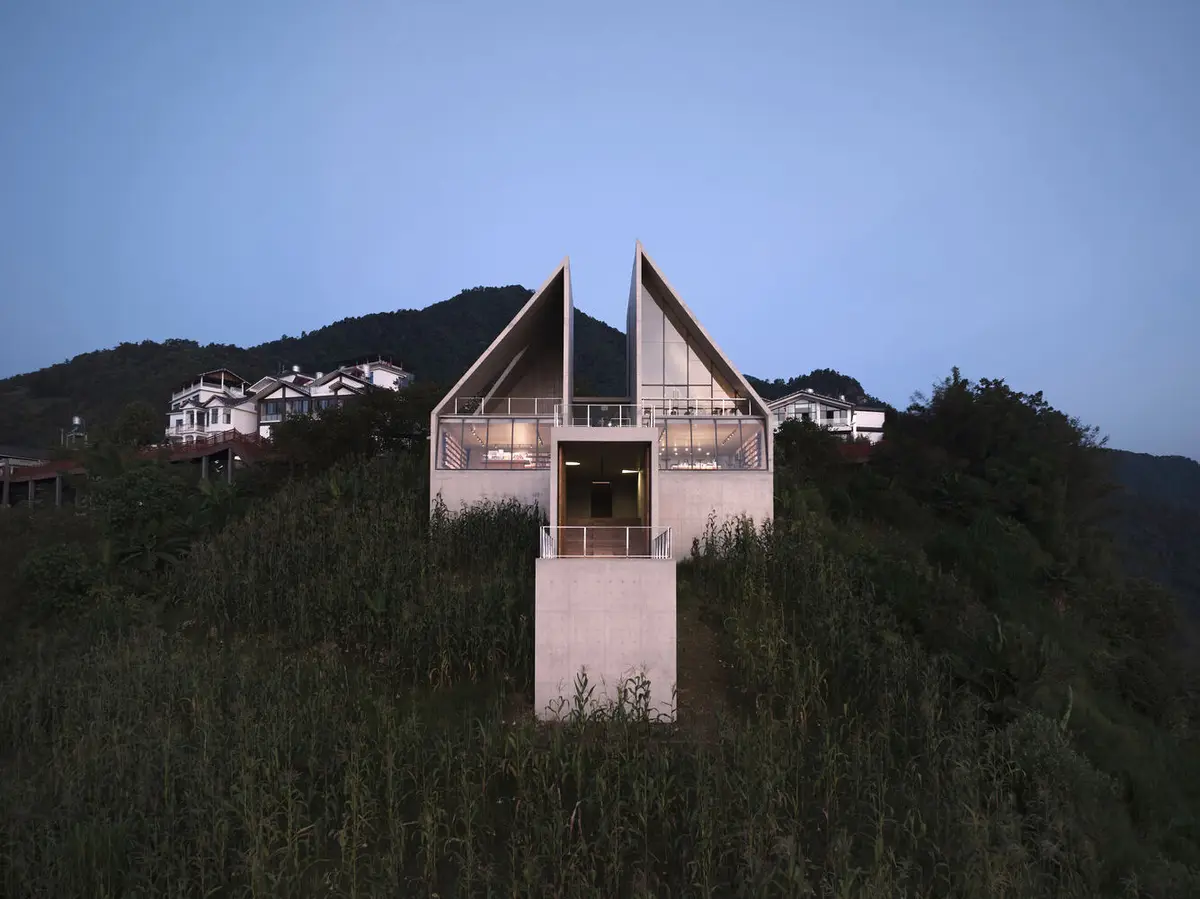
Nujiang Grand Canyon Bookstore by TAO blends avant-garde architecture with Lisu culture, perched above Nujiang River, offering immersive canyon views.


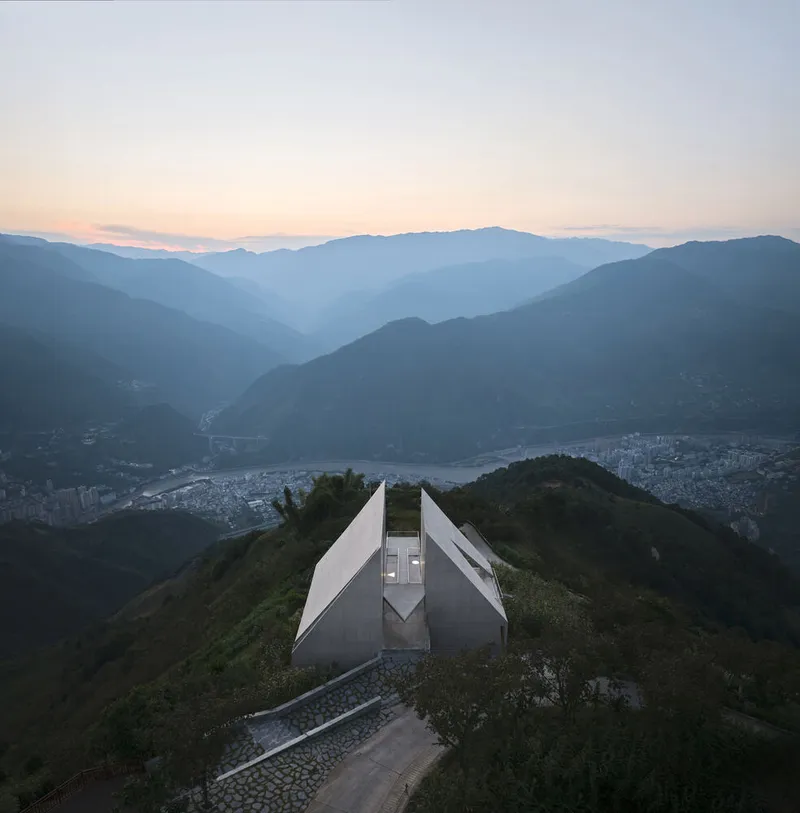
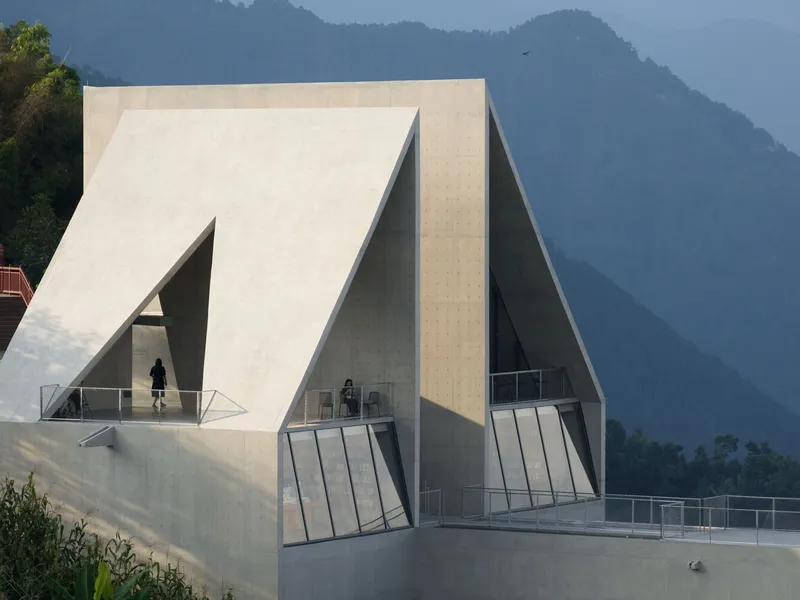
Nestled atop the Gaoligong Mountains in the breathtaking Nujiang Grand Canyon, the Nujiang Grand Canyon Bookstore by TAO (Trace Architecture Office) stands as a striking cultural landmark, merging avant-garde architecture with the rich heritage of the Lisu and Bai ethnic groups. Overlooking the last free-flowing river in China, the Nujiang River winds through the Hengduan Mountains, separating the sacred Gaoligong and Biluo Snow Mountains. This remarkable bookstore seamlessly bridges contemporary design with the natural and cultural landscape.
A Cultural and Geographical Context
Located in Yangpo Village, a traditional Lisu settlement perched on the Gaoligong ridge, the bookstore inhabits a historically rich landscape. The Lisu people migrated from the river valleys of Sichuan and Yunnan in the 16th century, adapting to the mountainous terrain and developing a cultural identity closely tied to tools like crossbows, which inspired the bookstore's architectural concept.
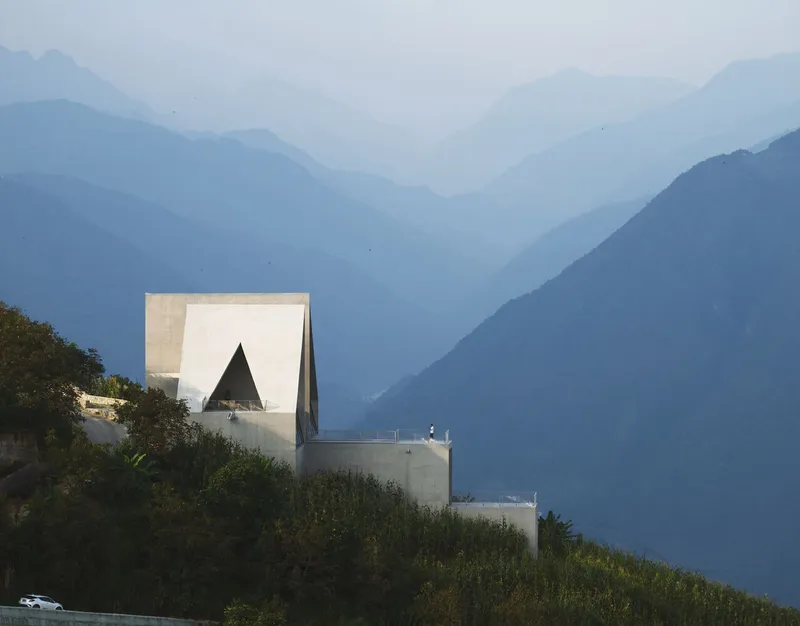
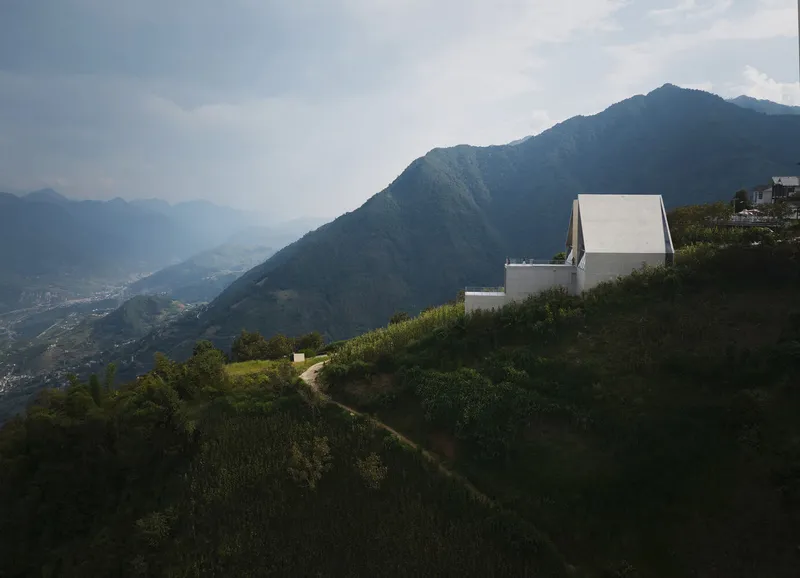
The site itself, at the southern gateway of the Nujiang Canyon and embraced by the Biluo and Gaoligong Mountains, naturally embodies the boundary between civilization and nature. Originally hosting an unfinished viewing platform, it offered panoramic views of the canyon, lending the bookstore its iconic name.
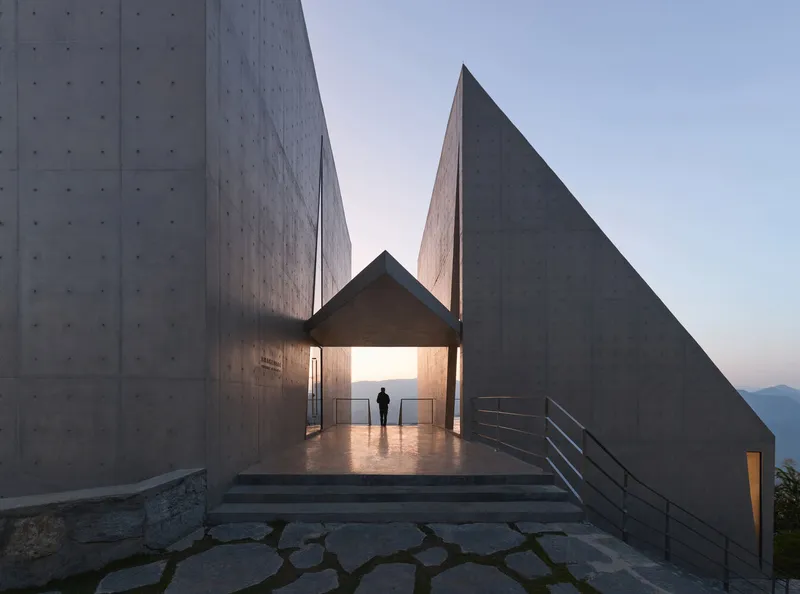
Architectural Concept and Design
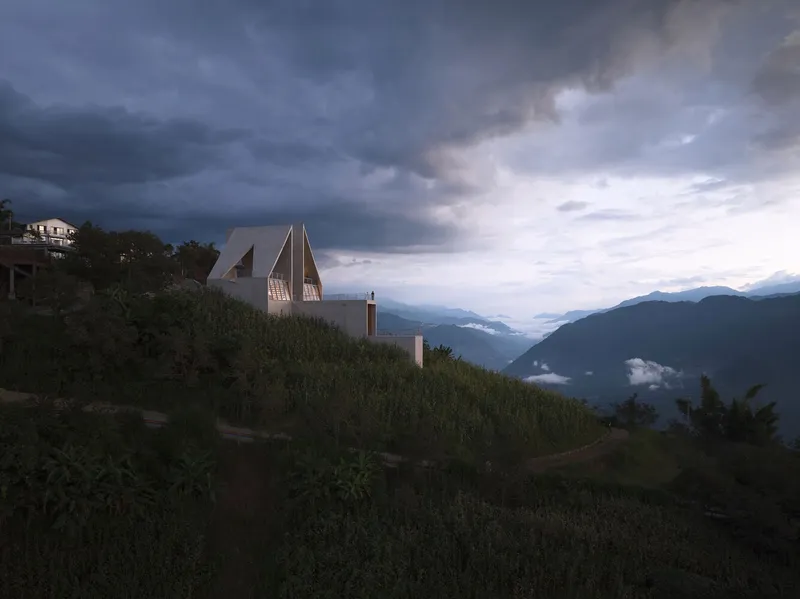
TAO envisioned a forward-stretching volume, responding to the steep slope and dramatic natural setting. The bookstore emerges as a suspended platform, giving visitors a sense of walking among the clouds, with canyon views unfolding to the north, east, and south. This unique positioning transforms the bookstore into a landmark for Yangpo Village, establishing a dialogue between modernity and tradition.
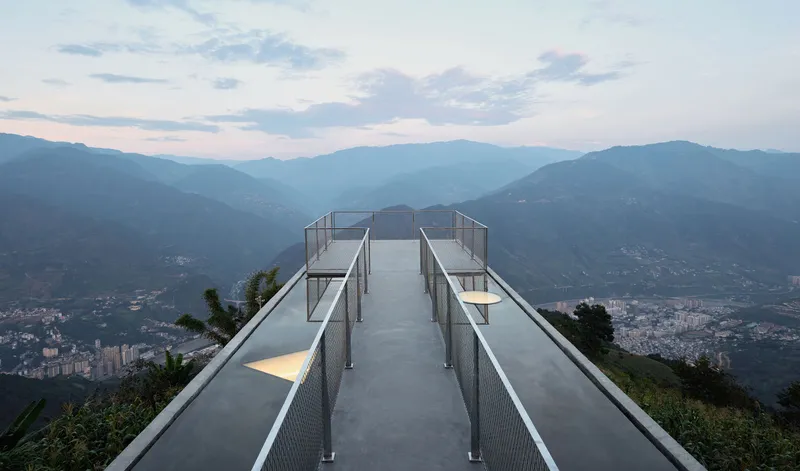
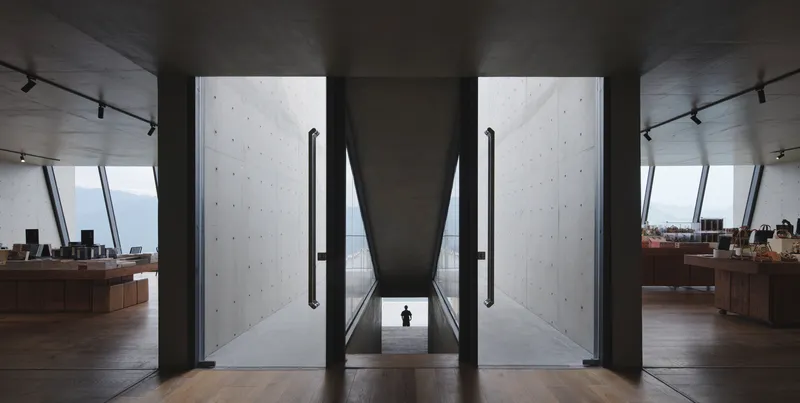
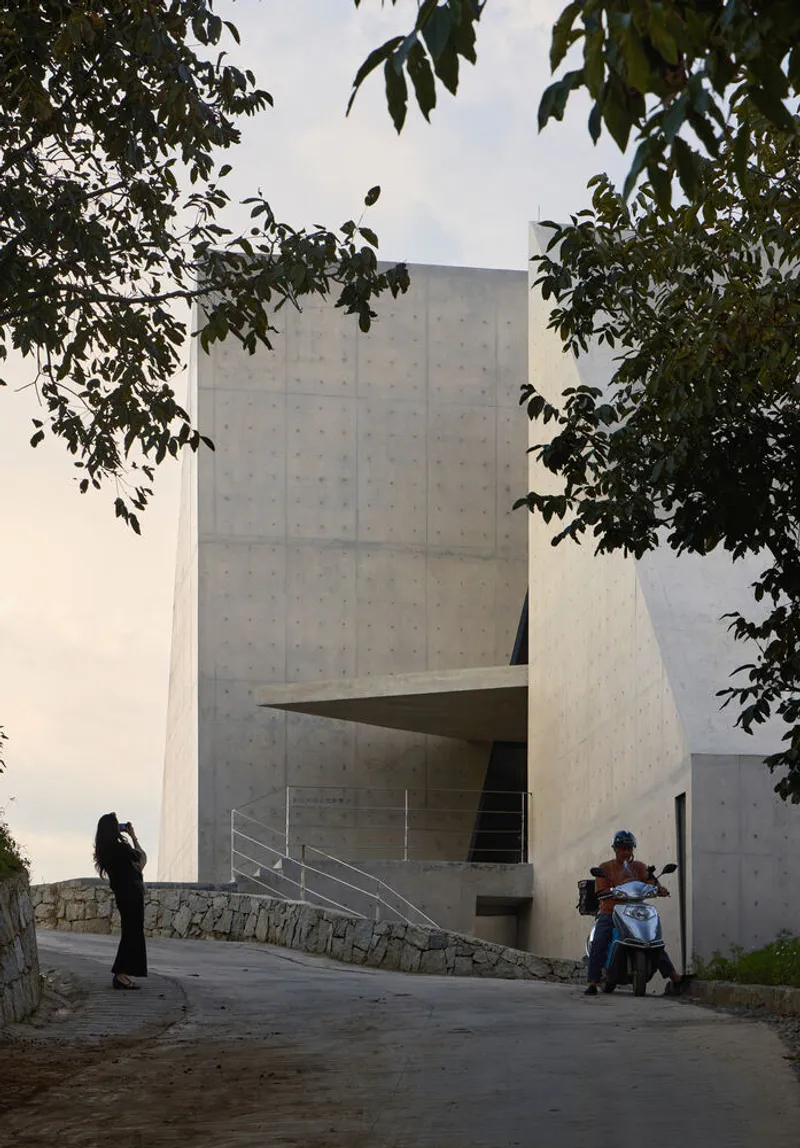
The design addresses the central question of balancing architectural individuality with local context. The village’s organic, collage-like texture of sloped-roof homes informed a contemporary architectural language, creating a building that respects history while asserting a modern presence. Slanted spaces and inclined geometry mirror the surrounding mountainous terrain, evoking the image of “an arrow on the bowstring,” a nod to the Lisu cultural heritage.
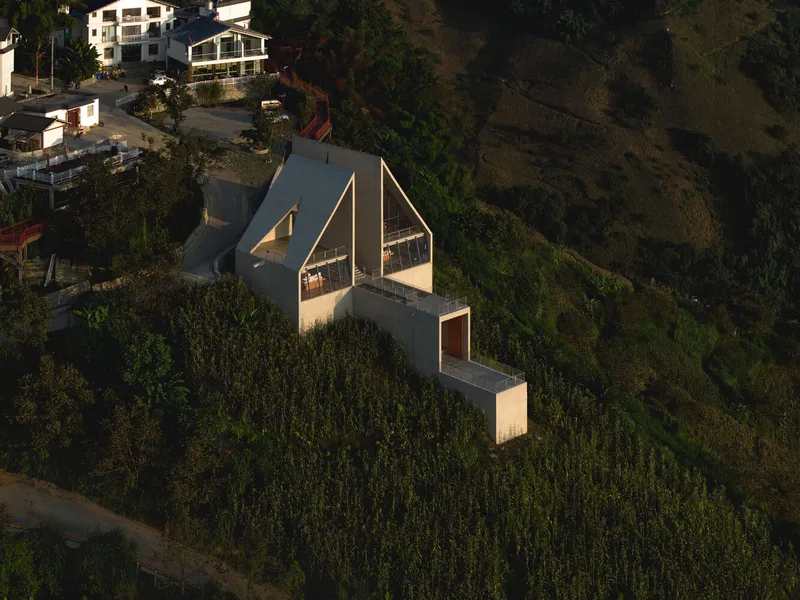
Interior Experience and Circulation
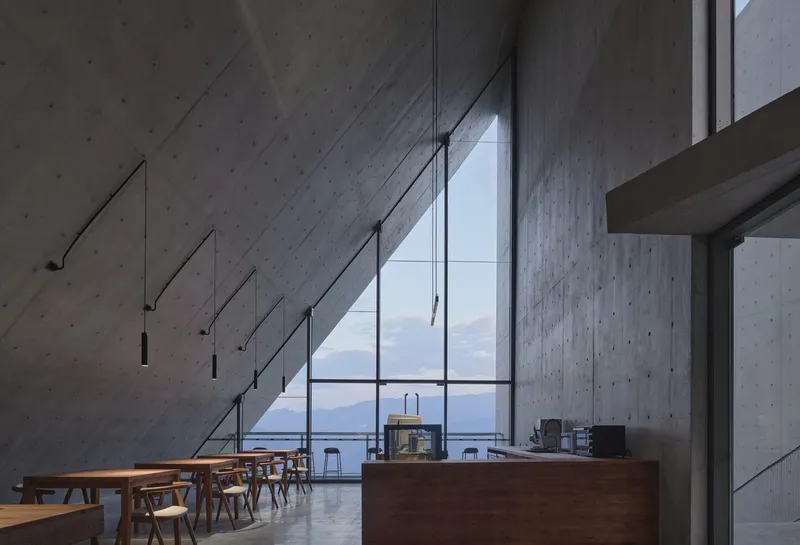
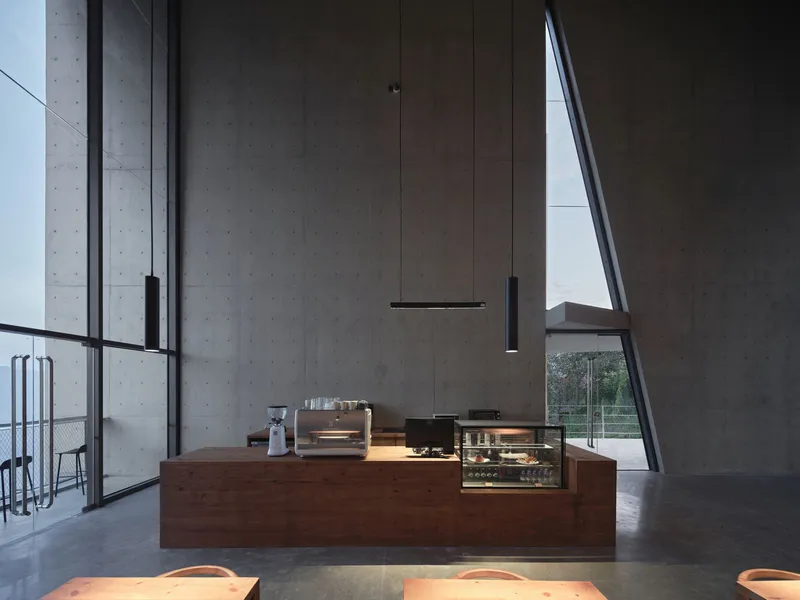
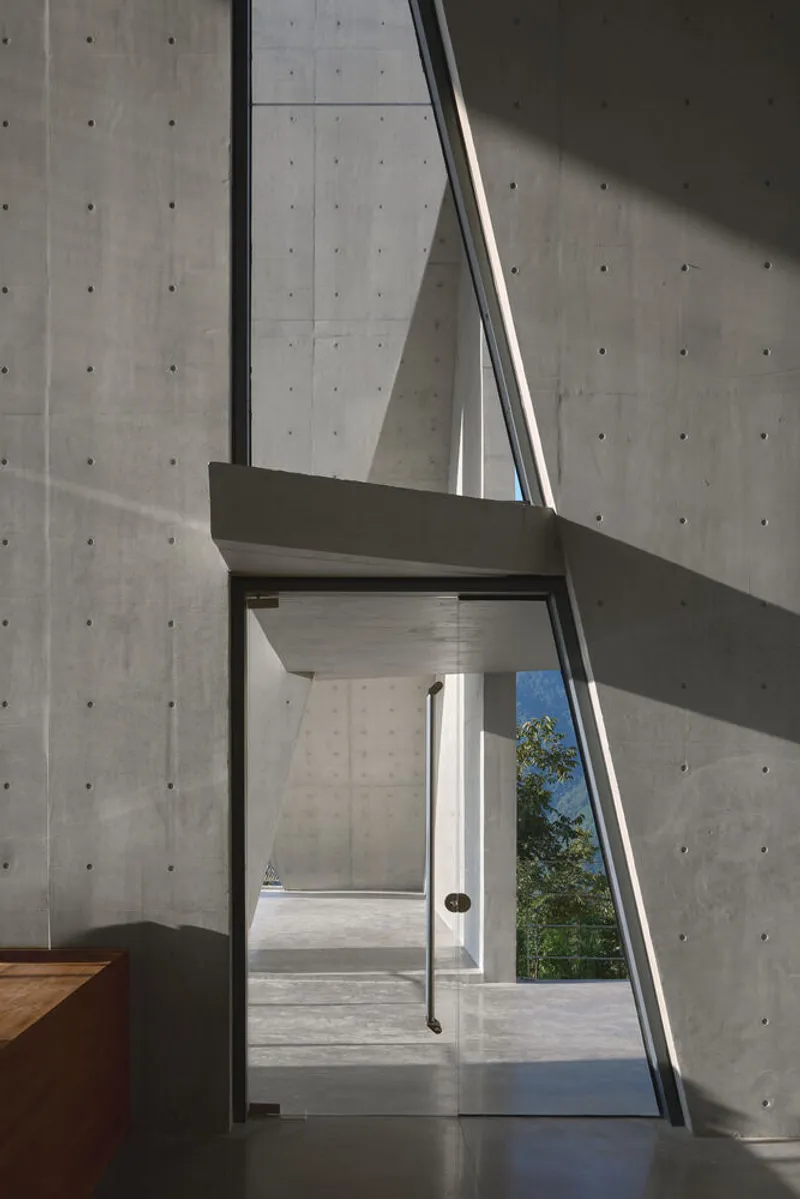
The bookstore features three levels, each interconnected by distinct circulation routes. Visitors begin at the top-level café, where sloping roofs direct attention skyward, fostering a contemplative and spiritual atmosphere. Descending to the mid-level bookstore, heavy concrete walls provide shelter and focus. At the lower-level theatre, light filters through skylights beneath the water surface, creating a luminous, immersive experience.

Two 6-meter camphor-wood doors, opening ceremonially once a day, frame the theatre’s performance space. Here, literature and the grandeur of the Nujiang River converge, allowing visitors to engage both with the written word and the natural landscape.
Externally, the circulation connects two viewing terraces at different heights, forming a public space accessible to both villagers and visitors, reinforcing the bookstore’s role as a cultural extension of the village itself. The carefully positioned openings and dynamic façade capture and frame unique canyon views, blending architecture with nature.
A Cultural Landmark and Future Vision
The Nujiang Grand Canyon Bookstore embodies a dialogue between past and present, tradition and modernity, nature and human experience. By integrating contemporary design into a culturally rich Lisu village, Librairie Avant-Garde has brought renewed cultural vitality to Yangpo Village, positioning it on the global map. This project not only celebrates architecture as art but also acts as a catalyst for cultural preservation and innovation in one of China’s most stunning natural landscapes.
All photographs are works of AOGVISION


Popular Articles
Popular articles from the community


The Ocean Hive: Sustainable Architecture for a Self-Sufficient Civilization at Sea
The Ocean Hive imagines sustainable architecture at sea, where modular habitats, algae, wave power and ocean waste sustain a growing colony.

Little Red Riding Hood: Architectural Design as a Journey Through Fear, Light, and Storytelling
Little Red Riding Hood reimagines the fairy tale through architectural design shaped by fear, light, scale, memory, uncertainty, and choice.

The Musturak Paradise: Senior Living Architecture for a Connected Future in Temara, Morocco
The Musturak Paradise reimagines senior living architecture in Temara via private homes, social spaces, culture, community, and shared care.

Lunar Spiral: Space Architecture Shaped by the Mathematics of the Universe
Lunar Spiral reimagines space architecture through Fibonacci geometry, lunar regolith, levitating habitats, and self-sustaining Moon living.

Similar Reads
You might also enjoy these articles


Hodi-Mandai Geram
Project Function: Preservation and revitalization of the Intangible heritage and socio-spatial identity of the Hodi by Housing, Cultural Memory Center, Sacred Grove, landscape, local tourism economy


Olio Towers: A Mid-Rise for Performers That Fuses Housing, Rehearsal, and Stage
Located blocks from Houston's Theater District, this modular tower stacks living units around a central performance atrium.

Oasis: Modular Green Housing Carved into Dhaka's Urban Fabric
A shortlisted Plugin Housing entry reclaims unauthorized settlements in Dhaka with stepped concrete volumes, green roofs, and ventilation-driven design.

Black Hole: A Floating Megastructure for the Post-Physical Era
Emiliano Mazzarotto envisions a spherical, self-scaling arena where e-sports, digital hotels, and holographic stadiums replace traditional public space.

Explore Architecture Competitions
Discover active competitions in this discipline

Challenge to design public laboratory

Challenge to reimagine the Iron Throne

Photograph architecture without architects

Illustrate the lost glory of Angkor Wat - Render Challenge
Comments (0)
Please login or sign up to add comments
No comments yet. Be the first to comment!