

O Castro da Costiña Cabins by Gramática Arquitectónica: A Dialogue Between Land, Culture, and Circular Living
Sustainable cabins in Galicia blending permaculture, circular design, and local tradition with elevated forms, green roofs, and immersive nature.


Nestled in the quiet landscapes of Santa Comba, Galicia, O Castro da Costiña Cabins designed by Gramática Arquitectónica represent a poetic reinterpretation of sustainable rural tourism. Inspired by permaculture principles, Galician heritage, and circular design, the project reimagines the temporary dwelling as a light, land-sensitive intervention—one that reflects both the ecology and culture of its setting.

A Permacultural Foundation Rooted in Landscape
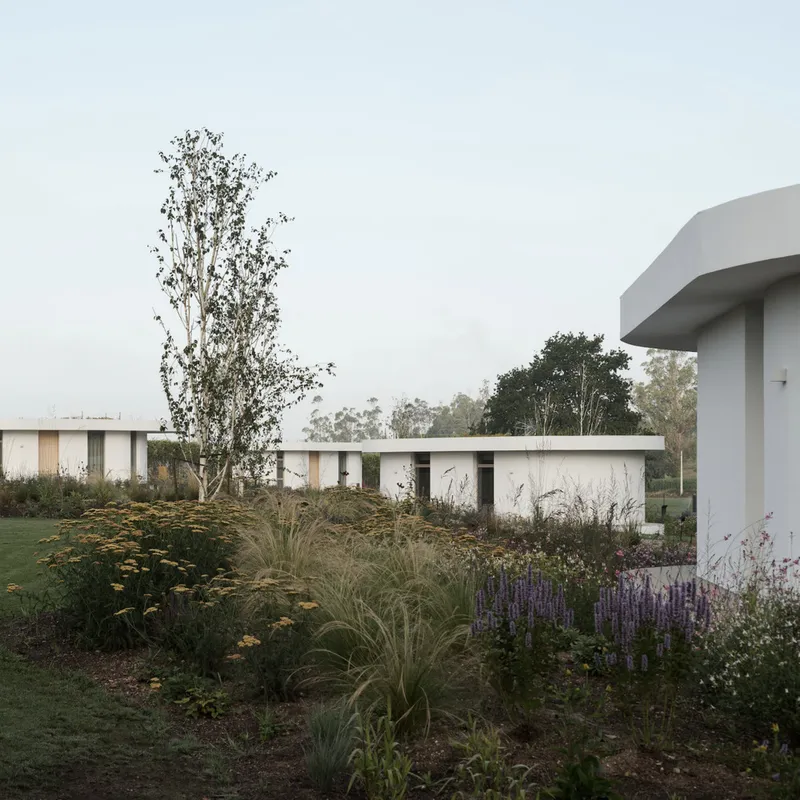
Born from the ethics of permaculture design, the cabins integrate into the site as if grown from the soil itself. This agricultural philosophy—originating in the 1970s—underpins the spatial organization and landscape integration of the project. By prioritizing ecological harmony and seasonal rhythms, the architects crafted a living environment where architecture coexists with nature rather than disrupting it.
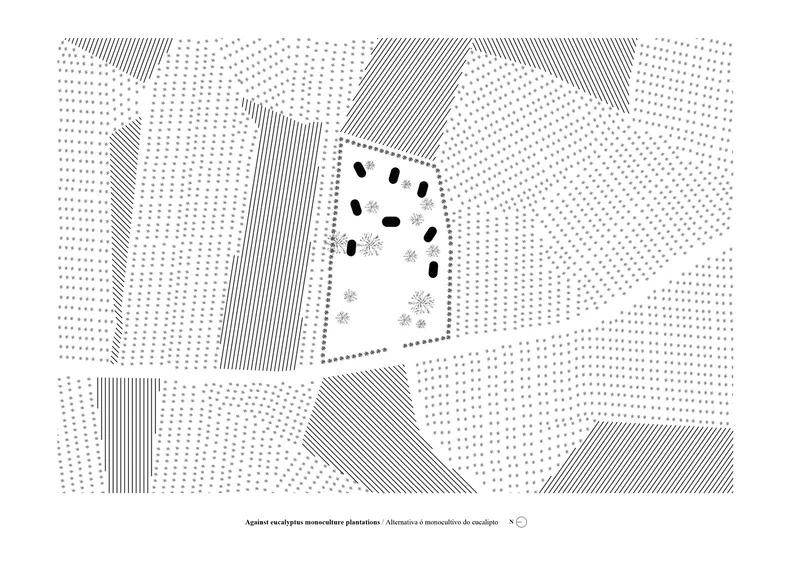
At the outset, a low perimeter green wall was planted, creating a subtle boundary between the eucalyptus monoculture outside and a vibrant microcosm of native flora within. Inside this boundary, deciduous trees, flower beds, and vegetable gardens evoke a colorful, seasonally responsive Galicia, contrasting with the evergreen stillness beyond.
Spatial Narrative Through Organic Geometry
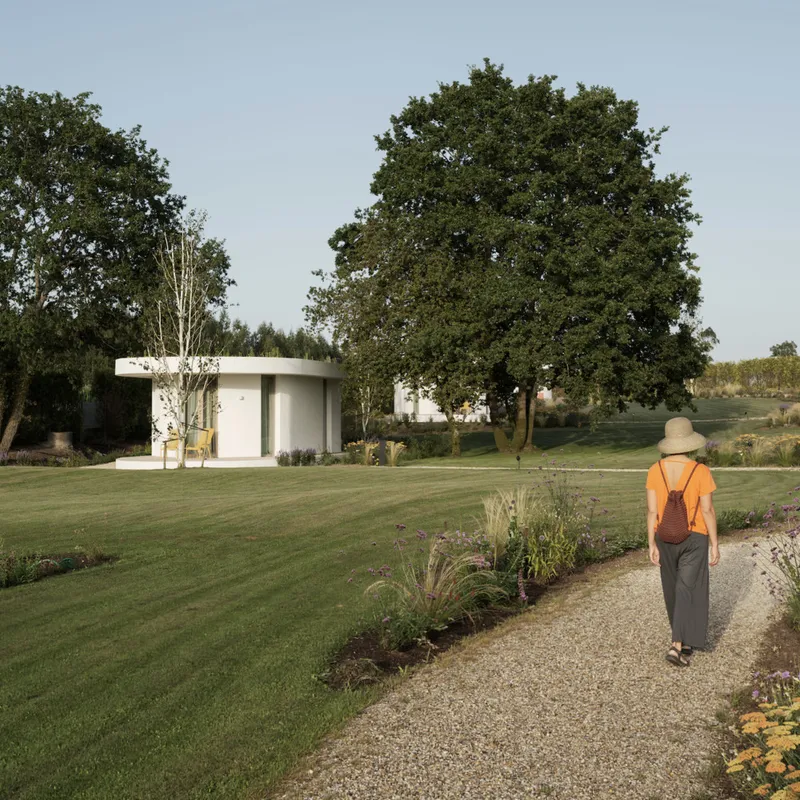
Rejecting linearity, the design embraces circular geometries to define internal paths and planting zones. These concentric layouts foster organic movement, mimicking the loops of learning and discovery that permaculture encourages. Visitors can wander intuitively, discovering edible landscapes that connect directly to the kitchen of the nearby Retiro da Costiña restaurant.
The buildings are arranged not in a rigid grid, but along natural curves that amplify the terrain’s gentle slopes. This orientation enables framed views of the valley while respecting natural water runoff patterns, reducing ecological disruption.

Light Touch Architecture: Elevated, Detached, Poetic
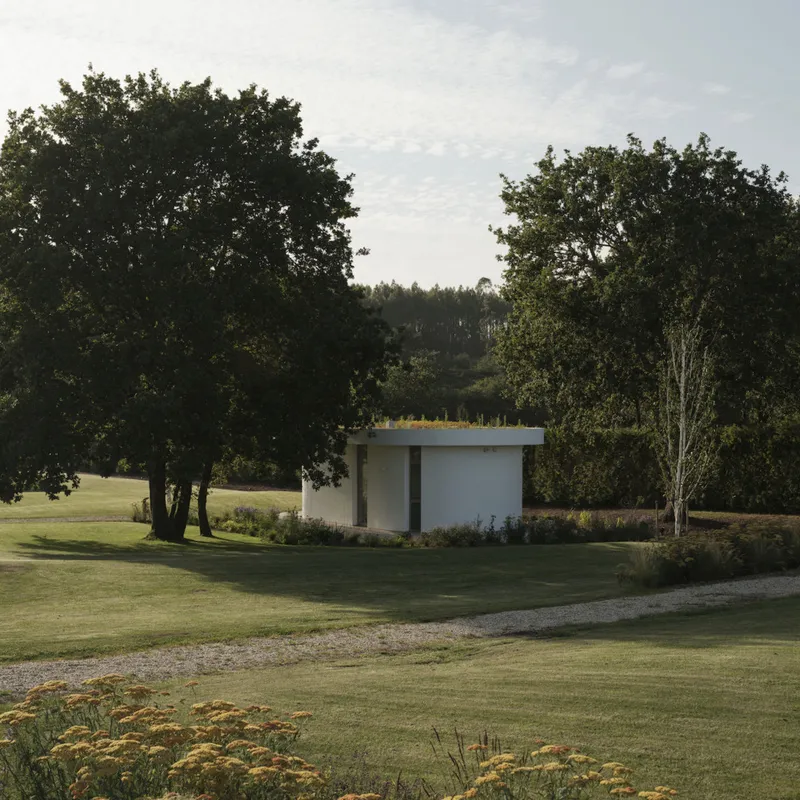
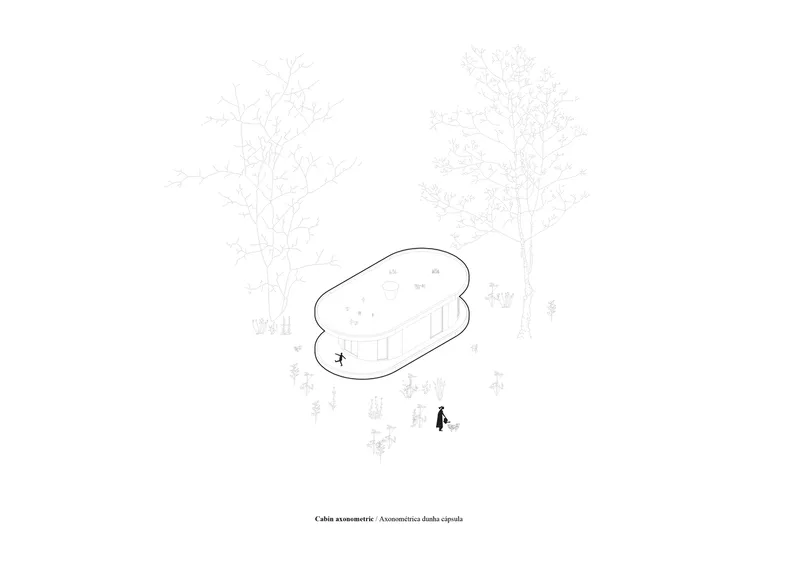
The cabins are defined by a two-slab structure—a lower platform and a landscaped upper roof. Raised slightly above the ground on stone staircases that never quite touch the building, the cabins reference Galician granaries (hórreos) and science fiction landing modules in equal measure, embodying a thoughtful tension between past and future.
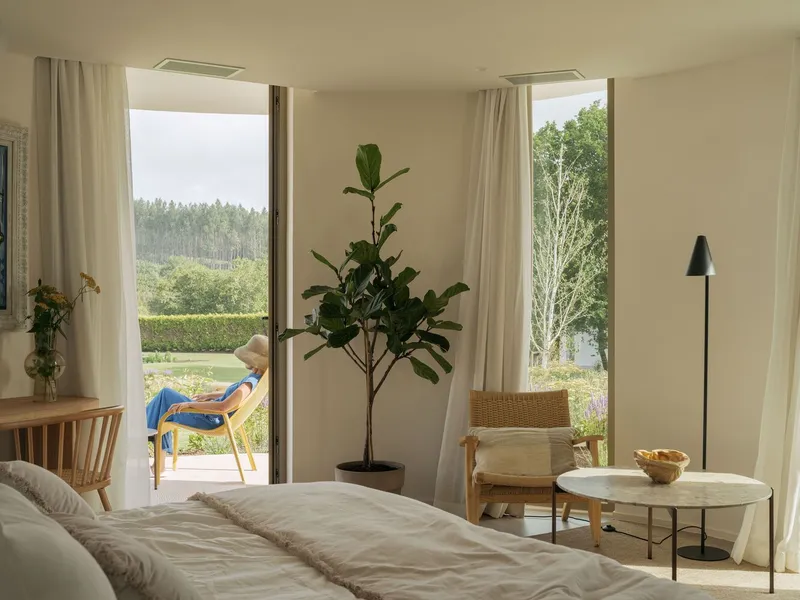
- The lower slab hosts the primary living space, including a bedroom, bathroom, small study, and a cozy living area that opens to an outdoor terrace surrounded by wildflowers.
- The upper slab acts as both a protective canopy and a green roof planted with sedum, supporting pollinators and reducing heat gain. This dual function creates an architecture that gives back to the land as much as it occupies it.
Materiality and Open Edges
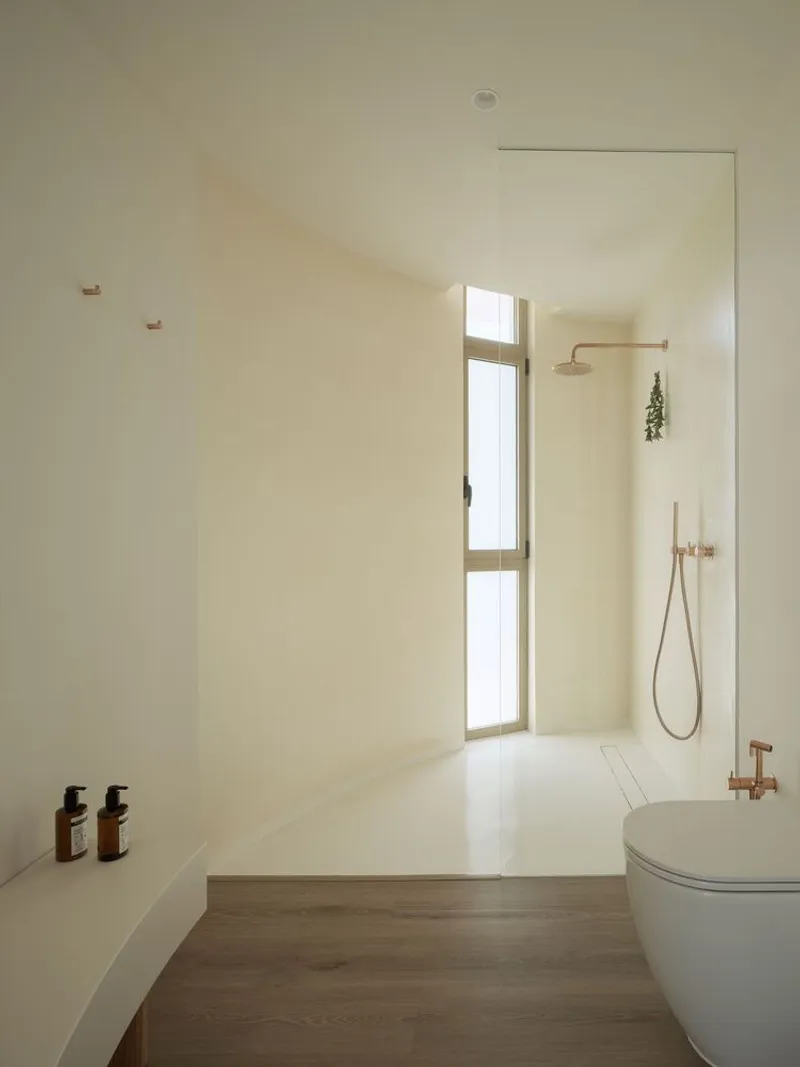
The cabins are wrapped in a continuous façade with vertical openings that emphasize the vertical voids between earth and canopy. The monochromatic off-white palette reflects the region’s vernacular buildings, while dark brown joinery provides elegant contrast, highlighting thresholds and movable elements like doors and windows.
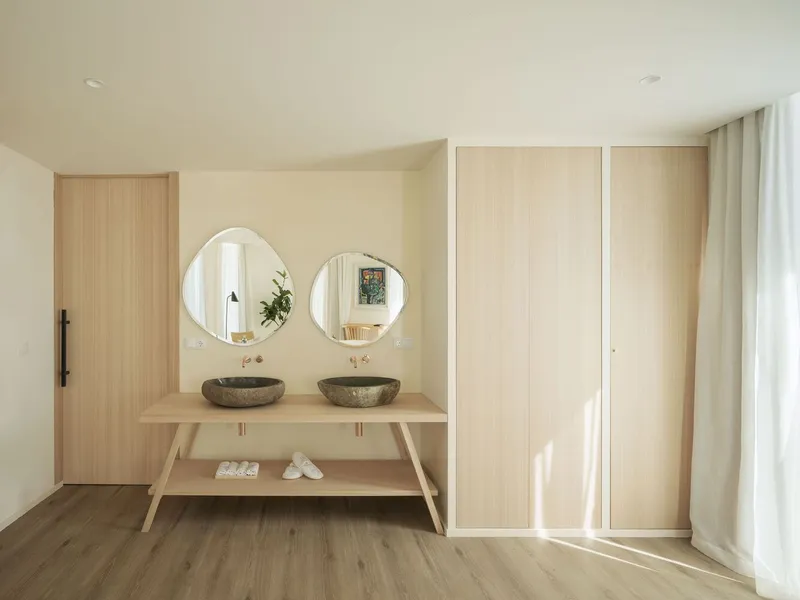
Interior materials maintain continuity with the exterior—matching floors and ceilings blur the boundaries, creating a seamless experience between inside and out. The spatial tone is softened by wood furniture and partition walls, cultivating warmth and domestic intimacy.
Sustainability in Form, Function, and Feeling
Every decision in O Castro da Costiña reflects a low-impact philosophy. From the minimal ground disturbance of the elevated modules to the climate-responsive roof garden, the project embodies a circular, regenerative model for rural retreat architecture.
This is not just a place to stay—it is a place to observe, reflect, and reconnect with nature’s cycles, honoring the landscape while living lightly upon it.
All Photographs are works of Luis Díaz Díaz



Popular Articles
Popular articles from the community


The Earth Pod: 3D Printed Homes for Resilient Refugee Communities
The Earth Pod reimagines refugee housing through 3D printed homes made from clay, combining resilience, self-sufficiency, and rapid shelter.

AL-JANNAH: Sustainable Architecture and Permaculture for Afghan Widows
AL-JANNAH uses sustainable architecture and permaculture to create resilient oasis of housing, learning, work and renewal for Afghan widows.

Conexión: Biophilic Design Reimagines High-Rise Living in Hong Kong
Conexión reimagines high-rise living in Hong Kong through biophilic design, green facades, shared spaces, daylight, water and nature within.

The Musturak Paradise: Senior Living Architecture for a Connected Future in Temara, Morocco
The Musturak Paradise reimagines senior living architecture in Temara via private homes, social spaces, culture, community, and shared care.


Similar Reads
You might also enjoy these articles


Hodi-Mandai Geram
Project Function: Preservation and revitalization of the Intangible heritage and socio-spatial identity of the Hodi by Housing, Cultural Memory Center, Sacred Grove, landscape, local tourism economy


Olio Towers: A Mid-Rise for Performers That Fuses Housing, Rehearsal, and Stage
Located blocks from Houston's Theater District, this modular tower stacks living units around a central performance atrium.

Oasis: Modular Green Housing Carved into Dhaka's Urban Fabric
A shortlisted Plugin Housing entry reclaims unauthorized settlements in Dhaka with stepped concrete volumes, green roofs, and ventilation-driven design.

Black Hole: A Floating Megastructure for the Post-Physical Era
Emiliano Mazzarotto envisions a spherical, self-scaling arena where e-sports, digital hotels, and holographic stadiums replace traditional public space.
Explore Landscape Design Competitions
Discover active competitions in this discipline



Challenge to reimagine the Iron Throne


Photograph architecture without architects


Illustrate the lost glory of Angkor Wat - Render Challenge


Design challenge to reuse E-waste
Comments (0)
Please login or sign up to add comments
No comments yet. Be the first to comment!