

Oasis Under a Building by fala – Innovative Glass House in Porto, Portugal
Oasis Under a Building by fala is a minimalist, inverted glass house in Porto, blending concrete, transparency, fluid spaces, and poetic interior design.


A Conceptual Reversal: The Glass House Inverted
The Oasis Under a Building project by Portuguese architecture studio fala challenges conventional domestic design with a radical approach: a glass house turned inside out. The architects describe it as “like a sock with a hole,” where divisive transparency is redirected inward, and loose objects hover at the periphery. The result is a conceptual home that reinterprets openness and privacy, offering an intimate yet visually permeable environment beneath a larger structure.
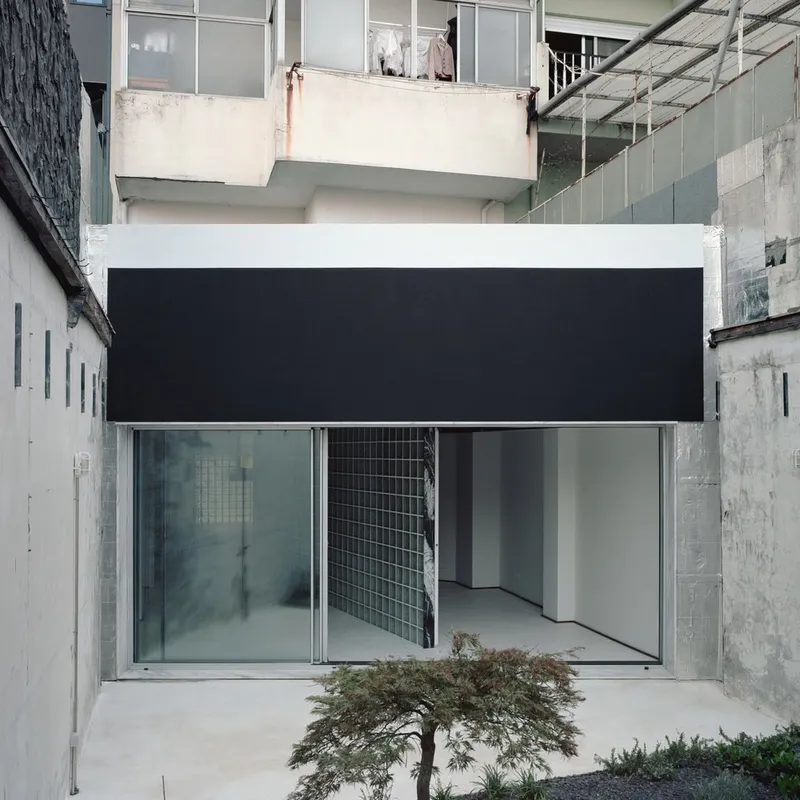
Spatial Innovation: Fluidity and Continuity
Spanning 1,292 square feet, the house is organized as a single, continuous space that can be read as multiple interconnected areas. Rather than conventional compartmentalization, the design emphasizes fluidity, allowing the interior to breathe and the eye to wander. Ornamentation and subtle structural interventions suspend key elements, while the ceiling functions as a bright sky, creating a sense of levitation and lightness.
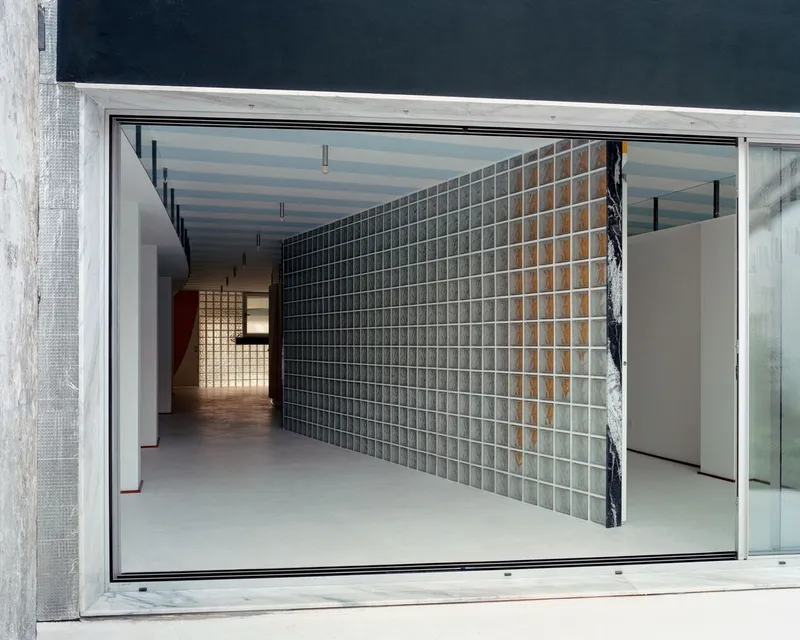
Materiality: Concrete, Glass, and Transparency
Materials play a central role in defining the character of this home. Concrete surfaces provide grounding and structural clarity, while expansive glass panels foster a dialogue between interior and exterior, maintaining visual openness even under a larger building envelope. Bathrooms and intimate spaces are integrated seamlessly, their transparency curated to balance intimacy with light.
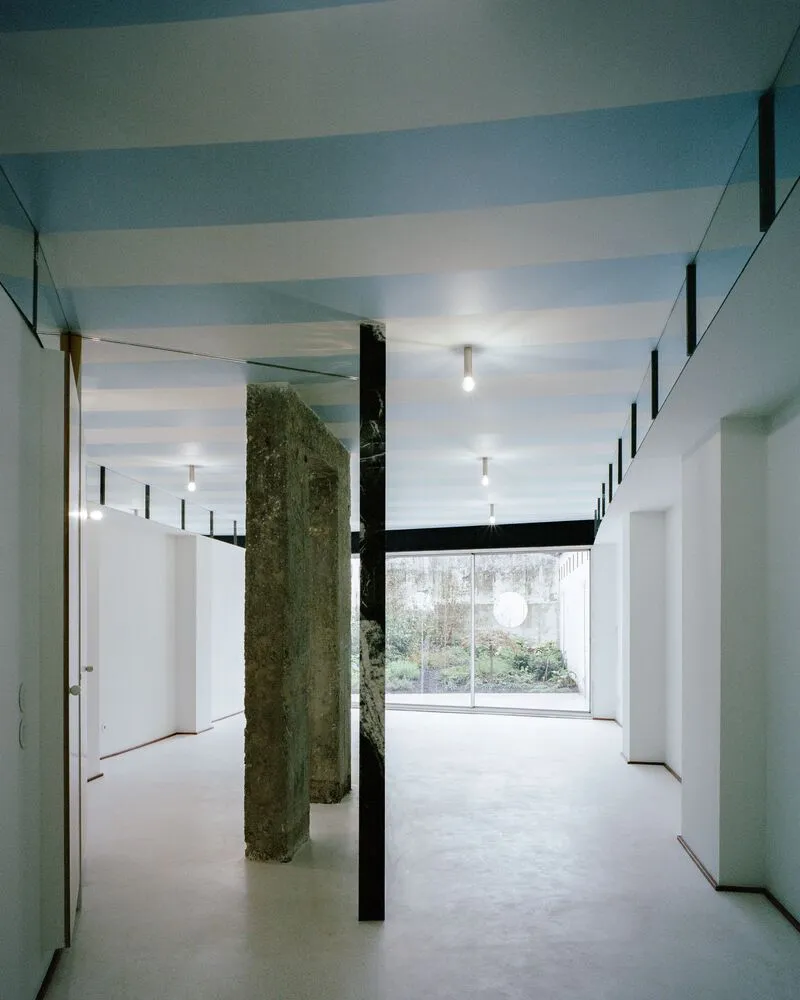
Architectural Storytelling: A House Between Boundaries
The Oasis Under a Building is more than a home—it’s a spatial narrative. By inverting traditional concepts of domesticity, fala encourages residents to experience architecture in an unconventional, poetic manner. Loose objects, suspended elements, and reflective surfaces create a dynamic environment, where each moment in the home unfolds differently depending on perspective and light.
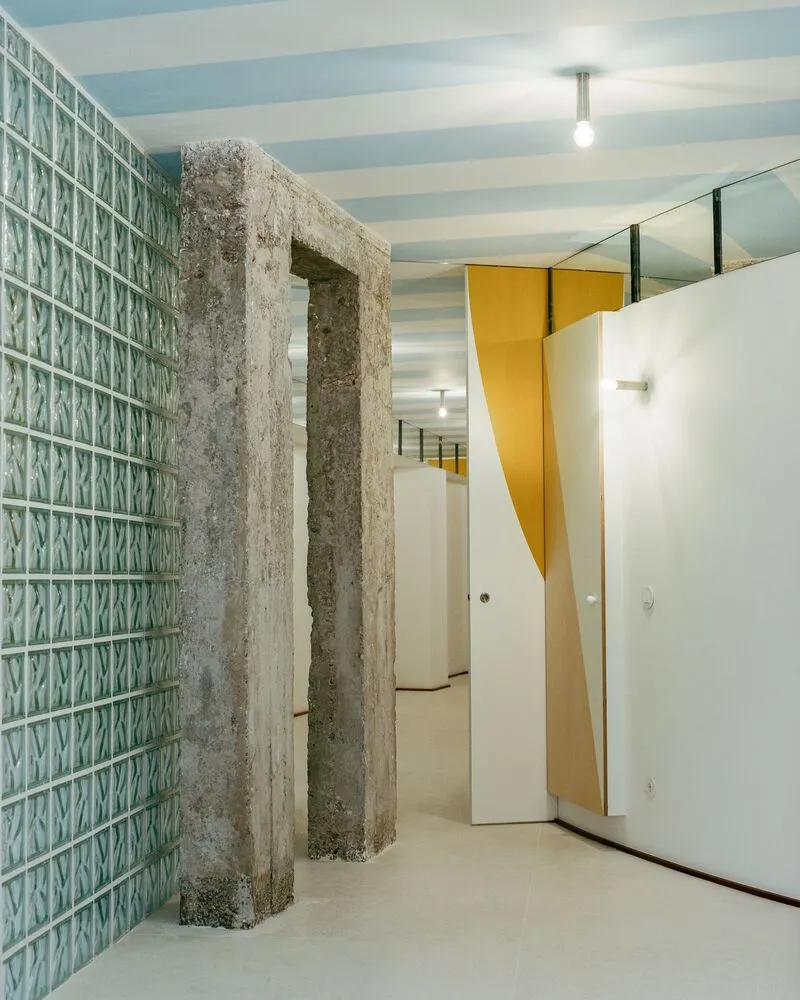
Plan and Collage: Structuring the Invisible
The architectural plan is minimal yet sophisticated, using collage-like layering to define zones without rigid walls. This approach enhances the sense of openness and allows natural light to penetrate deeply, activating concrete and glass surfaces throughout the interior.


Photography and Documentation
Photography by Francisco Ascensão, Lera Samovich, and Giulietta Margot captures the ethereal quality of the space, highlighting the interplay of light, material, and suspended elements. The images communicate the home’s conceptual depth, emphasizing transparency, structural subtlety, and the poetic inversion of traditional domestic spaces.

All photographs are works of Francisco Ascensão, Lera Samovich, Giulietta Margot


Popular Articles
Popular articles from the community


The Amber Palace Opera: A Geological Fiction Surfaces on Tallinn's Baltic Waterfront
Pierre Brillard reimagines a Baltic legend as a public landscape, opera house, and waterfront promenade rooted in Tallinn's coastal identity.


graciastudio Turns a Viewless Tijuana Lot Inward Around a Courtyard of Concrete, Timber and Trees
In Tijuana, Jorge Gracia's GA2 House stacks a timber-clad private floor over exposed concrete and replaces a missing view with a planted interior patio.

David Ortega Stacks a Two-Story Mexico City Penthouse Around a Steel Stair and a Pergola-Shaded Roof Terrace
In Colonia Roma, a 300 m² penthouse uses oak joinery, a planted steel stair and a slatted roof pergola to make a new-build apartment feel like a house.

ETEH Reworks the Shared Spaces of São Domingos School in Brazil Around Timber, Color and Hanging Plants
At São Domingos School in Brazil, 436 m² of hall, refectory and library are recast with timber joinery, a yellow and blue code and trailing greenery.

Similar Reads
You might also enjoy these articles


Hodi-Mandai Geram
Project Function: Preservation and revitalization of the Intangible heritage and socio-spatial identity of the Hodi by Housing, Cultural Memory Center, Sacred Grove, landscape, local tourism economy


Olio Towers: A Mid-Rise for Performers That Fuses Housing, Rehearsal, and Stage
Located blocks from Houston's Theater District, this modular tower stacks living units around a central performance atrium.

Oasis: Modular Green Housing Carved into Dhaka's Urban Fabric
A shortlisted Plugin Housing entry reclaims unauthorized settlements in Dhaka with stepped concrete volumes, green roofs, and ventilation-driven design.

Black Hole: A Floating Megastructure for the Post-Physical Era
Emiliano Mazzarotto envisions a spherical, self-scaling arena where e-sports, digital hotels, and holographic stadiums replace traditional public space.

Explore Green Oasis Competitions
Discover active competitions in this discipline

Challenge to reimagine the Iron Throne

Photograph architecture without architects

Illustrate the lost glory of Angkor Wat - Render Challenge

Design challenge to reuse E-waste
Comments (0)
Please login or sign up to add comments
No comments yet. Be the first to comment!