
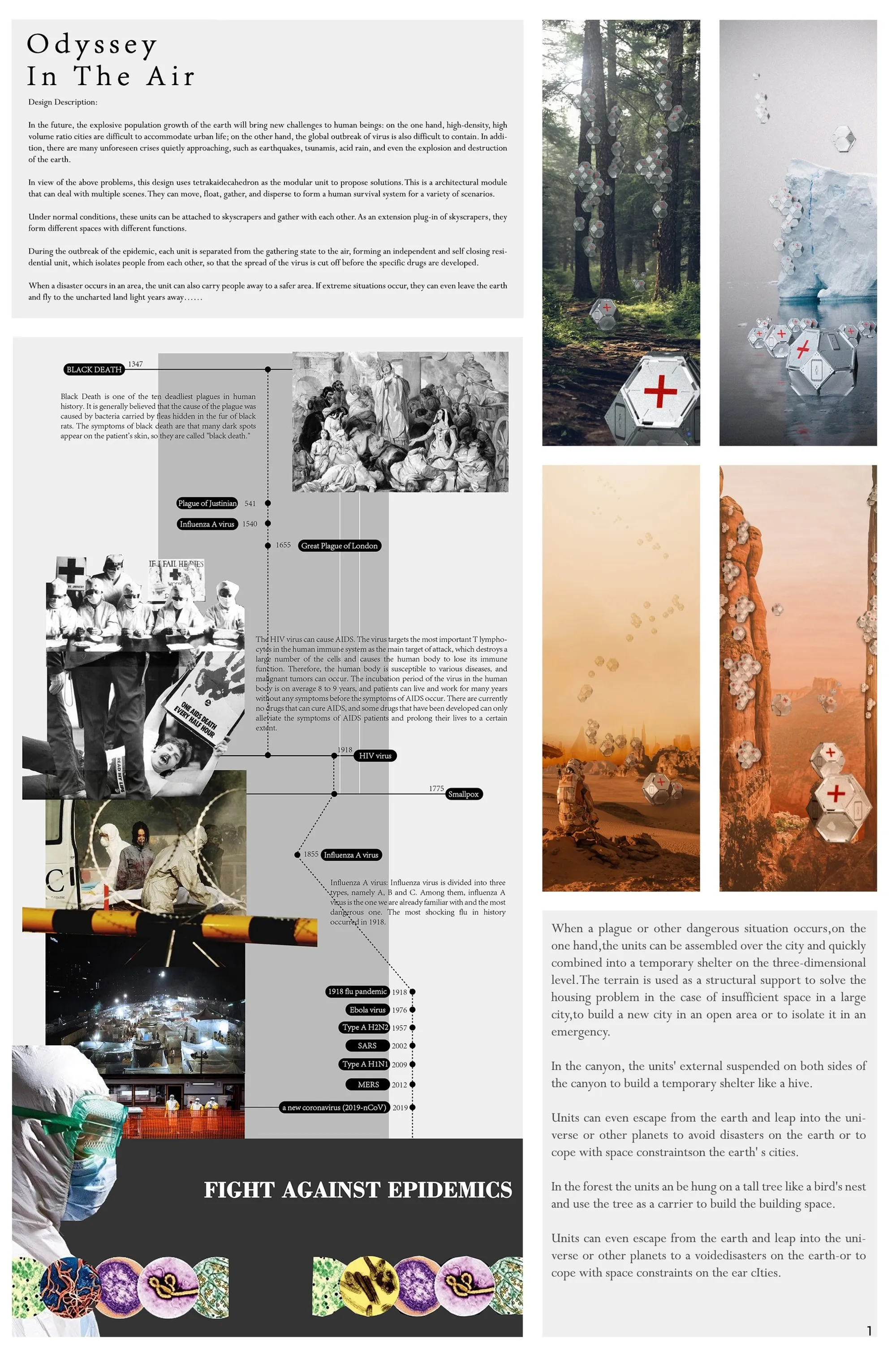
Odyssey In The Air: A Vision for Futuristic Modular Architecture in High-Density Cities
A futuristic modular architecture system redefining high-density urban living with adaptive airborne units for resilience, flexibility, and crisis response.


Futuristic modular architecture is rapidly emerging as a critical response to the pressures of urbanization, environmental instability, and global health crises. Odyssey In The Air, a shortlisted entry for the Architecture of the Apocalypse 2020 competition by 蒙 王, proposes an advanced architectural ecosystem where airborne modular units redefine how cities expand, adapt, and survive.
Set against dense metropolitan skylines, the project envisions a new layer of urban infrastructure that operates above the traditional city, introducing a dynamic and responsive architectural system.
Rethinking Urban Density Through Modular Architecture
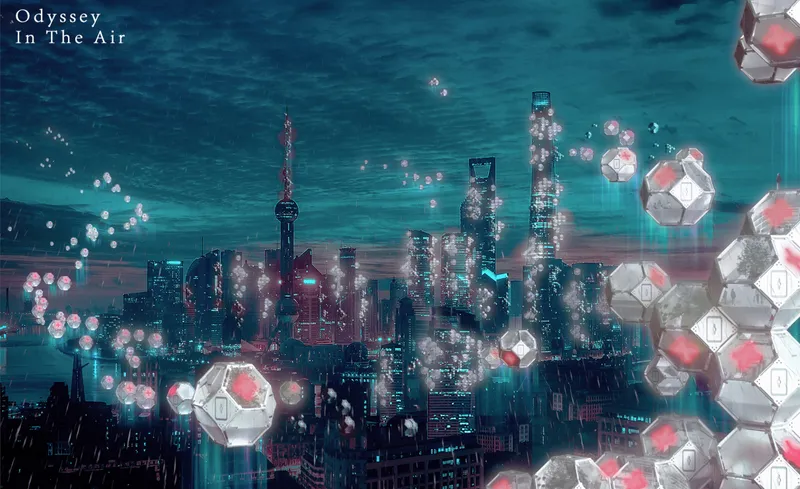
The project addresses one of the most urgent challenges in architecture: accommodating exponential population growth within limited urban land. Conventional horizontal expansion is no longer viable. Instead, Odyssey In The Air proposes vertical and aerial expansion using modular units that can attach to skyscrapers or operate independently in the air.
These units function as flexible spatial modules, capable of being reconfigured based on user needs. This approach transforms static architecture into a living system, where space is no longer fixed but evolves continuously.
Functional Diversity in Modular Units
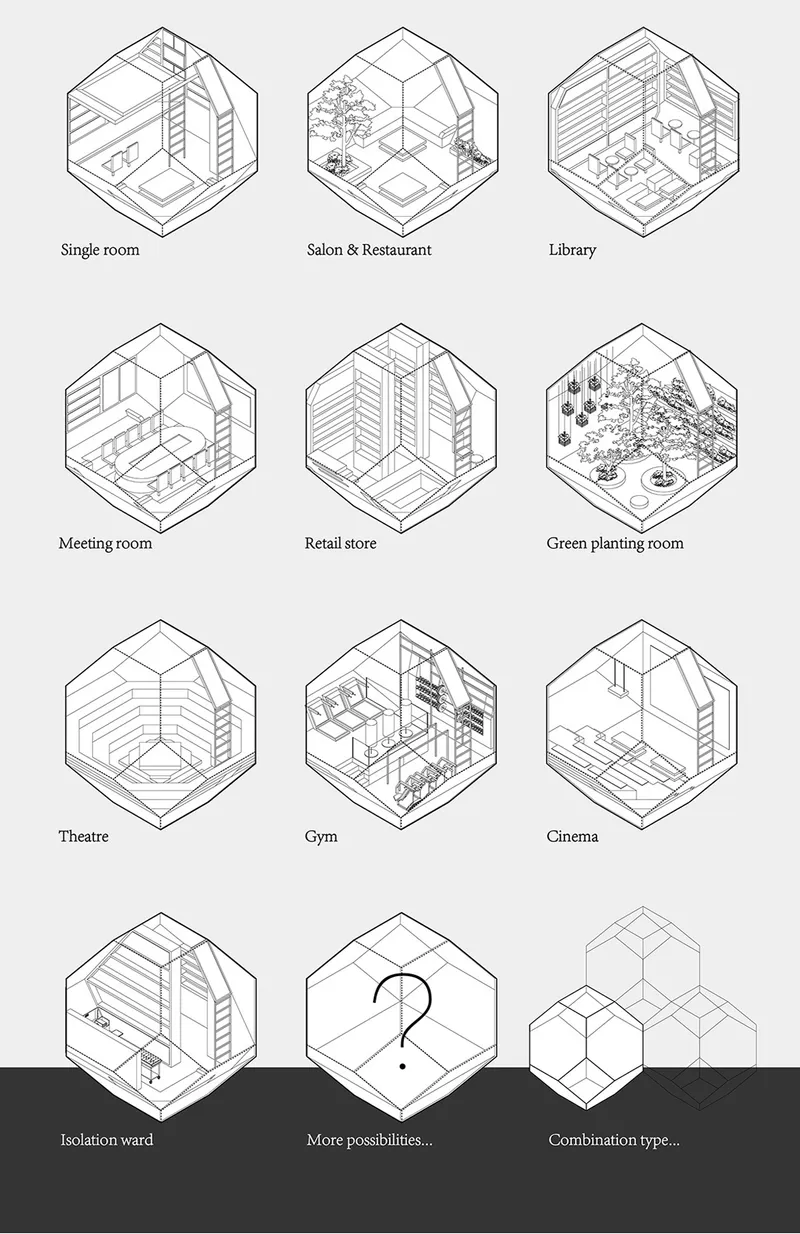
A key strength of this futuristic modular architecture system lies in its programmatic versatility. Each unit can be adapted for different functions, including:
- Residential spaces such as single rooms
- Social environments like salons and restaurants
- Knowledge spaces such as libraries
- Commercial modules including retail stores
- Wellness and recreation spaces like gyms and theaters
- Green planting rooms that introduce ecological balance
- Emergency isolation wards for healthcare scenarios
This diversity allows the system to support a fully functional urban ecosystem within a modular framework.
Design Logic and Computational Aggregation
The spatial organization of the project is driven by aggregation logic similar to computational design systems. Units can combine, separate, and reorganize dynamically, forming clusters that respond to density requirements and environmental conditions.
The design incorporates principles such as:
- Modular stacking and clustering
- Boolean spatial operations for aggregation
- Adaptive reconfiguration based on occupancy and demand
This creates a scalable system where urban growth is no longer constrained by rigid planning models.
Scenario-Based Adaptability
One of the most compelling aspects of Odyssey In The Air is its ability to respond to different urban scenarios.
Normal Conditions
Units remain attached to buildings, functioning as extensions of existing infrastructure while enhancing capacity and flexibility.
Transition Phase
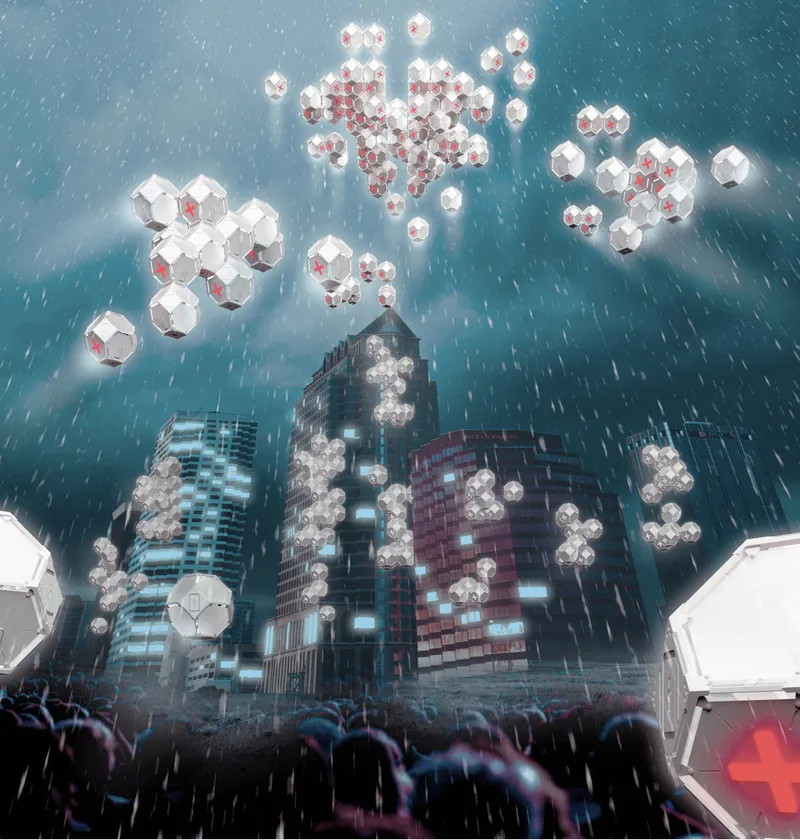
Modules begin to detach and reorganize, adapting to changing spatial or social requirements.
Emergency Response
In crisis situations such as pandemics or natural disasters, units become independent airborne pods. They isolate individuals, prevent disease spread, and ensure safety by physically separating populations.
This scenario-driven architecture introduces a new paradigm where buildings are no longer static but responsive entities.
Structural and System Design
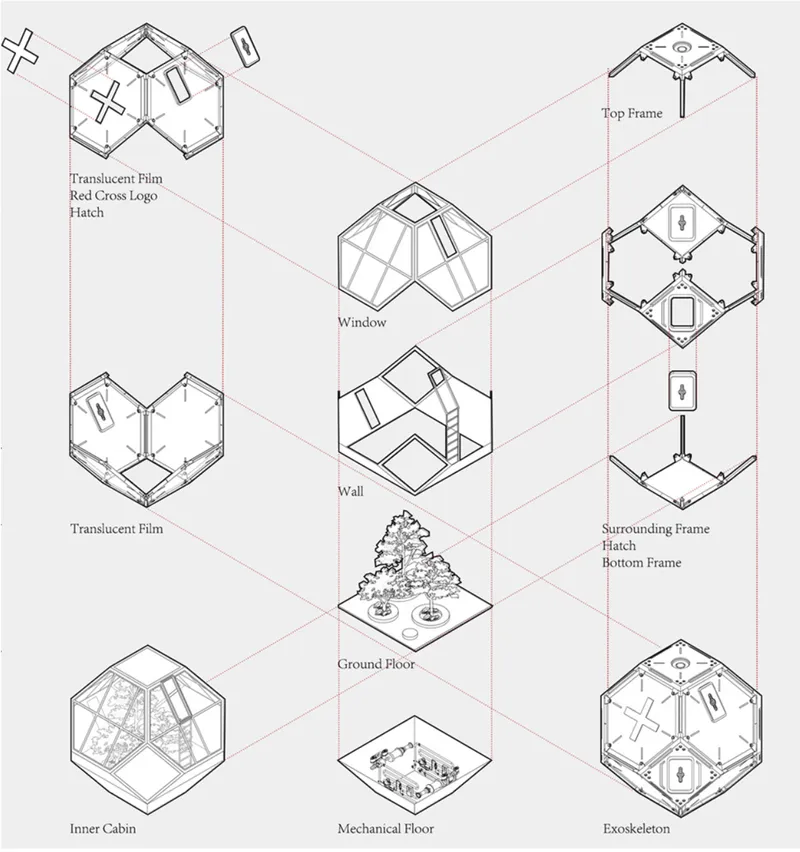
Each modular unit is constructed using prefabricated components designed for durability and environmental resistance. The system integrates multiple layers:
- External protective shell resistant to temperature, radiation, and chemical exposure
- Internal living modules optimized for comfort and safety
- Mechanical floors supporting utilities and energy systems
- Structural frames that enable attachment, detachment, and mobility
The units are connected through vertical and horizontal circulation networks, ensuring seamless movement between modules and the main urban fabric.
Autonomous and Self-Sustaining Systems
The project emphasizes independence and resilience. Each unit is designed to support essential life functions, including:
- Energy generation and storage
- Water and resource management
- Waste processing systems
In extreme scenarios, units can operate independently for extended periods, functioning as self-contained habitats.
Integration with Future Cities
Rather than replacing existing cities, Odyssey In The Air overlays a new infrastructural layer. Skyscrapers act as anchors, while airborne modules expand urban capacity vertically and horizontally.
This hybrid system creates a multi-layered city where ground, building, and airspace are all actively utilized.
Architectural Implications
This project challenges traditional architectural boundaries by introducing:
- Architecture as a dynamic system rather than a fixed object
- Urban space as a flexible, reconfigurable network
- Buildings as nodes within a larger adaptive ecosystem
It aligns closely with emerging trends in computational design, parametric systems, and responsive architecture.
Odyssey In The Air presents a compelling vision of futuristic modular architecture that addresses the complexities of modern urban life. By combining adaptability, mobility, and resilience, the project proposes a new model for cities that can evolve in real time.
As global challenges continue to intensify, such forward-thinking architectural systems may become essential in shaping the cities of tomorrow.




Popular Articles
Popular articles from the community


Hill & Cross Opera: Sculptural Opera House Architecture Shaped by Tallinn’s Landscape and Identity
Hill & Cross Opera reimagines opera house architecture in Tallinn through its sculptural hill, civic plaza, glass wave and a luminous cross.

The Earth Pod: 3D Printed Homes for Resilient Refugee Communities
The Earth Pod reimagines refugee housing through 3D printed homes made from clay, combining resilience, self-sufficiency, and rapid shelter.

Co-Life: Senior Housing Design That Reconnects Older Adults With the City
Co-Life reimagines senior housing design through healing gardens, shared streets, workshops, and a sustainable community across generations.

Co-life: Sustainable Architecture for Age-Friendly Community Living
Co-life reimagines sustainable architecture for seniors through courtyards, rammed earth, shared gardens, and spaces designed for belonging.


Similar Reads
You might also enjoy these articles

Eco Chapel: A Green Architecture Pavilion Designed in Symbiosis with the Forest
Eco Chapel uses green architecture to weave prayer, learning and reuse into a forest pavilion shaped by modular hexagonal canopies for life.
Kaffeebühnen: Coffee Shop Architecture Designed as a Civic Stage Between Vienna’s City and Park
Kaffeebühnen turns coffee shop architecture into a civic stage, linking Vienna’s park edge, urban life, warm timber yards, and coffee craft.
Healing Façade: Sustainable Architecture for Reforestation, Community, and Sacred Ecology in Ethiopia
Healing Façade reimagines sustainable architecture as a living wall that restores soil, catches water and renews Ethiopia's forest churches.


Urban Forest: A Vertical Ecosystem for 5,000 Workers in Singapore's Changi Business Park
Radially stacked pods and layered green decks turn a 7-acre plot into 47 acres of ecological workspace projected for 2040.

Explore Architecture Competitions
Discover active competitions in this discipline



Challenge to reimagine the Iron Throne


Photograph architecture without architects


Illustrate the lost glory of Angkor Wat - Render Challenge


Design challenge to reuse E-waste
Comments (0)
Please login or sign up to add comments
No comments yet. Be the first to comment!