
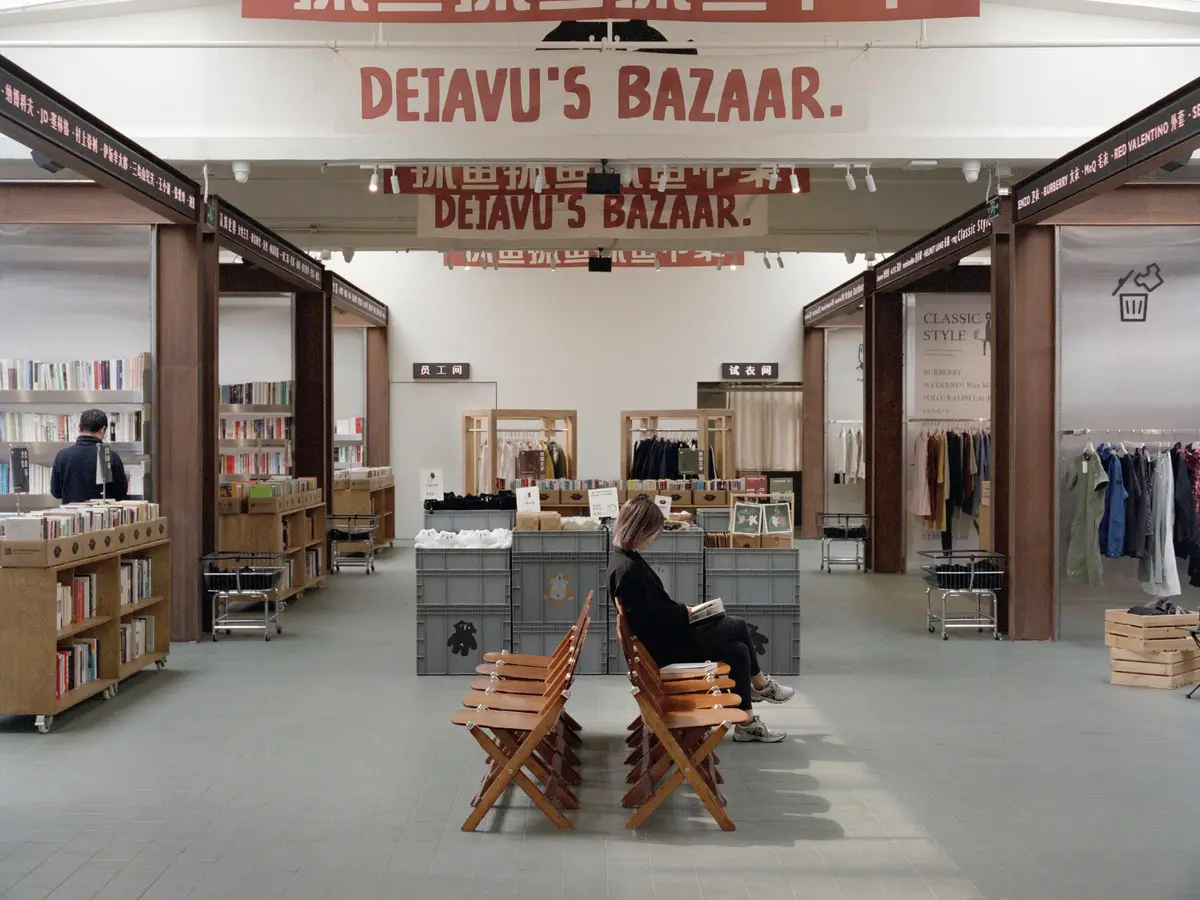
Offhand Practice Converts a Beijing Factory Compound into a Recycled Book and Clothing Store
Deja Vu Recycled Store occupies 700 square meters of a former electromechanical institute, trading industrial decay for curated secondhand retail.


Recycling as a retail concept tends to get dressed up in either rustic nostalgia or antiseptic minimalism. Offhand Practice sidesteps both traps at Deja Vu Recycled Store, a 700 square meter secondhand book and clothing outlet inside the Beijing Electromechanical Institute compound. The site sits among abandoned factories, creative studios, and the kind of trendy storefronts that colonize former industrial zones. Rather than erasing the compound's rough edges, the architects leaned into them: dead vines, tangled wires, a massive old chimney, and a derelict garbage shed all formed the raw canvas for a space that treats reuse as a design language rather than a marketing veneer.
What makes the project genuinely interesting is the way it deploys mobile, interchangeable display systems within a structural skeleton of timber portals and galvanized steel frames. Nothing here pretends to be permanent. Wheeled plywood units, folding chairs, caster-mounted garment racks: the entire interior can be reconfigured in an afternoon, which is exactly the point for a store whose inventory is, by definition, always changing. The architecture becomes a framework for improvisation, not a fixed container for a curated mood.
Street Presence and Entry Sequence

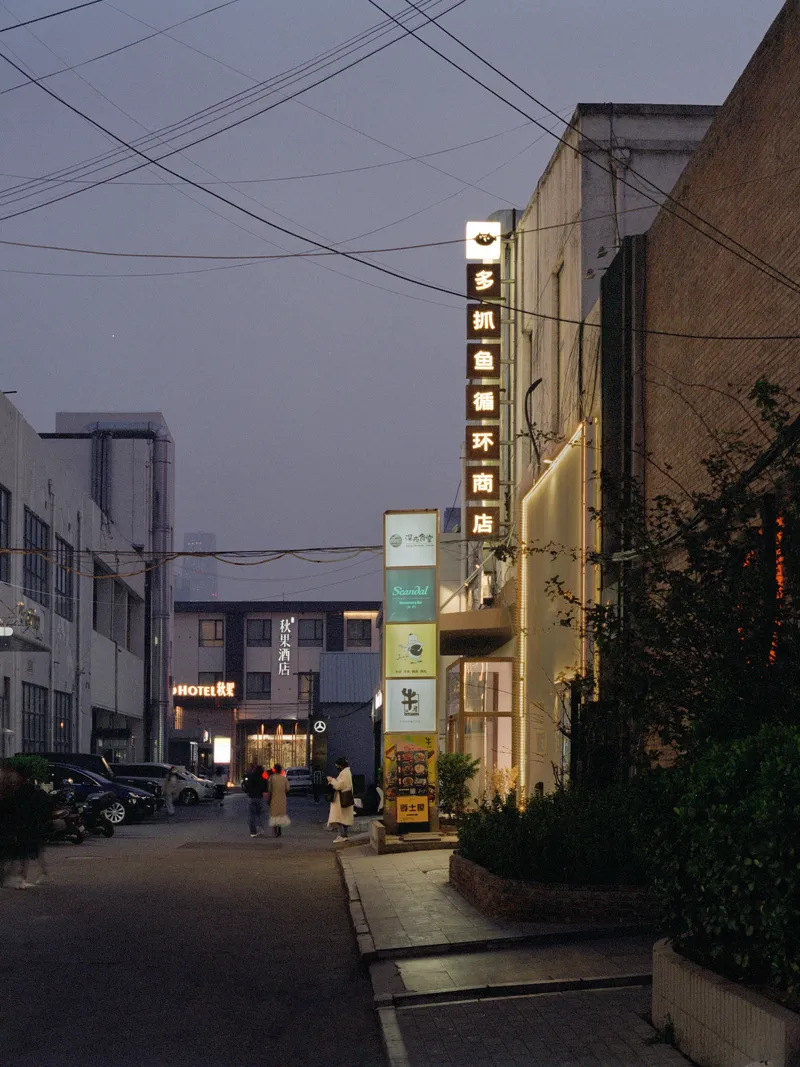

From the narrow street outside, Deja Vu reads as a warm slot of light behind dark timber frames. The facade strategy is restrained: a backlit grid panel anchors the composition at dusk, and the entrance is set back to offer a moment of shelter before you cross the threshold. Overhead power lines and neighboring storefronts give the approach an accidental urban charm that no amount of signage could replicate.
The entry vestibule sets the tone with dark green tiled steps and bilingual wall graphics that introduce the brand's philosophy without belaboring it. The green tile, which reappears throughout the interior, acts as a low-key material thread, linking circulation zones and service areas to the threshold where you first encountered the space.
Timber Portals and Translucent Partitions
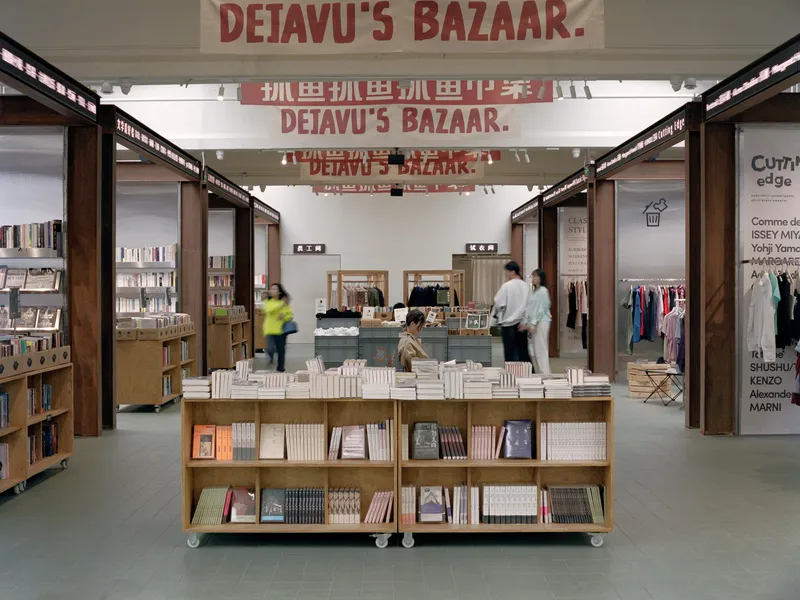

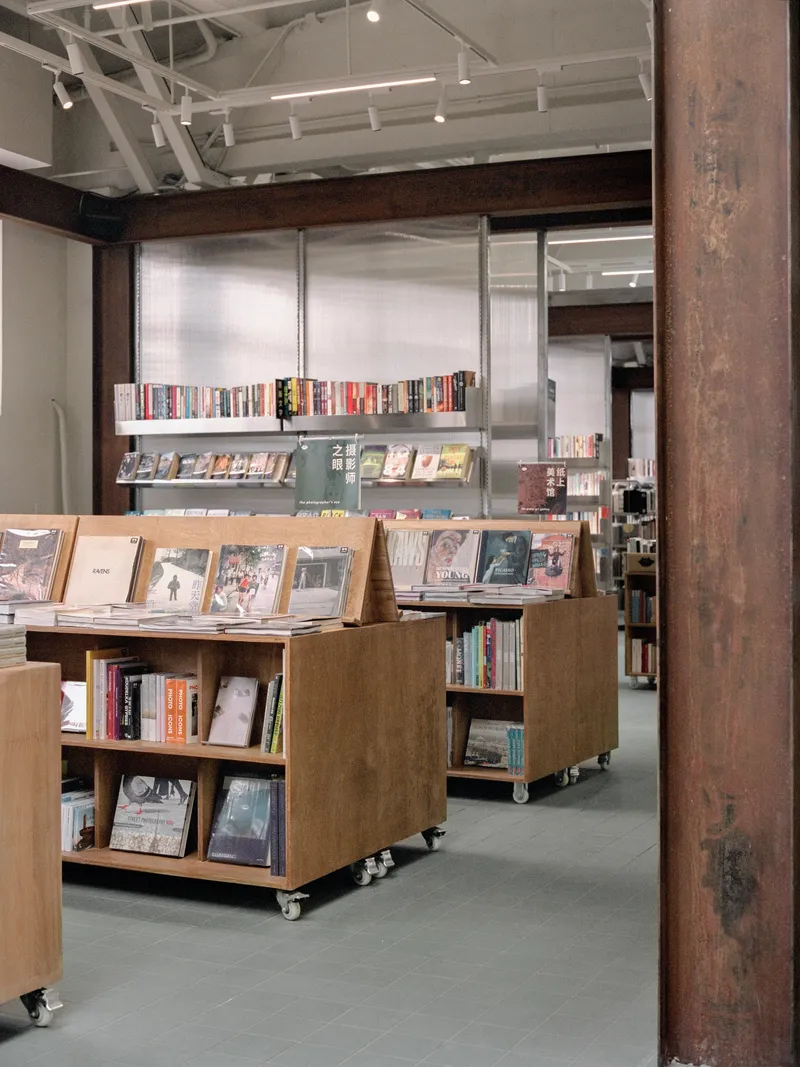
The interior is organized by a sequence of timber-framed portals that establish rhythm without closing off sightlines. Corrugated polycarbonate panels fill the bays between columns, catching light and blurring the boundary between display zones. The effect is simultaneously warehouse and gallery: you can always see through to the next section, but each zone retains its own character.
Wheeled plywood display units cluster in front of these translucent walls, holding books at browsing height. The units are deliberately plain, more market stall than boutique fixture. That democratic display logic, giving every item equal visual weight regardless of price or provenance, reflects the greengrocer-inspired approach that Offhand Practice has developed across the Deja Vu brand.
The Bookstore as Social Space
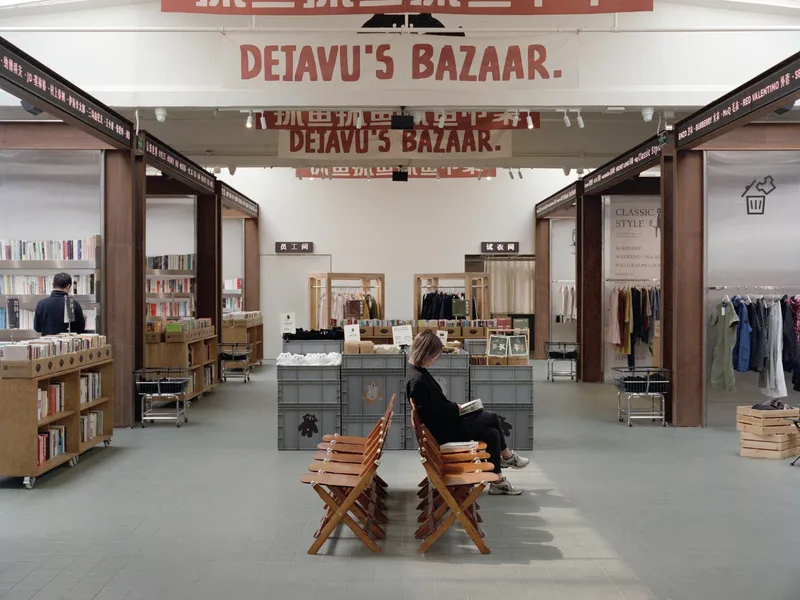
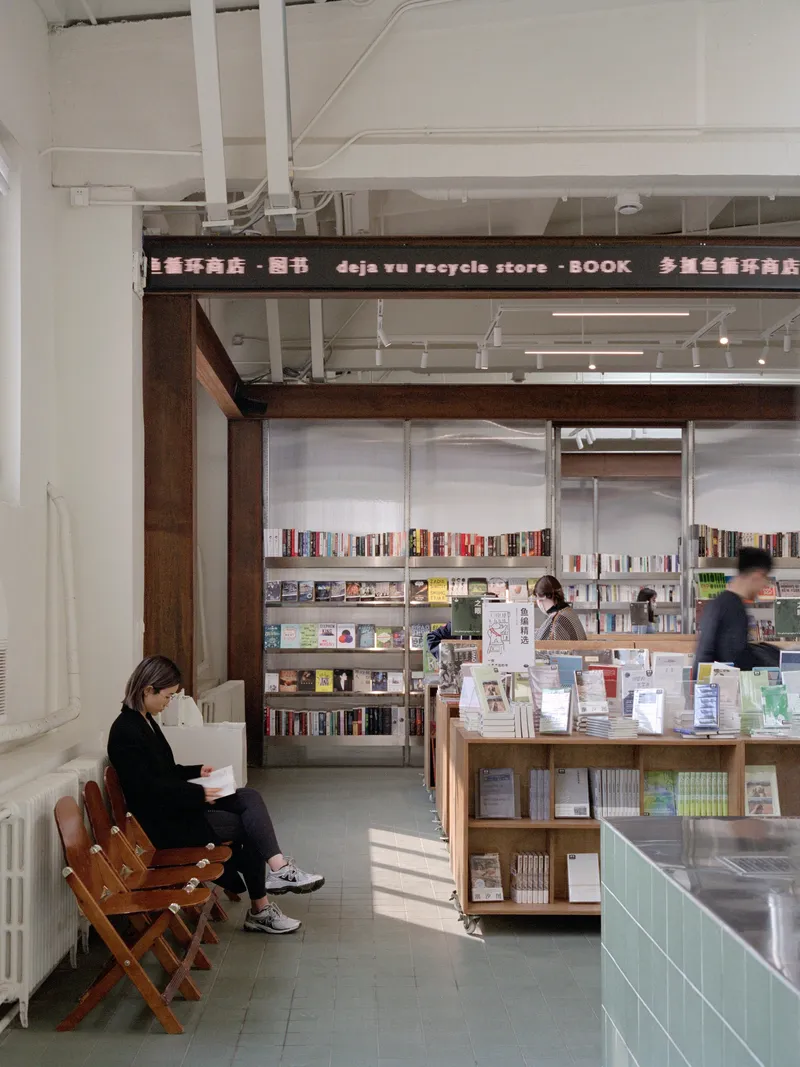
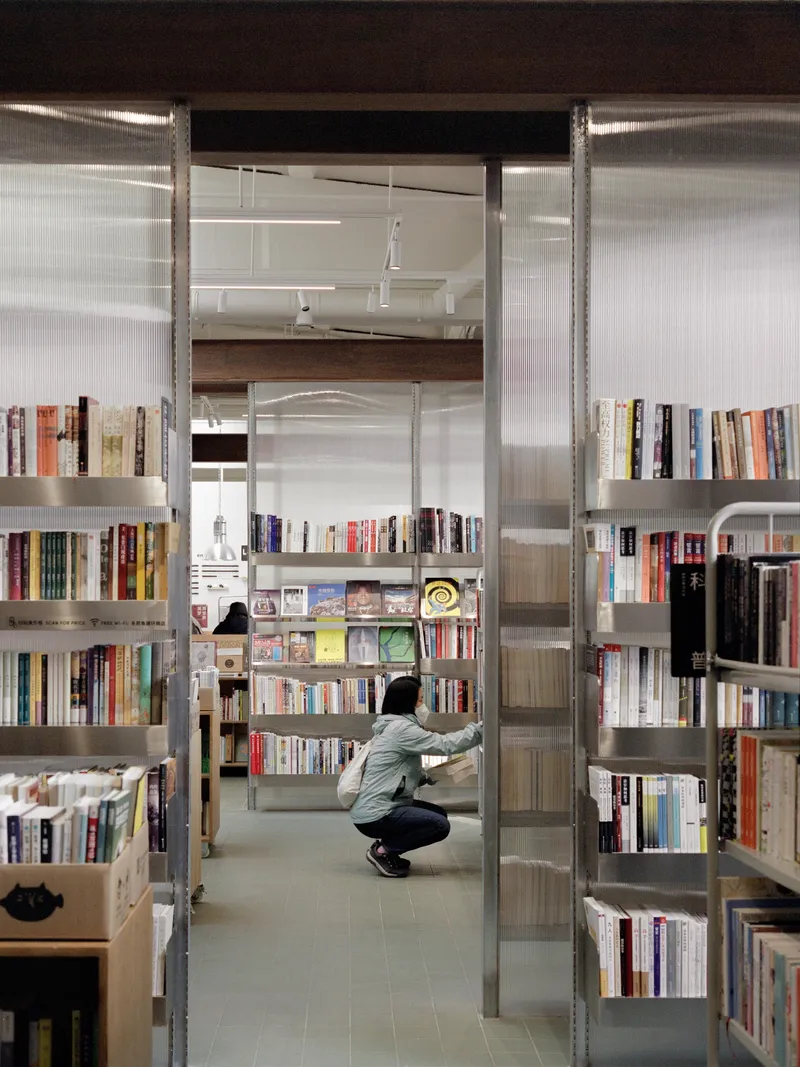
Preserved vintage signage hangs above a central seating area where folding chairs gather beneath exposed timber beams. The decision to keep the original signage is small but consequential: it anchors the space in the compound's industrial history and signals that the building has a biography older than the store. Symmetrical north-south windows and overhead skylights pour daylight across the reading zone, a simple passive strategy that reduces reliance on artificial lighting during operating hours.
The reading area is not ornamental. Visitors sit, browse, and linger. The exposed white ceiling structure overhead stays honest about the building's bones, and the folding chairs can be rearranged or removed for events. It is a retail interior that doubles as a community room, which is exactly what a recycled bookstore in a creative compound should be.
Shelving Systems and Display Logic
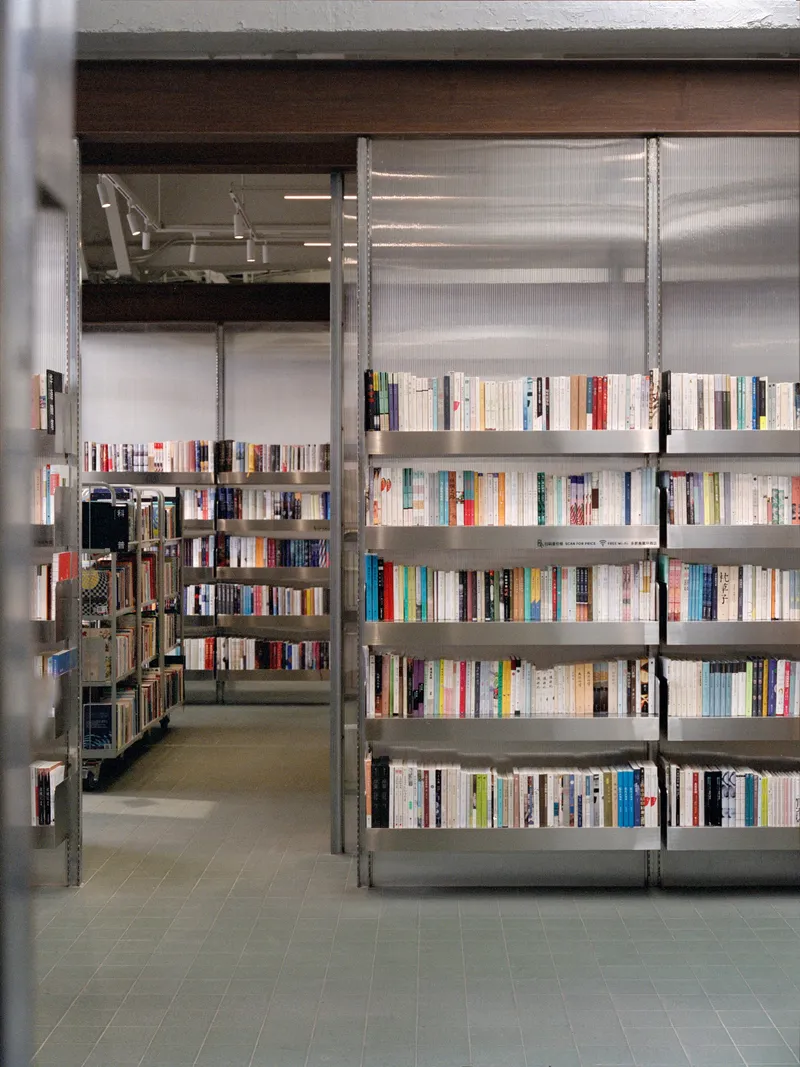
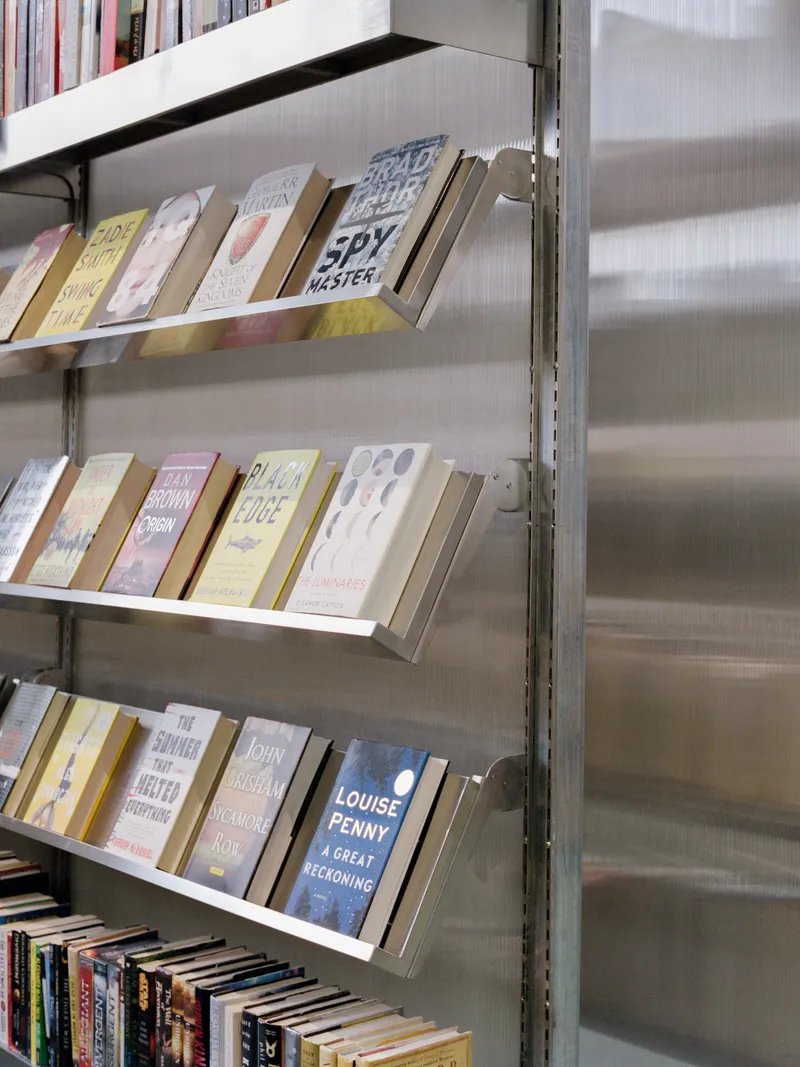
Metal shelving units with angled display ledges line the corrugated polycarbonate walls, holding books face-out for easy scanning. The shelves are industrial standard, the kind you might find in a hardware supply catalog, repurposed here with minimal modification. Their reflections in the translucent panels create layered visual depth that makes the modest floor area feel more expansive.
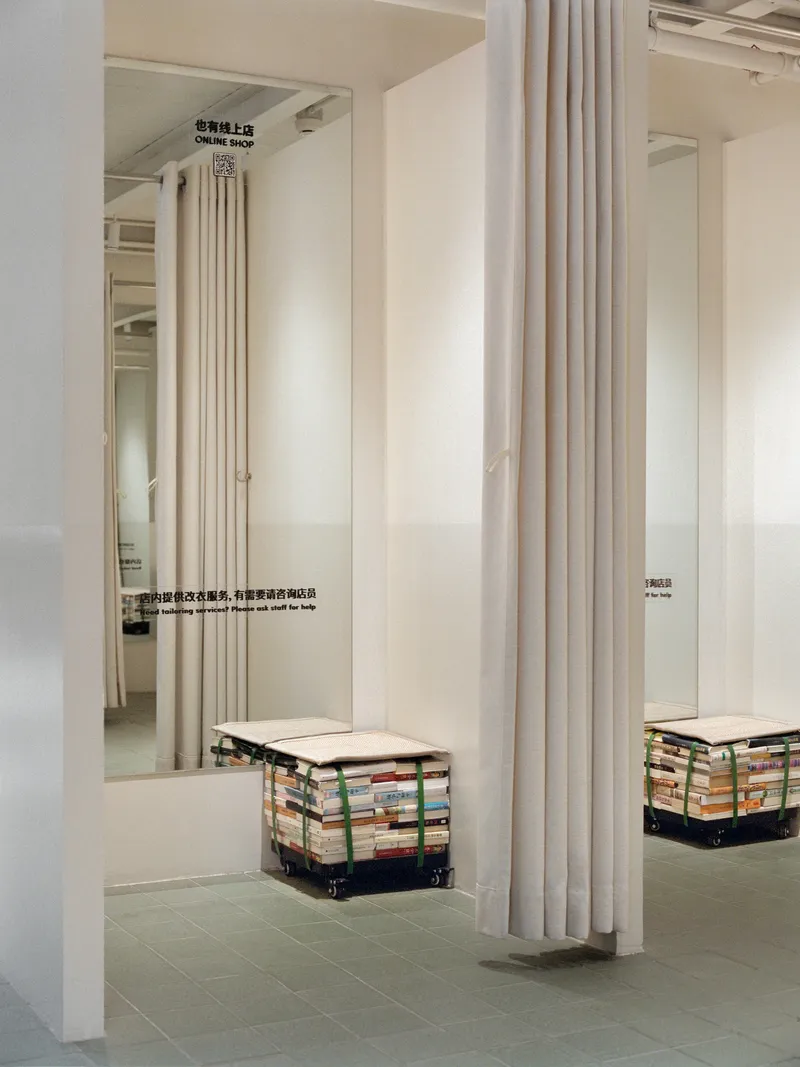
One of the more charming details is a seating cube built from stacked recycled books on a wheeled base, parked beside a white curtain divider and mirrored panels. It is furniture made from inventory, collapsing the boundary between product and architecture. Overhead mirrored surfaces amplify this effect, multiplying the books into a seemingly infinite column.
Clothing Retail on the Upper Level
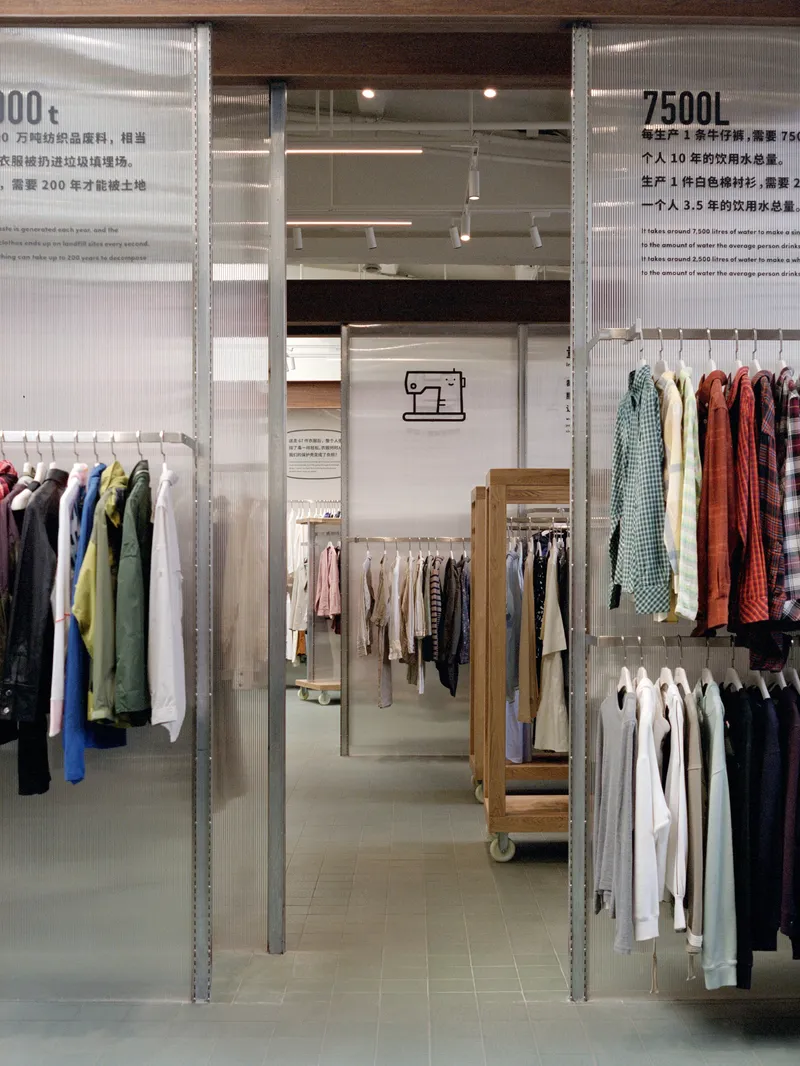
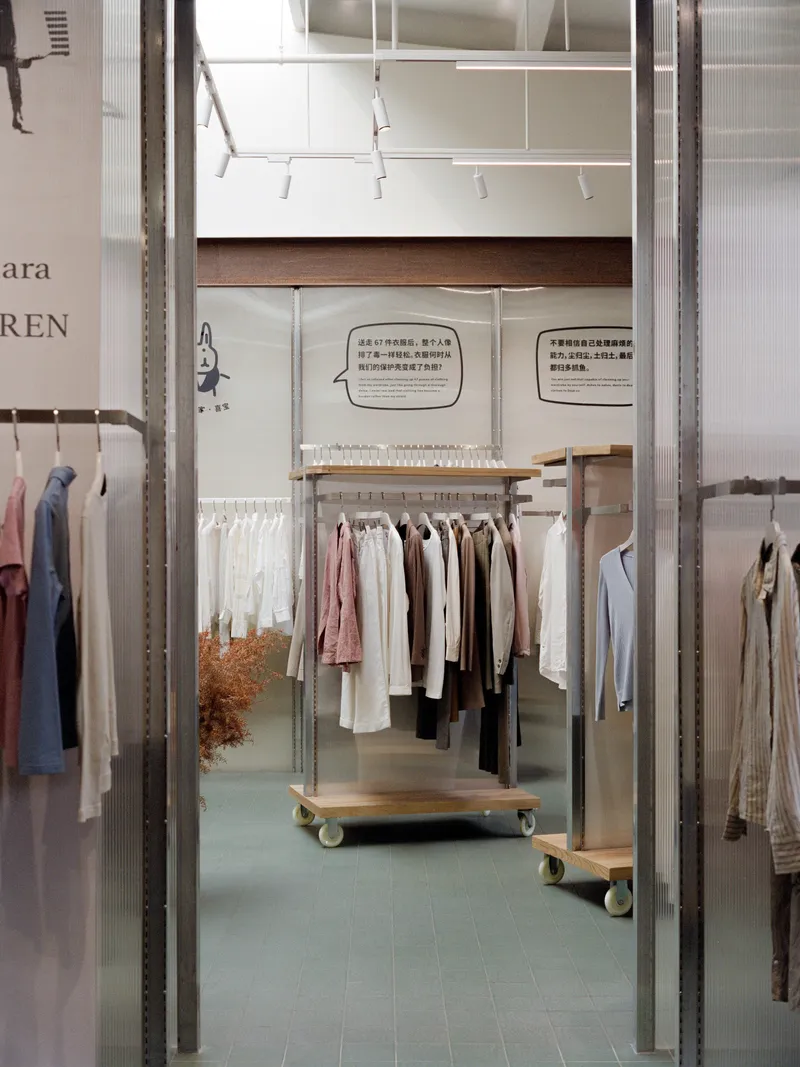

The clothing section operates with the same kit-of-parts logic as the bookstore below but substitutes garment racks for shelving units. Galvanized steel partition frames define zones without enclosing them, and translucent panels again provide soft diffusion between sections. Graphic signage floats above the racks, readable from a distance but unobtrusive up close.
Freestanding timber clothing racks on casters sit beneath exposed ductwork and red signage, reinforcing the idea that everything here is provisional. The garments themselves become the color and texture of the space. When the inventory turns over, the atmosphere shifts. The architecture accommodates that instability instead of fighting it.
Material Details and Finishing Touches
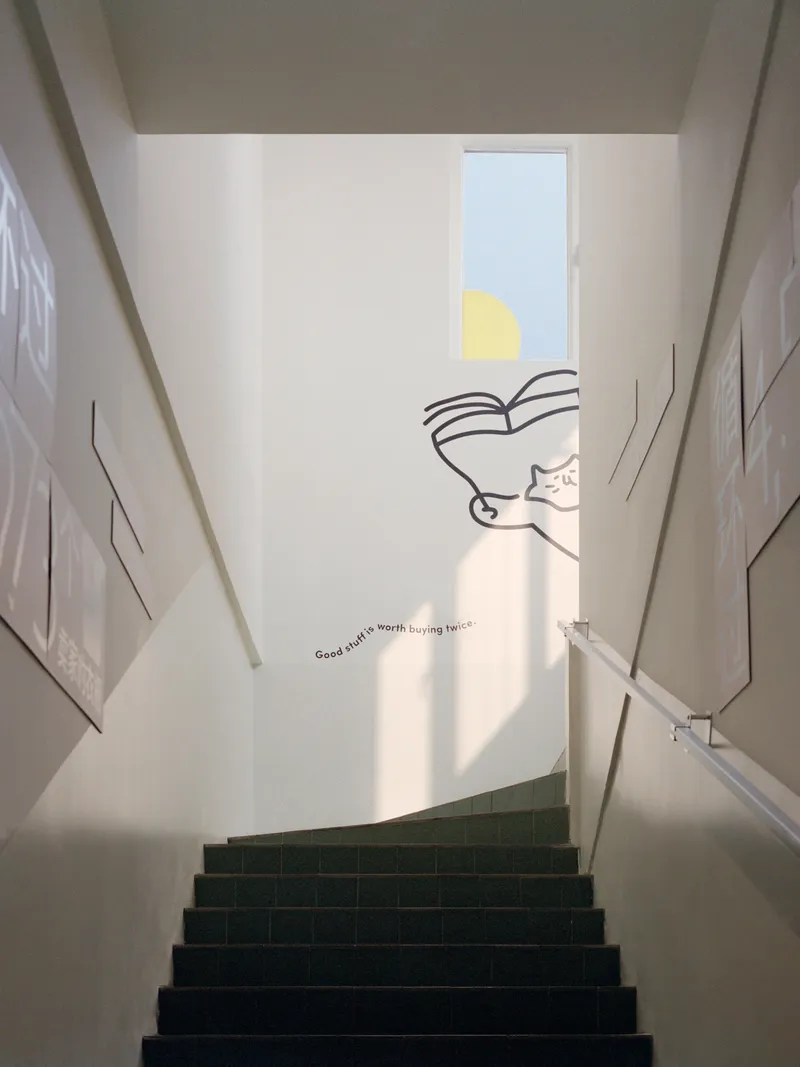


Green tile treads in the stairwell catch sunlight from a high window above mural graphics, creating one of the most photographed moments in the store. The green is a specific, slightly institutional shade that recalls the compound's former life as an electromechanical institute rather than any fashionable palette. It appears again on the cashier counter, clad in dark green square tiles beneath chrome pendant lights and wall text.
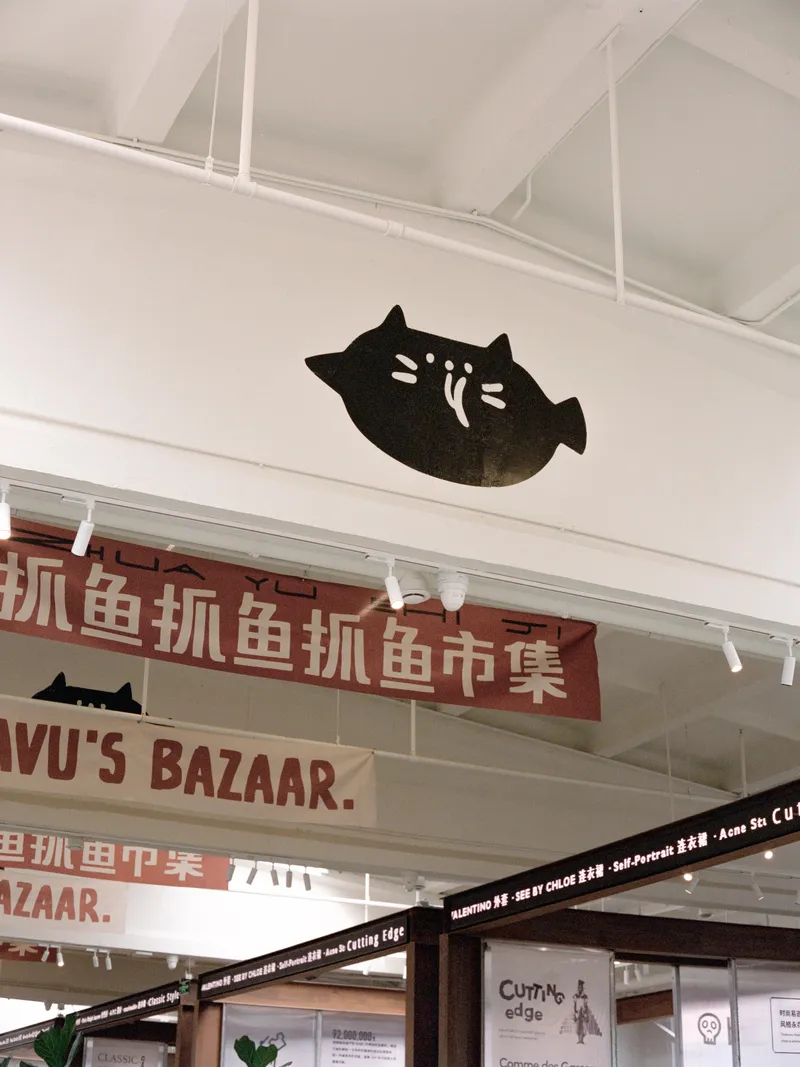
Small elements accumulate meaning: a white radiator exposed beside a timber column and half-height partition, track lighting along the clothing section, a black cat silhouette sign that functions as wayfinding and brand identity simultaneously. None of these details are expensive. Their power comes from precision of placement, not cost of material.
Plans and Drawings
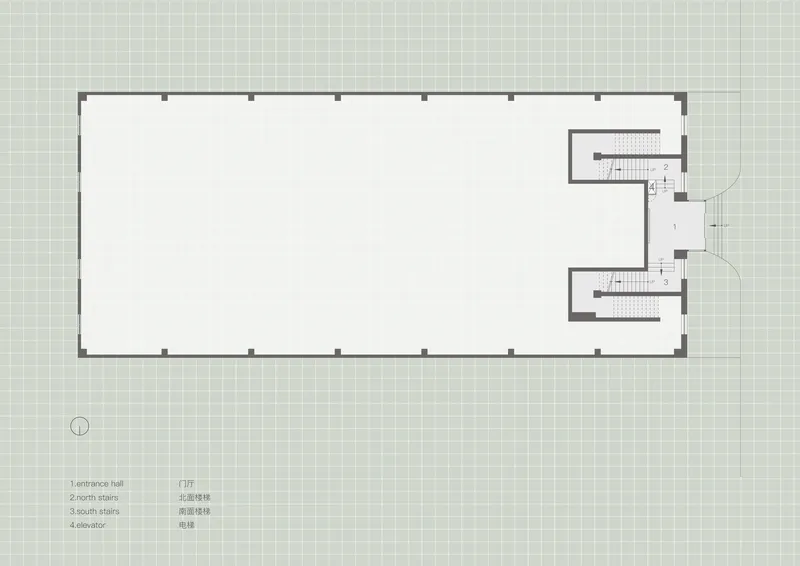
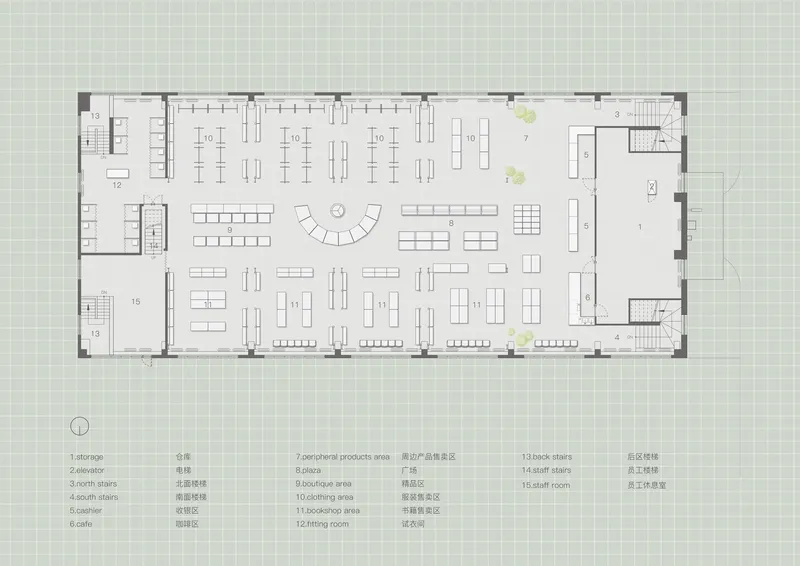
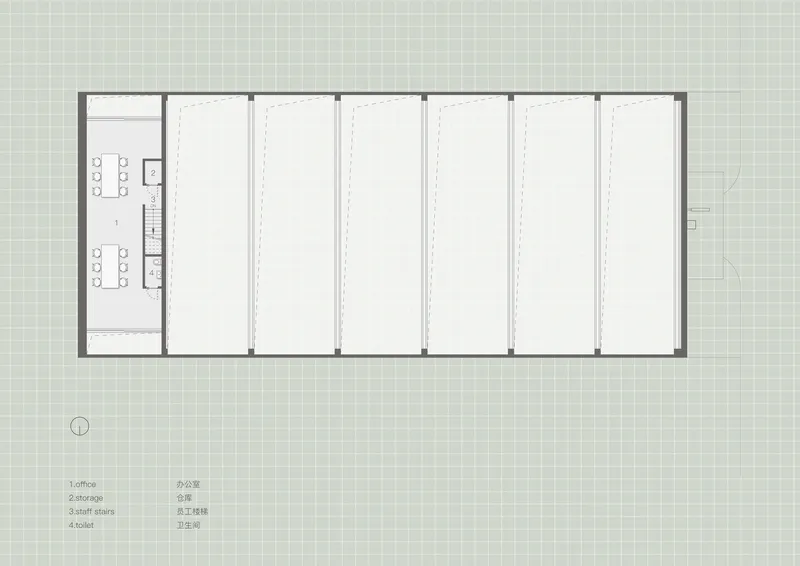
The floor plans reveal a straightforward rectangular hall divided into parallel structural bays, with two stair volumes and an elevator on the east side, and a service core to the west. The ground level organizes the open bookstore around seating areas and product displays, while the upper level maintains an open workspace layout. What the plans make clear is that Offhand Practice resisted the temptation to carve the big room into a maze of themed zones. The structural grid does the spatial work; the mobile furniture does the rest.
Why This Project Matters
Deja Vu Recycled Store succeeds because it takes the concept of reuse seriously at every scale. The building itself is reclaimed industrial space. The inventory is secondhand books and clothing. The display furniture is mobile, modular, and built from basic materials. Even the green tile is a nod to institutional finishes that predate the store. There is no moment where the design contradicts its own premise, which is rarer than it sounds in the world of sustainability-branded retail.
More broadly, the project offers a useful model for retail architecture in adaptive-reuse compounds. Instead of importing a polished aesthetic that overwrites the site's history, Offhand Practice built a flexible scaffold that allows the building's original character to coexist with commercial function. The result feels lived-in from day one, which is the highest compliment you can pay a space dedicated to giving objects a second life.
Deja Vu Recycled Store by Offhand Practice (lead architects: Nie Xuan, Yuan Yuan, Li Yue, Lin Chenxi). Located in the Beijing Electromechanical Institute compound, Beijing, China. 700 m², completed 2021. Photography by Yanyun Hu.
About the Studio
Share Your Own Work on uni.xyz
If projects like this are the kind of work you want to make, uni.xyz is a place to publish your own, find collaborators, and enter design competitions.


Popular Articles
Popular articles from the community


Cube Design Draws an Ecological Corridor Between Two Shenzhen Hills with the Nankai Building
Beside Shenzhen's container docks, the Nankai Building pairs stacked balconies with a climbing green screen to connect two hillsides across its height.

FCC Arquitectura Expands a Portuguese Granite House with a Board-Marked Concrete Wing
In Portugal, JV House pairs a cleaned-up whitewashed and granite dwelling with a timber-shuttered concrete extension, courtyards and a garden pool.

David Ortega Stacks a Two-Story Mexico City Penthouse Around a Steel Stair and a Pergola-Shaded Roof Terrace
In Colonia Roma, a 300 m² penthouse uses oak joinery, a planted steel stair and a slatted roof pergola to make a new-build apartment feel like a house.

graciastudio Turns a Viewless Tijuana Lot Inward Around a Courtyard of Concrete, Timber and Trees
In Tijuana, Jorge Gracia's GA2 House stacks a timber-clad private floor over exposed concrete and replaces a missing view with a planted interior patio.

Similar Reads
You might also enjoy these articles


LAVA Architecten Gives Vocational Education a Sawtooth-Roofed Face on a Mechelen School Campus
In Mechelen, Belgium, a 2,053 m² STEM school on a 6×6 m grid turns workshops and classrooms into rooms that can be rearranged as teaching changes.

KEMA Studio Turns a Derelict Marvila Attic into a 60 m² Lighthouse Apartment Above Lisbon
In Lisbon's Marvila district, a rebuilt roof, four skylights and two plywood volumes turn an unlivable attic into a bright home facing the Tagus.

Pixel Gardens: One Repeated Module Stacked Into a Terraced Social Housing Tower for Famagusta
Salem Bader's shortlisted housing tower builds a vertical neighbourhood from one repeated module, offsetting units to carve terraces, light and air.

Bao Huynh Watercolor Atelier: A Serene Art Retreat in Hội An
Bao Huynh Watercolor Atelier in Hội An blends multifunctional art spaces, sustainable design, local materials, and family-friendly living in a serene environment.

Explore Recycled Competitions
Discover active competitions in this discipline

Challenge to design luxury tourism on rails

VR headsets Storefront design competition

Designing a staircase for a client
Comments (0)
Please login or sign up to add comments
No comments yet. Be the first to comment!