

oftn studio Threads a Bukchon Cafe Through the Bones of an Old Timber House
In Seoul's historic Bukchon neighborhood, a 85-square-meter coffee shop preserves its wooden skeleton to serve breakfast and tradition alike.


In Bukchon, Seoul's most visible repository of traditional Korean domestic architecture, the challenge is never what to build. It is what to leave standing. oftn studio understood this when they took on onecafe, an 85-square-meter coffee shop threaded through the structure of an existing timber house. Rather than gutting the interior and draping it in contemporary finishes, the studio organized every decision around the existing wooden pillars and roof trusses, treating the old bones of the building as both spatial logic and aesthetic anchor.
The cafe serves a dual purpose: breakfast for guests staying at the surrounding accommodations (a follow-up to the studio's earlier project, Nostalgia Hiddenjae) and coffee and desserts for the public. That hybrid program, part hospitality lounge, part neighborhood cafe, demanded an interior that could feel intimate at breakfast and open during the afternoon. The result is a space that reads as genuinely old and genuinely new at the same time, with neither register trying to overpower the other.
Structure as Interior
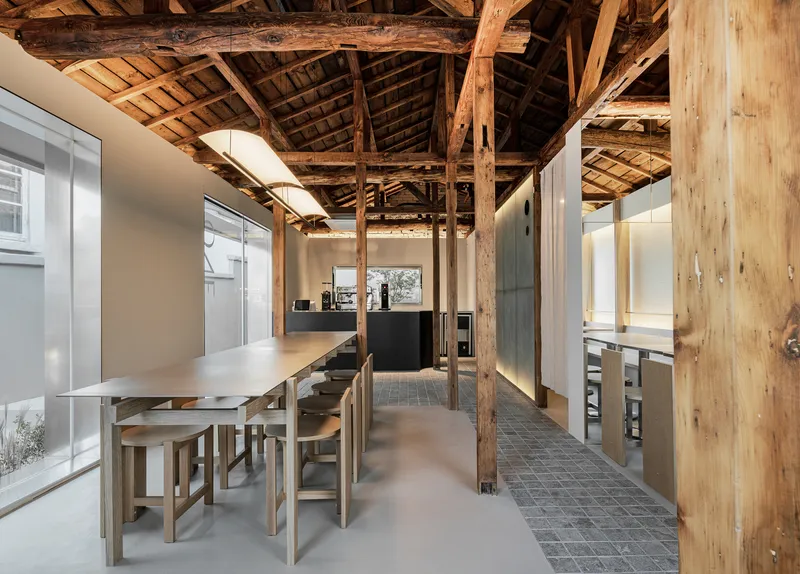
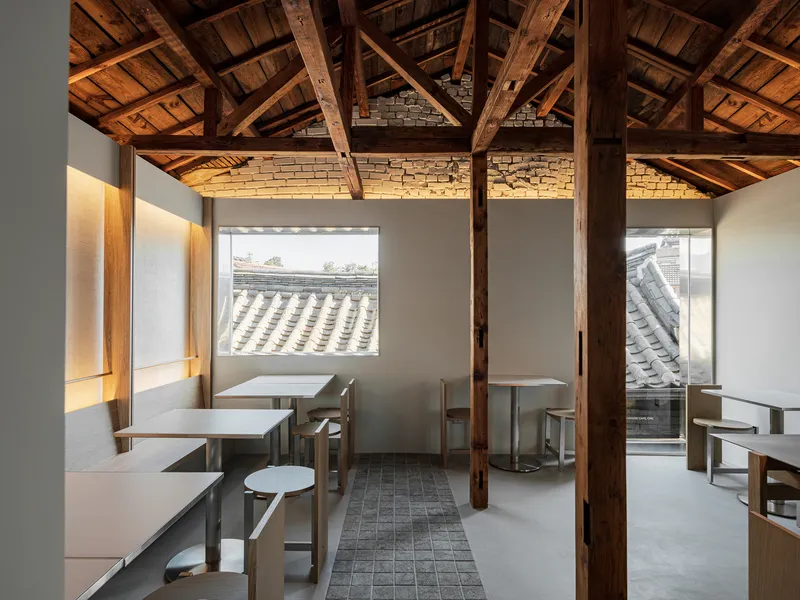
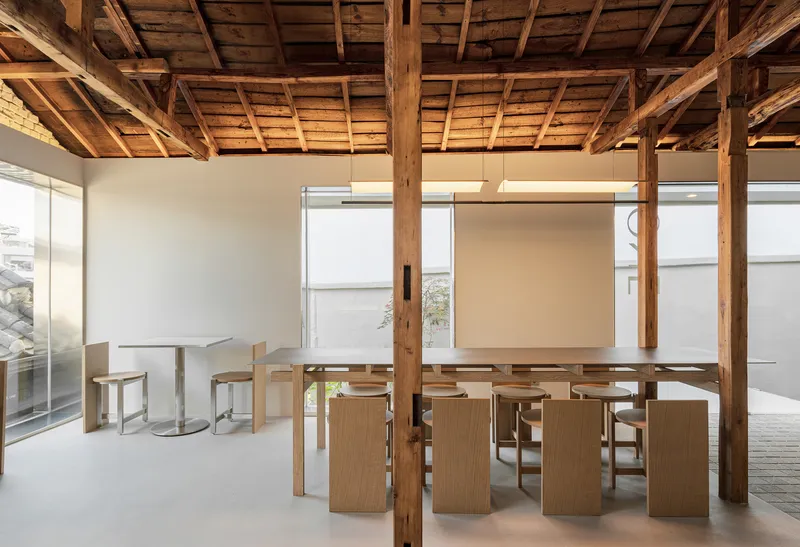
The most striking decision here is the refusal to conceal. Every timber column and every roof truss is exposed, not as a decorative gesture but as the literal framework through which customers move. The dining area unfolds along a long axis defined by the rhythm of these wooden pillars. Seating clusters form naturally in the bays between columns, giving each table a degree of enclosure without any partitions. The vaulted timber ceiling overhead absorbs sound and scales the room down to something domestic, even communal.
There is a restraint to the material palette that makes the timber legible. Grey brick walls, polished concrete floors, and fabric screens create a neutral ground. Against it, the weathered grain of the wood reads with real clarity. You notice where joints have darkened, where beams have settled. The structure carries its own biography.
Framing the Neighborhood
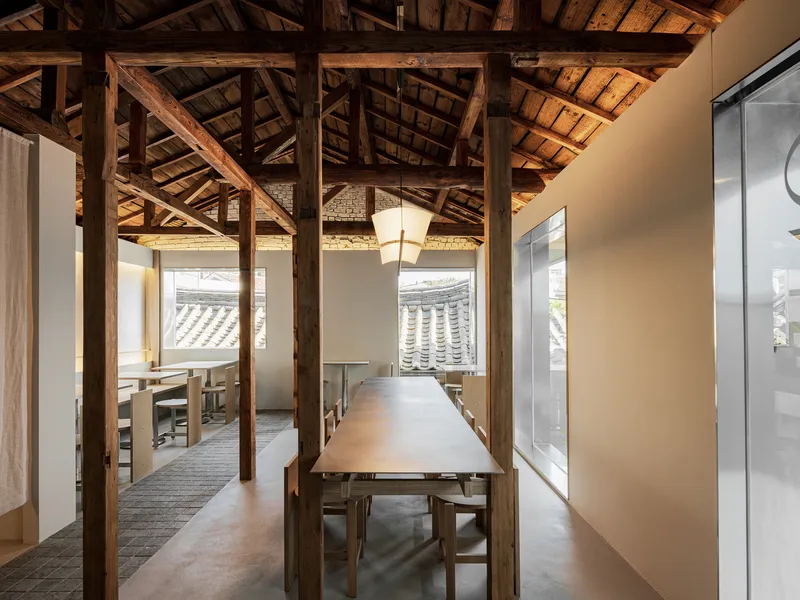


Bukchon's curved ceramic roof tiles are a landscape in themselves, layered and undulating across the hillside. oftn studio treats them as borrowed scenery. Windows are placed precisely to frame the neighboring tile roofs, turning the view into a kind of slow-motion painting that shifts with the light. In image after image, the exterior appears as a composed tableau of grey curves and warm clay, held in place by the deep reveals of the window openings.
The grey brick walls inside echo the tone of those roofs, creating a visual continuity between interior and exterior. Sitting at one of the window-side tables, the distinction between the cafe and its context blurs. You are not looking at tradition from a distance. You are inside it, drinking coffee under the same kind of roof.
The Counter and the Craft

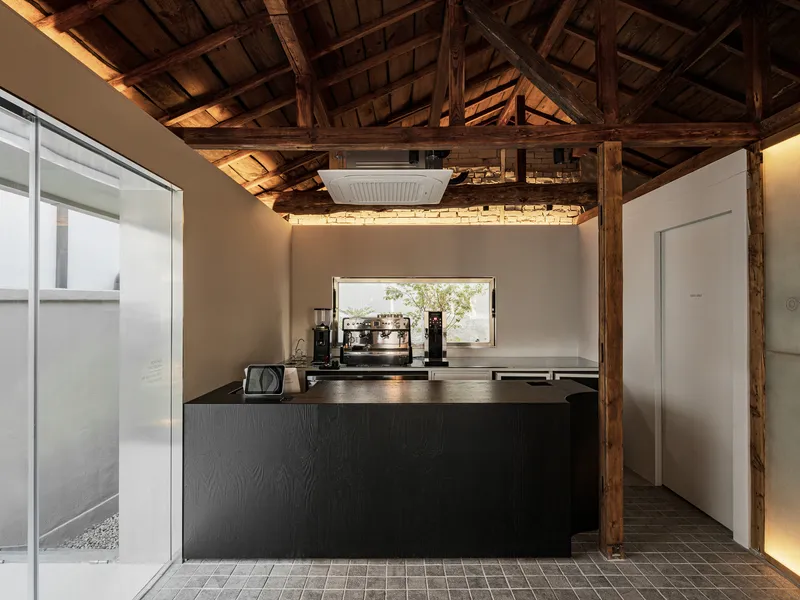
The cafe counter is a dark oak island, low and heavy, anchored beneath the preserved timber columns. Espresso equipment lines its surface with the kind of purposeful arrangement that signals a serious coffee program. A horizontal window behind the bar frames a strip of greenery, pulling daylight across the work surface without flooding it. The coffered wooden ceiling above the counter is denser, more articulated than the open trusses in the dining area, suggesting a zone of compression and focus.
It is a deliberately theatrical arrangement: the barista works within the old structure as if the building were a stage set designed centuries ago for exactly this purpose. The dark timber seating at the counter reinforces the mood, pulling customers into the same tonal register as the wood overhead.
Light Screens and Brick Floors
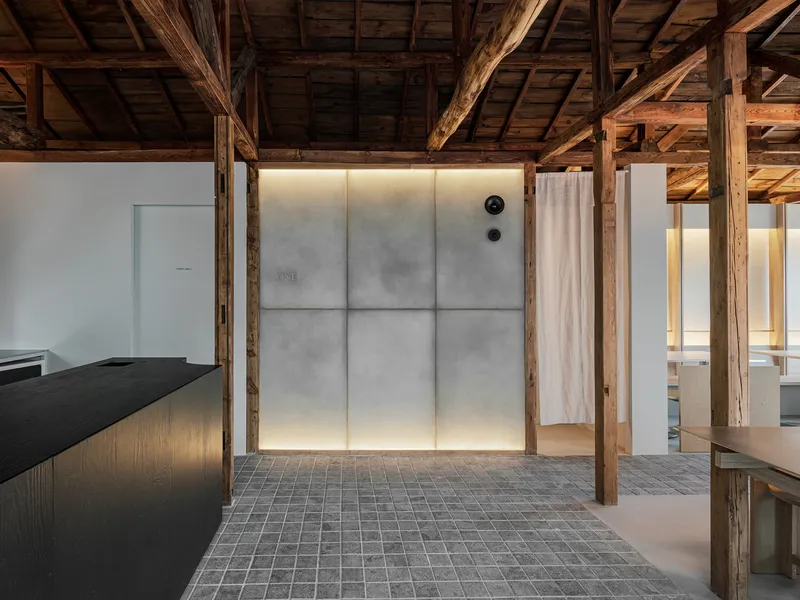
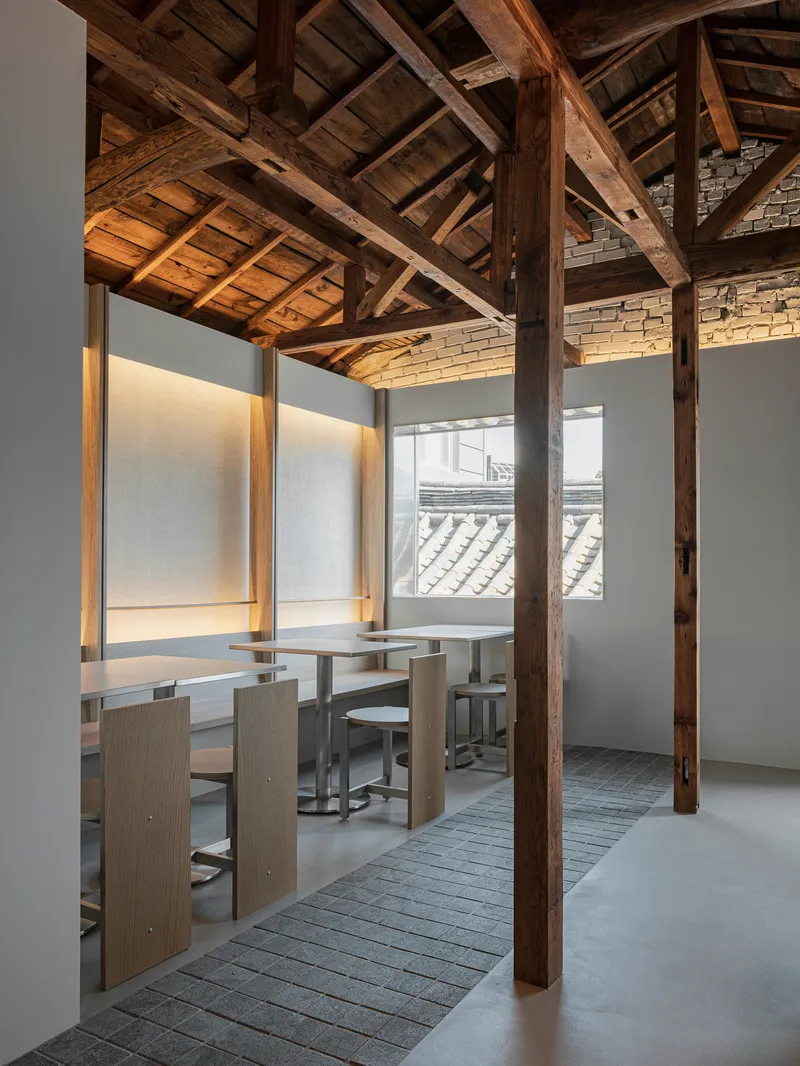
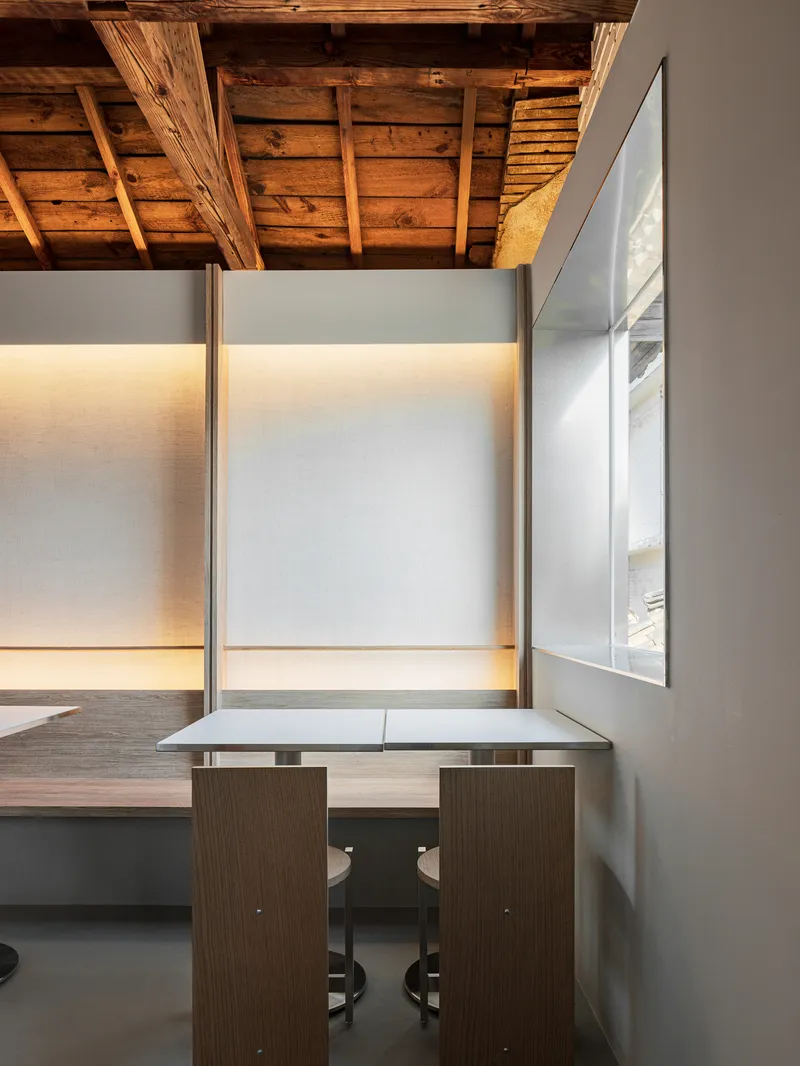
Backlit translucent panels appear at several points along the interior walls, glowing softly behind concealed cove lighting. These screens do real spatial work. They wash the adjacent timber posts in warm, even light, revealing texture without casting harsh shadows. The effect is close to the diffuse glow of traditional Korean paper screens, hanji, though the material here is contemporary. Grey brick flooring beneath ties the wall panels to the ground, giving the niches a sense of solidity.
At the corner tables, these backlit panels become intimate companions. The weathered ceiling joists overhead cast faint shadows across the illuminated surface, and the whole composition reads as a study in layered time: old wood, new light, the quiet intersection of centuries.
Courtyards as Breathing Room
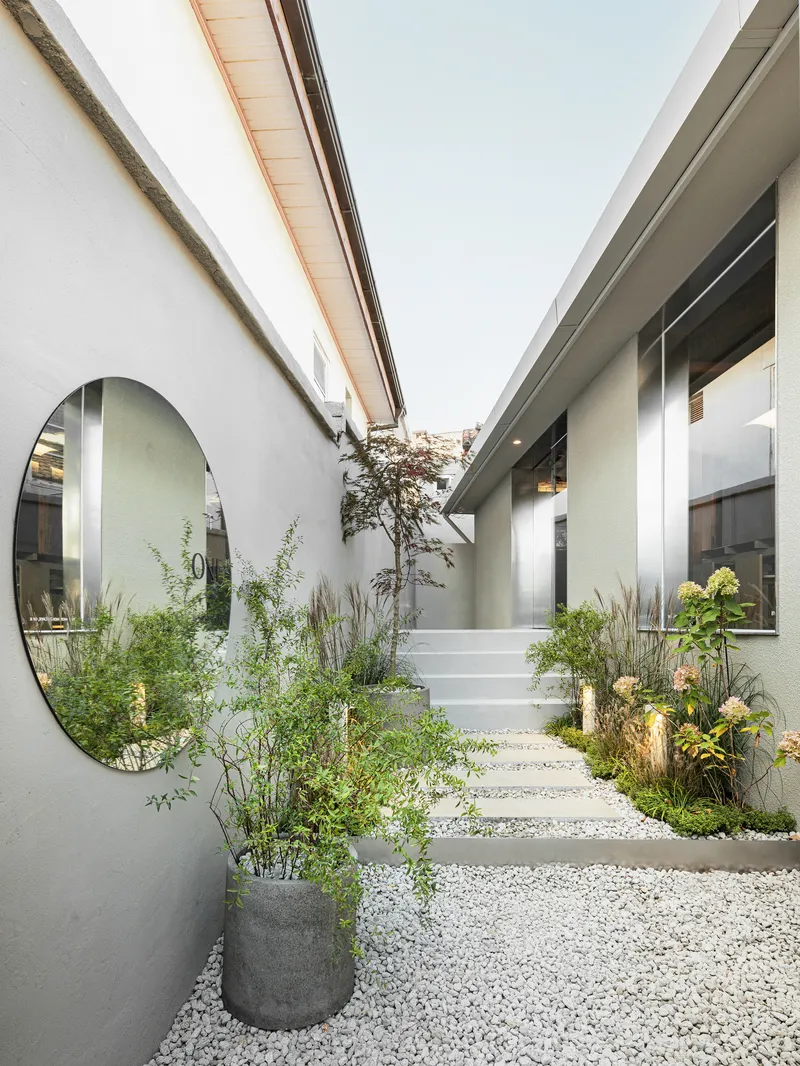
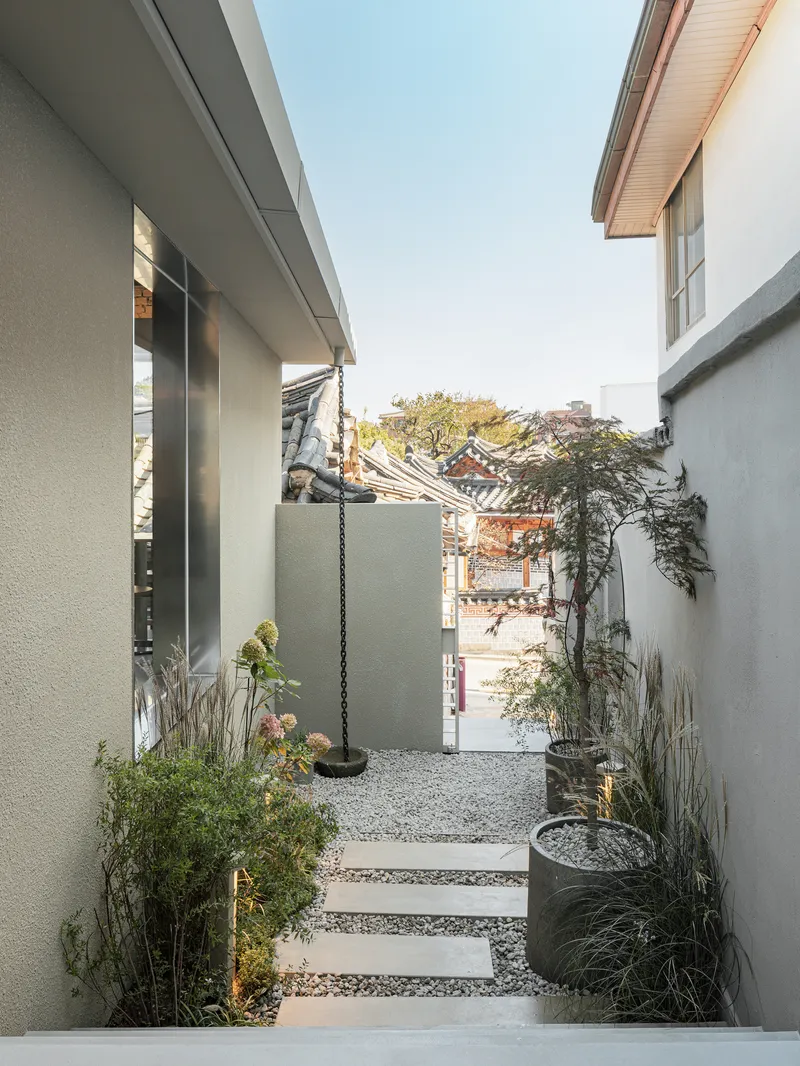
Two exterior courtyards punctuate the plan, offering gravel, stone pavers, planted beds, and views back toward the traditional tile roofs. These are not decorative afterthoughts. In Korean residential architecture, the courtyard is the organizing principle, the void that gives shape to the rooms around it. oftn studio preserves that logic here, using the narrow garden spaces to separate volumes, introduce daylight, and provide moments of pause between the cafe's interior zones.
Stepping stones through gravel, potted plants, a single small tree: the courtyards are deliberately understated. They resist the impulse to over-design, letting the roofline and the sky do the compositional work.
Details That Hold the Room Together

The furniture is worth a close look. Tables combine light oak frames with dark metal tops, a pairing that echoes the larger contrast between the warm timber structure and the cool grey brick and concrete surfaces. The polished concrete floor reflects just enough light to give the legs of these tables a subtle gleam. Nothing is accidental here. The furniture occupies the same material world as the building, which is the surest sign that the design was conceived as a whole rather than assembled from catalog parts.
Why This Project Matters
Preservation in Bukchon is politically loaded and commercially pressured. The neighborhood attracts millions of visitors who come to see traditional Korean houses, and the temptation is always to serve them a polished facsimile, tradition packaged as spectacle. onecafe resists that by working with an actual old structure rather than mimicking one. The timber columns are not reproductions. The roof trusses are not decorative appliqué. The building earned its patina, and the design lets that patina speak.
What oftn studio has produced is a model for how small-scale hospitality can inhabit historic fabric without embalming it. The cafe is warm, functional, and unpretentious. It serves good coffee under a roof that has sheltered other lives. That continuity, not nostalgia but actual continuity of material and structure, is the most honest thing a project in this neighborhood can offer.
onecafe by oftn studio, Jongno-gu, Seoul, South Korea. 85 m², completed 2022. Photography by Choi Yong Joon.
About the Studio
Share Your Own Work on uni.xyz
If projects like this are the kind of work you want to make, uni.xyz is a place to publish your own, find collaborators, and enter design competitions.


Popular Articles
Popular articles from the community


Juan García Correa, John González and Claudia Rueda Sink a Circular Amphitheater into a Manizales Engineering Building
On the La Nubia campus in Manizales, Colombia, the S1 Building folds labs and offices into a hillside of ramped lawns that double as a campus route.

GROUP A Strips a 1969 Rotterdam Harbor Headquarters to Its Frame and Wraps It in Timber Louvers
In Rotterdam's M4H harbor district, Ferro Offices reuses a 1969 frame, adds one timber storey and reaches BREEAM-NL Outstanding.

longwave studio Reorganizes a 112 m² Tainan Apartment Around the Daily Routines of a Family and Two Cats
In Tainan, Taiwan, birch plywood, rust-red furniture and a freestanding plaster wall link arrival, storage, work and family life in one apartment.

Cube Design Draws an Ecological Corridor Between Two Shenzhen Hills with the Nankai Building
Beside Shenzhen's container docks, the Nankai Building pairs stacked balconies with a climbing green screen to connect two hillsides across its height.

Similar Reads
You might also enjoy these articles


LAVA Architecten Gives Vocational Education a Sawtooth-Roofed Face on a Mechelen School Campus
In Mechelen, Belgium, a 2,053 m² STEM school on a 6×6 m grid turns workshops and classrooms into rooms that can be rearranged as teaching changes.

KEMA Studio Turns a Derelict Marvila Attic into a 60 m² Lighthouse Apartment Above Lisbon
In Lisbon's Marvila district, a rebuilt roof, four skylights and two plywood volumes turn an unlivable attic into a bright home facing the Tagus.

Pixel Gardens: One Repeated Module Stacked Into a Terraced Social Housing Tower for Famagusta
Salem Bader's shortlisted housing tower builds a vertical neighbourhood from one repeated module, offsetting units to carve terraces, light and air.

Bao Huynh Watercolor Atelier: A Serene Art Retreat in Hội An
Bao Huynh Watercolor Atelier in Hội An blends multifunctional art spaces, sustainable design, local materials, and family-friendly living in a serene environment.

Explore Cafe Competitions
Discover active competitions in this discipline

Challenge to reimagine the Iron Throne

Photograph architecture without architects

Illustrate the lost glory of Angkor Wat - Render Challenge

Design challenge to reuse E-waste
Comments (0)
Please login or sign up to add comments
No comments yet. Be the first to comment!