
Ohori Terrace Teahouse and Garden by Rhythmdesign: A Harmonious Fusion of Woodcraft and Nature in Fukuoka
Ohori Terrace blends traditional Japanese woodcraft with modern design, creating a serene teahouse harmonizing with Fukuoka’s natural park setting.


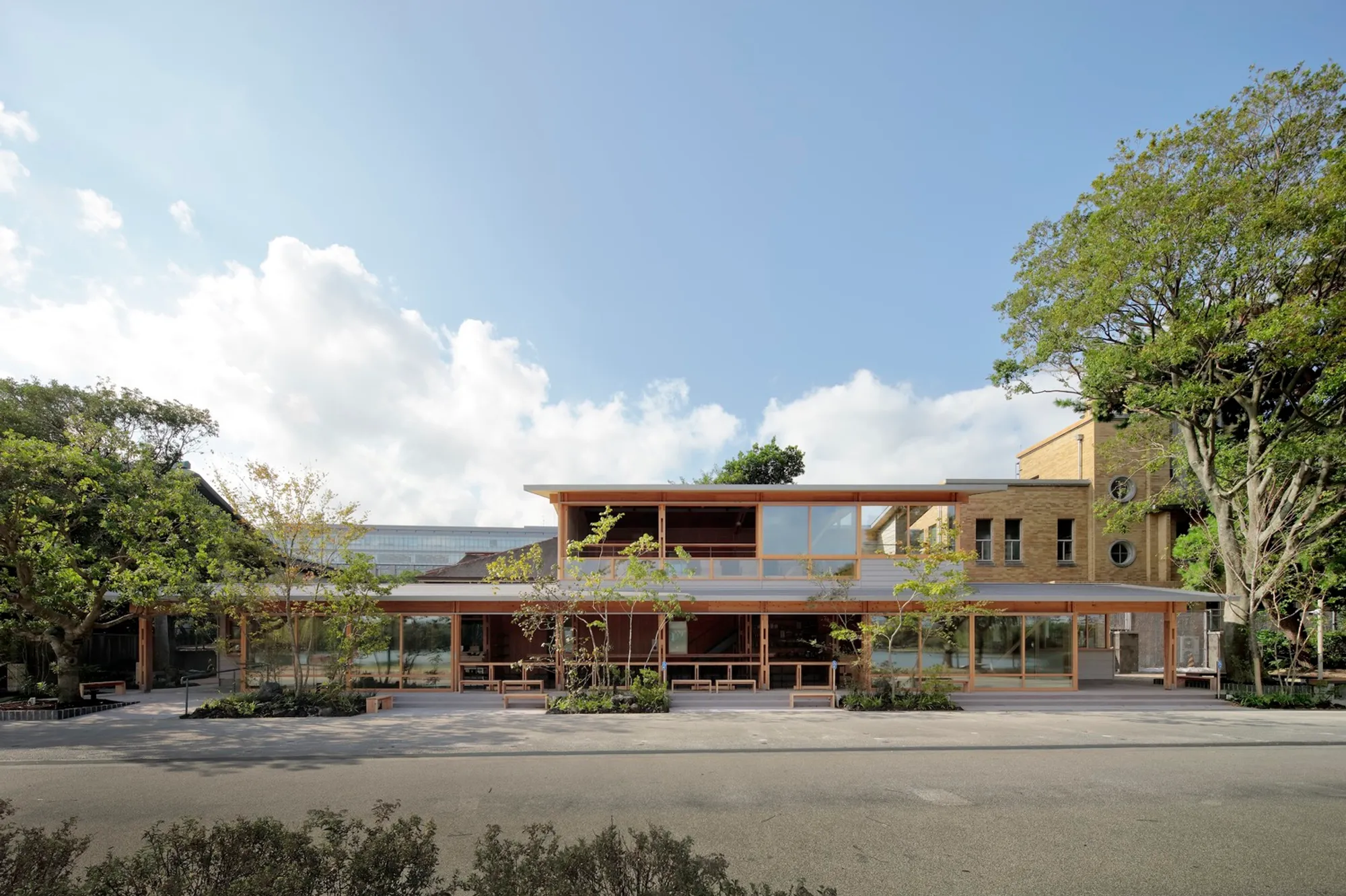
Nestled within the lush grounds of Ohori Park in Fukuoka, Japan, the Ohori Terrace Teahouse and Garden, designed by Rhythmdesign, is a contemporary architectural gem that reimagines traditional Japanese wooden construction for the 21st century. Completed in 2020 and spanning 199 square meters, the pavilion is both a tranquil teahouse and a cultural landmark, inviting locals and visitors alike to reconnect with nature, craftsmanship, and community.
Architecture That Blends, Not Competes
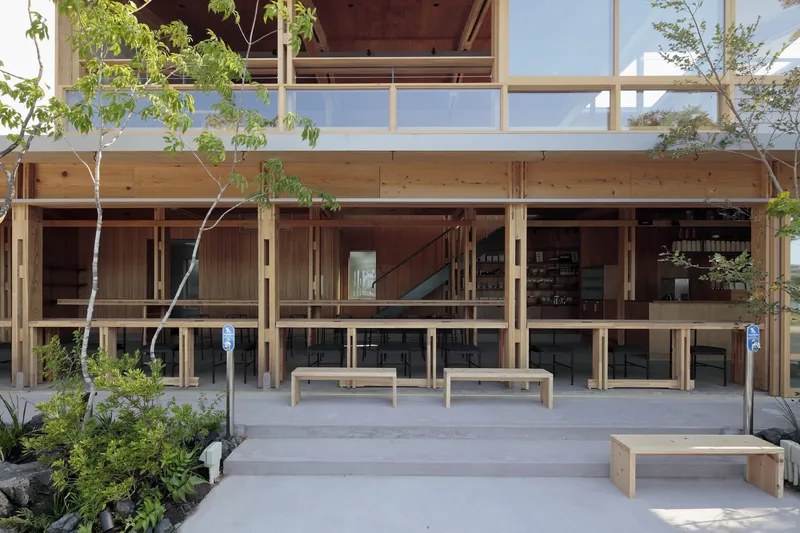
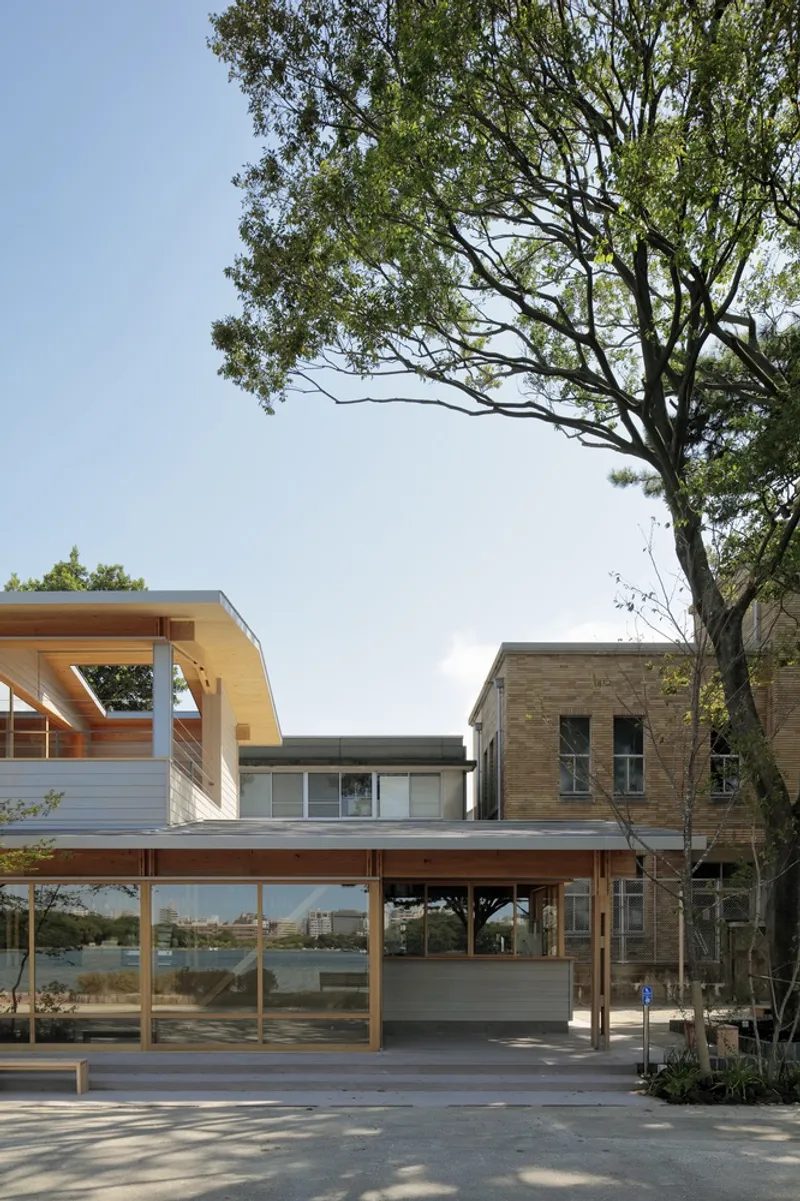
Conceived as a subtle intervention rather than a statement piece, the Ohori Terrace was designed to complement its natural and historical context. Situated near a Japanese garden within the park's southern section, the structure appears almost like a gently floating roof—a shelter that respects and frames its surroundings rather than dominating them.
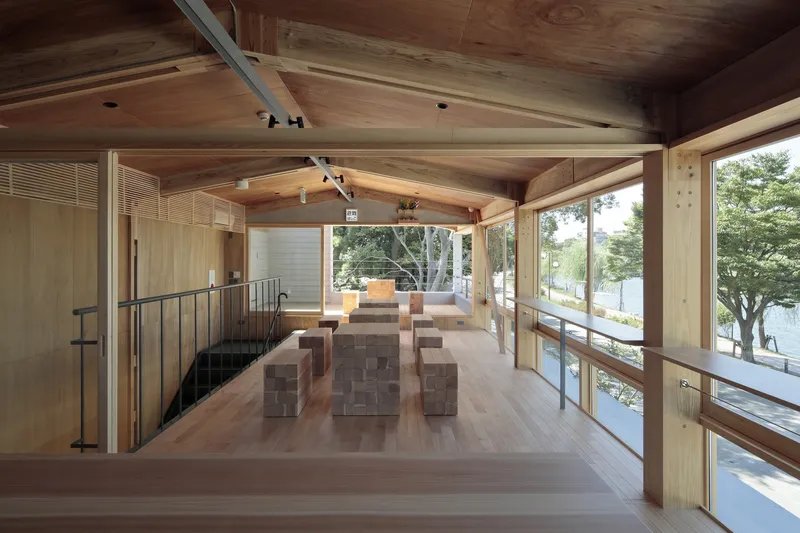
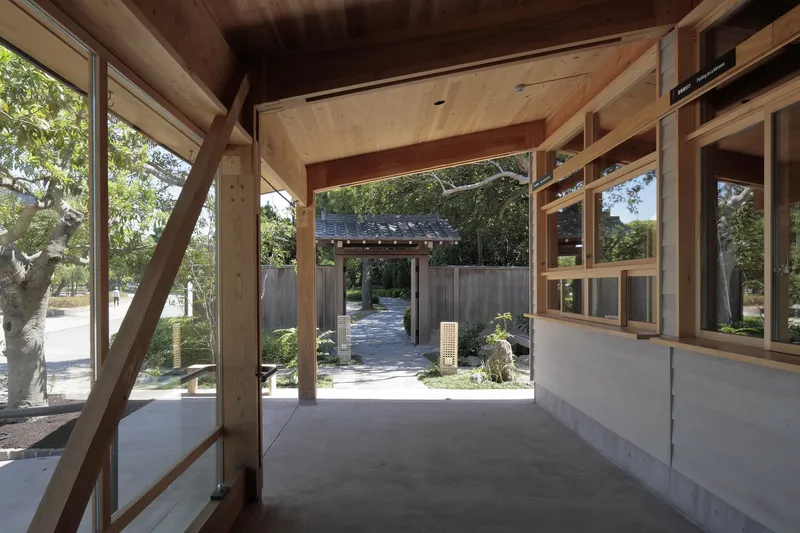
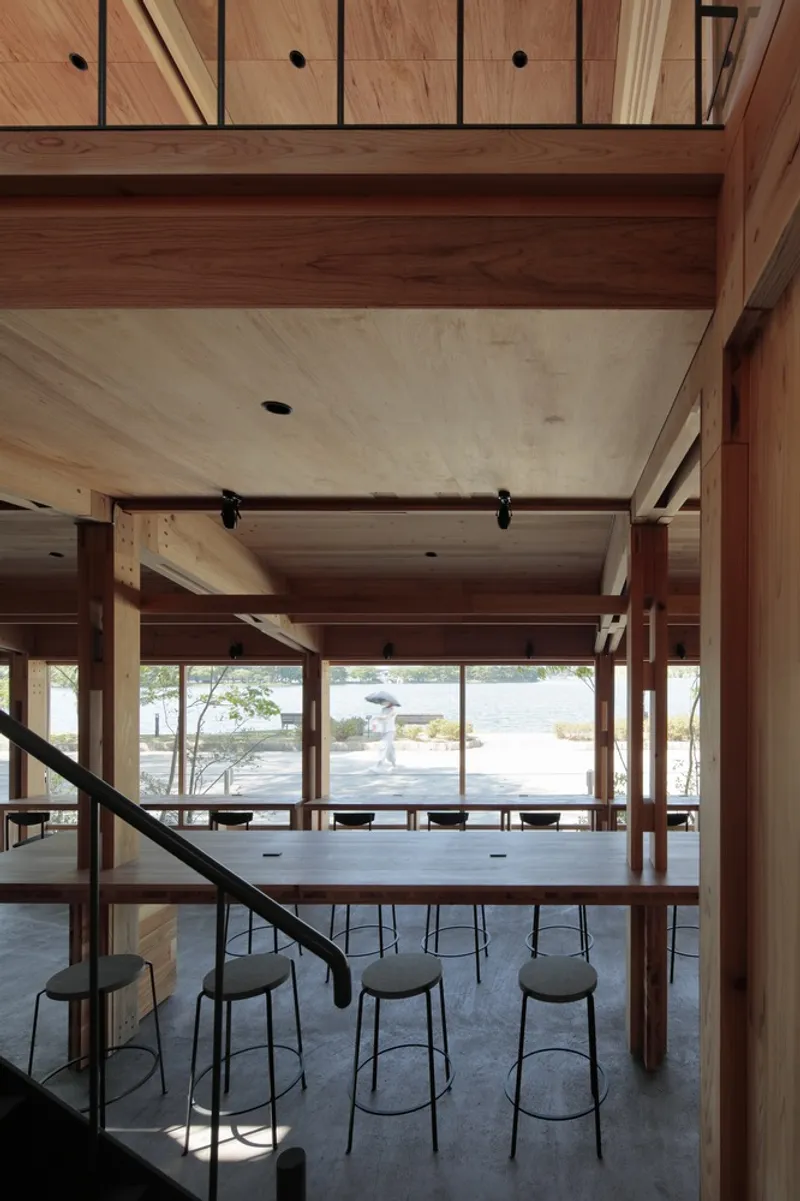
The design prioritizes transparency, simplicity, and material honesty. Large wooden-framed windows on both floors open generously to the landscape, blurring boundaries between interior and exterior. The absence of gutters on the garden-facing façade allows the soothing sound of rain to enhance the sensory experience, reconnecting occupants to seasonal rhythms.
A Showcase of Japanese Craft and Modern Timber Innovation
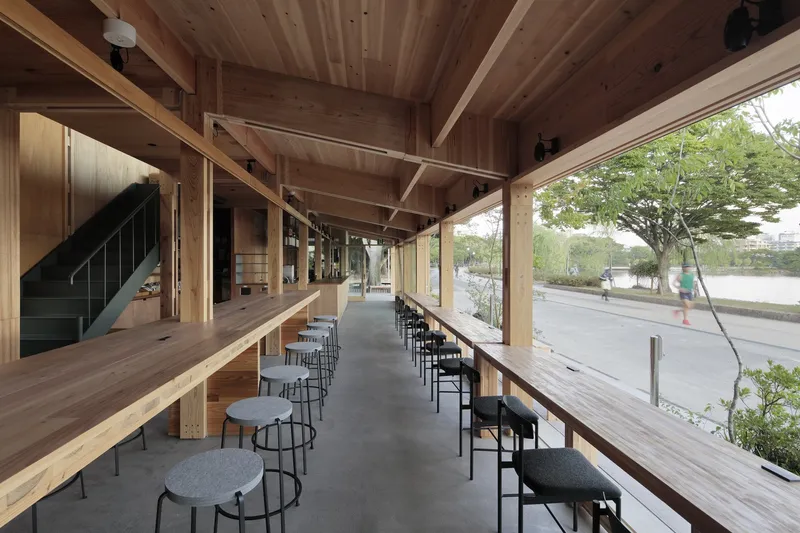
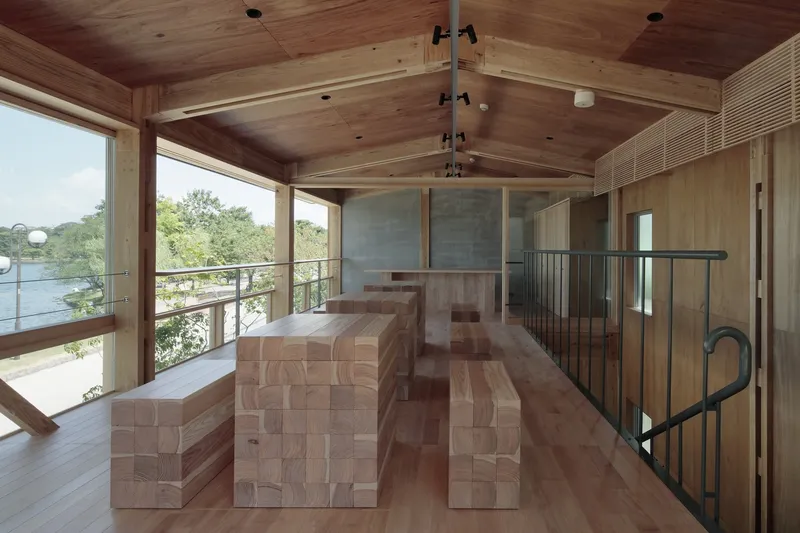
At the heart of the project lies a deep respect for traditional Japanese joinery techniques—which are entirely metal-free—combined with cutting-edge lumber technology. Rhythmdesign employed CNC-machined wooden components and cross-laminated timber (CLT) to construct a frame that is structurally sound yet easy to assemble.
In fact, the entire framework was designed so that it could be constructed using only wooden mallets—no electricity or metal fasteners required. This approach not only honors Japanese architectural heritage but also demonstrates the power of sustainable and participatory design.
Community-Built, Community-Owned
Ohori Terrace was realized under the Park-PFI initiative, a Japanese government program that invites private firms to propose and develop enhancements for public parks. One of the goals of this initiative was to highlight local Fukuoka culture, especially the regional specialty Yamecha (Yame tea). Accordingly, the teahouse integrates a café where visitors can enjoy locally grown tea in a peaceful garden setting.
But the project goes even deeper—it was designed to be a collaborative process. Rhythmdesign intentionally created a building system that allowed for local community involvement. Residents participated in the construction phase, forging a sense of ownership and stewardship over the new public space. This act of shared building fosters stronger emotional ties and encourages long-term care of the pavilion and its surroundings.
An Architectural Experience for All Senses
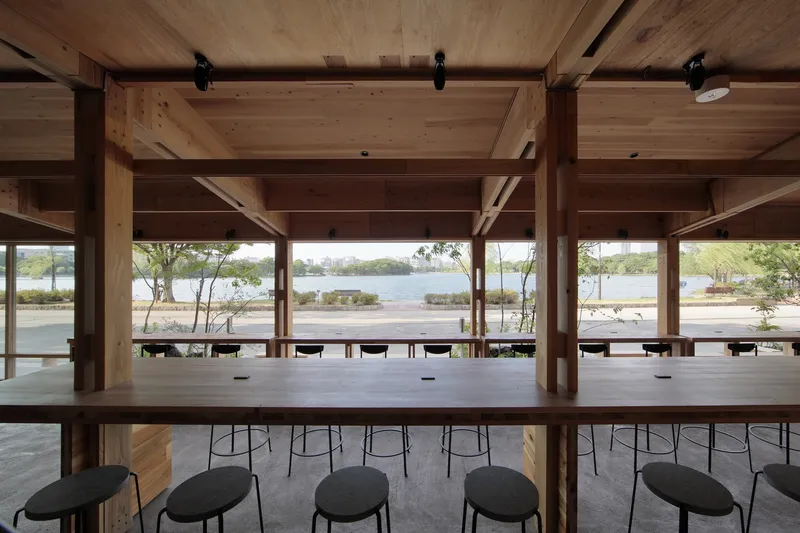
Stepping into Ohori Terrace is an immersive, sensory-rich experience. Natural light pours in through expansive windows, the scent of fresh timber permeates the air, and the soft acoustics of falling rain create an atmosphere of calm. The building's minimalist aesthetic highlights the elegance of the wooden beams, the smooth textures of CLT panels, and the interplay between interior and landscape.
The teahouse is both an architectural destination and a cultural retreat, drawing visitors not only for its beauty and craftsmanship but also for its spiritual alignment with the natural world.
Impact and Legacy
Since its opening, Ohori Terrace has become a beloved gathering spot and a symbol of architectural innovation rooted in tradition. It exemplifies a new direction in sustainable wooden architecture—one that is inclusive, community-centered, and deeply contextual.



Popular Articles
Popular articles from the community


Play: Fragments of Their World
Familiar architecture becomes modular playground design, creating safe spaces where displaced children can learn, connect, imagine and play.

The Musturak Paradise: Senior Living Architecture for a Connected Future in Temara, Morocco
The Musturak Paradise reimagines senior living architecture in Temara via private homes, social spaces, culture, community, and shared care.

Co-Life: Senior Housing Design That Reconnects Older Adults With the City
Co-Life reimagines senior housing design through healing gardens, shared streets, workshops, and a sustainable community across generations.

Conexión: Biophilic Design Reimagines High-Rise Living in Hong Kong
Conexión reimagines high-rise living in Hong Kong through biophilic design, green facades, shared spaces, daylight, water and nature within.


Similar Reads
You might also enjoy these articles


Hodi-Mandai Geram
Project Function: Preservation and revitalization of the Intangible heritage and socio-spatial identity of the Hodi by Housing, Cultural Memory Center, Sacred Grove, landscape, local tourism economy


Olio Towers: A Mid-Rise for Performers That Fuses Housing, Rehearsal, and Stage
Located blocks from Houston's Theater District, this modular tower stacks living units around a central performance atrium.

Oasis: Modular Green Housing Carved into Dhaka's Urban Fabric
A shortlisted Plugin Housing entry reclaims unauthorized settlements in Dhaka with stepped concrete volumes, green roofs, and ventilation-driven design.

Black Hole: A Floating Megastructure for the Post-Physical Era
Emiliano Mazzarotto envisions a spherical, self-scaling arena where e-sports, digital hotels, and holographic stadiums replace traditional public space.


Explore Hospitality Building Competitions
Discover active competitions in this discipline



Challenge to reimagine the Iron Throne


Photograph architecture without architects


Illustrate the lost glory of Angkor Wat - Render Challenge


Design challenge to reuse E-waste
Comments (0)
Please login or sign up to add comments
No comments yet. Be the first to comment!