
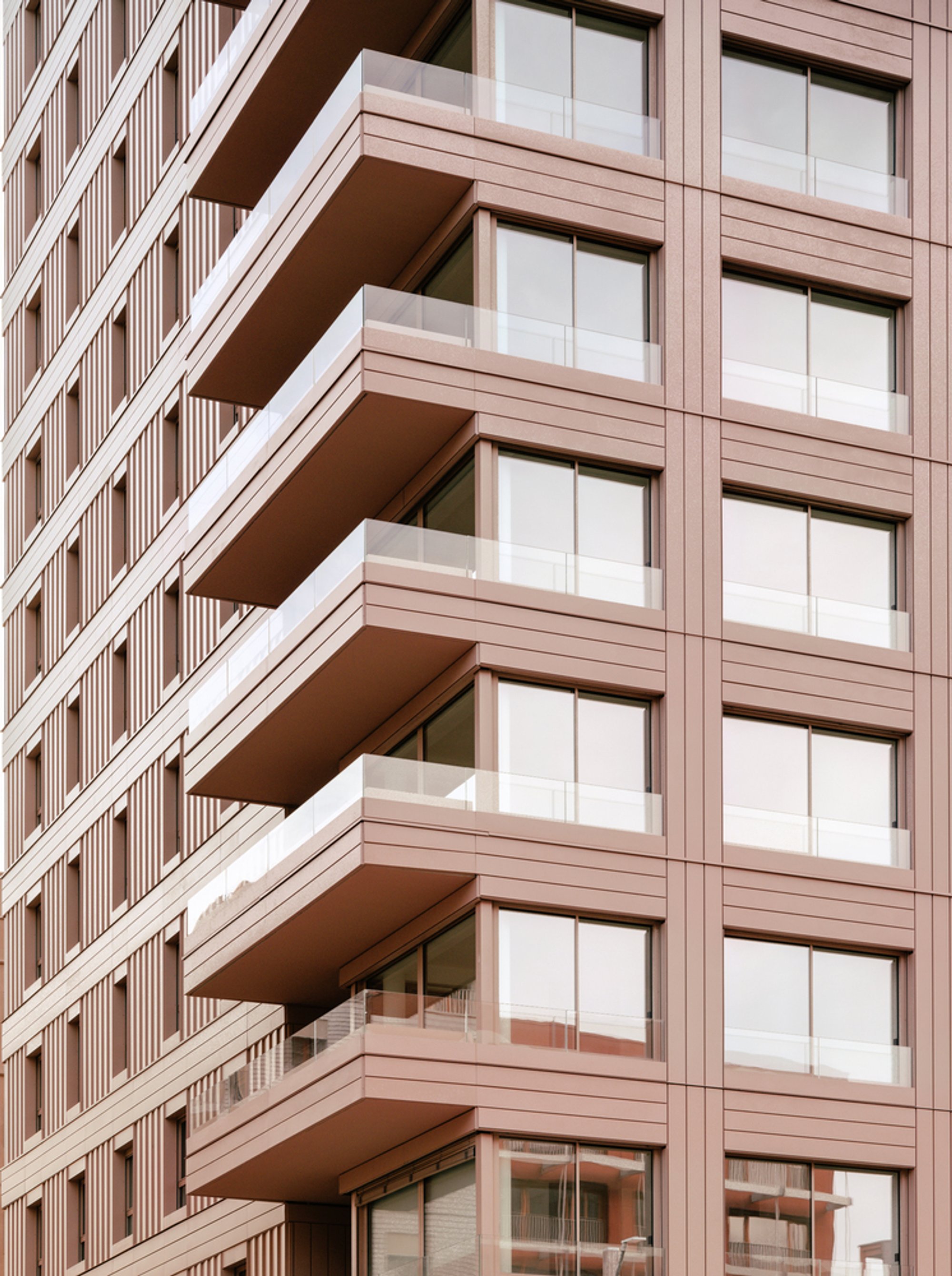
SOA Architectes Wraps Olympic Social Housing in a Single Terracotta Skin on the Banks of the Seine
Eighty-three apartments in Saint-Ouen channel bioclimatic strategy and industrial memory into the heart of the Paris 2024 Olympic Village.

Social housing built for an Olympic village tends to carry a whiff of compromise: temporary accommodation dressed up just enough to justify its second life. The Belvedere block by SOA Architectes in Saint-Ouen-sur-Seine pushes back against that assumption. Designed from the outset so that conversion from athlete housing to permanent residences would require removing only a single partition wall per unit, the 83-apartment complex treats its post-Games identity not as an afterthought but as the actual brief. The result is a 6,700-square-meter cluster of three buildings, one rising ten stories and two topping out at five and six, that reads as a deliberate piece of city rather than a leftover from a sporting event.
What makes the project genuinely interesting is its refusal to separate aesthetic ambition from environmental logic. A single color, developed with artist Morgane Tschiember and drawn from industrial terracotta tones and human skin shades as an Olympic symbol, wraps every facade, fusing material identity with site memory. Beneath that unified envelope, each orientation does different thermal work: deep terraces shade the south, wide openings pull urban views from the north, and minimal glazing on east and west walls protects bedrooms from solar gain and visual intrusion. Structure, climate, and narrative collapse into one design move.
An Industrial Palette, Reborn
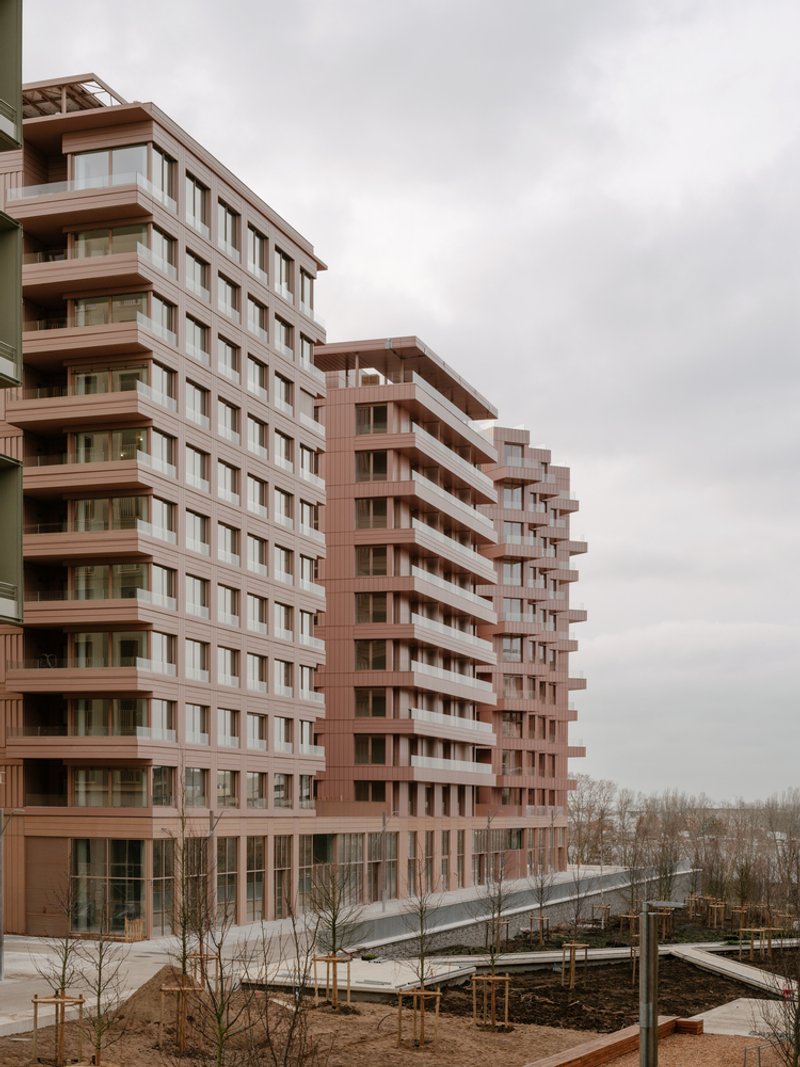
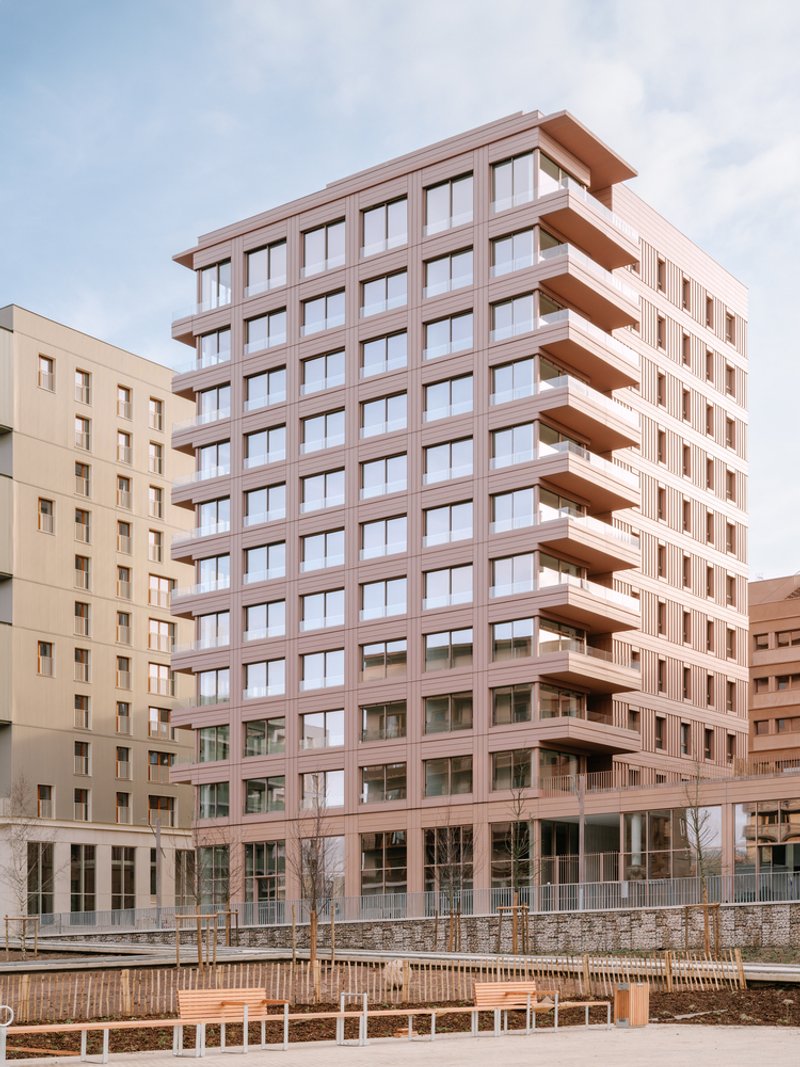
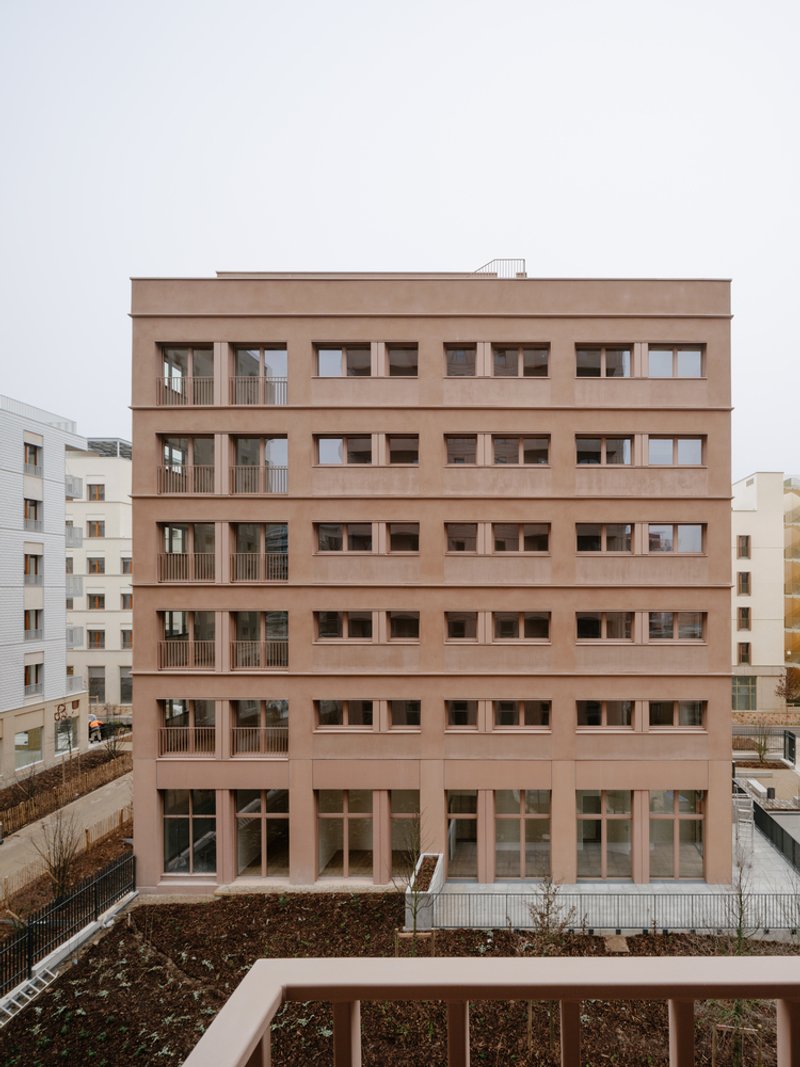
A century ago, tall chimneys and brick factories defined this stretch of the Seine. SOA's geometry recalls that diagonal silhouette, and the terracotta-toned cladding picks up the mineral register of the vanished industrial landscape. Metal panels face the river and Mail Finot, the village's main landscaped artery, while plaster covers the south-facing timber-framed walls. The distinction is invisible at a distance because every surface shares the same warm hue, but up close the material shifts register the building's orientation logic.
Tschiember's color study, produced in partnership with AkzoNobel, avoids the decorative trap of applied graphics. Instead it treats the entire building envelope as a continuous chromatic field. The effect is monolithic yet alive, shifting between warm red and sandy ochre as daylight and cloud cover change. Against the grey skies typical of the Île-de-France, the palette reads as quietly assertive rather than loud.
Facades That Work for a Living
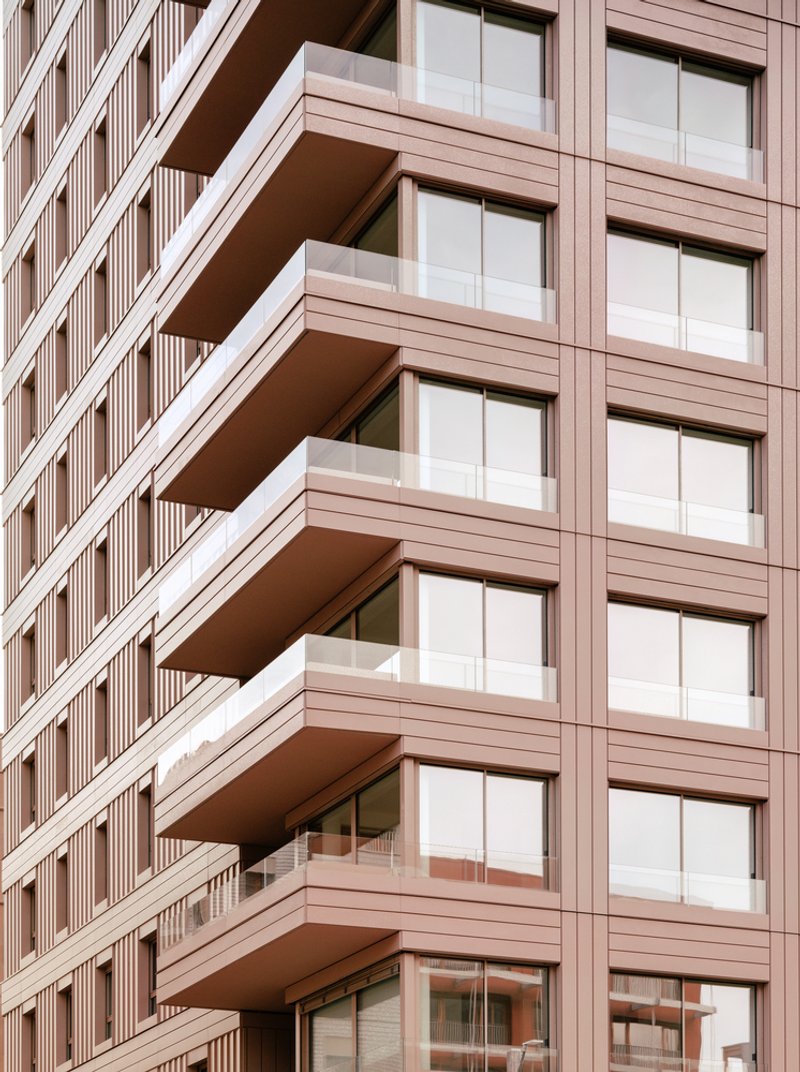
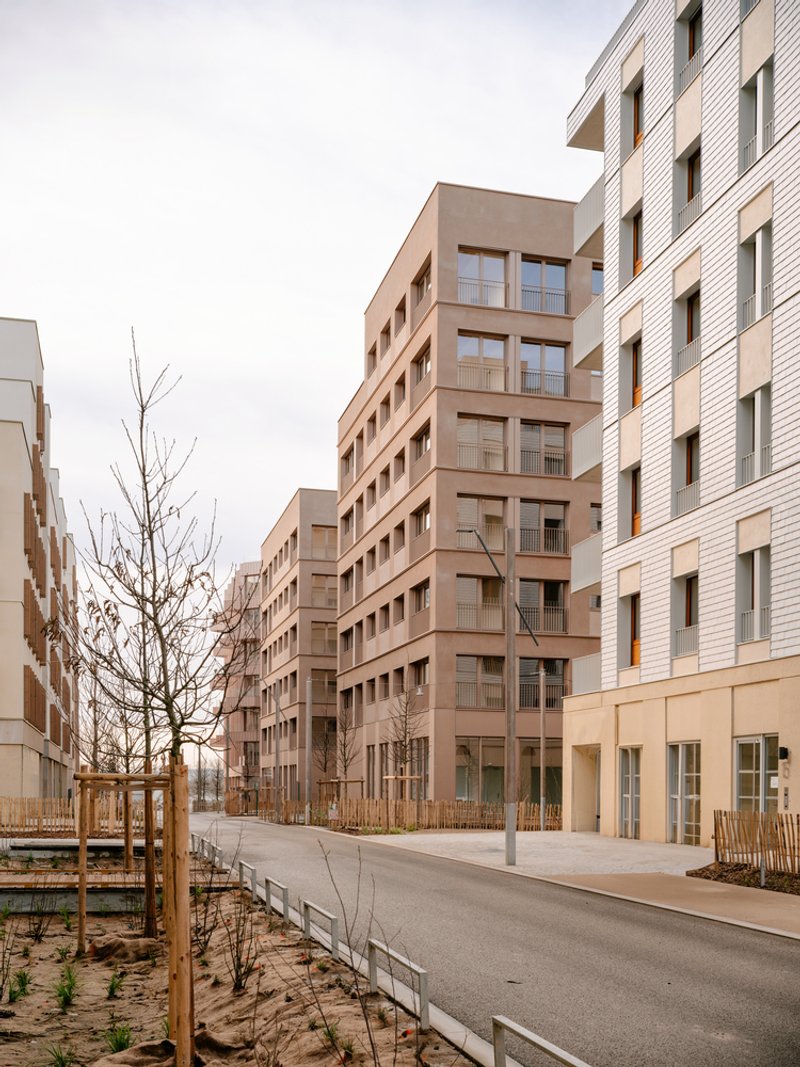
Bioclimatic design often gets reduced to a checklist of specifications. Here it shapes the architecture's character. The north facades open generously toward Mail Finot, framing the long perspective of Dominique Perrault's masterplan. The south facades recede behind staggered terraces deep enough to block high-angle summer sun while admitting low winter light. On the east and west, the envelope tightens: narrow openings provide ventilation and just enough daylight for bedrooms without exposing residents to neighboring units.
Vertical louvered screens and recessed balconies on the angled facades add a third layer of solar control and privacy. The rhythm of these elements gives the street elevations a syncopated texture that prevents the repetition inherent in housing from becoming monotonous. Each balcony type, whether linear, staggered, or angled, responds to the specific orientation and apartment layout behind it rather than following a single decorative pattern.
Corner Living and Double Orientation
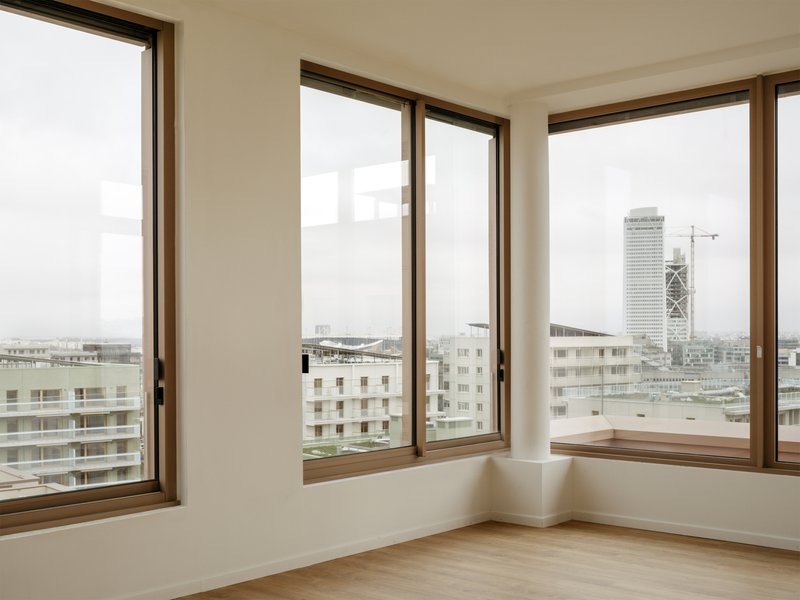
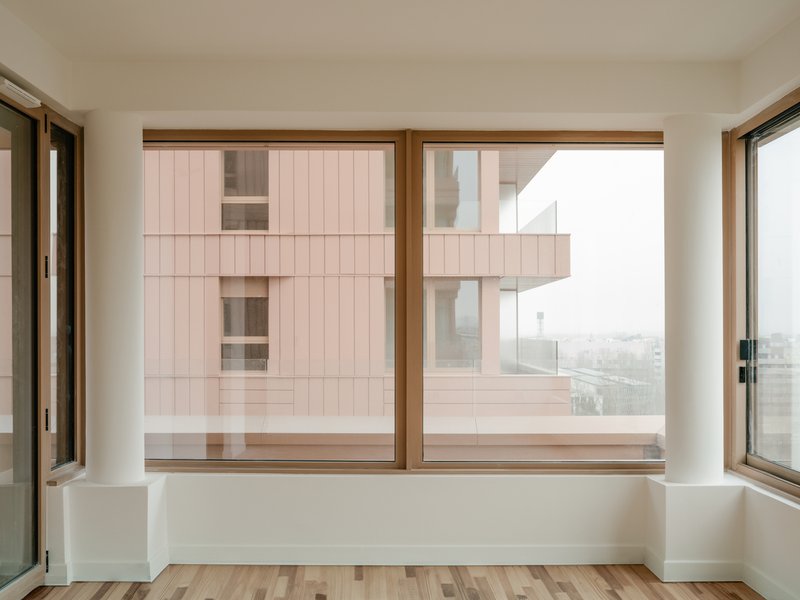
Every apartment in the complex enjoys dual orientation, a luxury rarely achieved in social housing at this density. The key is the generous 21-by-21-meter floor plate: service spaces and storage cellars are centralized around a compact core, liberating the full perimeter for habitable rooms. Living areas land on the corners, where two walls of glazing meet, and kitchens sit adjacent with their own source of natural light. The effect, visible in the timber-framed window bays, is a domestic interior that feels connected to the surrounding cityscape on multiple fronts.
On the Seine side, duplexes take advantage of the taller building's generous ceiling heights to create double-height corner spaces. The diagonal orientation of the corner building's floor plan amplifies this move, turning what would be a standard right-angle junction into a room that opens outward in two directions simultaneously. It is a spatial maneuver that rewards close attention to the plans.
The Urban Plinth
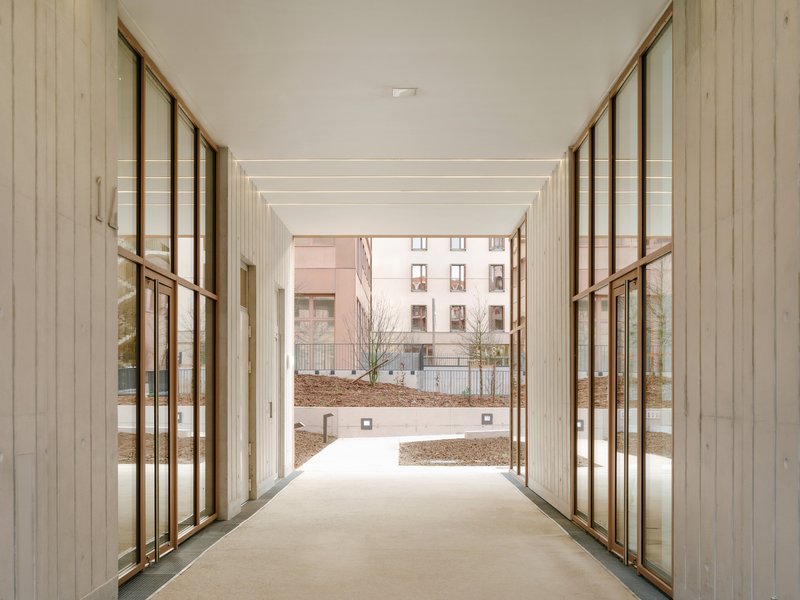
Connecting the three buildings at ground level is a monumental two-story plinth in sandblasted precast concrete. Its covered passageway, with a ribbed ceiling and full-height glazing, functions as both circulation spine and communal hall. A generous bicycle storage facility occupies part of this volume, a pragmatic acknowledgment that car-free mobility is central to the Olympic Village's infrastructure ambitions.
The plinth also mediates between the public scale of Mail Finot and the more intimate rear street. Walking through it, you transition from the grand landscaped promenade to a quieter pedestrian pathway lined with newly planted saplings. The dual-aspect quality that defines the apartments extends, conceptually, to the building's relationship with the neighborhood. The block has no back; both faces address their respective contexts.
Hybrid Structure: Wood and Low-Carbon Concrete
The structural system splits logically by height. The mid-rise buildings on the rear street use timber frames, keeping embodied carbon low where the structural demands allow it. The ten-story tower, facing the Seine and Mail Finot, employs low-carbon concrete, a necessary concession to gravity and acoustic performance at that scale. A column-beam system unifies both approaches, ensuring that interior layouts remain flexible and that the conversion from Olympic configuration to permanent housing requires minimal demolition.
That conversion strategy deserves emphasis. By avoiding temporary bathrooms and limiting the post-Games intervention to a single partition removal per unit, SOA dramatically reduced the material waste and cost typically associated with Olympic repurposing. The 19 million euro construction budget covers both lives of the building, not just the first.
Plans and Drawings
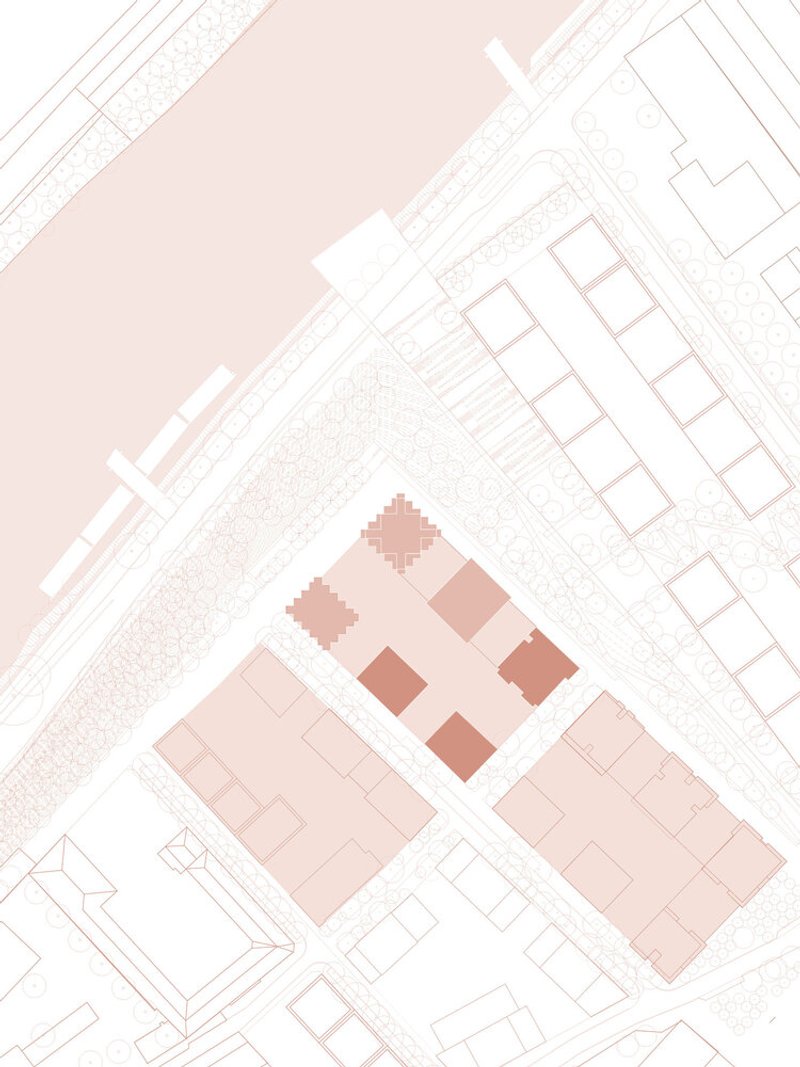
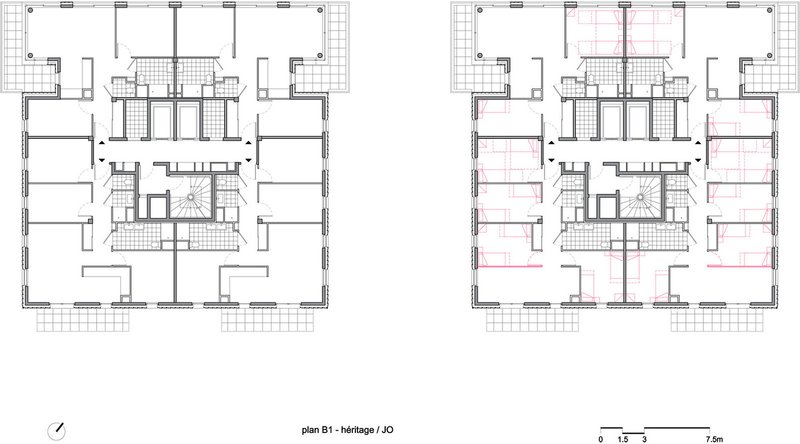
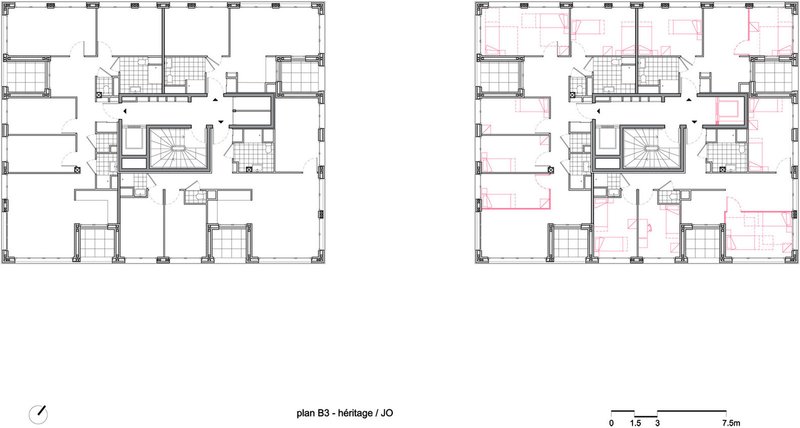
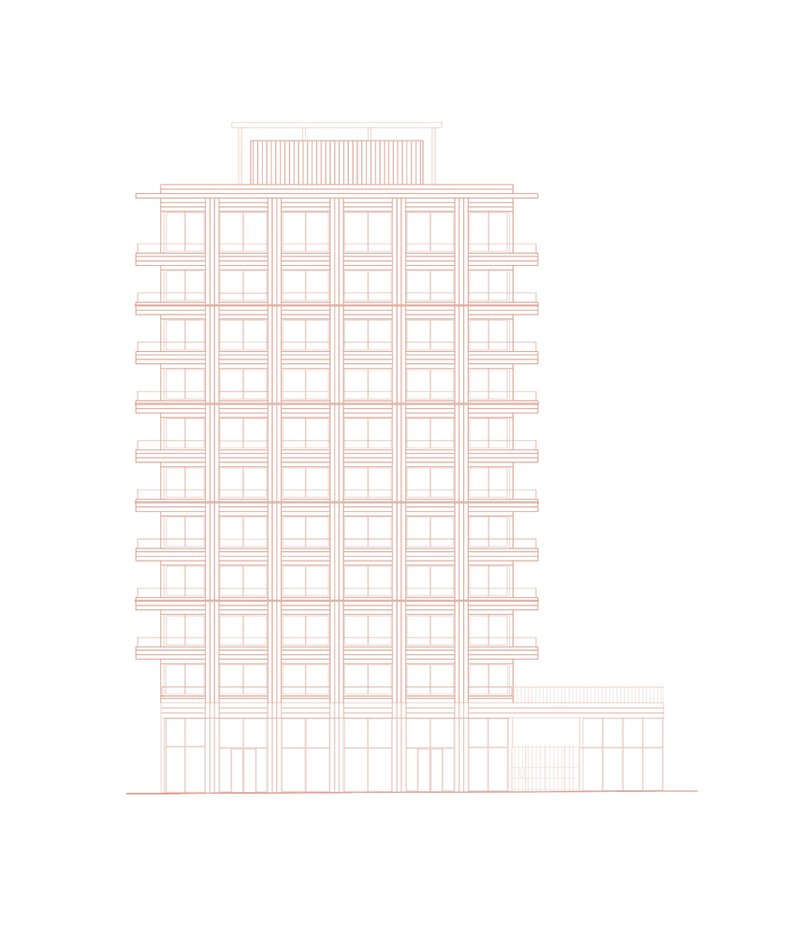
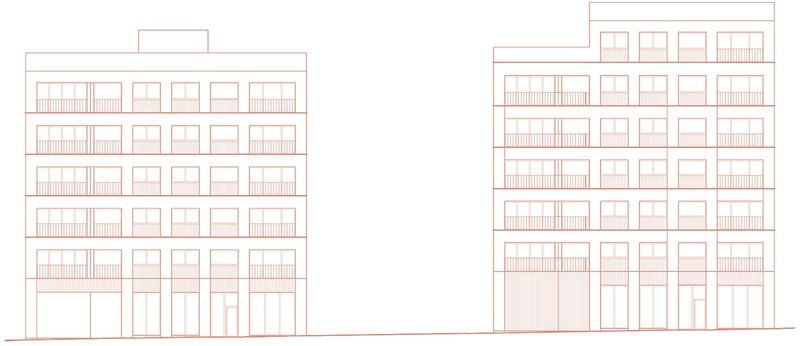
The site plan reveals how the Belvedere block sits within Perrault's masterplan of large "ships" running perpendicular to the Seine, sharing a common roofline or "waterline" that maintains a coherent urban silhouette. The floor plans confirm the centralized core strategy: stairs and elevators anchor the center while living spaces wrap the perimeter, every unit touching at least two exterior walls. The elevations show how horizontal banding and balcony rhythms break the tower's mass without dissolving its civic presence.
Why This Project Matters
Olympic architecture tends to be evaluated on spectacle, and then re-evaluated, usually harshly, once the athletes leave. SOA's Belvedere block sidesteps that cycle by refusing to treat social housing as the consolation prize after the Games. The apartments are designed for permanent residents from the start, with the Olympic configuration serving as a temporary overlay rather than the primary identity. That inversion of priorities is rare in mega-event urbanism, and it produces architecture that feels neither provisional nor over-designed.
More broadly, the project demonstrates that bioclimatic rigor, material restraint, and genuine aesthetic ambition are not competing goals. The single-color envelope, the orientation-specific facade strategies, the hybrid timber-concrete structure, and the conversion-ready layouts all reinforce each other. When social housing achieves this level of integration, it stops being a category and starts being simply good architecture.
Olympic Social Housing (Belvedere Block) by SOA Architectes, in collaboration with artist Morgane Tschiember. Saint-Ouen-sur-Seine, Greater Paris, France. 6,700 m². Completed for the Paris 2024 Olympic and Paralympic Village. Photography by Giaime Meloni.
About the Studio
Share Your Own Work on uni.xyz
If projects like this are the kind of work you want to make, uni.xyz is a place to publish your own, find collaborators, and enter design competitions.




Popular Articles
Popular articles from the community

RDTH architekti Rips Out Nearly Every Wall in a Prague Apartment and Replaces Them with Furniture
A 101-square-meter post-war flat in Prague trades rigid partitions for a single rotated furniture block, curtains, and glass concrete.

20 Most Popular Furniture Design Projects of 2025
Modular street systems, parametric benches, and insect hotels: the furniture design projects that captivated architects on uni.xyz in 2025.
Bernardes Arquitetura Stretches a Timber Roof Along a Reservoir's Edge in Minas Gerais
Dam House in Itaúna lets a sweeping wooden canopy dissolve the boundary between hillside terrain and open water.
HCCH Studio Wraps a Shanghai High-Rise Office in Curved Walls of Translucent Glass
A 1,000 square meter fit-out in Lujiazui replaces the typical tech-office palette with layered glass, micro-cement, and quiet rigor.

Similar Reads
You might also enjoy these articles
Olio Towers: A Mid-Rise for Performers That Fuses Housing, Rehearsal, and Stage
Located blocks from Houston's Theater District, this modular tower stacks living units around a central performance atrium.
Oasis: Modular Green Housing Carved into Dhaka's Urban Fabric
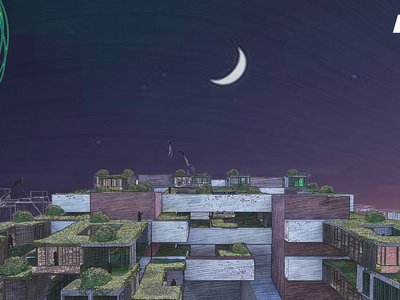
A shortlisted Plugin Housing entry reclaims unauthorized settlements in Dhaka with stepped concrete volumes, green roofs, and ventilation-driven design.

Black Hole: A Floating Megastructure for the Post-Physical Era
Emiliano Mazzarotto envisions a spherical, self-scaling arena where e-sports, digital hotels, and holographic stadiums replace traditional public space.
Compact & Sustainable Living in Piraeus: A Four-Level Family Home Built Around Light and Air
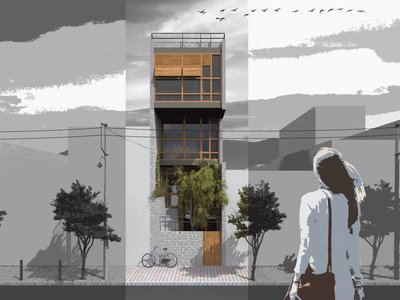
A narrow townhouse in one of Greece's densest port cities uses a central atrium and passive strategies to house three generations under one roof.


Explore Architecture Competitions
Discover active competitions in this discipline




The International Standard for Design Portfolios


The Global Benchmark for Architecture Dissertation Awards


The Global Benchmark for Graduation Excellence


Challenge to reimagine the Iron Throne
Comments (0)
Please login or sign up to add comments
No comments yet. Be the first to comment!