
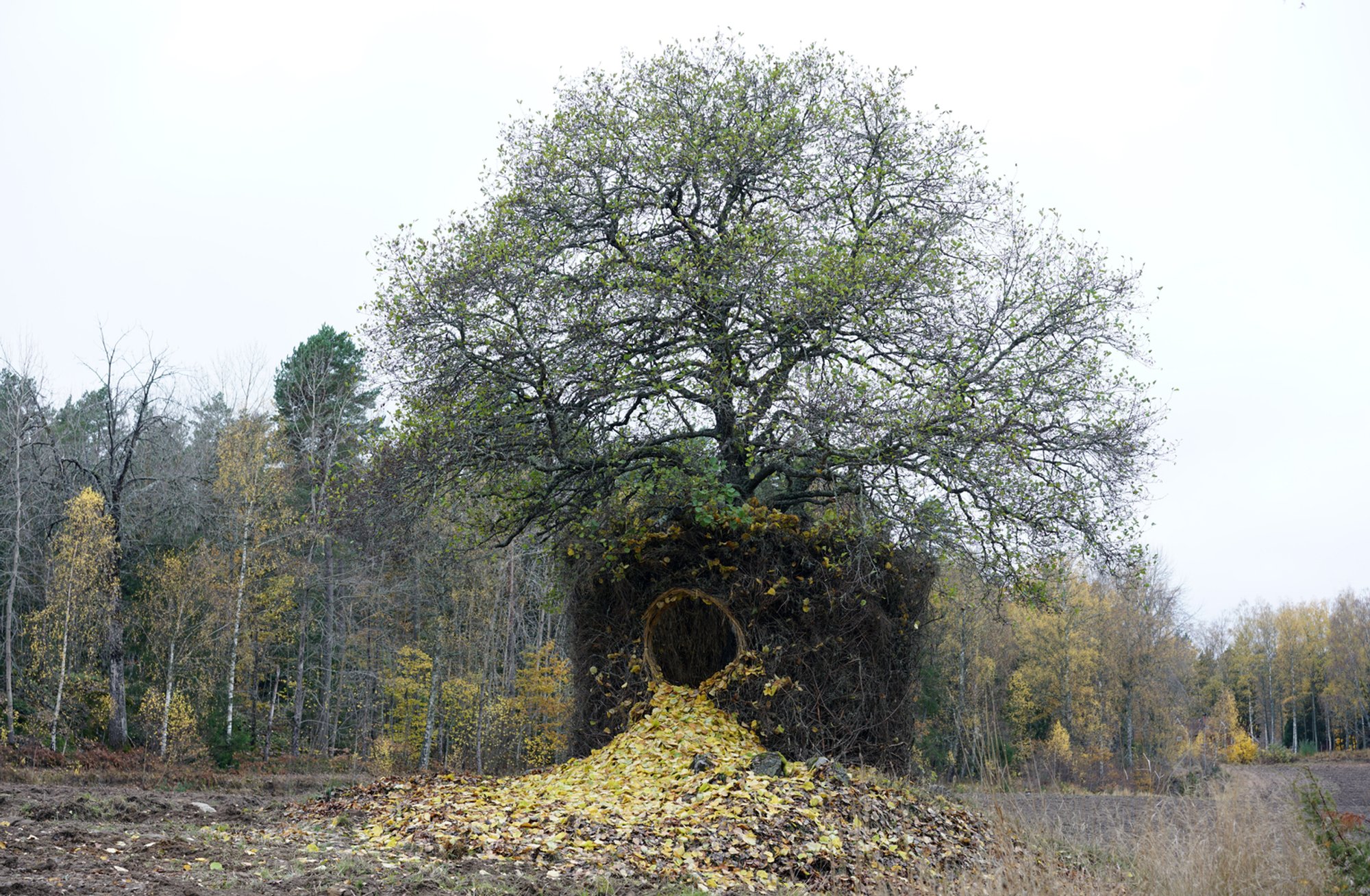
One Tree Four Seasons Installation: A Seasonal Dialogue Between Nature and Architecture
Seasonal pavilion transforms a single tree using natural materials, exploring time, ecology, and spatial experience through evolving architectural interventions.

The One Tree Four Seasons Installation by Ulf Mejergren and Antti Laitinen is a poetic exploration of time, materiality, and ecological sensitivity set in Turinge. Designed as a small-scale pavilion of just 5 square meters, the project transcends its modest footprint by engaging deeply with seasonal transformation and site-specific storytelling.
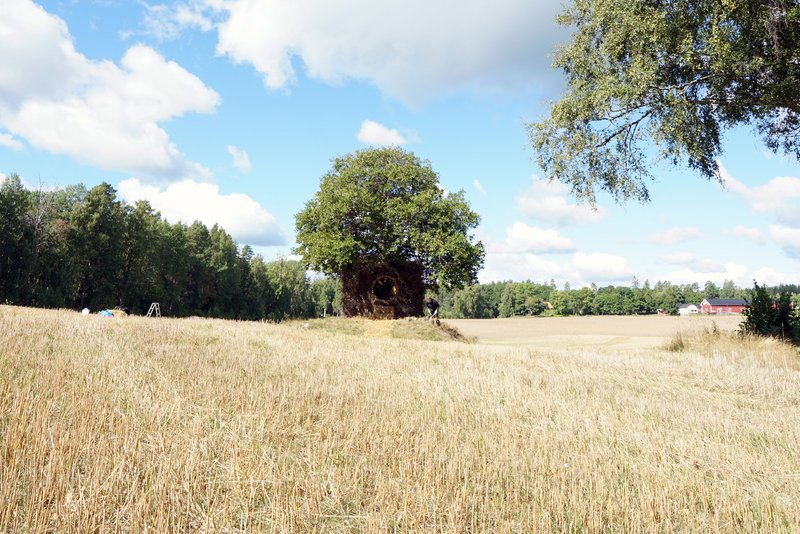
Concept: Architecture Rooted in Time and Nature
At the core of the installation lies a simple yet powerful idea, one tree, four seasons, four spatial interpretations. Instead of imposing a static structure, the architects embrace temporality, allowing nature to dictate both material availability and spatial experience. This approach aligns with sustainable design principles, where architecture becomes a process rather than a fixed object.
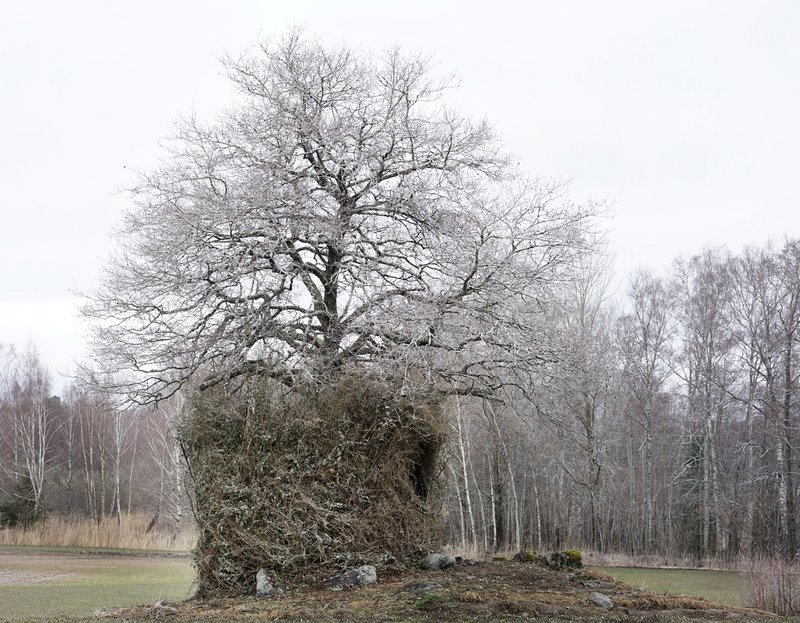
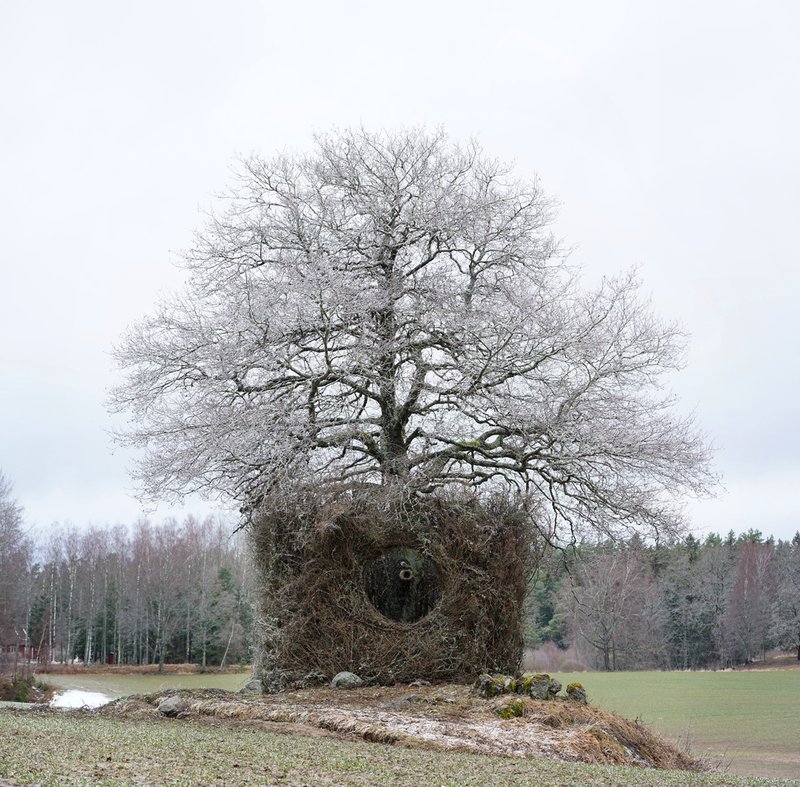
The chosen alder tree, standing alone on a rocky mound shaped by historical agricultural practices, becomes both subject and structure. Its changing form across seasons: bare, blooming, leafy, and snow-covered, acts as a living architectural element, redefining the installation throughout the year.
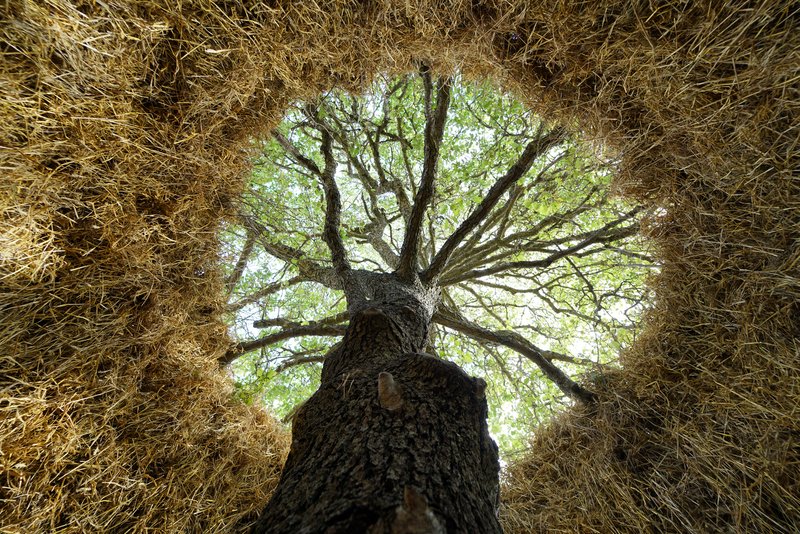
Spring: Nesting the Landscape
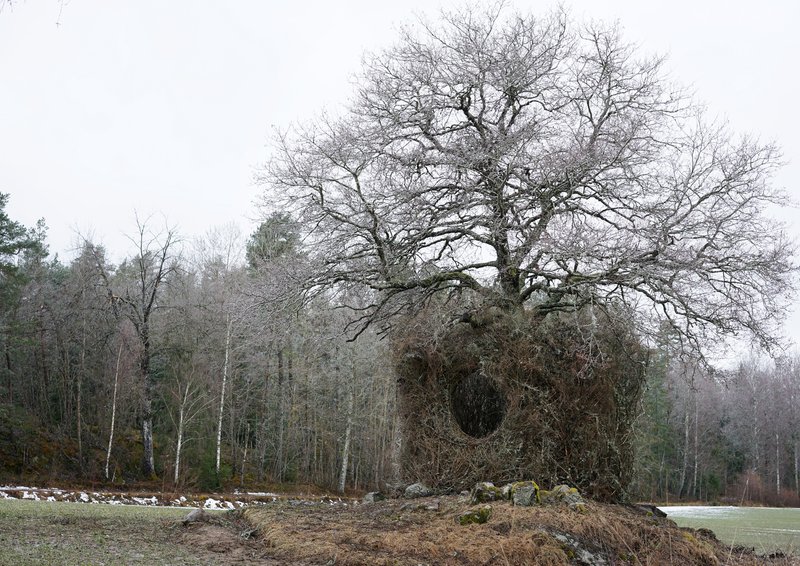
The first intervention, initiated in early spring, transforms the site using dead branches collected from the surrounding forest. These are intricately woven into a circular enclosure, resembling a large bird’s nest. This organic construction technique not only minimizes environmental impact but also creates a tactile, immersive space.
A circular opening frames a portion of the tree, inviting visitors to observe its awakening. Inside, a floor made of bent willow enhances the sensory experience, grounding the structure in natural textures and craftsmanship. The design celebrates regeneration, echoing the rebirth associated with spring.
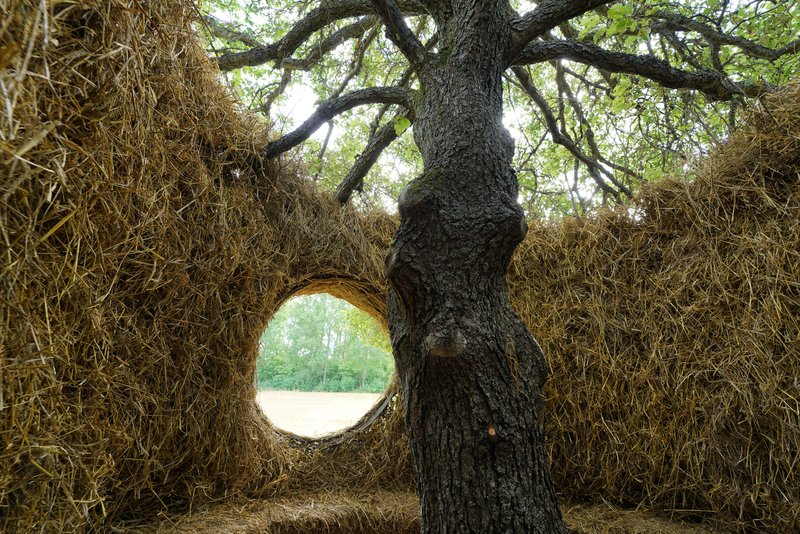
Summer: A Living Pavilion of Sound and Harvest
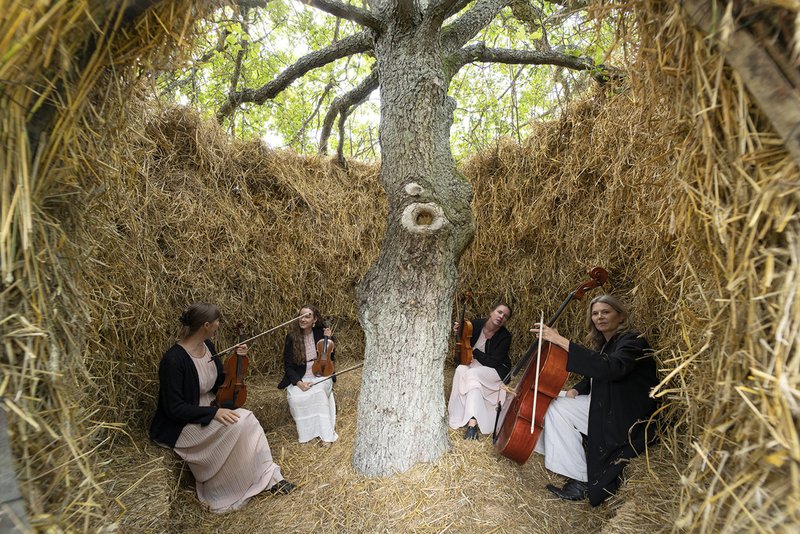
In summer, the installation evolves into a communal and performative space. Hay harvested from the adjacent fields is used to create seating, flooring, and interior partitions. The tree’s dense canopy becomes a natural roof, offering shade and enclosure without artificial intervention.
This phase highlights the integration of architecture and cultural activity. A live performance by the local string quartet transforms the pavilion into an intimate concert venue, reinforcing the relationship between space, sound, and community. Temporary hay bale stairs further emphasize the ephemeral and adaptive nature of the design.
Autumn: Kinetic Atmosphere of Falling Leaves
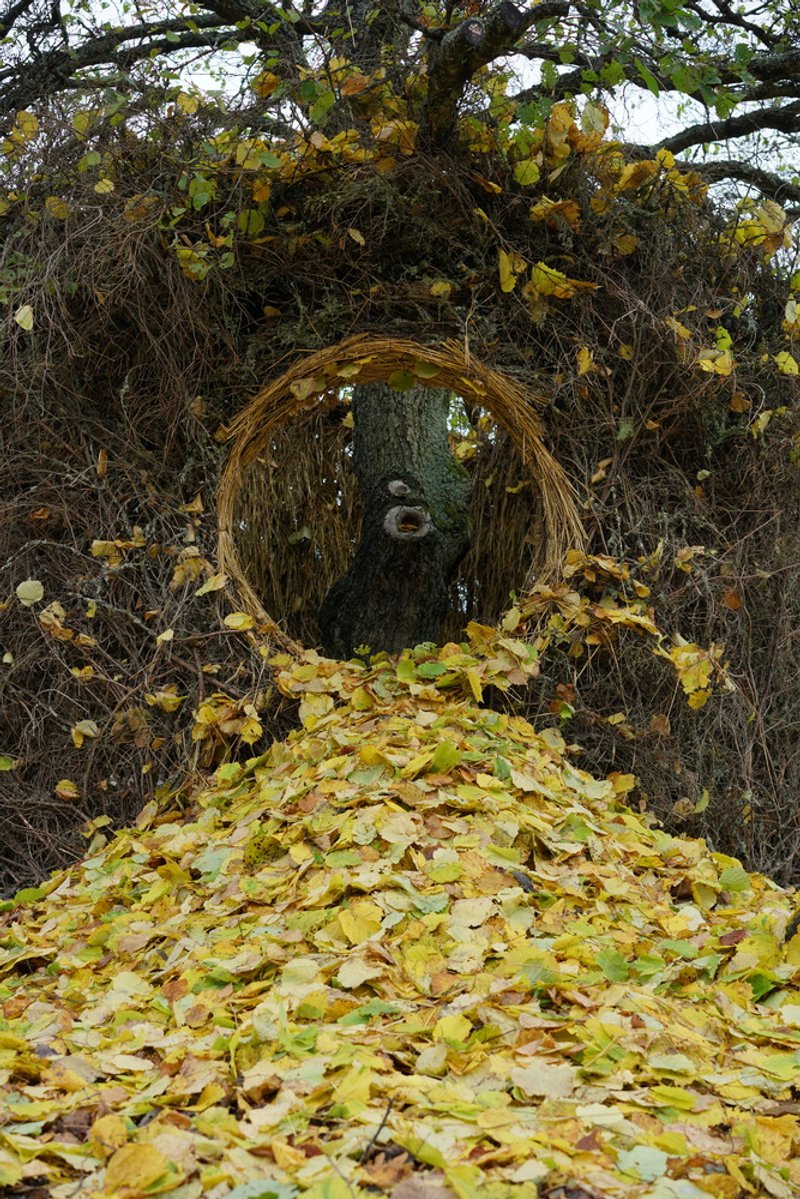
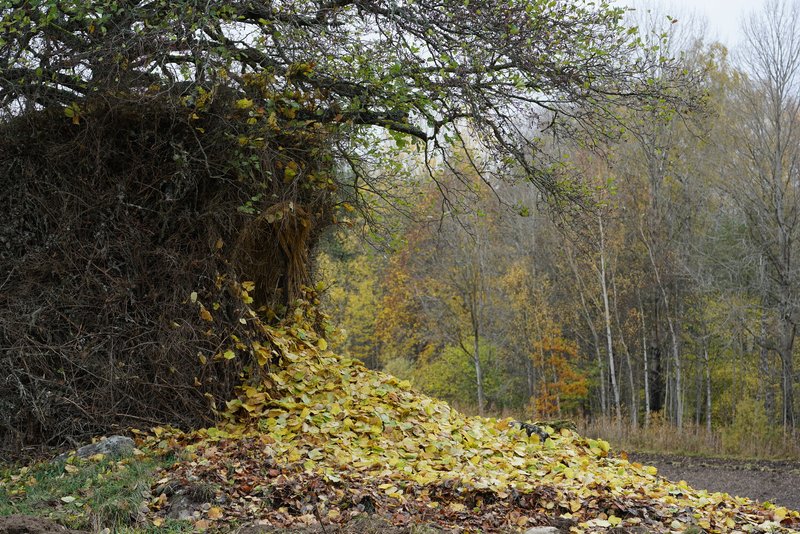
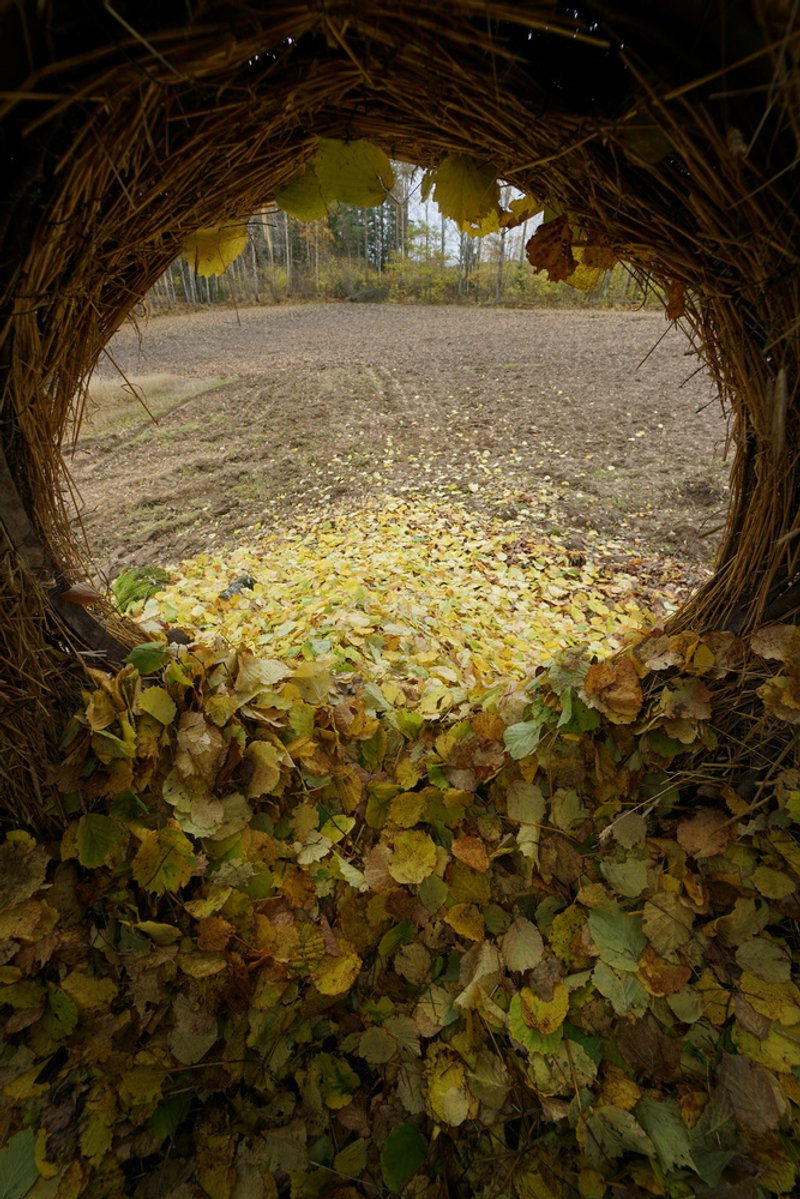
As autumn arrives, the installation shifts toward a more experimental and atmospheric expression. Fallen leaves collected from the tree and surrounding forest fill the enclosure. Through the introduction of artificial wind, the leaves are animated, swirling upward before gently descending.
This kinetic intervention blurs the boundary between natural and artificial forces. The structure becomes a vessel for movement and transformation, where real wind interacts with the constructed environment. The result is a dynamic spatial experience that captures the transient beauty of decay and transition.
Winter: A Sauna in the Snow
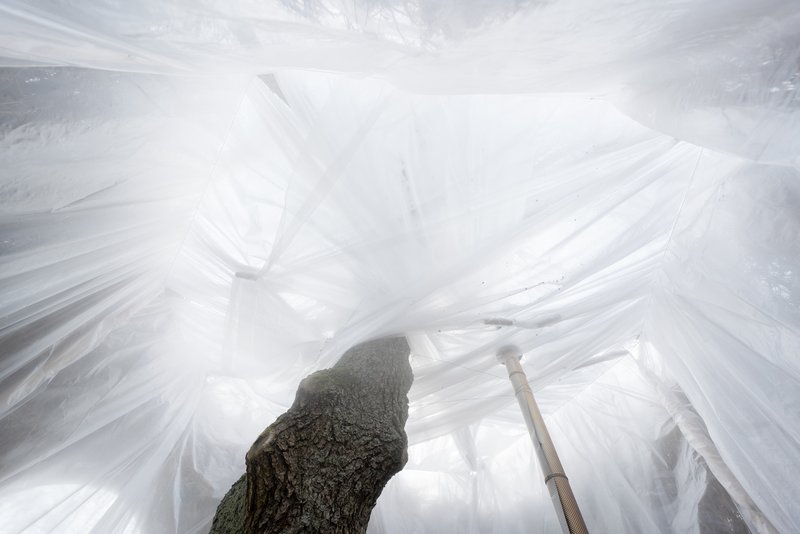
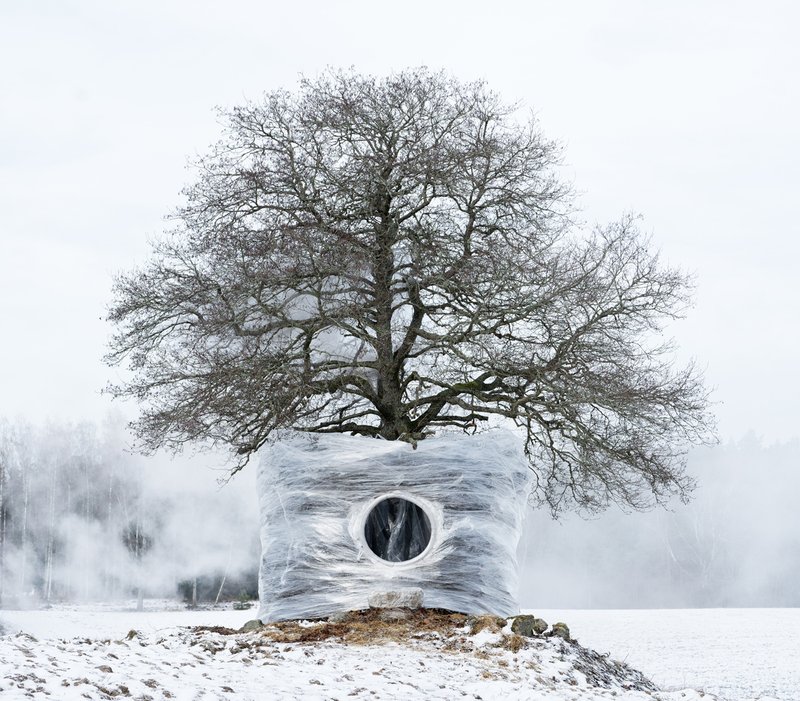
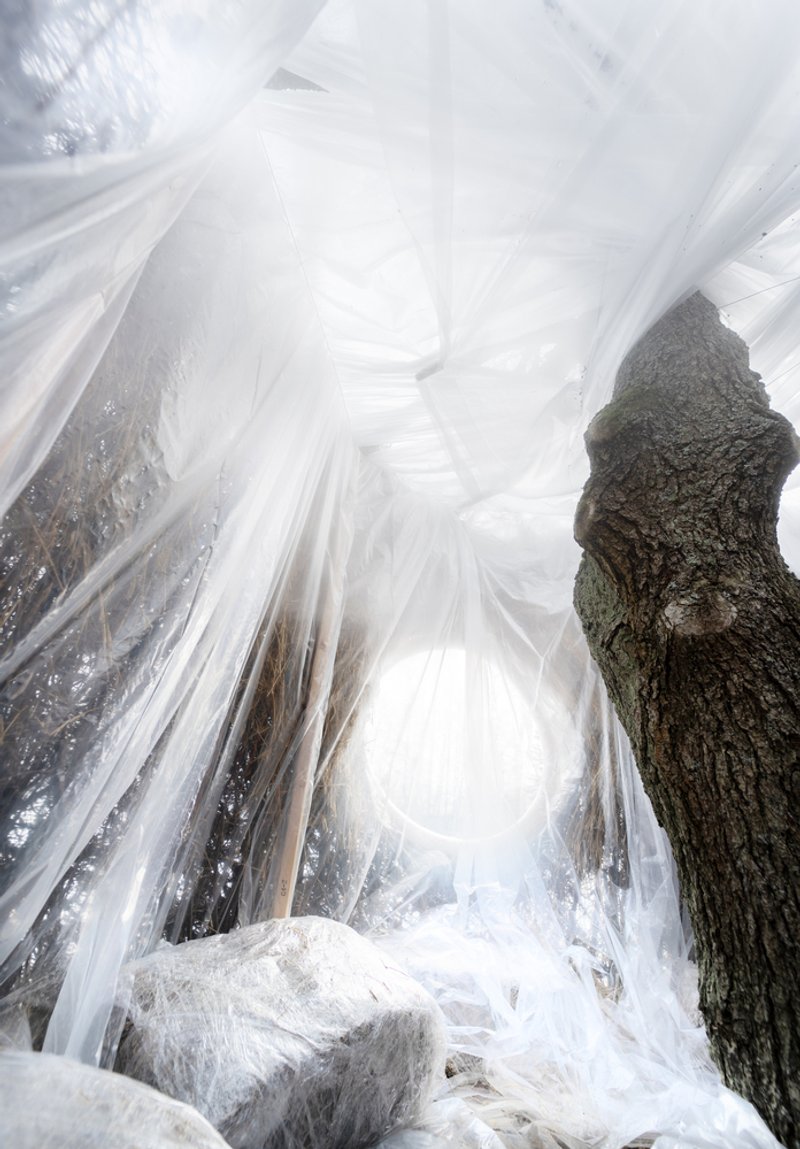
In its final transformation, the installation embraces winter by becoming a functional sauna. Wrapped in translucent plastic, the structure retains heat and steam while visually merging with the snowy landscape. The use of on-site wood for heating reinforces the project’s commitment to local resources and circular design.
The rising smoke creates a soft, shifting volume within the bare branches of the tree, turning the installation into a living, breathing entity. This phase introduces warmth and intimacy, contrasting sharply with the cold exterior environment while maintaining a strong visual connection to the site.
Material Strategy and Sustainability
A defining aspect of the project is its reliance on locally sourced, seasonal materials: branches, hay, leaves, and wood. These materials are not only sustainable but also time-sensitive, ensuring that each phase of the installation is unique and unrepeatable. The project exemplifies circular design thinking, where materials return to nature after use, leaving minimal ecological footprint.
Spatial Narrative and Experiential Design
Rather than focusing on permanence, the installation prioritizes experience and narrative. Each seasonal transformation offers a new way of inhabiting the same space, encouraging visitors to return and engage with the site over time. This cyclical approach challenges conventional architectural practices and highlights the potential of temporality in design.
The One Tree Four Seasons Installation is more than a pavilion, it is an evolving dialogue between humans and nature. By embracing change, impermanence, and local resources, Ulf Mejergren and Antti Laitinen redefine sustainability as a lived, seasonal experience.



Popular Articles
Popular articles from the community

The Faith: Modular Architecture for Play, Learning, and Hope in Kutupalong Refugee Camp
A modular playground architecture project in Bangladesh where play, learning, safety, and hope rebuild childhood inside a refugee camp anew.

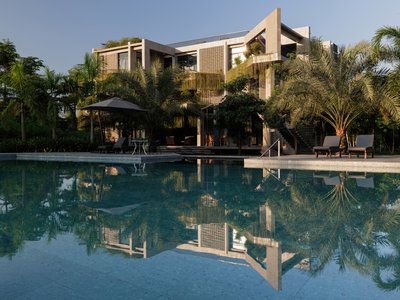
Reincarnation Weaves a Three-Story Retreat into the Green Landscape of Rural Bangladesh
Ara Manor in Narsingdi dissolves the line between domestic architecture and its lush surroundings through screens, courtyards, and planted rooftops.
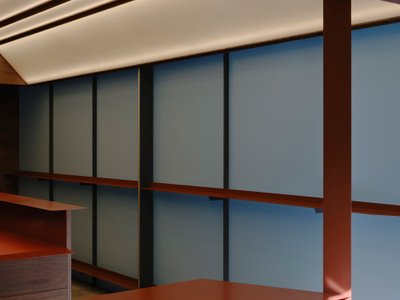
Kerry Kounnapis Packs 800 Daily Coffees into a 43-Square-Metre Melbourne Laneway Bar
Palace Coffee channels Pellegrini's and European standing bars through oxide-red steel and spotted gum timber in a Ridgway Place sliver.
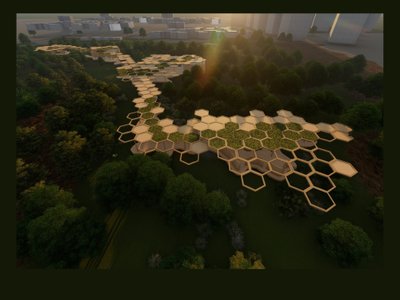
Eco Chapel: A Green Architecture Pavilion Designed in Symbiosis with the Forest
Eco Chapel uses green architecture to weave prayer, learning and reuse into a forest pavilion shaped by modular hexagonal canopies for life.


Similar Reads
You might also enjoy these articles
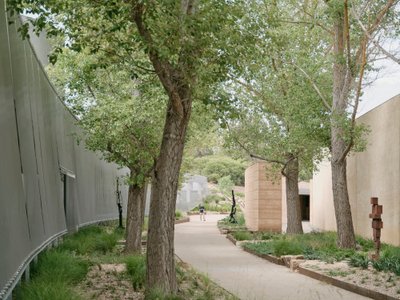
Kerstin Thompson Architects Buries a Cultural Center Beneath Its Own Car Park in the Yarra Valley
The Eva and Marc Besen Centre at TarraWarra hides 2,375 square metres of gallery and archive space under a reinstated landscape in Healesville, Australia.
Kerry Kounnapis Packs 800 Daily Coffees into a 43-Square-Metre Melbourne Laneway Bar
Palace Coffee channels Pellegrini's and European standing bars through oxide-red steel and spotted gum timber in a Ridgway Place sliver.
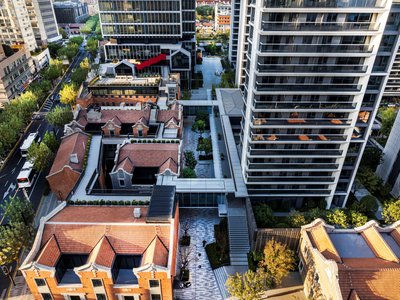
Nikken Sekkei Stacks a Three-Dimensional Lilong Atop Shanghai's Historic Alleyways
A 180-meter tower and restored heritage houses on Nanjing West Road reimagine communal lane life as a vertical mixed-use district.
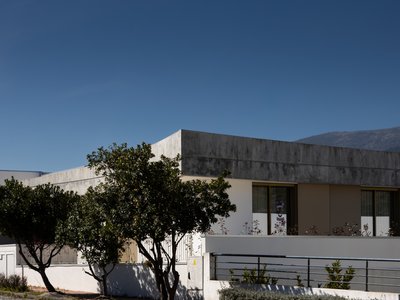
PLATAFORMArq Folds a Concrete Roof Over the Portuguese Mountains in House #474
A 220-square-meter residence in Teixoso, Portugal, wraps board-formed concrete into an angular canopy that frames the Serra da Estrela foothills.


Explore Sustainable Design Competitions
Discover active competitions in this discipline




The International Standard for Design Portfolios


The Global Benchmark for Architecture Dissertation Awards


The Global Benchmark for Graduation Excellence


Challenge to reimagine the Iron Throne
Comments (0)
Please login or sign up to add comments
No comments yet. Be the first to comment!