

OneTwoHouse: A Dual-Identity Home Blending Unity, Illusion, and Sustainable Living
Single-family house disguised as semi-detached, combining open and private spaces with sustainable materials, passive systems, and a strong indoor-outdoor connection.


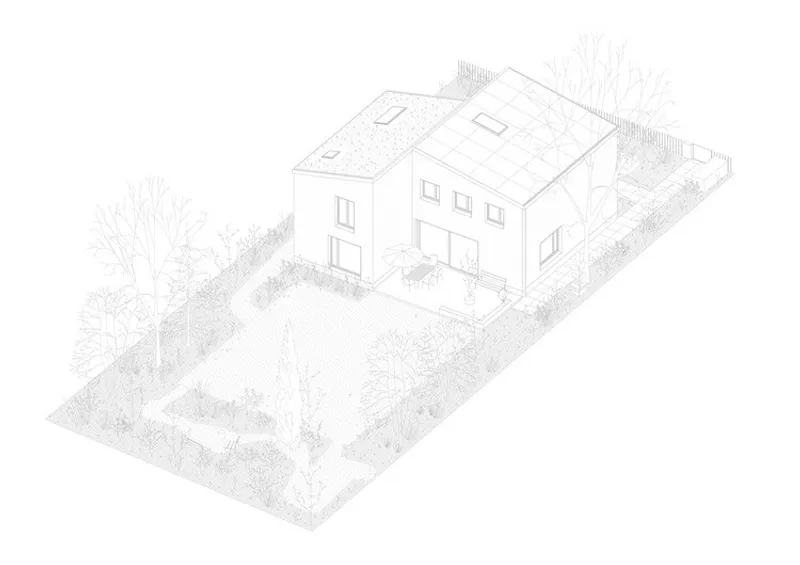
Located in Berlin, Germany, OneTwoHouse by rundzwei Architekten presents a compelling architectural narrative that challenges perception while redefining contemporary domestic living. At first glance, the house appears to be a semi-detached dwelling, two mirrored units placed side by side. However, this visual impression is carefully constructed. In reality, the building is a single-family home, unified under one roof. This deliberate ambiguity forms the conceptual foundation of the project, where duality and unity coexist in both form and experience.
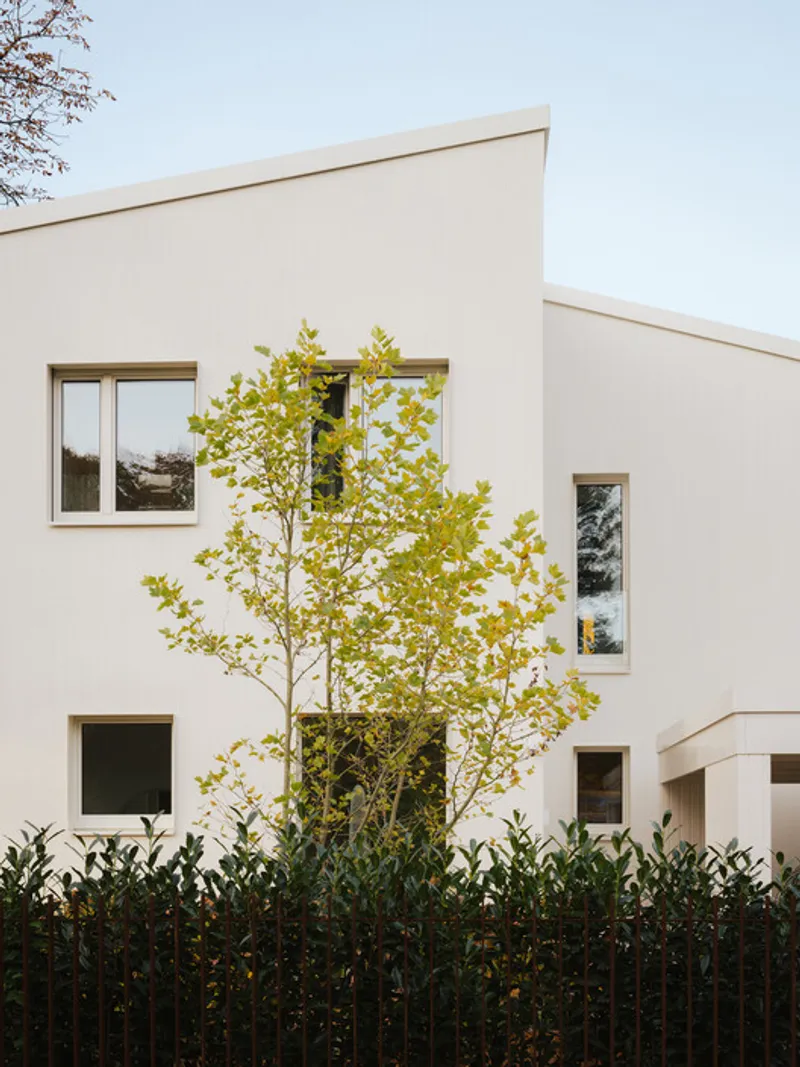
The exterior composition is defined by staggered volumes and a symmetrical façade that reinforces the illusion of two separate entities. This play on perception not only engages the viewer but also reflects the internal organization of the house, where contrasting spatial qualities are brought together into a cohesive whole. The architecture becomes a dialogue between apparent division and actual continuity.

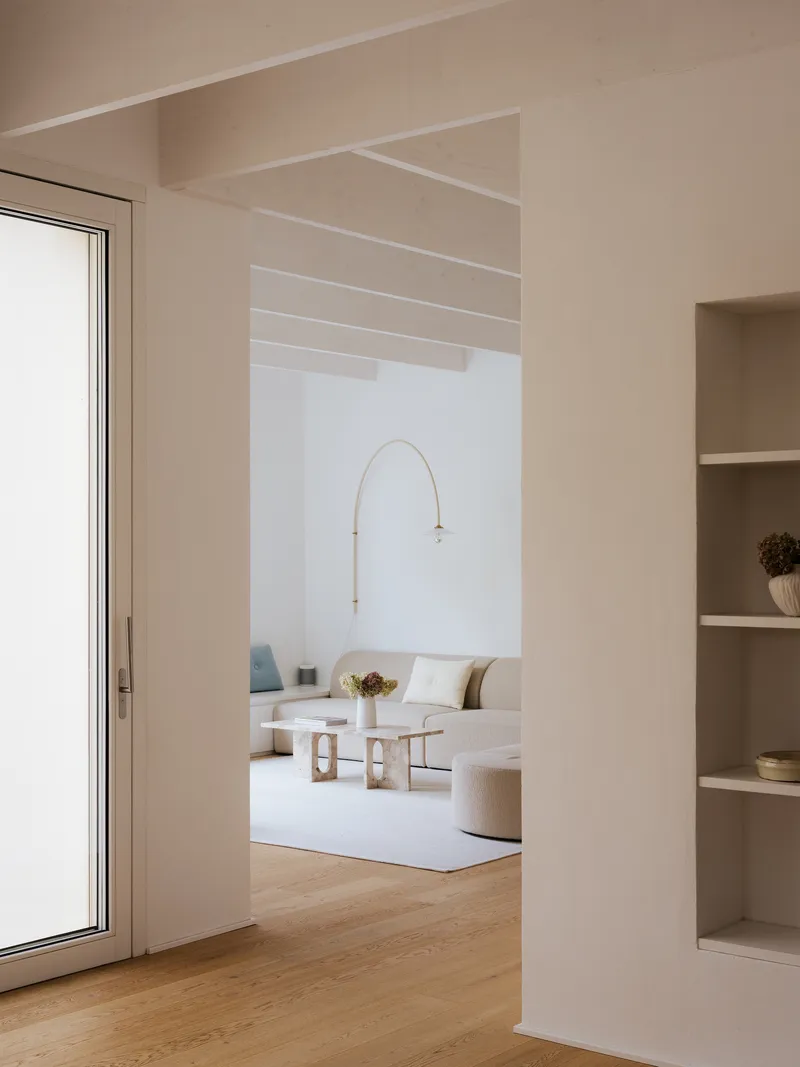
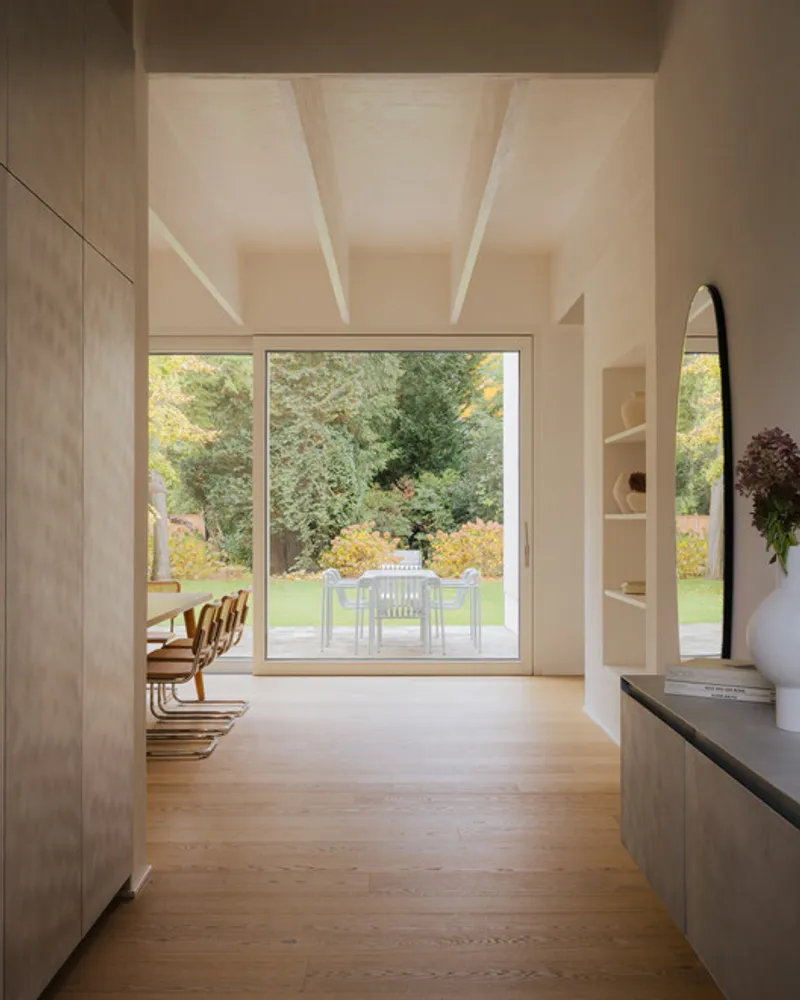
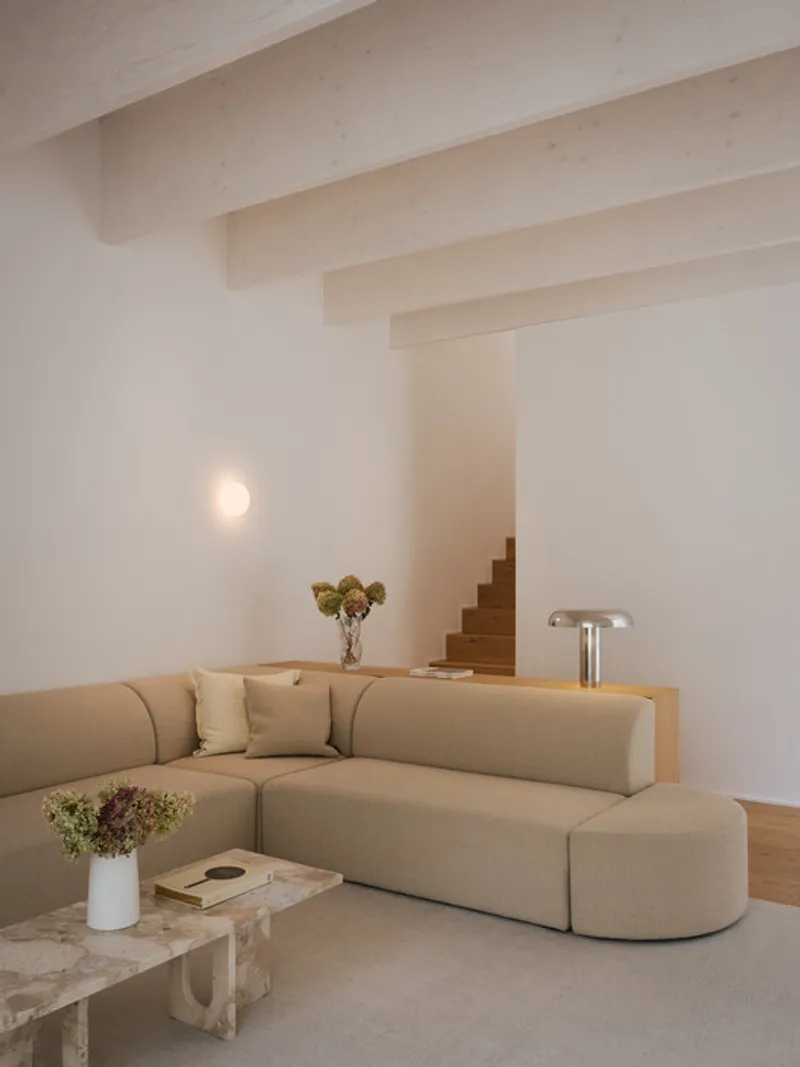
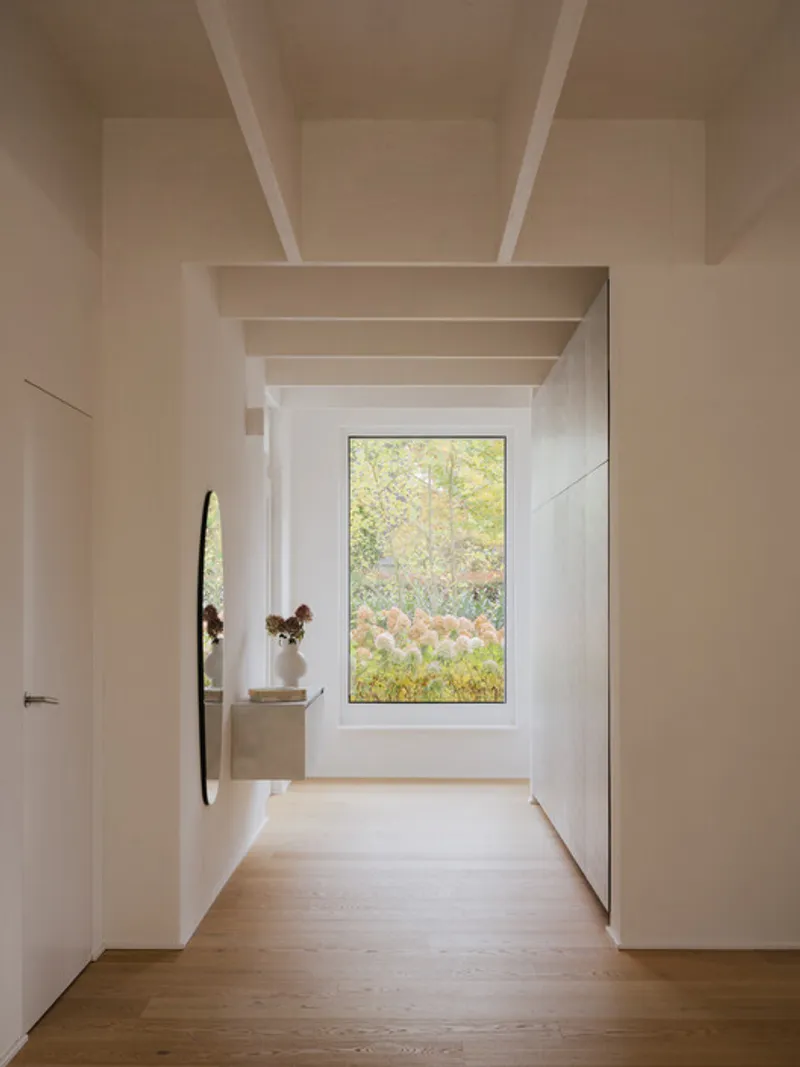
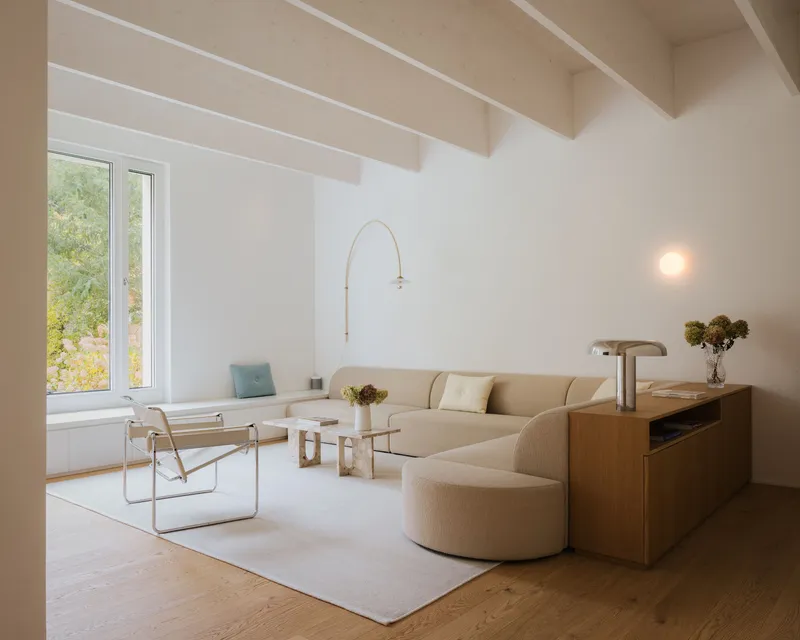
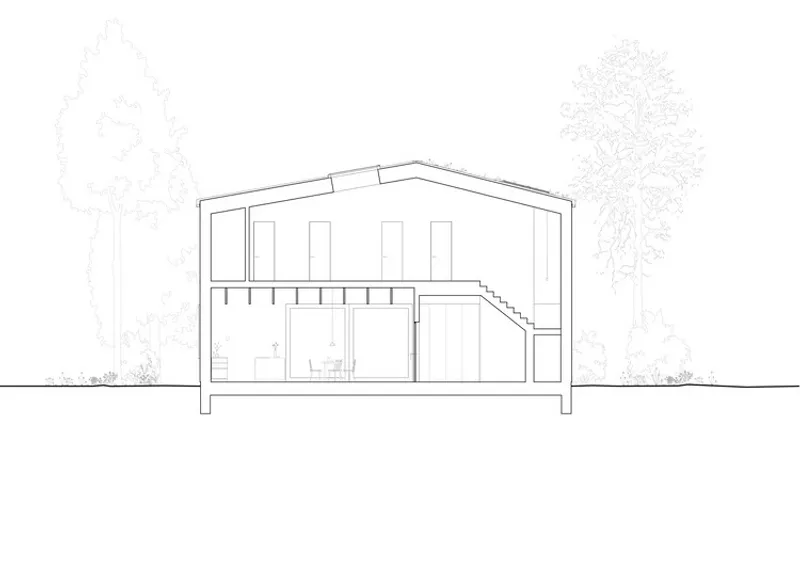
Internally, the house is organized across two primary levels, each responding to different modes of living. The ground floor is conceived as an open, expansive environment dedicated to shared activities. Living, dining, and kitchen spaces flow seamlessly into one another, creating a generous and flexible layout. Large openings and carefully positioned windows frame views of the surrounding garden, establishing a strong visual and spatial connection between interior and exterior.
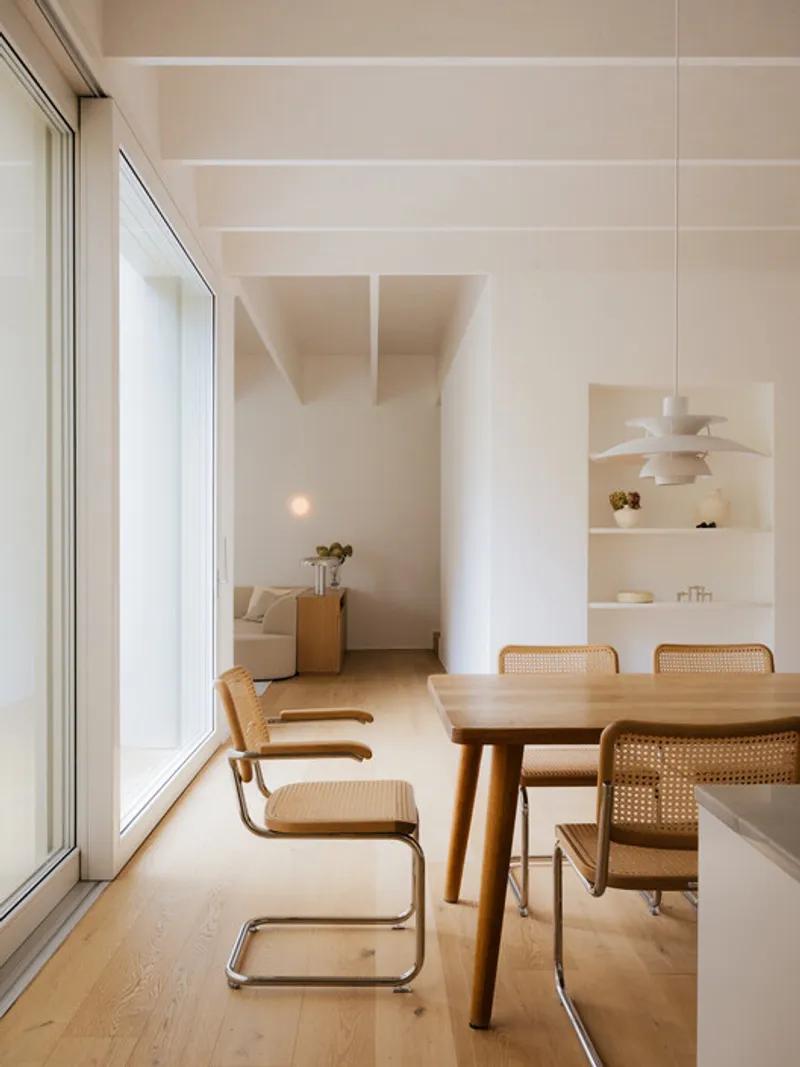
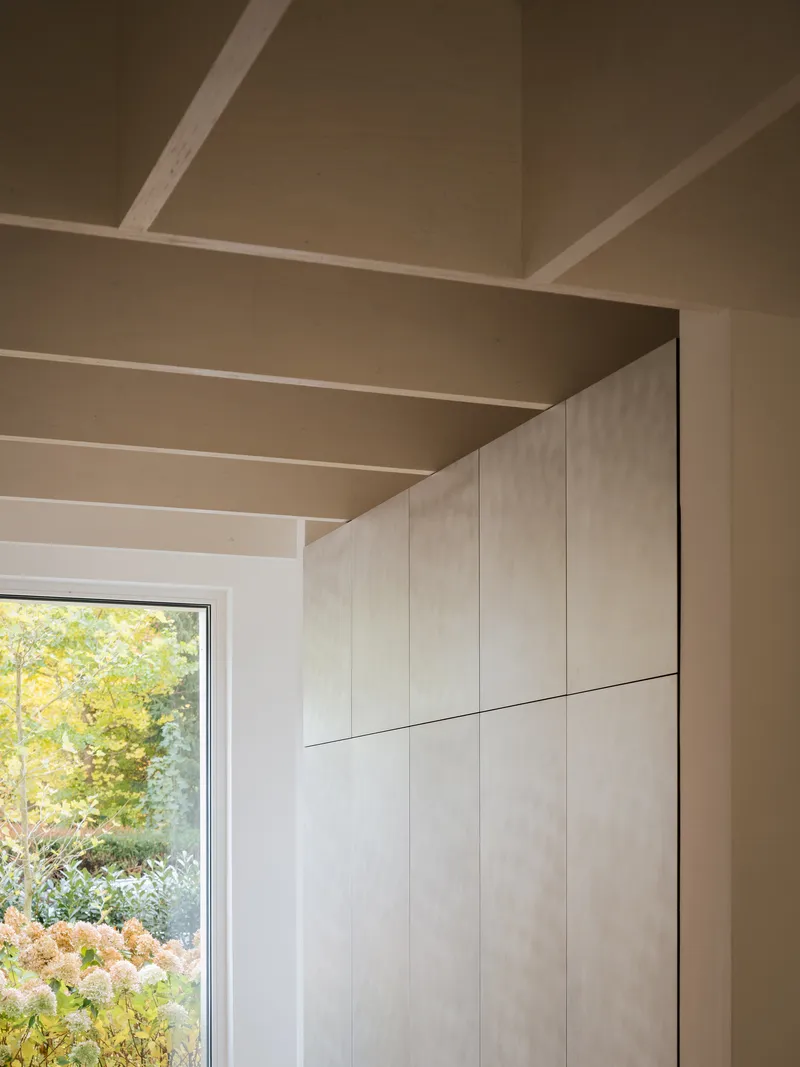
The architectural language of the ground floor emphasizes lightness and openness. High ceilings, combined with a refined wooden ceiling structure, enhance the sense of volume and warmth. Natural light filters through the spaces, creating an inviting atmosphere that encourages social interaction and daily life to unfold effortlessly.
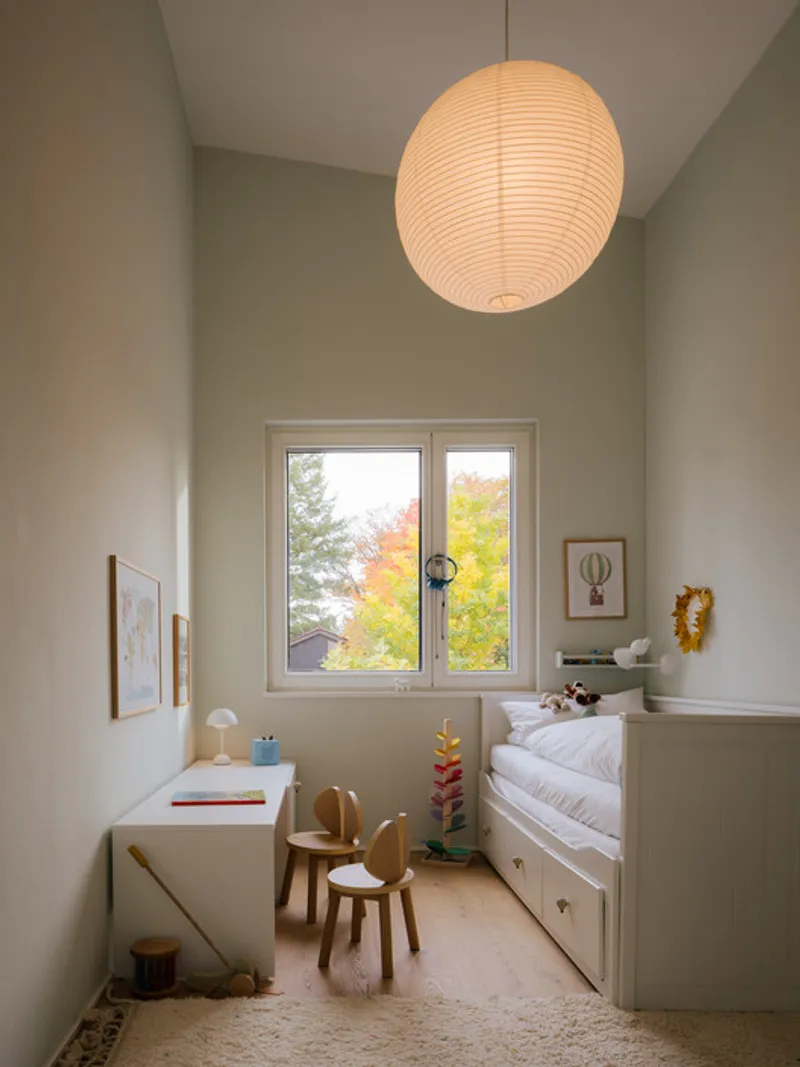
In contrast, the upper floor is designed as a more intimate and private domain. Bedrooms are intentionally compact, fostering a sense of comfort and retreat. A central hallway serves as the organizing spine of this level, connecting the rooms while offering a flexible space that can accommodate both circulation and moments of pause. This transitional zone reinforces the idea of balance, between movement and stillness, connection and solitude.

The name OneTwoHouse encapsulates this duality. It speaks not only to the external illusion of two houses but also to the internal coexistence of two distinct spatial conditions: openness and privacy. The project successfully merges these seemingly opposing qualities, creating a home that is both expansive and introspective.

Materiality and construction play a crucial role in reinforcing the project’s sustainable ambitions. The building is constructed using clay blocks with perlite insulation, assembled in a way that allows for disassembly and reuse in alignment with circular economy principles. The design intentionally minimizes the use of concrete, opting instead for environmentally responsible alternatives such as foamed glass gravel for the foundation layer.

Energy performance is addressed through a combination of passive and active strategies. A ground probe system paired with a heat pump provides efficient underfloor heating, while a full-roof photovoltaic system with battery storage supports renewable energy generation. The north-facing roof is designed as an inclined green roof, enhancing insulation and contributing to biodiversity.
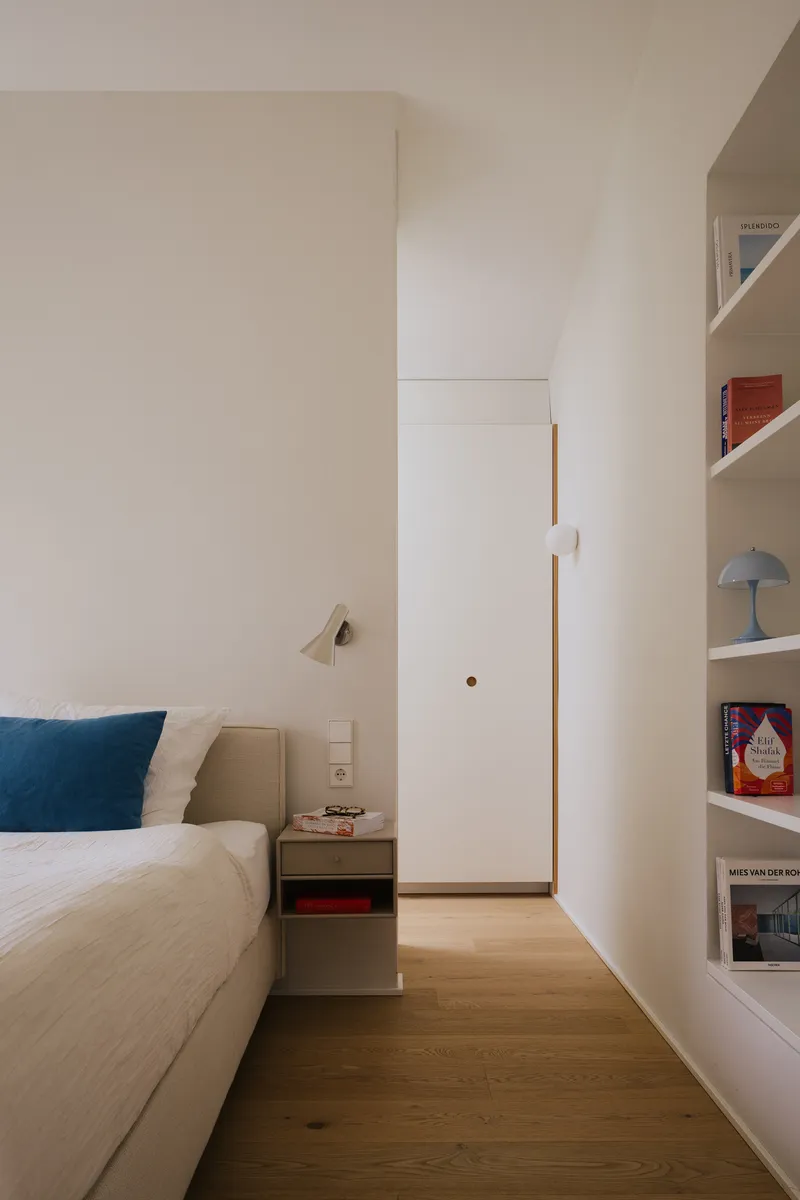

The interior environment is carefully calibrated to ensure comfort without relying heavily on mechanical systems. Ventilation is achieved naturally through operable windows, while clay plaster surfaces and construction boards regulate indoor humidity by absorbing and releasing moisture. This creates a stable and healthy indoor climate, aligned with principles of low-energy design.

Ultimately, OneTwoHouse is more than a residential building, it is an exploration of architectural identity. By merging the visual language of a semi-detached house with the functionality of a single-family dwelling, the project challenges conventional typologies. Through its thoughtful integration of spatial design, material logic, and sustainability, it offers a contemporary model of living that is both innovative and deeply grounded in environmental responsibility.

All the Photographs are works of Nate Cook Photography


Popular Articles
Popular articles from the community

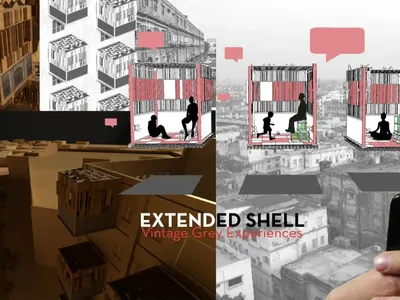
Extended Shell: Retrofitting Kolkata's Balconies as Living Urban Thresholds
A modular retrofit system recovers the social and environmental intelligence of Kolkata's historic verandas for contemporary Park Street residents.
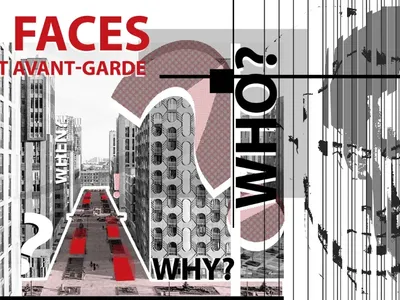
Faces of the Soviet Avant-Garde: Turning Moscow's Street Names into an Open-Air Museum
A network of sculptural installations across a Moscow residential district transforms forgotten architect names into spatial encounters with cultural memor

Opera on the Sea: Driftwood Logic Shapes a Timber Opera House on Estonia's Coast
Trevor Orgill's opera house translates the entangled drift of floating timber into a civic building where wood, water, and music converge.

Opera by the Sea Estonia: Three Shells Dissolving Architecture into Tallinn's Coastline
A winning opera house proposal replaces monumental form with interconnected shells that blur the boundary between building, park and Baltic Sea.

Similar Reads
You might also enjoy these articles

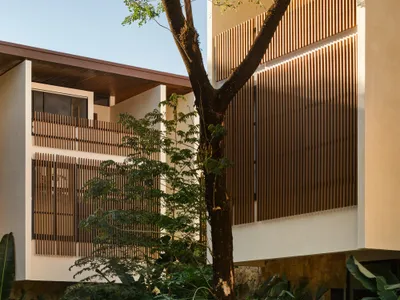
FAMM Arquitectura Organizes Ten Villas Around Courtyards and Jungle in Nosara, Costa Rica
El Molino pairs two elongated volumes with deep overhangs and timber louvers to build a compact coastal community five minutes from the beach.
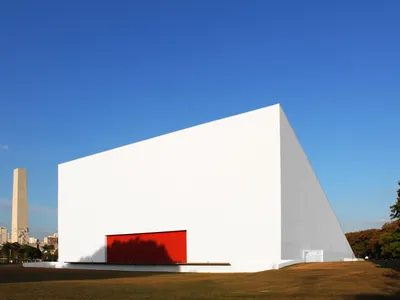
Oscar Niemeyer's Ibirapuera Park Pavilions Define São Paulo's Cultural Identity in Concrete and Curve
A constellation of modernist volumes set within São Paulo's most important urban park, conceived for the city's 400th anniversary in 1954.
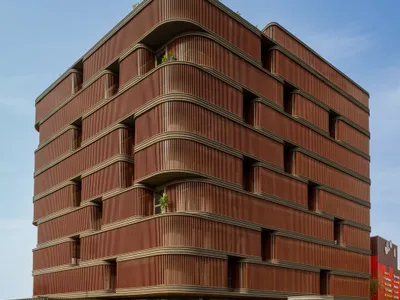
Sanjay Puri Architects Wraps a Jaipur Office Tower in Capsule-Shaped Green Buffers
A nine-level climate-responsive workplace near Jaipur Airport uses stacked planter terraces and aluminium screens to fight 40°C heat.
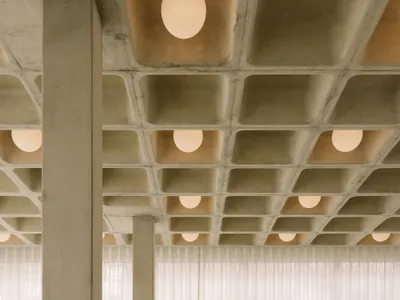
RHO Converts a Berlin Spree-Side Industrial Courtyard into Enkime's 1,000 m² Agency Headquarters
A social media agency's new home in Charlottenburg trades glossy branding for concrete waffle ceilings, glazed tile, and sheer curtains.

Explore Architecture Competitions
Discover active competitions in this discipline

Challenge to reimagine the Iron Throne

Photograph architecture without architects

Illustrate the lost glory of Angkor Wat - Render Challenge

Design challenge to reuse E-waste
Comments (0)
Please login or sign up to add comments
No comments yet. Be the first to comment!