
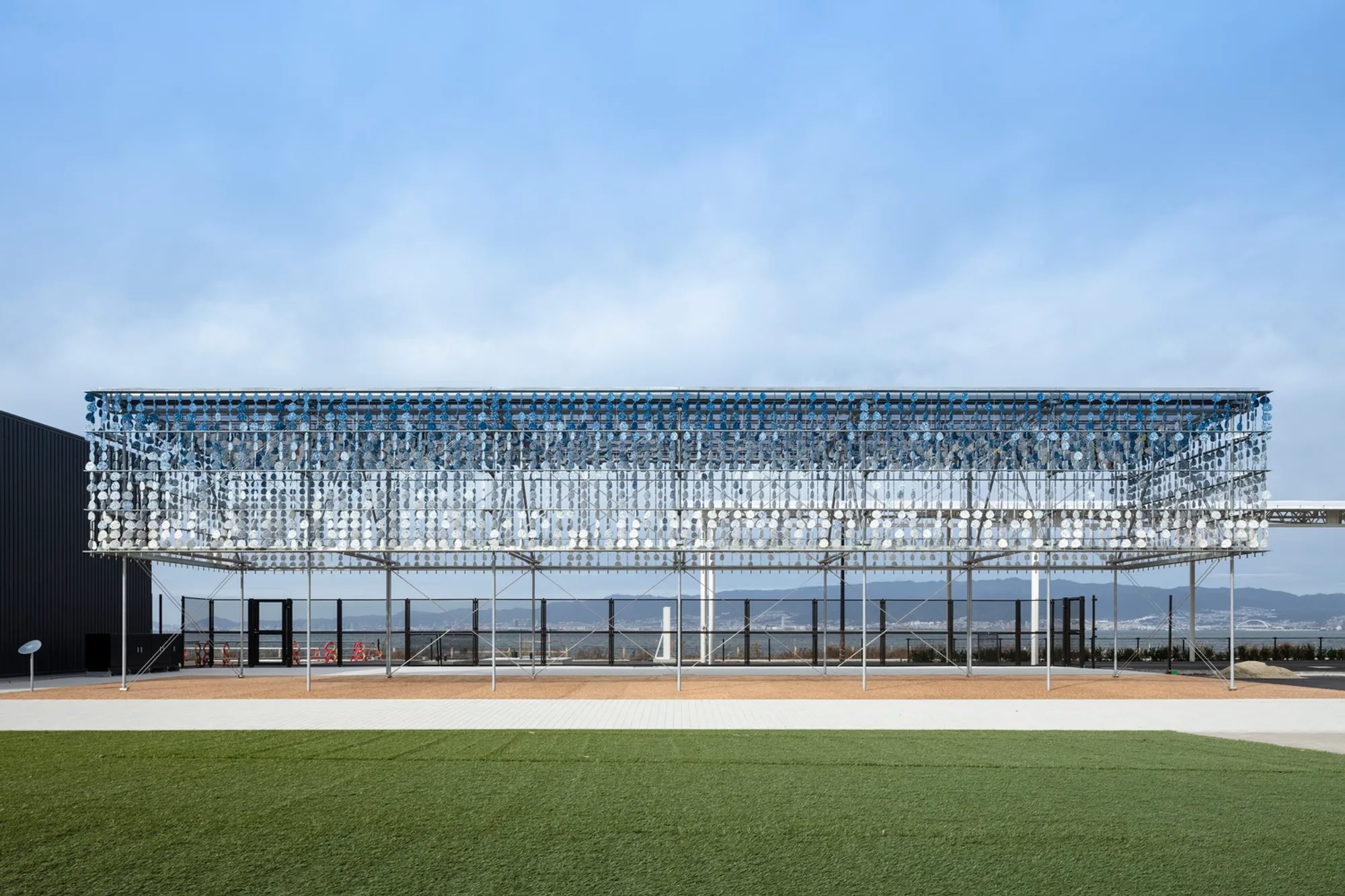
Osaka Expo 2025 Umi-Kuru Retail Facility
The Osaka Expo 2025 Umi-Kuru Retail Facility is a sustainable modular building made from upcycled marine plastics, promoting circular economy.


Pioneering Sustainable Architecture with Marine Plastic Waste
The Osaka Expo 2025 Umi-Kuru Retail Facility, designed by TAISEI DESIGN Planners Architects & Engineers, represents a groundbreaking initiative in sustainable and circular architecture. Situated next to the EXPO 2025 (Osaka, Kansai) Arena, the facility is constructed primarily from upcycled marine plastic waste, addressing the global challenge of marine plastic pollution.
Built on coastal reclaimed land, the project highlights the potential for architectural innovation that transforms environmental hazards into meaningful design elements. Beyond its function as a retail space, the facility embodies eco-conscious design principles and a vision for a circular economy, emphasizing reuse and adaptability.
Upcycling Marine Plastic: From Waste to Architectural Form
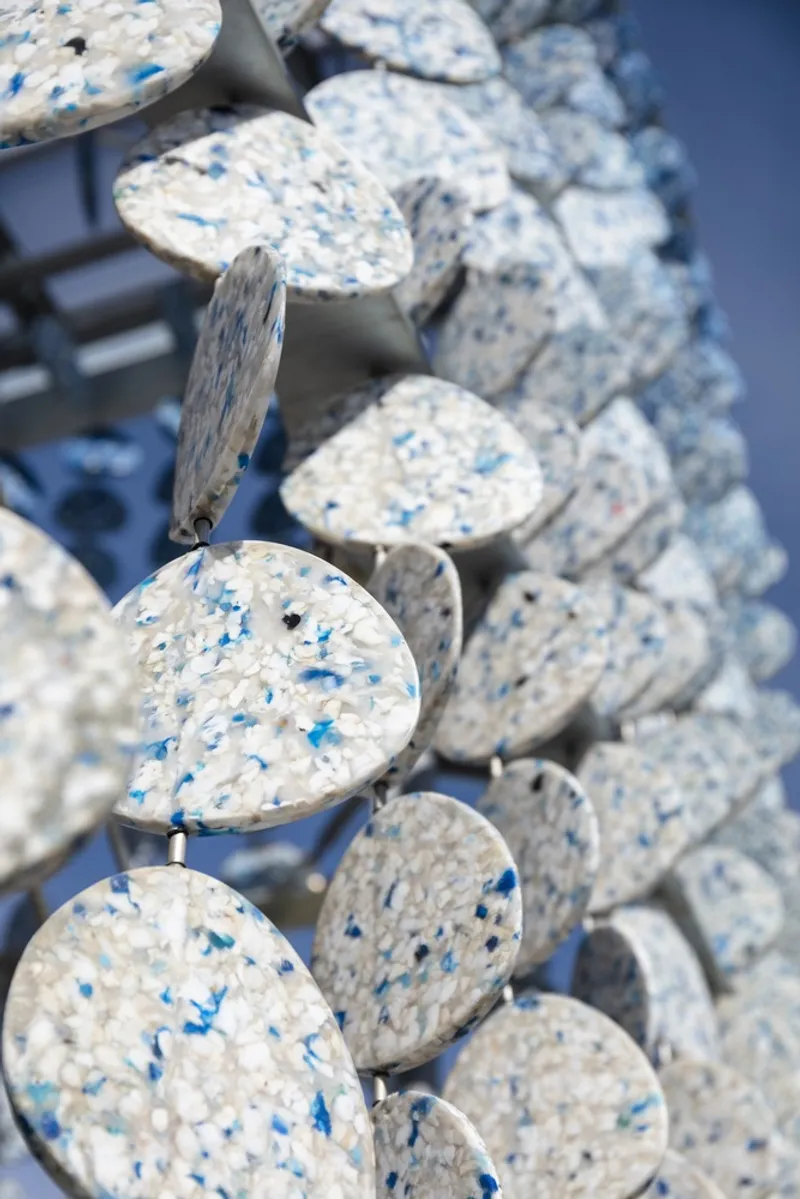
The project begins at the source: collecting marine plastic waste along Japan’s coastlines, including Tsushima in Nagasaki Prefecture. Over 5,000 upcycled panels were produced, equivalent to approximately 30,000 plastic bottles, transforming discarded materials into a striking architectural envelope.
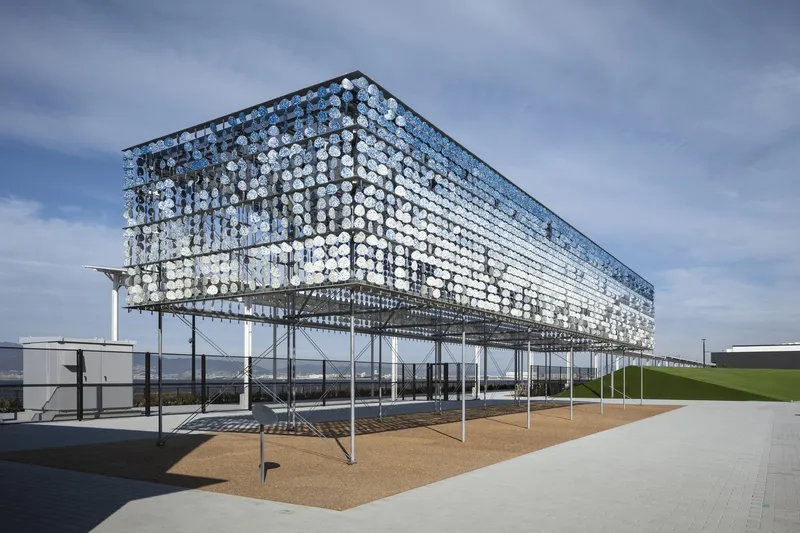
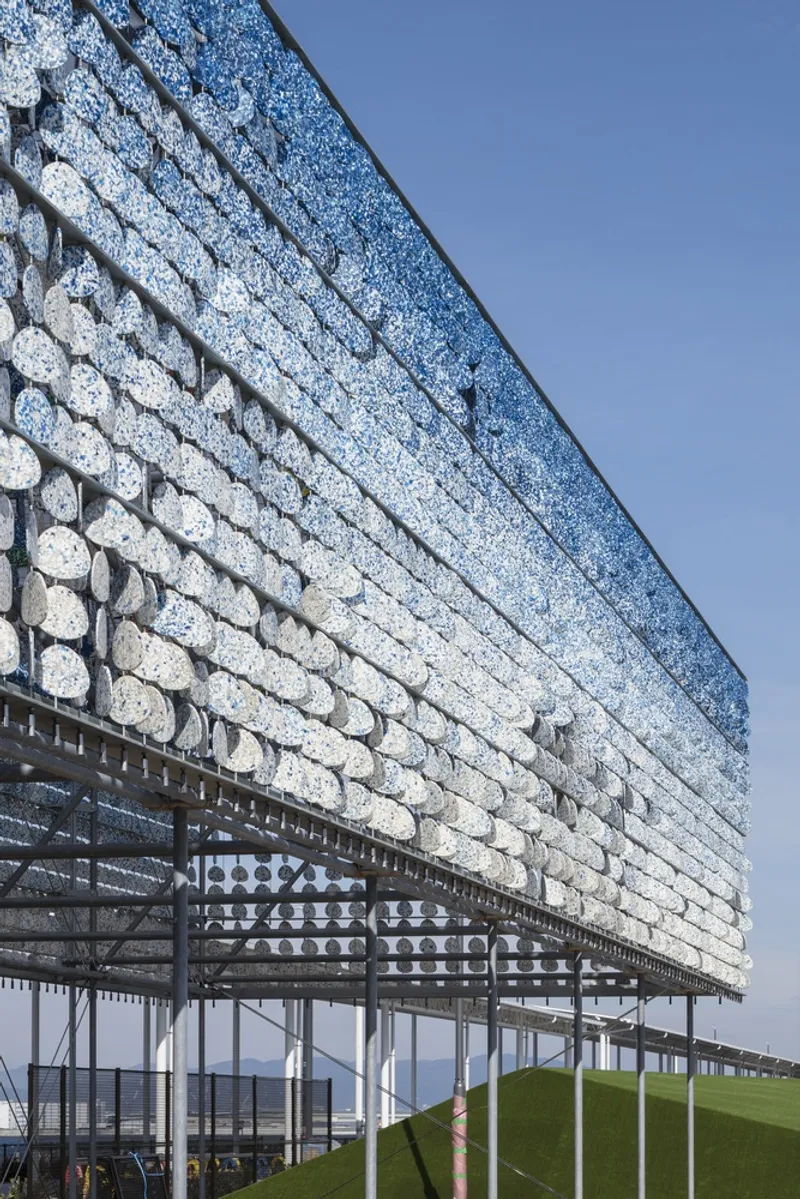
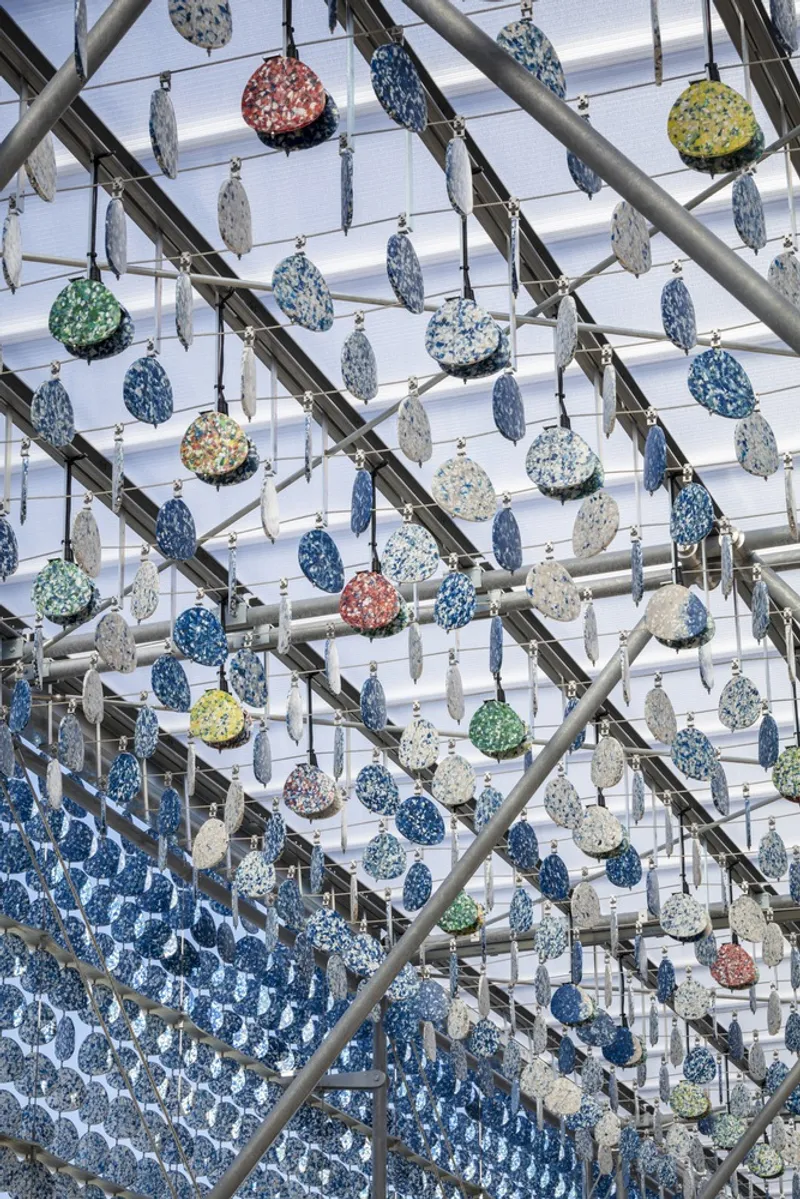
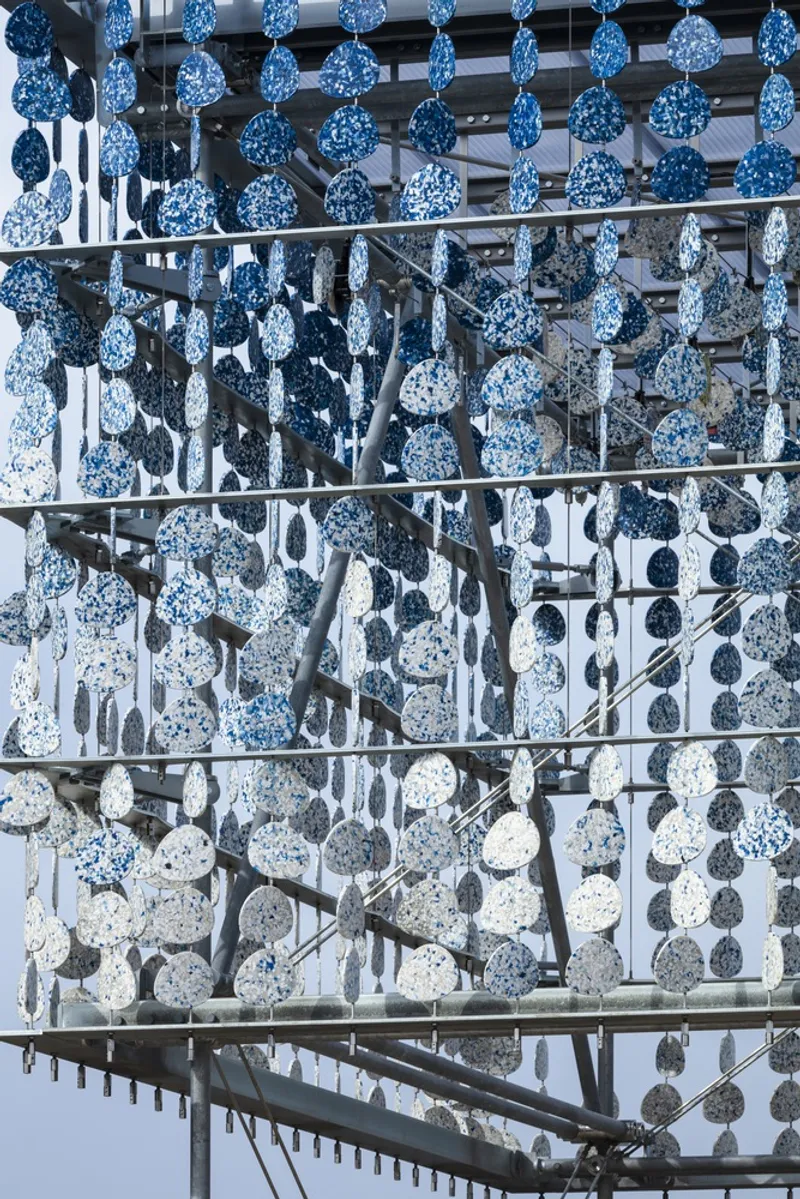
The exterior panels are designed to mimic a school of fish swimming in the blue sky, providing both aesthetic appeal and functional shading. Made entirely from 100% recycled marine plastics, the panels underwent rigorous testing, including material strength, wind tunnel, and environmental exposure tests, ensuring durability and commercial-grade quality.
The panels carry a strong environmental message: they symbolize the Earth, highlighting the delicate balance of land and water while promoting awareness of marine conservation.
Wind-Responsive Design for Coastal Conditions
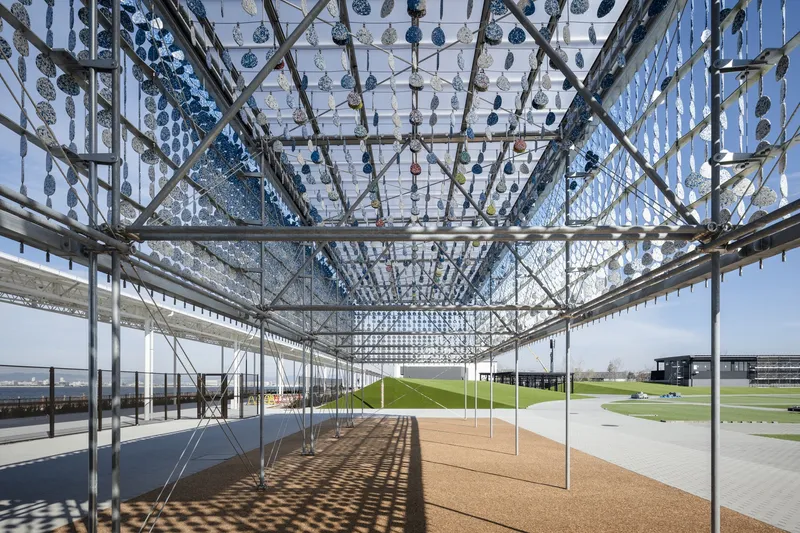
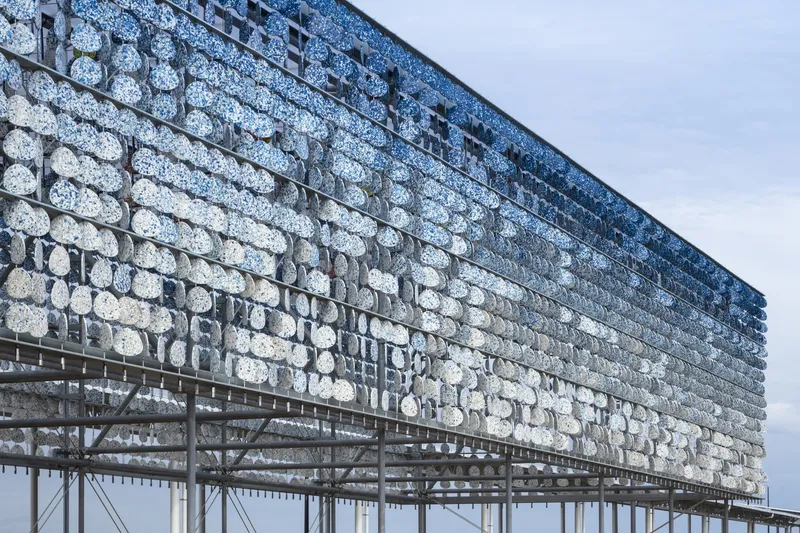
Located in a windy coastal site, the Umi-Kuru Retail Facility features an innovative exterior panel system that rotates freely to reduce wind load. By offsetting the suspension points of stainless steel (SUS) wires, the panels form a scale-like surface, stabilizing at angles below 15° relative to wind direction.
Through extensive wind tunnel testing, the system has been optimized to withstand wind speeds of up to 40 m/s, and the tension of the wires can be easily adjusted using precision clamping nuts. This dynamic and responsive facade combines structural ingenuity with aesthetic fluidity, echoing the movement of fish scales in the sea.
Modular Construction and Reuse
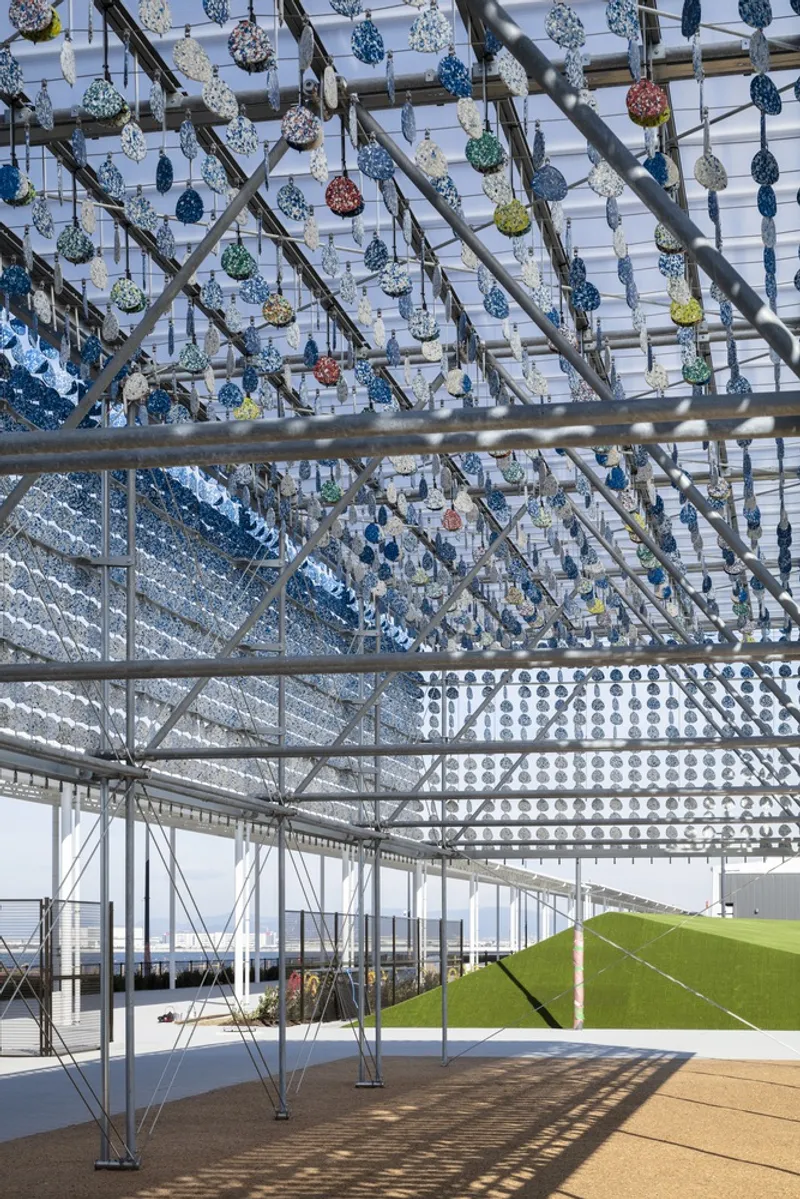
Designed with temporary assembly and future reuse in mind, the structure utilizes simple, low-cost pipes and precision-machined stainless steel clamps. The modular system allows for easy manual assembly and disassembly, ensuring that post-Expo, the materials can be relocated or repurposed as furniture.
This approach eliminates the sense of temporariness often associated with Expo installations, creating a stylish, minimalist aesthetic while adhering to sustainable construction practices.
River-Friendly Pavement and Local Materials
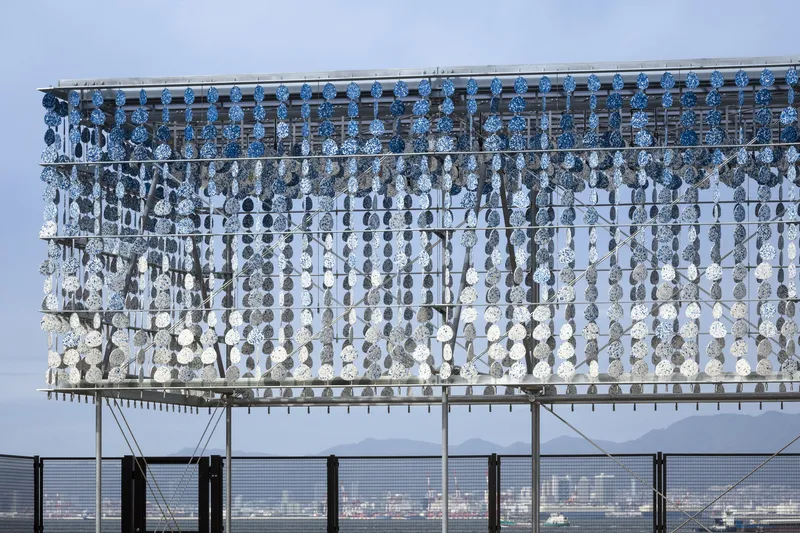
Beyond the use of marine plastics, the facility incorporates reed chip pavement sourced locally from the Udono area along the Yodo River in Osaka. Reeds naturally improve water quality and contribute to local river ecosystem preservation.
The warm, vibrant color of the reed pavement adds a tactile and visual richness to the building’s outdoor spaces, providing a relaxing environment for visitors while supporting local production and sustainable consumption practices.
A Symbol of Circular Economy and Environmental Awareness
The Umi-Kuru Retail Facility serves as more than a commercial space—it is a symbol of global environmental responsibility. Through its use of recycled marine plastics, wind-responsive panels, modular construction, and eco-friendly materials, the project demonstrates how architecture can address ecological challenges while delivering an engaging, memorable experience for visitors.
Visitors to Osaka Expo 2025 will not only enjoy a retail experience but also gain a tangible understanding of sustainable design, making this facility a landmark for eco-conscious architecture.
All Photographs are works of Norihito Yamauchi, Manami Takahashi Photography,




Popular Articles
Popular articles from the community


Lunar Spiral: Space Architecture Shaped by the Mathematics of the Universe
Lunar Spiral reimagines space architecture through Fibonacci geometry, lunar regolith, levitating habitats, and self-sustaining Moon living.

The Musturak Paradise: Senior Living Architecture for a Connected Future in Temara, Morocco
The Musturak Paradise reimagines senior living architecture in Temara via private homes, social spaces, culture, community, and shared care.

Play: Fragments of Their World
Familiar architecture becomes modular playground design, creating safe spaces where displaced children can learn, connect, imagine and play.

Hill & Cross Opera: Sculptural Opera House Architecture Shaped by Tallinn’s Landscape and Identity
Hill & Cross Opera reimagines opera house architecture in Tallinn through its sculptural hill, civic plaza, glass wave and a luminous cross.


Similar Reads
You might also enjoy these articles


Hodi-Mandai Geram
Project Function: Preservation and revitalization of the Intangible heritage and socio-spatial identity of the Hodi by Housing, Cultural Memory Center, Sacred Grove, landscape, local tourism economy


Olio Towers: A Mid-Rise for Performers That Fuses Housing, Rehearsal, and Stage
Located blocks from Houston's Theater District, this modular tower stacks living units around a central performance atrium.

Oasis: Modular Green Housing Carved into Dhaka's Urban Fabric
A shortlisted Plugin Housing entry reclaims unauthorized settlements in Dhaka with stepped concrete volumes, green roofs, and ventilation-driven design.

Black Hole: A Floating Megastructure for the Post-Physical Era
Emiliano Mazzarotto envisions a spherical, self-scaling arena where e-sports, digital hotels, and holographic stadiums replace traditional public space.


Explore Ocean Plastic Competitions
Discover active competitions in this discipline


Challenge to design a portable theatre


Challenge to design a portable music platform


Challenge to design an open learning module for the elderly


Challenge to reimagine the Iron Throne
Comments (0)
Please login or sign up to add comments
No comments yet. Be the first to comment!