

Otla House by We Design Studio: A Modern Courtyard Home Inspired by Traditional Indian Architecture in Bengaluru
Otla House in Bengaluru blends modern design with traditional Indian courtyard concepts, maximizing natural light, ventilation, teak interiors, and sustainable, serene living.


Located in the bustling city of Bengaluru, India, Otla House by We Design Studio is a 9,000 ft² contemporary residence that harmoniously blends modern architectural aesthetics with traditional Indian design elements. Completed in 2021, this home was envisioned to create a bright, open, and inviting living environment, echoing the clients’ nostalgic memories of growing up in colonial homes in New Delhi. At the heart of this design lies a central open-to-sky courtyard, or aangan, which becomes the core of the home, connecting indoor and outdoor spaces while fostering natural light, ventilation, and social interaction.
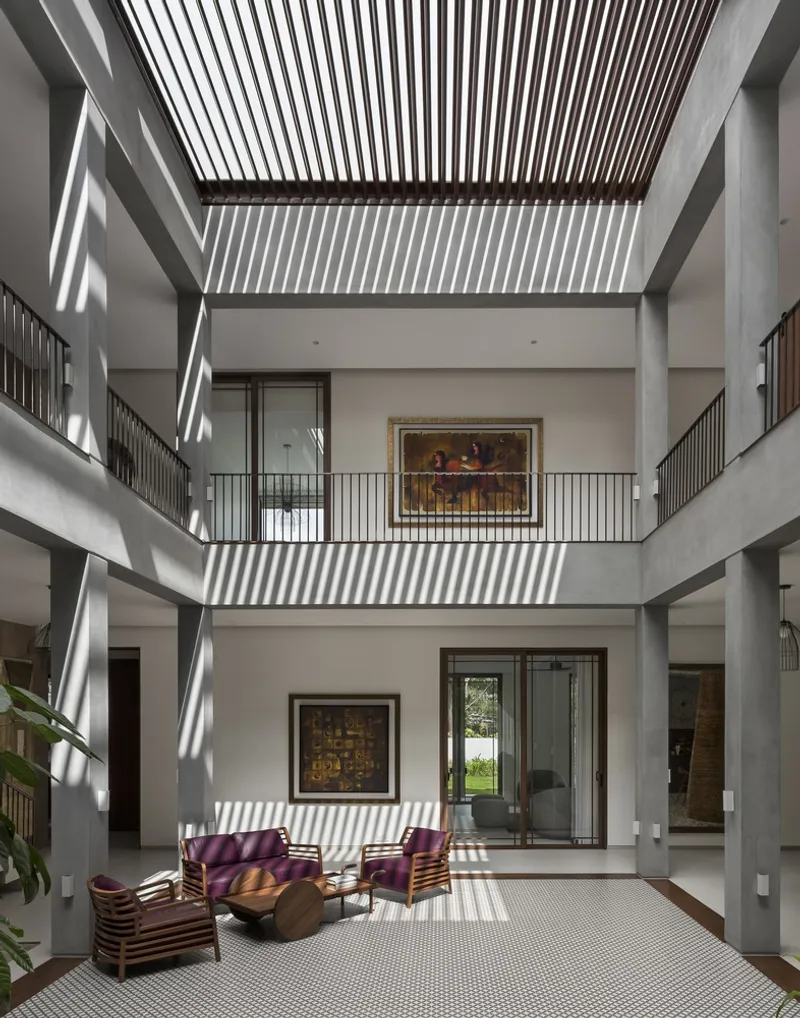
Courtyard-Centric Design: A Modern Take on Indian Tradition
The design of Otla House draws inspiration from sustainable traditional Indian architecture. The layout revolves around the central courtyard (aangan) internally and the external otla (veranda), with all primary living functions arranged around these spaces. The courtyard is thoughtfully covered with motorized louvers that respond to weather conditions, ensuring comfort while maintaining a strong visual and functional connection with nature. This design strategy reflects a passive solar approach, maximizing natural lighting and ventilation throughout the day.
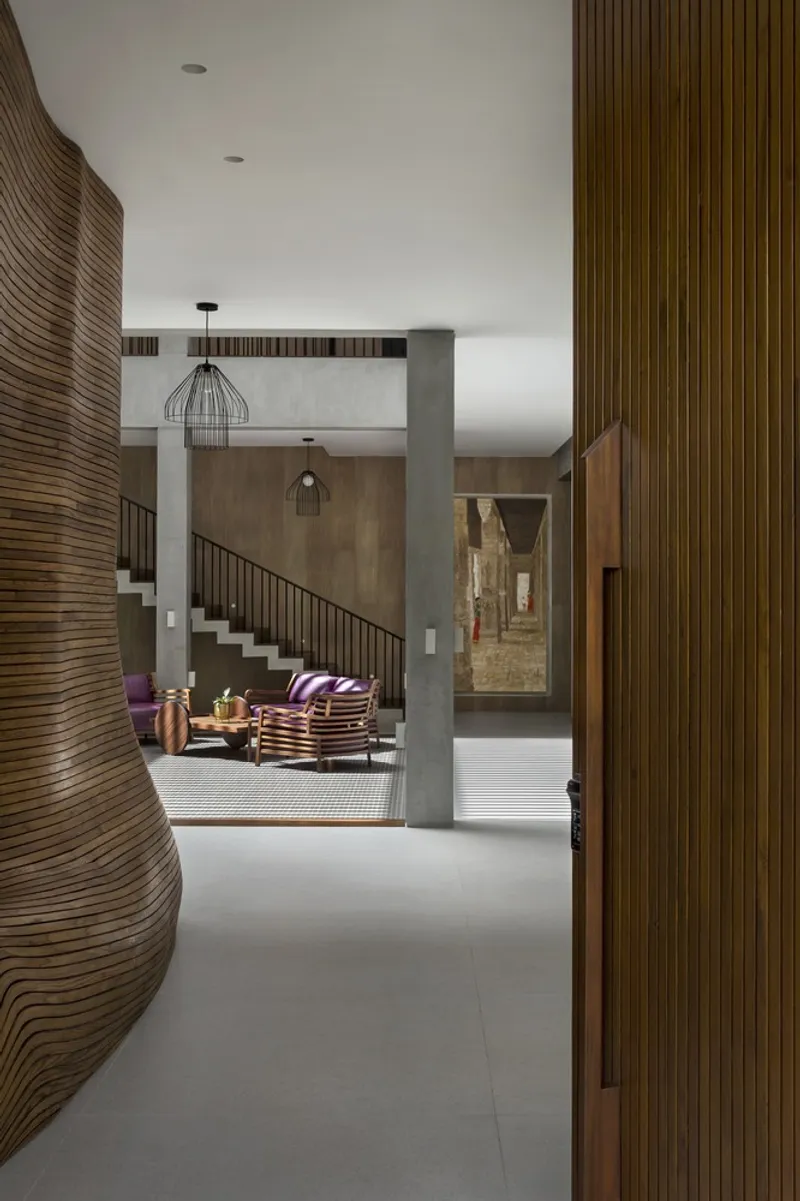
Entrance and Ground Floor Planning
Upon entering through a metal louvered gate, visitors are greeted by lush greenery within the property walls, creating a serene private oasis far removed from the city’s hustle. The ground floor features a double-height living room, kitchen, den, home office, and meditation space. Vastu-compliant principles guide the home’s orientation, with entry from the eastern veranda through a large pivoted teak wood door. A double-curved teak partition subtly separates the dining area from the entrance lobby while guiding movement toward the central courtyard.
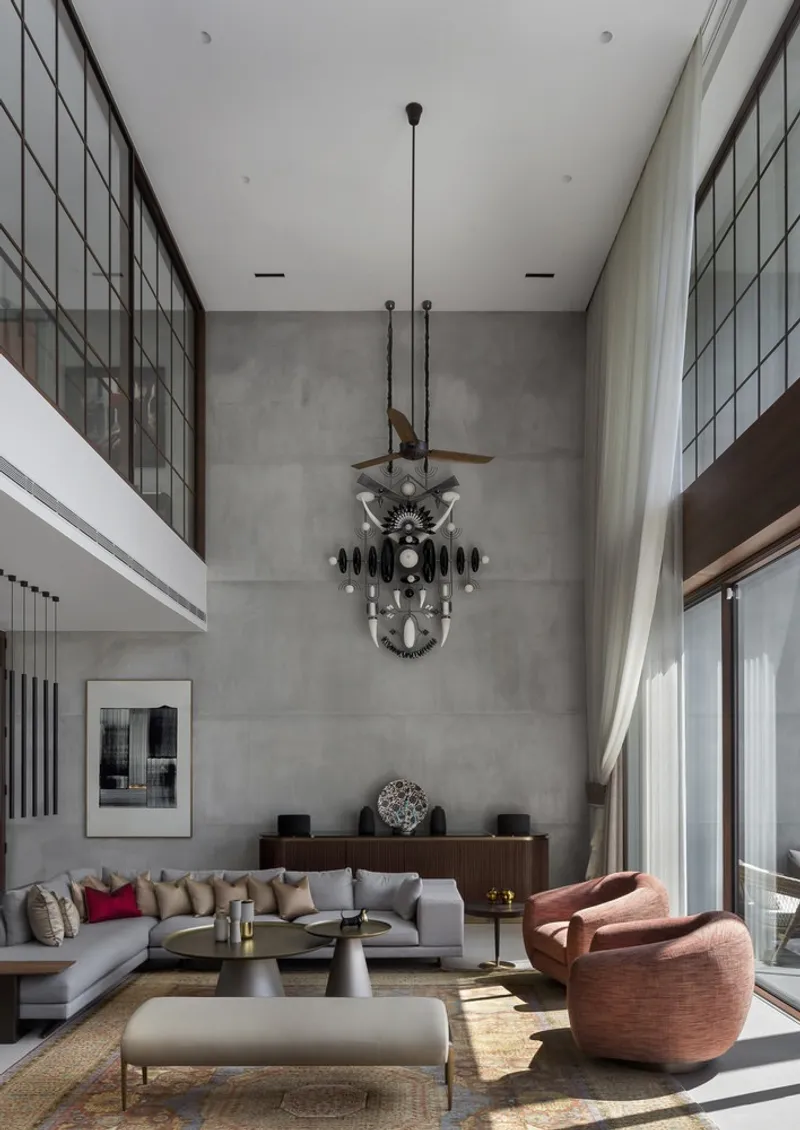
Natural Light, Ventilation, and Indoor-Outdoor Connection
Spaces flanking the courtyard receive abundant natural light and cross-ventilation, enhancing comfort and sustainability. Floor-to-ceiling glass doors connect the courtyard with the external veranda, visually and spatially integrating interior and exterior areas. The design ensures a seamless indoor-outdoor living experience, making nature an integral part of everyday life.
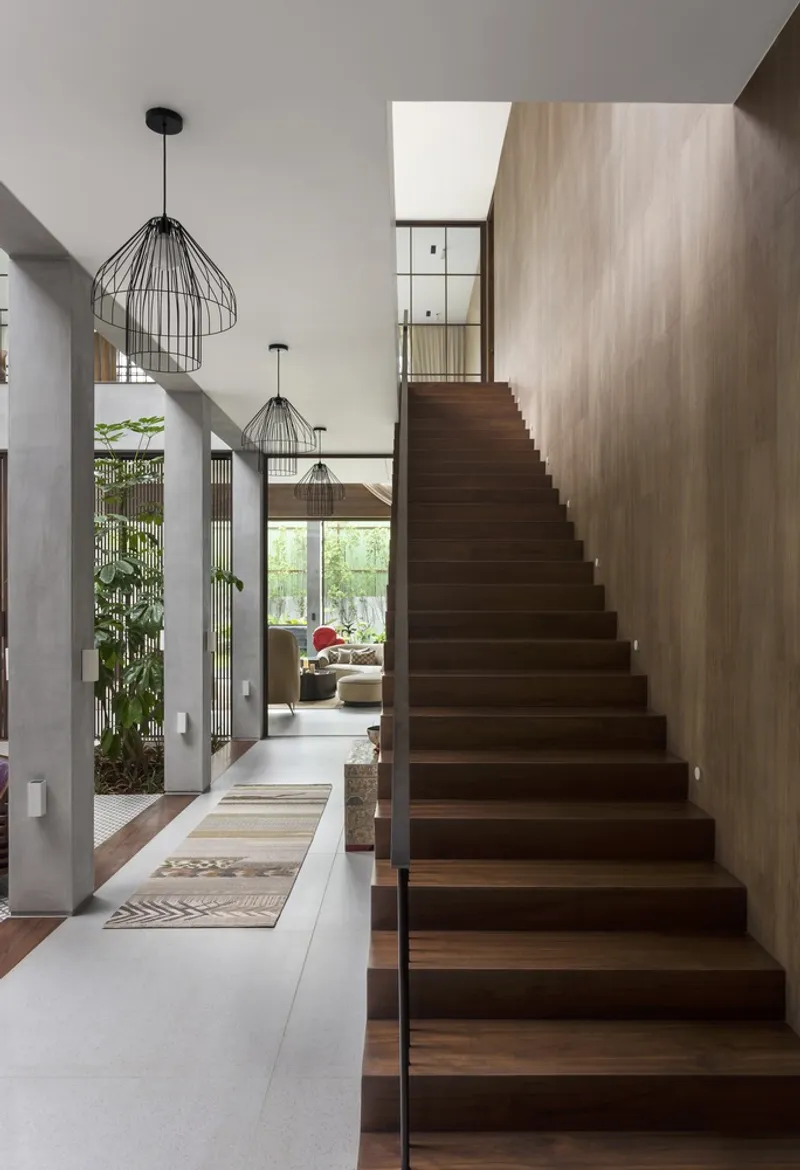
Materiality and Interiors
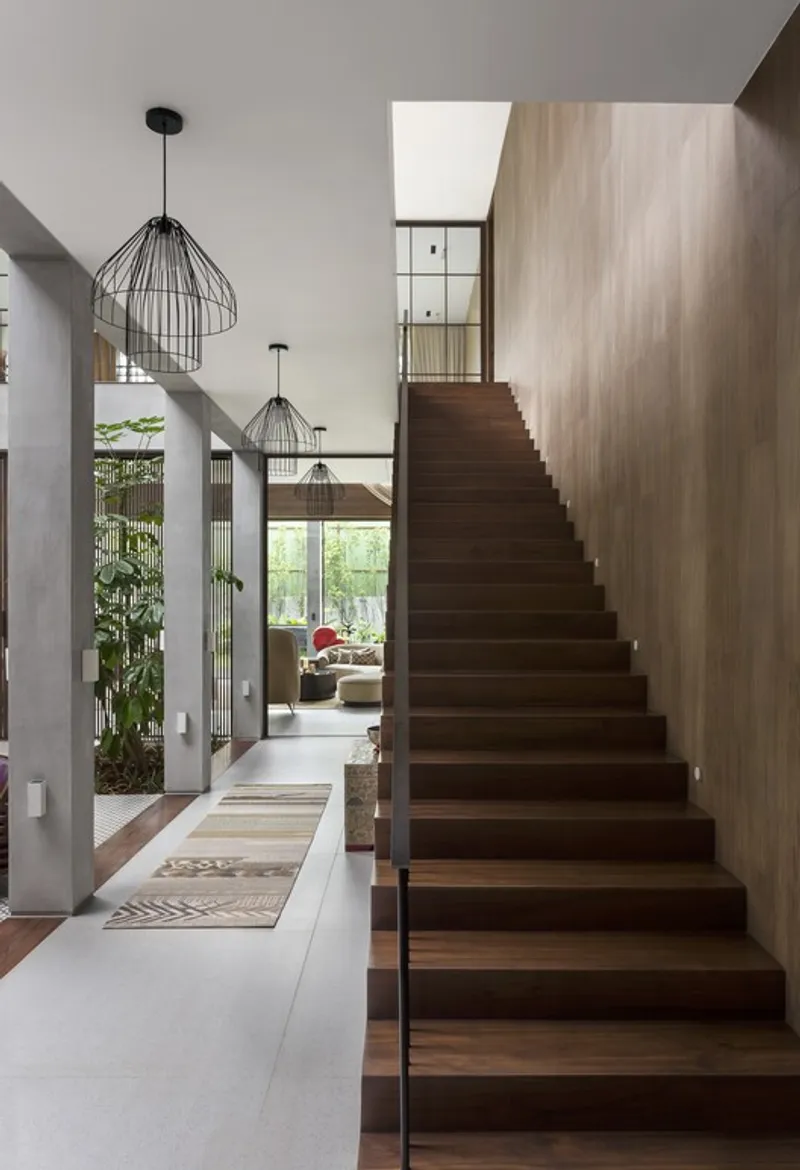
The material palette of Otla House combines timeless elegance with local authenticity. The home is finished with cut-polish concrete, while Burma teak wood is used extensively for doors, windows, wardrobes, and furniture. Grey cement tiles cover bathroom floors and walls, and black basalt tiles are used for veranda flooring and semi-covered areas. Pops of color from area rugs, artwork, and accessories infuse the interiors with warmth and character. The use of natural, durable, and locally-sourced materials reinforces the home’s sustainable approach.
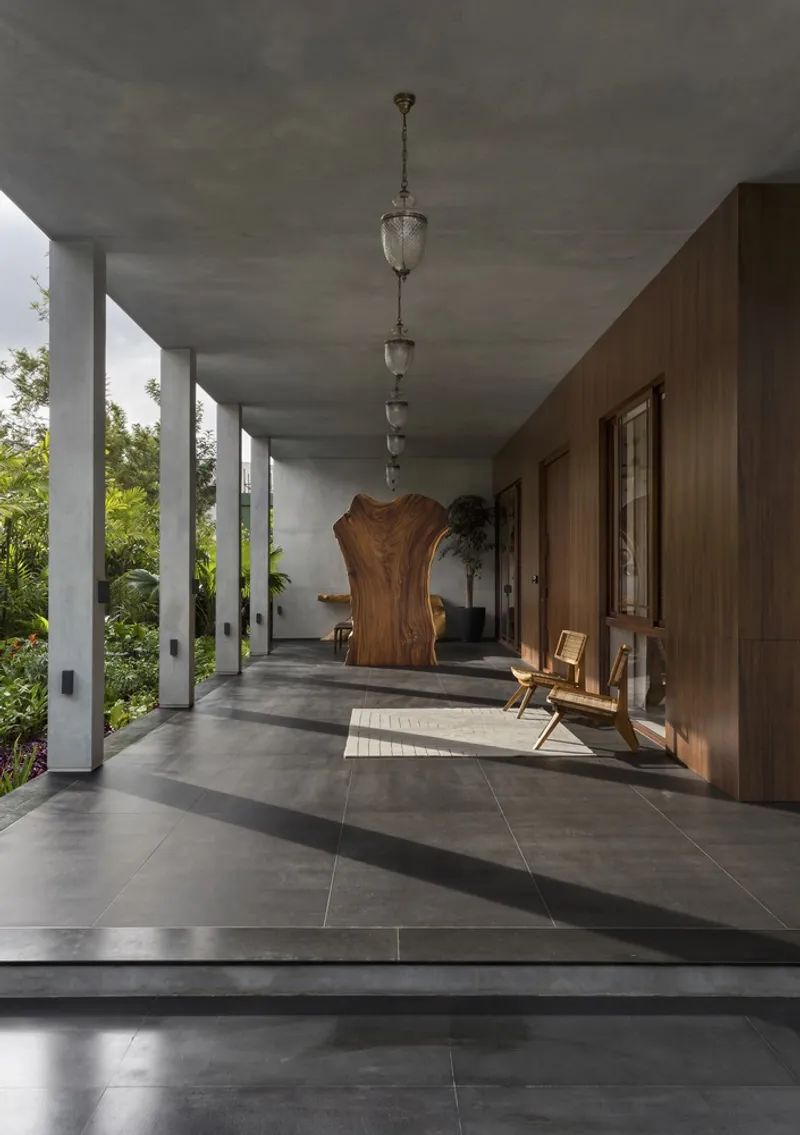
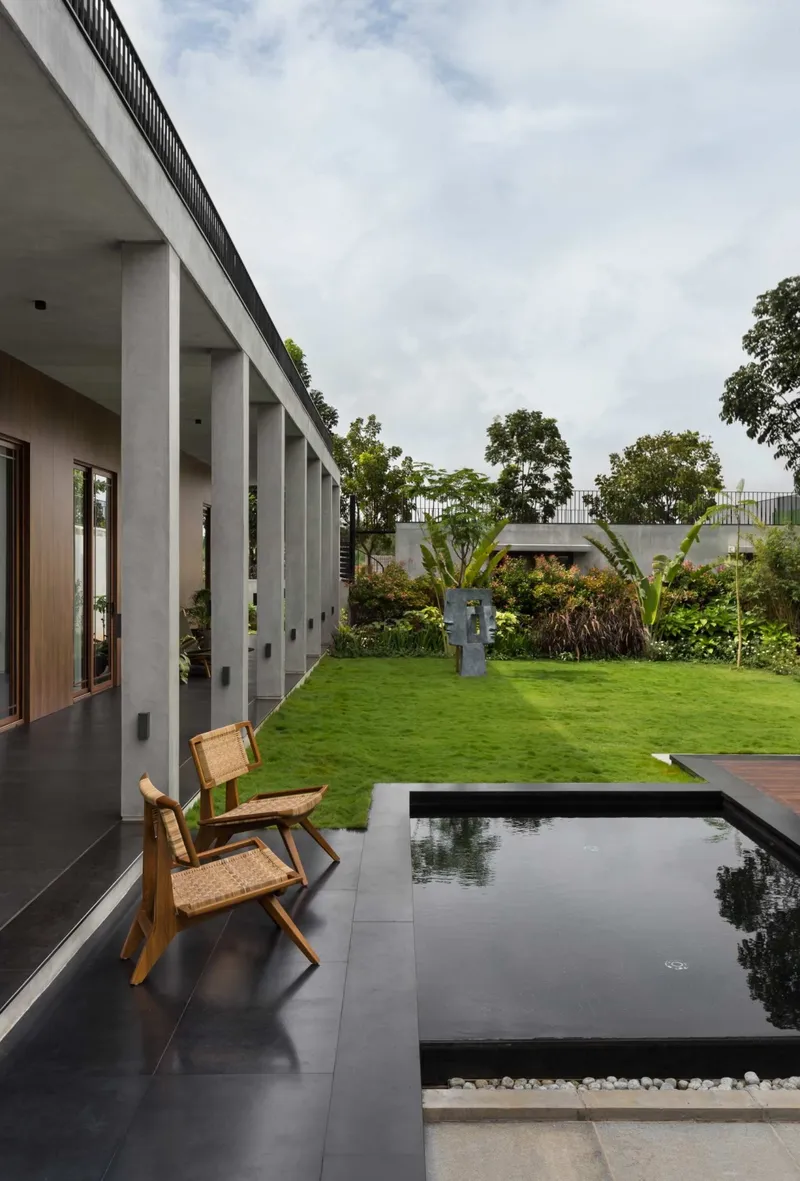
First Floor and Spatial Hierarchy
The first floor is set back from the ground level, softening the massing of the house and creating a lighter, more approachable form. Bedrooms are located here, offering privacy and quiet, while maintaining a strong visual connection to the central courtyard. A single-flight staircase from the courtyard ensures smooth circulation between levels and emphasizes the courtyard as the focal point of daily life.
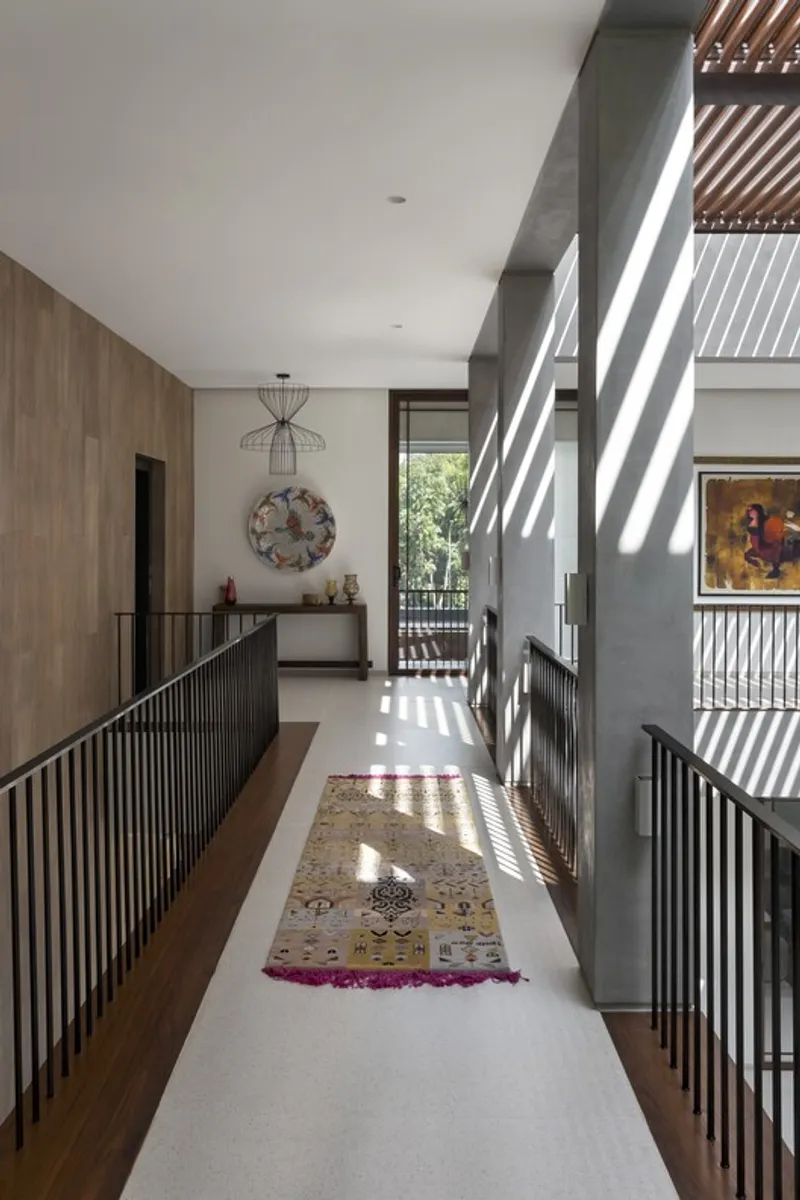
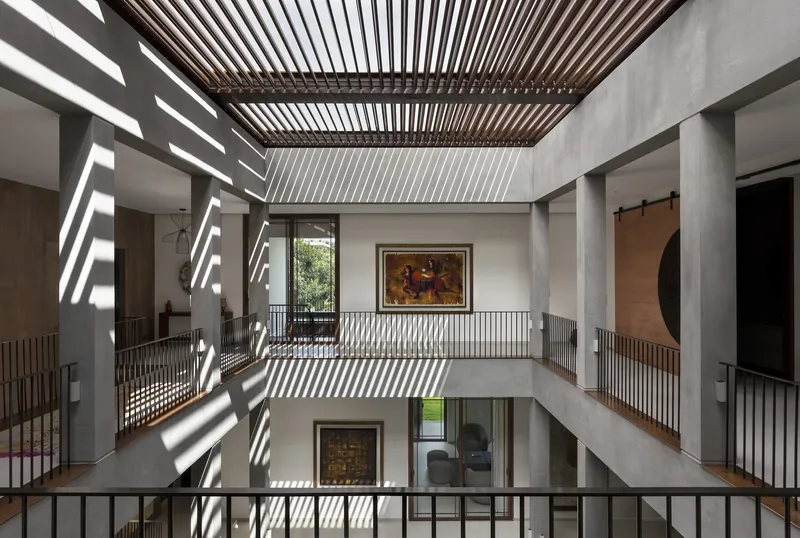
Sustainability and Climate Responsiveness
Otla House is conceived as a porous, climate-responsive home, allowing natural elements to permeate freely. The combination of the central aangan and peripheral otla functions as an effective passive solar feature, regulating interior temperatures and optimizing energy efficiency. By incorporating traditional Indian architectural strategies with contemporary design, the home achieves a perfect balance between modern comfort and heritage-inspired living.
Otla House is a testament to modern residential design rooted in tradition, where courtyard living, sustainable materials, and natural light converge to create a home that is both introspective and socially engaging. By integrating Vastu principles, passive design strategies, and timeless materials, We Design Studio has created a residence that reflects the clients’ memories while offering a contemporary, serene, and sustainable lifestyle in the heart of Bengaluru.
All photographs are works of Kunal Bhatia


Popular Articles
Popular articles from the community


Cube Design Draws an Ecological Corridor Between Two Shenzhen Hills with the Nankai Building
Beside Shenzhen's container docks, the Nankai Building pairs stacked balconies with a climbing green screen to connect two hillsides across its height.

FCC Arquitectura Expands a Portuguese Granite House with a Board-Marked Concrete Wing
In Portugal, JV House pairs a cleaned-up whitewashed and granite dwelling with a timber-shuttered concrete extension, courtyards and a garden pool.


Singing Woman: An Opera House That Performs Before the Curtain Rises
Ovidiu Cristian Pavel's conceptual opera house translates Estonia's choral identity into a sculpted waterfront landmark facing the Baltic Sea.

Manzana Morphosis: Stretching Barcelona's Grid into a Living Landscape for 2050
A radical reworking of the Eixample manzana turns density into a tool for generous public space, vertical ecology, and environmental performance.

Similar Reads
You might also enjoy these articles


Hodi-Mandai Geram
Project Function: Preservation and revitalization of the Intangible heritage and socio-spatial identity of the Hodi by Housing, Cultural Memory Center, Sacred Grove, landscape, local tourism economy


Olio Towers: A Mid-Rise for Performers That Fuses Housing, Rehearsal, and Stage
Located blocks from Houston's Theater District, this modular tower stacks living units around a central performance atrium.

Oasis: Modular Green Housing Carved into Dhaka's Urban Fabric
A shortlisted Plugin Housing entry reclaims unauthorized settlements in Dhaka with stepped concrete volumes, green roofs, and ventilation-driven design.

Black Hole: A Floating Megastructure for the Post-Physical Era
Emiliano Mazzarotto envisions a spherical, self-scaling arena where e-sports, digital hotels, and holographic stadiums replace traditional public space.

Explore Architecture Competitions
Discover active competitions in this discipline

Challenge to reimagine the Iron Throne

Photograph architecture without architects

Illustrate the lost glory of Angkor Wat - Render Challenge

Design challenge to reuse E-waste
Comments (0)
Please login or sign up to add comments
No comments yet. Be the first to comment!