
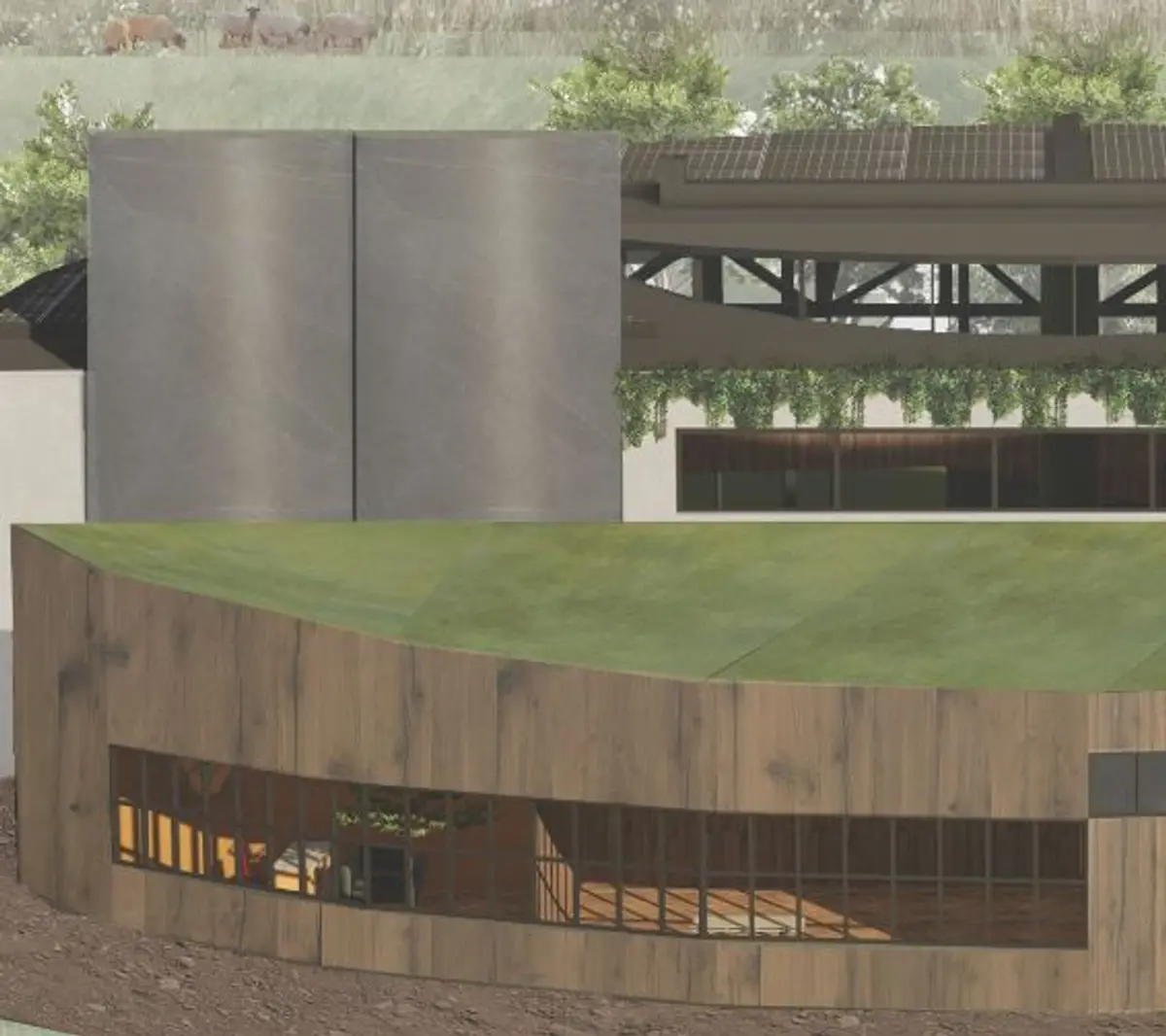
Our thoughts and process behind "Cyclovis"
The sustainable and caring way to keep animals

The project started from thinking about forms - what makes the farm looking like a farm, is there any particular pattern language.
We've looked at existing rural objects to find the similarities, something recognizable, and we found it - it's so often the round shapes of the structure - the silo towering over the plains.
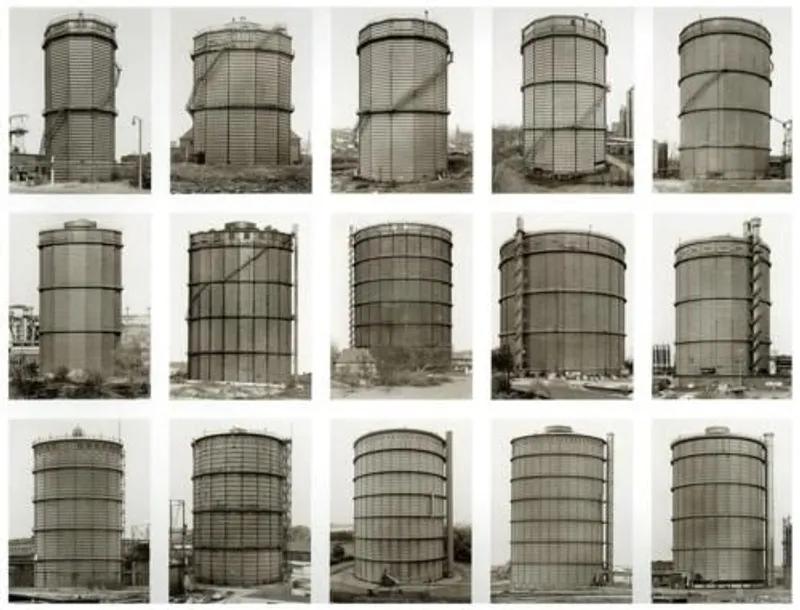
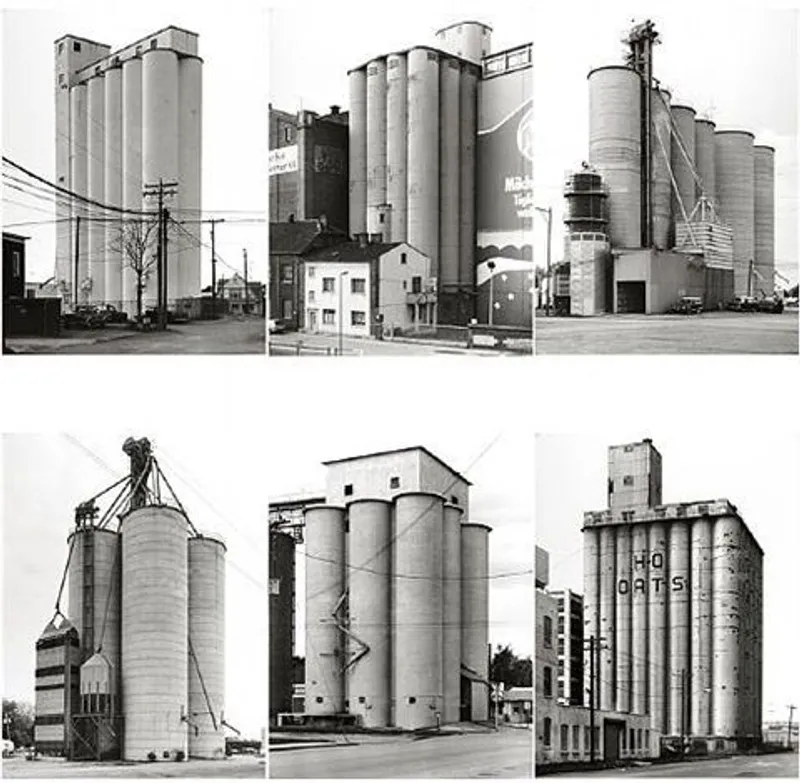
Silos and grain elevators photographed by
Bernd and Hilla Becher
The experimentation with forms was the next step, but so is thinking about basic functionalities of the animal farm - feeding, area to live, access, removing manure.
The combination of both revealed the solution - the flow of food that turns into dirt, with the observation that animal feeder should wide to prevent overcrowding, and one manure storage to simplify disposal. This solution uses the basic geometry - in circles, the bigger the radius, the longer the arch. So the reasonable answer is "feeders on the outside, manure to the center".
The Cyclovis project is adressing two modern problems - emission crisis and more concious, every month more "vegetarian" moral outlook of the people.
Cyclovis is supposed to deal with both of them. We implemented many solutions that are lowering the energy consuption, such as geothermal heating, solar panels or natural light. And on the other hand the animals have more space, better view, cleaner air than ever before.
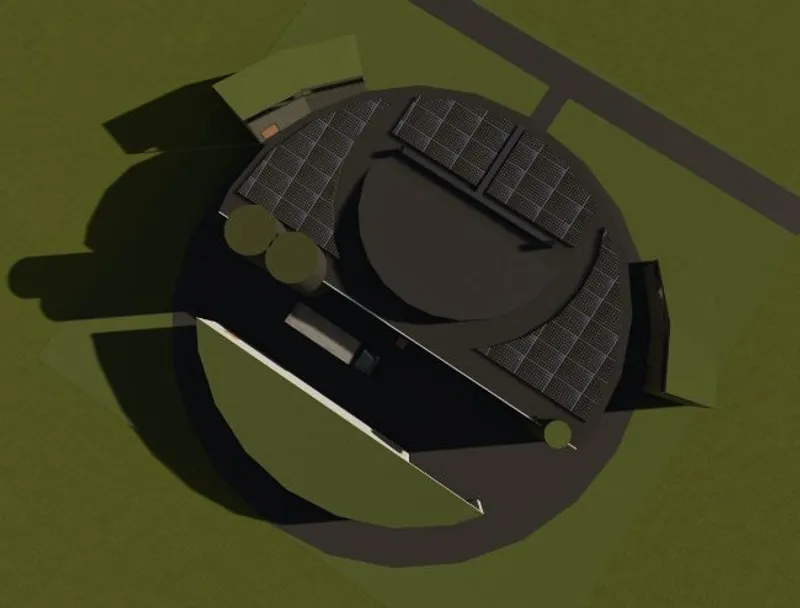
aerial view of the design
The finished form is simple conceptually but complex and exciting in visual way. With the cut made in the basic circle we not only divided building into two functional parts (barn, and the "human oriented" part for workers), we also made every element easily accesible from this central path.

Popular Articles
Popular articles from the community


The Amber Palace Opera: A Geological Fiction Surfaces on Tallinn's Baltic Waterfront
Pierre Brillard reimagines a Baltic legend as a public landscape, opera house, and waterfront promenade rooted in Tallinn's coastal identity.


graciastudio Turns a Viewless Tijuana Lot Inward Around a Courtyard of Concrete, Timber and Trees
In Tijuana, Jorge Gracia's GA2 House stacks a timber-clad private floor over exposed concrete and replaces a missing view with a planted interior patio.

FCC Arquitectura Expands a Portuguese Granite House with a Board-Marked Concrete Wing
In Portugal, JV House pairs a cleaned-up whitewashed and granite dwelling with a timber-shuttered concrete extension, courtyards and a garden pool.

David Ortega Stacks a Two-Story Mexico City Penthouse Around a Steel Stair and a Pergola-Shaded Roof Terrace
In Colonia Roma, a 300 m² penthouse uses oak joinery, a planted steel stair and a slatted roof pergola to make a new-build apartment feel like a house.

Similar Reads
You might also enjoy these articles

The Rhythm of Seasons
A Farmers' Market Connecting Nature and the City

More Than a Building-Designing a Living System
More Than a Building-Designing a Living System
Base Beyond
DESERT COMPOUND ARID: TOURISM OF ABSENCE AND ABUNDANCE


Comments (0)
Please login or sign up to add comments
No comments yet. Be the first to comment!