

Outdoor House by Quod Architects: A Tropical Sustainable Residence Blurring Indoor-Outdoor Living
Tropical sustainable house blending indoor-outdoor living, natural ventilation, adaptive reuse, greenery integration, and open spatial design for modern family life.


The Outdoor House by Quod Architects is a contemporary residential project in Singapore that redefines tropical living through sustainable design, spatial openness, and nature integration. Completed in 2022, the house reflects a modern architectural approach tailored to climate responsiveness, family interaction, and biophilic design principles.

Concept: Designing for Tropical Climate and Family Living
The design vision centers on creating an environmentally responsive home that enhances everyday family life. The architects envisioned a house that remains naturally ventilated, bright, and deeply connected to greenery. By prioritizing openness and airflow, the residence reduces dependence on mechanical cooling systems, making it a model of sustainable tropical architecture.
The homeowners’ passion for gardening played a key role in shaping the concept, resulting in a home that seamlessly integrates outdoor elements within interior spaces.

Spatial Planning: Open Layouts with Layered Privacy
The Outdoor House balances communal and private zones through thoughtful spatial organization. Expansive common areas encourage interaction, while upper levels provide secluded bedrooms and family spaces.
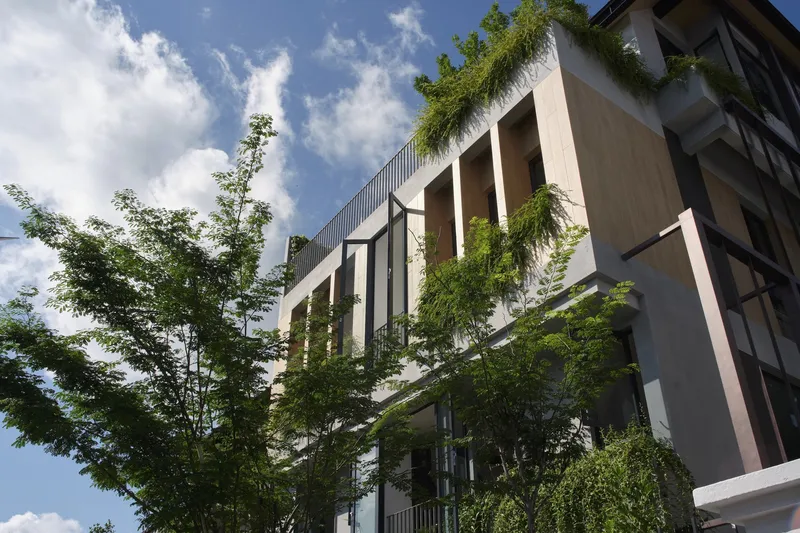
A defining feature is the integration of a 12-meter-high tree that visually connects different levels of the house. From the second-floor family area, residents experience the tree canopy, creating the illusion of being outdoors while remaining sheltered. This vertical green connection enhances spatial continuity and reinforces the biophilic design strategy.

Adaptive Reuse and Structural Transformation
Rather than demolishing the existing structure, the project embraces adaptive reuse. The basement, first, and second storeys were retained, while a new level was added to accommodate modern living requirements.
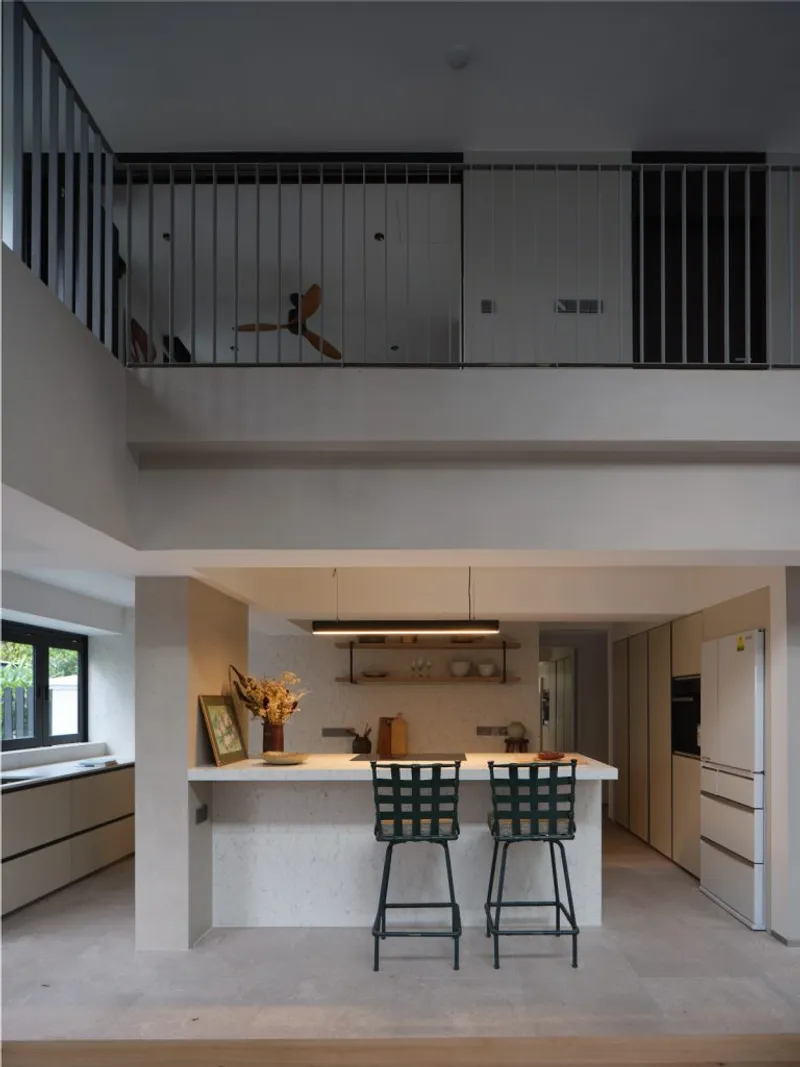
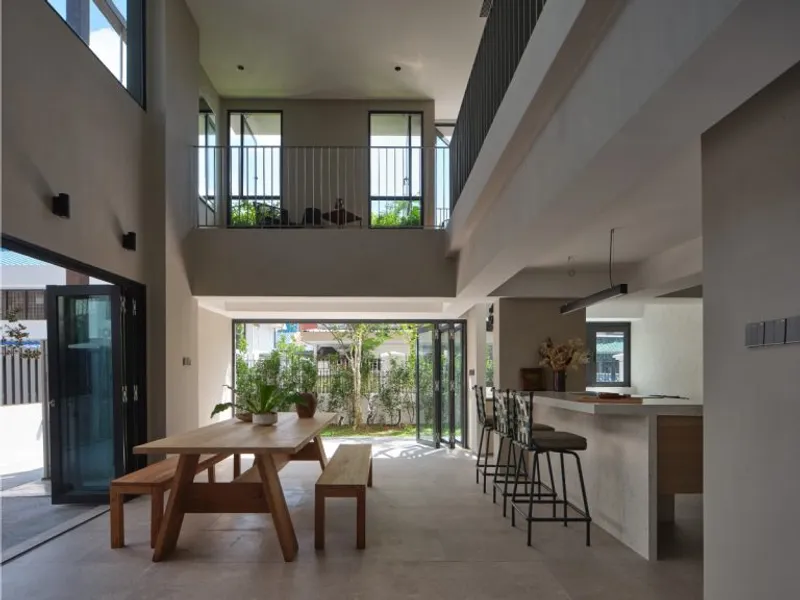
The original house suffered from poor ventilation, low ceiling heights, and compartmentalized spaces. The redesign introduces a double-volume dining area connected to the kitchen, significantly improving spatial quality, daylight penetration, and airflow. This transformation reflects contemporary residential architecture trends focused on openness and flexibility.

The Grand Staircase as a Social Space
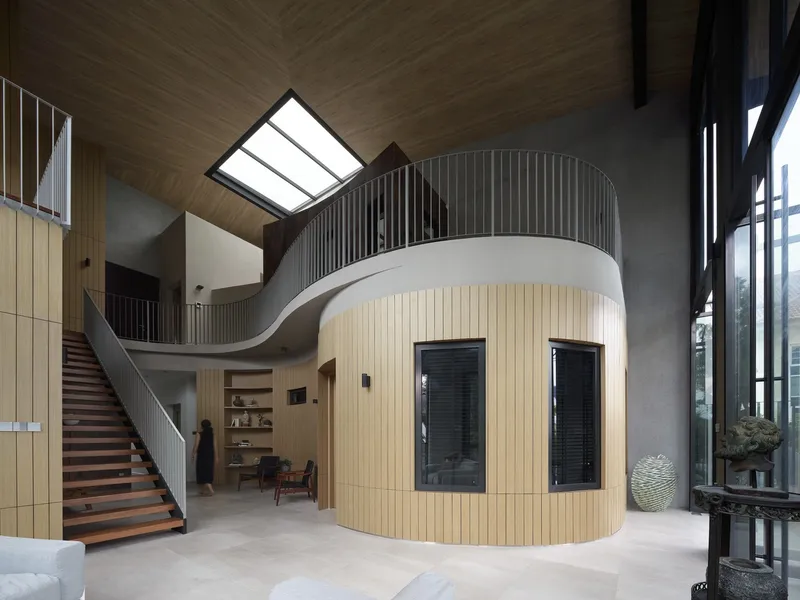
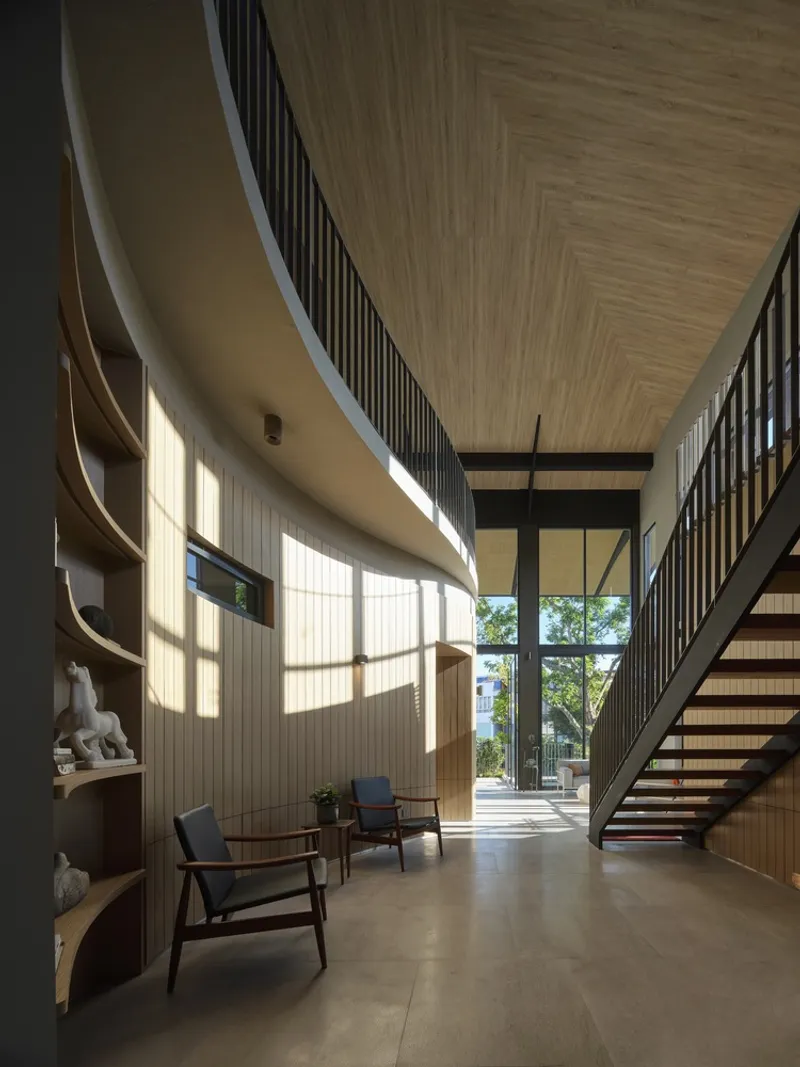
A striking architectural element is the grand staircase that connects the living and dining areas. Beyond its functional role, it acts as a social hub where residents and guests can gather, sit, and interact.
This multifunctional circulation space exemplifies how modern residential design can transform transitional areas into active social environments, enhancing the overall living experience.
Indoor-Outdoor Continuity and Circulation
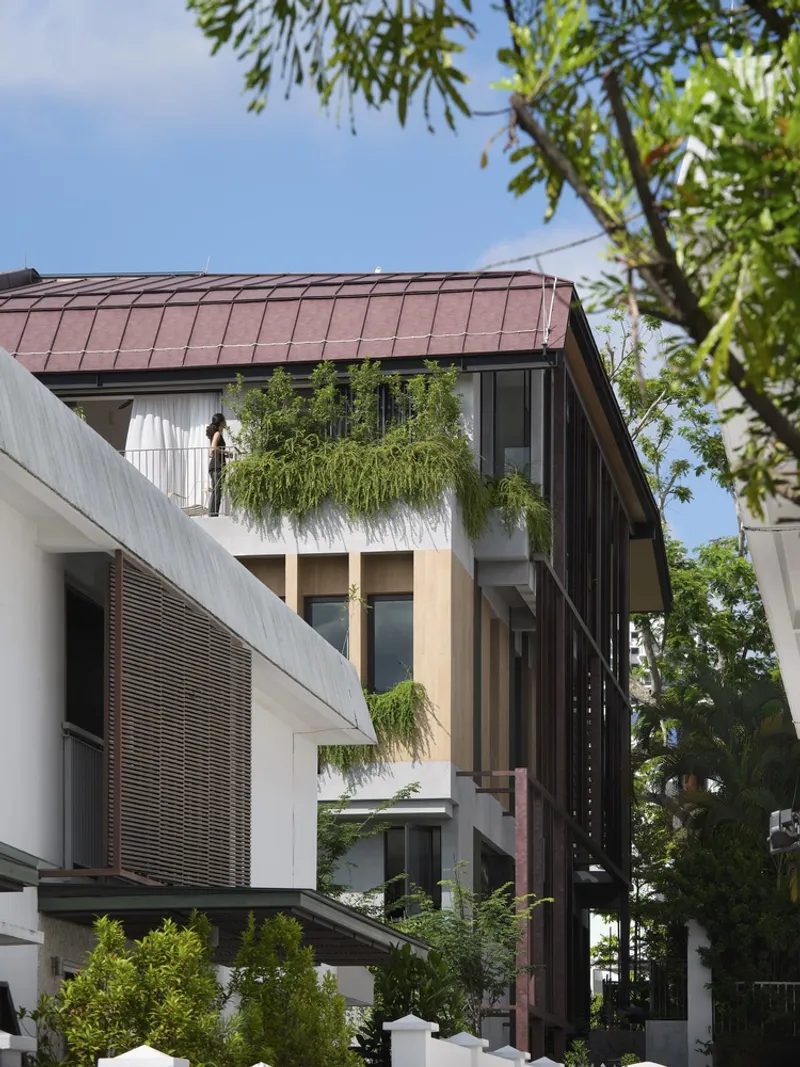
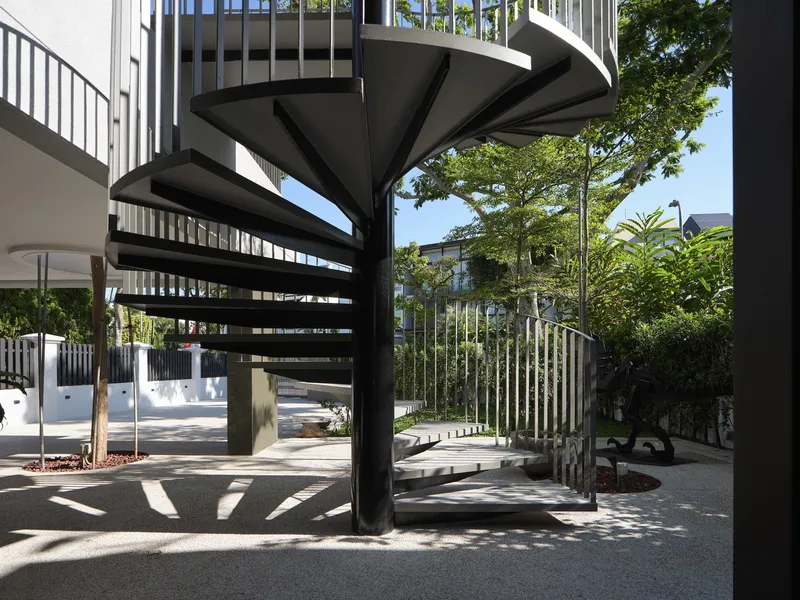
The house features multiple circulation paths, including an external staircase that links the family area to an internal balcony. This design creates a journey that mimics outdoor movement, blurring the boundaries between interior and exterior spaces.
Such spatial strategies strengthen the connection with nature and provide varied experiential pathways throughout the home, a hallmark of innovative tropical architecture.
Material Palette: Bringing the Outdoors Inside
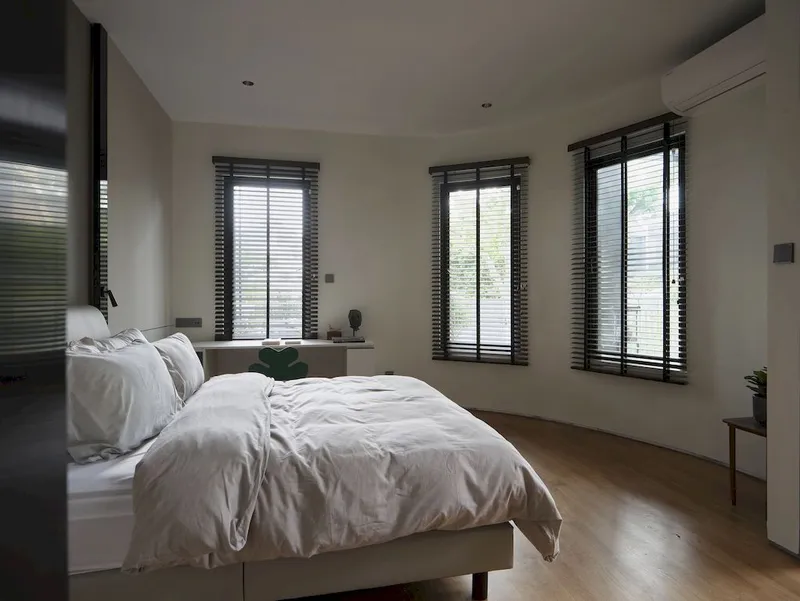
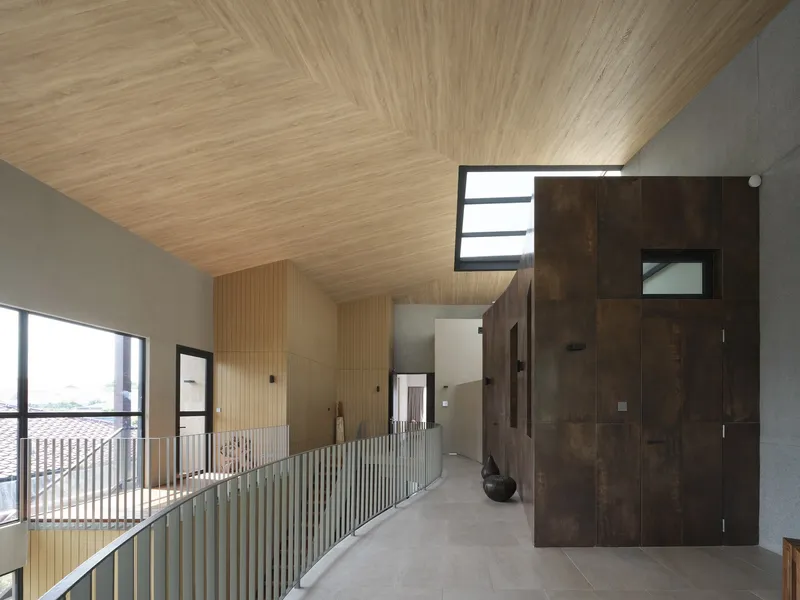
The material selection reinforces the outdoor-inspired concept. Natural timber, pebble wash finishes, and textured wall surfaces, typically used externally, are introduced indoors to create a rugged, tactile environment.
This approach enhances the sensory experience of the house while maintaining durability and climate suitability. The use of natural materials also aligns with sustainable design practices and contemporary architectural aesthetics.
Architectural Significance and Design Innovation
The Outdoor House presents a unique architectural language that merges sustainability, adaptive reuse, and experiential design. By integrating greenery, maximizing ventilation, and rethinking spatial relationships, the project sets a benchmark for modern tropical residential architecture.
It demonstrates how homes in dense urban environments can remain connected to nature while offering comfort, privacy, and functionality.
The Outdoor House by Quod Architects is a compelling example of sustainable residential architecture that harmonizes indoor comfort with outdoor experience. Through innovative spatial planning, material use, and environmental responsiveness, it reimagines the future of tropical living.

All photographs are works of
Fabian Ong




Popular Articles
Popular articles from the community


The Ocean Hive: Sustainable Architecture for a Self-Sufficient Civilization at Sea
The Ocean Hive imagines sustainable architecture at sea, where modular habitats, algae, wave power and ocean waste sustain a growing colony.

The Earth Pod: 3D Printed Homes for Resilient Refugee Communities
The Earth Pod reimagines refugee housing through 3D printed homes made from clay, combining resilience, self-sufficiency, and rapid shelter.

The Musturak Paradise: Senior Living Architecture for a Connected Future in Temara, Morocco
The Musturak Paradise reimagines senior living architecture in Temara via private homes, social spaces, culture, community, and shared care.

AL-JANNAH: Sustainable Architecture and Permaculture for Afghan Widows
AL-JANNAH uses sustainable architecture and permaculture to create resilient oasis of housing, learning, work and renewal for Afghan widows.


Similar Reads
You might also enjoy these articles

Bamboo Housing Challenge 2026: Design Affordable, Sustainable Homes Using Bamboo
An international design competition by Bamboo U and IBUKU inviting architects and designers to reimagine affordable housing using bamboo — with the winning design built full-scale in Bali.

Computational Design & Education: Beegraphy Design Awards Introduces 7th Category (Featuring Jiyun's Innovative Approach)
Dive into Beegraphy’s 7th Design Awards category, where computational design meets education to create immersive, interactive learning tools, inspired by Jiyun’s work.

From Parametric Lighting to Urban Furniture: Join the 2nd Workshop in Beegraphy’s Computational Design Series
Dive into Cutting-Edge Design Techniques and Practical Applications with Industry Experts

Last Call: Unleash Your Architectural Genius in SHAK's Kindergarten Design Competition
Urgent call for architects to join SHAK's kindergarten design competition before the looming deadline
Explore Architecture Competitions
Discover active competitions in this discipline



Challenge to reimagine the Iron Throne


Photograph architecture without architects


Illustrate the lost glory of Angkor Wat - Render Challenge


Design challenge to reuse E-waste
Comments (0)
Please login or sign up to add comments
No comments yet. Be the first to comment!