

Over the Wall
Far far away, there is a boundary; the tunnel connecting two worlds. The tunnel that you are going to entry.
INTRODUCTION AND IDEA
The wall - the boundary, which separates two worlds.
The main concept is to create the intimate and safe open space for the whole family in the center of home. In order to strengthen the impression of separation from the outside world, atrium is separated from the exterior by the stone wall. Space that enables you to work and to relax spending time with your family and friends and also to develop your passions.
PATH TO THE HOME
At the beginning you see just the wall. The building seems to be inaccessible. You come closer and you notice the gap, “ I wonder what it could be”. You enter and you can see
a mysterious picture: corridor cut by light streaks. The green glimmers at the end door and on the left wall. You approach to the crossing point.. You turn to the left, into the green, it seems endless. This is an effect of the mirror, which reflects a blooming oasis. You peer into the depths and through the glass you can see home: living room, kitchen, stairs to the entresol and way leading to the rest of rooms You notice something that draws your attention and makes you to come near. It is a meadow! You decide to turn back and check what was at the end of an entrance corridor.
FUNCTION AND CREATING FORM
The relationship exists between the form and the function. In order to create a safe exterior space, in the central point of the house there is an atrium design that creates a peaceful, intimate oasis and safe place for children. The atrium ensures south exposure, insolation of the house. The front elevation is located on the south side. The wall separates the street from the atrium and the house provides rest from the noise. Atrium’s elongated rectangle shape provides more sun access into the interior. This atrium becomes another room of the house.
Thanks to the large glass facades of the garden and atrium, the living part of the house seems to be more spacious and open for nature. The living room becomes a stage; the perfect place for spectacular performance. Glass walls are an invisible barrier that causes that interior and exterior are fluent and interweave together. There is also an outside terrace accessible from the living room which makes it a perfect place for a tea party..
The building consists of five zones: living (open space with the kitchen, saloon and terrace), bedroom, work and utility and atrium, which bounds all of the house parts.
The utility functions are localized in the left wing. There are: a garage, a wardrobe and a larder. There is a gate in the wall, which makes it possible to get into the garage. It is covered with stone, so that it is blended into the wall texture. The kitchen and the spacious living room are located in the main part of the house. They create the center of family life and also a stage for entertaining visitors. There are also stairs leading to the entresol, where parent’s workshops are located. The stairs form an architectural decoration, a sculpture. The net spread between rooms makes a sort of a play zone, where you can also get some rest, take a look at the garden, observe life at home or listen in to a concert. The right wing constitutes a bedroom wing, where there are four rooms (parent’s room, girls’ room, boy’s room and an additional room) and bathrooms ( one for parents and another for children). At the end of the wing there is a father’s office, accessible also from the outside corridor. Thanks to this solution space is segregated and his clients do not have to enter home.
MATERIALS
The stone, used for an elevation is strongest and most dominating material. It intensifies the effect of the wall barrier and it references to historical architecture of the region. At the foreground there is a meadow. Not to dominate the texture of the stone driveway is made of concrete tiles. Natural materials dominate and harmonize with nature present in the interior thanks to the glass facades. When more privacy is needed, they can be covered by curtains.
INSPIRATIONS
We drew inspirations from historical art. Architectural leading motive is a plan of cloister an idea inside the courtyard. The stone wall was intended to be a boundary underlining grey outside and bright, colorful inside, just like on Bosh’s medieval triptych - “The Garden of Earthly Delights”. When it is closed, it is grey and mysterious, opened it is full of life.
Light has a great importance. We were intended to achieve an effect of chiaroscuro similar to paintings of Georges de La Tour. Plastic and soft light falls into the corridor through small gaps in the wall and creates a mysterious atmosphere.

Popular Articles
Popular articles from the community


Opera on the Sea: Driftwood Logic Shapes a Timber Opera House on Estonia's Coast
Trevor Orgill's opera house translates the entangled drift of floating timber into a civic building where wood, water, and music converge.

Tsunami Convergenics: Turning Catastrophic Ocean Forces into Underwater Housing Infrastructure
A speculative underwater settlement off the coast of Onagawa, Japan, treats tsunamis and typhoons as energy sources rather than threats.

Manzana Morphosis: Stretching Barcelona's Grid into a Living Landscape for 2050
A radical reworking of the Eixample manzana turns density into a tool for generous public space, vertical ecology, and environmental performance.

Cloaked Colonization: A Mobile Underwater Habitat That Moves Like a Fish
Micah Abaya's shortlisted EHC Pacific entry reimagines ocean settlement as a dispersed network of self-sustaining architectural organisms.

Similar Reads
You might also enjoy these articles
The Rhythm of Seasons
A Farmers' Market Connecting Nature and the City

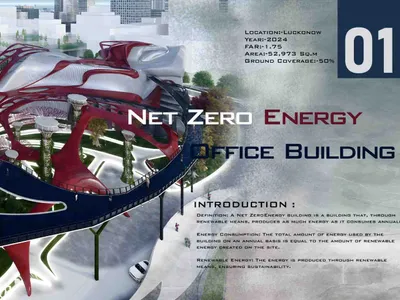
More Than a Building-Designing a Living System
More Than a Building-Designing a Living System
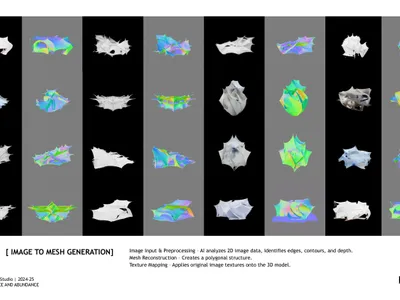
Base Beyond
DESERT COMPOUND ARID: TOURISM OF ABSENCE AND ABUNDANCE


Comments (0)
Please login or sign up to add comments
No comments yet. Be the first to comment!