
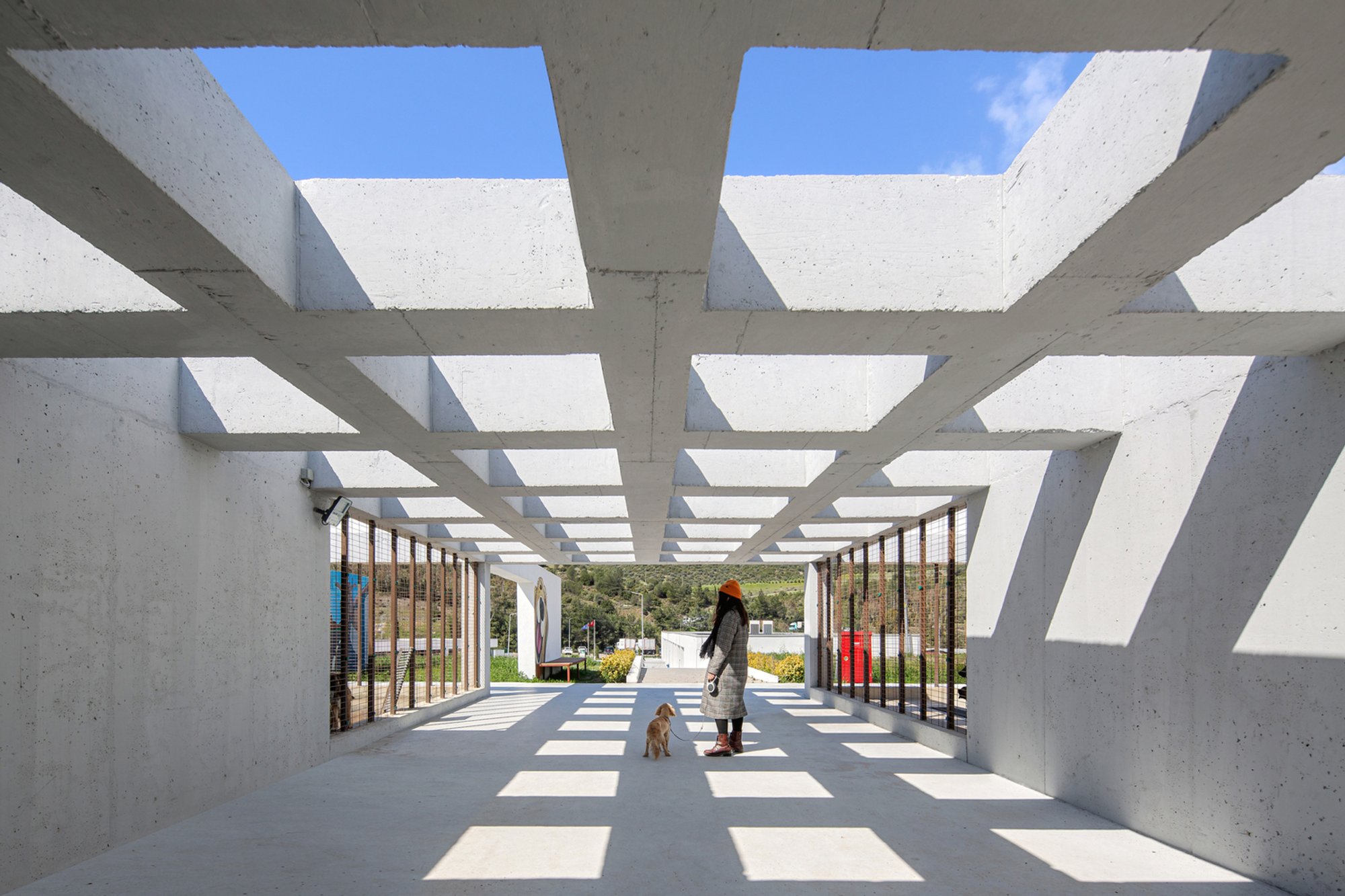
Pako Street Animal Social Life Campus by Mert Uslu Architecture
Innovative animal shelter in İzmir combining rehabilitation, adoption, and education, fostering human-dog interaction within a sustainable architectural campus.

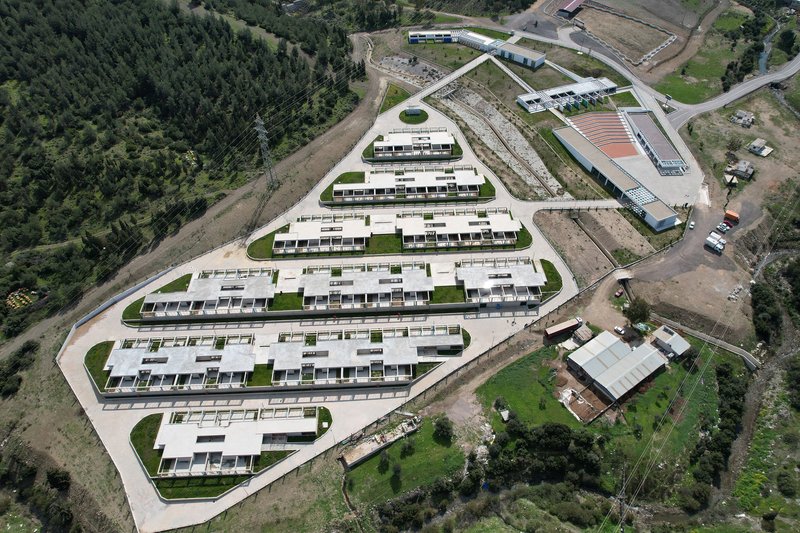
Located in Gökdere, İzmir, Türkiye, the Pako Street Animal Social Life Campus by Mert Uslu Architecture redefines the concept of animal shelters. This innovative project goes beyond providing temporary care, creating a holistic space for rehabilitation, adoption, and human-animal interaction. Spanning nearly 30,000 square meters, the campus functions as a community-oriented facility that encourages connection, compassion, and education around the welfare of stray dogs.
A New Standard for Animal Welfare Architecture
Commissioned with the primary goal of caring for abandoned, injured, or disabled stray animals, the project was envisioned as more than just a shelter. The design fosters reciprocal rehabilitation—a therapeutic relationship between humans and dogs—while also serving as a public venue for families and educational groups. Situated on a broader 110,000 m² site in Bornova, the facility promotes both adoption awareness and community involvement, aiming to serve as a prototype for future animal shelters in Türkiye and beyond.
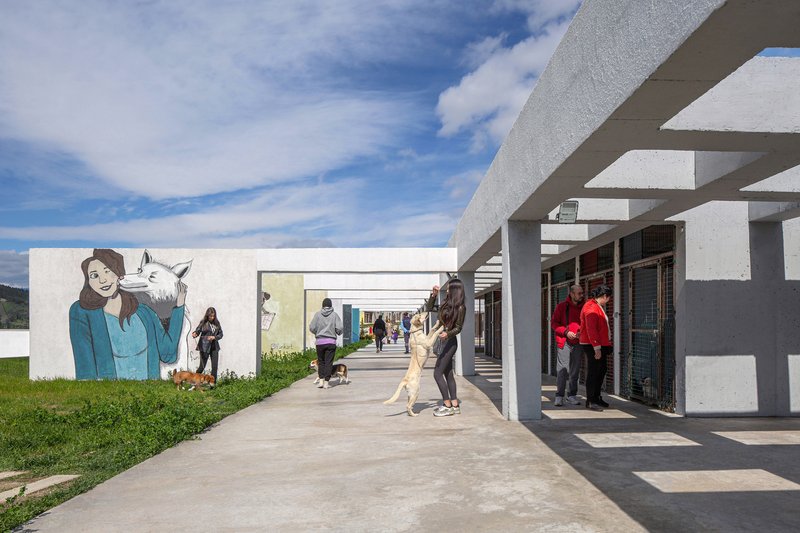
Spatial Logic and Zoning Strategy
The architectural program is divided into open and enclosed areas that prioritize functionality, well-being, and environmental harmony. The north and south edges of the campus are lined with shelter units, while the central area houses an open-air amphitheater, administrative buildings, and shelters for puppies and purebred dogs. The eastern zone is reserved for veterinary services, aggressive dog enclosures, and quarantine spaces.
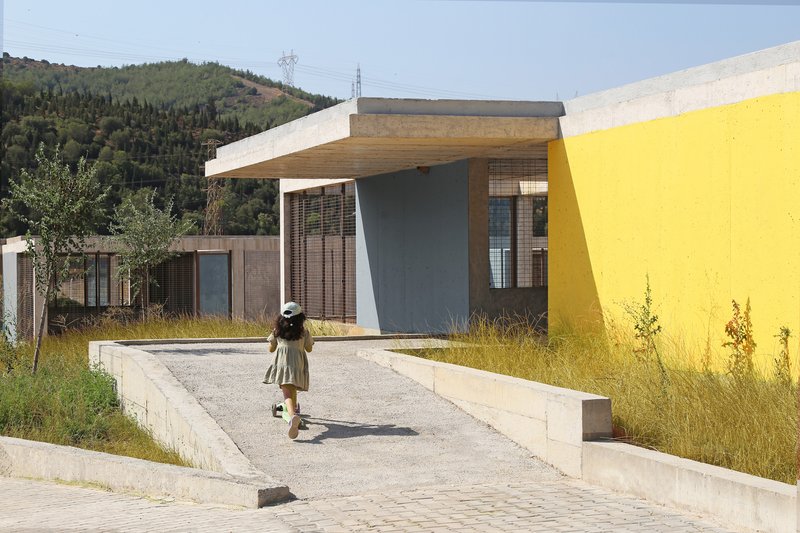
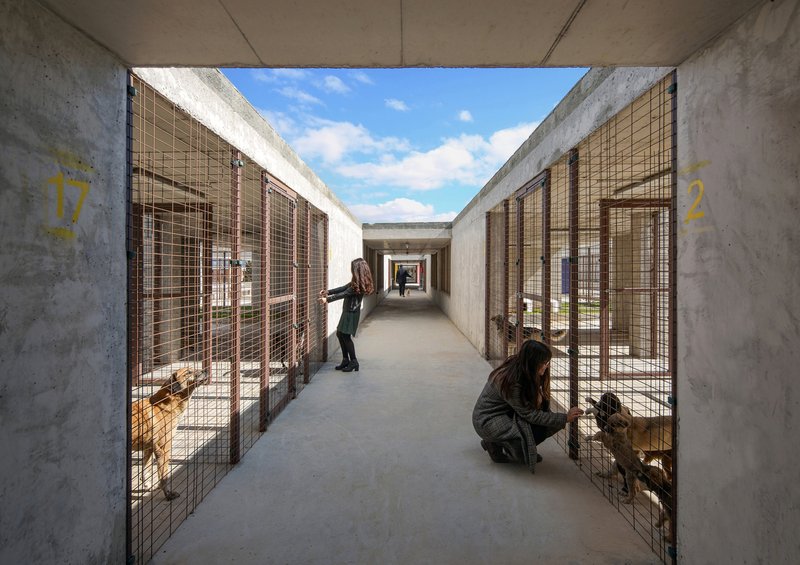
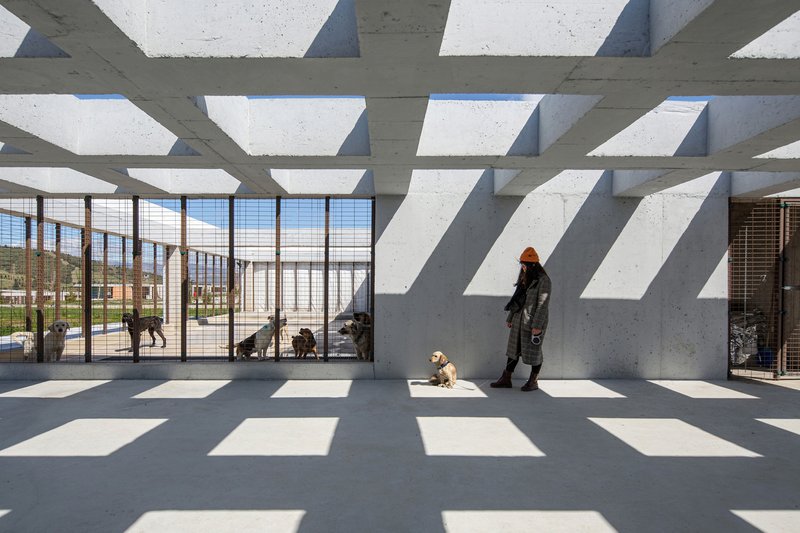
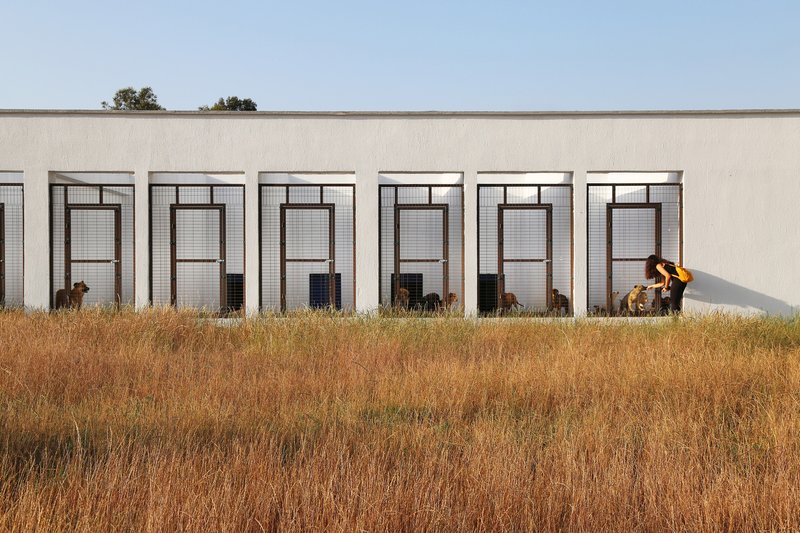
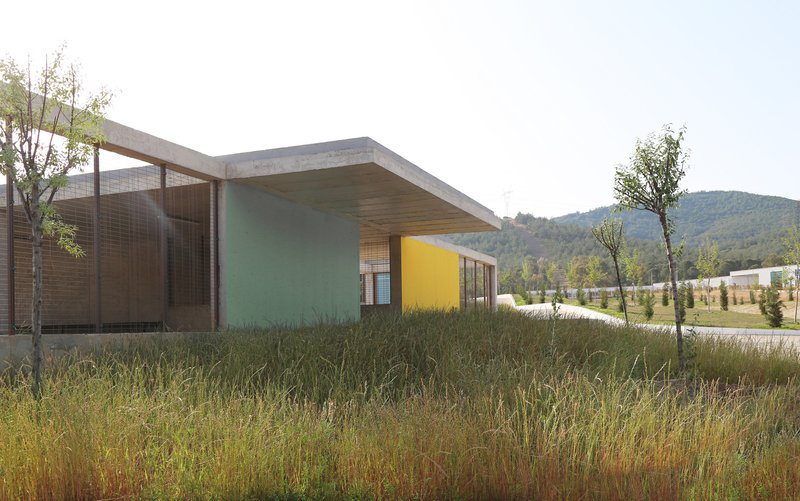
The campus layout facilitates visual and physical interconnectivity between dogs, caretakers, and visitors, using transparent elements and wire mesh facades to maintain sightlines. Green zones and soft-scape materials such as dirt and grass create a welcoming, natural setting that reduces stress for animals and fosters a healing environment.
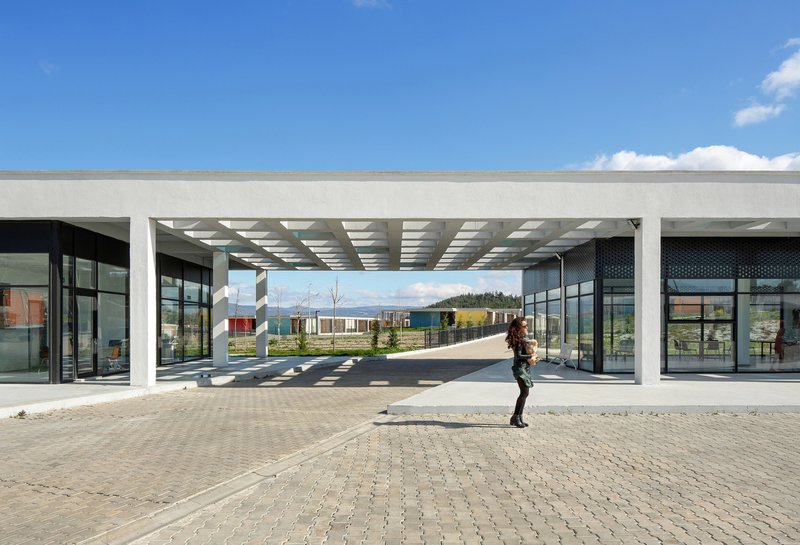
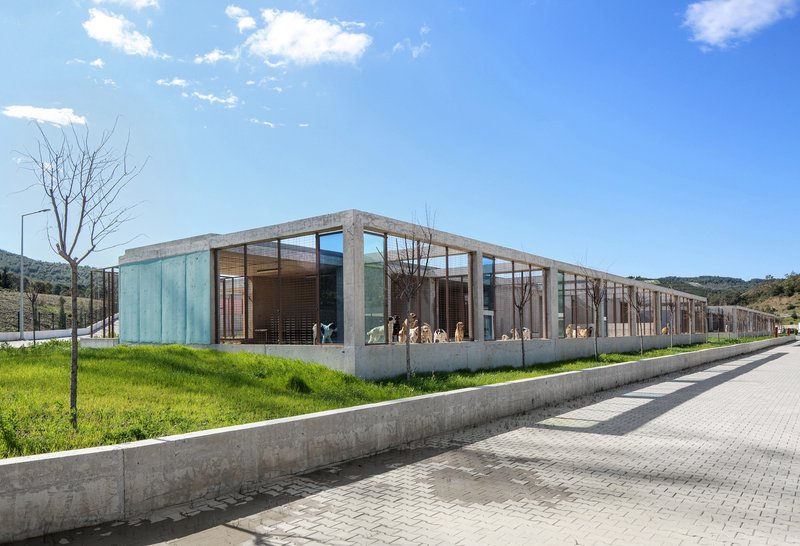
Thoughtful Design for Comfort and Functionality
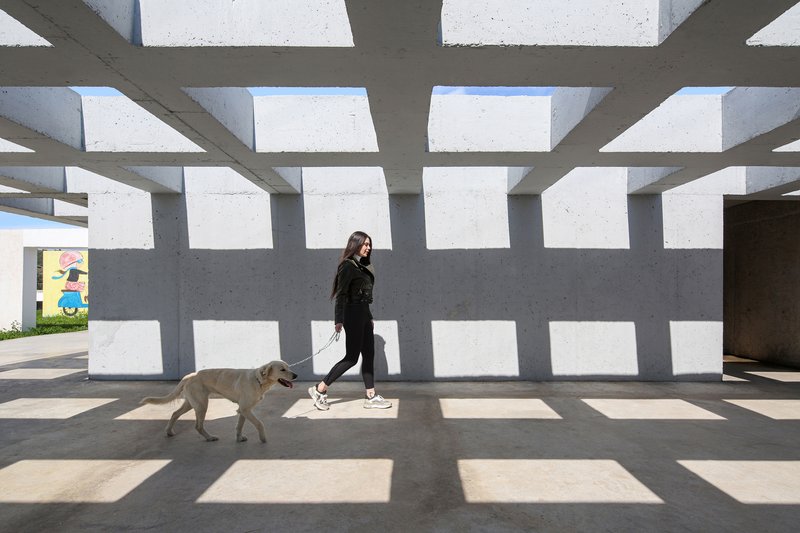
Each shelter unit is equipped with ample space, natural ventilation, sunlight, and an automatic watering system. These choices reflect a deep understanding of animal behavior and care needs, while the exposed concrete, transparent colored elements, and wooden accents add durability and warmth.
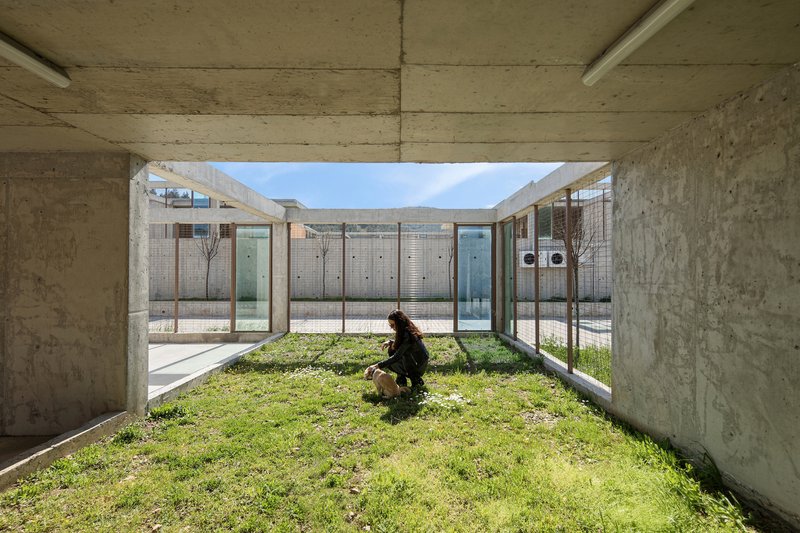
To ensure the safety and privacy of shelter staff, double-entry systems were incorporated. Additionally, the administrative area features dedicated spaces for seminars and workshops, including programs tailored for children with disabilities. These educational initiatives aim to create deeper bonds between dogs and people through interactive rehabilitation.
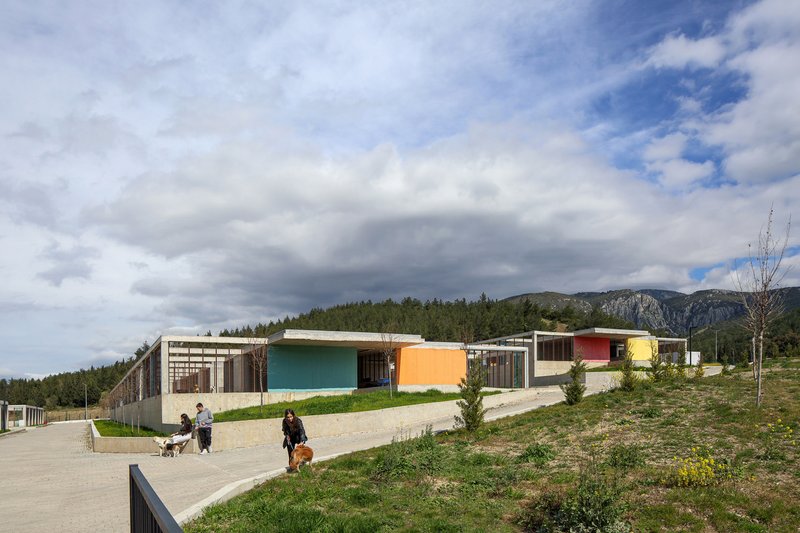
Amphitheater as a Social Heart
At the core of the campus sits a multi-use amphitheater, acting as both a community gathering space and a stage for dog socialization and adoption events. Visitors can observe or engage with dogs in a casual, open setting that promotes familiarity and empathy—crucial steps toward successful adoption.
Informative and Accessible Design
Concrete walls along the east wing also serve as informational panels, displaying details about dog breeds and individual temperaments. This approach not only educates visitors but also supports informed and responsible adoptions.
Sustainable and Inclusive Vision
With a focus on environmental integration, sustainable design, and inclusive community programming, the Pako Street Animal Social Life Campus is a pioneering project in animal welfare architecture. It blends landscape sensitivity with humane infrastructure, setting a benchmark for compassionate, functional, and educational design in animal care facilities.
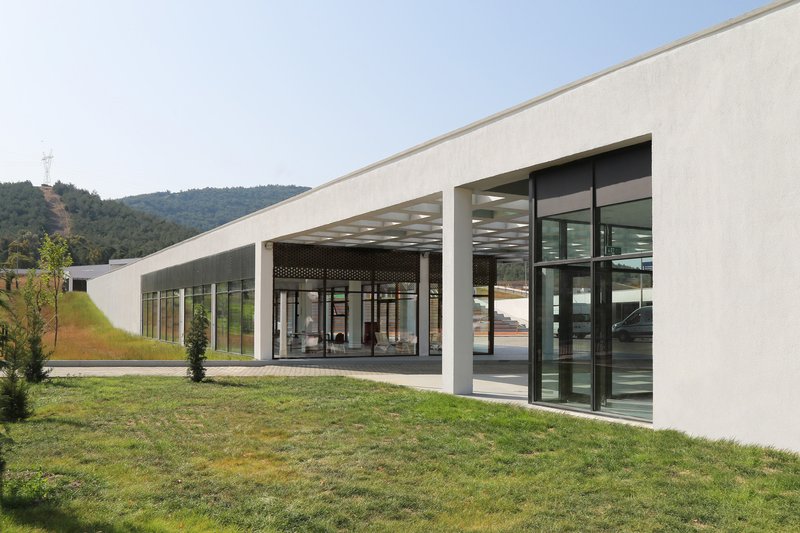
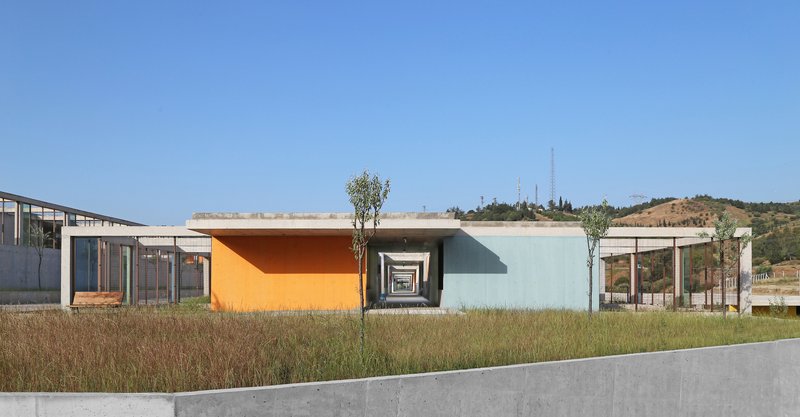
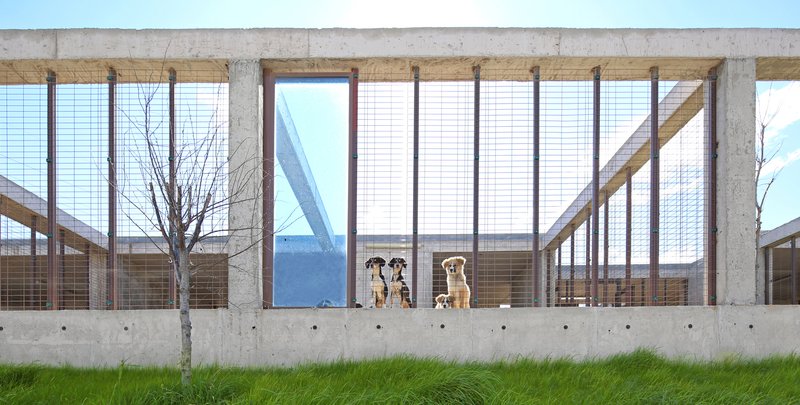
All the photographs are works of Zeren Yasa, Mehmet Yasa


Popular Articles
Popular articles from the community

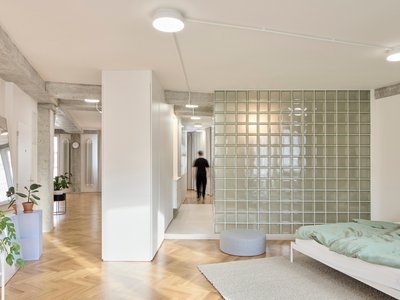
RDTH architekti Rips Out Nearly Every Wall in a Prague Apartment and Replaces Them with Furniture
A 101-square-meter post-war flat in Prague trades rigid partitions for a single rotated furniture block, curtains, and glass concrete.
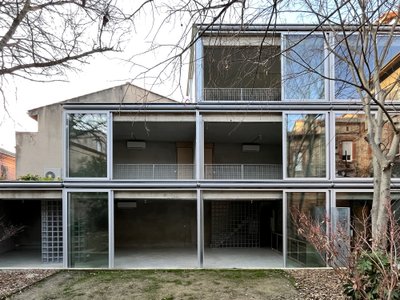
BAST Slots a Four-Story Glass House into a Narrow Gap Between Toulouse Townhouses
In the dense Bonnefoy district, a stepped infill building merges home and office while preserving a majestic hackberry tree.

20 Most Popular Office Building Projects of 2025
From biophilic workspaces in India to net-positive energy offices in New Delhi, 20 office building projects that defined architecture in 2025.
Fausto Terán and Toro Fuse Japanese Craft with Mexican Tradition in a Lakeside Retreat
Nakamura House pairs Shou-Sugi-Ban charred pine with handmade clay tile at the foot of Atlangatepec Lagoon in Mexico.


Similar Reads
You might also enjoy these articles
Olio Towers: A Mid-Rise for Performers That Fuses Housing, Rehearsal, and Stage
Located blocks from Houston's Theater District, this modular tower stacks living units around a central performance atrium.
Oasis: Modular Green Housing Carved into Dhaka's Urban Fabric
A shortlisted Plugin Housing entry reclaims unauthorized settlements in Dhaka with stepped concrete volumes, green roofs, and ventilation-driven design.

Black Hole: A Floating Megastructure for the Post-Physical Era
Emiliano Mazzarotto envisions a spherical, self-scaling arena where e-sports, digital hotels, and holographic stadiums replace traditional public space.
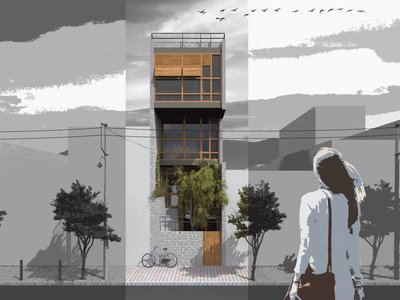
Compact & Sustainable Living in Piraeus: A Four-Level Family Home Built Around Light and Air
A narrow townhouse in one of Greece's densest port cities uses a central atrium and passive strategies to house three generations under one roof.
Explore Architecture Competitions
Discover active competitions in this discipline




The International Standard for Design Portfolios


The Global Benchmark for Architecture Dissertation Awards


The Global Benchmark for Graduation Excellence


Challenge to reimagine the Iron Throne
Comments (0)
Please login or sign up to add comments
No comments yet. Be the first to comment!