
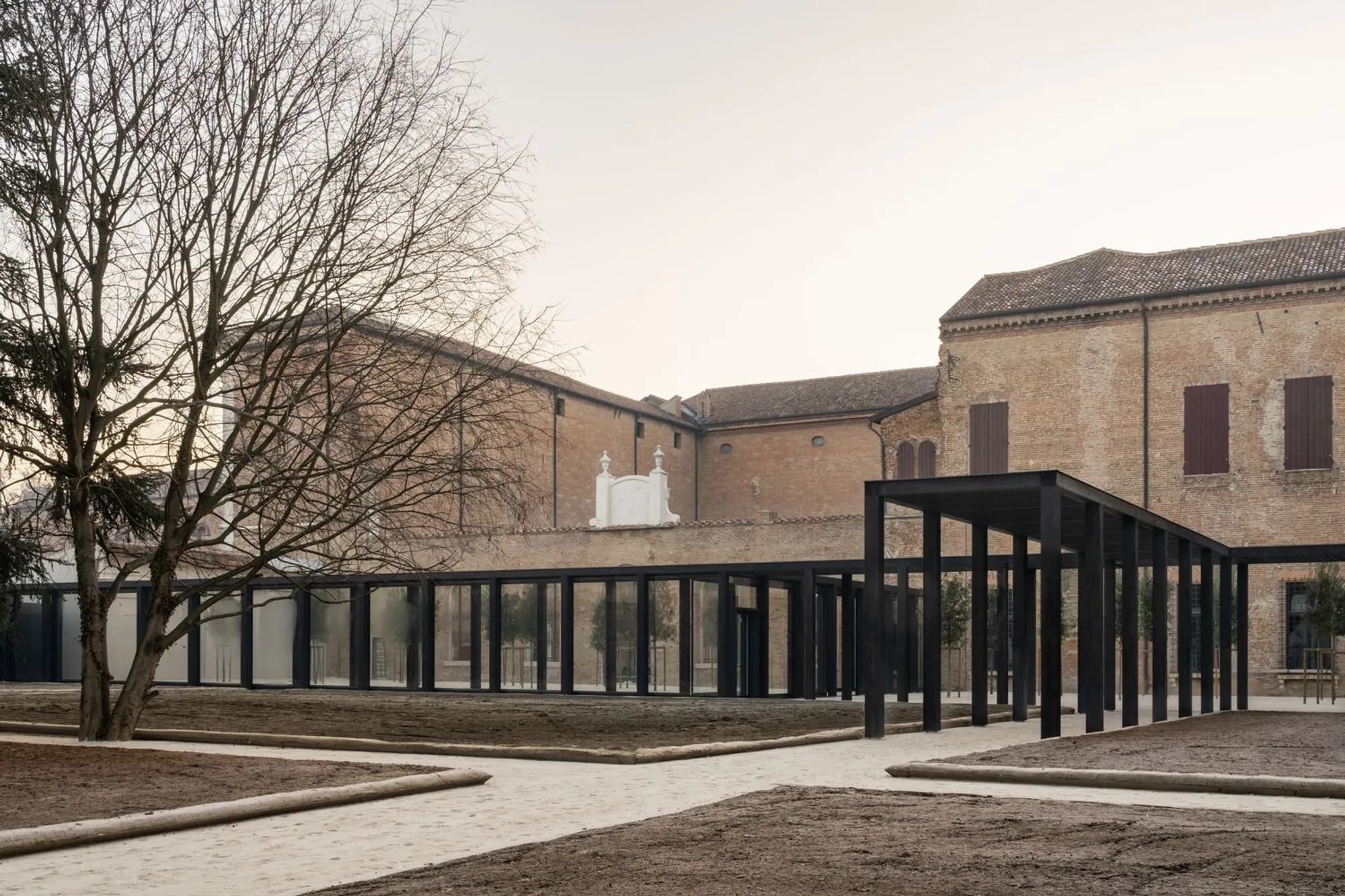
Palazzo dei Diamanti – A Renaissance Jewel Revitalized by Labics Architects
Palazzo dei Diamanti by Labics blends Renaissance restoration with modern museum design, featuring adaptive reuse, landscaped courtyards, and contemporary exhibition spaces.


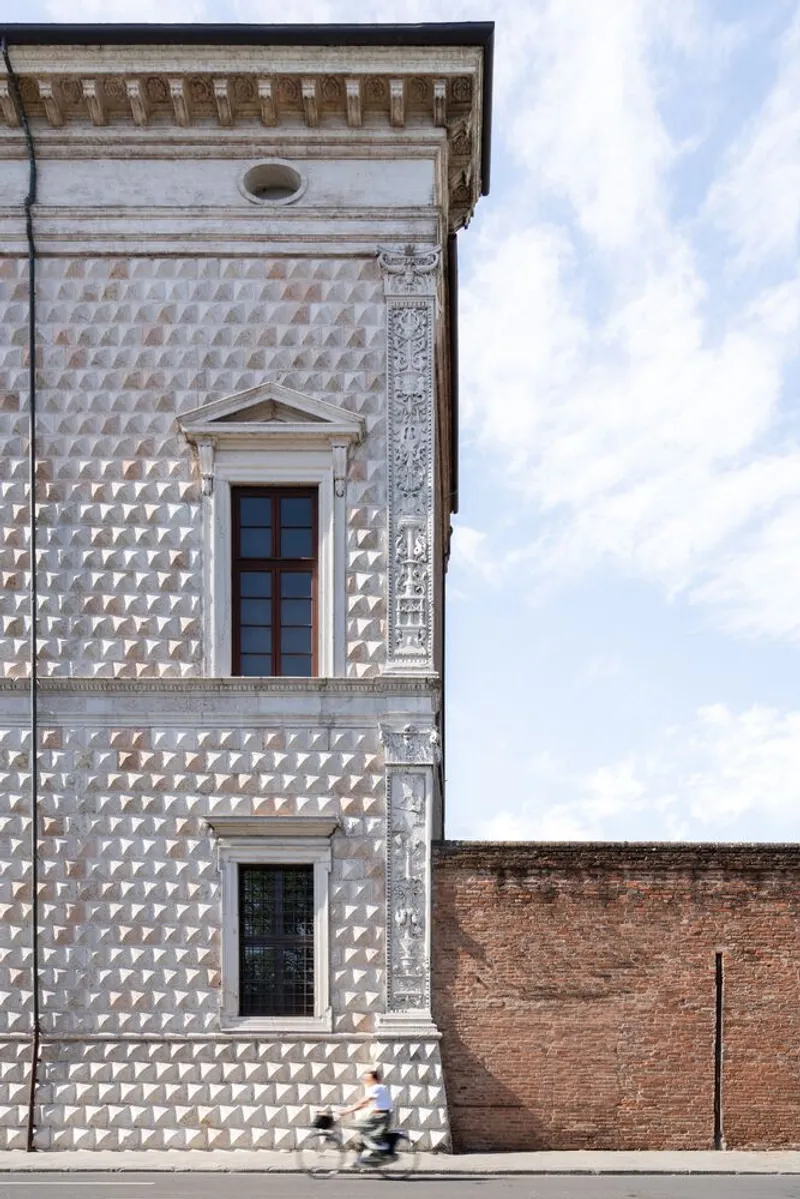
The Palazzo dei Diamanti, one of Ferrara’s most iconic Renaissance landmarks, has undergone a sensitive and contemporary transformation by Labics Architects. This ambitious project combines museum restoration, adaptive reuse, and landscape design to enhance the sixteenth-century architecture while updating its interiors and exhibition spaces for modern needs.
A Living Renaissance Masterpiece
Unlike static works of art, architecture is a living discipline, continuously evolving through reinterpretation. The intervention at Palazzo dei Diamanti embraces this philosophy, balancing historical preservation with innovative design solutions to ensure the building remains relevant and functional as a contemporary cultural hub.
Restoration of the Rossetti and Tisi Wings
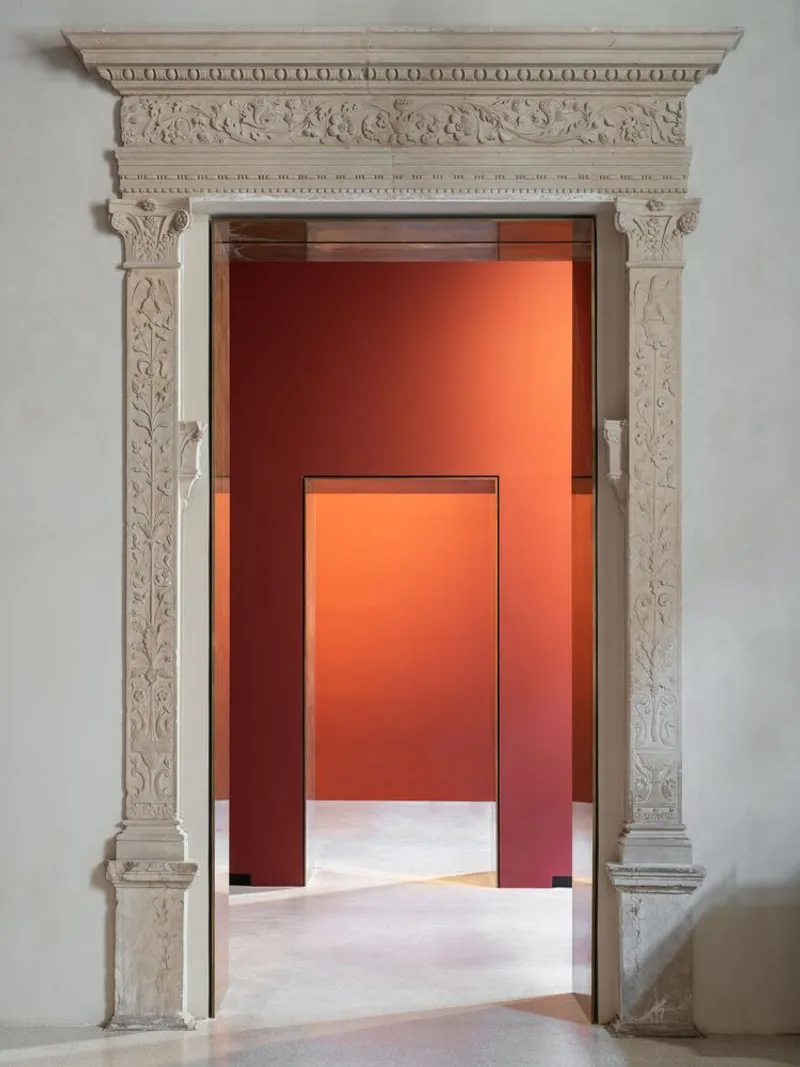
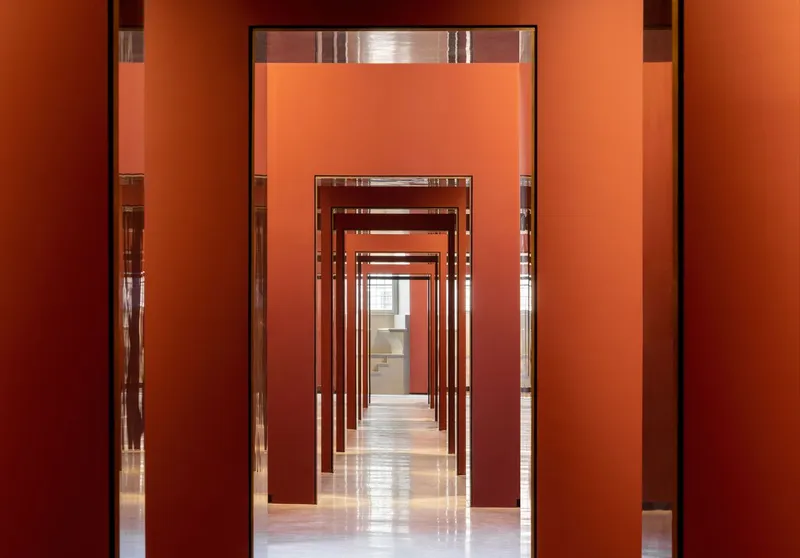
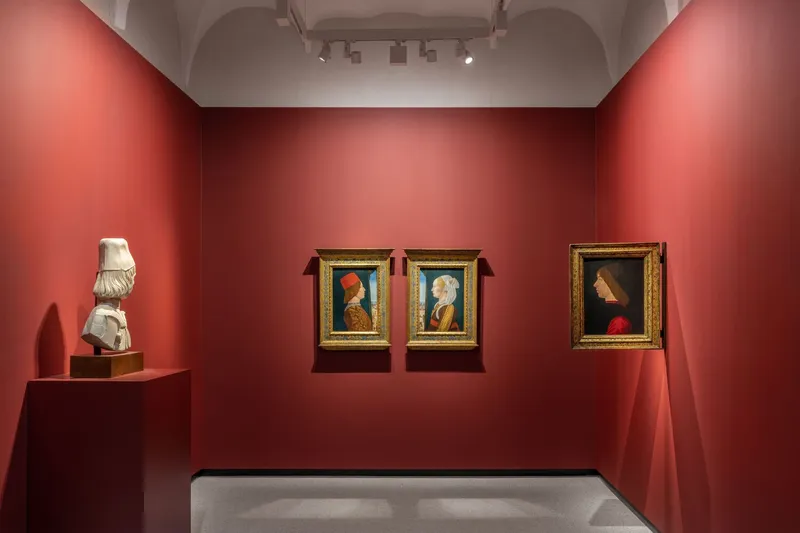
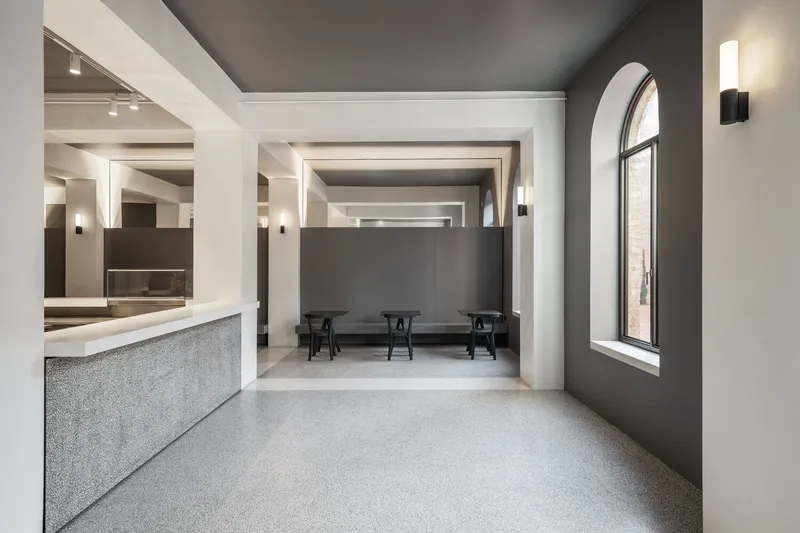
The project’s first phase focused on the existing exhibition areas, known as the Rossetti and Tisi wings. Labics introduced high-tech surface systems that discreetly conceal advanced climate-control and lighting technologies. These elements are crucial for maintaining the strict thermo-hygrometric conditions required for contemporary art displays.
Key interior updates include:
- Venetian terrazzo flooring in the Rossetti wing.
- Burnished brass portals that highlight the spatial rhythm and grandeur of the Renaissance palace.
- New surface treatments that protect the ancient walls while adding functionality without altering their historic character.
Adaptive Reuse of the Former Risorgimento Museum
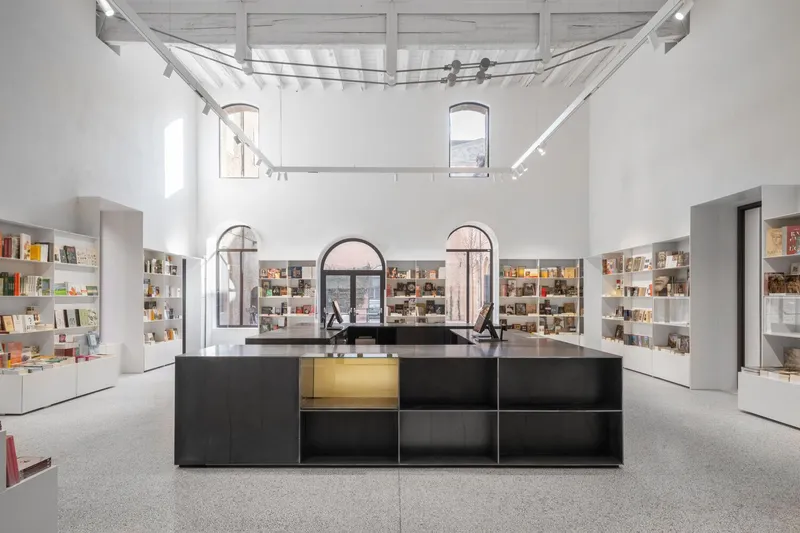
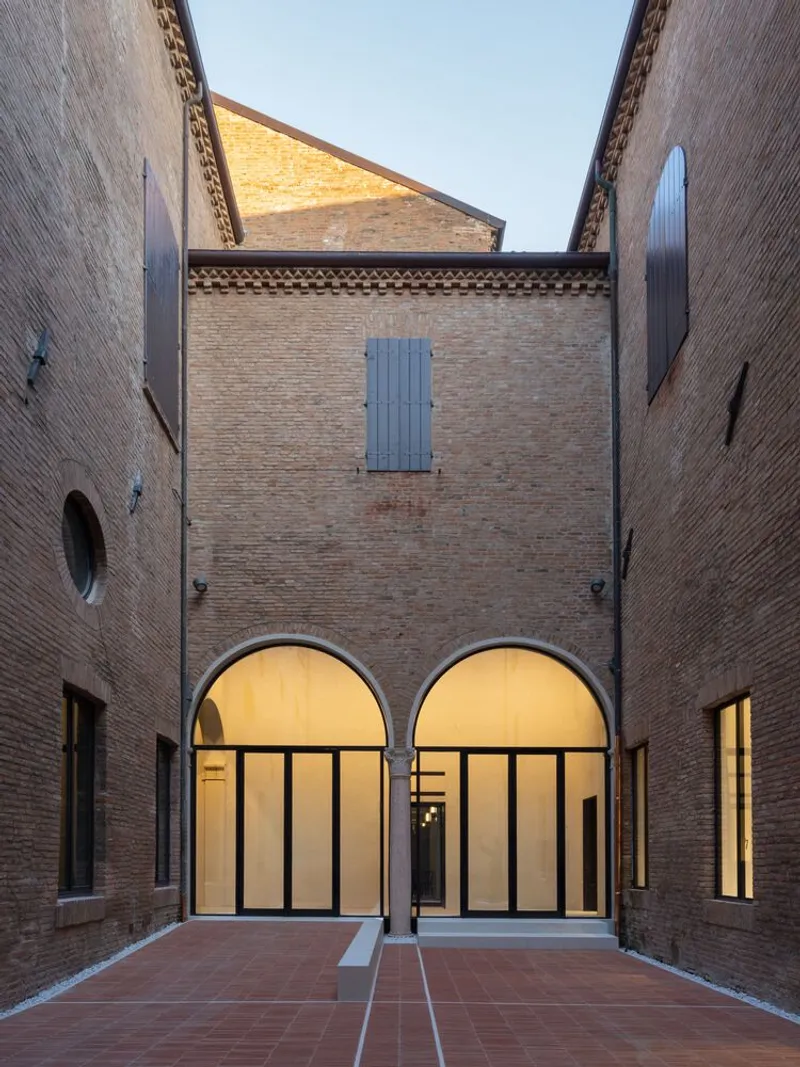
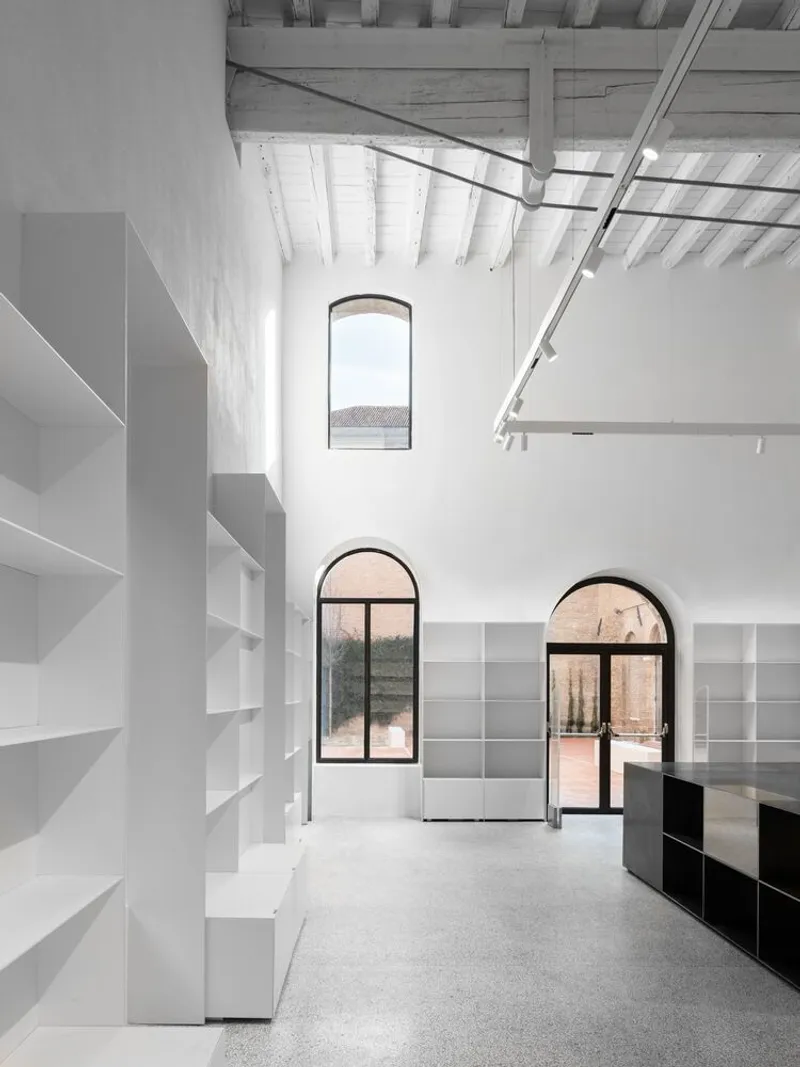
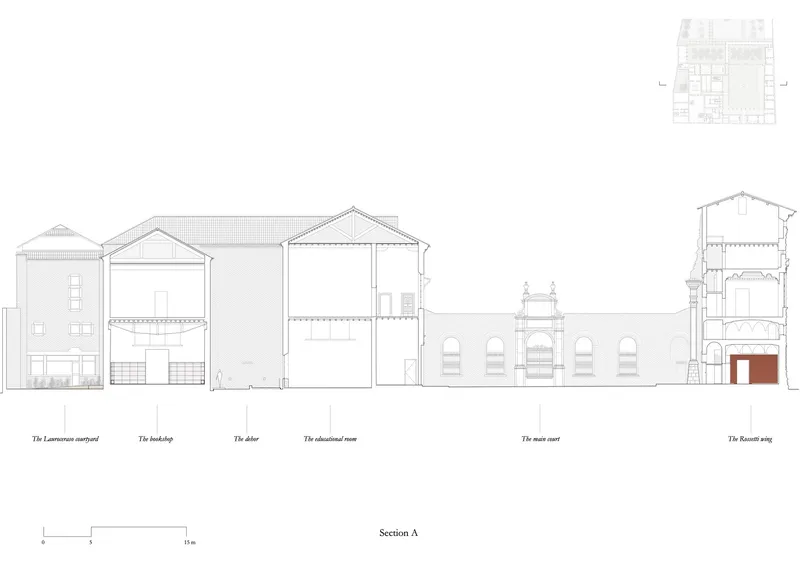
The second major intervention involved repurposing the former Risorgimento Museum. These spaces have been fully restored and reimagined to serve as essential amenities for visitors:
- A café and bookshop enhance the cultural experience.
- A teaching room and multipurpose hall provide areas for workshops and events.
- The internal courtyards, now upgraded with terracotta flooring, function as open-air rooms that merge seamlessly with the museum's circulation path.
These redefined spaces enrich the museum itinerary, celebrating the Palazzo’s unique interplay between solid volumes and open courtyards.
A Garden That Connects and Expands
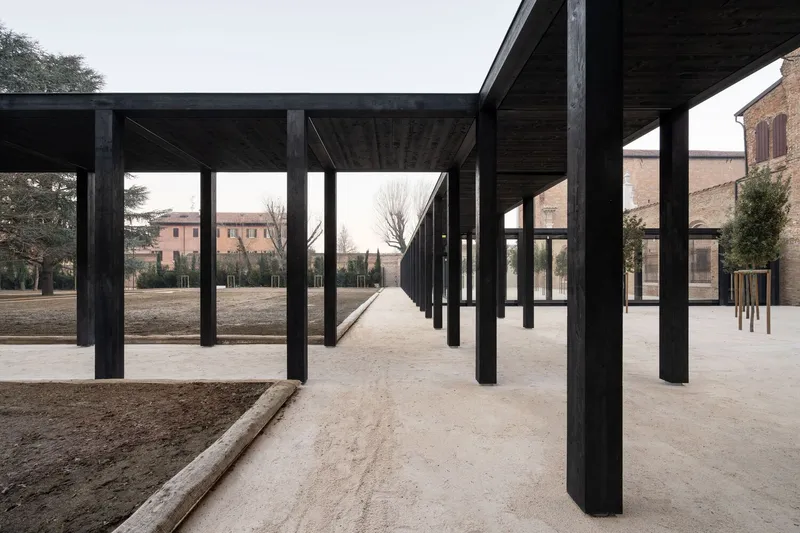
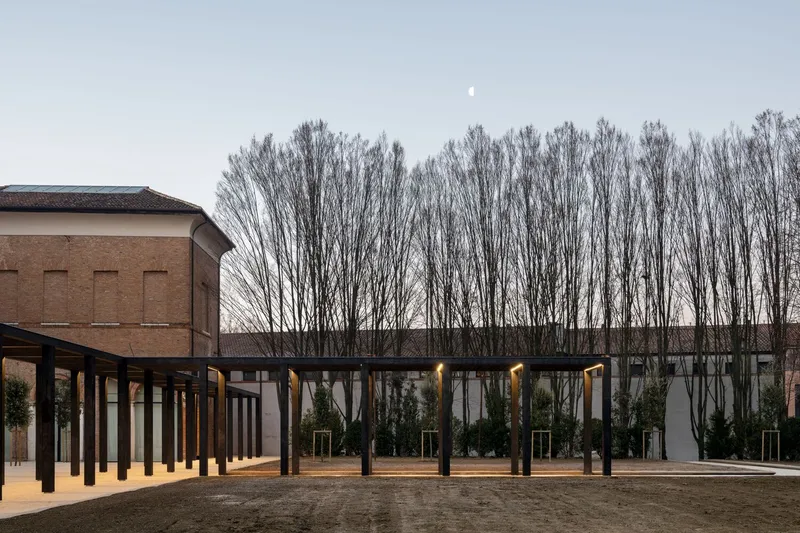
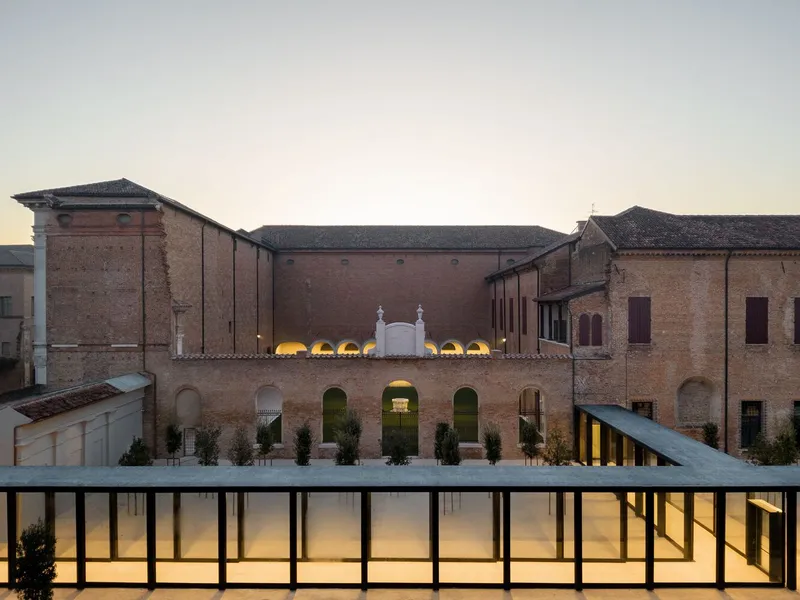
The third and perhaps most symbolic intervention focused on continuity of movement, both inside and outside the building. The architects designed a garden pavilion that physically and visually connects the Rossetti and Tisi wings. Inspired by 18th-century prints by Bolzoni, this new addition re-establishes the historical logic of the Palazzo’s open plan.
Design highlights of the garden structure include:
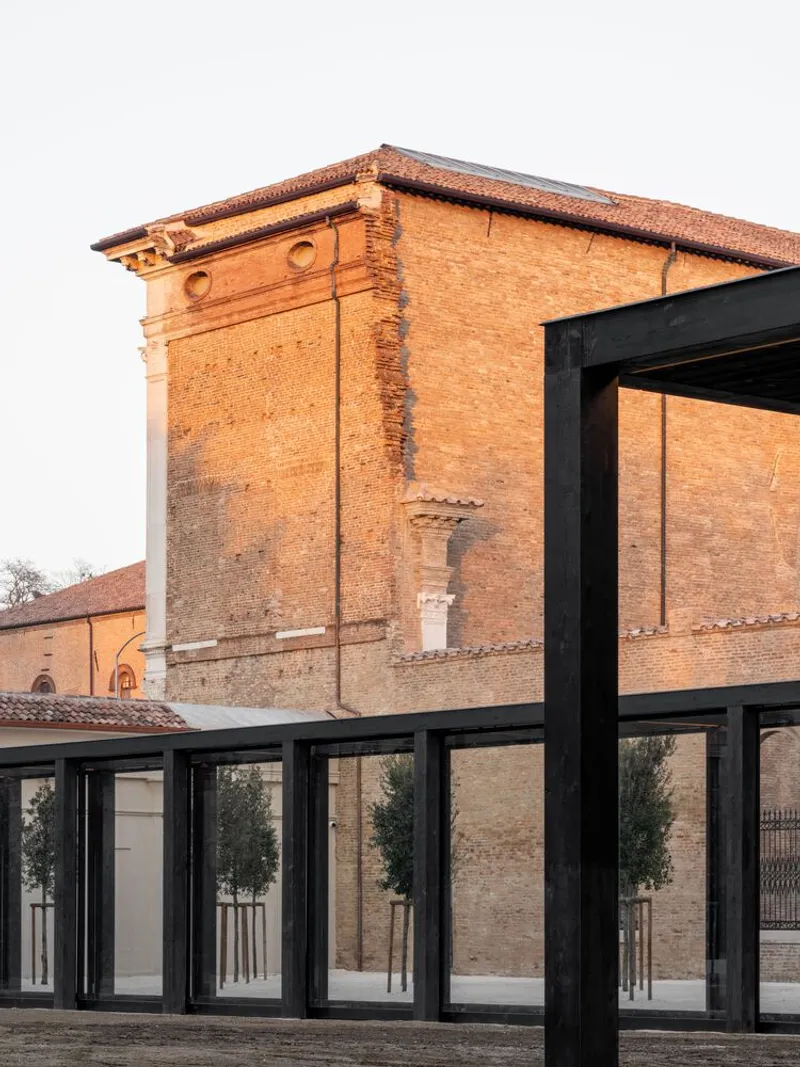
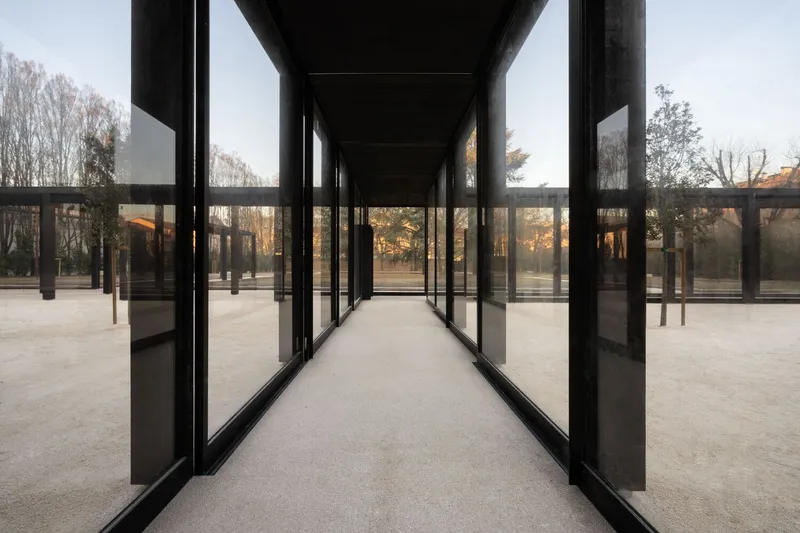
- A minimalist wooden trilithic framework, partially enclosed by sliding glass walls.
- Charred wood surfaces for durability and low maintenance.
- A flexible layout that allows the garden and exhibition spaces to merge during favorable seasons.
This new architectural gesture respects the Renaissance heritage while introducing a contemporary spatial narrative, creating a dialogue between the old courtyard and the redeveloped rear garden.
A Renaissance Revival with Modern Vision
The Palazzo dei Diamanti restoration by Labics is not just a preservation project—it is a cultural revival. The architects have reimagined this Renaissance masterpiece as a dynamic, interactive museum space, ensuring that it continues to inspire visitors for generations to come.
All Photographs are works of Marco Cappelletti




Popular Articles
Popular articles from the community


Play: Fragments of Their World
Familiar architecture becomes modular playground design, creating safe spaces where displaced children can learn, connect, imagine and play.

Riyadh For All: Intergenerational Urban Design for Active Aging in Rabat
Riyadh For All reimagines urban design in Rabat with intergenerational co-living, adaptive courtyards, and Moroccan cultural exchange today.

The Musturak Paradise: Senior Living Architecture for a Connected Future in Temara, Morocco
The Musturak Paradise reimagines senior living architecture in Temara via private homes, social spaces, culture, community, and shared care.

Conexión: Biophilic Design Reimagines High-Rise Living in Hong Kong
Conexión reimagines high-rise living in Hong Kong through biophilic design, green facades, shared spaces, daylight, water and nature within.


Similar Reads
You might also enjoy these articles


Hodi-Mandai Geram
Project Function: Preservation and revitalization of the Intangible heritage and socio-spatial identity of the Hodi by Housing, Cultural Memory Center, Sacred Grove, landscape, local tourism economy


Olio Towers: A Mid-Rise for Performers That Fuses Housing, Rehearsal, and Stage
Located blocks from Houston's Theater District, this modular tower stacks living units around a central performance atrium.

Oasis: Modular Green Housing Carved into Dhaka's Urban Fabric
A shortlisted Plugin Housing entry reclaims unauthorized settlements in Dhaka with stepped concrete volumes, green roofs, and ventilation-driven design.

Black Hole: A Floating Megastructure for the Post-Physical Era
Emiliano Mazzarotto envisions a spherical, self-scaling arena where e-sports, digital hotels, and holographic stadiums replace traditional public space.


Explore Cultural Architecture Competitions
Discover active competitions in this discipline



Challenge to reimagine the Iron Throne


Photograph architecture without architects


Illustrate the lost glory of Angkor Wat - Render Challenge


Bring back Drive In's
Comments (0)
Please login or sign up to add comments
No comments yet. Be the first to comment!