

Palazzo Navale: An Adriatic Oil Rig Recast as Marine Museum, Research Campus and Coral Reef Scaffold
A retired Adriatic oil rig becomes a stilted campus of museum, labs and dormitories, with a coral observatory and artificial reef growing beneath it.


An offshore oil rig is already a monument, whether anyone intended it or not. It stands alone in open water, stitching sea to sky, visible for miles and legible as a point of orientation. Palazzo Navale starts from that blunt fact and refuses the usual endgame of decommissioning and scrap. Instead of erasing a retired rig in the Adriatic Sea, the proposal keeps it standing and gives it a second life as a museum, a marine biology research centre, an educational facility and a platform for ecological restoration. The fossil fuel relic becomes infrastructure for the recovery of the very waters it once exploited.
Designed by Meruert Zharekesheva and kremerm for Proximity Island 2019, the project treats the rig as the centre of a new maritime landscape. Research, exhibition, observation and conservation share the same structure, and the composition plays a vertical tower against a horizontal museum axis. That pairing lets the designers explore the competition's theme through a series of tensions: proximity and distance, intimacy and vastness, water and sky.
Facade, Structure and Circulation Peeled Apart Above a Coral Net
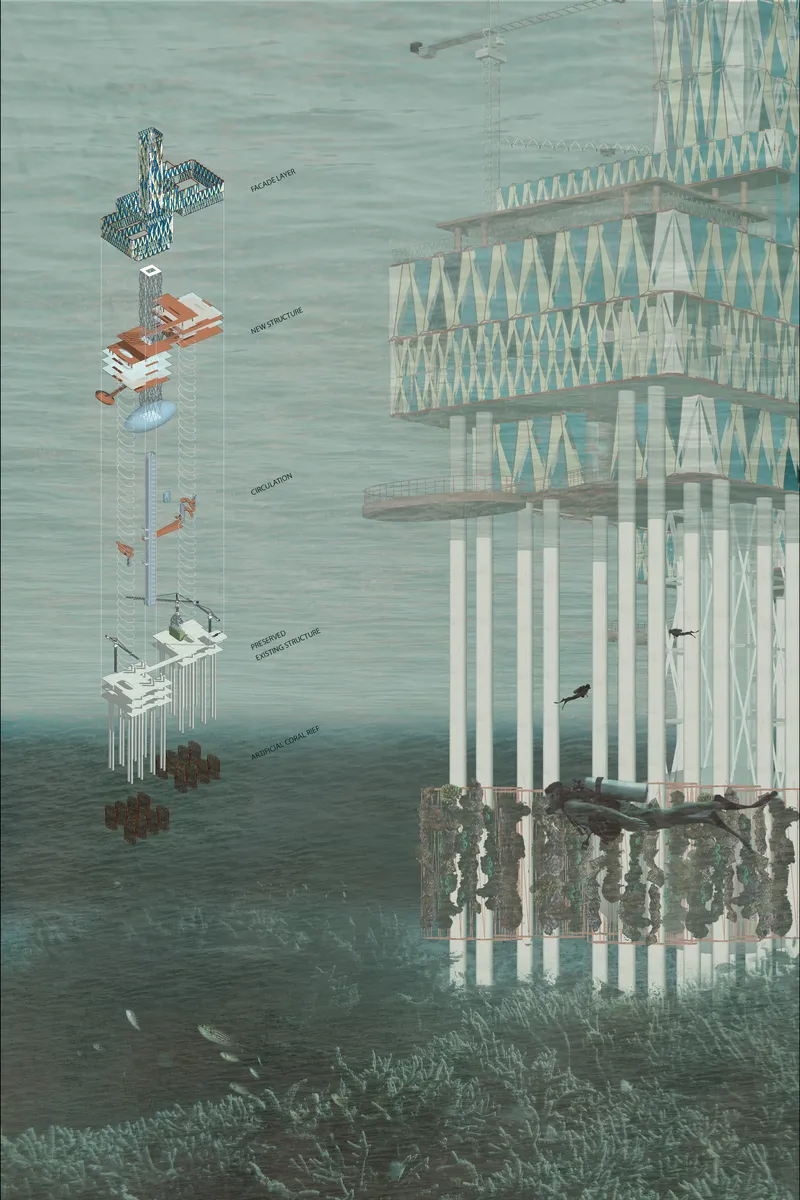
The exploded axonometric separates the scheme into three legible layers: a patterned facade skin, the structural frame and the circulation that threads through it. Reading them apart clarifies the strategy. The structure does the heavy lifting of an offshore installation, the circulation turns it into a public building, and the facade gives it a civic face. Nothing is disguised; the industrial logic remains visible beneath the new skin.
The underwater view beside it is where the project quietly makes its strongest argument. Stilted floors hover above a coral net while divers move through the water column below. The rig's submerged legs are recast as scaffolding for artificial reef growth, so the most consequential part of the architecture sits beneath the waterline, out of sight of anyone standing on deck.
Three Stilted Floor Plates Bridged into a Floating Campus
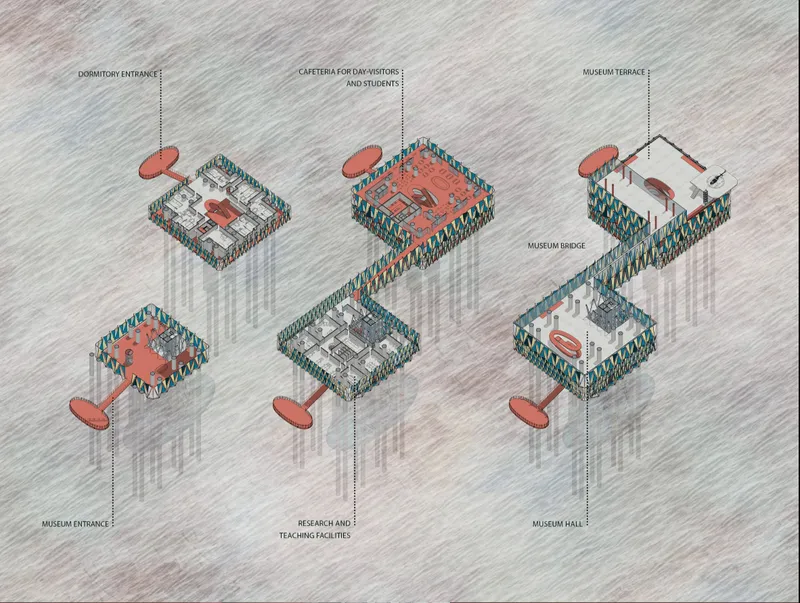
Programme is distributed across three floor plates raised on stilts and linked by bridges, with labels for museum, dormitory, cafeteria and research uses. The separation is sensible. Public exhibition, scientific work and domestic life each get their own platform, yet the bridges keep them within a short walk of one another, encouraging the overlap between researchers and visitors that the brief describes.
The dormitory is what turns the rig from a day trip into a campus. Short-term living quarters house students, researchers, visiting scholars and creative practitioners for extended stays, so study happens in direct contact with the ecosystem being studied. The designers pitch it as a floating academic institution, and the plan backs that up: laboratories, teaching spaces and residences sit side by side rather than on a distant mainland.
Maroon Ramps Spiralling Beneath Coloured Triangular Glazing
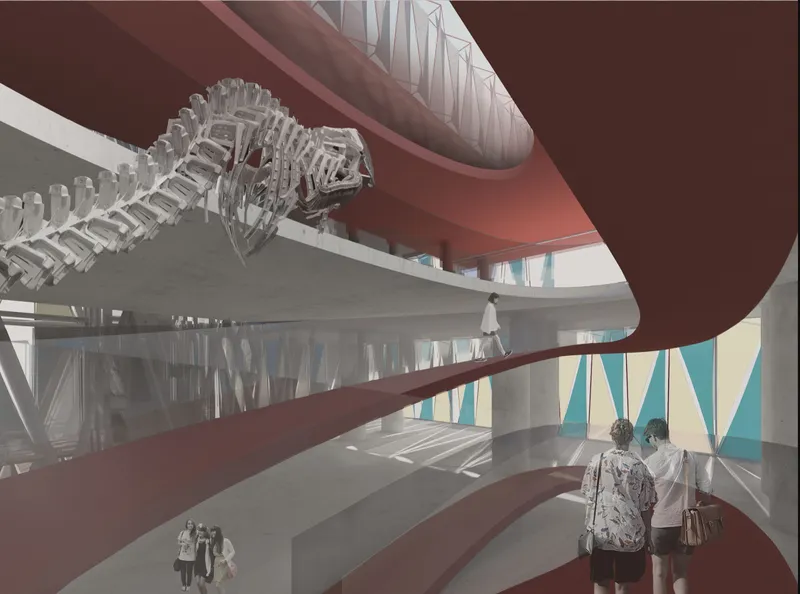
Inside the museum, curving maroon ramps sweep through a tall volume while a skeleton sculpture hangs overhead. Visitors walk beneath glazing broken into coloured triangles, which filters the hard Adriatic light into something closer to the shifting tones of water. The ramps slow movement down and make the climb itself part of the exhibition, offering changing views of the suspended specimen from below, beside and above.
This is the museum working as advocacy rather than storage. The proposal describes exhibits covering scientific research, marine biodiversity, environmental threats and artistic responses to ocean life, and the interior stages them with theatrical clarity. The warm ramp colour against the cool, faceted light keeps the space from feeling like a sterile lab, which matters for an institution that wants to persuade the public as much as inform it.
A Tower, a Museum Axis and an Observatory Below the Waterline
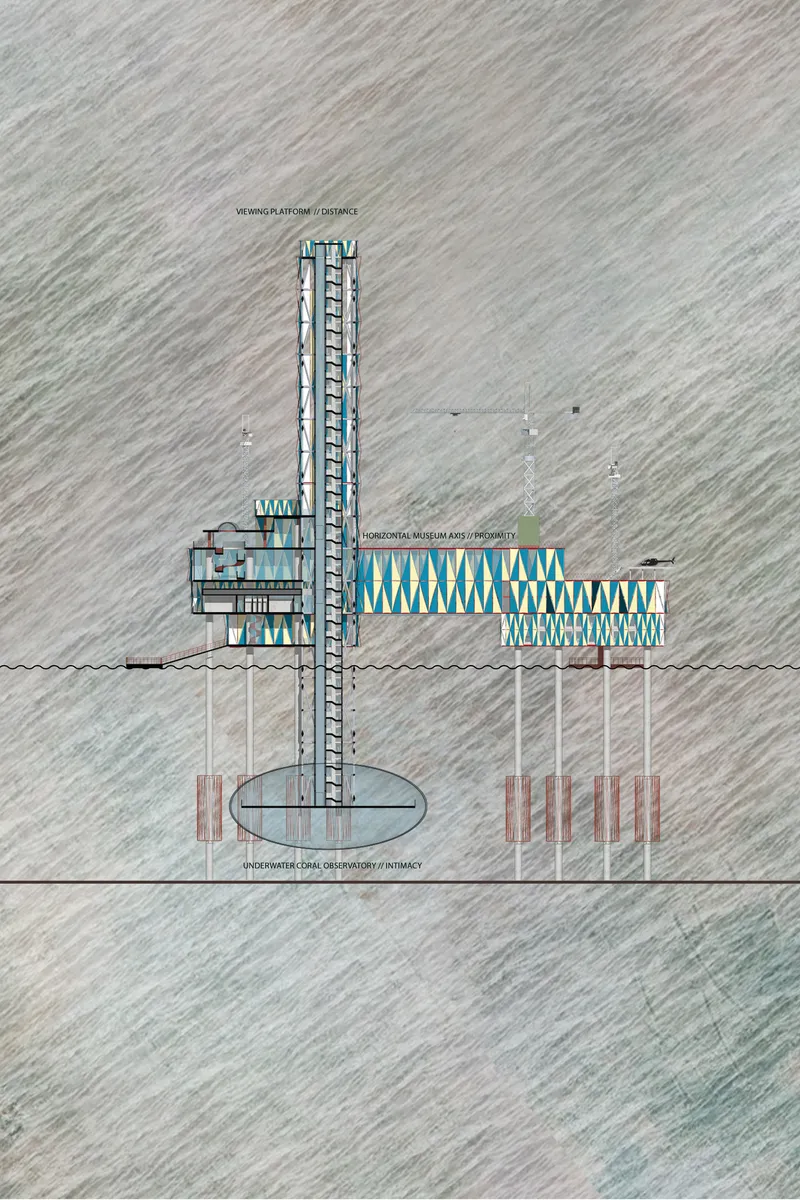
The section is the clearest statement of the project's ambition. A tall tower rises from the platform as the navigational marker, a horizontal museum volume spreads across the piles, and below the sea surface an underwater coral observatory looks directly into the reef. The vertical reaches for the horizon; the horizontal holds the visitor close to the water; the submerged room collapses the distance entirely.
That descending sequence is what makes the idea that the ocean itself becomes an exhibit more than a slogan. Visitors move from distant views at the top of the tower to framed panoramas in the galleries and finally to eye level with coral colonising the old rig. Learning shifts from display cases to direct observation.
Cranes and Triangles Against a Hazy Adriatic Horizon
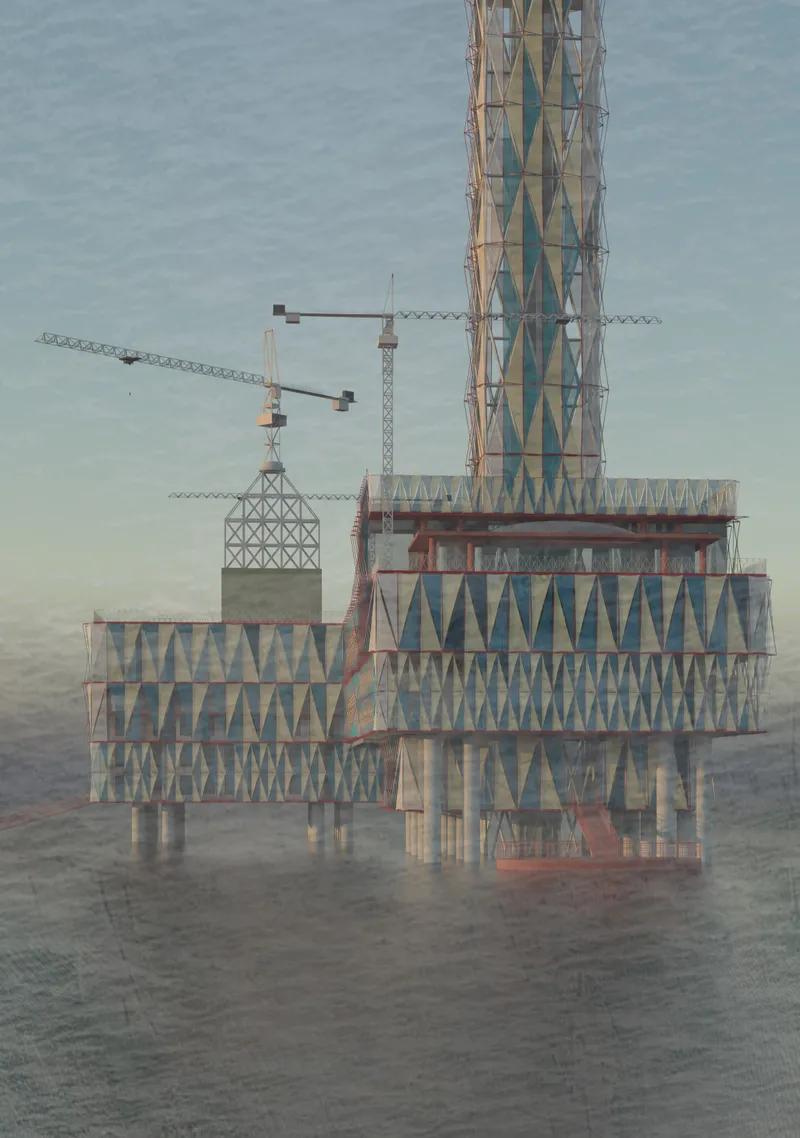
The exterior render shows the stilted platform wrapped in its triangular patterned facade, with the tower rising behind and cranes silhouetted above in soft sea haze. The cranes are a telling inclusion. They keep the image tied to the language of offshore engineering, so the building reads as a working installation that has changed its purpose rather than a polished resort dropped onto the sea.
The faceted facade does the opposite job, signalling that something civic and public now occupies the frame. Between the two, the render captures the hybrid identity the designers are after: part landmark, part laboratory, part museum, approached across open water as both a destination and a point of orientation.
Why This Project Matters
Decommissioning offshore infrastructure is usually framed as a cleanup problem with a price tag. Palazzo Navale reframes it as a design opportunity: the rig's existing structure, already engineered to survive open water, becomes the foundation for reef growth, scientific work and public education. Keeping the steel in place avoids the waste of demolition and puts the structure to work for marine recovery.
The project is strongest where it commits fully to the water. The coral net, the underwater observatory and the bridged campus of labs and dormitories all depend on being exactly where the rig already stands. For a competition about proximity, Zharekesheva and kremerm make a convincing case that the most meaningful distance to close is the one between people and the sea they have long extracted from.
View the Full Project
About the Designers
Designers: Meruert Zharekesheva, kremerm
Enter a Design Competition on uni.xyz
uni.xyz runs architecture and design competitions year-round that reward proposals with spatial conviction and real site intelligence.
Project credits: Palazzo Navale by Meruert Zharekesheva, kremerm Proximity Island 2019 (uni.xyz).


Popular Articles
Popular articles from the community


Manzana Morphosis: Stretching Barcelona's Grid into a Living Landscape for 2050
A radical reworking of the Eixample manzana turns density into a tool for generous public space, vertical ecology, and environmental performance.

Opera on the Sea: Driftwood Logic Shapes a Timber Opera House on Estonia's Coast
Trevor Orgill's opera house translates the entangled drift of floating timber into a civic building where wood, water, and music converge.

Singing Woman: An Opera House That Performs Before the Curtain Rises
Ovidiu Cristian Pavel's conceptual opera house translates Estonia's choral identity into a sculpted waterfront landmark facing the Baltic Sea.


FCC Arquitectura Expands a Portuguese Granite House with a Board-Marked Concrete Wing
In Portugal, JV House pairs a cleaned-up whitewashed and granite dwelling with a timber-shuttered concrete extension, courtyards and a garden pool.

Similar Reads
You might also enjoy these articles
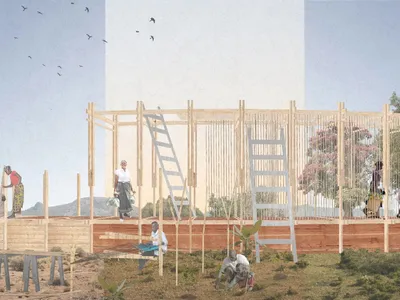
Healing Façade: A Modular Chapel System That Restores Ethiopia's Sacred Forests
Winner of the Eco-Chapel competition, this circular timber façade collects water from air to rebuild soil and reforest degraded Ethiopian landscapes.
Kaffeebühnen: Where Coffee Shop Architecture Becomes a Civic Stage in Vienna
A linear sequence of timber boxes, transparent shells, and open yards turns the Viennese café tradition into a public performance space.
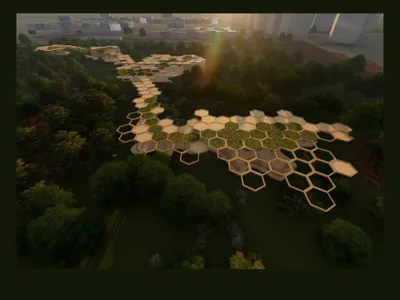
Eco Chapel: A Modular Forest Pavilion That Grows Like the Landscape It Protects
Hexagonal timber modules weave through existing trees, turning a chapel into a living system for prayer, education, and reforestation.


Urban Forest: A Vertical Ecosystem for 5,000 Workers in Singapore's Changi Business Park
Radially stacked pods and layered green decks turn a 7-acre plot into 47 acres of ecological workspace projected for 2040.

Explore Blocs Competitions
Discover active competitions in this discipline

Challenge to reimagine the Iron Throne

Photograph architecture without architects

Illustrate the lost glory of Angkor Wat - Render Challenge

Design challenge to reuse E-waste
Comments (0)
Please login or sign up to add comments
No comments yet. Be the first to comment!