
Palheiro House by Pedro Henrique Arquiteto: A Contemporary Reinterpretation of Coastal Vernacular in Esmoriz
Contemporary concrete house in Esmoriz reinterprets traditional Portuguese "palheiro" architecture, blending coastal heritage with modern minimalist design.


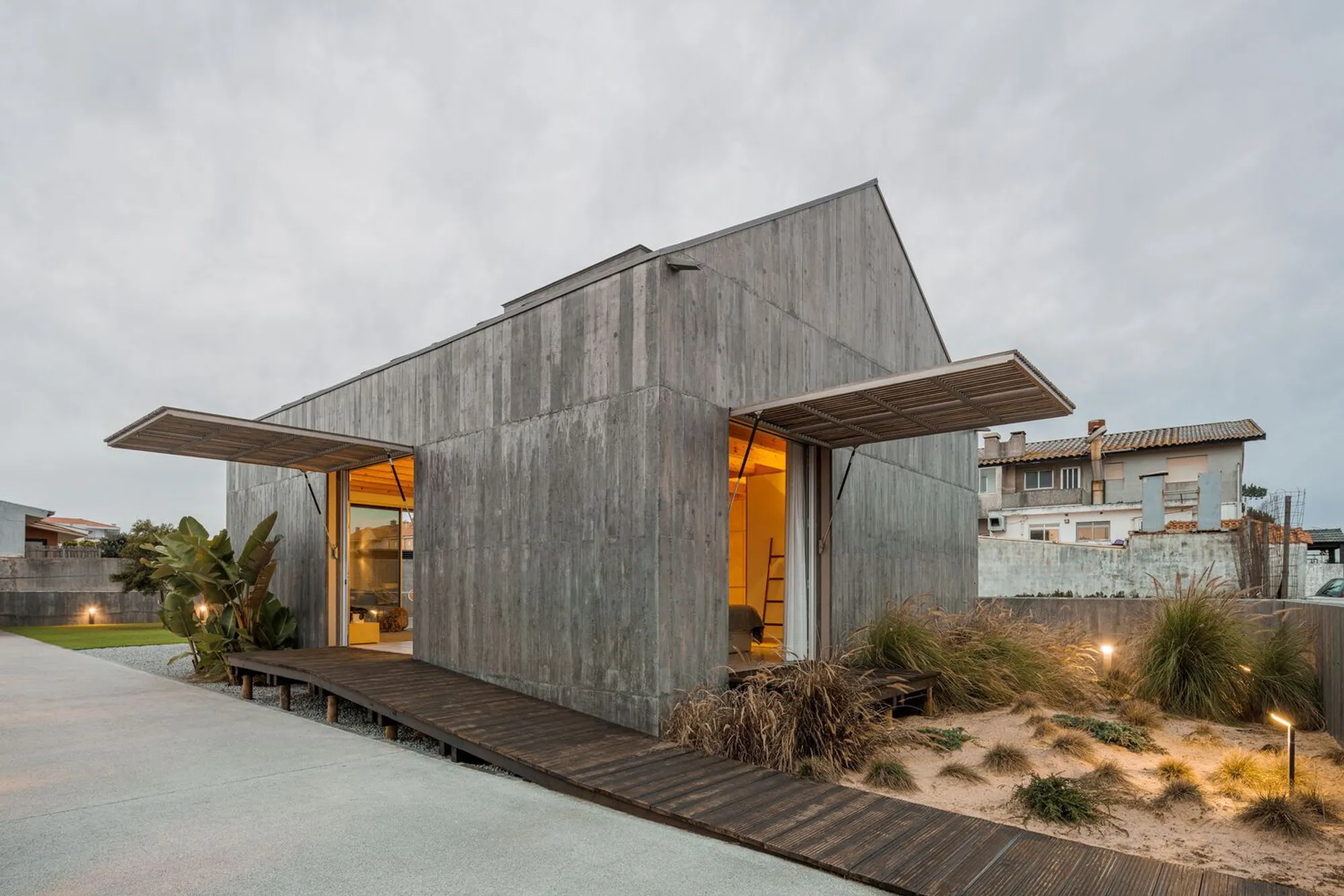
Located in the seaside town of Esmoriz, Portugal, the Palheiro House by Pedro Henrique Arquiteto is a poetic homage to the region’s architectural heritage. Completed in 2022, the 1722-square-foot residence reimagines the traditional "Palheiro"—a type of fishermen’s hut that once populated the Portuguese coast in the early 19th century.
Through thoughtful design and materiality, this project becomes more than a house—it acts as a cultural bridge between past and present, preserving collective memory while aligning with the demands of contemporary living.
A Tribute to Vernacular Coastal Architecture
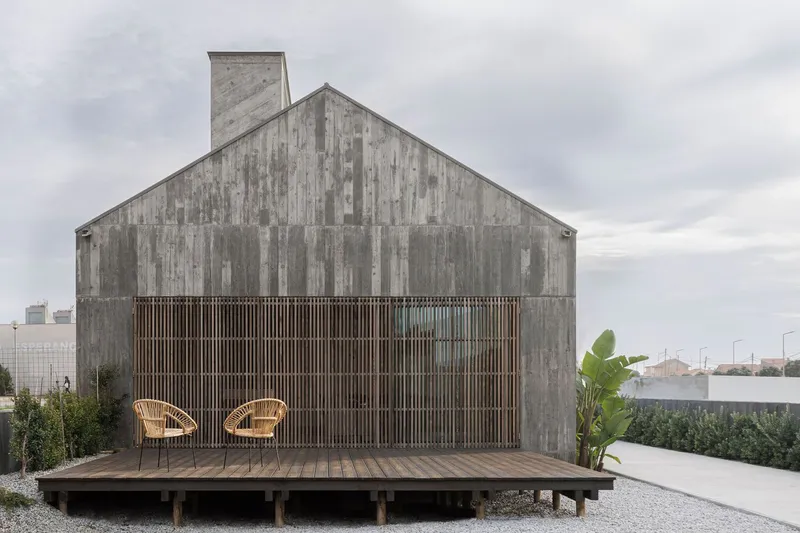
The design draws direct inspiration from the vernacular palheiros, modest wooden structures elevated on stilts to adapt to the coastal terrain. These traditional homes have long defined the visual identity of Esmoriz and its neighboring beach towns.
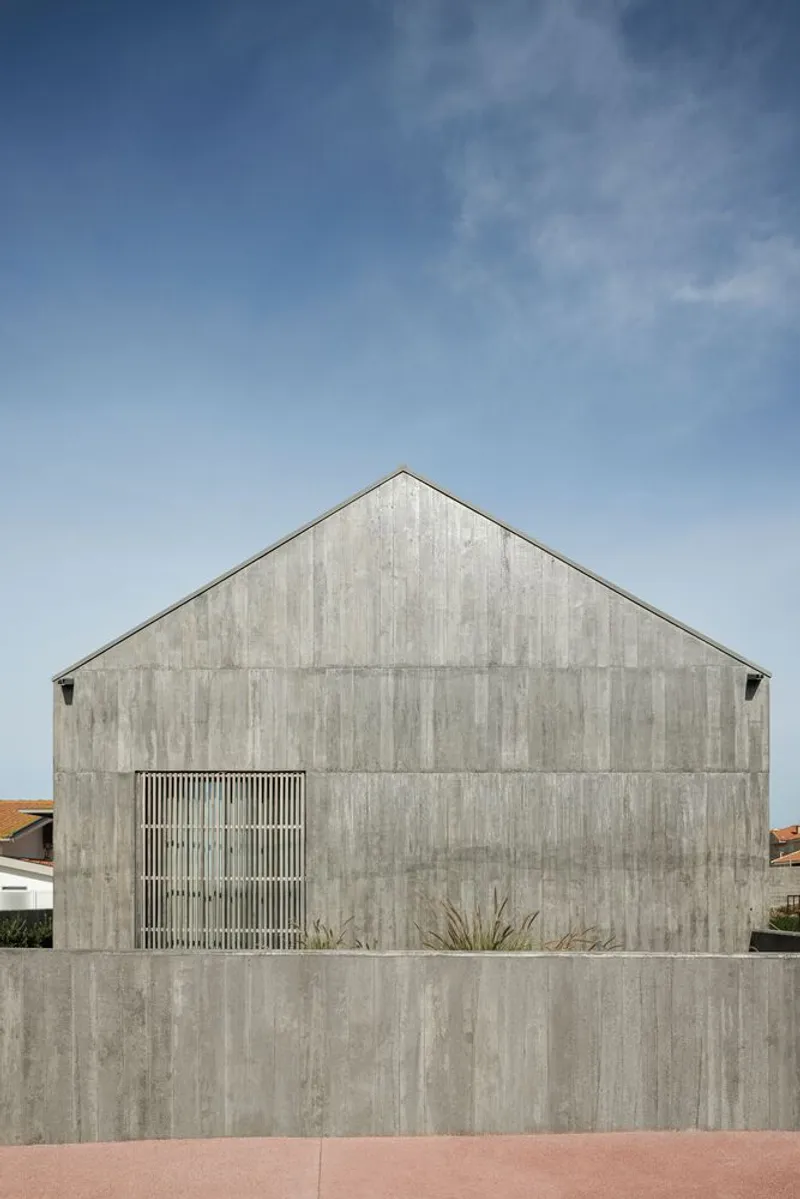
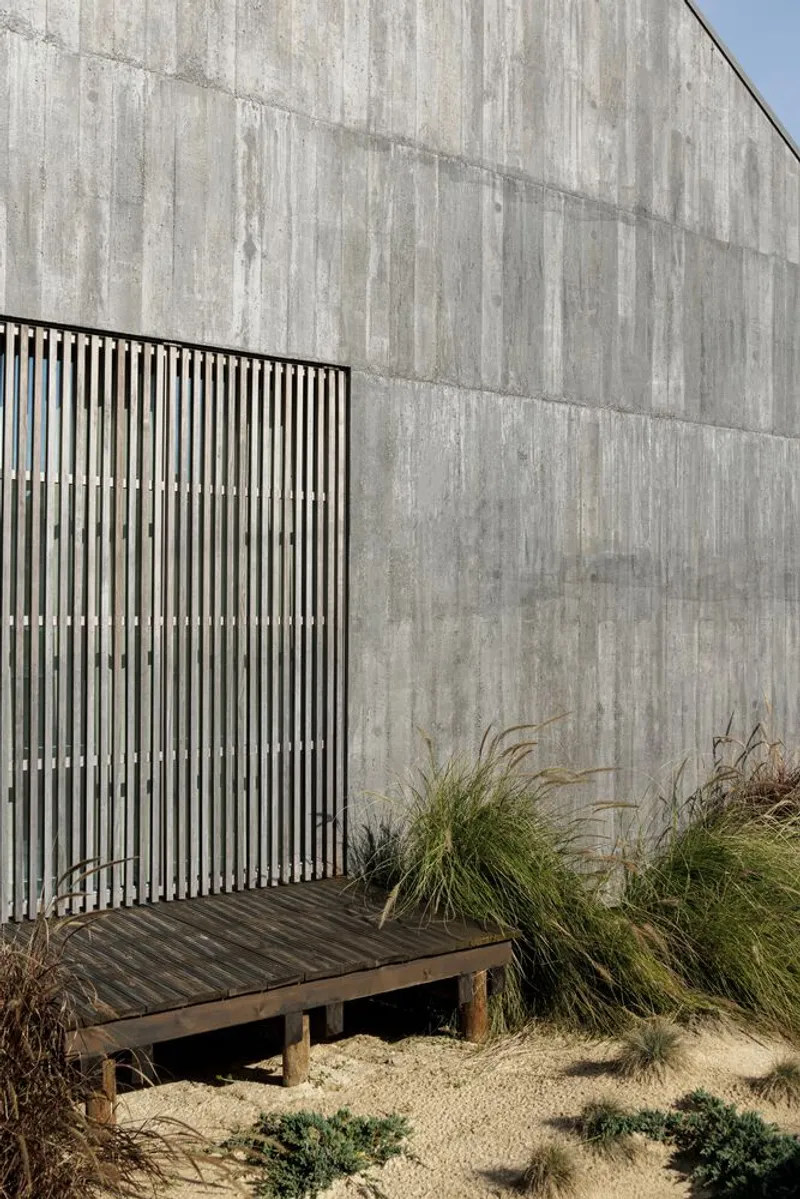
In the Palheiro House, this typology is translated into a modern architectural language using a robust concrete structure. Concrete becomes the dominant material, but it is softened by wood accents that echo the tactile and rhythmic qualities of traditional timber construction. Wooden elements articulate the façade and highlight the roof structure, creating a dialogue between permanence and lightness.
Elevated Living and Seamless Indoor-Outdoor Transitions
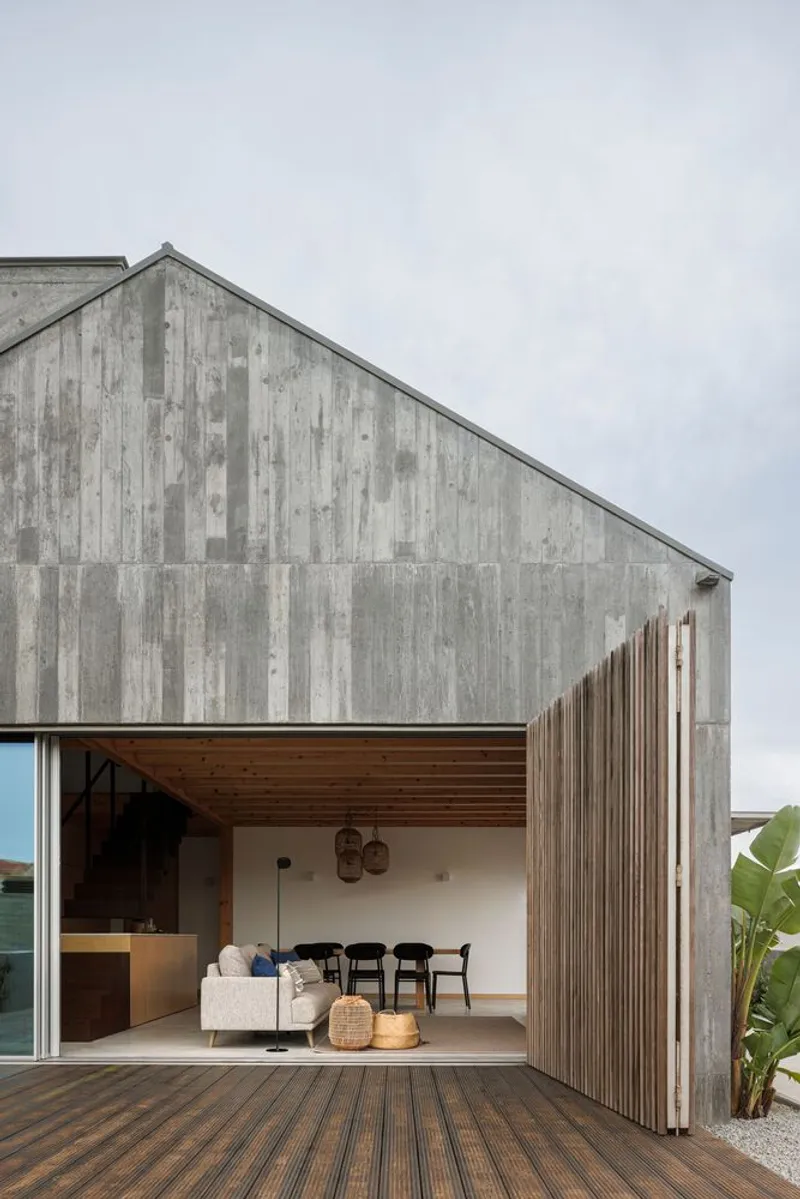
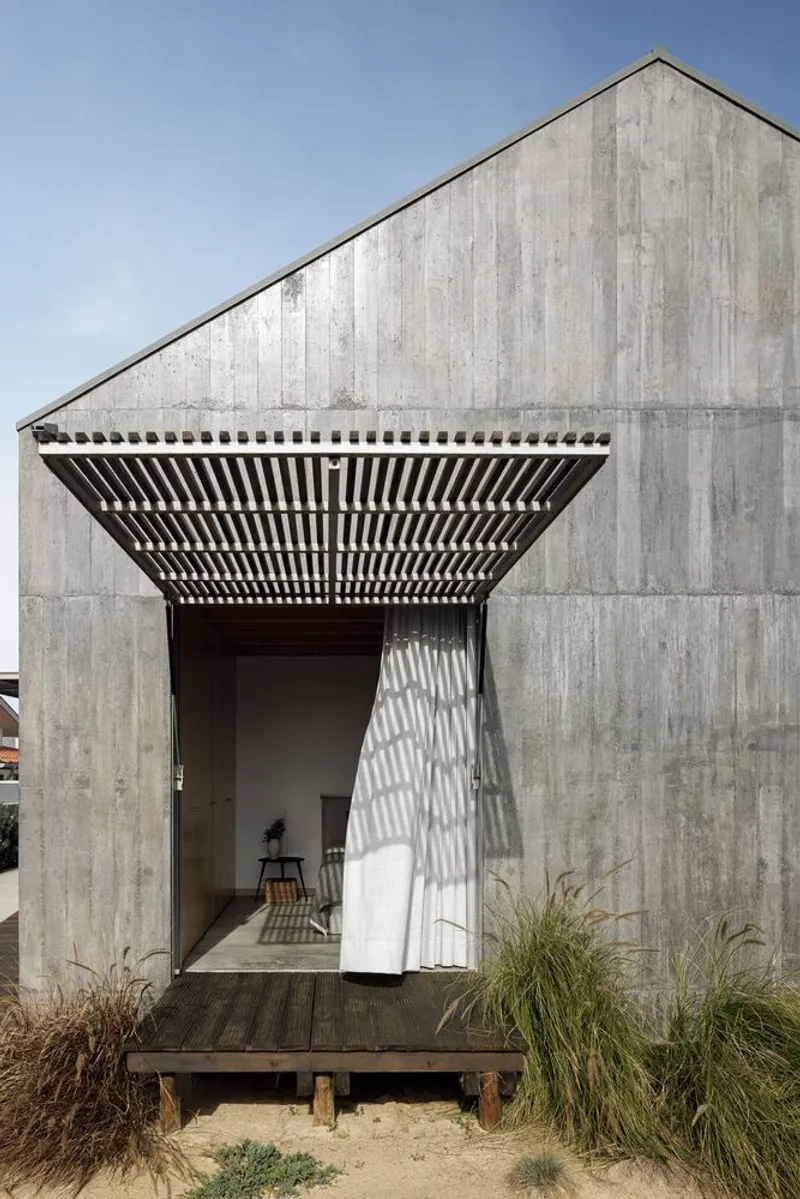
The house is accessed via a raised ramp, mimicking the wooden walkways found along the coast. This gesture not only reinforces the coastal context but also elevates the residence above ground level, much like its vernacular predecessors. The same structure forms a base for terraces that extend the living space outdoors, offering expansive views and creating protected transitional zones.
Large sliding glass doors open onto these terraces, blurring the boundaries between interior and exterior. Exterior shutters offer shade and privacy, while contributing to the overall architectural rhythm. These outdoor platforms, framed by timber and concrete, serve as modern porches—spaces for contemplation, relaxation, and connection to nature.
Spatial Fluidity and Central Circulation
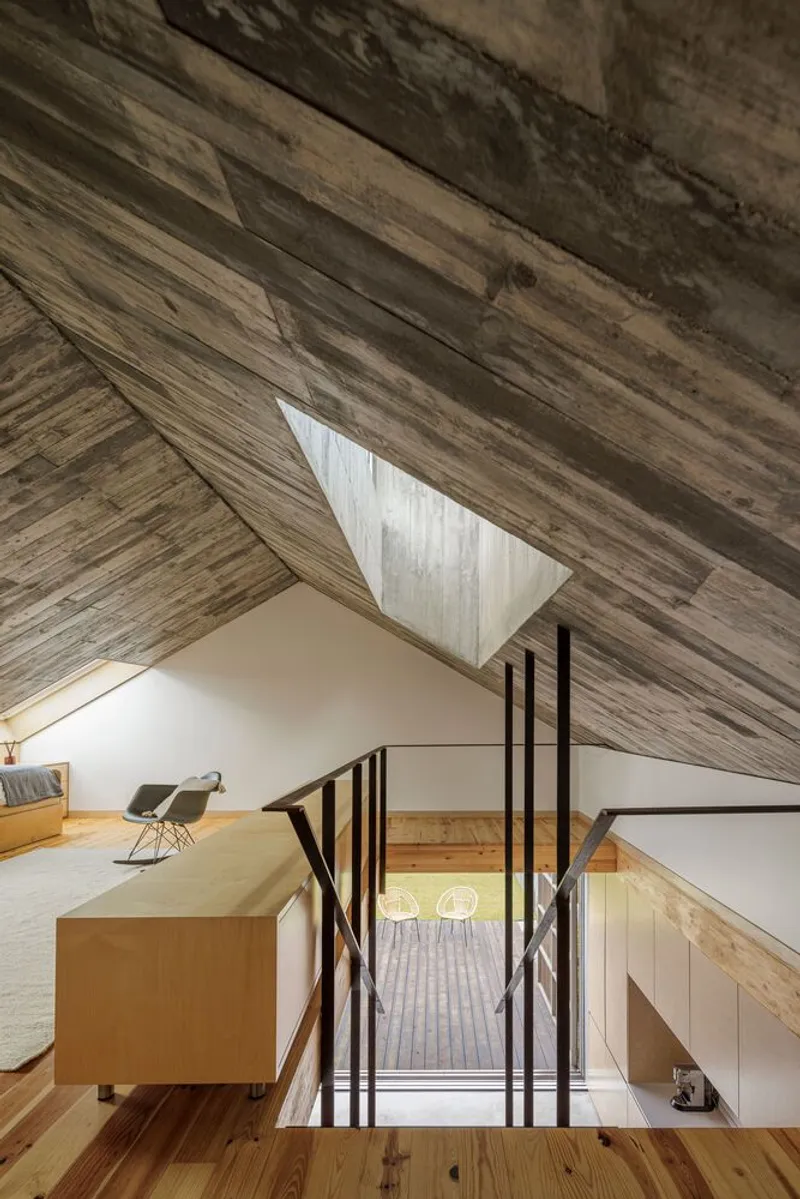
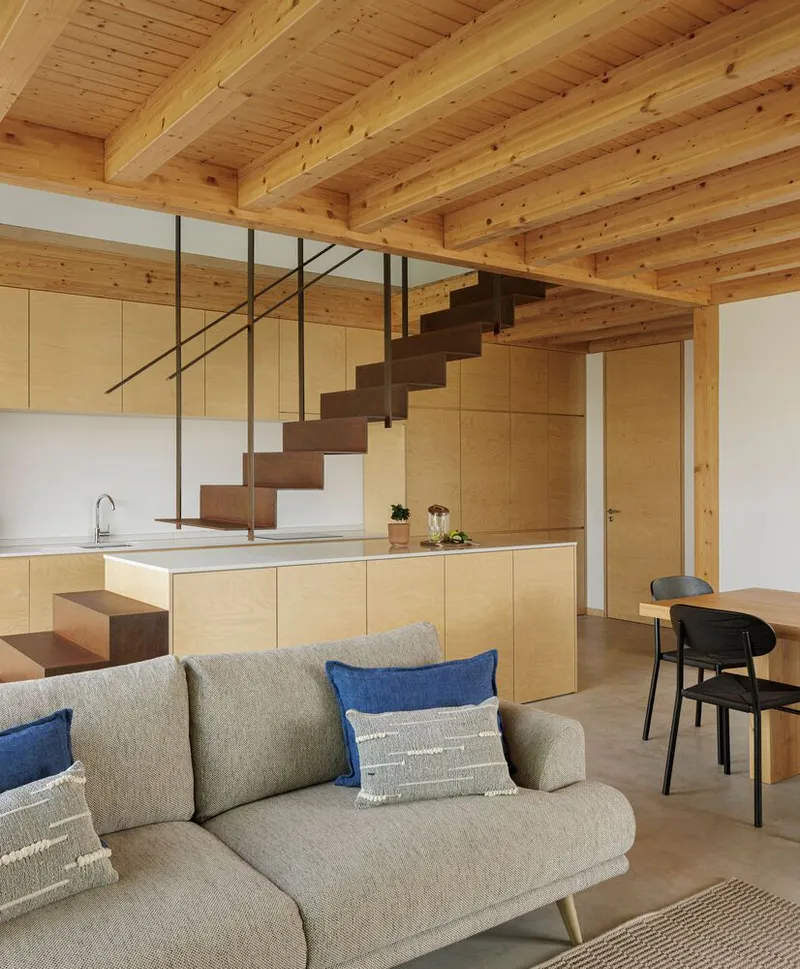
Inside, the layout is both functional and fluid, with the staircase acting as a central organizing element. Positioned at the core of the plan, it not only enables circulation but also defines spatial relationships between public and private zones.
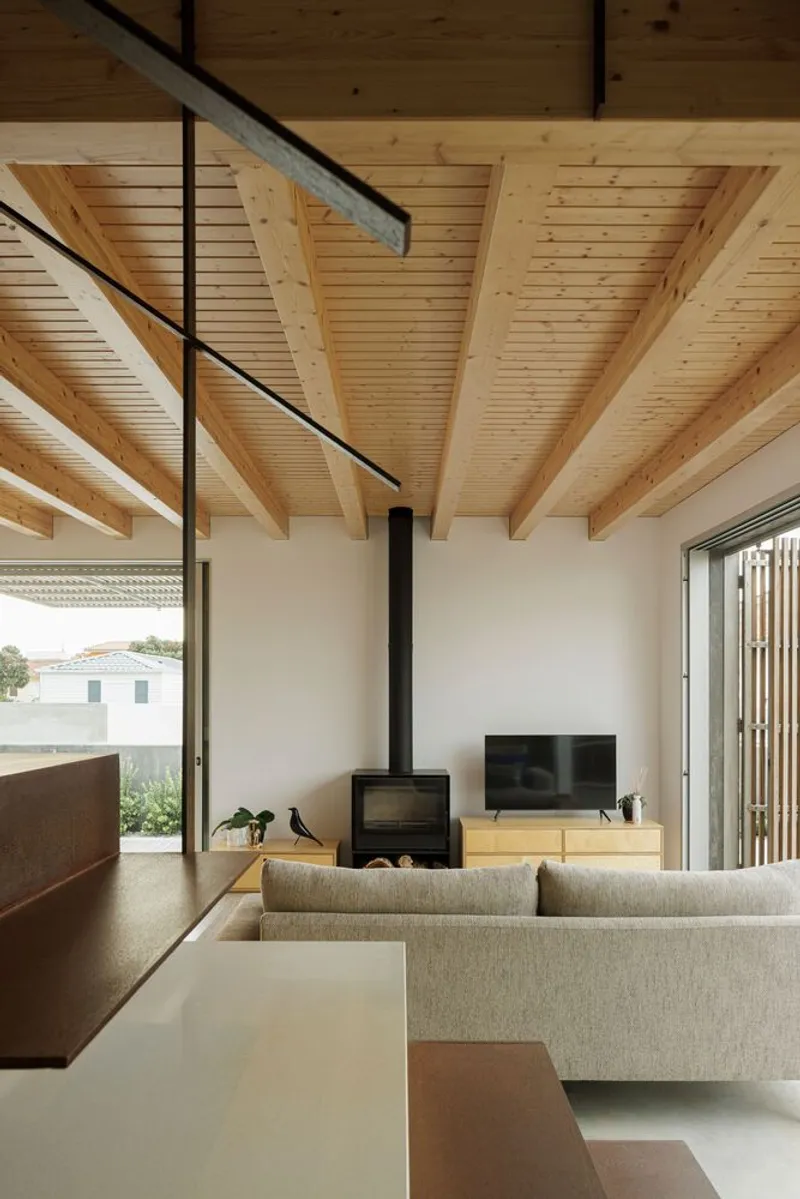
On the ground floor, the house accommodates the main living area, kitchen, dining space, and master bedroom with an adjacent bathroom. The upper floor houses a generous lounge area, a secondary bedroom, an additional bathroom, and storage. The exposed wooden beams, visible throughout the interior, create a warm, textured contrast to the minimalist concrete shell.
Material Expression and Rhythmic Façade
Material choices are essential to the project’s identity. While concrete establishes structural solidity, wood introduces rhythm, warmth, and historical resonance. The interplay between these two elements is carefully orchestrated, especially on the façade, where the stereotomy (the art of cutting stone or structural elements) is emphasized with wooden inlays.
The design's simplicity is deceptive—each element is carefully placed to respect the original palheiro typology while enabling a contemporary architectural expression. The result is a house that feels both rooted and forward-looking.
The Palheiro House by Pedro Henrique Arquiteto is a masterclass in contextual design and cultural preservation through architecture. It honors the typology of traditional fishermen’s houses while offering a refined, modern dwelling that speaks to today’s needs. With its elevated form, rich material palette, and thoughtful reinterpretation of the vernacular, it sets a new standard for coastal living in Portugal.
All Photographs are works of Ivo Tavares Studio




Popular Articles
Popular articles from the community


The Musturak Paradise: Senior Living Architecture for a Connected Future in Temara, Morocco
The Musturak Paradise reimagines senior living architecture in Temara via private homes, social spaces, culture, community, and shared care.

The Ocean Hive: Sustainable Architecture for a Self-Sufficient Civilization at Sea
The Ocean Hive imagines sustainable architecture at sea, where modular habitats, algae, wave power and ocean waste sustain a growing colony.

Lunar Spiral: Space Architecture Shaped by the Mathematics of the Universe
Lunar Spiral reimagines space architecture through Fibonacci geometry, lunar regolith, levitating habitats, and self-sustaining Moon living.

Hill & Cross Opera: Sculptural Opera House Architecture Shaped by Tallinn’s Landscape and Identity
Hill & Cross Opera reimagines opera house architecture in Tallinn through its sculptural hill, civic plaza, glass wave and a luminous cross.

Similar Reads
You might also enjoy these articles


Hodi-Mandai Geram
Project Function: Preservation and revitalization of the Intangible heritage and socio-spatial identity of the Hodi by Housing, Cultural Memory Center, Sacred Grove, landscape, local tourism economy


Olio Towers: A Mid-Rise for Performers That Fuses Housing, Rehearsal, and Stage
Located blocks from Houston's Theater District, this modular tower stacks living units around a central performance atrium.

Oasis: Modular Green Housing Carved into Dhaka's Urban Fabric
A shortlisted Plugin Housing entry reclaims unauthorized settlements in Dhaka with stepped concrete volumes, green roofs, and ventilation-driven design.

Black Hole: A Floating Megastructure for the Post-Physical Era
Emiliano Mazzarotto envisions a spherical, self-scaling arena where e-sports, digital hotels, and holographic stadiums replace traditional public space.


Explore Housing Competitions
Discover active competitions in this discipline



Challenge to reimagine the Iron Throne


Photograph architecture without architects


Illustrate the lost glory of Angkor Wat - Render Challenge


Design challenge to reuse E-waste
Comments (0)
Please login or sign up to add comments
No comments yet. Be the first to comment!