
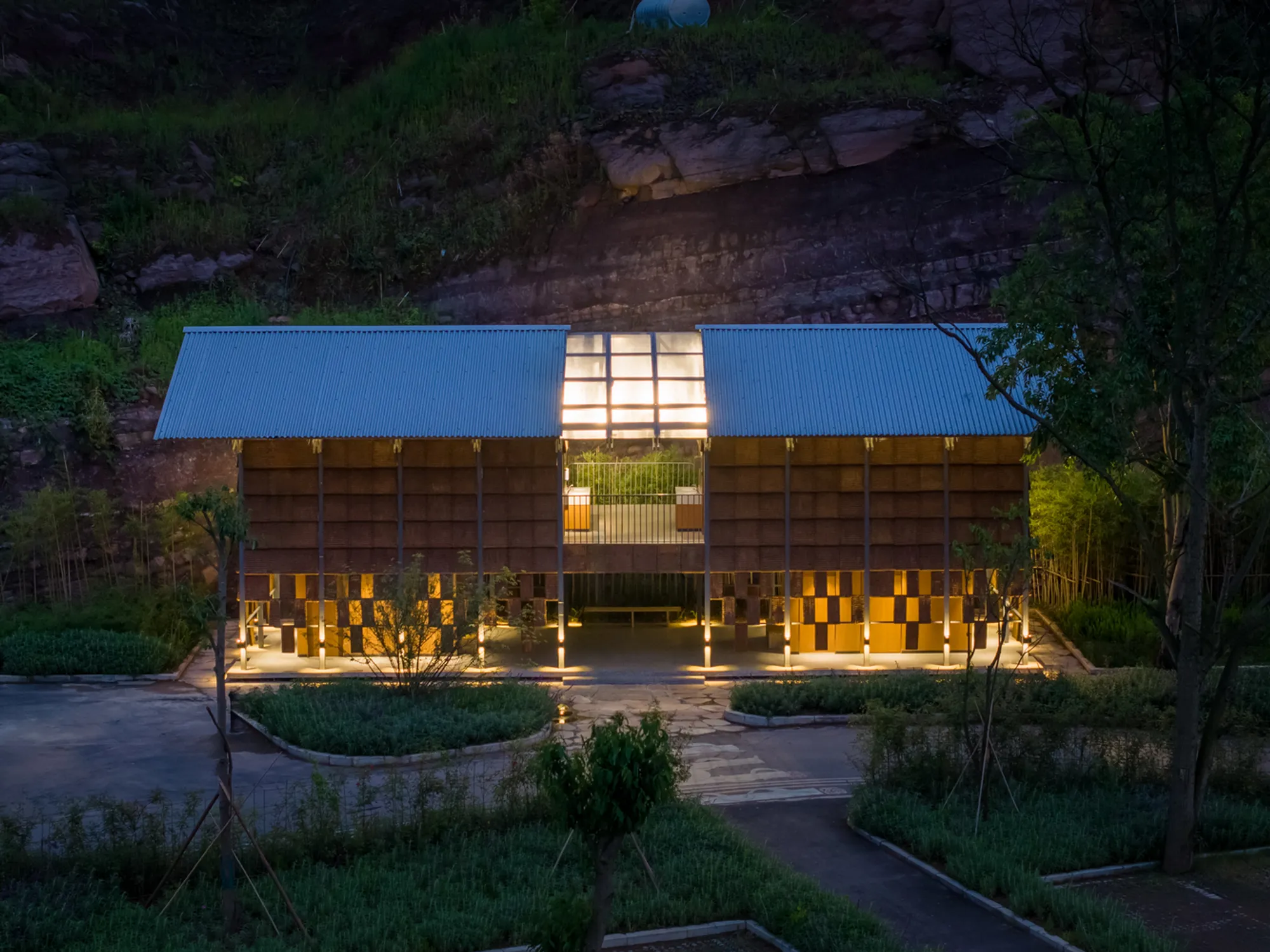
Palm Toilet Facing the Sea of Flowers by Zaixing Architectural Design: A Sustainable Public Facility Blending Nature, Culture, and Innovation
A public restroom blending palm fiber, wood, and steel, harmonizing with nature and offering scenic views in Meilinhuaxi Park.


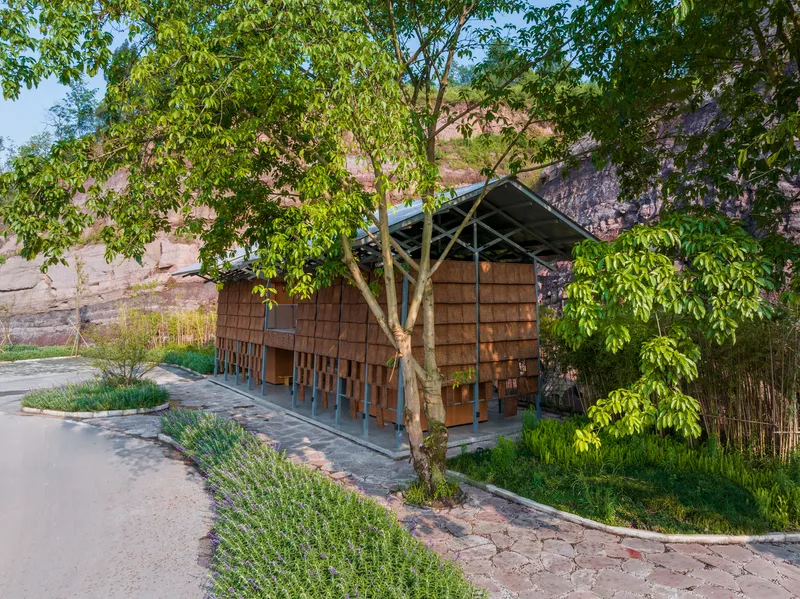
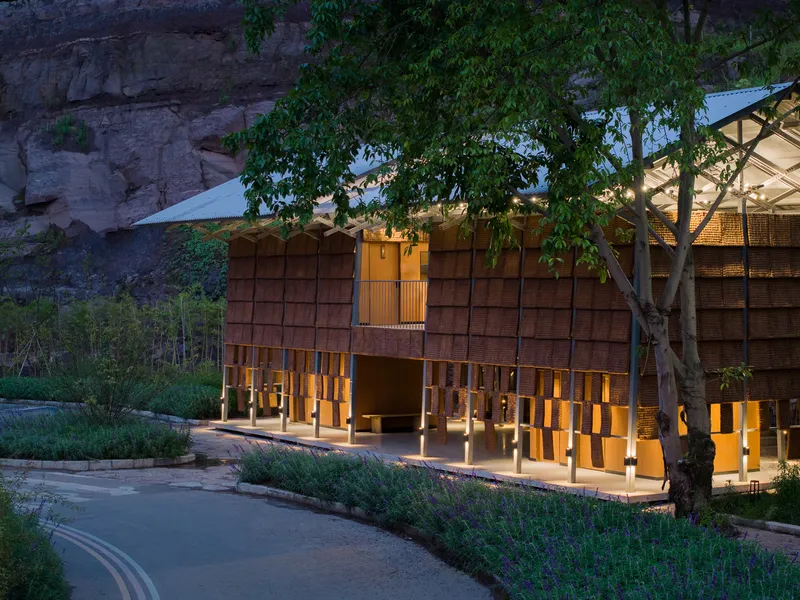
Located at the entrance of Meilinhuaxi Rose Industrial Park in Yibin, China, the Palm Toilet Facing the Sea of Flowers, designed by Zaixing Architectural Design, redefines the potential of public restroom architecture. More than just a utility structure, this 180-square-meter project serves as a cultural landmark, thoughtfully integrating sustainable materials, rural aesthetics, and modern functionality. Set amidst terraced rose fields and flanked by lush hillsides, the structure harmoniously blends into the idyllic landscape while offering comfort and ecological sensitivity to visitors.
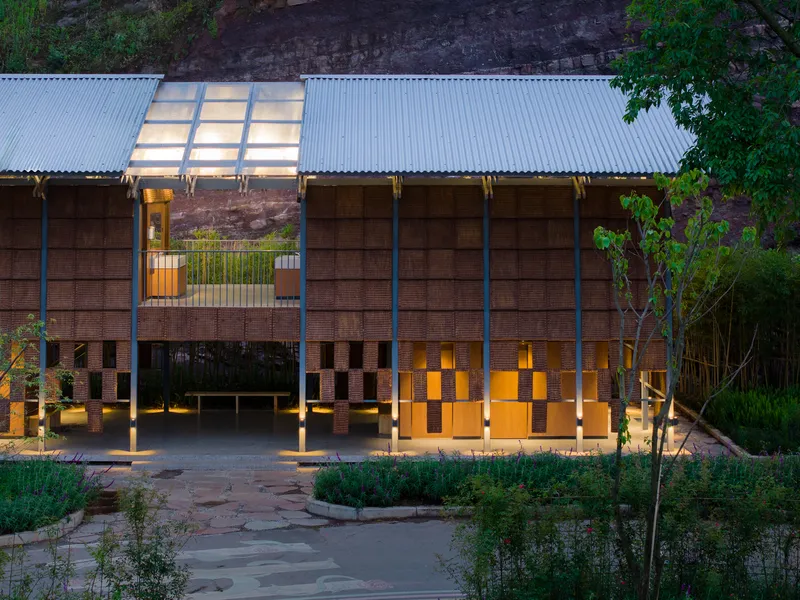
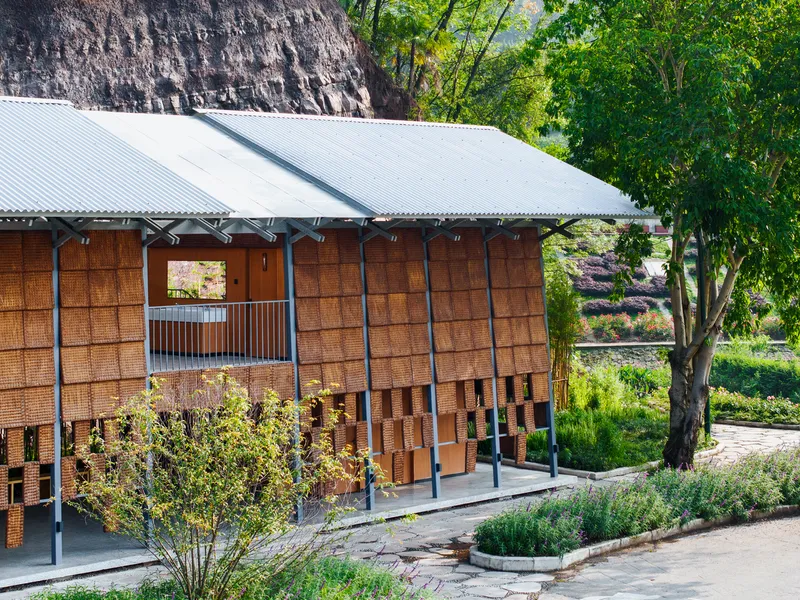
A Gateway to the Scenic Rose Fields
As the first building visible from the parking lot of the industrial park, the Palm Toilet functions not only as a public restroom but also as a welcoming pavilion that sets the tone for the entire rose-themed destination. The site—nestled in a natural cove—offers expansive views of the surrounding rose fields, while the backdrop of hills and preserved native trees provides natural screening and enhances privacy.
Thoughtful Spatial Organization and Accessibility
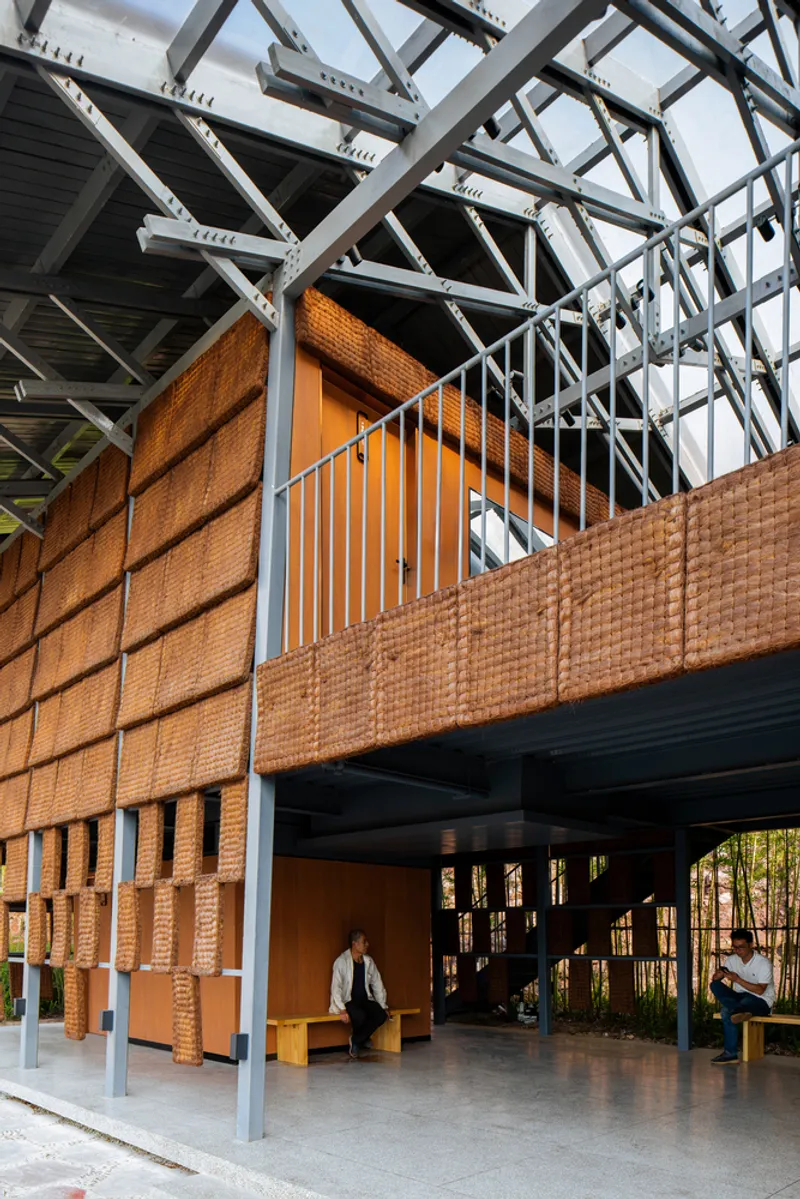
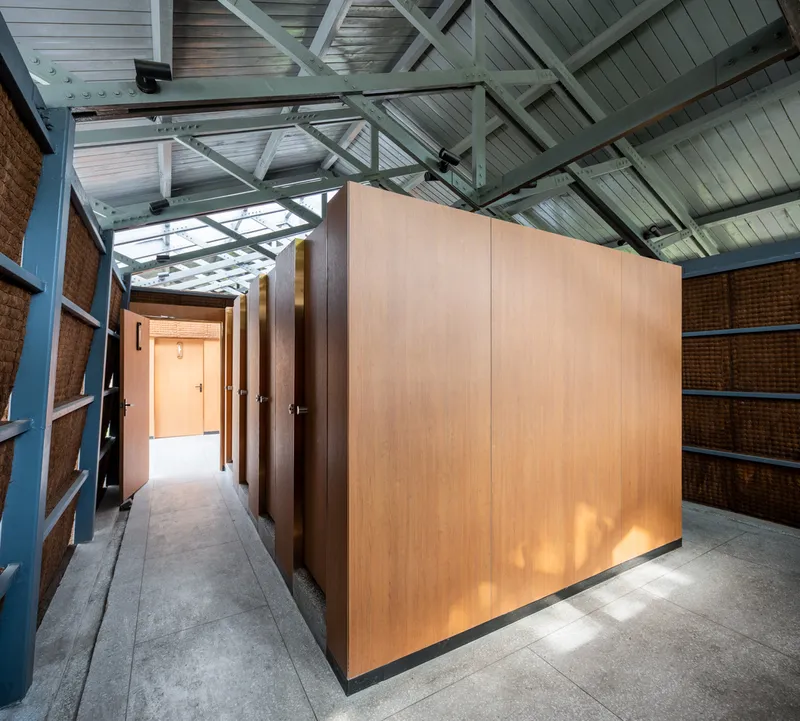
The facility is arranged on two levels along a symmetrical central axis, consisting of four wooden square volumes. On the ground floor, accessible amenities include a family restroom, a disabled toilet, and a tool room. The first floor hosts the male and female toilets, designed with a central island configuration that optimizes both spatial flow and plumbing layout. This zoning approach maximizes user comfort while enhancing the visual rhythm of the architectural form.
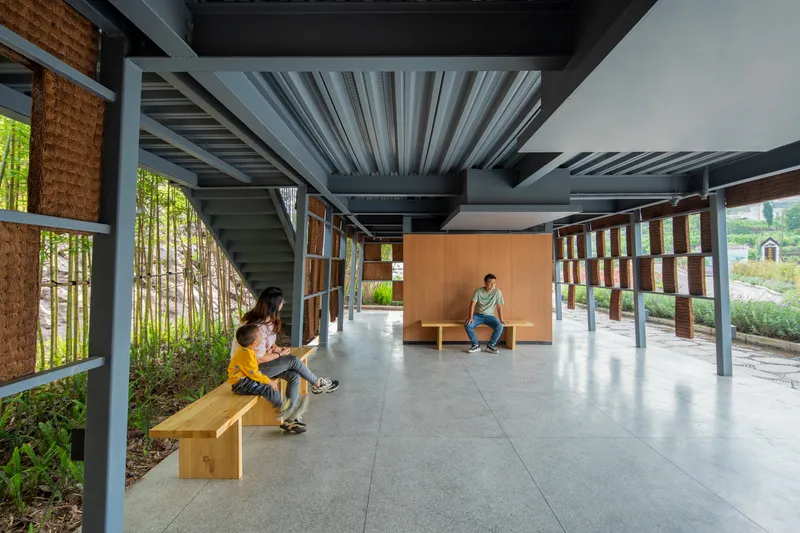
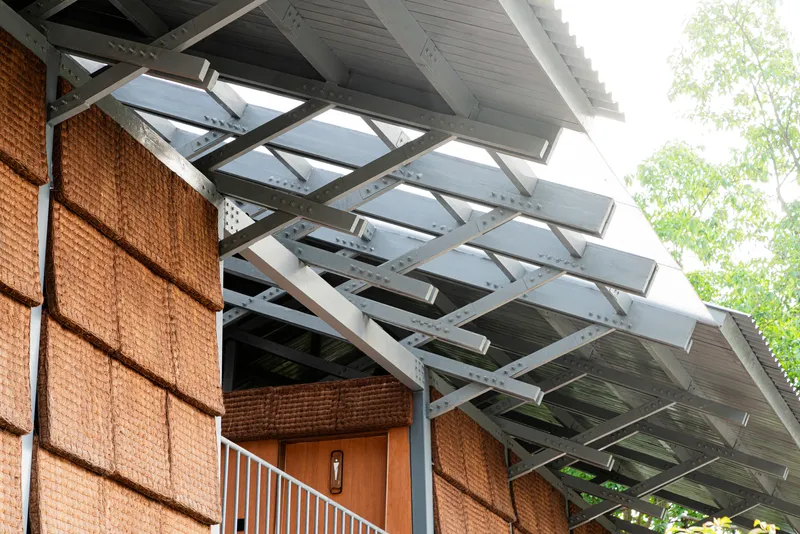
The design strategically places traffic stairs and an accessible ramp along the hillside to maintain open vistas for visitors, while the sloped roof supported by a hybrid steel-and-wood structure allows for efficient natural ventilation. Under the extended eaves, palm fiber panels define shaded resting areas where guests can pause and take in the panoramic views of blooming rose terraces.
Material Innovation Rooted in Tradition
The Palm Toilet draws from the vernacular architecture of Sichuan, a region characterized by its rainy, temperate climate and abundant timber resources. Inspired by traditional dwellings that feature lightweight wood frame systems and deep overhanging eaves, the design incorporates modern construction techniques with a regional touch.
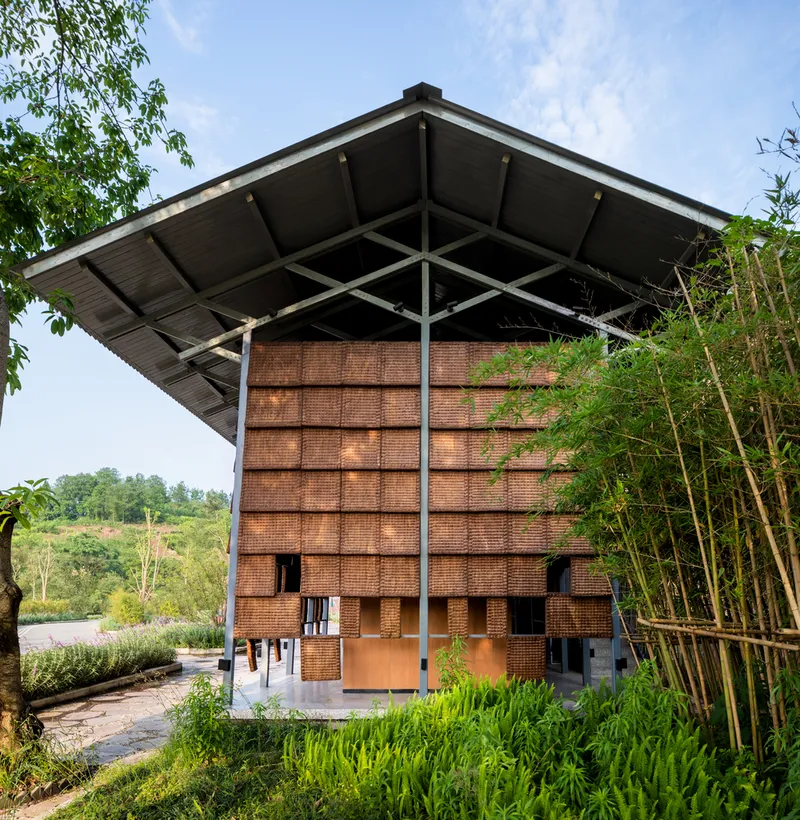
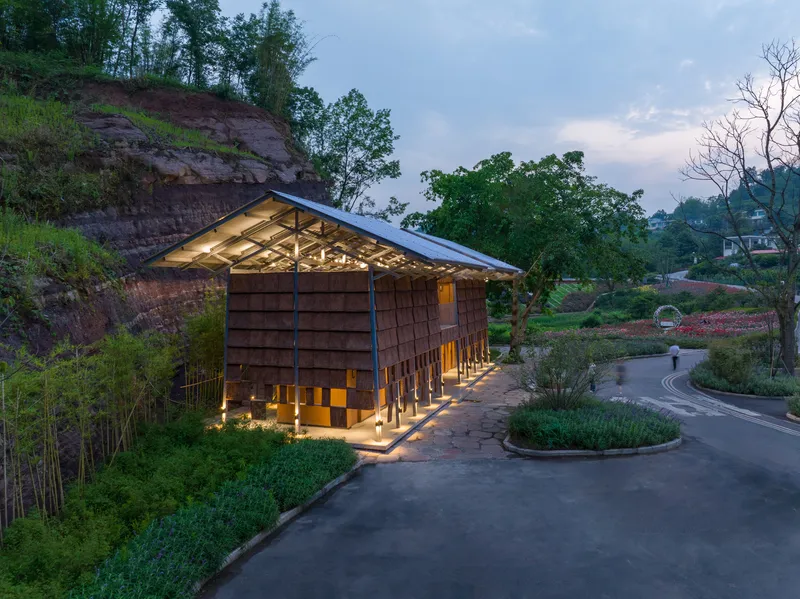
The roof structure employs color steel plates for cost-efficiency and durability, while translucent sun panels at the center bring daylight into the atrium, creating a glowing lantern effect at night. The wooden framework, constructed with fast-growing pinus sylvestris, is painted to match the steel elements, providing both moisture protection and a cohesive visual identity.
Palm Fiber as Sustainable Façade Material
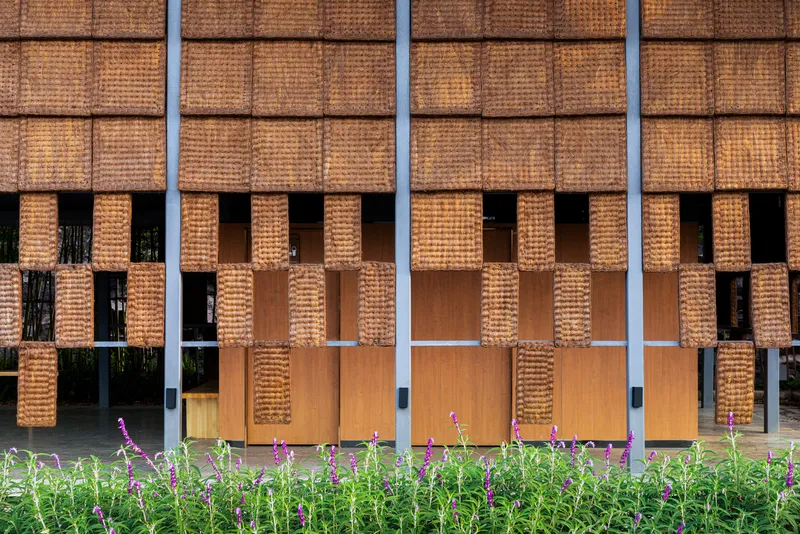
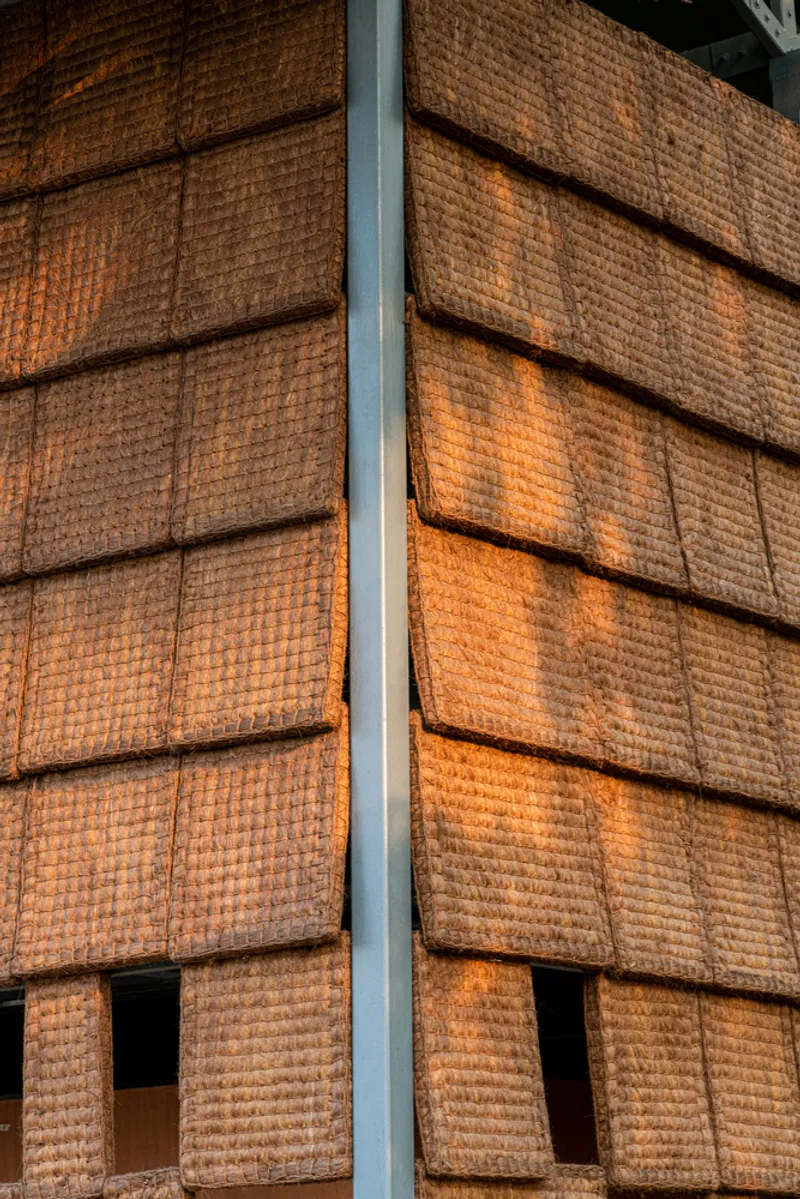
At the heart of the design is the use of palm fiber panels, innovatively applied as a breathable and durable cladding material. Traditionally used in rural China for straw rain capes and bedding, palm fiber possesses remarkable properties such as water resistance, rot prevention, and natural breathability. In this project, the material is crafted into woven panels with a density gradient—denser at the top and more open at the bottom—balancing ventilation, visibility, and privacy.
Mounted onto the steel frame, these palm panels contribute to the building’s thermal comfort, weather resistance, and longevity. Their textured, earthy aesthetic enhances the rural charm of the structure while subtly referencing local craftsmanship and material culture.
A Model for Rural Public Architecture
As a pivotal part of the Meilinhuaxi Rose Industrial Park, a key cultural tourism initiative celebrating Yibin as the "Rose City and Romantic Capital," the Palm Toilet offers more than basic functionality. It stands as a model for sustainable public architecture in rural China, embodying environmental stewardship, cultural respect, and architectural ingenuity.
Through its contextual design, material authenticity, and commitment to public comfort, the Palm Toilet presents a new standard for rural infrastructure, serving both the practical needs of visitors and the aesthetic aspirations of the local community. This thoughtful intervention illustrates how even the most humble structures—like a public toilet—can become powerful tools for place-making and cultural storytelling.
All Photographs are works of Xiaobin Lv




Popular Articles
Popular articles from the community


The Ocean Hive: Sustainable Architecture for a Self-Sufficient Civilization at Sea
The Ocean Hive imagines sustainable architecture at sea, where modular habitats, algae, wave power and ocean waste sustain a growing colony.

Co-Life: Senior Housing Design That Reconnects Older Adults With the City
Co-Life reimagines senior housing design through healing gardens, shared streets, workshops, and a sustainable community across generations.

Lunar Spiral: Space Architecture Shaped by the Mathematics of the Universe
Lunar Spiral reimagines space architecture through Fibonacci geometry, lunar regolith, levitating habitats, and self-sustaining Moon living.

Conexión: Biophilic Design Reimagines High-Rise Living in Hong Kong
Conexión reimagines high-rise living in Hong Kong through biophilic design, green facades, shared spaces, daylight, water and nature within.


Similar Reads
You might also enjoy these articles


Hodi-Mandai Geram
Project Function: Preservation and revitalization of the Intangible heritage and socio-spatial identity of the Hodi by Housing, Cultural Memory Center, Sacred Grove, landscape, local tourism economy


Olio Towers: A Mid-Rise for Performers That Fuses Housing, Rehearsal, and Stage
Located blocks from Houston's Theater District, this modular tower stacks living units around a central performance atrium.

Oasis: Modular Green Housing Carved into Dhaka's Urban Fabric
A shortlisted Plugin Housing entry reclaims unauthorized settlements in Dhaka with stepped concrete volumes, green roofs, and ventilation-driven design.

Black Hole: A Floating Megastructure for the Post-Physical Era
Emiliano Mazzarotto envisions a spherical, self-scaling arena where e-sports, digital hotels, and holographic stadiums replace traditional public space.


Explore Public Building Competitions
Discover active competitions in this discipline



Challenge to design locus for the upliftment of human rights


Challenge to reimagine the Iron Throne


Photograph architecture without architects


Illustrate the lost glory of Angkor Wat - Render Challenge
Comments (0)
Please login or sign up to add comments
No comments yet. Be the first to comment!