

Paper Space: A Folded Hometown: Immediacy Design and Research Office
Paper Space: A Folded Hometown transforms 2D paper into an immersive 3D installation, exploring urban life, memory, and hometown nostalgia.


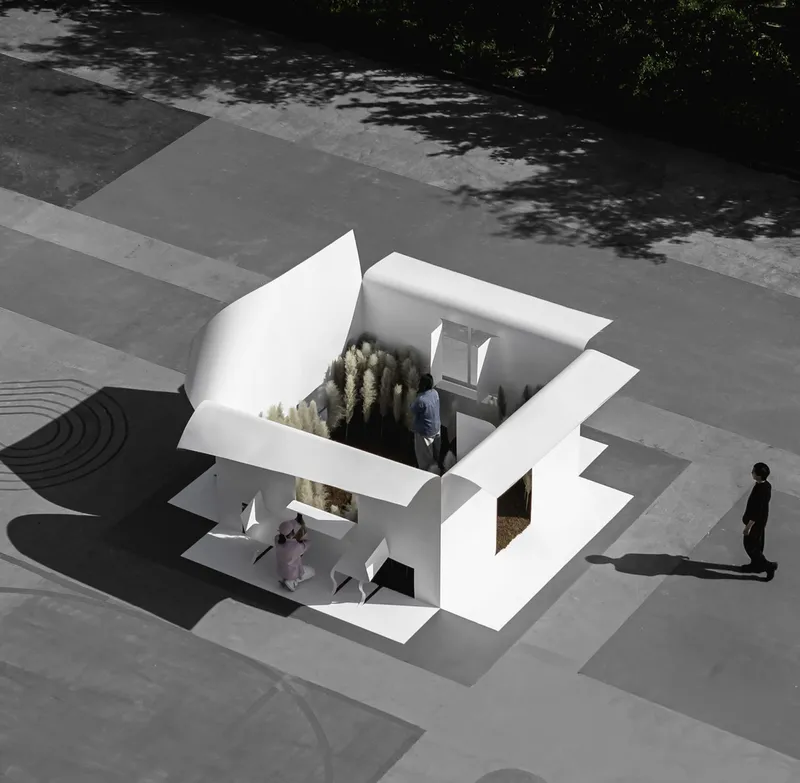
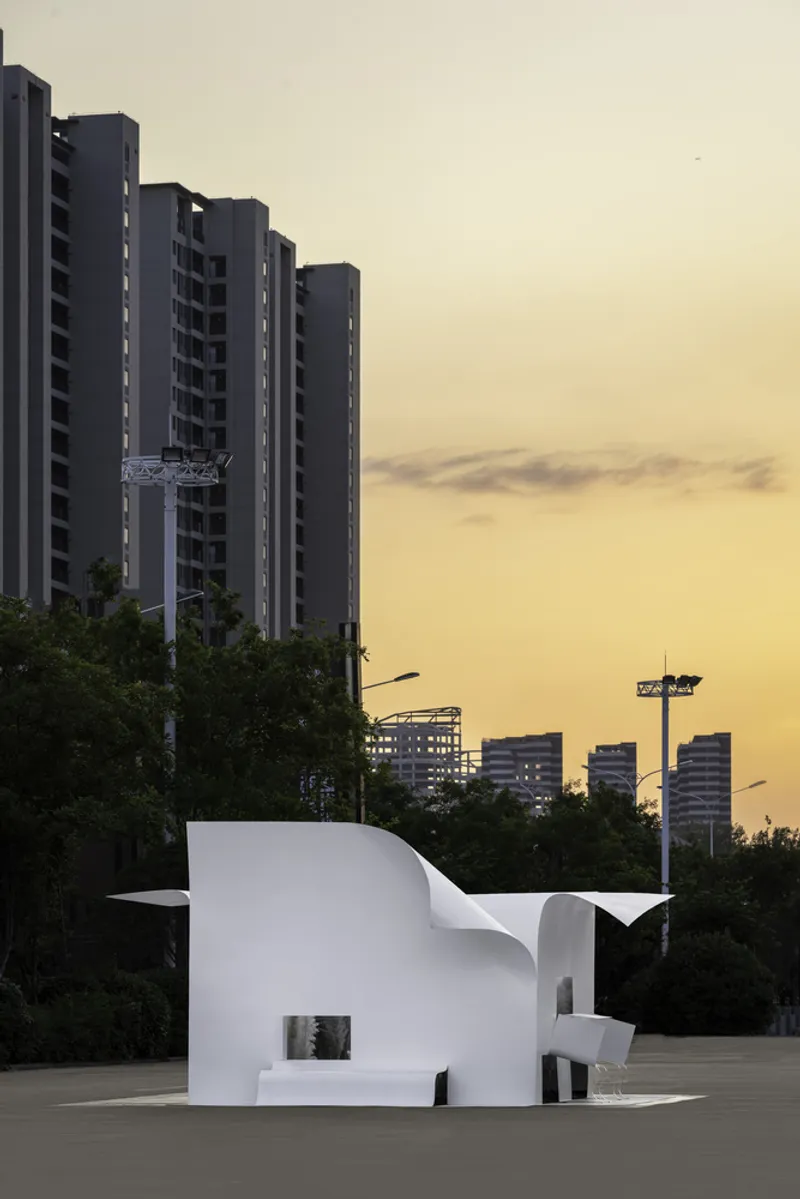
Paper Space: A Folded Hometown is an innovative spatial installation created by Immediacy Design and Research Office for The First Origins Earth Art Festival 2024 and later showcased at the Shiwan China City Public Art Season. This compact yet immersive 29 m² installation explores the concept of “hometown” in the context of modern urban life.
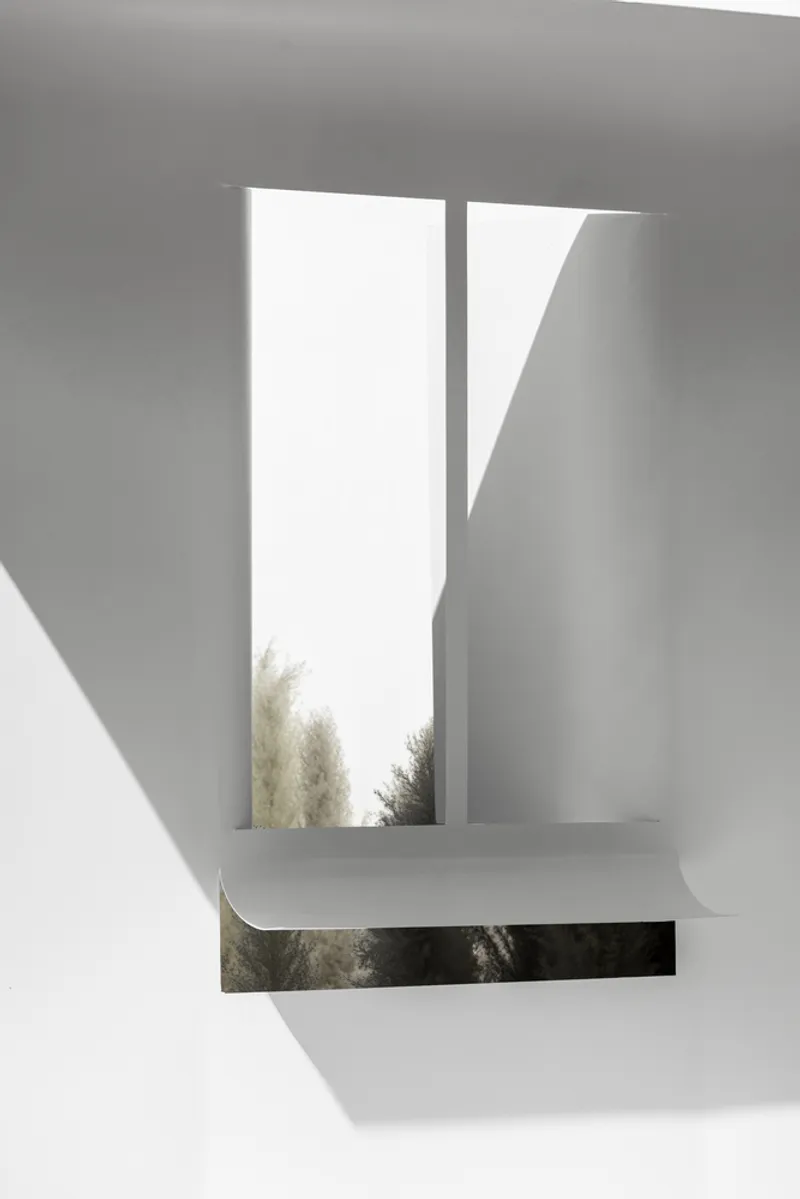
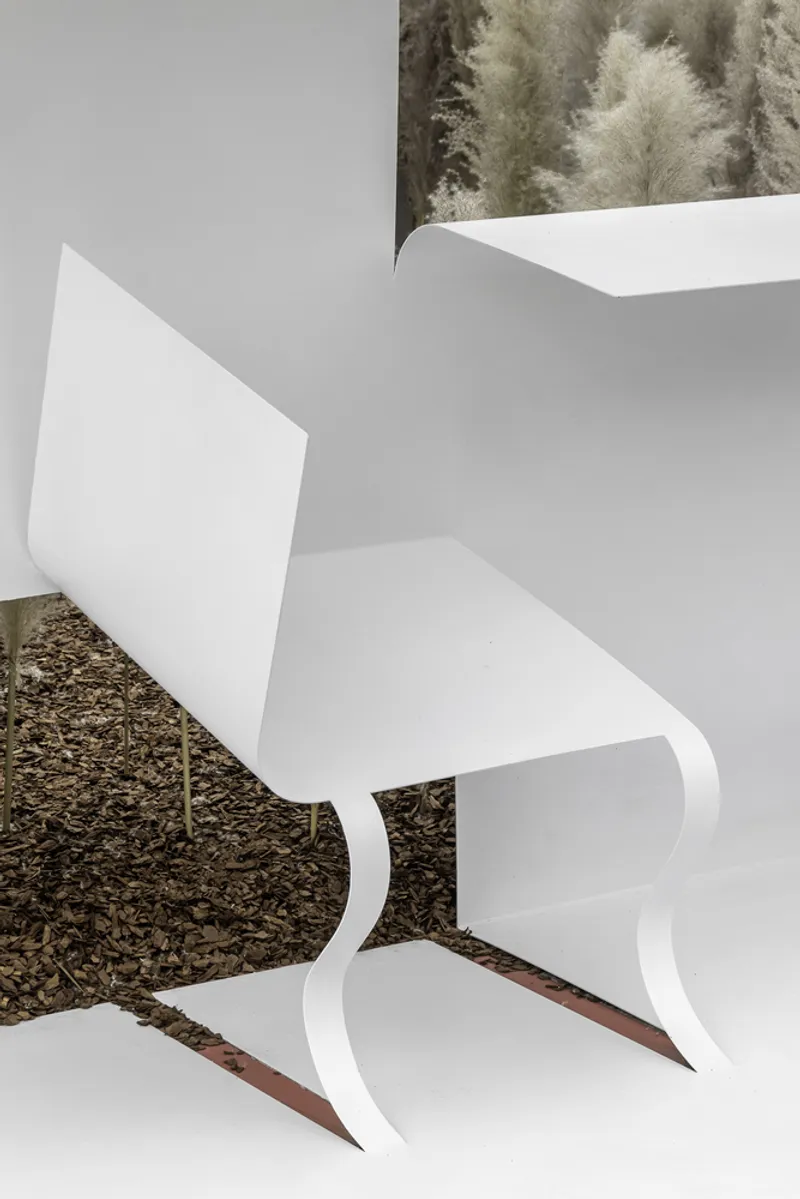
The project draws inspiration from the designer’s personal experiences traveling to cities such as Taipei, Shanghai, and Beijing. In this work, “hometown” extends beyond a physical countryside or city; it represents a spiritual longing common to contemporary urban dwellers, a desire to reconnect with personal roots amidst the fast pace of metropolitan life.
From Paper to Three-Dimensional Space
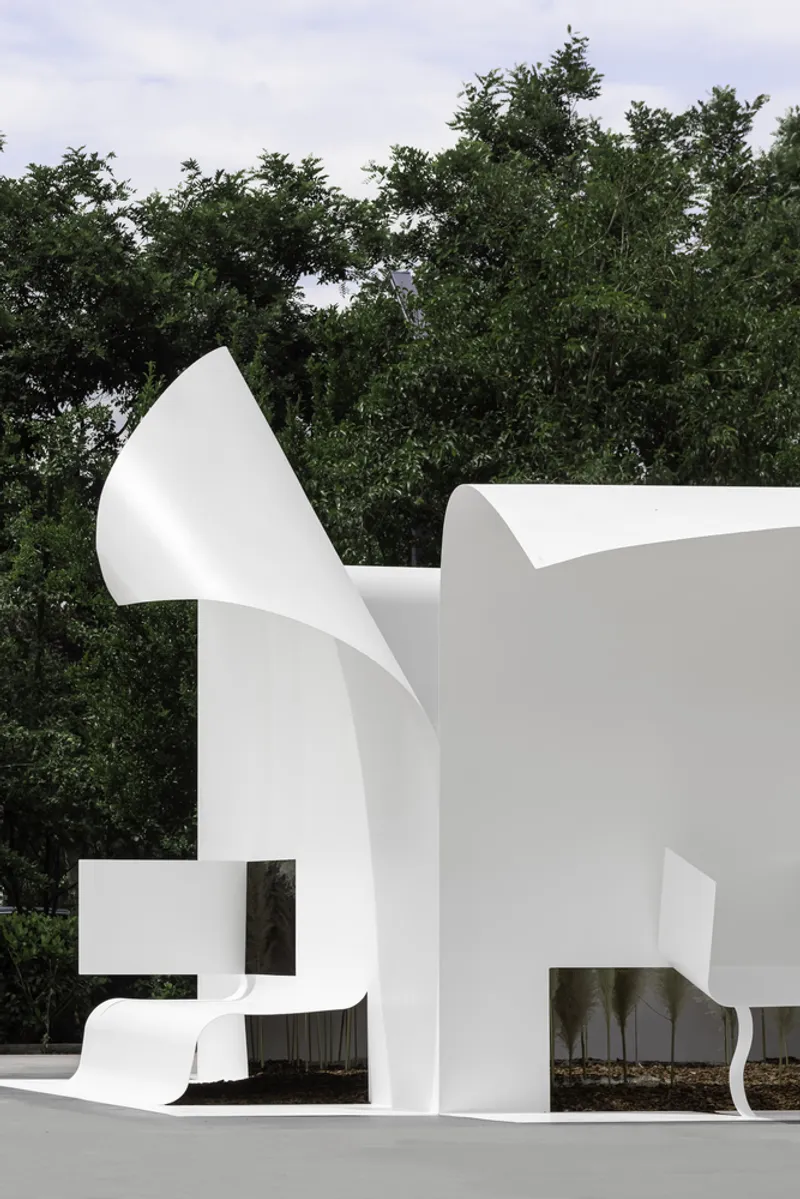
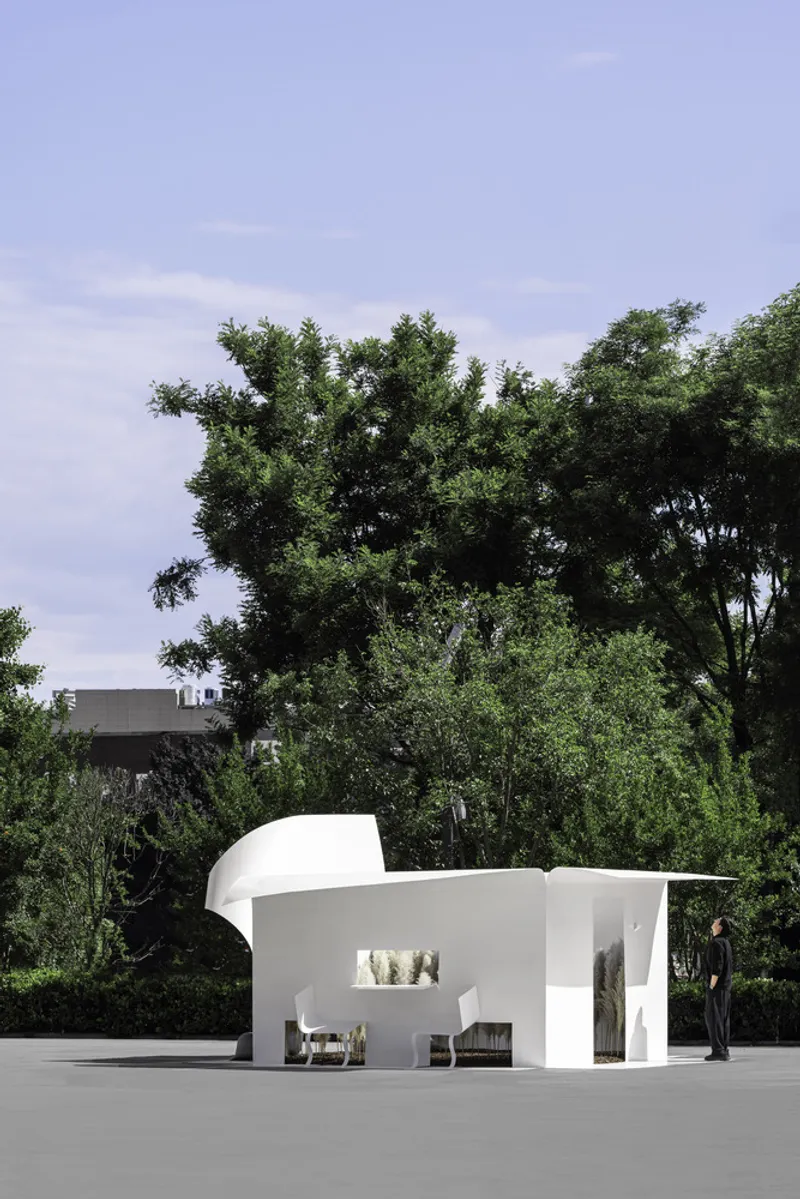
The installation transforms 2D paper into a three-dimensional immersive environment. By cutting, folding, and layering paper-like surfaces, the space evolves into an abstract, multi-layered environment that contrasts sharply with the bustling urban market surroundings of Xi’an. The spatial dimensions, 3.66m × 3.66m × 2.26m, are inspired by Le Corbusier’s Le Cabanon, providing an intimate yet thought-provoking exploration of spatial limits and minimal living standards.
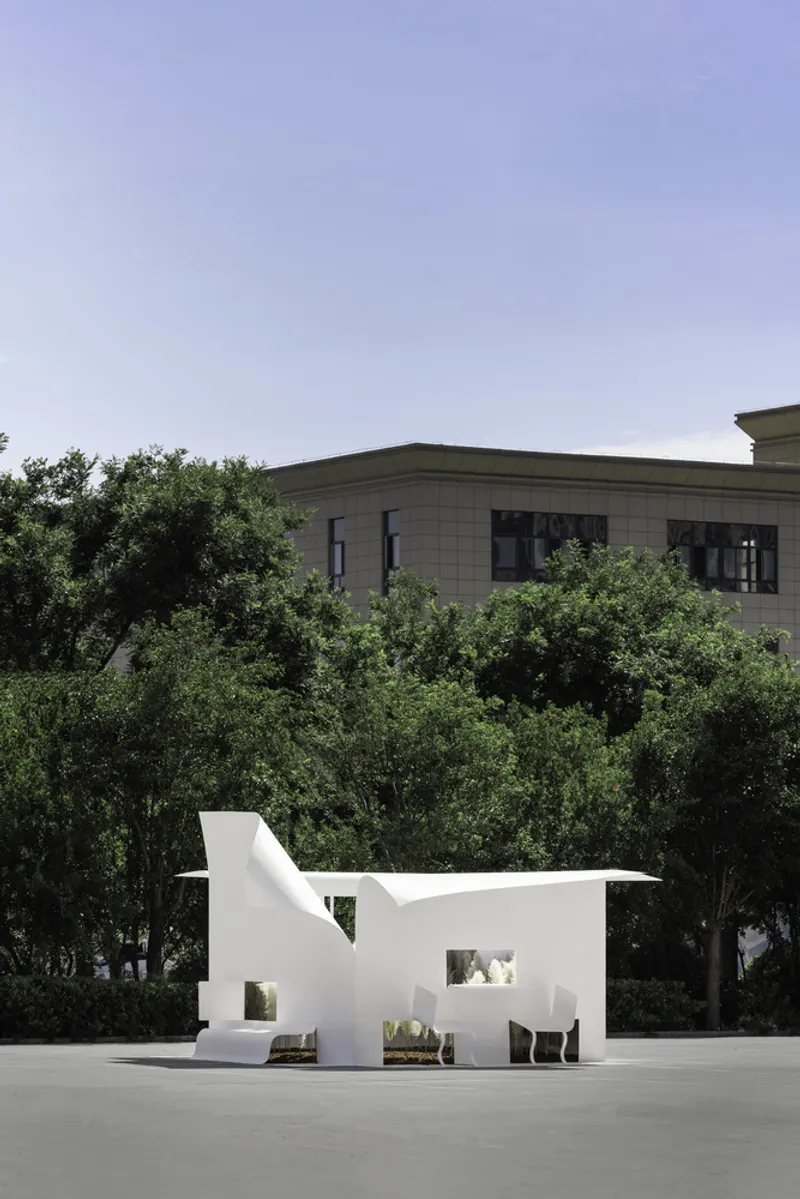
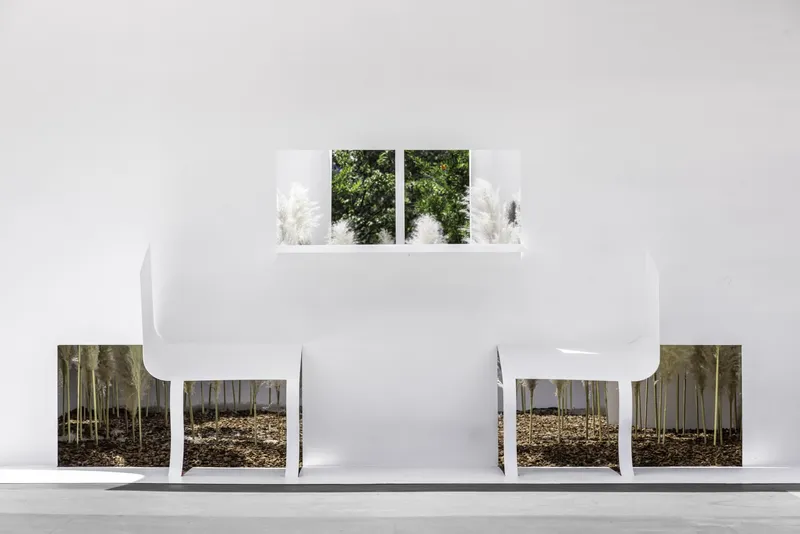
Through its folds, the installation examines the relationship between inside and outside, creating a microcosm of urban life. Doors, windows, tables, chairs, and beds reflect the essence of a city residence. As these elements unfold outward, they multiply, forming a miniature representation of millions of urban dwellings. This compression and expansion metaphorically explore urban density, entropy, and the fleeting nature of personal space.
Immersive and Natural Experience
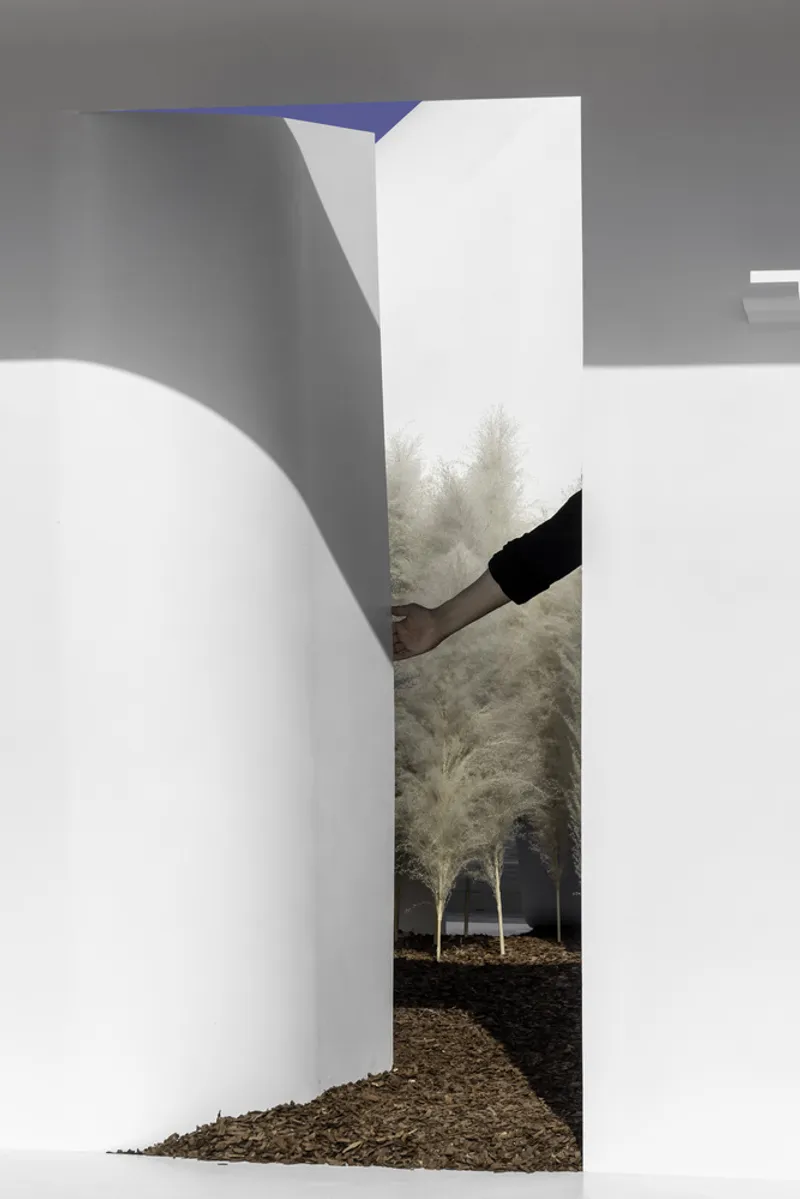
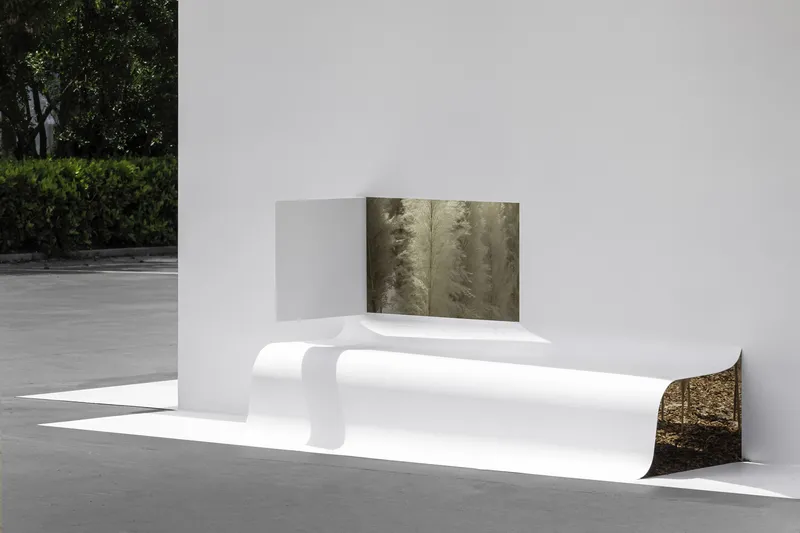
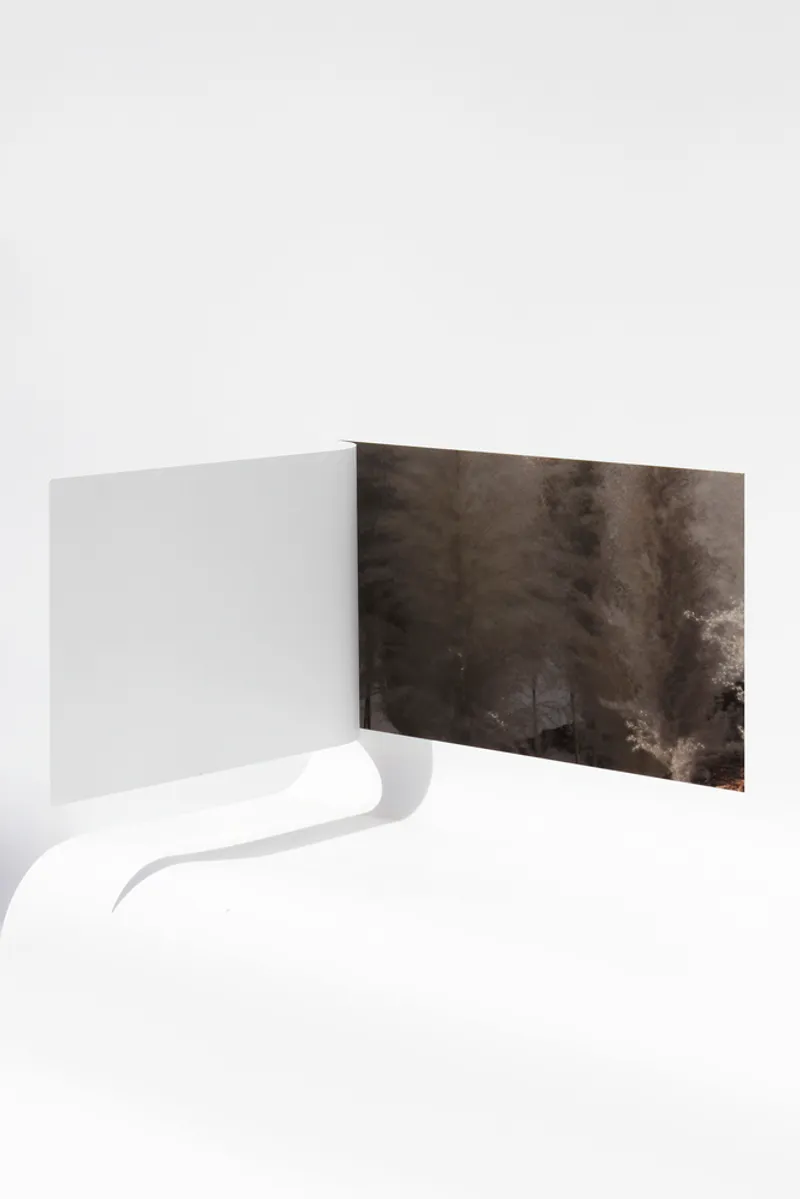
The interior design blurs boundaries between built form and nature. Ceilings and floors extend from the interior outward, while everyday components like coat hooks are emphasized, providing a playful sense of domesticity. Reeds and pine bark fill the space with tactile, organic textures, enhancing sensory immersion. Visitors experience soft sunlight, breezes, and the sounds of birds, creating an environment that feels both intimate and dreamlike.
The folded structure generates multiple caves of varying sizes and heights, offering perspectives that range from the grounded earth to the open sky, forming poetic, dream-like frames. This layered approach reflects the multi-dimensional experience of memory, nostalgia, and urban life.
Innovative Construction and Structural Design
Construction combines prefabrication and on-site assembly, using 2mm thick steel plates to emulate the fragility of paper while maintaining structural integrity. Despite its delicate appearance, the installation supports furniture and interactive elements up to 150kg, ensuring full audience engagement. This thoughtful balance of material innovation and safety exemplifies the studio’s mastery of experiential architecture.
Urban Reflection and Social Commentary
China’s urbanization has surged dramatically from 26.23% in 1990 to 66.16% in 2023, displacing millions of young people from their hometowns. Paper Space: A Folded Hometown addresses this social phenomenon, offering a public space that reconnects “urban exiles” with a sense of ownership and belonging. The installation transforms public life and collective memory into a medium for emotional grounding, bridging fragmented communities and streetscapes to turn the abstract cityscape into a metaphorical “home.”
All photographs are works of Kevin


Popular Articles
Popular articles from the community


Singing Woman: Contemporary Architecture Inspired by Estonia’s Voice and the Sea
Singing Woman turns Estonia’s song culture into flowing opera house architecture, blending public life, landscape, sea, and national memory.

The Amber Palace Opera: A Geological Fiction Surfaces on Tallinn's Baltic Waterfront
Pierre Brillard reimagines a Baltic legend as a public landscape, opera house, and waterfront promenade rooted in Tallinn's coastal identity.

Opera on the Sea: Driftwood Logic Shapes a Timber Opera House on Estonia's Coast
Trevor Orgill's opera house translates the entangled drift of floating timber into a civic building where wood, water, and music converge.
Temporary Home for Dogs: A Reversed Zoo Rethinks Animal Shelter Architecture
In Bucharest, a sinuous corridor and freed landscape flip the logic of containment, designing a shelter that works to make itself unnecessary.

Similar Reads
You might also enjoy these articles


Hodi-Mandai Geram
Project Function: Preservation and revitalization of the Intangible heritage and socio-spatial identity of the Hodi by Housing, Cultural Memory Center, Sacred Grove, landscape, local tourism economy


Olio Towers: A Mid-Rise for Performers That Fuses Housing, Rehearsal, and Stage
Located blocks from Houston's Theater District, this modular tower stacks living units around a central performance atrium.

Oasis: Modular Green Housing Carved into Dhaka's Urban Fabric
A shortlisted Plugin Housing entry reclaims unauthorized settlements in Dhaka with stepped concrete volumes, green roofs, and ventilation-driven design.

Black Hole: A Floating Megastructure for the Post-Physical Era
Emiliano Mazzarotto envisions a spherical, self-scaling arena where e-sports, digital hotels, and holographic stadiums replace traditional public space.

Explore Intimacy of Space Competitions
Discover active competitions in this discipline

Challenge to reimagine the Iron Throne

Photograph architecture without architects

Illustrate the lost glory of Angkor Wat - Render Challenge

Design challenge to reuse E-waste
Comments (0)
Please login or sign up to add comments
No comments yet. Be the first to comment!