

PAREID's Enigmatic Architecture: Blurring the Boundaries Between Everywhere and Nowhere
Can PAREID's Architecture Transcend the Notions of Space and Existence?


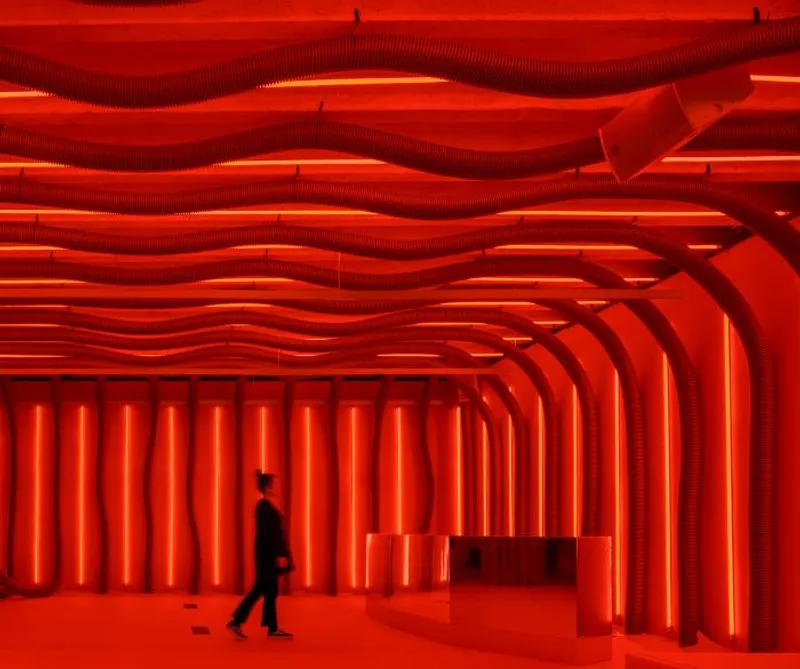
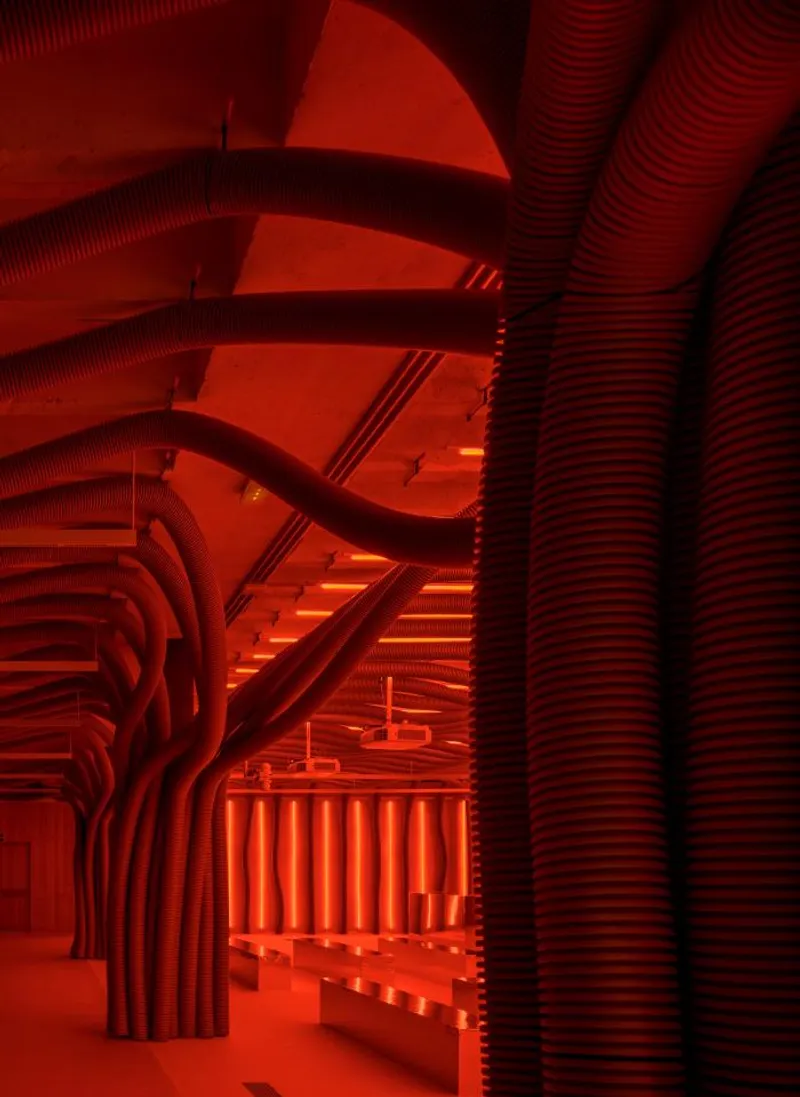
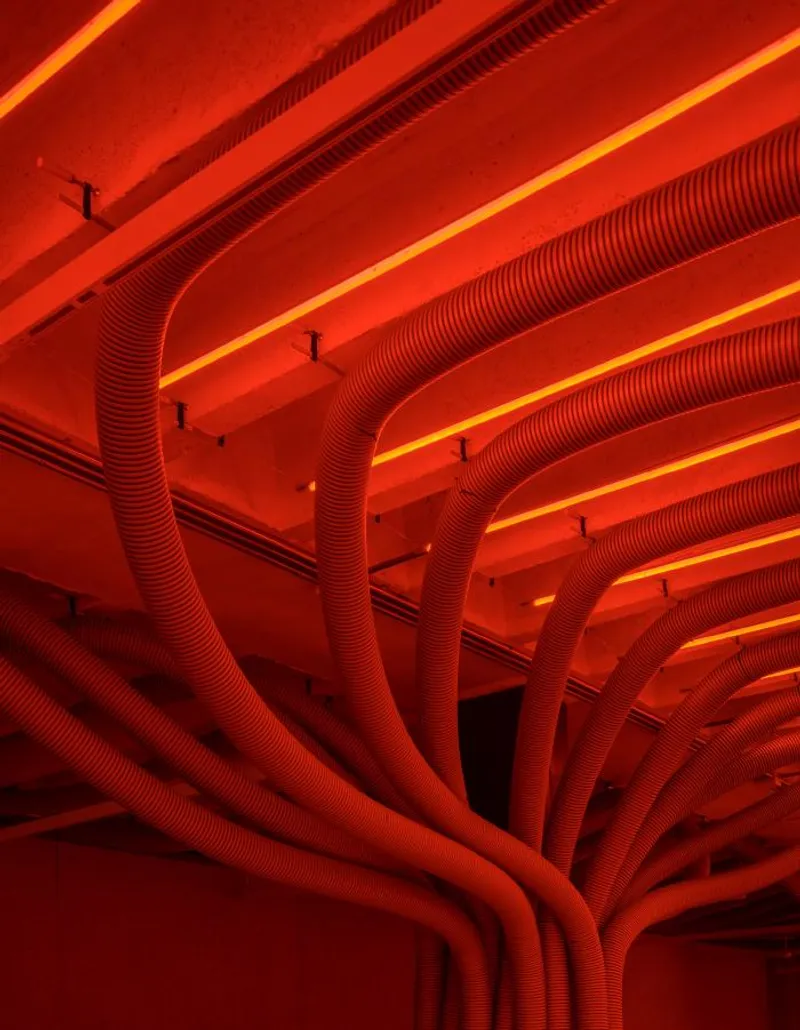
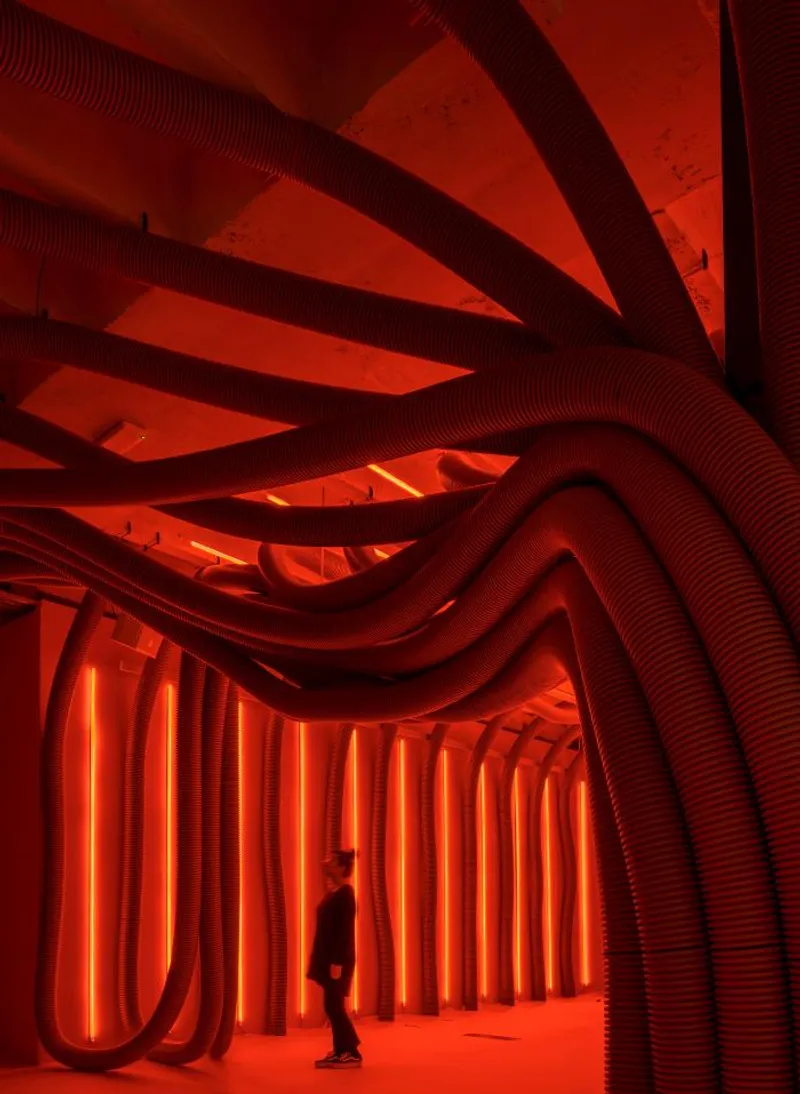
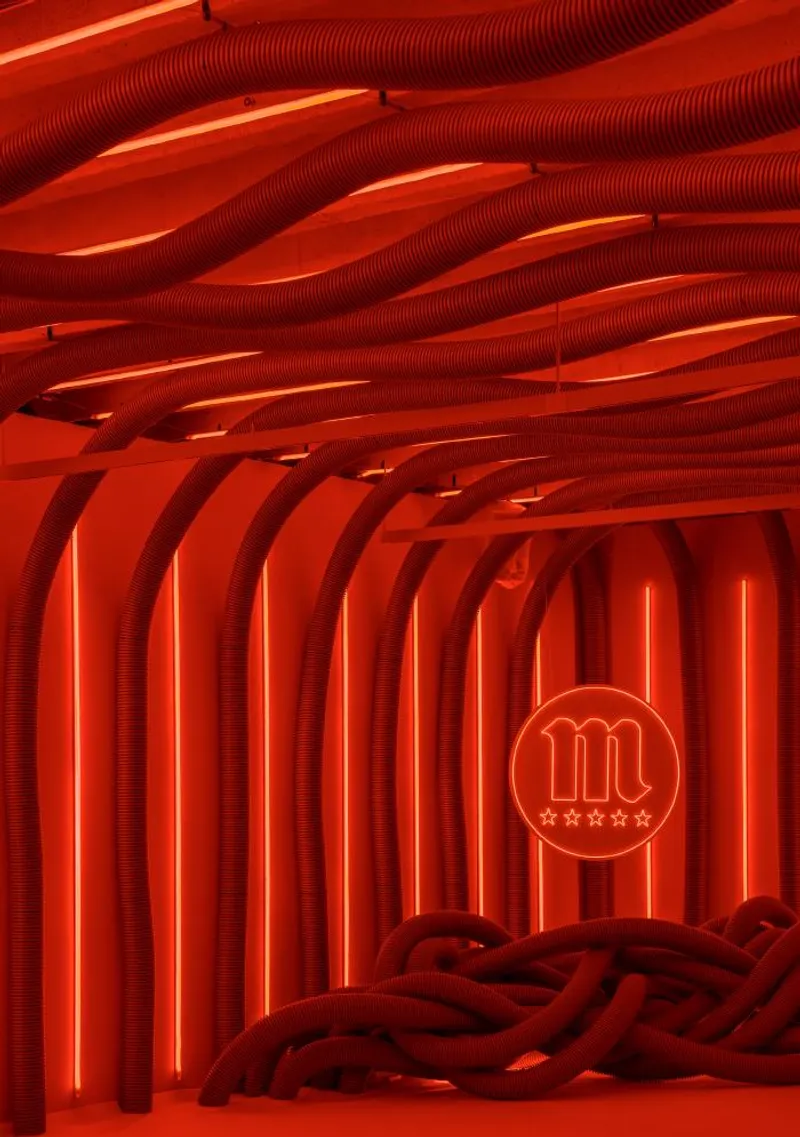
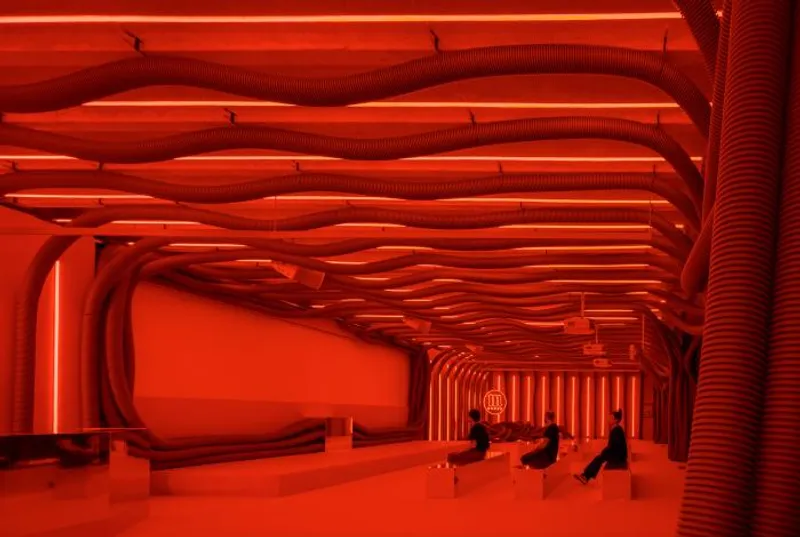
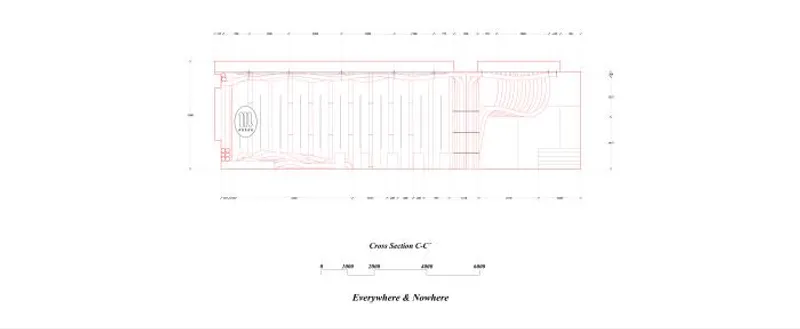
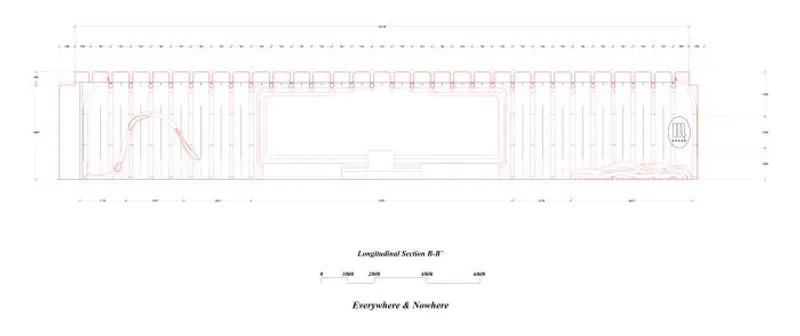
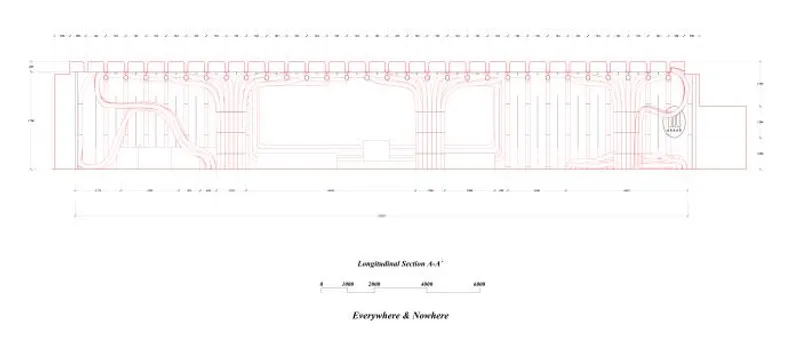
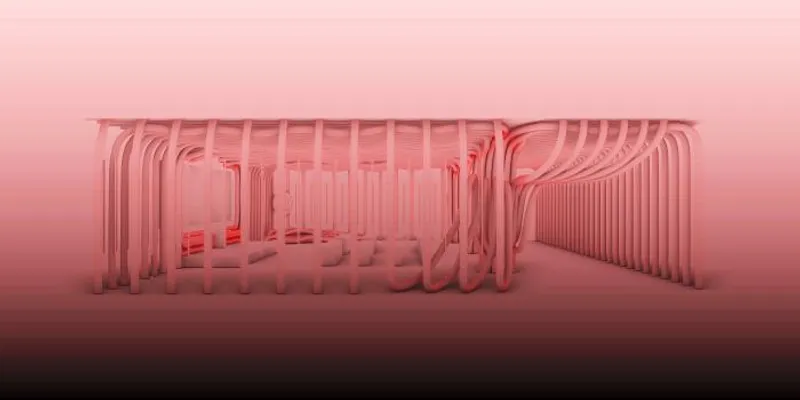
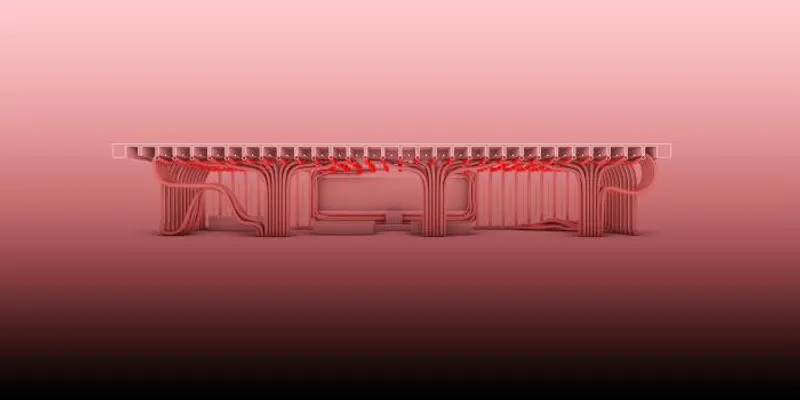
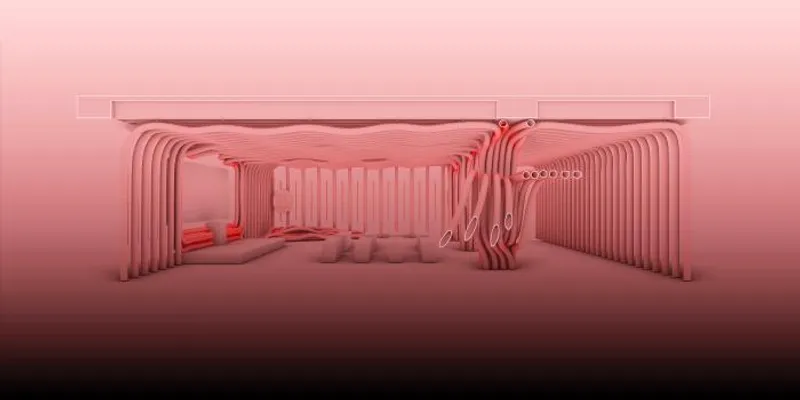
Everything is connected. Pipes, tubes, wires, and cables transfer physical and digital matter through vast infrastructural networks. These elements span cities, landscapes, and continents, often in plain view yet leading to no beginning or end, abruptly vanishing behind walls, into the ground, or connecting to circuits and subsuming into a large whole. Ubiquitous yet disappearing, they are everywhere and nowhere. The language of excess, fluidity, connectivity, and transmission is rendered in this space through the use of three materials: tubes, lights, and metal. Lining the walls, ceiling, and parts of the floor, visitors are immersed in a machine-like environment with a red glow, both familiar and alien. The temporary installation was built in February 2022 for the Urvanity Art Fair, held annually at the College of Architects of Madrid (COAM). It served as both a presentation/conference space for public talks and a social gathering space with a small bar. While the physical space connected people and ideas, the talks were also live-streamed online for remote access. Inspiration for the installation came from visiting construction sites where the same kind of tubes was seen in different circumstances, such as partially submerged in the ground or running along the side of a large wall. This extends the office's interest in finding new or slightly different ways of utilizing industrialized materials. The project tackles issues surrounding temporary installations, the construction industry's waste, and people's appreciation for certain aspects of the built environment.
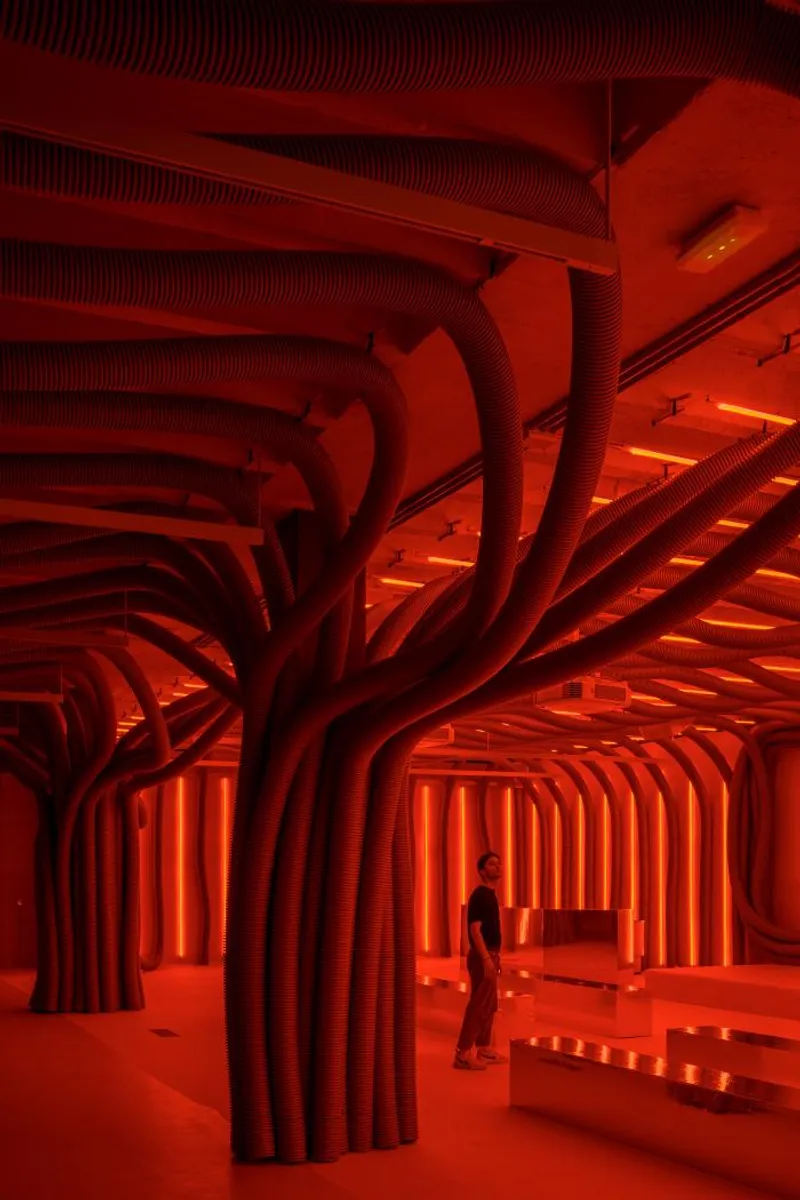
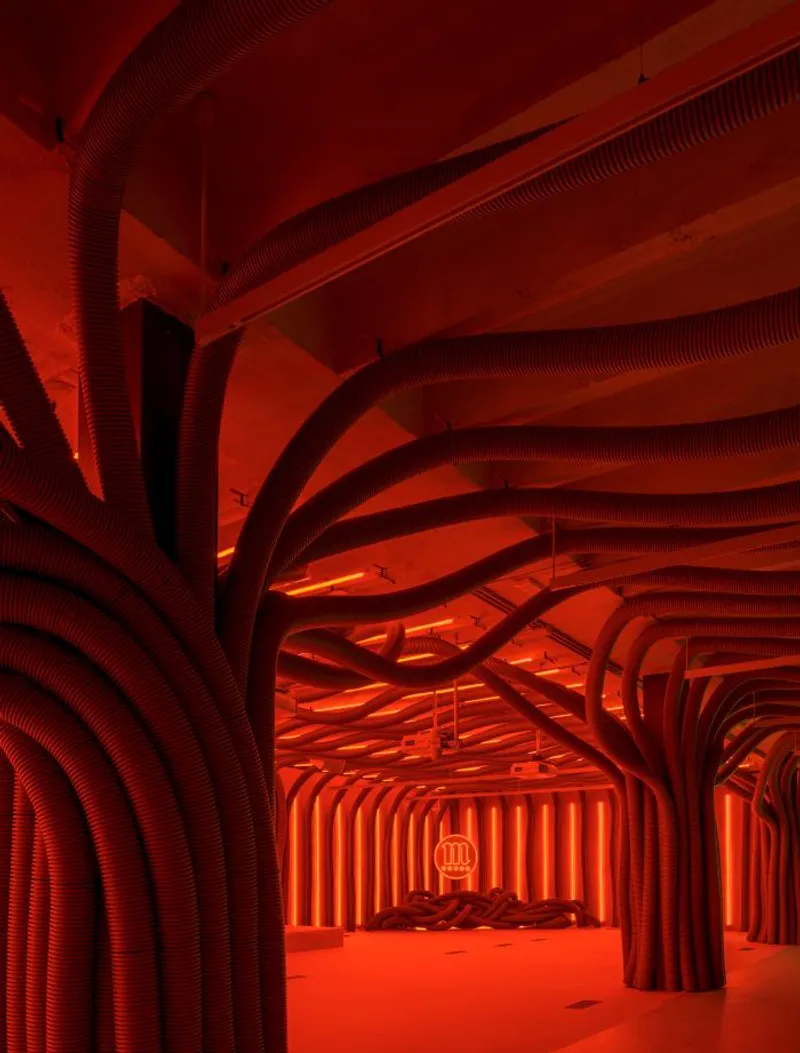
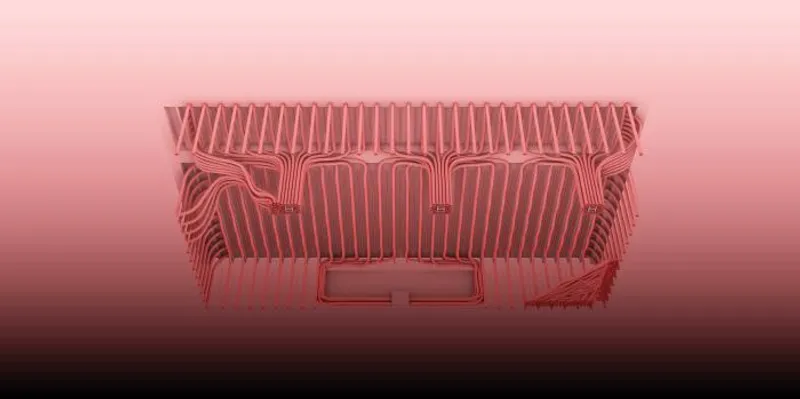
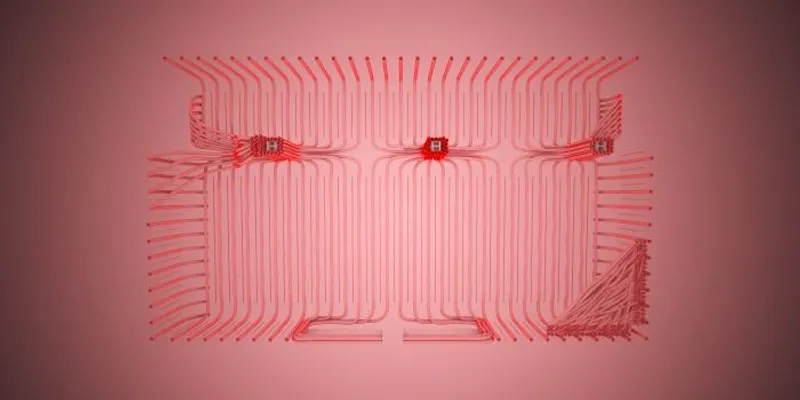
The primary material used for the installation was corrugated tubing, an element that is essential to our contemporary urban and rural lives, yet often overlooked and hidden underground. To draw attention to this often-unappreciated element, the project was sponsored by the Spanish beer company Mahou, whose iconic red colour bathes the entirety of the room, creating an immersive experience. The existing spatial organization of three large columns and four walls with entrances on opposite ends was further defined by the bundling of tubes in certain areas and their hanging height, delineating the various bits of the program such as the central seating area, bar area, and lounge corner. In this way, the room was transformed into a backdrop for the event, while still maintaining a sense of presence and personality.
The festival lasted four days, so the installation had to be quick and temporary. To ensure no trace was left behind, a non-invasive strategy of clamps and straps was used to attach the PVC tubes to the existing ribbed slab and columns. After the four-day installation was finished, the tubes were donated to a nearby small-town construction company, where they have already resumed their traditional role as electrical cable protection. We hope to see all forms of rejects welcomed and appreciated into everyday life.














Popular Articles
Popular articles from the community


Lunar Spiral: Space Architecture Shaped by the Mathematics of the Universe
Lunar Spiral reimagines space architecture through Fibonacci geometry, lunar regolith, levitating habitats, and self-sustaining Moon living.

The Musturak Paradise: Senior Living Architecture for a Connected Future in Temara, Morocco
The Musturak Paradise reimagines senior living architecture in Temara via private homes, social spaces, culture, community, and shared care.

Hill & Cross Opera: Sculptural Opera House Architecture Shaped by Tallinn’s Landscape and Identity
Hill & Cross Opera reimagines opera house architecture in Tallinn through its sculptural hill, civic plaza, glass wave and a luminous cross.

Conexión: Biophilic Design Reimagines High-Rise Living in Hong Kong
Conexión reimagines high-rise living in Hong Kong through biophilic design, green facades, shared spaces, daylight, water and nature within.

Similar Reads
You might also enjoy these articles
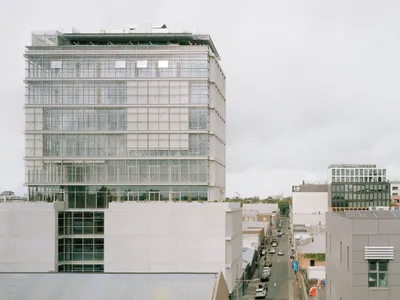
116 Rokeby Building, Collingwood
Sustainable Collingwood office building featuring double-skin façade, natural ventilation, rooftop amenities, and carbon-neutral design focused on wellbeing and longevity.
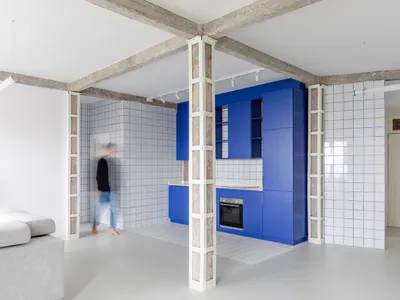
Contemporary Apartment Renovation in Spain: RV House by BIAN Opens Up to the Sea
A minimalist 1930s apartment in Santander is transformed into a flexible, sea-facing home through contemporary Spanish renovation.
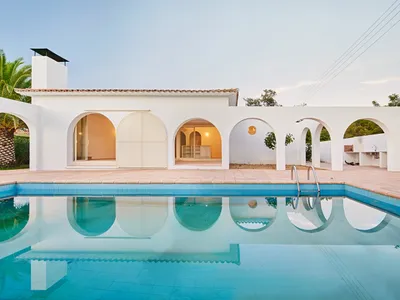
3 Marías House: A Contemporary Mediterranean Courtyard Retreat by Bajet Giramé + Burckhardt
Mediterranean courtyard home blending traditional architecture with modern design, terracotta flooring, flexible interiors, sustainable climate strategies, and garden integration.
NZ10 Apartment by auba studio: Adaptive Reuse in Palma de Mallorca
Adaptive reuse apartment transforms bakery into light-filled home with patios, privacy layers, and wood interiors enhancing urban living experience.

Explore Metaphorical Space Competitions
Discover active competitions in this discipline



Challenge to reimagine the Iron Throne


Photograph architecture without architects


Illustrate the lost glory of Angkor Wat - Render Challenge


Design challenge to reuse E-waste
Comments (0)
Please login or sign up to add comments
No comments yet. Be the first to comment!