
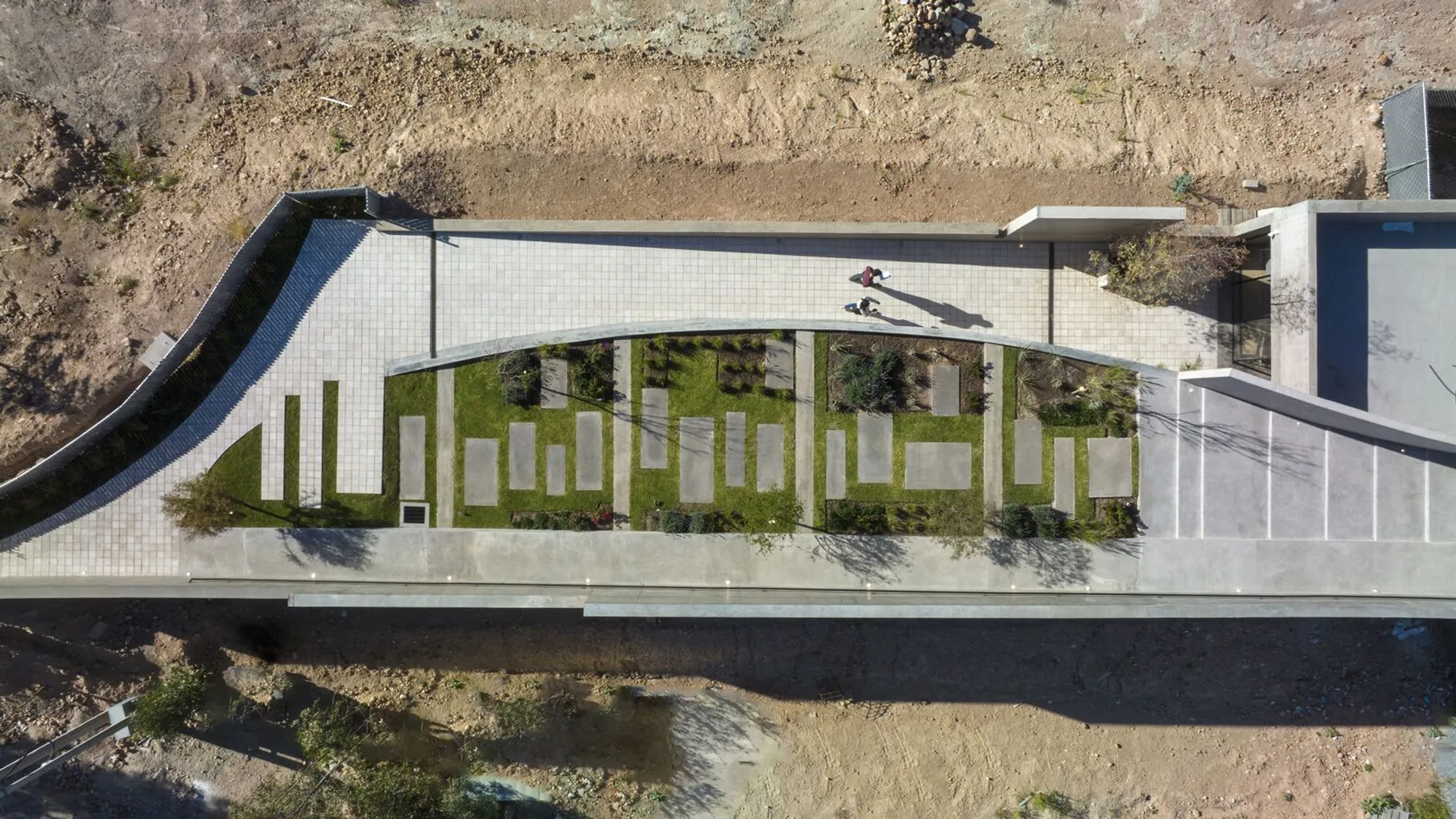
Park Pavilion by MATERIA + Gustavo Carmona: A Sculptural Showroom Embedded in the Landscape of San Luis Potosí
Park Pavilion blends sculptural concrete, panoramic views, and adaptive spaces, transforming a showroom into a community landmark in San Luis Potosí.


A New Typology: The Showroom as a Civic Landmark
Perched at the foot of the lush hills bordering San Luis Potosí’s Tangamanga Park, Park Pavilion redefines the concept of a sales showroom. Originally conceived as a temporary space to support a large mixed-use development—including residential, commercial, and office towers—the building has evolved into a permanent architectural landmark that integrates deeply with its landscape and community.
MATERIA, led by architect Gustavo Carmona, approached the commission with a broader vision: not just a display space, but a structure of enduring civic value. The result is a dynamic architectural pavilion that blends urban foresight, topographic sensitivity, and sculptural form.
Architecture that Climbs the Hill
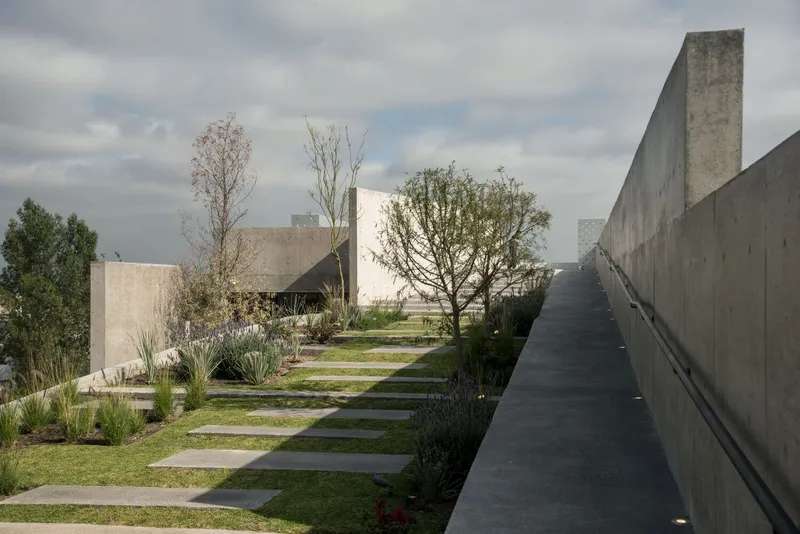
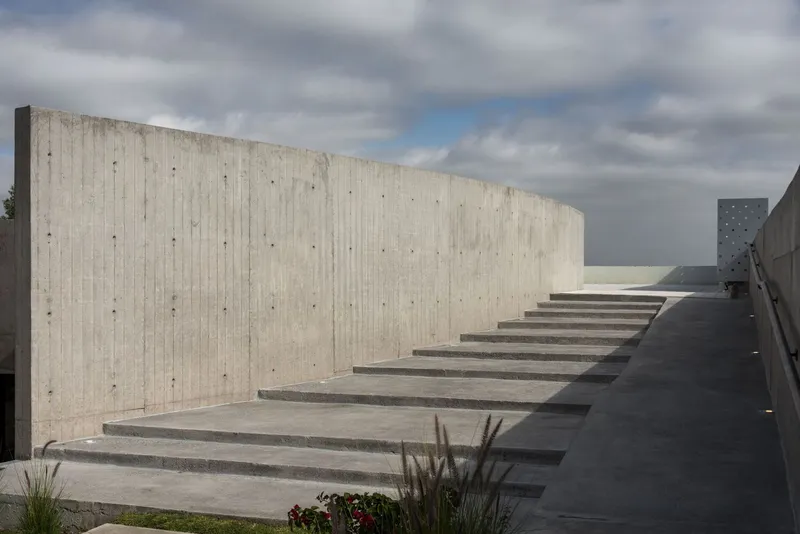
Rather than resting at the base, the pavilion’s entrance is located at the highest point of the hill, dissolving into the slope. This intentional sequence creates a sense of anticipation, drawing visitors along a stepped parkway that culminates in a panoramic viewing point. Framing views of Tangamanga Park, the building becomes a destination in itself.
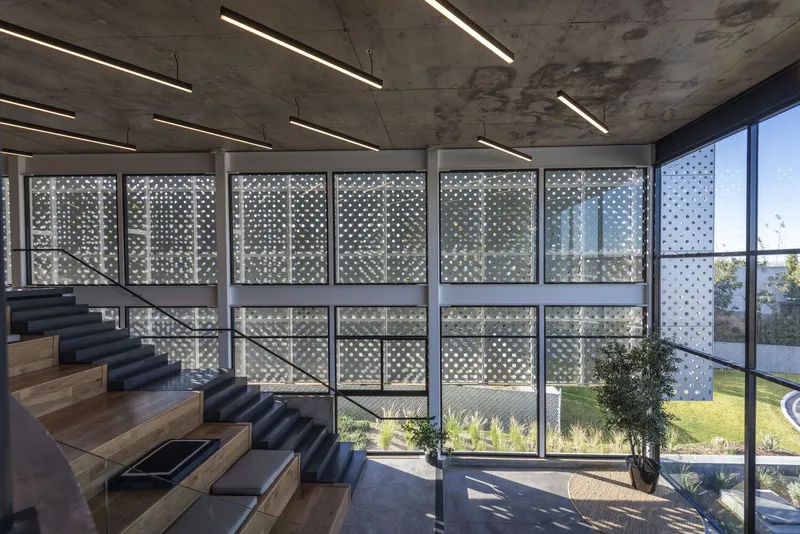
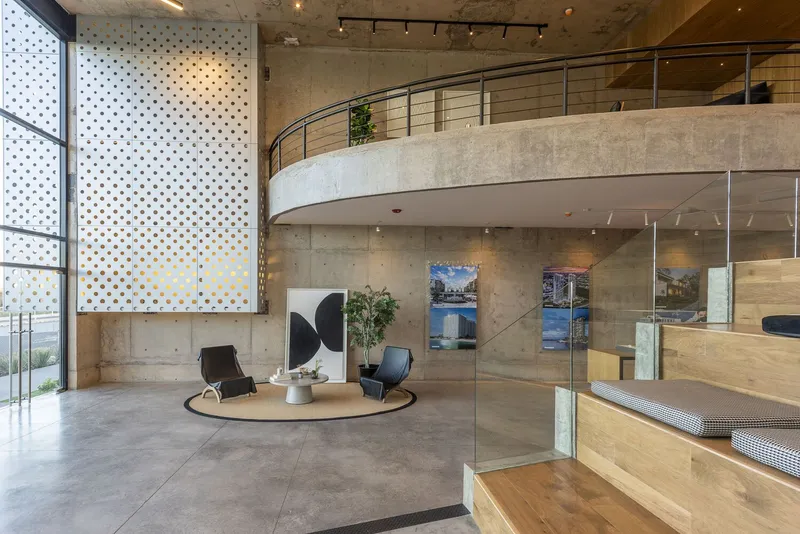
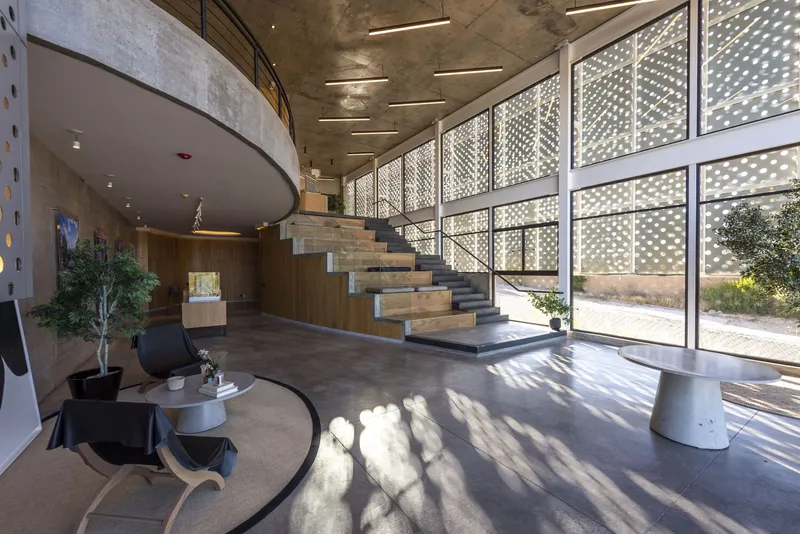
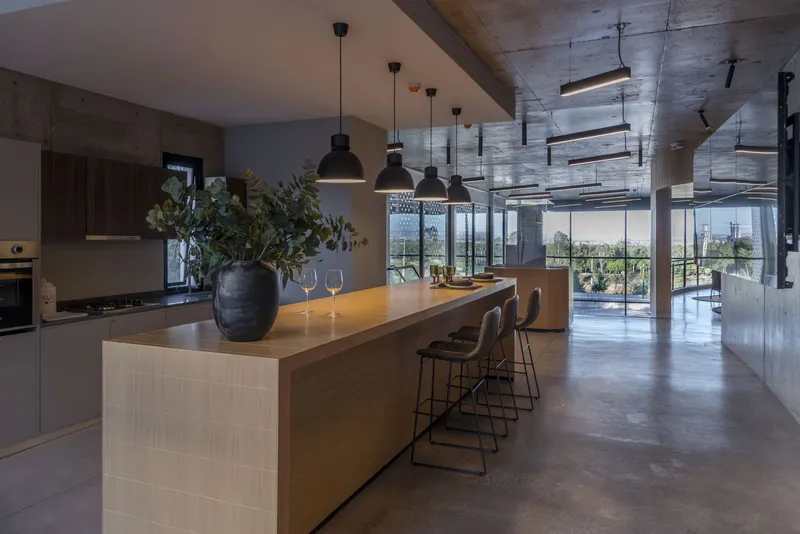
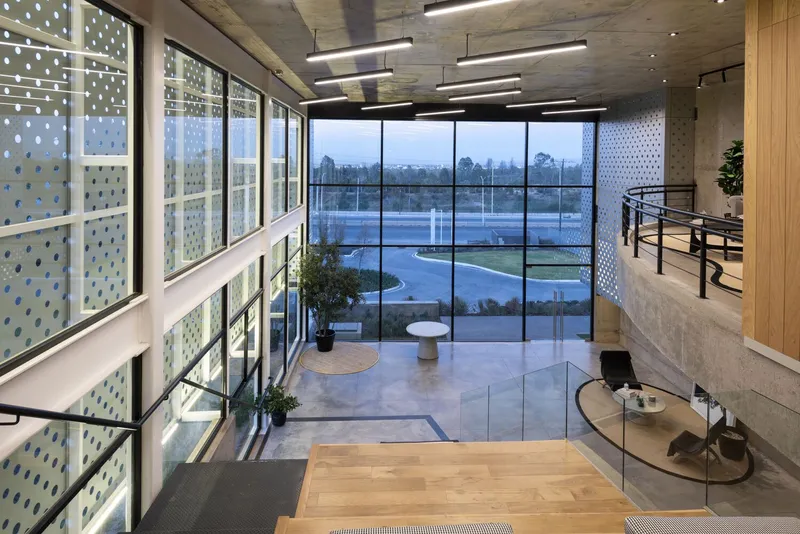
Visitors descend via a ramp flanked by bold concrete walls into the heart of the structure. This journey unfolds through an open kitchen, reception, and finally, a double-height space housing a dramatic staircase and amphitheater. Every space reveals views of the natural park, ensuring that landscape and architecture remain intertwined.
A Program of Connection and Flexibility
The internal layout moves beyond transactional spaces. It integrates living rooms, exhibit areas, and gathering points such as the amphitheater—used for community events, talks, and informal interaction. This strategic programming allows the space to transition from a commercial center to a cultural and social node, adaptable to future uses.
Material Expression and Climatic Responsiveness
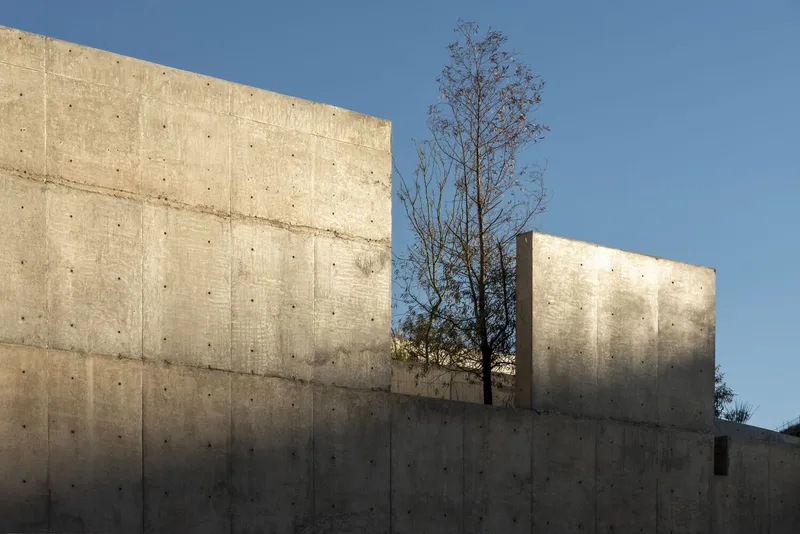
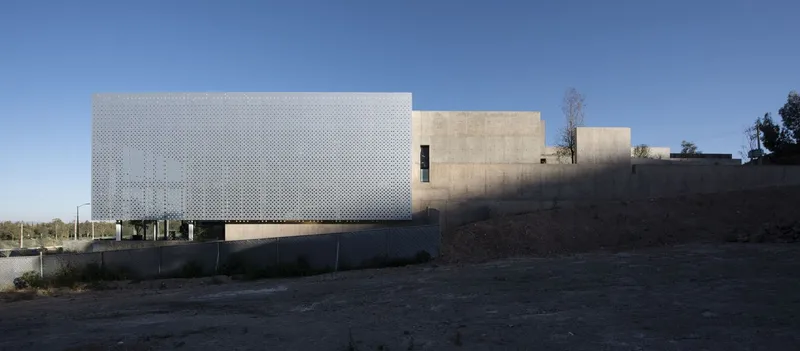
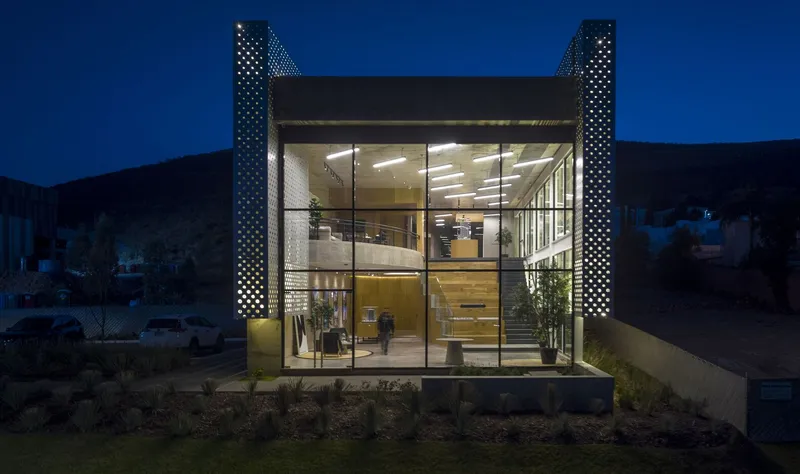
Park Pavilion’s expressive material palette plays with contrast. Massive concrete walls anchor the building, echoing the earth and slope. In contrast, perforated alu-zinc panels and a double-skin glass façade mediate daylight, reduce glare from harsh western exposure, and offer varying degrees of transparency. These surfaces shift in quality depending on the time of day—opaque and solid under sunlight, luminous and porous by night.
Notably, the roof is treated as a "fifth façade", blending seamlessly with the surrounding landscape—further grounding the structure in its environmental context.
Impact and Legacy
Despite its recent completion, Park Pavilion has quickly become a recognizable urban icon in San Luis Potosí. Its success lies in the ability to reimagine a commercial typology into an inviting, contextually rooted, and sustainable civic space. By doing so, it sets a new benchmark for future developments that aim to engage the city and its people meaningfully.
All Photographs are works of Jaime Navarro




Popular Articles
Popular articles from the community


The Ocean Hive: Sustainable Architecture for a Self-Sufficient Civilization at Sea
The Ocean Hive imagines sustainable architecture at sea, where modular habitats, algae, wave power and ocean waste sustain a growing colony.

Lunar Spiral: Space Architecture Shaped by the Mathematics of the Universe
Lunar Spiral reimagines space architecture through Fibonacci geometry, lunar regolith, levitating habitats, and self-sustaining Moon living.

The Earth Pod: 3D Printed Homes for Resilient Refugee Communities
The Earth Pod reimagines refugee housing through 3D printed homes made from clay, combining resilience, self-sufficiency, and rapid shelter.

Play: Fragments of Their World
Familiar architecture becomes modular playground design, creating safe spaces where displaced children can learn, connect, imagine and play.

Similar Reads
You might also enjoy these articles


Hodi-Mandai Geram
Project Function: Preservation and revitalization of the Intangible heritage and socio-spatial identity of the Hodi by Housing, Cultural Memory Center, Sacred Grove, landscape, local tourism economy


Olio Towers: A Mid-Rise for Performers That Fuses Housing, Rehearsal, and Stage
Located blocks from Houston's Theater District, this modular tower stacks living units around a central performance atrium.

Oasis: Modular Green Housing Carved into Dhaka's Urban Fabric
A shortlisted Plugin Housing entry reclaims unauthorized settlements in Dhaka with stepped concrete volumes, green roofs, and ventilation-driven design.

Black Hole: A Floating Megastructure for the Post-Physical Era
Emiliano Mazzarotto envisions a spherical, self-scaling arena where e-sports, digital hotels, and holographic stadiums replace traditional public space.

Explore Architectural Promenade Competitions
Discover active competitions in this discipline



Challenge to reimagine the Iron Throne


Photograph architecture without architects


Illustrate the lost glory of Angkor Wat - Render Challenge


Design challenge to reuse E-waste
Comments (0)
Please login or sign up to add comments
No comments yet. Be the first to comment!