
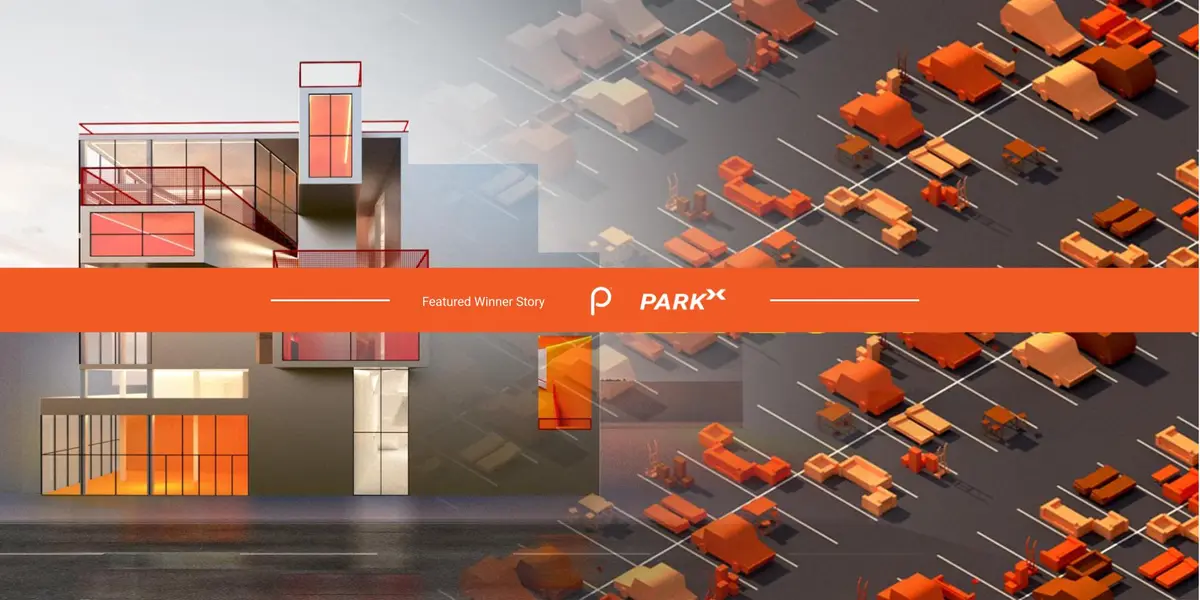
Designing for Driverless Future
Parkx - Result Story


Overview
It’s a common reality of how building plans are only approved with adequate or surplus units of these vacant spaces. It’s no surprise our cities look like more parking and less of life at any time soon. This shows how parking spaces have Zero function but have a very inflated value associated with them but something’s about to that will surely alienate their presence in the coming decades.
A future of driving where people not driving is closer than ever. The two parameters that drive this massive shift in the auto industry are 1. Autonomous driving - This enables cars to behave like hyper-accurate machines that have surgical precision on-street and 2. Transportation as a Service - Shifting in ownership modes of cars is showing signs of decline where people are realizing services like Uber and Lyft are a cheaper alternative to things.
Assume a situation - the city becomes like a huge mega skyscraper - vast in the expanse. So vast; that only lifts get you across the floor above. The zero ownership of transportation is a scenario when transportation across the city is so smooth - that nobody has to own cars and cars roam around the city like lifts reaching various levels on a skyscraper and as decreasing ownership approaches - the thought comes to what will happen to so much human-centric parking available around the world? Will there be dead spaces of nothingness? Will these make our cities unsafe? There will be a new kind of parking space rolled out for self-driving cars that will not need light, or natural ventilation - while cars can be stored underground/above ground through narrow lifts.
Challenge
These unusually large parking spaces will create zero functional activity and we will have a surplus of land back at us again.
Brief - As the transportation industry today is becoming way too uncertain, it is logical to ask how a future with self-driving cars possibly looks like? There is a tremendous motion to fix this massive
Hence, the challenge was to Repurpose an existing parking space in a possible future when it gets completely abandoned because of driverless cars.
The jury for the competition consisted of esteemed designers, professionals, and academicians from around the world. The Lead Jurors for the competitions were as follows:
Sofie Eggemont, Architect / Partner, Abscis Architecten, Belgium
Jeonghoon Lee, Principal Architect, JOHO Architecture, South Korea
Adrian Emanuel Subagyo, Architect, Trope, United States

Some of the Best of competition projects are:
Winning Project: PRODUCTION HUB
By: Yesim Serdar & Elif Tasasız

Description: Recycling our residual spaces can bring us resiliency in urban life.
------------------
People’s Choice: The Sheltering centre
By: Anastasia Olkhovskaya
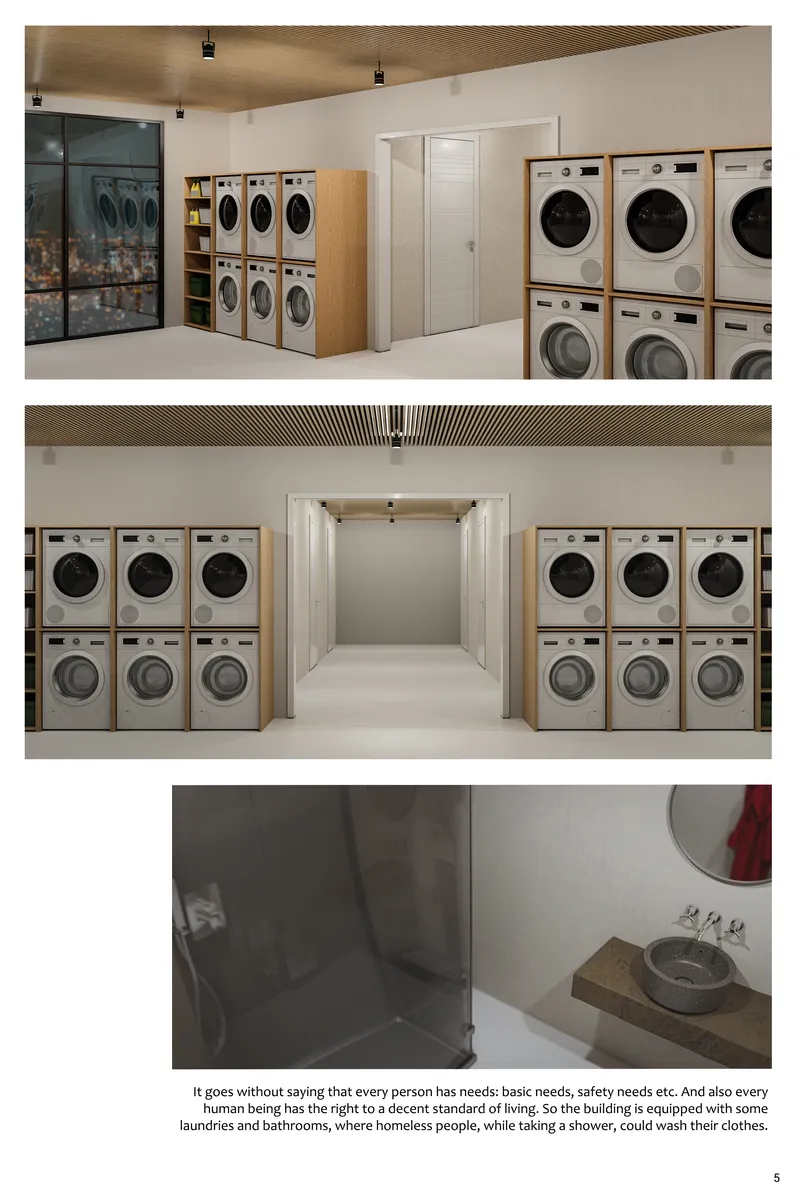
Description: The Sheltering center is committed to being a space where all of the homeless people could find help, shelter, and even start a new life. The building is divided into four levels, each of them has its own purpose to change the future of not only parking spaces but also homeless people.
-----------------
Editor’s Choice: LA LOGI-C
By: Sirui Chen
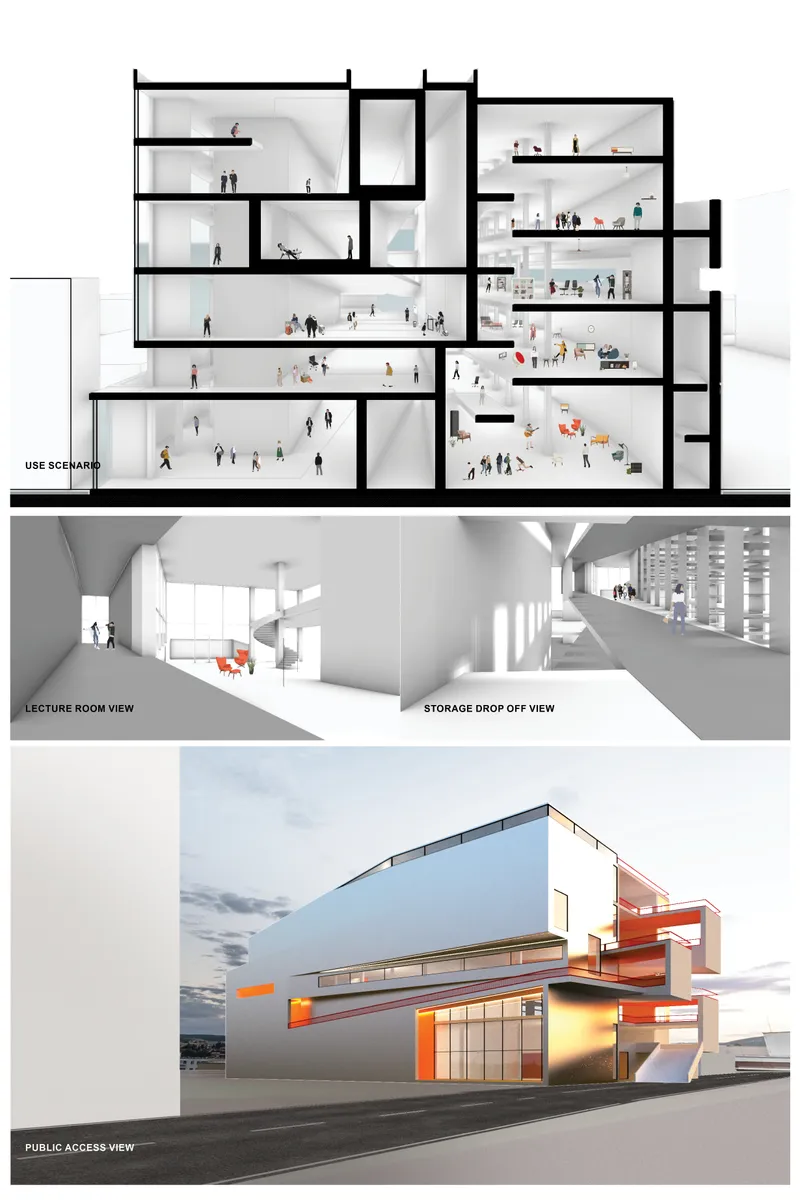
Description: LA LOGI-C proposes a new urban typology for the existing parking lots. In the locations where vehicles were parked, bikes, drones, E-commerces, and second-hand merchandise could also be ‘parked‘. LA-LOGIC is a logistic center combined with shopping and exhibition programs, a transportation node assisting the urban traffic as well as social interaction.
--------------------
Editor’s Choice: EW _ PARK
By: Gabriele Filippi

Description: Electric Wood Park. It is a wooden tower that accommodates human-driven or drives fewer car parks in an extremely compact and automated way. It is a light, modular, bio-sustainable building and produces energy for electric cars and internal mechanisms; its iconic appearance is guaranteed by the total use of wood in very dense concrete urban contexts.
Discover the design brief here: https://uni.xyz/competitions/parkx/info/about
Discover the full results here: https://uni.xyz/competitions/parkx/entries
Follow us on social media: Facebook | Instagram | LinkedIn | Twitter | Youtube
Discover other design competitions to participate here: https://uni.xyz/competitions


Popular Articles
Popular articles from the community


Faces of the Soviet Avant-Garde: Turning Moscow's Street Names into an Open-Air Museum
A network of sculptural installations across a Moscow residential district transforms forgotten architect names into spatial encounters with cultural memor
PÄRT OPERA: A Monumental Stone Platform That Turns an Opera House into Public Infrastructure
Raised above the waterfront on stepped terraces and rhythmic colonnades, this opera house invites the city in before the curtain rises.
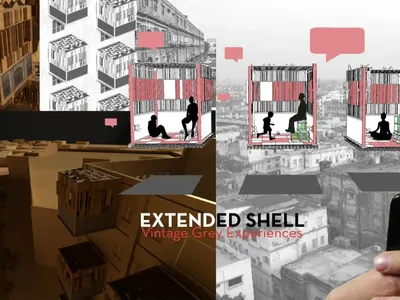
Extended Shell: Retrofitting Kolkata's Balconies as Living Urban Thresholds
A modular retrofit system recovers the social and environmental intelligence of Kolkata's historic verandas for contemporary Park Street residents.
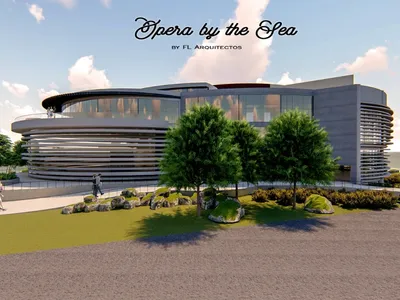
Opera by the Sea: Curved Volumes and Coastal Geometry on Tallinn's Waterfront
A wave-inspired cultural landmark beside Linnahall fuses a 2,000-seat concert hall, library, museum, and public terraces into one flowing composition.

Similar Reads
You might also enjoy these articles

Tsunami Convergenics: Turning Catastrophic Ocean Forces into Underwater Housing Infrastructure
A speculative underwater settlement off the coast of Onagawa, Japan, treats tsunamis and typhoons as energy sources rather than threats.
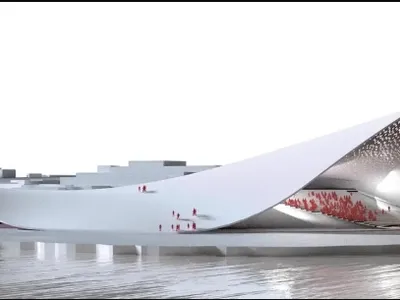
Sound Waves: An Opera House That Opens Its Stage to the Baltic Sea
A shortlisted proposal for Tallinn's waterfront dissolves the boundary between auditorium, public hill, and Baltic horizon.
Cloaked Colonization: A Mobile Underwater Habitat That Moves Like a Fish
Micah Abaya's shortlisted EHC Pacific entry reimagines ocean settlement as a dispersed network of self-sustaining architectural organisms.
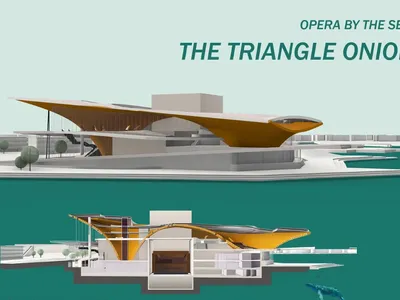
The Triangle Onion: Peeling Back Layers to Find an Opera House Inside a Public Landscape
A shortlisted opera house proposal stacks triangular planes into an explorable terrain of ramps, terraces, and curved performance volumes.

Comments (0)
Please login or sign up to add comments
No comments yet. Be the first to comment!